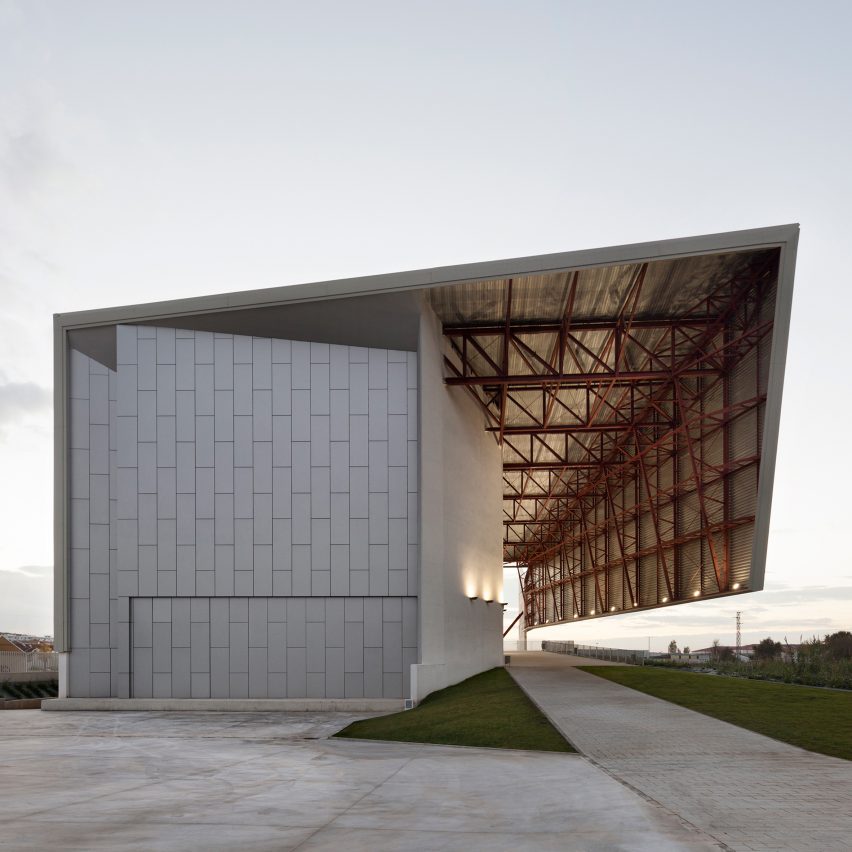
A huge canopy extends from one side of this auditorium in the Spanish province of Córdoba and folds over a riverside terrace, encouraging visitors to loiter around before and after performances. Read more
A huge canopy extends from one side of this auditorium in the Spanish province of Córdoba and folds over a riverside terrace, encouraging visitors to loiter around before and after performances. Read more
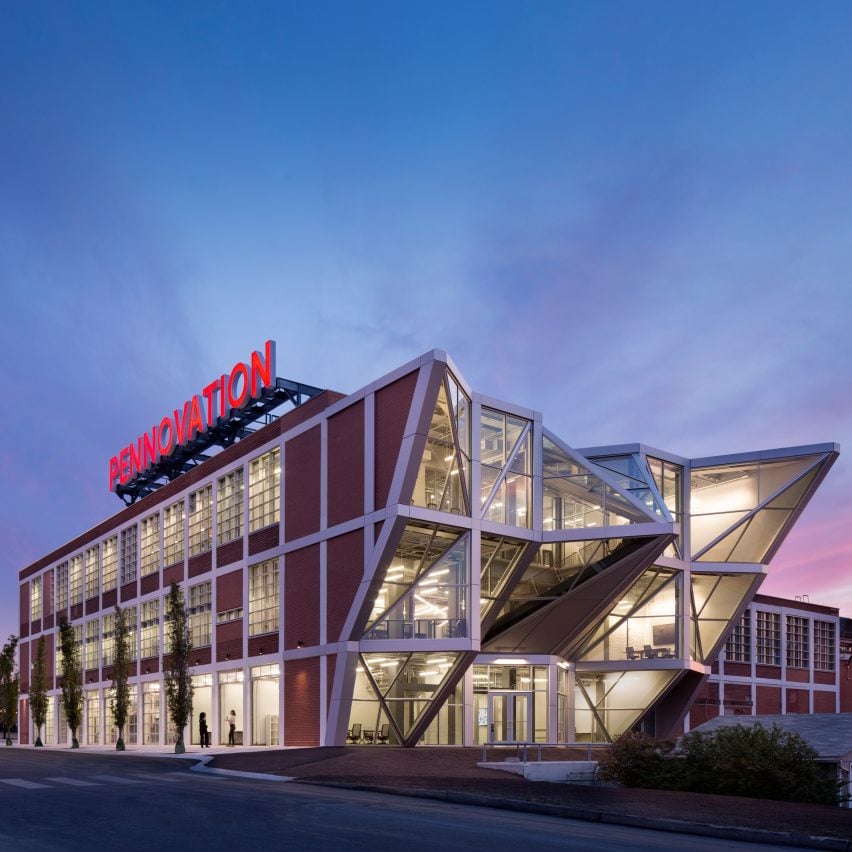
US studio Hollwich Kushner has transformed an old paint factory into the Pennovation Center, which contains labs, co-working areas and social spaces for entrepreneurs and researchers. Read more

The Whittaker Cube was designed as two levels of just 8 metres x 8 meters with immaculate detailing of durable materials and a cost effective structure.
Despite the compact footprint the house features three bedrooms and the upstairs living spaces feel light and spacious.
Located in the small sea side settlement of Kakanui near Oamaru although maximizing sea views was important this had to balance the need for privacy from the street and neighboring properties.
The cedar cladding is used as a rain screen and allows flashing’s to be hidden, which creates a simple uncluttered look, the modern interior features American Oak feature throughout.


OBR Paolo Brescia and Tommaso Principi and Michel Desvigne Paysagiste have been announced of the winners of first prize in the international competition to design the new Parco Centrale (Central Park) in Prato, Italy.
The 230-team competition asked architects to design a new 3-hectare urban park in Prato’s historical city center on the site of the former city hospital, within the perimeter of the city walls. The project is intended to meet the needs of a contemporary city while driving socio-economic development of the city center through “enhancements to its touristic vocation, sustainability and accessibility.”
The jury, chaired by architect Bernard Tschumi, unanimously selected the winning proposal for “its ability to offer to the city of Prato an original, innovative and practical solution.” Commented Tschumi on the design, “The project is remarkable in the way it understands and celebrates the history of Prato and of its medieval walls. At the same time, it looks to the future and to the development of the city and its diverse population.”
The jury also released the full rankings of the 10 finalist teams. Learn about the winning design and see the entries from all 10 of the finalists, after the break.
Winner: OBR Paolo Brescia and Tommaso Principi + Michel Desvigne Paysagiste
Description via Il Parco Centrale di Prato Competition.
The winning project pays a lot of attention to the urban fabric of the city of Prato and to its extreme regularity: an orthogonal grid which, as a trace of the ‘cardo’ and the ‘decumano’ of the Roman grid, is still very persistent and is striking for its spatial and temporal diffusion. The project hence starts from the memory of the place and from its original urban forms to manipulate them, through abstraction. It enhances the historical city wall, it evokes traces of the Italian Renaissance gardens, organized according to perspectives, pergolas and hedges, and reinterprets them in a contemporary language. To the north of the site, the pavilion is a one-storey structure, open towards the park. Beside restaurants and other park-related facilities, it accommodates ample spaces for artists’ ateliers and temporary exhibitions.
In the words of the designers: “The park itself soars to the status of open-air museum. In the heart of the park contemporary sculptures are exhibited, along with a collection of plants that will be selected not merely for their botanical features, but also for their aesthetic qualities, their colors, their exuberance. Displayed in such manner, these natural elements will become art pieces themselves.”
The project for the new 3-hectare park consists of two functional lots. The first lot includes the complete creation of the green areas and therefore of the park, as well as a built volume with a minimum area of 500 square meter of gross floor area containing, among other things, the services essential to the park itself. The second functional lot includes the creation of other buildings, up to a maximum of 3,000 square meters of gross floor area.
For the city, the creation of the urban park in the former hospital area represents an exceptional and unrepeatable occasion. The new urban park must first of all be able to change the vision and perception not only of the new place that will be created, but it must also alter the perception of the downtown areas adjacent to it, conferring awareness that a new part of the city has been created inside the walls. We will not come upon an area closed off by walls and gates, but we will detect a prevalently open area capable of becoming a hub of vitality for the center and for the city outside the walls.
2nd place: Ferdinand Ludwig (Baubotanik)
3rd place ex aequo: Benedetta Tagliabue (EMBT | Enric Miralles – Benedetta Tagliabue)
3rd place ex aequo: ELEMENTAL
4th place ex aequo: Alvisi Kirimoto + Inside Outside
4th place ex aequo: Dogma + Elia Zenghelis
4th place ex aequo: MAXWAN Architects + Urbanists
5th place ex aequo: DGT Architects (DORELL.GHOTMEH.TANE)
5th place ex aequo: Jakob + MacFarlane Architects with Coloco
5th place ex aequo: TURENSCAPE
Along with the commission for the project, the winning team has been awarded an prize of 40.000 Euro. Each finalist will receive a reimbursement of 13.000 Euros.
OBR and Michel Desvigne Paysagiste will now work with the city to finalize plans for the new Parco Centrale di Prato.
More information about the competition and the finalist designs can be found on the competition website, here. You can also follow the competition through Facebook and Twitter.
News via Il Parco Centrale di Prato Competition.
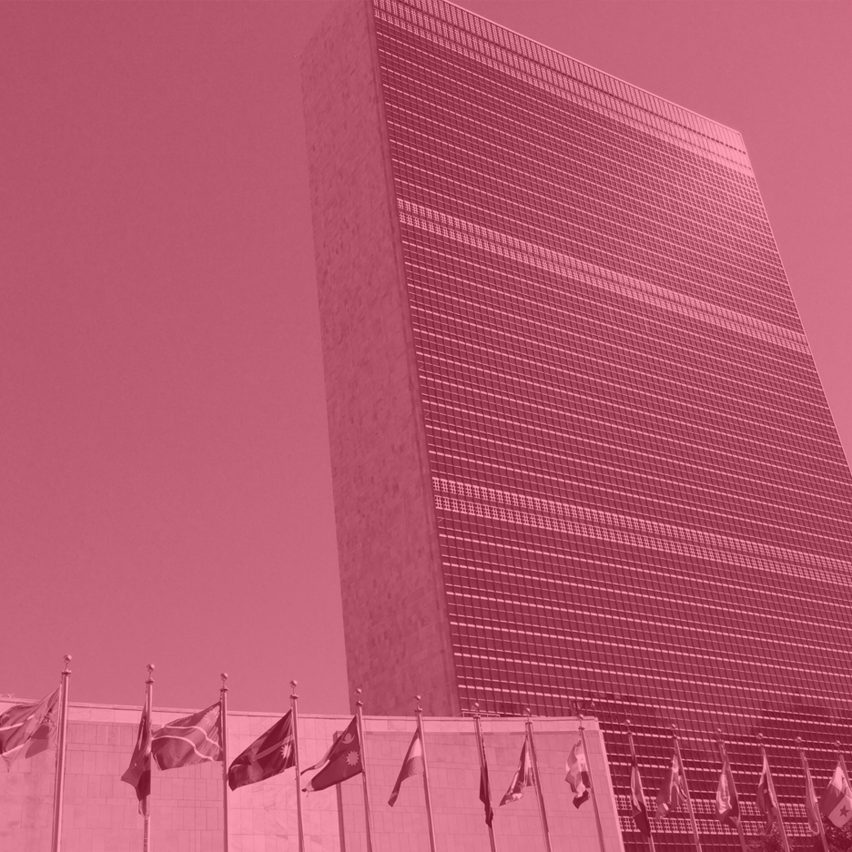
The design community and foreign policymakers need to attend each other’s events and communicate, if we are to find solutions to global urbanisation issues, says US Department of State advisor Ian Klaus. Read more

New York City – New York – USA (by Sergey Galyonkin)

The context of the project is already contained in the same title of the project task: Church St. Ana and Social center Vežica. This public and social context is only enhanced by the presence of a school in direct contact with the location of the project, but also the park that connects everything, and functions as a certain ‘green spine’. The church is therefore in direct dialogue with the social center and park, so the project puts emphasis on these two spatial relations by means of an ‘atrium’ and a ‘porch’, two strong architectural elements trough which a place becomes a ‘position’.
The interior of the church already begins in the access square that connects the church with the social center, where the church leans above it forming an inner atrium as the spatial extension of the square. The rise starts in our own reflection in the glass façade of the ground floor, and continues on the central stairs leading to the atrium. The atrium has a task to gather and connect people, surround them and protect them, get them to jointly participate in religious events. It also refers to the monastic cloister, which is peripherally framed by a full wall, while in the middle is the void, the connection with the access square and the ground floor of the church. The atrium also covers one part of the main square. Following the atrium are the sacred spaces of the church at the park level with which the church is linked directly through the porch. So instead through one door, the exterior and interior of the church are separated over the atrium and the porch of the church that are directly connected (semi-public space). This spatial proximity of the church, the park and the access square is articulated as the area of procession, where the liturgical and secular spaces meet and give life to the church. The building itself shows its presence in one essential gesture: the white volumetric dematerialized mass looms over the main square.
The difference between ‘secular’ and sacred part of the church is emphasized by partially shifting and different materialization of the facade – glass wall in relation to the wood panelling and concrete slabs compared to the stone pavement of the atrium. White walls define the outer perimeter of the church and create a distance between the inner spiritual world and outside of the city.
The spatial growth of the church through the atrium, nave that ends at the presbytery of the church is followed by a graduation of the interior lighting. Access Square bathed by daylight, rises in the mysterious dimmed atrium, and ends in the light-filled main hall. The church hall is characterized by three basic elements. The first of these elements is a longitudinal and cross-section of the hall, which follows the growth of the hall to the presbytery. The second are the visible reinforced concrete angled ribs, which draw the side, diffuse light in the hall of the church. Third are spatial niches, which draw direct daylight in the altar, baptistery and tabernacle. Artificial light follows the same principle of natural daylight by means of color and the type of lighting (warm – liturgical spatial niches, cold – diffuse side lighting). The mediterranean ambient of the church is also narrated through shadows that alternate on the porch towards the park and on the covered square in front the entrance of the church.
From the architect. A temple of light expressing a faith of inclusion is poised to become an architectural landmark in Chile. Set within the Andean foothills just beyond the metropolis of Santiago, the complex- curved temple is designed by the distinguished Canadian architect Siamak Hariri as an invitation for spiritual contemplation and architectural pilgrimage.
Surrounded by reflecting pools and a landscape of native grasses, the Bahá’í Temple of South America is a domed, luminous structure that echoes the rolling topography of the Andes while appearing to oat some 30 metres above the earth. Its nine monumental glass veils frame an open and accessible worship space where up to 600 visitors can be accommodated on curved walnut and leather seating. Looking up to the central oculus at the apex of the dome, visitors will experience a mesmerizing transfer of light from the exterior of cast glass to an interior of translucent Portuguese marble. At sunset, the light captured within the dome shifts from white to silver to ochre and purple.
Fourteen years in the making, the South American House of Worship represents the last of the eight continental temples to be completed as part of a remarkable portfolio of landmark sacred architecture commissioned by the Bahá’í Community. The temple will be unveiled on its stunning 10-hectare site outside of Santiago in mid-October, 2016 with a series of press and public events.
Without ritual or clergy, without icons or images, Bahá’í Temples are conceived to reflect an ideal of universal worship where women, men and children can gather together as equals. The Bahá’ís believe in the critical role of volunteerism (known as service) to heighten their prayer and reflection within a House of Worship. In time, universities and hospitals are to be erected in proximity to the temples. In Chile, connecting to the community has inspired the repurposing of an existing golf clubhouse on the property into an education centre for youth.
Openness and transparency are fundamental to both the structure and its site. The Bahá’í House of Worship can be accessed by nine entrances located at regular intervals around the domed structure, while curving paths lead visitors on walking meditations through the sloped landscape. The acclaimed Chilean landscape architect,Juan Grimm, has transformed a barren golf course into a lush, colourful landscape planted with native, drought-resistant varieties that extend generously around the temple. According to Grimm’s landscape design and working in partnership with the Municipality of Peñalonen, the Bahá’ís are planting native Quillay trees to support an environmental program called “Crece Verde” or “Green Growth”. In total, more than 6000 trees have been planted or are currently growing in a nursery established for the temple landscape.
Visitors to the spectacular site will be amazed first by the epic scale of the surrounding Andes. Walking toward the House of Worship up stone stairs and along pathways visitors will experience gardens that foreground the temple. As the path cuts between a rise in the landscape, the temple disappears momentarily only to reappear alongside a monumental reflecting pool. Standing next to the temple, visitors will appreciate the complex subtlety of the exterior cladding manufactured from melted glass that recalls the configuration of snowflake crystals.
Access to the mountain site was previously di cult. To open the House of Worship to all peoples as a place of prayer and meditation, the Bahá’ís have invested significantly to build a new road to the site, allowing for easy access for locals visiting from Santiago. Of the new South American temple, Francisco Chahuán, Senator of the Republic of Chile said: “I have no doubt that this place is destined to be a center of prayer, meditation and gathering, that will also invite all of the inhabitants of Peñalolén and the whole country to seek a place of tranquility and introspection.”
Designing a structure as complex and varied as nature required the most advanced computer technology. Led by Siamak Hariri, the team at Hariri Pontarini Architects innovated its own system of rendering the sculptural building, using machine-to-machine fabrication to create highly irregular, organic shapes in glass.

Trying to stop drug addiction by yourself is extremely hard. Without the right drug addiction treatment programs, the process can rattle you psychologically, emotionally and physically.
In case you or a loved one is aiming to end this bad habit, here are the 8 programs that can help you achieve your goal faster and safer.
See Also: Suffering From Anxiety? This Is How I Deal With Mine
There are myriads of options available to drug addicts for their recovery. However, the type of treatment that would be appropriate for a patient would depend on his level of addiction.
For people who are in the early stages of their addiction, their treatment can require routine visits to rehabilitation centers. For acute to severe cases, they may need to be admitted to facilities.
To ensure patient safety, medical and health experts must first assess a patient thoroughly to ensure that their plan of treatment will be effective and safe.
Most people who turn to drugs are frequently mentally unstable. They experience a lot of stress, depression and disappointments. They feel extremely lonely.
Psychotherapy can help patients deal with these emotions better. Treatment is typically carried out by a psychologist, psychiatrist and social workers. They perform psychological assessments on their patients to figure out how they can help them.
The key to the success of this treatment is in resolving a patient’s psychological issues.
Drug addiction doesn’t only affect the actual patients; their families can suffer, too. They can experience frustrations, stress and even stigmatization.
Family therapy is geared towards helping family members become support systems for the patient. They undergo counseling that will teach and assist them on how to cope with their patient’s recovery process.
Mutual support groups help patients get over their sense of inferiority and insecurity. They give patients the chance to talk about their problems and come up with opinions and practical solutions.
A couple of mutual support groups do exist. There is the Alcoholics Anonymous (AA) and Narcotics Anonymous (NA) just to mention a few. They offer support to both men and women undergoing rehabilitation.
If you are really serious about getting out of the shackles of drug addiction, medical care and support should be your top priority.
For those busy patients that do not need intensive care to get better, a flexible outpatient treatment plan can be the best program for you. You’ll need to come at regular intervals for checkups and assessment of your progress.
In the case of chronic addiction as well as cases where outpatient treatment schedules do not seem to be yielding results, an intensive 24-hour treatment center is the next best option.
With this drug addiction treatment program, patients stay in a residential setting that makes close monitoring easy. With patients totally secluded from normal life, tendencies of relapsing into addiction will be reduced.
They will have more time with their psychologists and psychiatrists as well as have less exposure to factors that can trigger a relapse, such as relationship issues and social problems.
Sober living can be the last stage of the rehabilitation process for some patients. For chronically addicted patients, it may take awhile before they reach this phase. This is to avoid overwhelming them right away.
When you’ve been secluded for several years and months, adjusting to the outside life won’t be that easy. Aside from the change in your environment, you’ll also be re-exposed to the factors that caused your previous addiction.
If you’re not prepared enough, there’s a good chance you’ll fall back to your previous habit.
Medication can be a part of the patient’s treatment process under certain conditions. Take, for example, the effects of withdrawing from drug use.
It may take awhile for the body to get used to the changes. As it is adapting, it experiences a lot of side effects, such as depression and anxiety. It can experience stress, too.
To mitigate them, your doctor can prescribe medications such as Buprenorphine, Baclofen and Topiramate. Usually, they are given for a certain period only and tapered slowly until there are no more side effects or withdrawal symptoms.
If the risk of health complication is very high, the patient may temporarily be admitted to a hospital. As soon as his health stabilizes, he’ll receive the next course of his treatment in a recovery facility and then he’ll be closely monitored.
The starting point of breaking free from drug addiction is in acknowledging and accepting that you are in dire need of help. If you can’t recognize your vulnerability, you’ll see no problem with your addiction and behavior.
Once you are able to admit and understand your condition, you need to reflect on the factors that triggered your bad habit. By taking some time to reflect, you’ll be able to give your counselor or psychologist the help they need in coming up with the right drug addiction treatment programs for you.
See Also: Spiritual Pointers for Quitting a Bad Habit
The post 8 Drug Addiction Treatment Programs To Help You Break Free appeared first on Dumb Little Man.
 Sig Nordal