Bloomberg Hong Kong Office / Neri&Hu Design and Research Office


Courtesy of Neri&Hu Design and Research Office

Courtesy of Neri&Hu Design and Research Office


Courtesy of Neri&Hu Design and Research Office


Courtesy of Neri&Hu Design and Research Office


Courtesy of Neri&Hu Design and Research Office


Courtesy of Neri&Hu Design and Research Office

  • Associate In Charge: Christine Chang
  • Designe: Wu Dong
  • Designer: Jiameng Li
  • Senior Associate In Charge Of Product Design: Brian Lo
  • Product Designer: Zhao Yun
  • Associate In Charge Of Graphic Design: Christine Neri
  • Graphic Designer: Haiou Xin
  • Architectural Materials: Pre-cast exposed fine aggregate concrete, Electroplated Bronze, American Ash wood (floor & wall finish), Clear Glass, Grey Mirror, Green leather, Gray leather, Wood laminate

Courtesy of Neri&Hu Design and Research Office

Courtesy of Neri&Hu Design and Research Office

From the architect. Robin Evans’ 1978 essay Figures, Doors and Passages analyzes how ordinary elements of a plan and their arrangements interact and shape occupancy. A simple corner or window opening is in fact inscribed with a complex matrix of spatial relationships that determine how a space is used. Neri&Hu’s design for Bloomberg Hong Kong’s internal office stair is in part inspired by the mundane elements of space-making – windows, passages, staircases and thresholds. The client’s brief was to design a staircase to connect the 3 different floors of their office with the explicit rule that this stair should to be used daily as the only vertical connection within the office to encourage employee interaction. Part of the brief was to also create a design that would respond to the locale of Hong Kong to create a link to the larger context of the city. The site is situated in the client’s existing office, within a typical office tower and surrounded by existing conference rooms, break-out areas, a recording studio and an auditorium. The existing spiral staircase was sculpturally iconic but the geometry was not conducive for the daily high traffic volume. Our challenge was re-design a staircase that would work within the structural limitations of the knock-out panels in the floor slab, while still creating a more spacious journey.


Courtesy of Neri&Hu Design and Research Office

Courtesy of Neri&Hu Design and Research Office

Courtesy of Neri&Hu Design and Research Office

Courtesy of Neri&Hu Design and Research Office

The new staircase integrates elements of platforms, landings, built-in seating and strategic window framing that echo what one may find in the extremes of Hong Kong’s natural landscape and urban terrain. Expressed as a wooden box insertion, the staircase massing actively denies the view to Victoria Harbor (a typically sought after and framed view in Hong Kong corporate offices) and instead focuses on framing activity within the office while still offering curated views out. Enclosed in a light ash wood massing, with exposed fine aggregate concrete treads and bronze metal railing accents, the staircase winds and turns to offer unexpected views – through windows, up double height cuts, down large voids and across to surrounding programs. Recessed barrisol lighting was designed to mimic natural skylight cuts in the ceiling.


Courtesy of Neri&Hu Design and Research Office

Courtesy of Neri&Hu Design and Research Office

Section

Section

Courtesy of Neri&Hu Design and Research Office

Courtesy of Neri&Hu Design and Research Office

Each of the three levels is designed with different functions to accommodate a diverse set of vertical programs. The journey begins on the 25th floor reception, expressed as a carved niche with a window framing the harbor view beyond. This level is designed to be the most extroverted in nature with a large event space stage for gatherings, built in benches on the perimeter as well as dedicated areas for small break-out group seating. The niche seating was also inspired in part by the break-out meeting pods that were displaced in the enlarged staircase scheme; rather than reinstating these as separate meeting spaces, we integrated functional seating and meeting areas into the architectural language of the staircase. Upon closer interaction with the millwork, hidden bespoke details are revealed to the user within these seating niches – small wood and bronze panels fold out to reveal charging ports, mirrors, and functional ledges where a cup of coffee or cell phone may be placed – unexpected details in support of the ordinary rituals of daily office life.


Courtesy of Neri&Hu Design and Research Office

Courtesy of Neri&Hu Design and Research Office

Continuing up to the 26th floor, different views are framed along the circulation path. Given that the Bloomberg recording studio is located on this level along with conference rooms, the idea was to create a more introverted space to address issues of acoustic containment and visual privacy. The mass is split into two boxes, allowing the landing to become the threshold zone that visually opens up to the harbor view along the curtain wall on one side and linked to a passage to the conference rooms on the other. The visual framing also satisfied the client’s request to provide a controlled glimpse or “borrowed scene” of the activated staircase from the recording studio as a filming background. In consideration of the more quiet nature of this floor, built-in seating facing the harbor view side is provided for solitary respite.


Courtesy of Neri&Hu Design and Research Office

Courtesy of Neri&Hu Design and Research Office

On the final level of the 27th floor, the staircase opens up again to be more extroverted to bring in views of the surroundings. The massing is reduced further in scale, punctuated with larger openings and clear glass to provide expansive views. A cantilevered viewing podium is designed as part of the auditorium break-out space to provide dramatic views down the multiple levels and the journey culminates in a lounge facing the harbor view.


Courtesy of Neri&Hu Design and Research Office

Courtesy of Neri&Hu Design and Research Office

Through careful composition and juxtaposition, the ordinary vignettes we take for granted on a daily basis, especially in an office typology, are choreographed into a rich journey that allows for moments of chance encounters, of pause and informal conversations.


Courtesy of Neri&Hu Design and Research Office

Courtesy of Neri&Hu Design and Research Office

http://ift.tt/2dCOjOD

A Colossus in the Desert

Hoover Dam Ansel Adams

fgfgfg

We are here to celebrate the completion of the greatest dam in the world, rising 726 feet above the bedrock of the river and altering the geography of a whole region; we are here to see the creation of the largest artificial lake in the world . . . and we are here to see nearing completion a power house which will contain the largest generators yet installed in this country . . . The mighty waters of the Colorado were running unused to the sea. Today we translate them into a great national possession.

from President Franklin D. Roosevelt’s speech at the dedication ceremony for the Hoover Dam

The Hoover Dam turns eighty this week, its first kilowatts delivered to the citizens of Arizona, Nevada, and California on October 9, 1936. The dam was an immediate and enduring factor in the economic and environmental transformation of the Southwest, but it generated more than a regional makeover. “The story of America in the last half of the twentieth century,” says Michael Hiltzik in Colossus, “is the story not of the postwar era, but the post-dam era”:

The United States became in that post-dam era a country very different from the United States that built it. It was transformed from a society that glorified individualism into one that cherished shared enterprise and communal social support. To be sure, that change was not all the making of the dam itself; Social Security, the Works Progress Administration, and other New Deal programs forged in the crucible of the Depression played their essential role, as did the years of the war. But the dam was the physical embodiment of the initial transformation, a remote regional construction project reconfigured into a symbol of national pride.

In the hands of the Norwegian-American sculptor Oskar J. W. Hansen, that symbolism was given Art Deco style and Wagnerian scale. He saw his monumental “Winged Figures of the Republic,” flanking the dedicatory flagpole on the Nevada side of the dam, as representations of “the immutable calm of intellectual resolution, and the enormous power of trained physical strength, equally enthroned in placid triumph of scientific accomplishment.” Even the 200 workers who died during construction were orchestrated into Hansen’s heroic national vision: “They died to make the desert bloom,” reads their commemorative plaque.

But the dam has a legacy of division and disruption also, starting with the political squabble over its name — the partisan Roosevelt administration insisting on “Boulder Dam” until President Truman, in a gesture of reconciliation with Republicans, made Hoover Dam official in 1947 (by which time some exasperated citizens were lobbying for “Hoogivza Dam”). Herbert Hoover, as FDR’s predecessor, not only deserves recognition for the dam, argues Glen Jeansonne in his new biography, Herbert Hoover: A Life, but deserves better treatment from history. Contrary to the usual view, Jeansonne says that Hoover’s legislative record shows that he was “neither a do-nothing nor a laissez-faire president” and provided an essential bridge to the New Deal era: “American politics could hardly have leaped from Coolidge to Franklin Delano Roosevelt without Hoover in between.”

In The Profiteers, Sally Denton describes how the Hoover Dam became a different sort of stepping stone, not only ushering in the era of New Deal public works projects but propelling the major builder of the dam, Bechtel Corporation, “into a condition approaching that of a corporate nation-state,” today the largest construction-engineering company in America. The dam was Bechtel’s first megaproject, and it opened the floodgates on profit and influence:

Bechtel has closer ties to the US government than any other private corporation in modern memory. No other corporation has been so manifestly linked to the presidency, with close relationships to every chief of state from Dwight Eisenhower forward. For nearly a hundred years, Bechtel has operated behind a wall of secrecy with its continually evolving military-industrial prototype.

For Marc Reisner, author of the 1986 classic Cadillac Desert: The American West and Its Disappearing Water, the Hoover Dam symbolized the watershed moment when a blind or blithe nation “began to founder on the Era of Limits.” In The Water Knife, a near-future novel by the prizewinning author Paolo Bacigalupi, those limits have gone so unheeded that the Southwest is in the grip of “Big Daddy Drought” and the water baron thugs who manipulate it.

The Barnes & Noble Review http://ift.tt/2dpUMye

@signordal San Francisco @signordal/instagram #twitter #fb

via Instagram http://ift.tt/2dQBGx5

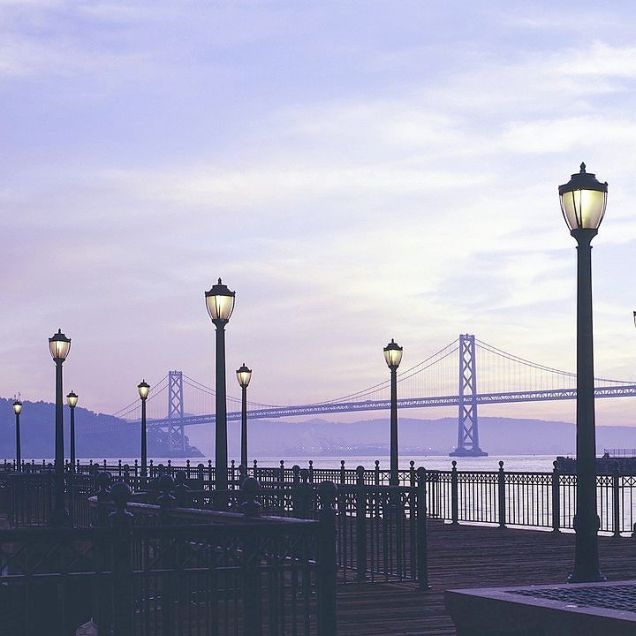
@signordal San Francisco at night with the Golden Gate Bridge in the background #twitter #fb

via Instagram http://ift.tt/2dcVucN

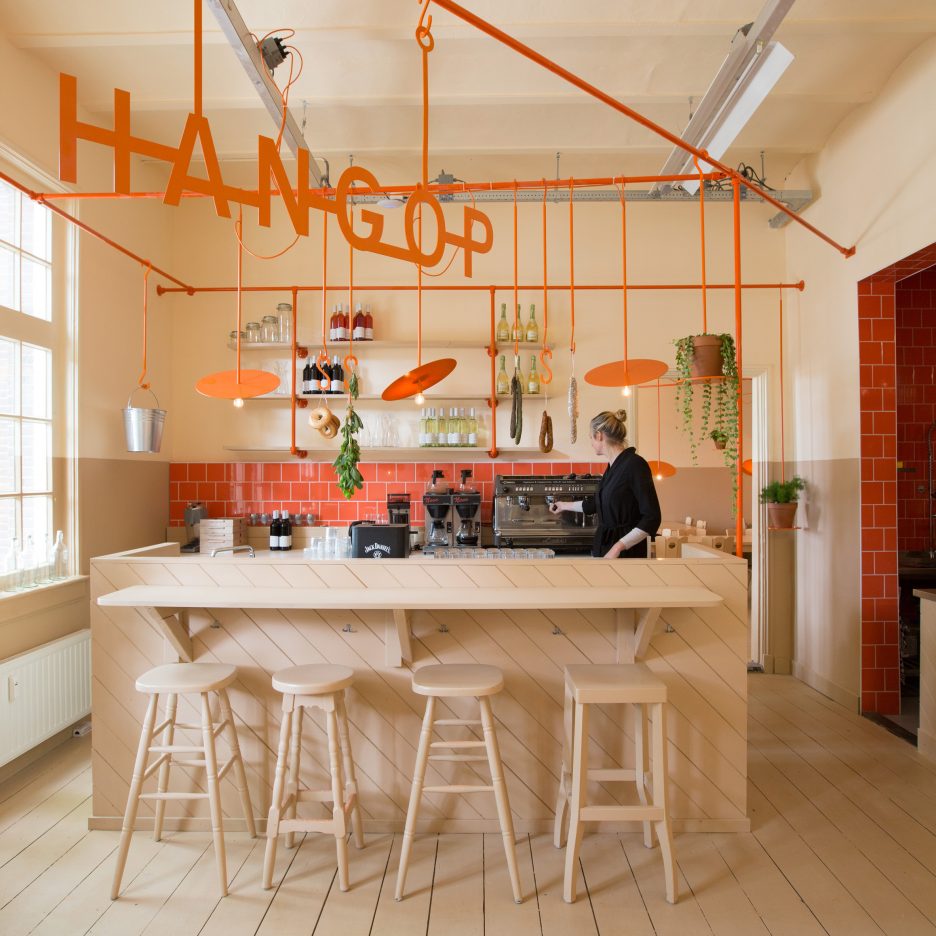
Overtreders W installs orange pipework above heads of customers in Netherlands cafe


Dutch design studio Overtreders W has used a bold colour palette and an elaborate pipe network to give a concert-hall cafe a cheap but cheerful makeover (+ slideshow). (more…)

http://ift.tt/2dcTJfI

Office in Tokushima / OHArchitecture


© Toshiyuki Yano

© Toshiyuki Yano


© Toshiyuki Yano


© Toshiyuki Yano


© Toshiyuki Yano


© Toshiyuki Yano

  • Architects: OHArchitecture
  • Location: Itano District, Tokushima Prefecture, Japan
  • Architect In Charge: Kosuke Okuda, Tatsuya Horii
  • Area: 415.64 sqm
  • Project Year: 2016
  • Photographs: Toshiyuki Yano
  • Produce And Contract: WELL Co,.Ltd

© Toshiyuki Yano

© Toshiyuki Yano

“Cover” that wears the environment

This office building is located in a residential area in Itano district, Tokushima prefecture. There are new and old houses in a mixed, which are organized or have been there for a long time.


© Toshiyuki Yano

© Toshiyuki Yano

In this location, the building is required the consideration for these houses which have the different time axis of life. On the other hand, it also should open to outside as a place in which various people are in and out to produce new things.


© Toshiyuki Yano

© Toshiyuki Yano

Floor Plans

Floor Plans

© Toshiyuki Yano

© Toshiyuki Yano

In this plan, we thought about how to open the office to such as surrounding environment. As a method, instead of delineating the inside and the outside, we devised a way to cover both sides as an office space integrally. The space is made up of the “cover”, instead of walls and roof that separate inside and outside, or windows that obliterate the border between inside and outside.


© Toshiyuki Yano

© Toshiyuki Yano

This “cover” which opens like an umbrella takes in the soft reflected light inside while shielding the direct sunlight, and ventilates from the top by the wind blowing up along the “cover”. In this way, this cover makes the space homogeneous and confortable technically. The “cover” has the internal space wear the external environment and the natural environment. As a result, it has achieved a rich office space which ensuring the concentration and relaxation.


© Toshiyuki Yano

© Toshiyuki Yano

Material’s brief: Concrete

The finish of the first and second floors is concrete finishing driving the hot water pipe. It is possible to thermal storage heating effect, and it can be reduced the air-conditioning load. As a result, it realizes the office comfortable without air draft from the air-conditioner.


Diagram

Diagram

http://ift.tt/2cQNS3K

Haskell Health House / Weaver Buildings


© Atelier Wong

© Atelier Wong


© Atelier Wong


© Atelier Wong


© Atelier Wong


© Atelier Wong

  • Architects: Weaver Buildings
  • Location: Austin, TX, United States
  • Architect In Charge: Jen Weaver
  • Area: 850.0 ft2
  • Project Year: 2016
  • Photographs: Atelier Wong
  • Landscape Architecture: Studio Balcones
  • Structural Engineering: Structures
  • Environmental Design: Positive Energy
  • Interior Space: 850 sf
  • Landscape Living: 1100 sf
  • Surface Livable: 1950 sf

© Atelier Wong

© Atelier Wong

The Haskell Health House, modeled after concepts in Richard Neutra’s Lovell Health House, reinterprets how a conscientious architecture might be embodied in Austin, Texas today. The urban infill home holds 850 sq ft of interior living and pairs it with 1,100 sq ft of landscaped living along downtown’s hike and bike trail on Lady Bird Lake.


© Atelier Wong

© Atelier Wong

The efficient and tall interior spaces of Haskell Health House form a footprint designed for maximum utility. The stair tower acts as lungs, pulling rising heat to exit through north-facing clerestory. Hopper windows above all of the doors feed the stair tower, creating constant air movement. A 3-head split system offers an option for mechanical climate control as well. The upgraded vapor barrier provides greater thermal comfort – keeping the air conditioner on 70F in Texas’ July, the energy bill was only $118 (1/3 normal costs for the same size space.)


Courtesy of Weaver Buildings

Courtesy of Weaver Buildings

In keeping with the design manifesto, the outdoor kitchen, dining table, cocktail lounge, master screened porch and roof deck that overlooks Lady Bird Lake bring living spaces outside. Native plant selections and edible features qualify this yard as a Natural Wildlife Federation Certified Wildlife Habitat. Visitors are greeted by range edge plantings like persimmons and prickly pear to form a hardy barrier from the street. The front yard hosts a hypernature plant gallery with loquat, agarita, and various wildflowers of central Texas. Privacy is enhanced along the fence with screened edge plantings like virginia creeper, mustang grapes and Will Fleming yaupons.


© Atelier Wong

© Atelier Wong

Haskell Health House depicts a future in which the new urban home truly celebrates garden living.Reduced impervious cover allows for greater recharge of our underground water resources.


© Atelier Wong

© Atelier Wong

Landscaped living fosters natural habitats to be a greater part of our daily life, not relegated tovisitation in municipal and state parkland only. Individuals who can connect with nature every day ontheir personal urban nature preserve can lead more fulfilling, healthy lives. As Mies van der Rohe sopopularly shared, “Less is more.” Within our current context of sharing finite resources, the HaskellHealth House proves that using fewer resources in building consumption and in energy systems canprovide both a healthy and luxurious solution.


© Atelier Wong

© Atelier Wong

http://ift.tt/2dpA3uy

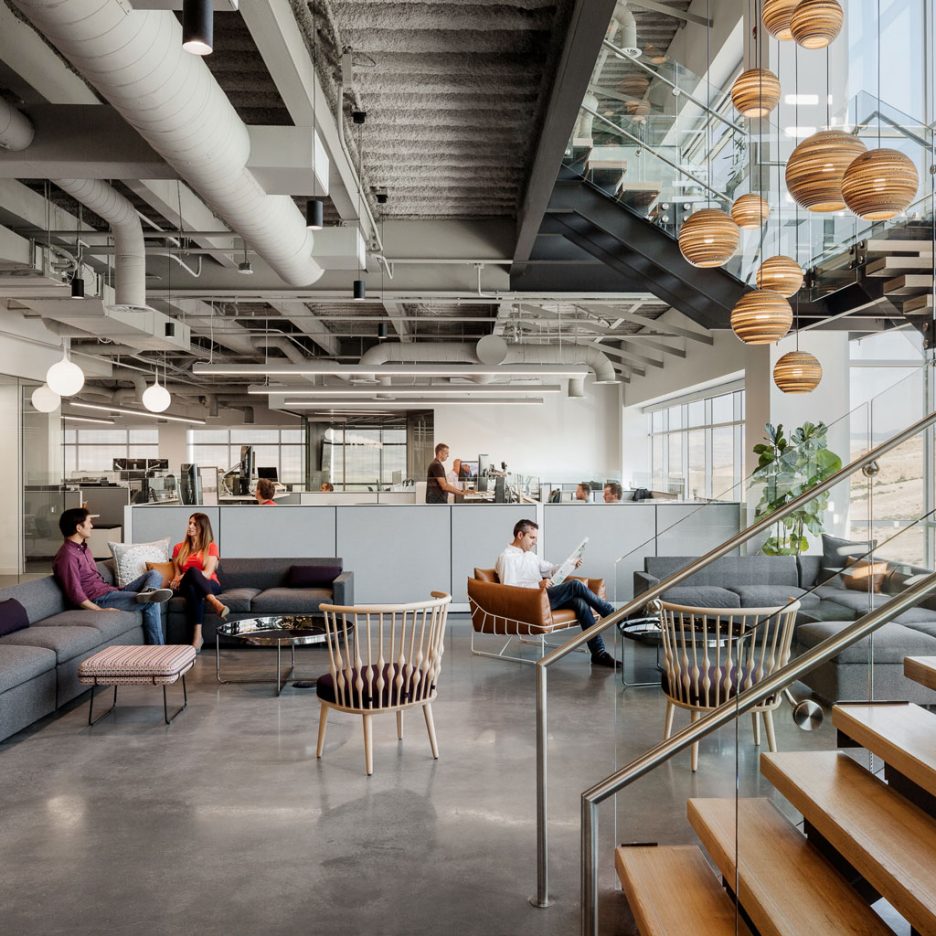
Rapt Studio creates “family rooms” inside new Utah headquarters for Ancestry


American firm Rapt Studio has designed the interiors for tech company Ancestry’s new office, which features comfy lounge areas, communal dining tables and art installations that refer to genealogy (+ slideshow). (more…)

http://ift.tt/2dqDXB4