
💙 Firat Glow on 500px by Roland “Bill” Moser, Solothurn,… http://ift.tt/1qXX2xh
💙 Firat Glow on 500px by Roland “Bill” Moser, Solothurn,… http://ift.tt/1qXX2xh
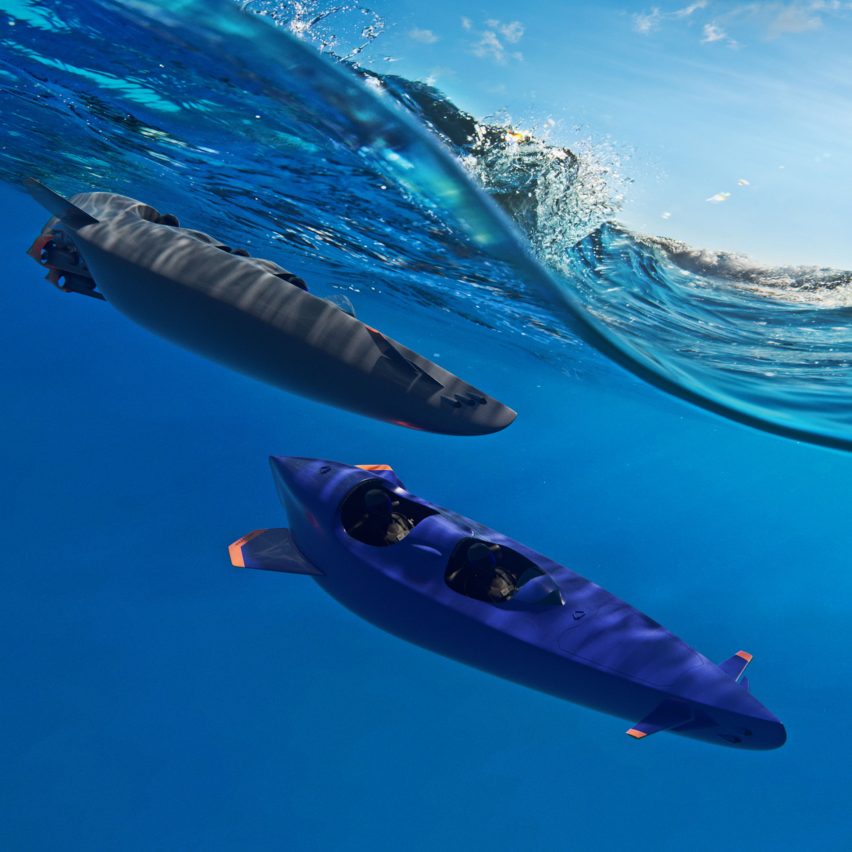
Dutch company Ortega has designed an electric submersible for divers, which it claims is the fastest of its kind. Read more

This article was originally published by Archipreneur as “5 of the Most Innovative Architecture Firms.”
The AEC industry is notoriously slow to adopt new technologies. Cumbersome organizational structures and high financial stakes make it difficult for AEC professionals to experiment. Due to the limited role of architects in the project development process, innovative design solutions and experimentation with new manufacturing techniques are still confined to academic circles and research institutions.
However, some architecture firms are utilizing their high profiles, international success and the influx of talented, young designers to establish in-house research divisions and incubators that support the development of new ideas in the AEC industry. The following five companies are consistent in pushing the envelope and helping architecture adopt some of the latest technologies:
One of the most renowned architecture firms in the world, BIG, is a great example of architects keeping step with pop culture and new business trends. Both their design and company culture reveals a nimbleness and experimental attitude that allow them to explore different avenues for practicing architecture. BIG’s founder, Bjarke Ingels, is a rare example of an archipreneur attuned to the latest media trends and business strategies. He embraces social media, invests in new enterprises, and implements innovation in his projects.
Recently, BIG teamed up with aerospace organization Rumlaboratorium, the Danish Technical University and artists from realities:united to launch a Kickstarter campaign to design a prototype of a unique steam-ring generator that would be part of the “cleanest power plant in the world.” The initiative shows a readiness to invent and extend their involvement in the construction process to engineering. In 2014, they launched a new division within the company and called it BIG Ideas, which was intended to act as a research and development lab where the firm could create products and new building materials. Several other independent projects are currently underway, many of which are focused on finding new engineering solutions to be incorporated into BIG’s projects.
SHoP Architects and SHoP Construction (SC), collectively known as SHoP, are among New York’s 10 largest architecture firms. What makes them stand out among other mainstream architecture firms is their interest in addressing the gap between real estate development, architecture and engineering. A hybrid business model allows them to function as a combination of a real estate development firm, a think tank, and a one-stop shop for clients.
Five people with individual backgrounds in design, construction, business, marketing and development founded the firm in 1996. The team was led by Gregg Pasquarelli, who had previously worked as an investment banker on Wall Street. They first experimented with trading fees for equity on their Porter House project, and went on to develop several other projects, as well as their own, and collaborating with other architects.
SHoP is a trailblazer when it comes to redefining the way architecture is practiced. They are rethinking the role of architects in the project development process and looking for ways to get more autonomy, better pay, and innovative design projects off the ground, all while cutting construction costs through smart fabrication.
Perkins + Will is one of the United States’ leading architecture firms in healthcare design, delivering buildings that focus on better patient experience and high performance. Their new in-house Innovation Incubator program aims to “foster, through micro-grants of money and time, a culture of innovation, creativity and experimentation by supporting small research projects proposed by individuals.” The program has already selected 19 entries from the firm’s global offices and awarded several micro-grants to groups of participants with the most innovative proposals.
The firm also formed the Perkins + Will Building Technology Laboratory, which is focused on developing new technological solutions that boost the performance of buildings. Their annual design competition encourages talented designers to experiment. Design solutions selected through the contest are often further developed through the Innovation Incubator system.
One of the first architecture offices to fully embrace Virtual Reality (VR), Seattle-based NBBJ, developed its self-contained venture Visual Vocal to build a VR platform integrated into the firm’s design process. By using VR, NBBJ hopes to speed up collaboration and communication between designers and allow them to make decisions based on client feedback. The new productivity tool will allow architects to build VR versions of 3D models that can be explored on a smartphone.
Together with mobile and cloud-based solutions, VR is expected to replace conventional communication such as email. The team, led by John San Giovanni and Sean House, raised $500,000 for Visual Vocal, which will be developed as a tool not only for architecture but also for other industries. Future plans for these platforms include solutions for working in the aerospace industry, product design, and biotech.
Recently, HOK partnered with the Biomimcry Guild in order to foster bio-inspired innovation in the field of architecture. The partnership began in 2004 and the two companies have collaborated on several projects since, including HOK’s proposal for the “City of the Future” competition in 2008.
“We believe biomimicry will not only help us significantly reduce the environmental impact of our projects, but also has the potential to help define a whole new sustainable standard for our profession,” said HOK Sustainable Design Director, Mary Ann Lazarus, “Because biomimicry addresses critical environmental issues at the habitat scale, it gives us lessons on how to achieve significant results even restorative outcomes at all scales.”
HOK is also a great example of an architecture firm embracing new media tools, as one of the most active users of social media in the architectural industry. The firm launched Life at HOK in 2008 as a supplementary resource to the company’s main site. It is an employee-authored blog, dedicated to showing the processes behind their projects and office culture. HOK employees from around the country post different types of content, such as links to YouTube videos, Facebook profiles and Flickr images. The site aggregates several social media platforms and encourages feedback and interaction with and between its users.
***
These five firms are consistently showing a readiness to adopt new design and communication tools, design strategies, and business models. This attitude allows them to remain flexible and absorb various cultural and technological shifts instead of simply trying to keep up with the world. Which other architecture firms do you find innovative?

Love and marriage are two words that more often than not go together. And yet, finances is another variable that couples must consider seriously before they pledge to a lifelong commitment.
If you are thinking of going into a longterm relationship or are already in the middle of one, here is a must-read list of tips about couples and finances.
According to Charles Murray in his piece, “Advice for a Happy Life”, timeliness, cleanliness, and frugality are the three critical commonalities for a successful union. While these attributes may seem minor in comparison to hobbies or political beliefs, they are quotidian conversations, meaning, they come up every day. They’re the quintessential “everyday struggle”.
So, if you are tight with money, then it behooves you to marry someone also tight. If you like to regularly treat yourself, having to convince your partner of every little luxury– will be exhausting. Choose your financial match to avoid weekly arguments.
If you’re not feeling convinced, consider that finances are the number one cause of relationships stress. In the words of Muhammed Ali, “It isn’t the mountains ahead that wear you down. It’s the pebble in your shoe.”
See Also: 5 Ground Rules to Keep Finances from Killing Your Relationship
Eating brownie batter, with its raw eggs, is a fun game of Russian roulette. While adults love to warn about the dangers of Salmonella, the bacteria is actually not that common. Turns out, only about 1 in 20,000 eggs are actually infected.
In the case of marriage, however, about 40% end in divorce. If you’re a couple below age 25, then the odds jump to 60%. So, marriage is a much more daunting game of Russian roulette.
To keep the odds in your favor, it may be helpful to talk with your partner about the worst-case scenarios. What are deal-breakers? How would you strive to behave in a break-up? How would you attempt to cooperate?
Emotional trauma aside, being able to work as a team in divorce can save you thousands. Of course, it will be hard to act logically so remember that the average cost of divorce is around $20,000. If this makes you ill, then talk preemptively about an “uncontested” option, where both of you agree to the terms. By avoiding expensive litigation, you could save around 80% of sunken divorce costs.
See Also: 5 Divorce Mistakes to Avoid Right Now
Couples manage finances different ways. It is generally thought, however, that merging accounts & assets is the best way to inspire mutual trust and accountability. Furthermore, it’s simply easier to keep track of.
For newlyweds, however, it may take time to arrive at this place of trust. Therefore, it’s possible to do the process slowly, with each party adding money into a shared fund until everything is merged.
In the same vein, it’s important to decide if you’re going to file taxes jointly or separately. Honestly, there are only a few reasons to file separately, such as deep medical debt. Otherwise, it’s not worth the extra time.
Adjust your W-4 tax forms with your respective employers, so that your little family isn’t underpaying in taxes. For a married couple that both work, it’s likely that each of you should claim one allowance, or one of you claim both and the other, none.
While it’s hard or seemingly impossible to contemplate an end to a relationship when you’re just starting out, couples should also make preparations and arrangements for their future to head off potential rows and fights.
The post 3 Things You Should Keep In Mind About Fiancés and Finances appeared first on Dumb Little Man.

Wrap House is a private home located in Reculver, England. It was designed by OB Architecture in 2015. Wrap House by OB Architecture: “Set on an unassuming narrow plot within the Metropolitan Green Belt south of London, The Wrap House is a modern 200m2 (2,153ft2), 2 storey family home overlooking the open fields of Biggin Hill Airport. The house comprises of 2 long ‘wrapping’ elements that stretch down the narrow..
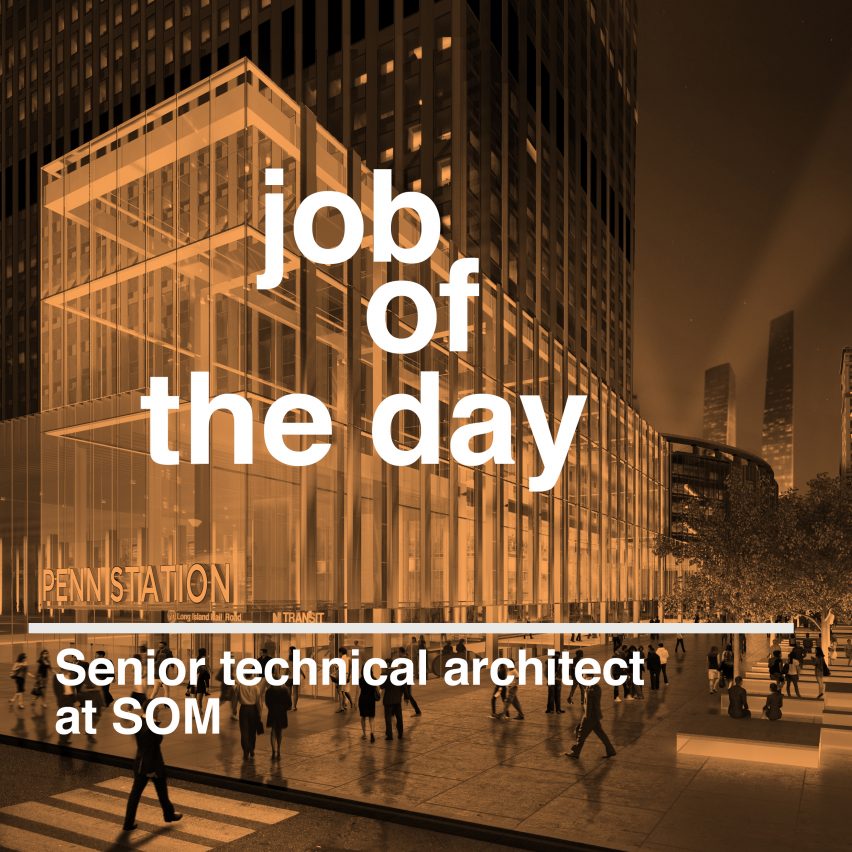
Our job of the day from Dezeen Jobs is for a senior technical architect at the London office of Skidmore, Owings & Merrill, whose current projects include the expansion of New York’s Pennsylvania Station (pictured). Read more stories on SOM, or browse more architecture and design opportunities on Dezeen Jobs.

Architectural research initiative arch out loud has announced the winners of Tokyo Vertical Cemetery, its international open ideas competition that sought solutions to Tokyo’s rising issue of burial space.
Sited in the Shinjuku district of Tokyo, the competition challenged architects and designers to develop proposals for a vertical cemetery that explores the relationship between life and death in the city while taking into account the cultural identity that is tied to death.
From 460 proposals representing 54 countries and six continents, one winner and three runners-up were selected by a jury including David Adjaye, Tom Wiscombe, Alison Killing, and more.
The winners of the Tokyo Vertical Cemetery competition are:
Runner Up: In-Between / Moises Roro Marquez, Carlos Orbea Martinez, Gonzalo Garcia-Robeldo, Piotr Panczyk; Spain
The concept is based on a dialogue between volumes made of two drastically different materials and the empty space in the middle. Apart from generating interesting spaces with three different ambiances, this could be considered a metaphor for cemetery, a place between two worlds: dead and living. Our project recognizes them both as different and bonds them together within one structure by finding a place for utilities and public spaces. All this is concealed in modular grid that sorts out space dedicated for each grave in an economic and respectful manner that does not contradict Japanese traditions nor customs.
Runner-Up: Beyond the Horizon of Consciousness / Anna Eckes, Olaf Mitka; Krakow, Poland
BEYOND THE HORIZON OF CONSCIOUSNESS questions about our current concept of the consciousness and its relation to death. The project is an ‘uncanny’ negation of Tokyo – the city which floods every ‘dark space’ with light and noise, the city that leads to shatter myth and irrationality. Space express itself through mimicry of cave, architecture that doesn’t have a plan or rooms. The site is a meadow interacting with users. The surface of rocks serves as a columbarium, a storage for modern ‘urns’ created from the separation of DNA. The bottom of cave consists of a main reflection space. Smaller, personal ones are located all the way from entrance to lake.
Runner-Up: Inner Landscape / Niccolo Brovelli; Italy
Inner Landscape is a boundary between the frantic rhythm of the city and the timeless interior space. Inner Landscape is a vertical path, hybrid interpretation of multi-storied pagoda and Japanese shrine. Inner Landscape symbolizes the Buddhist tripartition into three lands: a land of roots, a land of the middle and a plain of high heaven. Inner Landscape is death and life: a cryptic place to feel close with loved departed and a spiritual route between “artificial” pieces of Japanese landscape, that leads to the perception of the Shinto’s reverence for natural artifacts.
Winner: Death Is Not The End. Being Forgotten Is. / Wei Li He, Wu Jing Ting Zeng, Zhi Ruo Ma, Kui Yu Gong; China
This project explores a new way of dealing with the spatial constraint for urban cemeteries while expressing a unique approach to life and death. By having the balloons as a medium for coffin storage, we utilize the vertical space by having balloons that gradually rise up and eventually fly off. The appearing and disappearing of balloons resonate with the temporality of life. Departing from the depressing silence in traditional cemetery design, we propose a new space of tranquility created by a tower of rising balloons.
The winners of the competition will be featured in the first issue of the out lous journal, “DEATH + ARCHITECTURE,” which will be released in early 2017.
Learn more about the winners, as well as honorable mentions, here.
News and project descriptions via arch out loud.
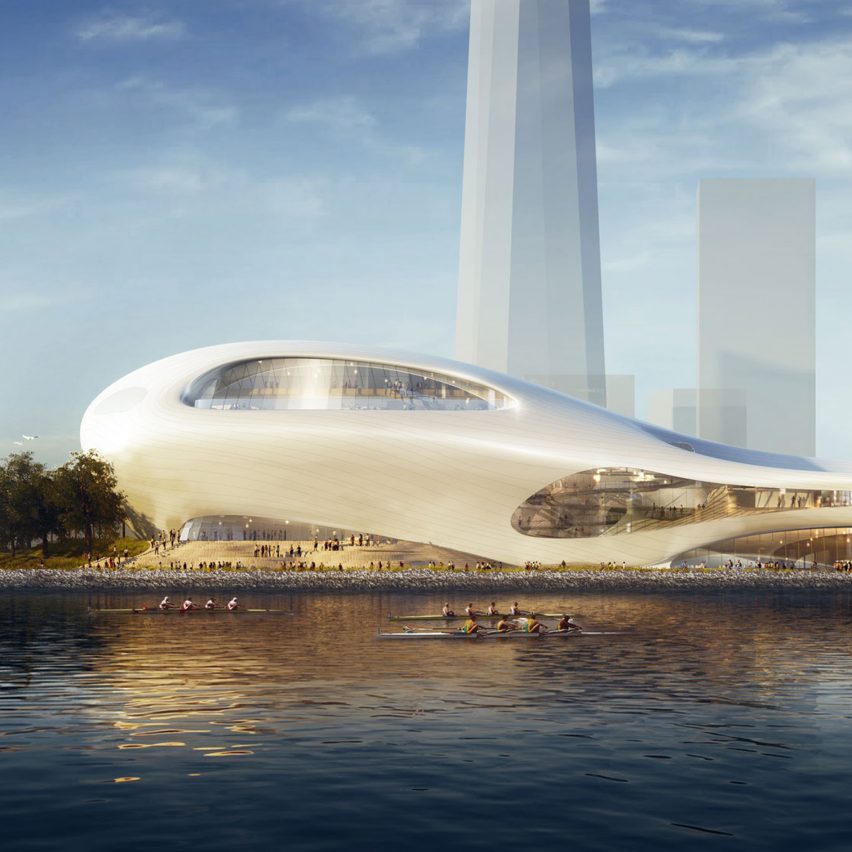
After abandoning plans in Chicago, Beijing studio MAD has now revealed two new designs for its George Lucas Museum of Narrative Art – one for San Francisco, and a different one for Los Angeles. Read more
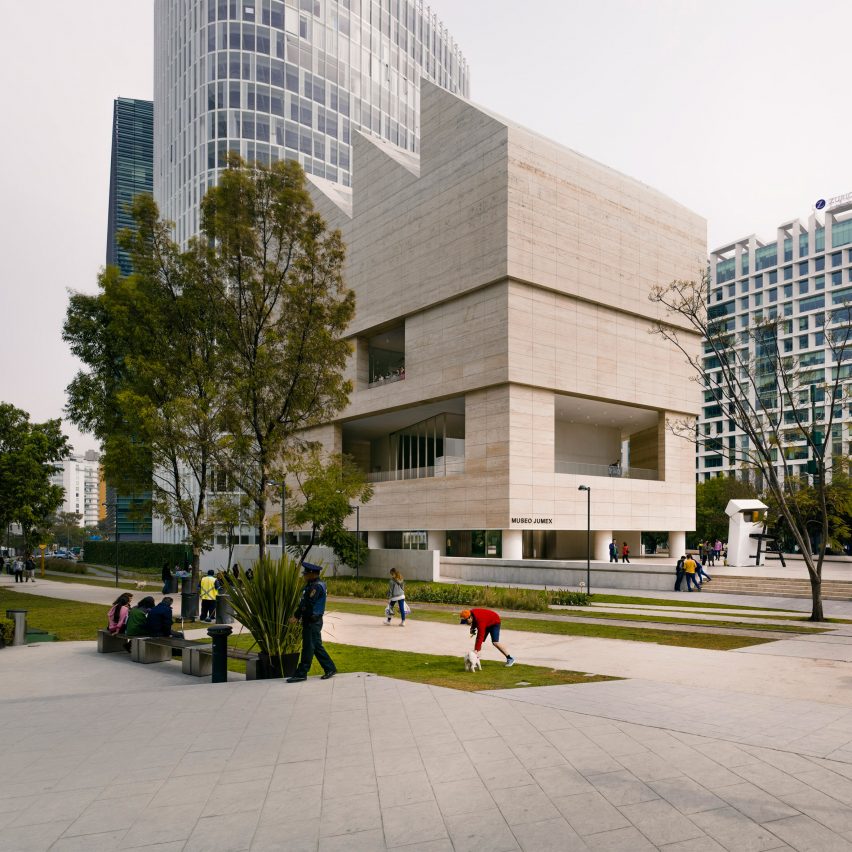
RIBA International Prize: the Royal Institute of British Architects has revealed the six projects competing to be named world’s best new building, including David Chipperfield’s Museo Jumex and Zaha Hadid’s Heydar Aliyev Center. Read more

 Sig Nordal