
Duplex in Marseille is a residential project completed by T3 Architecture in 2016. The 1,076-square-foot home is located in Marseille, France. Photos by: David Giancatarina
7 Scary Architectural Elements That Wouldn’t Meet Building Code Requirements Today

The Skull Chapel in Czermna, Poland. Image© <a href='http://ift.tt/2ee69H2 user Merlin</a> licensed under <a href='http://ift.tt/2cVj3fA BY 3.0</a>
Architecture is often the backdrop, rather than the subject, of the scary. For example, The Shining owes much to the Overlook Hotel, “haunted” is often followed by “house,” and Victorian architecture has come to be associated with the creepy. In a less supernatural manner however, architectural elements themselves have proven over history to be scary in their own right. With the clarity that only retrospect can offer, it’s easy to look back on the following macabre materials, bleak utilities, and terrifying technologies in horror… but perhaps what is most scary is to consider which aspects of architecture we might blindly accept today that will also become glaringly frightening with time.
1. Paternoster Elevators
© <a href='http://ift.tt/2eea6M5 user kallerna</a> licensed under <a href='http://ift.tt/2d3FStB domain</a>
Unlike conventional elevators, paternosters have no doors and never stop. Working sort of like a completely vertical escalator or ski lift, a user steps into an open compartment looping in either the up or down direction, simply stepping off at their desired floor. The paternoster’s lack of adaptability for disability design and their safety issues–such as people staying in the compartments past their looping endpoint, or passenger changeovers gone wrong, with people falling in the shaft between compartments–mean that paternosters are now banned in most countries, though pre-existing ones can still be found scattered around Europe, sometimes repurposed to novel uses.
2. Lead Piping
© <a href='http://ift.tt/2ee7huw user KBreker</a> licensed under <a href='http://ift.tt/2aA6y58 BY 3.0</a>
Not only deadly to the likes of Colonel Mustard and Miss Scarlet, lead water piping was common up until the early 20th century before it was proven to be linked to lead poisoning. Before this knowledge, lead was favoured for its malleability, resistance to pinhole leaks, and longer lifetime compared to iron pipes.
3. Bones
The Skull Chapel in Czermna, Poland. Image© <a href='http://ift.tt/2ee69H2 user Merlin</a> licensed under <a href='http://ift.tt/2cVj3fA BY 3.0</a>
Although never a widespread practice, human bones are certainly unlikely to make it into a BIM database or drawing set schedule today. However, historic buildings such as the Sedlec Ossuary (decorated with over 40,000 human skeletons, including a chandelier made from every bone of the human body) and the Czerma Skull Chapel (with three thousand skulls making up its walls), show off a gratuitous use of tibia over timber.
4. Sky Boys
A worker on the Empire State Building. Image<a href='http://ift.tt/2ee4jX0 Wikimedia</a>. Image taken by Lewis Hine, used under <a href='http://ift.tt/2f8RRVS domain</a>
Immortalized in the (albeit staged) photograph “Lunch atop a Skyscraper,” the precarious working heights of ironworkers earned them the nicknames of “air-treaders” or “sky boys.” In the 1890s, American ironworkers had the highest accident and mortality rate of any trade, as they needed to traverse narrow steel beams all with the expectation that they would work ten-hour work days and disregard weather conditions. Today, ironworkers have greatly improved safety regulations, with nets, helmets, and harnesses, but the sheer heights remain the same, if not higher.
5. Cesspits
© <a href='http://ift.tt/2ee7aPs user Emillie via Wikimedia</a> licensed under <a href='http://ift.tt/2f8Tl2F BY 2.0</a>
Before indoor plumbing, early pit latrine-style toilets usually had a cesspool outside or underneath to collect excretion. Not only would this lead to terrible smelling neighborhoods, the “night-soil men” in charge of emptying them faced a dangerous and dirty job, with at least one recorded case of a night-soil collector who drowned after falling into one.
6. Asbestos
© <a href='http://ift.tt/2eecz9t user aramgutang</a> licensed under <a href='http://ift.tt/2d3FStB domain</a>
Once hailed as a “miracle material,” asbestos was desirable for its insulating properties, fire and heat resistance, and tensile strength. Less desirably, it was discovered to be carcinogenic when inhaled, though only after widespread international use in construction. Today, non-carcinogenic but materially similar fibreglass insulation is the most common substitute, while many older buildings throughout the world are riddled with a dangerous and difficult-to-remove reminder of our earlier ignorance.
7. Blood
© Wikimedia user Internet Archive Book Images licensed under public domain
The Phoenicians were amongst the first to use animal blood in their building methods [1]. Blood held symbolic value as a paint, but was also a powerful additive to clay used in the building of adobe bricks. On a molecular level, a tight layer of blood wraps around the clay crystals, increasing the material’s plasticity, strength and water repellence. Although this ancient technique of using mammal blood as a bio-adhesive may seem slightly grisly, as one architectural graduate sees it, revitalizing the art of blood bricks today could be a productive way of utilising waste cattle blood.
References:
- Winkler, Erhard M. “Stone: Properties, Durability in Man’s Environment.” Volume 4 of Applied Mineralogy Technische Mineralogie (2013).
The Creative Process of Zaha Hadid, As Revealed Through Her Paintings

Vision for Madrid – 1992. Image Courtesy of Zaha Hadid
Today, on October 31st, we celebrate what would have been the 66th birthday of Zaha Hadid (1950-2016) who tragically died in March. Internationally renowned for her avant-garde search for architectural proposals that reflect modern living, Hadid made abstract topographical studies for many of her projects, intervening with fluid, flexible and expressive works that evoke the dynamism of contemporary urban life.
In honor of Hadid’s birthday and in order to further knowledge of her creative process and the development of her professional projects, here we have made a historic selection of her paintings which expand the field of architectural exploration through abstract exercises in three dimensions. These artistic works propose a new and different world view, questioning the physical constraints of design, and showing the creative underpinnings of her career.
The Peak – 1983. Image Courtesy of Zaha Hadid
What Were Zaha Hadid’s Early Inspirations?
From the beginning of her career Zaha Hadid was influenced by the artist Kazimir Malevich, who led her to use paint as a tool for architectonic exploration. During the 1980s, before Zaha had realized any of her works, she was faced with many fruitful years of theoretical architectural design. In these years she created a precedent for her entire career, with these explorations later consolidated in material form in her works.
The Peak – 1983. Image Courtesy of Zaha Hadid
“I was very fascinated by abstraction and how it really could lead to abstracting plans, moving away from certain dogmas about what architecture is” – Zaha Hadid
The Peak – 1983. Image Courtesy of Zaha Hadid
Hadid began her paintings with essays in a macro urban scale, exploring proposals for masterplans and forms of connection within and between cities. In her paintings of “The Peak,” Hadid proposed a landmark as a respite from the congestion and intensity of Hong Kong, developed on an artificial mountain.
The World (89 Degrees) – 1983. Image Courtesy of Zaha Hadid
In “The World (89 degrees)” the architect explored the multiple capabilities of new technologies and their impact on architectural design, producing an abstract composition—almost like a satellite view of the world. Using only sharp angles that give dynamism to the view, the plan is crossed by a wide curved horizon which in its movement embodies the constant change in contemporary lifestyles.
Grand Buildings Trafalgar Square – 1985. Image Courtesy of Zaha Hadid
Hadid also used this graphic research to rethink existing urban spaces, as in the case of “Grand Buildings Trafalgar Square.” In this painting, in addition to inserting a public podium recognizing the tradition of public meetings in the square, Hadid introduced tall buildings with public terraces, whose height would correspond with various landmarks in the city.
Kurfuerstendamm 70 – 1986. Image Courtesy of Zaha Hadid
Kurfuerstendamm 70 – 1986. Image Courtesy of Zaha Hadid
Entering into a public competition to design an urban development plan for what was at the time West Berlin, in “Victoria City Aerial” Hadid intervened with an urban context organized around programmatic corridors at different heights that would inject commerce and culture into the area.
Victoria City Aerial – 1988. Image Courtesy of Zaha Hadid
Hafenstrasse Development – 1989. Image Courtesy of Zaha Hadid
Hafenstrasse Development – 1989. Image Courtesy of Zaha Hadid
The Hafenstrasse development was designed by Hadid to fill intermediate spaces in a zone of traditional vertical housing in Hamburg. The graphic essays propose a succession of permeable constructions with terraces that connect to the river Elbe.
Hafenstrasse Development. Image Courtesy of Zaha Hadid
KMR Art and Media Centre – 1989/93. Image Courtesy of Zaha Hadid
Great Utopias – 1992. Image Courtesy of Zaha Hadid
In 1992 Zaha Hadid was called on to develop a collection of paintings and drawings for “The Great Utopia,” an exhibition on Russian Constructivism at the Guggenheim Museum in New York. In response, Hadid realized an interpretation of Vladimir Tatlin‘s Monument to the Third International (1919-1920), in addition to experimenting with recreations of other Russian artists such as Kazimir Malevich.
Great Utopias – 1992. Image Courtesy of Zaha Hadid
Vitra Fire Station – 1993. Image Courtesy of Zaha Hadid
In her studies for the Vitra Fire Station, Hadid’s paintings materialize and freeze the movement of the work, tracing the plan’s emerging and inter-connected walls, and giving a sensation of suspense before imminent movement.
Terminus Multimodal Hoenheim Nord – 2001. Image Courtesy of Zaha Hadid
From her student days onward, Zaha Hadid used painting as a part of her broad and profound process of architectural creation, demonstrating that we must never stop experimenting. Despite painting throughout her career and realizing multiple exhibitions of her painted work, she never accepted the definition of artist, since all her graphic explorations were part of her ongoing architectural exploration; using the flexibility inherent in art to delve freely into her experimentation as an architect.
For more on Zaha Hadid’s relationship to art, check out a documentary in which she discusses the influence of Kazimir Malevich on her work here.
Rosenthal Center for Contempoary Art – 2003. Image Courtesy of Zaha Hadid
How Sensitive Is Your OCD Radar?
This a great quiz to help you find out how visually perceptive you are to the tiniest of details and find out how OCD you might be.
Can you spot the tiniest of detail changes in this quiz?
Let me know how you get on with it.
How Sensitive Is Your OCD Radar?
//cdn.playbuzz.com/widget/feed.js
Leave a comment and share your results with everyone.
The post How Sensitive Is Your OCD Radar? appeared first on Change your thoughts.
8 Free Things That Feel Great To Do
Winter is coming around the corner and everyone is getting excited to start booking their holiday escapes. As the winter winds come in and the snow starts building up, we all want to disappear and spend our days kicking up our feet on the beach; but we don’t have to wait for winter to unwind, or spend thousands of dollars on expensive vacations. Here’s a few things we can do that feel great year round, and don’t cost us too much (or any!) money. Enjoy.
 1. Watching a sunset or sunrise
If you have the time, try getting out to a local lookout point and watching the sun set, either alone or with a friend or special person. Don’t take your phone out; just meditate in the moment. Watch the silhouettes of the trees, feel the change in the air, gaze out into the world as the sun goes down and the moon shows up – find peace. It will be a moment alone, maybe somewhere new, with undisturbed beauty. Likewise, if you can get up to watch the sun rise, another epiphany may be upon you; feel good that you’ve taken the time to watch the spectacle of a new day, and think of all the great things a new day means for you.
2. Feeding some animals
If you’re lucky enough to have a local nature park or reserve nearby, (perhaps even a central park), take a bit of bread or nuts and go out with a friend or relative to feed the animals. Imagine it’s a nice, sunny day and you have a couple of tiny chipmunks stuffing peanuts into their face right out of your hand. When we play with dogs we have an interaction with them that feels very humanlike – they can understand us and feel our energy. But so can the wild animals that are around us everyday. There’s an interesting and friendly energy about becoming in tune with wild local animals that we don’t get too often. Take the time to find it.
3. Singing out loud
We have to be reserved these days, given our close proximity living quarters and having to uphold social qualities. But don’t you just feel like screaming out loud sometimes? It doesn’t have to be out of anger or frustration – it could be joy, or success! Well then, let’s do it. Where do you like to sing loudest? If you have a house you might be able to enjoy a quick shower concert, but if you’re stuck in an apartment with thin walls, that luxury may not be so present. Try getting in a car and singing to your heart’s content, or going out for a karaoke night. Singing releases endorphins in our brain that make us feel good. So don’t be shy – let it out!
4. Tell stories with someone
If you need to relax, there’s a good chance something is on your mind. Getting together with someone to talk and tell stories can get our mind off things, or help us put the matter of contention at rest. Talking to someone you confide in helps us deal with our issues and grow a stronger connection with others. We get to laugh, relax, feel good, and share common ground with someone else. We discover that our problems are pretty much universal, and nothing to worry about.
5. Listening to nature
When was the last time you heard absolute silence, or just the sounds of the natural world around you? It’s not something that we get the privilege of listening to too often, thanks to the fact that we live in such large cities and mostly in human clusters. We are busy listening to cars, phone chatter and shopping malls. Try to go for a nice walk around a local park or natural area and take in all the sounds of the different birds, animals and winds. Let your mind clear out and find peace where you otherwise couldn’t find it.
6. Go swimming
Who needs to spend thousands of dollars on a vacation to a sunny place when you can replicate it at home? We love the beach and sun, which we might not have at home, but something else we love is the feeling of free floating in water. Check online or through your friends for local listings and try to track down a nice swimming pool nearby your home or community. Go with some friends and have fun with it – you’ll forget all your worries when you’re free floating in the nice water, eyes closed, troubles drifting away.
7. Smiling
Smiling is maybe something we take for granted, but it’s something we should all practice more often. You should get out of bed with a smile on your face and go to bed with one too – start and end the day fresh. If you can get into the habit of being able to smile at yourself and laugh at leisure, you will be unstoppable. Smiling is attractive and powerful – it makes everyone around you feel good, yourself included.
8. Go for a tan
This is particularly stated for people in places with heavy winters. The sun has retired for months and we all hibernate in what seems like year round darkness. People who live in these climates experience a high lack of Vitamin D due to the absence of the sun, and seasonal affective disorder starts kicking in, sending many people spiralling through depression. Combat this with a short tanning session at a local salon every now and then. It aims to replicate the same feeling that being in the sun gives us, and will steer you towards a better mood.
The post 8 Free Things That Feel Great To Do appeared first on Change your thoughts.
NHS spending will fall on a per head basis before 2020, says health committee chair – Politics live
Rolling coverage of all the day’s political developments as they happen
9.12am GMT
Autumn and winter are always the seasons when the state of the NHS becomes a growing concern and, right on cue, a day after the clocks went back, health funding is on the front pages. The Guardian has splashed with the news that five MPs, including Sarah Wollaston, the Conservative who chairs the Commons health committee, have written to the Treasury saying it should stop claiming that it has put an extra £10bn into the NHS because that’s not true. Here’s our story.
Related: Theresa May’s claim on NHS funding not true, say MPs
TELEGRAPH: Hospital beds and A&E Units face axe #tomorrowspaperstoday #bbcpapers http://pic.twitter.com/PUFXYwqAtj
Well, it’s only technically correct if you’re looking at spending on NHS England and you add an extra year to the spending review and you also take account of the switch from other budgets that we would normally think of as health spending. So, for example, you can only arrive at the £10bn by shifting money from public health budgets and from health education and training, and also by changing the date at which you calculate real terms increases. So, yes, you can see how they have arrived at the figure. But the real figure we feel should be quoted at £4.5bn which is considerably less … That’s over the period of the spending review and that’s the period that we usually talk about increases in spending. We wouldn’t normally, say for other government departments, just add an extra year.
[Stevens] was very clear when he came before our committee during our inquiry that if you look at the middle years, next year and the year after, we are going to be seeing a far more constrained situation, and certainly not what he asked for. So, certainly, for 2018-19 we will be seeing a per capita fall in funding for the NHS at a time when our demographics [are changing], the increase in older people, a 21% increase in the number of people over 65 in the last decade up to 2015.
‘Government wrong on NHS spending’ – @sarahwollaston says actual figure £4.5bn rather than £10bn they have claimed https://t.co/BfALjw4bMg http://pic.twitter.com/BVT6qNe3F2
Politics blog | The Guardian http://ift.tt/2f4pSaY
D. João IV / PF Architecture Studio

© João Morgado
- Architects: PF Architecture Studio
- Location: R. de Dom João Iv 954, 4000-300 Porto, Portugal
- Area: 460 sqm
- Project Year: 2016
- Photographs: João Morgado
- Engineering: ASL&Associados
- Construction: Homereab
© João Morgado
Oporto has been suffering radical cultural and social changes in the last ten years, leading to a large revitalization dynamic that has expanded beyond the city center. Driven by this movement, we were invited to refurbish an abandoned XIX century bourgeois house and convert it into a set of 5 apartments.
© João Morgado
Floor Plans
© João Morgado
D. João IV project is a pragmatic response to the program requirements, where the pre-existence served as a guide for a dialogue between different timelines. A simple principle: re-inhabit respecting the building’s concept and character.
© João Morgado
The project preserves the main elements of the house, such as its construction system and spatial organization, introducing only the necessary infrastructures, like kitchens and bathrooms.
Our design intended to merge all the interventions that the house has suffered in his lifetime, providing it with an unified image that denies any design statement intention.
Section
© João Morgado
D. João IV house was build 120 years ago and will hopefully the inhabited for another 120.
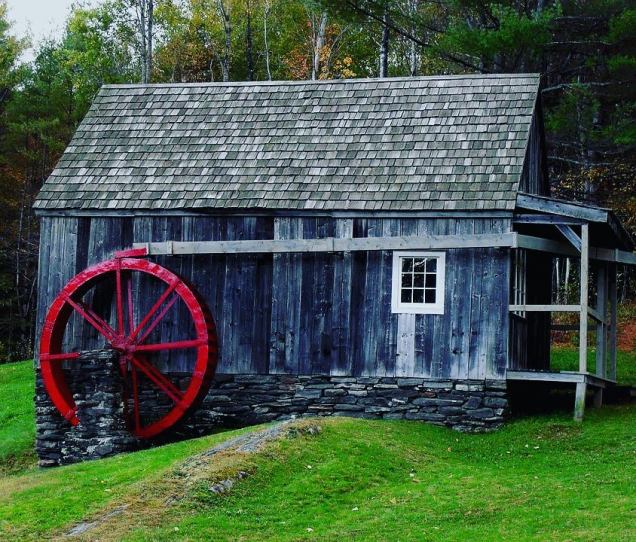
@signordal The Red Wheel
💙 Golden Age on 500px by Krénn Imre, Budakeszi,…

💙 Golden Age on 500px by Krénn Imre, Budakeszi, Hungary☀ Canon… http://ift.tt/1Xot1oT
An Architectural Halloween: 10 Boo-tiful Pumpkin “Interventions”

What do ghosts say when they see a great design? “Ghoul!” (Sorry, not sorry). 10 exceptional ArchDailyers showed their salt by designing these Halloween-themed gourds. Since all of you are our kin, we wanted to give you something that would pump you up for Halloween. -__-
See the fab-boo-lous winners below! The gif shown above is the masterful work of Andres Antolin!
Submitted by Nadia Abotaleb
© Nadia Abotaleb
Submitted by City Ink Design
Submitted by Samyukthaa Natarajan
© Samyukthaa Natarajan
Submitted by Arnaud Lignan
Submitted by Hannah Chow
© Hannah Chow
Submitted by Ana Fernández Álvarez
Submitted by Yvonne Chan
© Yvonne Chan
Submitted by Christine Espinosa
© Christine Espinosa
Submitted by Cassandra
 Sig Nordal