8 Ways To Set Up An Awesome Home Office

If you’re working from home, sweeten the deal even further by putting together the best home office setup you can devise. Here are 8 easy steps in setting up a home office you’d love to spend your working hours in.

1. Get the essentials

home-office-essentials

Setting up a home office starts with developing a list of absolute essentials. These are the things you’ll definitely, definitely need in order to get your home working space up and running.

Here’s what we reckon you’ll need to get you started:

  • Office chair
  • Computer or laptop
  • Telephone
  • Space for other work, if, say, you’re a designer
  • Storage
  • Wastepaper bin
  • Filing cabinets
  • Printer
  • Client meeting area (if applicable)

Anything to add? Share your essentials below.

2. Let the light in

Research gathered by Pottery Barn for their interactive home office productivity guide highlights the importance of natural and artificial light for a productive home working space.

For starters, your desk should be oriented to make the most of the available sunlight without it negatively affecting your work. The wrong angle can get in your eyes and keep you from being productive.

Artificial light should have the same intensity as daylight. This way, you can trim down on the number of artificial lights in the room. Light bulbs that are 65 watts are recommended for this setup.

If you are making use of an office lamp, make sure it doesn’t create glare on your computer screen. 

3. Divide your work and home lives

When you work from home, it can be difficult to keep your personal life separate from your professional one. Ensuring your working area is divided from the rest of your house is a great way to focus and get on with work.

Only use your home office for work and nothing else. Enter only at certain times and have days when you’re completely barred from using it. Doing so ensures the line between personal and professional does not become blurred.

4. Personalise your space

personalize-your-workspace

What a lot of people dislike about the modern office is its greyness, its corporateness, and its lack of identity. If you work from home, you have complete control over the look and feel of your space, so it’s entirely up to you what you do with it.

Personalising your space is a good idea. It means your home office doesn’t want for a bit of soul and can keep you inspired.

Motivational posters, pictures of friends and family, some plants – these are all examples of simple ways you can make your home office personal.

See Also: Turn Your Home Office Into A Productivity Zone

5. High-speed internet

A speedy, healthy internet connection is key to the smooth running of a home office. If your current connection is a little slow or unreliable, consider switching to a new provider or a more powerful line. A strong internet connection means you can stay in touch with clients easily, run multiple projects at once, and get things done at high speed.

6. A great office chair

This is definitely something you shouldn’t skimp on. If you can afford it, make sure you invest in a sound, sturdy and comfortable office chair. After all, you’ll be spending a lot of time sitting at your desk, so you need to feel as relaxed and comfortable as possible.

If you can, head to a showroom so you can try out a chair in the flesh. It’s much better than just buying one randomly online. Check out ergonomic manager or executive chairs while you’re at it.

7. A quality coffee machine

Okay, so this is something of a luxury…as you’ll probably know, a great-tasting, strong cup of coffee is one of the best sources of fuel for a productive day working from home. You can pick up a reasonably cheap (£40 – £50) coffee-maker and most supermarkets do fantastic, well-priced own brand coffee. Stick it in the corner of your room and get it bubbling as soon as you wake up.

8. A best-practice project management approach

If you’re freelancing, then work schedules, email chains, online tools and invoices will become part-and-parcel of your working day. For many freelancers, it’s the first time they’ll have to keep track of their work in such a way and probably the first time they’ve ever filed an invoice. Keeping on top of your administrative stuff is an absolute essential.

See Also: 10 Productivity Musts for Freelancers

Do you work from home? What are your tips for setting up a great home office? Let us know.

The post 8 Ways To Set Up An Awesome Home Office appeared first on Dumb Little Man.

http://ift.tt/2eCCaXG

House in Krostoszowice / RS+


© Tomasz Zakrzewski

© Tomasz Zakrzewski


© Tomasz Zakrzewski


© Tomasz Zakrzewski


© Tomasz Zakrzewski


© Tomasz Zakrzewski

  • Architects: RS+
  • Location: Krostoszowice, Poland
  • Architect In Charge: Robert Skitek, Jakub Zygmunt
  • Area: 305.0 sqm
  • Project Year: 2016
  • Photographs: Tomasz Zakrzewski

© Tomasz Zakrzewski

© Tomasz Zakrzewski

From the architect. Krostoszowice is a village in a southern part of Silesia (region in Poland). The Investor owns large parcel with a significant slope in the east. The building should to stand on the highest point of the parcel, close to the road, in the north- west corner.


© Tomasz Zakrzewski

© Tomasz Zakrzewski

The surrounding buildings are very diverse and chaotic. There are mainly houses of the 60’s and  70’s of the twentieth century.


Floor Plan Level 0

Floor Plan Level 0

The surrounding landscape  interested us more than unexciting development context. Hilly area and forest in the background has become a main point of reference. The building fits to existing topography, coincides with the landscape. House is open towards the most interesting views and separate from the nearest buildings.


© Tomasz Zakrzewski

© Tomasz Zakrzewski

From the street we can see single-storey building with garage and glass foyer between. This characteristic body of the buildings have a required by the local law sloping roofs, they are covered totally with slate. Concrete  fence wall marks platform with building, entrance area, driveway and wooden terrace suspended over the ground. 


© Tomasz Zakrzewski

© Tomasz Zakrzewski

Bedrooms are located downstairs. This part of the building is partially covered by ground and invisible from the street. Under the upper terrace, at the ground level is second, fully covered terrace. Exterior cantilevered stairs link both terraces.


© Tomasz Zakrzewski

© Tomasz Zakrzewski

In interiors, white surfaces of walls and slanted ceiling are complemented by glass, polished concrete and natural wood floors, wooden stairs and dark accessories.


Section

Section

On the top level there is open living room. Pantry, study room, toilet and kitchen were hidden in white cuboid. Above cuboid there is mezzanine with bookcase. Wooden stairs are a conspicuous part of the living room.


© Tomasz Zakrzewski

© Tomasz Zakrzewski

When we go downstairs we can walk out directly to lower terrace. On this floor there are 2 rooms for children, main bedroom with dressing room, toilet, technical rooms with laundry room and climbing gym. In addition, a storage accessible from the outside is located on the lower floor.


© Tomasz Zakrzewski

© Tomasz Zakrzewski

Product Description. We covered all main solids by natural slate (Rathscheck Schiefer). We wanted to create dark homogeneous solids and choosing a slate was perfect solution for covering roofs and walls by one lasting material, composing  really good with concrete and natural wood.

http://ift.tt/2eBvUni

Selected: Untitled by RichardBeresfordHarris

Morning mist on the meadows.

http://ift.tt/2eLPPfC

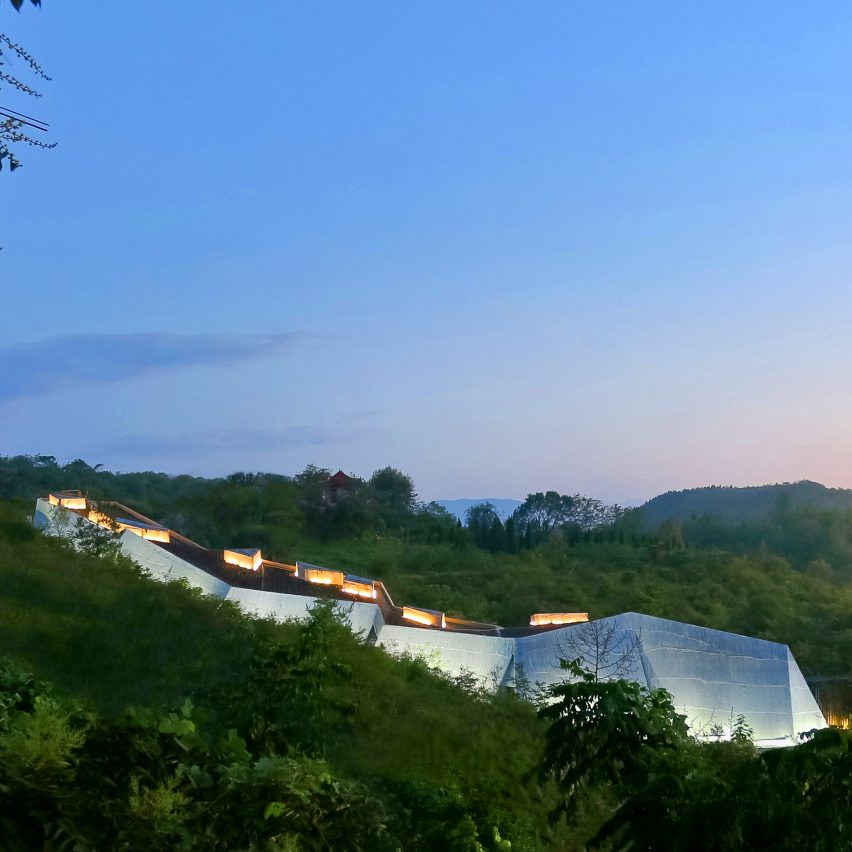
Dinosaur egg museum in China features bamboo-textured walls

dinosaur-egg-geological-museum-wuhan-hust-architecture-qinglong-mountain-china_dezeen_sq

Chimney-shaped skylights spotlight dinosaur eggs inside this museum with craggily textured concrete walls at China’s Qinglong Mountain Geopark.  Read more

http://ift.tt/2f46zlP

Las Vegas – Nevada – USA (by Sergey Galyonkin) 

Las Vegas – Nevada – USA (by Sergey Galyonkin

Heathrow Illustrations Envision the Future of Sustainable Airports

Alongside designer Paul Tinker and developer Esteban Almiron, UK-based illustrator Sam Chivers has created a series of animations visualizing the sustainable development of airports for a recent Guardian piece. The animations, which describe the topics of transport, alternative energy, noise reduction, airport terminal design, biodiversity, and fuel efficiency, capture the passage of time from morning to evening in Heathrow Airport in London.


Courtesy of Sam Chivers


Courtesy of Unknown


Courtesy of Unknown


Courtesy of Unknown

The article describes recent technological and design advancements in airports around the world that serve to reduce emissions, create healthier indoor environments, and overall support the wellbeing of communities near airports and under flight paths. 

Check out the full article and animated illustrations here.

http://ift.tt/2ejLznY

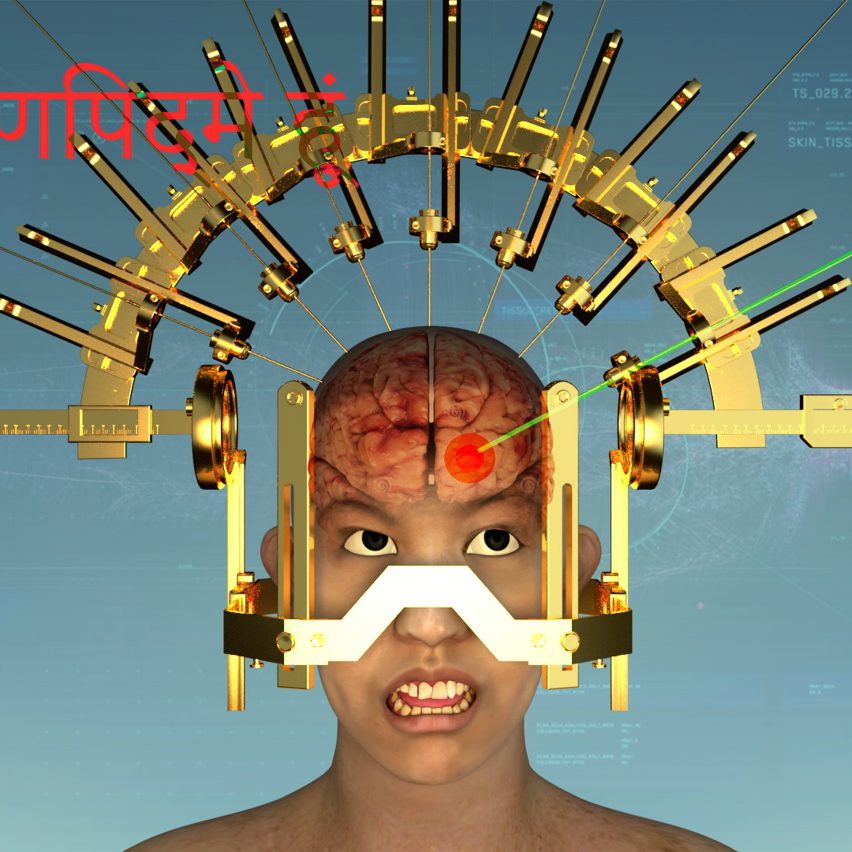
Seven shocking sights at the Istanbul Design Biennial 2016

Seven shocking sights at the Istanbul Design Biennial 2016

The evolution of the human body is one of the major topics of this year’s Istanbul Design Biennial, with exhibits ranging from a cyborg skeleton to a brain in a book. Dezeen editor Amy Frearson has selected seven of the most provocative examples. Read more

http://ift.tt/2dRVDFn

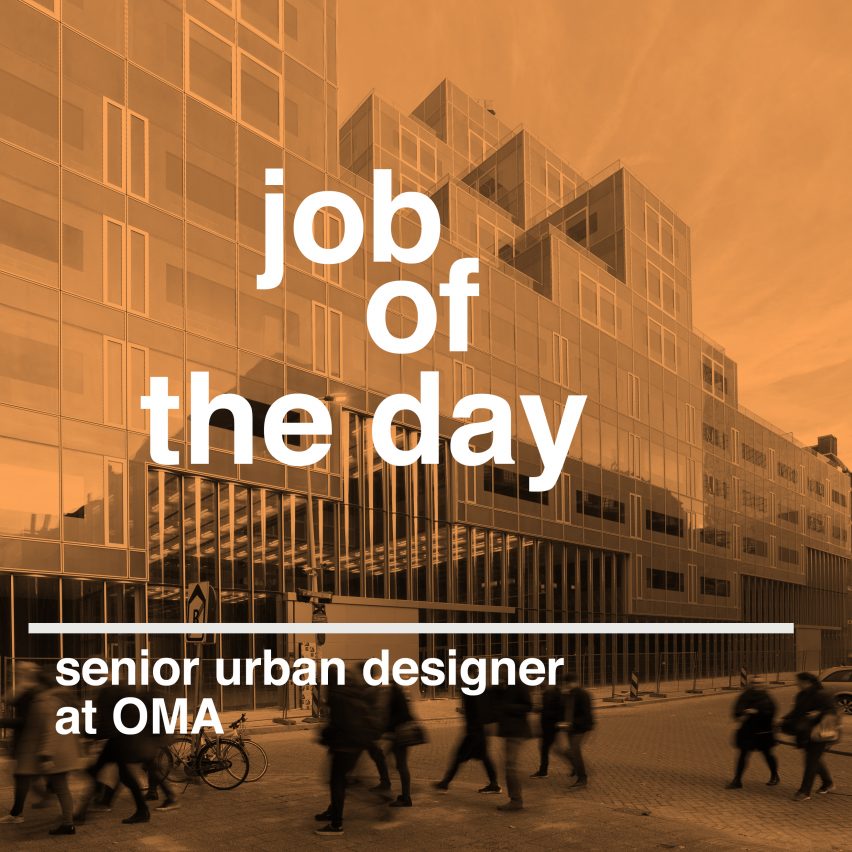
Job of the day: senior urban designer at OMA

Dezeen Jobs architecture and design recruitment

Our job of the day from Dezeen Jobs is for a French-speaking urban designer at OMA in Rotterdam, where the Dutch firm recently completed the pixellated steel and glass Timmerhuis. Read more stories on OMA or browse more architecture and design opportunities on Dezeen Jobs.

http://ift.tt/2eChZcb

💙 Adventure alert on 500px by Peter Pinnock, Durban,…

💙 Adventure alert on 500px by Peter Pinnock, Durban, South… http://ift.tt/1TMr01C

http://ift.tt/2dRXb26

CyArk Captures Culture and Preserves History in the Face of ISIS in Syria

This article was originally published in Redshift and is republished here with permission.

In 2001, the Taliban destroyed the Buddhas of Bamiyan in central Afghanistan using dynamite, anti-aircraft guns, and artillery. After weeks of incremental destruction, nothing of the statues remained.

That sad turn of events was the impetus for the founding of CyArk, a nonprofit that uses technology to ensure sites of rich cultural heritage remain available to future generations. Since 2003, they have used laser scanning, photography, photogrammetry, and 3D capture to record nearly 200 sites around the globe.


A laser scan of Al-Madrasa al-Jaqmaqiyah (currently serving as the Museum of Arabic Epigraphy) in Damascus, Syria. Courtesy DGAM/CyArk. Image via Redshift

A laser scan of Al-Madrasa al-Jaqmaqiyah (currently serving as the Museum of Arabic Epigraphy) in Damascus, Syria. Courtesy DGAM/CyArk. Image via Redshift

“With no real three-dimensional or engineering-type record of those structures in Afghanistan, they are just gone,” says Elizabeth Lee, managing director of CyArk. “So we started to go out and capture this information for monuments around the world, so that if anything happens to the physical monuments, we have that record available for future reconstruction efforts.”

Unfortunately, CyArk cannot just focus on capturing sites before the ravages of time, the environment, or natural events erase them from the landscape. Now groups like ISIS have put sites in Syria at the top of CyArk’s priority list, as they try to digitally preserve cultural landmarks that may not exist much longer.

“It certainly increases the urgency and adds a clarity of purpose,” Lee says. “We’ve seen a huge increase in intentional destruction. We were founded in response to a singular intentional destruction, but what we’ve seen over the last 18 months, in terms of specifically targeting these sites, really brings into focus what we’re trying to do and why it is so important to have this information captured.”

And it’s not just about the loss of the historical structures themselves. “That building or that piece of art is something that previous generations left behind as a way of communicating their experience and their worldviews, and when we lose that object, we lose that line of communication to people in the past,” Lee says. “That’s why I think the work that we’re doing right now, and mobilizing these teams in conflict areas, is more urgent than ever because we are losing [sites] at an increased rate.”


Reality-capture training at the Sursock Museum in Beirut, Lebanon. Courtesy CyArk/UNESCO. Image via Redshift

Reality-capture training at the Sursock Museum in Beirut, Lebanon. Courtesy CyArk/UNESCO. Image via Redshift

Capturing Sites Within Syria. Initially, CyArk trained Syrian teams in Beirut, Lebanon, to get them familiar with using the technology (including FARO scanners and Autodesk AutoCAD and Recap 360 Pro software) necessary to capture a site.

“It’s a safer region to work in,” says Ross Davison, field manager for CyArk. “It allows them to get better at the entire process and make it quicker, so that when we are going to higher-risk areas, places where you do see active conflict, they can be very efficient in the way they do go about the work.”

Following the training, the teams returned to Damascus, Syria, to start the work. The time it takes to document a site depends on its size and the resolution at which you capture it, with most sites ranging anywhere from one to three days, and larger sites up to two weeks. The upside of the technology is that sites in high-conflict areas can be documented almost without notice.


Reality-capture training at the Sursock Museum in Beirut, Lebanon. Courtesy CyArk/UNESCO. Image via Redshift

Reality-capture training at the Sursock Museum in Beirut, Lebanon. Courtesy CyArk/UNESCO. Image via Redshift

“You can send a really small task force, and the technology has come so far at this point that if you deploy two people—one with a camera, one with a scanner—you can get an entire site documented almost unnoticed in a couple days,” Davison says.


Geghard Monastery in Goght, Armenia. Courtesy CyArk/TUMO. Image via Redshift

Geghard Monastery in Goght, Armenia. Courtesy CyArk/TUMO. Image via Redshift

The risk level at these sites prevents CyArk from using nonhuman technology such as drones to capture the data, since it would draw too much attention to the work they are doing. “They’re loud, noticeable, and easy to track back to their source,” Davison says.


Reality-capture training at Geghard Monastery in Goght, Armenia. Courtesy CyArk/TUMO. Image via Redshift

Reality-capture training at Geghard Monastery in Goght, Armenia. Courtesy CyArk/TUMO. Image via Redshift

Racing Against Time. CyArk also spends a lot of time working with local culture-heritage professionals, architects, archaeologists, and surveyors—so they are not only capturing the site, but also empowering people who live in the region with the tools to preserve their history.

“A lot of times organizations will go abroad to work on a project, but once it’s done, all of the information and technology involved with it leaves the country,” Davison says. “If you don’t have the infrastructure or the people in place who actually know how to employ it, it’s not going be a sustainable program.”

As a nonprofit, the other thing CyArk needs to sustain is the financial means necessary to capture as many sites as possible.

“There is endless demand in terms of need to do this work,” Lee said. “The training that Ross did with 5 Syrians tripled into 15 Syrians in a couple of months, and they’re so hungry for this technology and willing to go into these zones that are heavily conflicted because the preservation of their culture and history is so important to them. So it is this race against time.”


Reality-capture training at Geghard Monastery in Goght, Armenia. Courtesy CyArk/TUMO. Image via Redshift

Reality-capture training at Geghard Monastery in Goght, Armenia. Courtesy CyArk/TUMO. Image via Redshift

A Moment of Awe. But even when time is precious, these antiquities and what they represent are sometimes too powerful not to stop and take it all in. One time, Davison was leading a training effort in Armenia, teaching a few dozen people to capture a monastery, when the gravity of his surroundings truly hit him.

“We were working on a monastery that was actually carved out of rock, but for the first hour, I was getting a group of high school kids in line and showing them all this stuff,” Davison says. “I was talking about exposures because the inside of the monastery is quite dark, and I was looking around, stopped for a moment and was like, ‘Oh my God, this is incredible.’ It took a hot second, and then I was like, ‘Oh yeah, exposures!’ You really do find yourself being shocked at how amazing these places are every time you go out.”


Reality-capture training at Geghard Monastery in Goght, Armenia. Courtesy CyArk/TUMO. Image via Redshift

Reality-capture training at Geghard Monastery in Goght, Armenia. Courtesy CyArk/TUMO. Image via Redshift

Lee says the feedback they received about their work, as well as the selection of potential target sites, tell the same story: “These sites hold meaning,” she says. “They’re really powerful symbols of culture and history, and for people who want to rewrite history, the elimination of some of these things is critical to their message. Having this record is so important because it’s a counter to that hate and that rewriting of the narrative.”


Reality-capture training at Geghard Monastery in Goght, Armenia. Courtesy CyArk/TUMO. Image via Redshift

Reality-capture training at Geghard Monastery in Goght, Armenia. Courtesy CyArk/TUMO. Image via Redshift

http://ift.tt/2dRShlK