With the aim of supporting the design work of our readers, the company UrbanPlay has shared with us a series of files in .DWG format for different models of children’s games, playgrounds, and equipment for public space. Files can be downloaded directly in this article and include 2D and 3D files.
Floating House is a residential project completed by Hyunjoon Yoo Architects in 2009. It is located in Gyeonggi, South Korea. Floating House by Hyunjoon Yoo Architects: “Site The given land has beautiful scenery of South Han-River from the north. Meanwhile, the site is also visually polluted by bunch of restaurants and motels lining the street, especially the decadent neon signs of those shops at night. Client The clients are a..
Bedford Gardens is a private home located in Notting Hill, London, England. It was designed by Nash Baker Architects in 2014. Bedford Gardens by Nash Baker Architects: “This property was one of 14 semi-detached houses dating from the early 19th Century. The properties were some of the earliest to be built on the street and historically had large gardens backing onto Campden Street to the North. Over time, mews houses..
Residencial III is a private home located in Pozuelo de Alarcón, Madrid, Spain. Completed in 2014, it was designed by Marisa Gonzalez LLanos. Photography courtesy of Marisa Gonzalez-Llanos
From the architect. Designed by Henning Larsen Architects and GPP Architects Danish School Building of the Year, Frederiksbjerg School, is the first school in Denmark to meet the demands of the Danish school reform of 2013. The law focuses on learning through movement and sensation as well as openness and community creation. Part of the reform is a demand of a minimum of 45 minutes of movement and activity throughout school hours.
Site Plan
The school is situated in the district of Frederiksbjerg in Aarhus city centre. It is already a gathering point for the children and youth of the local society. Inside the building offers a great variety in space, light and materiality, thus creating an adaptable and sentient learning environment with a focus on health and fellowship. Outside the school adapts to its historical surroundings by means of heights and materiality.
The school houses 900 students, a daycare facility and a youth club, and after school hours the premises can be used for evening classes, courses and sports arranged by local associations and societies. Large terraces and outdoor teaching facilities contribute to the area by bringing the teaching and school life into the cityscape. The outdoor facilities are open around the clock.
Frederiksberg School is organized around a center atrium where the building’s four clusters meet and join together. The clusters are built around a shared center-room encouraging various activities and/or quite studies. The 40 activity areas focus on learning through movement and play. These areas are specifically fitted to different age groups and their levels of understanding and motion. The study areas are small niches that create quiet space for individual study.
The school shares public playgrounds and outside areas with the surrounding houses and institutions. The playgrounds are supplemented by big terraces on each floor which work as both learning and playing areas. On the rooftop you find playing fields and areas with furniture where you can sit, relax and enjoy the view. Some of the terraces can in addition be used as outside workshops for the classes. All the terraces are open for the public outside of school opening hours.
Frederiksbjerg School was recently awarded Danish School Building of the Year 2016.
Ad. 1: The facades are made from reused brick of which a large part stem from historical buildings of the neighborhood. Some of the oldest bricks used to form the regional hospital of Aarhus, which was built in the 1880s. Others stem from the former Sct. Annagade School, which was built in 1953 and torn down in 2014 to make space for the new Frederiksbjerg School.
”It takes more for the bricklayers to work with reused brick because of the stone’s variety in shape and color. But the extra effort increases by far the value of the building. The façade appears warm and glowing unlike other new-built brick houses,” architect Margrete Grøn, Henning Larsen Architects explains.
Elevation
It is yet rather rare to build projects of such a great scale in reused brick in Denmark, and the construction at Frederiksbjerg did challenge the capacity of the manufacturer “Gamle Mursten” (meaning “Old Bricks”) in the process of cleaning the total of 400,000 bricks.
Ad. 3: The graphic design concept has been developed in line with the architectural intention. Graphic designers at Henning Larsen Architects have created the visual identity of the building with the keywords openness, kindness, motion, diversity, play, and learning as a common objective.
The typography, Deyinyl, is the initial key for the remaining parts of all graphics and signs, repeated both in- and outdoors.
The typeface exists in seven selections, with their own unique definition, creating a distinct and clear geometrical expression throughout the building.
By varying all seven typographic selections, the designers have created an expression which is both playful, dynamic and fluid. The colors correspond with the additional elements in the new building, where the color red acts as the primary color. The graphics also supports the main maps, maps of orientation, floorplans and glass markings, lockers and signs on meeting rooms and facades.
Quotes and inspirational words, adapted to the specific course and age level, are likewise implemented on classroom walls and glass. Here the graphics underline and clarify the spatial traits of the different rooms, while communicating academic useful information equal for students and teachers.
Ad. 4: The artistic decorations at Frederiksbjerg School is just as diverse as the school. Sculptures, paintings and artistic installations have been integrated in the building design and placed around the school.
Rosen Eken, the Danish artist who have created most of the art pieces at the school, explains her thoughts about her creations:
“The task was to create both big extensive creations and small almost invisible pieces. I especially loved the idea about creating pieces that you might not notice at first sight.”
She has created small goggle-boxes in the walls that you can look through and into a miniature parallel world. The miniature worlds show everyday situations, a birthday party and a motorcycle repair shop.
“I work with everyday objects. It has been important to me that the children can relate to the situations and objects that the pieces present,” Rosen Eken states.
Besides the goggle-boxes, Rosen Eken has created some big wall paintings and bronze sculptures, which pictures everyday furniture and elements. E.g. one of the sculptures are an abandoned school bag. The idea is that the art is hard to separate from the reality.
“Don’t be fooled by the calendar. There are only as many days in the year as you make use of. One man gets only a week’s value out of a year while another man gets a full year’s value out of a week.” Charles Richards
There are many important things in life.
Your family and friends. A hobby perhaps. Working out and staying healthy. Reading, learning and growing as a person.
But finding the time for what is most important in life is not always easy. It sometimes feels like there aren’t enough hours in the day.
But even if it may not feel like it, there are often ways to improve how you use your time. This week I’d like to share 6 of the best questions I have found for doing just that and for shaking yourself out of a rut.
1. What are the top 3 most important priorities in my life right now?
With a lack of focus on what is most important in your life it becomes easy to spend too much time and energy on aimless actions or work. On things that aren’t really that important but you do out of old habit or because of other unhelpful reasons.
To keep your attention in the right place it is essential to remind yourself every day of what is truly most important to you.
So ask yourself: what are the top 3 most important priorities in my life right now?
Write those three things down on two notes and put one in your workspace and the other one on your bedside table.
2. What are the 1-3 most common distractions that keep me from doing my work in a focused way?
Figure out how you can prevent those things from distracting you. It could be by:
Shutting the door to your office.
Putting your phone on silent mode.
Having notifications for your email or instant messaging program/app shut off.
3. What are the 1-3 most common distractions that keep me from having quality time with the people closest to me?
The answer could for instance be your smart phone, TV-shows you just watch out of routine and not because you like them very much or bringing your work back home.
Then figure out how you can reduce or eliminate those distractions.
4. What is one healthy limit I can start setting in my life this week?
One of the smarter ways to simplify your life and to free up time is to set limits.
Here are a few key areas that you can set powerful and healthy limits for:
Your daily input. Reduce the number of blogs, newsletters, magazines, book clubs, podcasts, TV-shows etc. you follow. Just keep the ones you are really getting something out of.
Email. Just check and process your email during one chunk of time once per day. Instead of checking it 10 times or more each day.
Social activities. Write down a list of the social activities you are involved in after school or work. Maybe you are involved in a club or an activity that it is not as fun or rewarding as it used to be. Maybe you want to rearrange your priorities a bit to focus on something else this winter and in 2017.
5. How can I minimize or eliminate one thing I may have missed?
What else can you eliminate or minimize besides the things listed above? Some meetings at work or in school? Redditing or some online forum you hang out on a lot?
Really question and reconsider your own daily and weekly habits regularly instead of moving along in the same old tracks just because it is what you usually do.
6. What is one piece of unnoticed or misused piece of free time during my regular day?
There is often quite a bit of open travel- or waiting-time during a year.
What will you use such time for as we approach the end of this year and go into 2017?
Perhaps you would like to read more while riding the train or while waiting for a meeting to start. I, for example, often listen to podcasts while I’m out and about or while waiting for a meeting.
Even if you only have 10-20 minutes of commuting time each day you still have a many, many hours in a year that you may want to, at least partly, use in a new way.
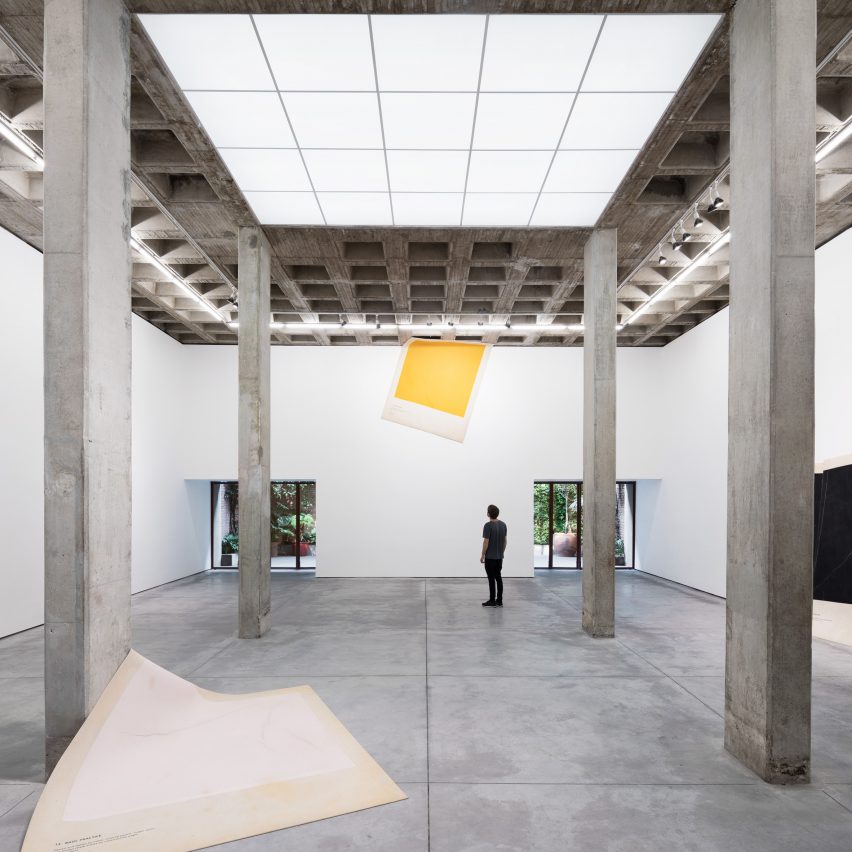
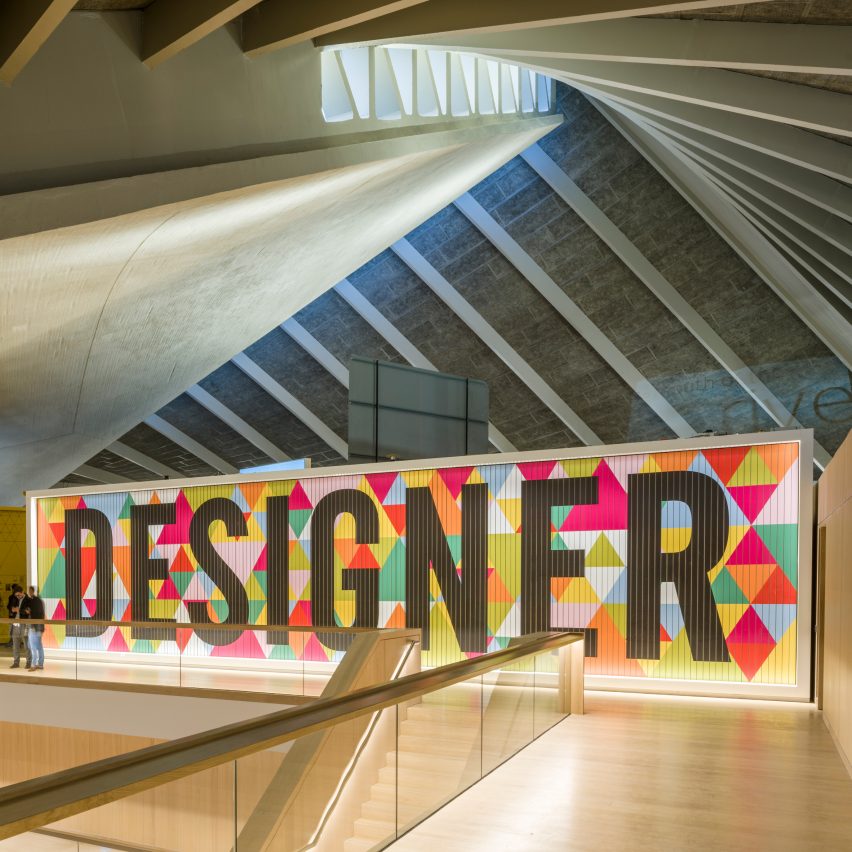
These photographs taken by Gareth Gardiner offer a glimpse of the interiors created by John Pawson for the new Design Museum ahead of its official opening next week. Read more