BIG Transitlager in Switzerland Photographed by Laurian Ghinitoiu


Basel Transitlager / BIG. Image © Laurian Ghinitoiu

Basel Transitlager / BIG. Image © Laurian Ghinitoiu

In this latest photoset, photographer Laurian Ghinitiou gives us a first look at BIG’s Transitlager, a new mixed-use arts complex located within and around an existing warehouse building in Basel, Switzerland. Now nearing completion, the renovation and expansion is characterized by its reaction to the existing geometries of the nearby industrial infrastructure, taking the form of two distinct buildings, one placed on top of the other. The complex will contain a series of multifunctional floors for art, commerce, working and living in becoming the center of the new arts district of Dreispitz.

Check out the full series, below.


Basel Transitlager / BIG. Image © Laurian Ghinitoiu


Basel Transitlager / BIG. Image © Laurian Ghinitoiu


Basel Transitlager / BIG. Image © Laurian Ghinitoiu


Basel Transitlager / BIG. Image © Laurian Ghinitoiu


Basel Transitlager / BIG. Image © Laurian Ghinitoiu

Basel Transitlager / BIG. Image © Laurian Ghinitoiu

Basel Transitlager / BIG. Image © Laurian Ghinitoiu

Basel Transitlager / BIG. Image © Laurian Ghinitoiu

Basel Transitlager / BIG. Image © Laurian Ghinitoiu

Basel Transitlager / BIG. Image © Laurian Ghinitoiu

Basel Transitlager / BIG. Image © Laurian Ghinitoiu

Basel Transitlager / BIG. Image © Laurian Ghinitoiu

Basel Transitlager / BIG. Image © Laurian Ghinitoiu

Basel Transitlager / BIG. Image © Laurian Ghinitoiu

Basel Transitlager / BIG. Image © Laurian Ghinitoiu

Basel Transitlager / BIG. Image © Laurian Ghinitoiu

Basel Transitlager / BIG. Image © Laurian Ghinitoiu

Basel Transitlager / BIG. Image © Laurian Ghinitoiu

Basel Transitlager / BIG. Image © Laurian Ghinitoiu

Basel Transitlager / BIG. Image © Laurian Ghinitoiu

Basel Transitlager / BIG. Image © Laurian Ghinitoiu

Basel Transitlager / BIG. Image © Laurian Ghinitoiu

Basel Transitlager / BIG. Image © Laurian Ghinitoiu

Basel Transitlager / BIG. Image © Laurian Ghinitoiu

Basel Transitlager / BIG. Image © Laurian Ghinitoiu

Basel Transitlager / BIG. Image © Laurian Ghinitoiu

Basel Transitlager / BIG. Image © Laurian Ghinitoiu

Basel Transitlager / BIG. Image © Laurian Ghinitoiu

Basel Transitlager / BIG. Image © Laurian Ghinitoiu

Basel Transitlager / BIG. Image © Laurian Ghinitoiu

Basel Transitlager / BIG. Image © Laurian Ghinitoiu

Basel Transitlager / BIG. Image © Laurian Ghinitoiu

Basel Transitlager / BIG. Image © Laurian Ghinitoiu

Basel Transitlager / BIG. Image © Laurian Ghinitoiu

Basel Transitlager / BIG. Image © Laurian Ghinitoiu

Basel Transitlager / BIG. Image © Laurian Ghinitoiu

Basel Transitlager / BIG. Image © Laurian Ghinitoiu

Basel Transitlager / BIG. Image © Laurian Ghinitoiu

Basel Transitlager / BIG. Image © Laurian Ghinitoiu

Basel Transitlager / BIG. Image © Laurian Ghinitoiu

Basel Transitlager / BIG. Image © Laurian Ghinitoiu

Basel Transitlager / BIG. Image © Laurian Ghinitoiu

Basel Transitlager / BIG. Image © Laurian Ghinitoiu

Basel Transitlager / BIG. Image © Laurian Ghinitoiu

Basel Transitlager / BIG. Image © Laurian Ghinitoiu

Basel Transitlager / BIG. Image © Laurian Ghinitoiu

Basel Transitlager / BIG. Image © Laurian Ghinitoiu

Basel Transitlager / BIG. Image © Laurian Ghinitoiu

Basel Transitlager / BIG. Image © Laurian Ghinitoiu

Basel Transitlager / BIG. Image © Laurian Ghinitoiu

Basel Transitlager / BIG. Image © Laurian Ghinitoiu

Basel Transitlager / BIG. Image © Laurian Ghinitoiu

Basel Transitlager / BIG. Image © Laurian Ghinitoiu

Basel Transitlager / BIG. Image © Laurian Ghinitoiu

Basel Transitlager / BIG. Image © Laurian Ghinitoiu

Basel Transitlager / BIG. Image © Laurian Ghinitoiu

Basel Transitlager / BIG. Image © Laurian Ghinitoiu

Basel Transitlager / BIG. Image © Laurian Ghinitoiu

Basel Transitlager / BIG. Image © Laurian Ghinitoiu

Basel Transitlager / BIG. Image © Laurian Ghinitoiu

Basel Transitlager / BIG. Image © Laurian Ghinitoiu

Basel Transitlager / BIG. Image © Laurian Ghinitoiu

Basel Transitlager / BIG. Image © Laurian Ghinitoiu

Basel Transitlager / BIG. Image © Laurian Ghinitoiu

See more of Laurian Ghinitiou’s work on ArchDaily here, and check out his website for more photography.

BIG transforms Transitlager in Switzerland
//cdn.embedly.com/widgets/platform.js
http://ift.tt/2fuszoM

How Being Lazy Can Be The Best Thing For You

The next time you’re feeling burned-out, overwhelmed or just ready to slack off, don’t be afraid to kiss it all goodbye.

Turns out, doing nothing is something intelligent people do all  the time.  So says a three-decades old research study from Florida Gulf Coast University.

Researchers determined in the experiment, via a series of tests ,whether a pool of candidates fell into either a cerebral or non-cerebral category.  They then monitored the activity of both groups of people for a full week.

lazyTheir findings, considered both robust and highly statistical, were published in The Journal of Health.  It showed the “thinking” group as far less active than the “non-thinking” group.  At the end of the experiment they concluded more intelligent people tend to be a little, well, lazier.

We’ve all heard the idiom ‘work smarter, not harder’.  This study proves factual evidence to back it up.  Others who have conducted similar studies liken this to the hamster wheel conundrum.

A hamster goes ‘round and ‘round, working harder and harder begetting the same results.  In this routine he gives himself, and his imagination, zero time to see the bigger picture.

Shut off your phone, shrug off the guilt.

The truth is, thinkers or non-thinkers, we all need step away from the hustle and bustle from time to time.  In fact, our bodies and minds crave it.

Exhausted, overworked, stressed out, just plain out of ideas?

These feelings are signaling our bodies; pleading with us to slow down.  Quite often, it’s only when the mental or physical strain becomes so great that we finally heed the warnings, and step away.

This study suggests that it is not only more beneficial for our productivity to steer clear of the breakdown, but literally the smarter choice.

The problem?  Sitting idle can be very, very difficult for most of us.

Most of us are firm believers in the philosophy that doing is equal to being productive, stepping away feels counterintuitive.  This idea has been cemented deeper in our minds, over the last 10 years, with smartphones barely allowing us a moment of downtime.

Are we accomplishing more by working harder?

If this study tells us something, the answer is no. Working all the time, in fact, can be in direct opposition to productivity.

We all have something called a Default Mode Network (DMN).  This mode is the state our brain goes into early in the morning, late at night or during the day, when you are focused on nothing in particular.

Essentially your DMN lights up when your activity slows down.

Researchers believe going into our DMN mode at intermittent times during the day increases our creativity, productivity, forms stronger memories and reenergizes our enthusiasm.

Our DMN also improves our sense of self. They found that after a moment of reprieve people actually feel more confident in their endeavors when they got back to them.

Let’s look at some of the reasons why the occasional day of doing nothing is not only good for your health, but good for your pursuits.

1. Napping for productivity

Resting, napping, or going out for a stroll in the middle of the day may seem odd to some.  Though, it is a method practiced by many great thinkers, including Albert Einstein, and Salvador Dali.

Dali practiced a method he called “slumber with key”.  Everyday, Dali would take a micro-nap while holding a key between his forefinger and thumb. Soon after falling asleep, the key would inevitably slip through his fingers to the floor, and he would wake up.  Thus accomplishing a micro-nap, which he relied upon to revitalize his mind.

2. Daydreaming for creativity

When you daydream, or even just let you mind wander, you brain enters into default mode as mentioned above.  This is the same mode you enter during meditation.  To ensure you get into this mode at least once a day you can schedule it through a morning meditation practice. When your mind is in this space you unconsciously form new connections, find solutions to problems, and new ideas come forth.

3. Laziness for ingenuity

Bill Gates was caught saying, ‘I choose a lazy person to do a hard job. Because a lazy person will find an easy way to do it.’

Laziness is okay as long as you don’t let it hinder your progress.  When used in a proactive, creative way, laziness can be a virtue.  It allows you to find new, novel ways to solve a problem as opposed to following traditional methods.

Take a breather, turn off the news, let go of the worry and zone out.  Tomorrow is a new day!

The post How Being Lazy Can Be The Best Thing For You appeared first on Change your thoughts.

http://ift.tt/2fCxNwn

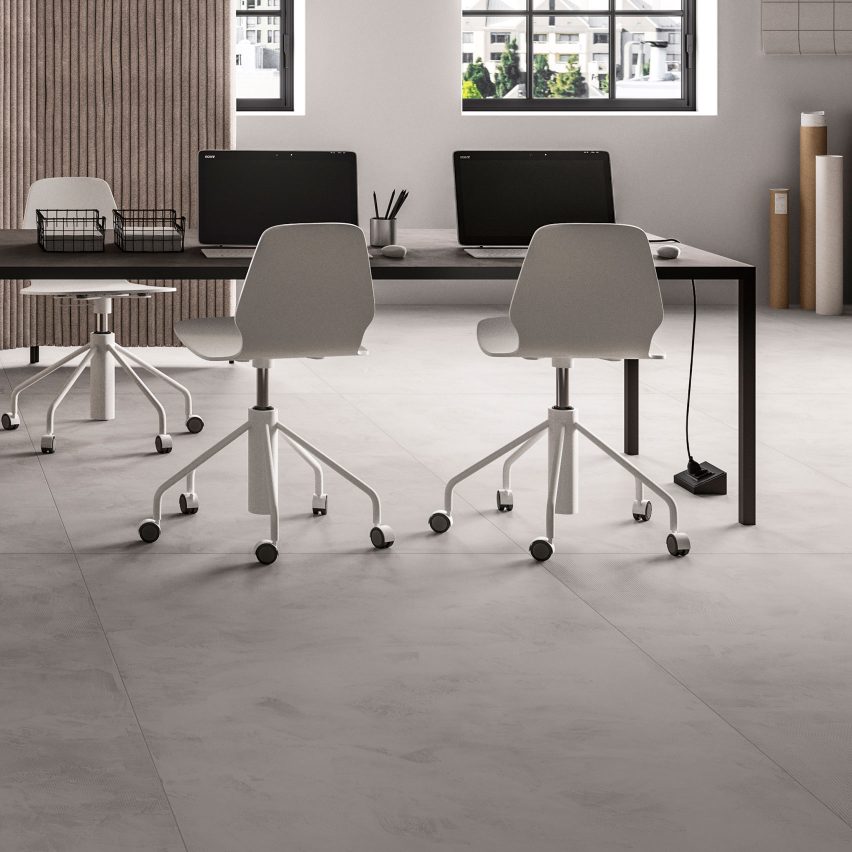
Ceramiche Refin launches Craft tiles influenced by hand-applied cement surfaces

Craft Cloud tiles by Ceramiche Refin

Dezeen promotion: the latest porcelain tile collection from Italian manufacturer Ceramiche Refin features patterns based on textured cement finishes. Read more

http://ift.tt/2fCos7F

Joolz Headquarters / Space Encounters


© Jordi Huisman

© Jordi Huisman


© Jordi Huisman


© Jordi Huisman


© Jordi Huisman


Courtesy of Space Encounters

  • Architects: Space Encounters
  • Location: Amsterdam-Noord, Amsterdam, The Netherlands
  • Team: Joost Baks, Gijs Baks, Remi Versteeg, Stijn de Weerd, Bram van der Heuvel, Ines van Sandick, Lars Goossens, Naomi Cheung San, Carlos Callejo, Vincent van Leeuwen
  • Area: 1600.0 sqm
  • Project Year: 2016
  • Photographs: Jordi Huisman , Courtesy of Space Encounters, Charlotte Odijk
  • Stuctural Engineer: Van Rossum
  • Climate Design: Huisman & van Muijen, Den Bosch
  • Contractor: Barten
  • Interior Fit Out: Roord Binnenbouw
  • Greenery: GrownDownTown
  • Projectmanagement: New Cheese
  • Furniture: Lensvelt

Courtesy of Space Encounters

Courtesy of Space Encounters

From the architect. Space Encounters won the pitch to design and construct the new Joolz headquarters in a former machine factory building in Amsterdam-Noord. The designer and manufacturer of ergonomic pushchairs is a fast-growing Dutch company from Amsterdam which aims to do things differently. Joolz has a strong ideological agenda when it comes to responsible entrepreneurship. Key to the new building should be their core value: positive design.


© Jordi Huisman

© Jordi Huisman

Ground Floor

Ground Floor

© Jordi Huisman

© Jordi Huisman

The new office measures 1.600 m2 and is located in the developmental area of Amsterdam-Noord and consists of a spacious industrial hall and a generic office building. It’s obvious where the quality and character resides, but unfortunately, the office blocks the hall from view from passersby. The first step to nullify this disbalance in quality is taken by removing all the walls on the ground floor, making the hall visible from the street. Subsequently large openings are made in the office buildings facade, further removing all associations of mediocrity.


Section

Section

 The new glazing is placed under an angle to -in line with the brands beliefs – improve transparency. But the main intervention are three lavish gardens filled with trees, plants, birds and fish. Extruded from three of the existing roof lights, they echo the scale and logic of what was already there. Next to express the Joolz ideology by providing a pleasant backdrop for the daily routines, these large glazed gardens also improve the internal climate and provide employees with some more exotic choices to pick as their work location for the day.


© Charlotte Odijk

© Charlotte Odijk

http://ift.tt/2fUrLtZ

Selected: Paths by giuliamonacolli

Analogue double exposure

http://ift.tt/2fjbKxI

Selected: Stuck In The Past by James-Cunningham

Selected: Breakfast in Milan, spring 2016. by samanthatirabasso

Selected: Untitled by MikelSajerasPerezMoreno