From the architect. The aim of this project was to redesign and reconstruct the envelope of a dated home in Halifax’s West End. Over the decades this residence was the subject of a number of poorly executed renovations and as a result our team aimed to strip the layers of vinyl and wood cladding back to the original shiplap sheathing and rebuild the exterior of the home with the intention of creating a project that was sustainable in both design and construction practices. Using only the highest quality products, the envelope of this house was rebuilt with wood as the number one material choice. The main house volume was clad in Maibec’s Rabbited Bevel siding with the EM Plus installation system and the front and rear accent volumes were clad in locally sourced rough sawn Hemlock. The final result is a strikingly contemporary residence with a sustainable material palette that will certainly stand the test of time.
Product Description. – VaproShield- Reveal Shield IT Integrated Tape – A UV stable, black mechanically attached, water resistive vapor permeable air barrier membrane with integrated tape. This product enabled us to achieve the open joint cladding with1x2 rough sawn hemlock on the front and rear volumes of this project.
One of the true tragedies of the architecture profession is that it instills in you expensive taste, but doesn’t give you the salary to acquire all those fine goods. The holiday season is the peak of this conundrum – how do you find the perfect gift for someone that lives up to your own lofty standards when buying a plane ticket home to see your family is already putting you in the red? One thing architects always seem to manage, however, is justifying that a cool new gadget or designed object isn’t just something we want, but something we need.
Looks like Santa’s gonna have to do double duty for the rest of the family this year. That’s alright, as the prime developer of the North Pole, he’s probably got some extra cash to throw around.
To attract more visitors to Lanalhue Lake, in western Chile, tourism entrepreneur Pedro Durán commissioned architect Susana Herrera and her team FACTORIA to create a symbol for the region. In return, she designed a catamaran that rises from the water like a cluster of cattail leaves.
“We wanted this Artisanal foliage to emerge from the very nature of the lake, from its marsh grasses, from the wild nature of its shoreline, like woodwater creature coming in and out the natural fog, always present in the mystical legends of the lake”, she says.
She challenged a team of PolyteSolet and more than 15 local artisans to build the boat, by integrating nature, technology and sustainability; the result is the 10-by-4.5-metre Arca de Quelén, a catamaran that can carry up to 40 passengers plus crew. Crafted from laminated bay laurel and cypress, and equipped with a bar and a boutique that sells local products and handicrafts, the vessel has already grown into a source of local pride. And while it navigates a far-flung lake, it aims to attract travellers from overseas to experience its singular design.
We needed to give connectivity between the various touristic entrepreneurs of the lake, and at the same time deliver a memorable and unique experience. We wanted the ark to move almost in a secretive and smooth way, to alter as little as possible the fauna surround, so the double-hulled catamaran gave the stability and safety we needed.
Just as the Mapuche ancestors built their canoe like Wampos from a carved log, this vessel had to be built on wood and made tribute to those that inhabit the lakes way before us.
This project, must incorporate additional parameters beyond those for architecture, and that was very attractive design wise. We had to get familiar with aspects of computer lofting, 3D modelling, hydrostatic calculations, and creation of boat layouts. In terms of design process, it approaches both, computer-aided design and the craft of woodworking.
Resilient strength, permanent watertightness, and graceful marsh grasses lines are part of the design theme. The structural ribs highlight the verticality of the ship, dematerializing itself as they touch the sky on the second ledge. In addition, they give an integrated image to the two levels of the boat. The first level closed by a skin of curved polycarbonate sliding windows that allows a 360 panoramic view of the surroundings during winter and another completely open to the landscape on the second level. This contributes to breaking the tourist seasonality. The intentions is to think of this vessel as highly organic expressions of nature, architecture and design reflecting the specificity of this lake by hand crafted means, including natural materials, software systems and laminated wood methods of fabrication.
We combined traditional boatbuilding methods with cold-moulded wood construction. The technique involves laminating together layers of wood veneers and wood sticks to create a hull that is watertight, extremely strong, and lightweight. We embraced wood and woodworking techniques with an emphasis on hand tool usage as well, bringing an experience of close contact with wood, enabling us to get to know and work with its grain structure and complex joinery.
Pei Partnership Architects, in collaboration with Guangzhou HSArchitects, has been selected as the winner of an international design competition for the Nanhai Cultural Center in the Nanhai District of Foshan, China. The winning design seeks to create a “New Civic Plaza” connecting a variety of cultural program elements through a balance of structure and void.
Courtesy of Pei Partnership Architects
To be located on a 400 meter long, 150 meter wide lot facing the Qiandeng Lake Park, the 130,000 square meter (1,400,000 square foot) complex will contain a library, arts and science exhibition spaces, sports facilities, and performance halls, among other cultural amenities. Bound by heavily trafficked roads, subways and bus station transit hubs, the design challenge was to go beyond architectural building design into organizing of the greater urban fabric.
Courtesy of Pei Partnership Architects
Courtesy of Pei Partnership Architects
This is achieved by a creating a balance of structure and void within the cultural complex, a philosophy that is inherent to the Chinese concept of space and cultivation of culture
“The concept of space in the Chinese language describes that the open void is no less important than the physical being. Similarly, Chinese calligraphy emphasizes a balanced void and stroke, sometimes even a deliberate void that complements the stroke to enhance its existence,” explain the architects.
“The space which enables the people to gather and exchange ideas freely is the key element of the formation of culture. Most importantly, it shall be an open assembly space without predefined programs.”
Courtesy of Pei Partnership Architects
Courtesy of Pei Partnership Architects
“Based on the perception of cultural formation and the dialogue with the contextual urban fabric, we conclude that the central space of Nanhai Cultural Center should be a “void” that provides a welcoming gesture to the public at all times: a 24-7 opened yet sheltered “New Civic Plaza”. Thus, the most essential core area of the cultural center is dedicated to the open public and it shall be a sincere architectural response for the community.”
Courtesy of Pei Partnership Architects
Courtesy of Pei Partnership Architects
The “New Civic Plaza” will be pervasive throughout the complex, organized around a “decentralized” unit typology inspired by vernacular architecture that allows southeastern wind to pass through each unit and offers shaded areas to protect visitors from the blazing sun.
“Capturing the mountain, the river, and the cloud of Guangzhou Lingnan region along with the imprint of local traditional dwellings, we try to elevate the poetic grace in the project for Nanhai through implementation of the metaphysical instead of the physical form,” the architects explain.
Courtesy of Pei Partnership Architects
Courtesy of Pei Partnership Architects
“The historical heritage is carefully interpreted and preserved in the New Nanhai Cultural Center for generations to come.”
From the architect. Located at the rear of brazilian actor Eduardo Okamoto’s home, the building houses the theater producer’s office of SIM!Cultura as well as the owner’s studio.
The working space is inside a masonry white box which also contains a guest room / dressing room on the ground floor and an office on the upper floor.
This white masonry box is located inside a warehouse which has hinged doors at the front and rear constructed of aluminum overlaid with alveolar polycarbonate sheet.
In addition to serving as closures and providing both illumination and ventilation as needed, these doors also can be opened and closed as part of a theatrical performance.
In the actor’s own words expressing his appreciation to the architect:
“… And, most importantly, beyond its beauty I feel the space will save me years in theatrical research. The architecture, condensed as it is to its essential core opens new scenic perspectives and truly stirs my emotions. Many times I look at these studio shapes and lose myself in meditation and the simplicity of the architectural lines calm me. Soon I hope to persuade the architect to design sceneries for my stage plays.”
“Greeted with hostility and derided as a Modernist affront when it was first proposed as the main entrance to Paris’ Musée du Louvre, the project was born of President François Mitterrand’s quest to modernize the Louvre in the early 1980s,” commented the AIA. “Pei’s pyramid thrust the 800-year-old Palais complex into the modern era while simultaneously making the museum more accessible to larger crowds. To execute the project, Pei wove together an unprecedented amount of cultural sensitivity, political acumen, innovation, and preservation skill.”
This year’s jury for the award included: Mark Reddington, FAIA (Chair), LMN Architects; Gregory P. Baker, AIA, HNTB Architecture; David Cordaro, AIAS Representative; Leslie K. Elkins, FAIA, Leslie K. Elkins Architect; Timothy J. Johnson, AIA, NBBJ; William Q. Sabatini, FAIA, Dekker/Perich/Sabatini; Adrian D. Smith, FAIA, Adrian Smith + Gordon Gill Architecture; Beatrice Spolidoro, Assoc. AIA, Rothschild Doyno Collaborative and Marilyn Terranova, PhD, Interim Superintendent, Pocantico Hills CSD.
The new police station is located on the outskirts of the neighborhood in a zone reserved for council buildings. The proposal is placed in a pre-existing grove of magnificent beech trees that determine the main decisions for the project. The main building mass is concentrated at the north end of the site, in the unoccupied area, while the car park is organized around the grove. The remainder of the site forms a green cushion that separates the building from the road becoming a transition space for the visitors.
Site Plan
The building
The building is separated from the street by no more than a wooded garden. There are no railings to bar the public. The police should be seen to be accessible and friendly. A compact, horizontal, abstract and introverted volume is proposed due to the requirements of high-security, use and flexibility of the program. The public entrance is formed by raising the head at one of the ends of the building forming a large access porch. The staff entrance is placed at the opposite end of the main facade.
Once inside everything changes. A system of double height spaces and patios organize the private zones and flood the interior with light. The color white becomes the main player. Its texture changes to differentiate the different walls: textured concrete for the exterior, polished stone on the floor, white brick and wood for the walls, perfect white for the ceiling…
The lightness of the interior is also reflected in the organization of the building. The program is ordered around strict hierarchical and functional criteria.
A longitudinal spine-like scheme ordered around the patios orders the program in plan and establishes a clear transition between the public and the private.
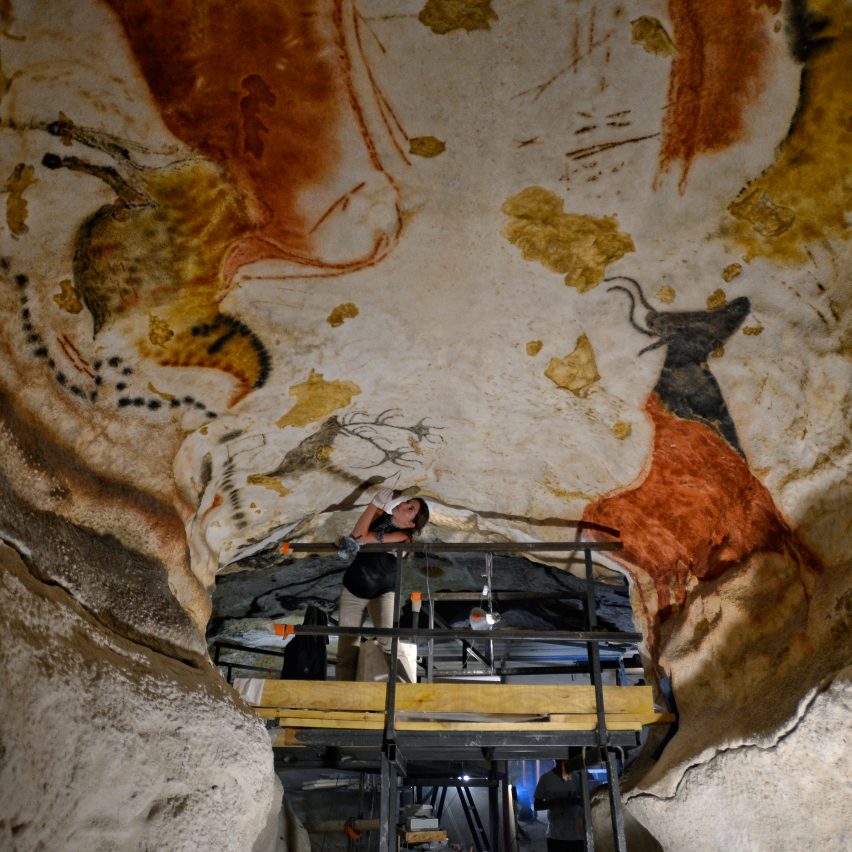
A major new building by architecture firm Snøhetta has opened in the south of France, framing a huge replica of one of the world’s most important examples of prehistoric cave art. Read more
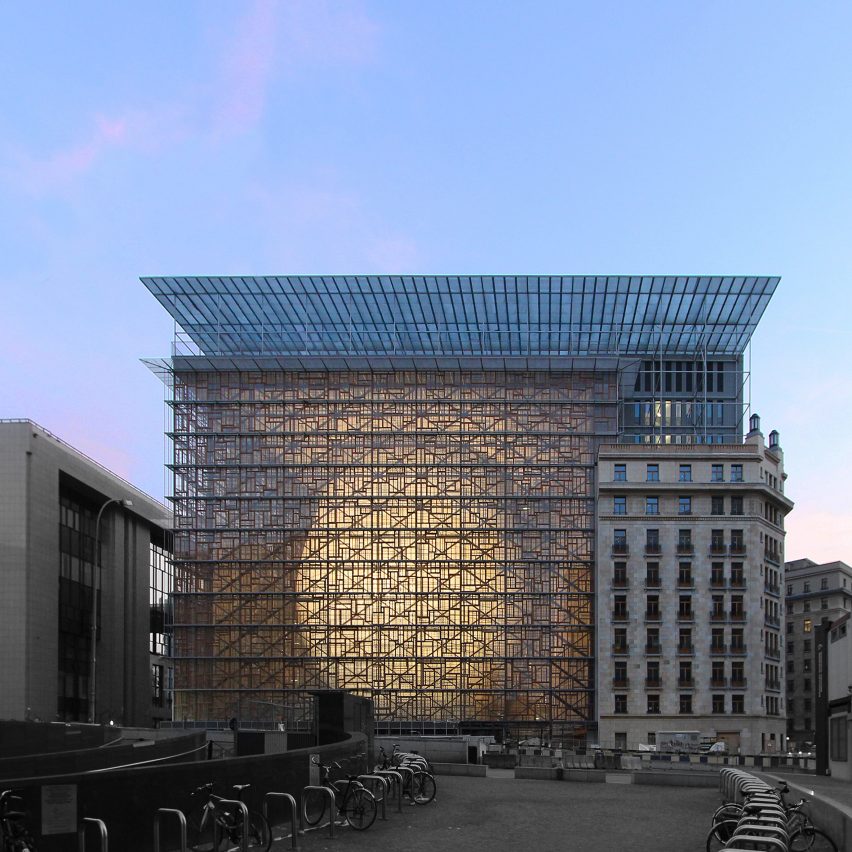
The European Union is moving into a new headquarters in Brussels, which features a huge glass atrium enclosing a bulging, lantern-like structure. Read more


 Sig Nordal