Meadow House / Malcolm Davis Architecture


© Joe Fletcher

© Joe Fletcher


© Joe Fletcher


© Joe Fletcher


© Joe Fletcher


© Joe Fletcher

  • Landscape Architect: Lutsko Associates
  • Contractor: Phil Simon, Simon Construction.

© Joe Fletcher

© Joe Fletcher

From the architect. A well-read, well-traveled couple commissioned this house as a counterpoint to their small apartment in a San Francisco high rise. Their house was to hold their books and collection of artifacts from around the world.  The program called for “his and hers” offices at opposite ends of the house, encouraging focus but allowing for interaction around the central kitchen.  They wanted a place to read and write in the reflective and inspiring coastal setting.


© Joe Fletcher

© Joe Fletcher

Sited on a highly exposed ocean meadow lot, the challenge was to provide privacy and sheltered outdoor space while maximizing the sense of openness and capturing the southerly views.  The sheltered courtyard separates the main living spaces from the two-story volume of more private uses. The massing of the two simple sheds creates a focal point while blocking the coastal wind and views from the house of the immediate neighbor. A connector joins the volumes with small portal windows at the driveway in contrast to the all glass exposure at the garden and blocks the coastal winds while allowing one to enjoy private ocean views.


© Joe Fletcher

© Joe Fletcher

Floor Plan

Floor Plan

© Joe Fletcher

© Joe Fletcher

The plan is open and informal with the kitchen, dining room, and living room in one space.  The interiors are warm and calm with generous windows framing views of the ocean and the forested ridge.   The material palette is drawn from these views.  The polished concrete floors are sown with local beach sand. The fir used throughout was locally harvested.  Indoor and outdoor connections are emphasized by the continuous use of stone from the front walk through the house and out to the central courtyard. Being in the main living space is to be “in the meadow” able to observe the birds and native plants close at hand.

http://ift.tt/2haXPYv

This Cement Generates Light


Courtesy of Sinembargo.com

Courtesy of Sinembargo.com

Over the past ten years the development of intelligent construction models, closely tied to energy efficiency, has introduced new materials that have one or more properties modified, in a controlled and partial way, by external stimuli such as radiation, temperature, pH, humidity, wind, and other environmental factors. 

As a response to new construction models, Dr. José Carlos Rubio Ávalos of the UMSNH of Morelia, has developed a cement with the capacity to absorb and irradiate light energy, in order to provide greater functionality and versatility to concrete in regards to energy efficiency. 

The new smart material developed by Rubio Ávalos was released on October 20, 2015, in an official press release by the Agencia Informativa Conacyt. The researcher claimed that the applications are very broad, and those which stand out most are for the architectural market: facades, swimming pools, bathrooms, kitchens, parking lots, etc. It would also be useful in road safety and road signs, in the energy sector, such as oil platforms, and anywhere you want to illuminate or mark spaces that don’t have access to electricity since it doesn’t require an electrical distribution system and is recharged only with light. The durability of light-emitting cement is estimated to be greater than 100 years thanks to its inorganic nature, and its material components are easily recyclable. 


Courtesy of Cybersis.com

Courtesy of Cybersis.com

According to the same statement, the essential feature of this new material is obtained by a process of polycondensation of raw materials (silica, river sand, industrial waste, alkali, and water). This process, the researcher said, is performed at room temperature and doesn’t require high energy consumption. The pollution produced in manufacturing is low compared to other types of cement such as Portland or synthetic plastics. 

We want light to penetrate the material up to a certain level. In the case of conventional cement, Portland, doesn’t have that capability because when the light reaches its surface it can’t penetrate it,  Ávalos explained.


Courtesy of El Excelsior

Courtesy of El Excelsior

Charging the material using natural or artificial light, it hopes to offer new light and thermal functions to the most used construction element in the world in order to reduce the energy consumption generated by current light and thermal systems. 

In addition to its distribution in Mexico, it is expected that investors from Chile, Spain, Argentina and Brazil will commercialize the material for its use in roads and other urban spaces in 2016.

http://ift.tt/2h7zKl9

Splashpoint / WilkinsonEyre


© Julian Abrams

© Julian Abrams


© Julian Abrams


© Julian Abrams


© Julian Abrams


© Julian Abrams

  • Client: Worthing Borough Council
  • Architect: WilkinsonEyre
  • Engineer: AECOM

© Julian Abrams

© Julian Abrams

WilkinsonEyre was appointed to design this new swimming pool for Worthing Borough Council following a RIBA Design Competition. The new pool complex includes a six lane, 25 metre pool; a combined learner/diving pool; indoor leisure pools with rapids, flumes and outdoor waters; a health and fitness centre; café; crèche and flexible space for other activities.


© Julian Abrams

© Julian Abrams

Section

Section

© Julian Abrams

© Julian Abrams

This new complex, located adjacent to the existing Aquarena and close to the town centre, is an exciting development on a unique seafront site. The design maximises the potential of the site with ‘ribbons’ of accommodation flowing from north to south to emphasise the connection between land and sea. Each pool has its own terrace, opening up the façade to animate the beachfront elevation and enliven this prominent location in line with the Council’s aspirations for an Active Beach Zone.


© Julian Abrams

© Julian Abrams

http://ift.tt/2h0f54F

Monocle 24 Explores Architectural White Elephants

http://ift.tt/2gZSNQM

Cities across the world are full of white elephants – something which ArchDaily has recently explored. In the latest episode of Section DMonocle 24’s weekly review of design, architecture and craft, the team examine similar cases from the unfinished Palestinian Parliament to redundant projects in Belgrade. This edition also looks at the RIBA’s new International Prize, which was awarded this year to Grafton Architects for their University of Engineering and Technology building in Lima.


Courtesy of Monocle 24

Courtesy of Monocle 24

Unfinished Palestinian Parliament Building. Image Courtesy of Monocle 24

Unfinished Palestinian Parliament Building. Image Courtesy of Monocle 24

Palestinian Parliament Building

Twenty years ago, with the Israeli-Palestinian peace talks in full swing, the Palestinians began constructing their first parliament building. But when the peace process fell by the wayside, violence swept the region and the half-finished parliament became an afterthought. Monocle contributor Mary Pelletier went to the East Jerusalem neighbourhood of Abu Dis to see why this sandy-coloured monolith is still stuck in limbo.


Santiago Calatrava's Constitution Bridge in Venice. Image Courtesy of Monocle 24

Santiago Calatrava's Constitution Bridge in Venice. Image Courtesy of Monocle 24

Belgrade

Belgrade used to be the capital of Yugoslavia. Now it’s the capital city of a considerably diminished Serbia. And that’s left it with all sorts of redundant buildings – everything from banks to army barracks – all designed to serve a much larger country. Campaigners say these places could be repurposed so they’ve called on experts from other European countries with experience of turning white elephants into something more useful.

http://ift.tt/2howZLu

Loft MdP / FFWD Arquitectes


Courtesy of FFWD Arquitectes


© David Benito Cortázar


© David Benito Cortázar


© David Benito Cortázar

  • Architects: FFWD Arquitectes
  • Location: Barcelona, Spain
  • Architects In Charge: Laia Guardiola, David Benito
  • Area: 122.0 m2
  • Project Year: 2016
  • Photographs: David Benito Cortázar, Cortesía de FFWD Arquitectes

© David Benito Cortázar

© David Benito Cortázar

When dealing with the refurbishment of this old carpenter’s workshop placed at Barcelona’s Poble Sec neighbourhood, the main goal was to set up this space for inhabitation while the main constructive components were mantained. They gave charm and singularity to the space.


© David Benito Cortázar

© David Benito Cortázar

Floor Plan

Floor Plan

© David Benito Cortázar

© David Benito Cortázar

These elements were poorly conserved. Brick and stone walls were hidden under thick linings of gypsum and mortar, as well as the ceiling surface was. Wodden beams in the ceiling were vastly damaged by termites at points, and it could affect the whole building stability.


© David Benito Cortázar

© David Benito Cortázar

However, the property had multiple light openings. The existance of an inner patio allowed us to use translucent glass in the street windows to keep the house privacy. The main spaces of the house will be visually connected with the courtyard which will be their focus point.


© David Benito Cortázar

© David Benito Cortázar

The existing valuable components which we wanted to restore formed the upper shell of the project: walls and roof. Owing to that the floor would be the new constructed element in charge of the space configuration. It becomes a magma that fills the whole base of the space. It creates open areas that are organized with the levels and objects generated.


© David Benito Cortázar

© David Benito Cortázar

First of all, it solves the conflict produced by the two entrances at different heights. It also gives a solution for the relation between the main level and the patio level which is depressed by 45cm.

In second place, some of the fixed furniture of the house is raised from the floor. The living-room sofa, the kitchen tables and some of the bathroom sinks are brick-made, and covered with a concrete lining as the floor is.


Section

Section

In some of the main areas generated, space is organized with the use of closed boxes. They contain the more private uses of the house, such as bathrooms and dressing rooms. With its positioning, bedroom spaces are also generated, remaining separated from the daytime areas of the house.

The layout singularity arises from the owner requirements. He wanted to have a small independent apartment for the frequent visitors he will have during the year. At the same time, this space will be used as his studio while no guests are in the house. That is the reason why house is conceived with two separated spaces that can be used independently if wanted.

http://ift.tt/2gfmMFd

Dezeen is officially the world’s most popular online design magazine

Dezeen relaunch 2016

Dezeen is now the most popular online design magazine in the world, according to statistics from web data firm Alexa. Read more

http://ift.tt/2gee9pf

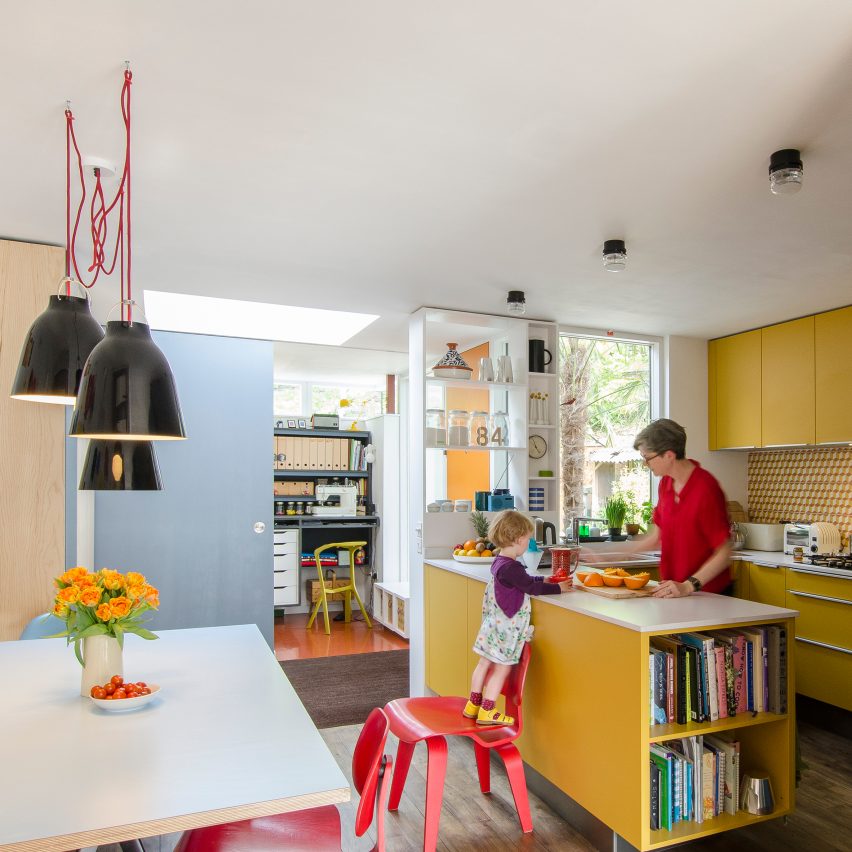
Former London council home remodelled to create bright and open living space

Delawyk Modular House by R2 Studio

R2 Studio has renovated a 1960s home on a London council estate, creating a playful interior for a family with two young children. Read more

http://ift.tt/2geXneT

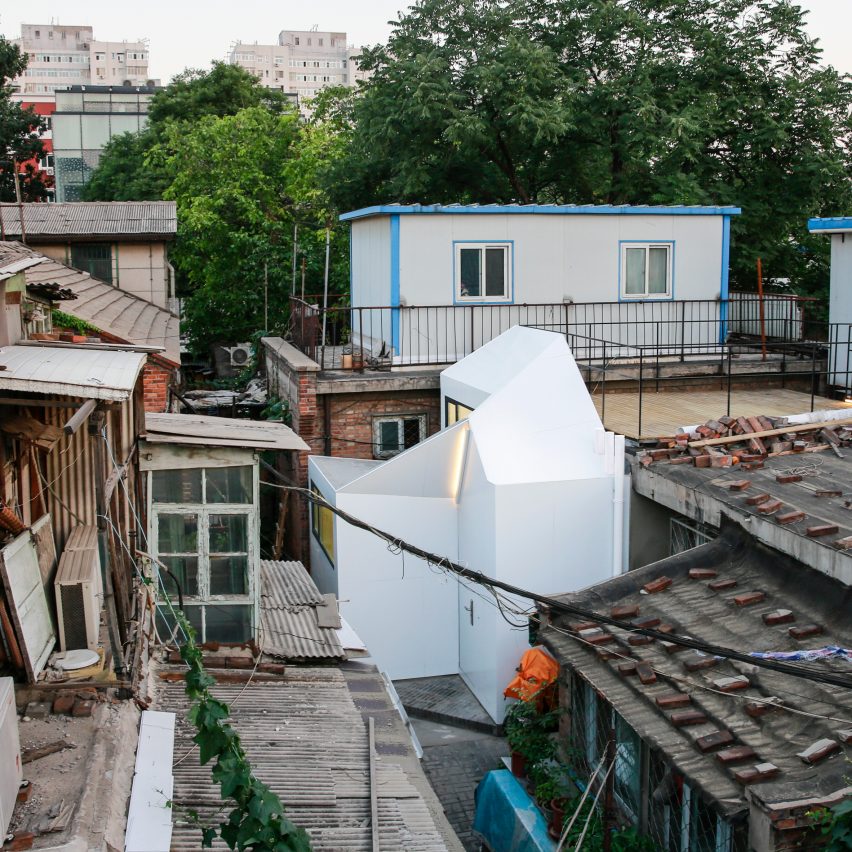
People’s Architecture Office uses prefabricated panels to update Beijing hutong house

Mrs Fan's Plugin House by People's Architecture Office

People’s Architecture Office has overhauled a rundown home in one of Beijing‘s historic hutong neighbourhoods, using prefabricated panels to create a contemporary and light-filled residence. Read more

http://ift.tt/2gEQ4Jn

Job of the day: senior exhibition designer at the V&A

jotd-2634-featured

Our job of the day from Dezeen Jobs is for a senior exhibition designer at the V&A museum, which this year staged the first retrospective exhibition of pioneering engineer Ove Arup (pictured). See more stories about the V&A, or browse more architecture and design opportunities on Dezeen Jobs.

http://ift.tt/2h9GJdQ

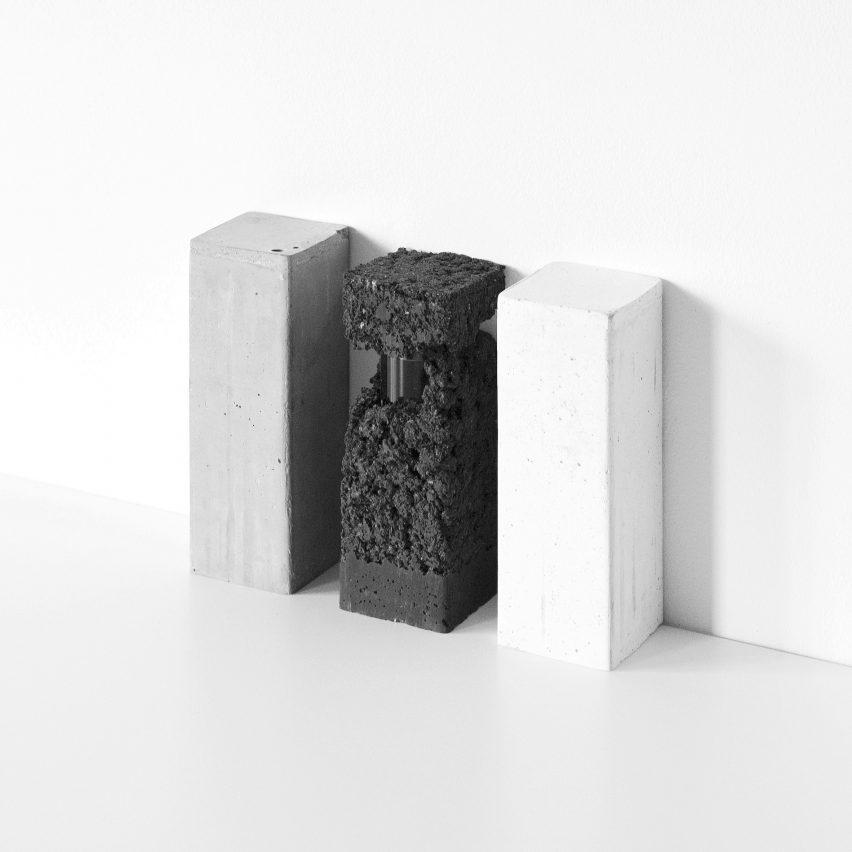
Francesca Gotti conceals perfume inside Glebanite blocks

inaccessible-perfume-francesca-gotti-design-miami-products_dezeen_2364_col_4

Francesca Gotti has hidden fragrances within seemingly impenetrable concrete-like blocks for Italian perfumer oneofthose. Read more

http://ift.tt/2gXWOoN