Hui | Origin of Everything / C.DD


© OUYANG Yun

© OUYANG Yun


© OUYANG Yun


© OUYANG Yun


© OUYANG Yun


© OUYANG Yun

  • Architects: C.DD
  • Location: Foshan, Guangdong, China
  • Chief Designer: HE Xiao-Ping, LI Xing-Lin
  • Design Team: YU Guo-Neng, LIANG Yi-Hui, LV Zhuo-Ming, CAI Tie-Lei
  • Area: 9.0 m2
  • Photographs: OUYANG Yun
  • Main Materials: perforated steel plate, LOW-E, bamboo

© OUYANG Yun

© OUYANG Yun

It is a cubic architectural installation of 3m*3m*3m. This is not a large space; however, it carries the designers’ great affection and thinking for their hometown Foshan. The core concept of the design could be summed up in one phrase” Origin of everything”.


© OUYANG Yun

© OUYANG Yun

Actually, this architectural installation is an exhibit represents Foshan designed by the designers when invited by Expressions of The City during Guangzhou Design Week. Because the organizer sets limitations to the size of exhibition work, so the designers choose a cube which has the largest volume as the carrier of the architectural installation to express the vast theme “city”. The use of the cube allows the designers to present a journey back to “Foshan” and their original minds around the core concept of “Origin of everything”.


© OUYANG Yun

© OUYANG Yun

Concept

Concept

© OUYANG Yun

© OUYANG Yun

For the structure, the designers use bamboos to form a smaller rectangular space around the geometric center of the cube. A one-way path which allows passage of only one person is thus built along the four lateral facades of the cube. This is the road for the journey. However, when look at the cross section of the whole space from above, the two squares created by the bamboo wall and exterior wall together form the Chinese character “Hui”, which symbolizes “return to the origin”


© OUYANG Yun

© OUYANG Yun

Plan

Plan

© OUYANG Yun

© OUYANG Yun

The process of “Hui”has begun before visitors enter into the architectural installation. Visitors could come into this space alone through a narrow entrance, walk slowly and circle the space with the playing of background music which has a sense of ritual. While looking through the gaps between the bamboos, semi-finished Chinese Southern lion and Chinese leather drum placed in the centre could be seen; it is like a journey from outside to inside of both your inner self and the environment. In respect of spatial level , this  journey , from external environment, the steel plate material of the façade, to the bamboo of the inner wall, and then to the traditional prototypes which enclosed by bamboo, allows visitors to experience the process from modern to ancient and from new to old,  and offers visitors enlightenment from a different angle. 


© OUYANG Yun

© OUYANG Yun

For the designers, “Origin” means Foshan and the original selves. The Chinese Southern lion placed at the right centre of the space is originated from Xiqiao district, Nanhai county, Foshan. Thus it represents part of  Foshan’s important traditional culture and it represents the root of the designers as well. Beatings of drum is necessary when performing a lion dance, so a primitive leather drum prototype is placed under the white body of the Chinese Southern lion, they appear as one set. What is worth mentioning is that, the designers choose semi-finished Chinese Southern lion instead of a completed Chinese Southern lion with eyes is because that they could take use of the light permeability of the white body; they could make the image of the Chinese Southern lion more rich through placing flashing lights inside the white body. As the beatings of the drum leads the emotions and actions of the lion dance, the background music in this space matches with the flashing colorful lights. So visitors would see the lion in red or in green from time to time, and the colors express different emotions. 


© OUYANG Yun

© OUYANG Yun

The imagery which represents Foshan also appeared on the façade – the designers piece together the maps of Foshan city and Nanhai county and the words “Foshan”on the steel plate wall with small holes. Functionally, it strengthens the ventilation of the space and gives visitors a better feeling on the one hand; on the other hand, these small holes bring light to the space – apart from that, only the rectangular roof which is partitioned off by bamboos that could provide natural light for the space.  From the aspect of artistic conception, considering that mirrors are used in both the ceiling and floor of the corridor, when sunlight enters into the space through the holes, under the reflection of the mirror, the whole space will become more mysterious, fantasy and changeable. This is the artistic conception needed to be created for the journey of our mind.  And such artistic conception will change according to the position that the installation is placed— when the angle of the sunshine changed, the picture create by light through the holes will change accordingly.


© OUYANG Yun

© OUYANG Yun

The whole design process is more like a process of re-learning and understanding  of the traditional culture of their hometown, said the designers. But due to the limit of space, so what could be expressed is limited as well. What they hope is that through this well-chosen design expression, more and more people could pay attention to Foshan and try to understand Foshan. From higher level, the designers hope every visitor could be inspired by the architectural installation so as to pay more attention to their hometown’s traditional culture and the original self, no matter where they come from and where they are. 

http://ift.tt/2gioEeP

St Kilda East House / Claire Scorpio Architects


© Tom Ross

© Tom Ross


© Tom Ross


© Tom Ross


© Tom Ross


© Tom Ross

  • Budget: $120000 AUD

© Tom Ross

© Tom Ross

From the architect. St Kilda East House is a tiny addition to an existing Edwardian House. With just 11m2 of new building works, this project engaged with big ideas within a modest footprint and budget to enhance the quality of everyday experience for the family living here.


© Tom Ross

© Tom Ross

Section

Section

© Tom Ross

© Tom Ross

http://ift.tt/2hfnXAy

Blue Bottle Coffee Shinagawa Cafe / Schemata Architects


© Takumi Ota

© Takumi Ota


© Takumi Ota


© Takumi Ota


© Takumi Ota


© Takumi Ota

  • Architects: Schemata Architects
  • Location: Konan, Minato, Tokyo 108-0075, Japan
  • Architect In Charge: Jo Nagasaka / Schemata Architects
  • Design Team: Ryosuke Yamamoto, Liliko Mizukami
  • Area: 173.7 m2
  • Project Year: 2016
  • Photographs: Takumi Ota
  • Construction: TANK
  • Collaboration: ARAYA SHOTEN (stone) / SOUP DESIGN (sign) / HOSHIZAKI ELECTRIC CO.,LTD. (kitchen) / WHITELIGHT.Ltd (sound plan) / ENDO LIGHTING CORP. (lighting plan)

© Takumi Ota

© Takumi Ota

From the architect. Walking through the concourse of Shinagawa Station towards the Kohnan exit, one looks up at the glass-clad shopping mall above and find Blue Bottle Coffee Shinagawa Cafe, their 6th shop in Japan, behind the glass facade. The act of “looking up” to find the place inspired James Freeman, the Founder of Blue Bottle Coffee, to imagine a “heavenly space” for the new cafe.


© Takumi Ota

© Takumi Ota

Based on this image, we envisioned a serene white space which simultaneously resonates the urban vigor at the station concourse; we chose Takigahara-ishi (tuff stone produced in Ishikawa Prefecture) as the main interior finish, combined with wood to create a space composed of a white color palette. 


© Takumi Ota

© Takumi Ota

Natural hardness of the stone and the horizontal / vertical composition create a cool and sophisticated impression, while the finely textured stone surface gently receives light to enhance the serene feeling; and the stone finish is seamlessly applied throughout the floor, wall and counter paneling to create subdued calmness.


Floor Plan

Floor Plan

In terms of plan, a hollow-square shaped counter is placed at the center to facilitate a “fair relationship” between all people present, in the same way as the Blue Bottle Coffee Shinjuku Cafe.


© Takumi Ota

© Takumi Ota

http://ift.tt/2hf6fgg

2016 RIBA President’s Medals Winners Announced


Silver Medal: Crafts Vault / Thomas Chee. Image Courtesy of RIBA

Silver Medal: Crafts Vault / Thomas Chee. Image Courtesy of RIBA

The Royal Institute of British Architects (RIBA) announced the President’s Medals Student Awards at a special event today in London. The awards, recognised as the world’s most prestigious in architectural education, were inaugurated in 1836 (making them, including the RIBA Gold Medal, the institute’s oldest award). Three medals in particular—the Bronze for a Part I student (Bachelor level), the Silver for a Part II student (Masters level), and the Dissertation Medal—are awarded to “promote excellence in the study of architecture [and] to reward talent and to encourage architectural debate worldwide.” In addition to these, the winners of the Serjeant Award for Excellence in Drawing and the SOM Foundation Fellowships alongside a rostra of commendations have also been announced.

RIBA Silver Medal: Thomas Chee (Chinese University of Hong Kong)

Crafts Vault: The V&A Academy of Artisanal Crafts

Responding to the uncertain future of traditional crafts industry in the UK threatened by the economic downturn and the rise of new manufacturing technologies, the proposal by introducing crafts workshops into a new extension of the Victoria & Albert Museum in London, tries to promote a new typology of museum building for storing and exhibiting crafts that could help bringing the lost touch of crafts back to the modern city.

Tutors: Peter Winston Ferretto, Ingrid Schroder


Silver Medal: Crafts Vault / Thomas Chee. Image Courtesy of RIBA

Silver Medal: Crafts Vault / Thomas Chee. Image Courtesy of RIBA

Silver Medal: Crafts Vault / Thomas Chee. Image Courtesy of RIBA

Silver Medal: Crafts Vault / Thomas Chee. Image Courtesy of RIBA

Silver Medal: Crafts Vault / Thomas Chee. Image Courtesy of RIBA

Silver Medal: Crafts Vault / Thomas Chee. Image Courtesy of RIBA

Silver Medal: Crafts Vault / Thomas Chee. Image Courtesy of RIBA

Silver Medal: Crafts Vault / Thomas Chee. Image Courtesy of RIBA

Silver Medal: Crafts Vault / Thomas Chee. Image Courtesy of RIBA

Silver Medal: Crafts Vault / Thomas Chee. Image Courtesy of RIBA

RIBA Bronze Medal: Allan Chong (Mackintosh School of Architecture)

‘Formless’ – An Alternative Typology for Preservation

This project takes a theoretical path in creating an alternative typology for preservation. It introduces a compromise between the desire for preservation and the cultural shift necessary for architectural expansion in the city’s future. Interpreting the concept of ‘formless’ in preservation means that architecture and heritage are no longer seen as permanent objects, but they keep transforming to re-frame their key spaces.

Tutors: Josep-Maria Garcia-Fuentes, Aldric Rodriguez Iborra


Bronze Medal: Formless / Allan Chong. Image Courtesy of RIBA

Bronze Medal: Formless / Allan Chong. Image Courtesy of RIBA

Bronze Medal: Formless / Allan Chong. Image Courtesy of RIBA

Bronze Medal: Formless / Allan Chong. Image Courtesy of RIBA

Bronze Medal: Formless / Allan Chong. Image Courtesy of RIBA

Bronze Medal: Formless / Allan Chong. Image Courtesy of RIBA

Bronze Medal: Formless / Allan Chong. Image Courtesy of RIBA

Bronze Medal: Formless / Allan Chong. Image Courtesy of RIBA

Bronze Medal: Formless / Allan Chong. Image Courtesy of RIBA

Bronze Medal: Formless / Allan Chong. Image Courtesy of RIBA

Bronze Medal: Formless / Allan Chong. Image Courtesy of RIBA

Bronze Medal: Formless / Allan Chong. Image Courtesy of RIBA

Dissertation Medal: Roy Khatchadourian (University of Liverpool)

A Juxtaposition of Ideological Expressions: Evaluating the urban transformations of Yerevan (Armenia) during 1915-2015

What determines our sense of belonging to a territory? How can an identity be maintained, or created? Yerevan – the crown jewel and capital city of Armenia – has been grappling with these issues in a quest of rediscovering its national pride, after years of political oppression, even genocide. This dissertation explores the role of architecture in this endeavour through Alexander Tamanyan’s work, an overlooked master whose contribution forms today’s city branding…

Tutor: Iain Jackson


Dissertation Medal. Image Courtesy of RIBA

Dissertation Medal. Image Courtesy of RIBA

Dissertation Medal. Image Courtesy of RIBA

Dissertation Medal. Image Courtesy of RIBA

The Serjeant Award for Excellence in Drawing (Part 1) went to Lucian Mocanu (University of Greenwich, tutored by Rahesh Ram and Tom Noonan) for New Greenwich Civic Centre: A transformative architecture. The project proposes an alternative centre for Greenwich that can be adapted for society’s needs.

The Serjeant Award for Excellence in Drawing (Part 2) was awarded to James Bussey (University of Kent, tutored by Adam Cole and George Thomson) for The Company, a dystopian graphic novel exploring architecture, isolation and Potemkin villages through the eyes ofa fictional German revolutionary exiled to the island of Helgoland.

The UK office of Skidmore, Owings & Merrill (SOM) also awarded SOM Foundation Fellowships to Jack Bailey (Kingston University, UK, tutored by Michael Lee) and Shenpei Ha (The Cass, London Metropolitan University, UK, tutored by Signy Svalastoga, Edward Simpson and Jonathan Cook).

Silver Medal Commendations

  • Molly De Courcy Wheeler, University of Westminster, UK, tutored by Sean Griffiths / More or Less, Bricks
  • Roven Rebeira, City School of Architecture, Sri Lanka, tutored by Tamara Wijayapala / Centre for Ethno-Elephantology: A cross-species design initiative
  • Mikki Ristola, Aalto University, Finland, tutored by Pekka Heikkinen / Visitor Centre for Petäjävesi Old Church

Bronze Medal Commendations

  • Muneeb Ali Khan, London South Bank University, UK, tutored by Nicolas Pople / Lewes Art Foundry
  • Paolo Pisano, Architectural Association, UK, tutored by Ryan Dillon / The Thirty Years of Architecture: A short guide on abandoning accumulated memories at the mercy of an inclement weather
  • Samiur Rahman, University of Greenwich, UK, tutored by Rahesh Ram and Tom Noonan / Nuclear NOW!

Dissertation Medal Commendations

  • Tessa Forde, University of Auckland, New Zealand, tutored by Kathy Waghorn and Aaron Paterson / The House that Politics Built: Parliament Aotearoa
  • Phillipa Longson, The Cass, London Metropolitan University, UK, tutored by Joseph Kohlmaier / Are You My Mother? An exploration into the bonds between people and places
  • Robin Farmer, Bartlett School of Architecture, UCL, UK, tutored by Brent Carnell / A Flâneur’s Guide to Boystown: Performativity, pride and place

Juries for the Medals

Silver Medal

  • Chair: David Gloster, RIBA Director of Education
  • Mel Dodd, Programme Director of Spatial Practices, Central Saint Martins
  • Winka Dubbeldam, Chair and Professor of Architecture, University of Pennsylvania School of Design
  • Alan Jones, RIBA Vice-President Education
  • Nathalie Rozencwajg, Director, RARE

Bronze Medal

  • Chair: David Gloster, RIBA Director of Education
  • Alessandra Cianchetta, founding partner of AWP – Office for Territorial Reconfiguration
  • Nic Clear, Head of the Department of Architecture and Landscape, University of Greenwich
  • Alan Jones, RIBA Vice-President Education
  • Charlotte Skene Catling, Director, Skene Catling de la Peña

Dissertation Medal

  • Chair: Peg Rawes, Senior Lecturer, Bartlett School of Architecture (UCL)
  • Harriet Harriss, Senior Tutor in Interior Design and Architecture, Royal College of Art
  • Katie Lloyd Thomas, Senior Lecturer in Architecture at Newcastle University
  • Philip Ursprung, Dean of the Department of Architecture, ETH Zürich

http://ift.tt/2h08VPJ

Palermo Lake House / Reims Arquitectura


© Ricardo Janet

© Ricardo Janet


© Ricardo Janet


© Ricardo Janet


© Ricardo Janet


© Ricardo Janet

  • Project Team: Eduardo Reims, Jorge Reims.
  • Construction: Reims Arquitectura
  • Collaborators: Andrea Leiva, Héctor Soto, Daniel Segovia, Carlo Hernández, Andrea Maldonado.
  • Plot Area: 1934 m2

© Ricardo Janet

© Ricardo Janet

From the architect. Palermo Lake is a countryside residence that includes the ideals of a family whose greatest aspiration is to live outside the urban boundaries within a natural, remote, and peaceful environment.


© Ricardo Janet

© Ricardo Janet

Despite its palpable isolating condition due to its location outside the urban fabric, the purpose of the project is completely the opposite, for this is a house designed to encourage those social activities enjoyed by the family, activities revolving around its passion for equestrian activities, water sports, enology, and, above all, country living.


Ground Floor Plan

Ground Floor Plan

The parti is determined by the front areas exploitable for such purposes, where the south and the west, which align with the lake and the polo field respectively, define the outline of the house, its landscapes and mainly the unifying thread which harbors all the possible public outdoor recreation areas in a linear promenade, going from the main access to the property, developing along the lake, and ending in the social terrace, crowning the head of the polo field with its shadow.


© Ricardo Janet

© Ricardo Janet

This design strategy led to a linear and continuous public spine from which the project emerges, and it´s center point along the journey turned became the optimal location for he most important space and the heart of this dwelling -the “great hall”- which purpose is to concentrate, under the same double heighted space, all the possible activities involving family and social dynamics.  Aside from being an overwhelming introduction to it´s interior, an efficient distributor of the public and private program in two levels, and a reconfigurable environment, the great hall is the space that allows for light, natural air circulation coming from the south, and the constant breeze of the lake to flow into the house, thus refreshing from the public area to the deepest private spaces of the program in the upper level, in order to keep comfortable interior temperatures during all seasons, in a region with semidesert and warm climate lasting 10 months per year.  During the cold months, these large openings oriented towards the south, will allow sunlight to access and generate solar gain while heating the interior, especially the private areas of the residence.


1st Floor Plan

1st Floor Plan

Adjacent and around the great hall in the lower level, complimentary spaces are assembled, emphasizing the gourmet kitchen, cellar, dining room, playroom, terrace, and family memory room.


© Ricardo Janet

© Ricardo Janet

Communicated with the great hall, as a semiprivate mezzanine in the upper level, the family room may be found; an open and continuous space which adapts to the daily necessities and temporary family dynamics. This area brings together, like a hinge, the two private parts of the program which are located at opposite ends; the master bedroom and the children’s bedrooms.  The direction of each of these areas was determined based on the most preferred view according to the users, orienting the children’s bedrooms to the lake due to their fondness for water sports, and the master bedroom, to the polo field, on account of their passion for the equestrian life.


© Ricardo Janet

© Ricardo Janet

With both ends cantilevering to underline it´s hierarchical ends – the main entrance and the shaded social terrace-  the architectural form of the project is defined by a load-bearing mass of reinforced concrete which, apart from giving evidence of its structure, serves as a canvas on which quarry stones from Queretaro, recycled timber from surrounding former railroad tracks, national hardwood finishes treated with oil and steel structures and fixtures tamed by the local workmanship, complement the material palette of this architectural composition.


© Ricardo Janet

© Ricardo Janet

Finally, the goal behind the outward appearance of the house is to provide a timeless countryside environment, which, despite the fact of formally speaking of its era, it is still open to time’s intervention and patina where we believe the weatherization of the selected materials and nature’s takeover of its concrete canvas, shall end this work which, as wine does, pretends to age gracefully, improve over the years, and acquire a greater sense of belonging with its site and context.


© Ricardo Janet

© Ricardo Janet

http://ift.tt/2h420YG

San Miguel de Tango Convention Center / PAR Arquitectos


© Diego Elgueta

© Diego Elgueta


© Diego Elgueta


© Diego Elgueta


© Diego Elgueta


© Diego Elgueta

  • Architects: PAR Arquitectos
  • Location: Lonquén Sur, Región Metropolitana, Chile
  • Author Architects: Pablo Lopez, Alvaro Cortés, Tomás Pardo.
  • Area: 1016.0 m2
  • Project Year: 2016
  • Photographs: Diego Elgueta

© Diego Elgueta

© Diego Elgueta

From the architect. The project seeks the configuration of a central void, as an adaptive and flexible extension to the functions of the various uses required by the program, this complemented by a system of perimeter corridors that articulate the various services of the programmatic edge. This configuration contrasts with the existing anteroom, a park of ancient trees, the patrimonial house and the state chapel.


© Diego Elgueta

© Diego Elgueta

It is propose the renovation of the preexisting buildings arranged in L-shape,  a old warehouse and stables, which together with the construction of two new volumes (kitchen and bathrooms), worked in cob brick masonry, confined in metal profiles and limewash painted, structure and contain the new square; Preserving the original formal expression of the time, a neutral and unitary language.


© Diego Elgueta

© Diego Elgueta

© Diego Elgueta

© Diego Elgueta

As a complement to the above, it is sought, through specific elements, to inject a new contemporary character that dialogues with the existing traditional architecture; Unifying elements such as Cor-ten steel skylights, as light lamps and composed pine pillars as support for louvers and temporary structures. In addition, some specific maneuver are established that give lightness to the profiles of the corridors and accentuations of color with terracotta and wine tones.


© Diego Elgueta

© Diego Elgueta

Floor Plan

Floor Plan

© Diego Elgueta

© Diego Elgueta

The take-off or detachment, in terms of the order and arrangement of the new elements with respect to the old ones; Generates the project intervention strategy, a maneuvers that allows to understand the pieces of the project, manifesting the origin of each old or new part.


© Diego Elgueta

© Diego Elgueta

© Diego Elgueta

© Diego Elgueta

The landscape development, focused mainly on point applications; Lines and specific areas of vegetation that accompany paths and “dresses” certain places, maintaining a arid and clear image, which contrasts with the density and leafiest of the existing park.


© Diego Elgueta

© Diego Elgueta

At the same time, different textures of floors are worked, river bolls with rounded stones in corridors detachments and random lines arranged in the esplanade; concrete refined slab for corridors; Prefabricated concrete tiles 30x60cm in locked arrangement for the square; And framing slate stone for the intervention of pre-existing damaged slabs.


© Diego Elgueta

© Diego Elgueta

http://ift.tt/2gOyaqF

Competition: win a book illustrating the life of Frank Lloyd Wright

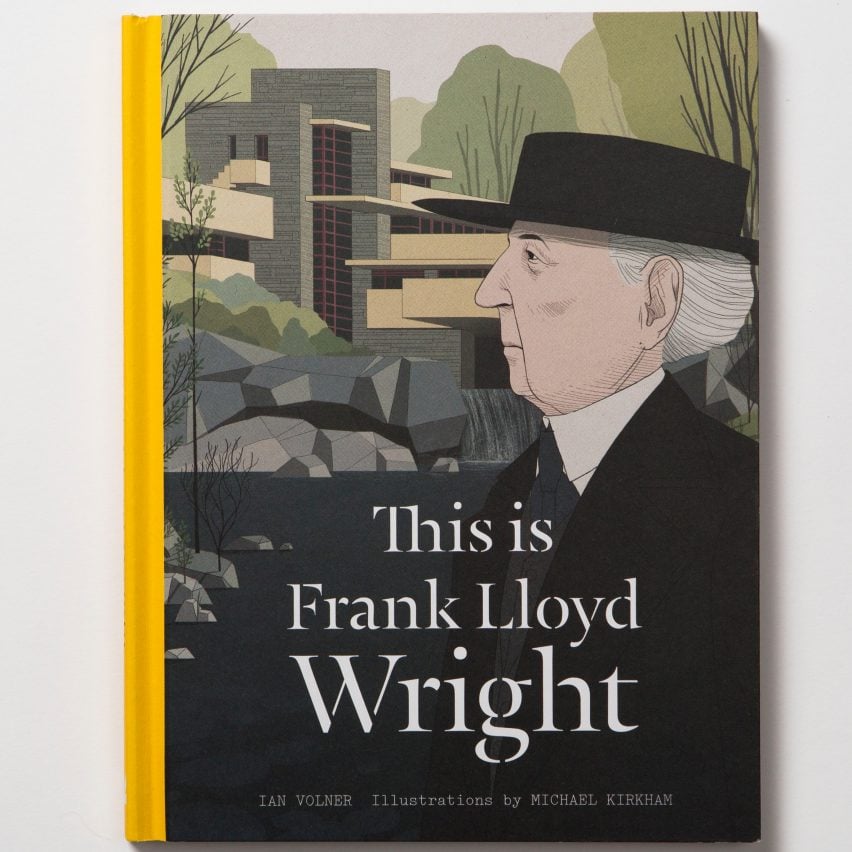
Free comp: This is Frank Lloyd Wright

Dezeen has teamed up with Laurence King Publishing to give away five copies of This is Frank Lloyd Wright, an illustrated biography of one of the world’s most iconic architects. Read more

http://ift.tt/2g6rCVb

Gonzalez Hinz Zabala’s design for new Bauhaus Museum Dessau breaks ground

bauhaus-museum-dessau-competition-architecture-germany_dezeen_sqb

Construction has begun on the new Bauhaus Museum Dessau by Barcelona architecture firm Gonzalez Hinz Zabala, which saw off competition from New York practice Young & Ayata to win the project. Read more

http://ift.tt/2gZrh3w

Miami architecture finally addresses “visible and tangible impacts of sea-level rise”

faena-bazaar-and-parking-garage-by-oma-miami-architecture-forum-news-credit-iwan-baan_sq

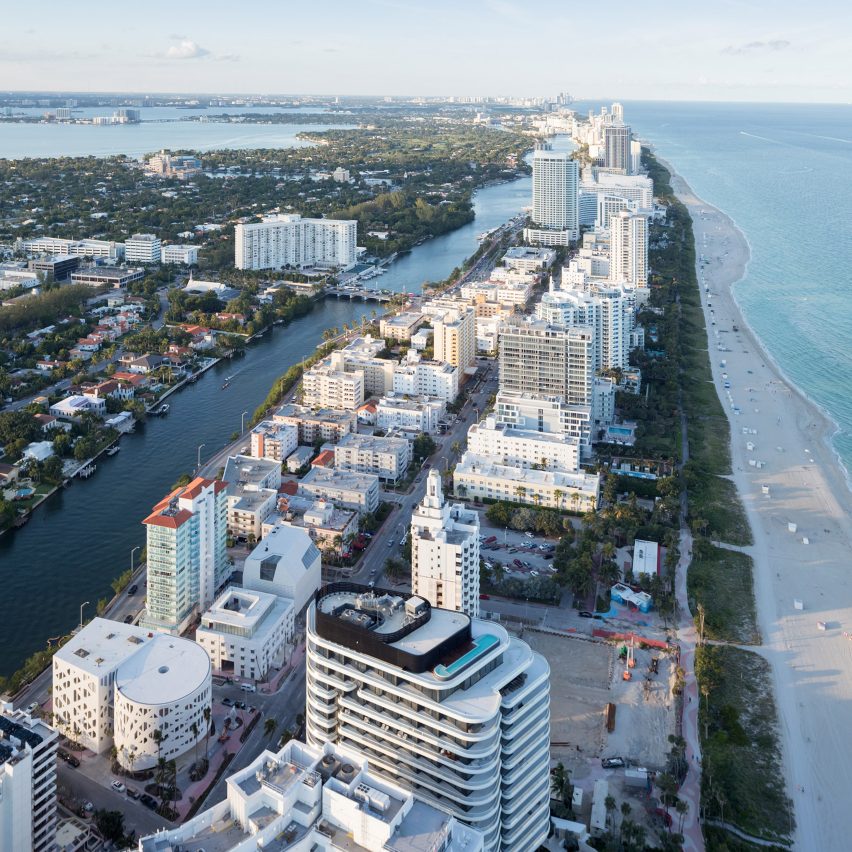
Architects and developers working in Miami are belatedly responding to climate change, amid a growing sense of alarm over how rising sea levels are affecting the city. Read more

http://ift.tt/2h3rFAw

Snarkitecture designs gallery-like interior for Kith’s Miami flagship store

Kith Store Miami Interiors USA

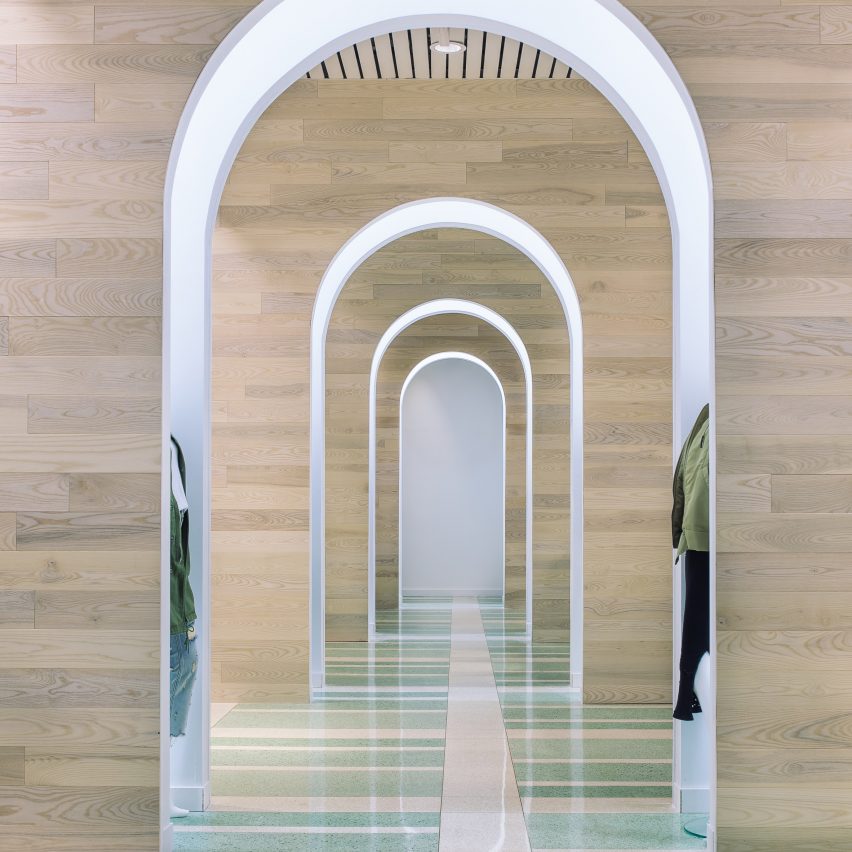
Five hundred replica Air Jordan V sneakers line the walls of Kith’s new Miami outpost, designed by New York studio Snarkitecture. Read more

http://ift.tt/2gh7zld