iHouse Dormitory / Studio SUMO


© Kawasami Kobayashi Photograph Office

© Kawasami Kobayashi Photograph Office


© Kawasami Kobayashi Photograph Office


© Kawasami Kobayashi Photograph Office


© Kawasami Kobayashi Photograph Office


© Kawasami Kobayashi Photograph Office

  • Client: Josai International University
  • All Engineering Service And General Contractor: Obayashi Corporation

© Kawasami Kobayashi Photograph Office

© Kawasami Kobayashi Photograph Office

From the architect. As Japan copes with a declining population, universities are trying to attract an increasingly international student body for both long and short term stays. This dormitory and International Center for approximately 140 international students efficiently houses, educates, and integrates a population that is both culturally and economically diverse through a collection of shared public spaces and rooms that range from singles and doubles with private baths, to rooms sleeping four with shared bathing facilities.


© Kawasami Kobayashi Photograph Office

© Kawasami Kobayashi Photograph Office

These shared rooms allow JIU to offer accommodations for as little as $80/month and are particularly geared towards students of modest means from emerging Asian and Eastern European countries. The building is sited along the main access road to the university on the edge of an expanse of rice fields. It is comprised of a 9-meter wide dormitory bar that hovers over the International Center that projects out to engage the landscape.


© Kawasami Kobayashi Photograph Office

© Kawasami Kobayashi Photograph Office

Floor Plans

Floor Plans

© Kawasami Kobayashi Photograph Office

© Kawasami Kobayashi Photograph Office

The International Center is comprised of a gallery, archive room, and event space in memory of the late Prince Takamado who helped broker the Japan/Korea partnership that hosted the 2002 World Cup. JIU maintains a close relationship with the Takamado family. One enters the building off the campus road through a void in the bar that separates the two programs on the ground level. A louvered surface interspersed with projecting balconies masks exterior walkways that serve the dormitory rooms facing out over the rice fields beyond. Multiple sliding glass doors open onto the walkways, recalling the ‘engawa’ space of traditional Japanese houses. The provision of shared spaces, the walkway, and balcony system expand the compressed living space into the outdoors.


© Kudoh Photography Ltd.

© Kudoh Photography Ltd.

Diagram

Diagram

© Kawasami Kobayashi Photograph Office

© Kawasami Kobayashi Photograph Office

Product Description. The most conspicuous material is the aluminum louver the makes up the south façade. We used horizontal louvers with three different dimensions. They are attached each with the maximum cantilever from the vertical support to create a woven pattern to comprise a unified façade to the public, and shaded walkways with a dynamic play of light for the inhabitants.


© Kawasami Kobayashi Photograph Office

© Kawasami Kobayashi Photograph Office

http://ift.tt/2gKficp

Tilt Roof House / BCHO Architects


© Sergio Pirrone

© Sergio Pirrone


© Sergio Pirrone


© Sergio Pirrone


© Sergio Pirrone


© Sergio Pirrone

  • Architects: BCHO Architects
  • Location: Jipyeong-myeon, Yangpyeong-gun, Gyeonggi-do, South Korea
  • Architect In Charge: Byoung Cho, So-jin Kang
  • Area: 161.78 m2
  • Project Year: 2014
  • Photographs: Sergio Pirrone
  • Other Participants : Young-sung Jun, Sung-chul Hong

© Sergio Pirrone

© Sergio Pirrone

From the architect. The subterranean Tilt Roof House is set amid peaceful mountains and rice fields an hour east of Seoul in Korea. The house shows our understanding and consideration of “Ki”, which is the traditional term for the universal energy that permeates through everything.


© Sergio Pirrone

© Sergio Pirrone

Section

Section

© Sergio Pirrone

© Sergio Pirrone

Tilt Roof House tries to respect the natural energy flow of the existing mountains and celebrates a primal relationship between experiential qualities of the surrounding nature and a building. By taking advantage of the steep slope around the site, the house blends with the topography and is partially embedded into the ground, while minimizing the excavation of the earth. The roof is tilted to follow the slope of the hill while disappearing into the ground. It is built with careful consideration of construction efficiency and the surrounding nature without disrupting the energy flow. Mass composition of this house is a result of the adaptation of the existing topography line from the north and the parallel line of the adjacent street in the main access area.  


© Sergio Pirrone

© Sergio Pirrone

Section

Section

© Sergio Pirrone

© Sergio Pirrone

The house also utilizes the sloped roof-top as a terrace. It is punctuated by three square boxes: two recessed boxes and one courtyard box. The two partially recessed squares not only serve as outdoor furniture but also distinguish different programs, such as the master bedroom and kitchen underneath the terrace. The central courtyard allows natural light penetration and makes the interior space more desirable and breathable. The heavy pour-in-place concrete and the pressure treated black-stained pine wood exterior is in contrast to the warm and ambient light created by the bright yellow birch plywood interior. The curvature of the interior wall along the central courtyard softens the pointed corners created by the triangular shape from the living room to the reading area. During the summer time, wind blows from south to north, inducing air circulation from the courtyard, where the kitchen is located creating cross-ventilation.  


© Sergio Pirrone

© Sergio Pirrone

1st Floor Plan

1st Floor Plan

© Sergio Pirrone

© Sergio Pirrone

http://ift.tt/2h93gWX

KM Kindergarten and Nursery / HIBINOSEKKEI + Youji no Shiro


© Ryuji Inoue / Studio Bauhaus

© Ryuji Inoue / Studio Bauhaus


© Ryuji Inoue / Studio Bauhaus


© Ryuji Inoue / Studio Bauhaus


© Ryuji Inoue / Studio Bauhaus


© Ryuji Inoue / Studio Bauhaus

  • Site Area : 4230 m2
  • Building Area : 799 m2

© Ryuji Inoue / Studio Bauhaus

© Ryuji Inoue / Studio Bauhaus

From the architect. The project which is an old decrepit kindergarten located at Izumi city in the south of Osaka.


© Ryuji Inoue / Studio Bauhaus

© Ryuji Inoue / Studio Bauhaus

Izumi is a city which take the textile as the main industry from long time ago. But now as the work transfer to the overseas where has cheap labor, the local industry recession is today’s situation. About this planning, we set two topics.


© Ryuji Inoue / Studio Bauhaus

© Ryuji Inoue / Studio Bauhaus

Floor Plans

Floor Plans

© Ryuji Inoue / Studio Bauhaus

© Ryuji Inoue / Studio Bauhaus

One is, By daily activities to solve kids’ lake of exercise which caused by inadequate site.  Another is, for teaching kids about the local history, put in the element of textile which representative the local industry.  Concretely, for increasing the amount of exercise in the inadequate site, made an environment that kids can run around, and undulating ground.


© Ryuji Inoue / Studio Bauhaus

© Ryuji Inoue / Studio Bauhaus

The building is surround the middle yard, and ramp which people can climb from first flower to roof is be built. By this plan, kids can bend to a squat and climb to the roof, and then run around get down from stairs to the middle yard. And all these activities make kids’ amount of exercise has been greatly improved. About the local industry, as one of the mine idea of the design, by using fabric to make the sign and paste carpet on the wall for letting kids play on it, to actualize that the building materials can be touched softly, and also can let kids feel the material texture. 


© Ryuji Inoue / Studio Bauhaus

© Ryuji Inoue / Studio Bauhaus

http://ift.tt/2gw5MXd

Victorian Residence / Architecton


© Jack Lovel

© Jack Lovel


© Jack Lovel


© Jack Lovel


© Jack Lovel


© Jack Lovel

  • Architects: Architecton
  • Location: Middle Park, Australia
  • Architect In Charge: Nick Lukas
  • Area: 420.0 m2
  • Project Year: 2016
  • Photographs: Jack Lovel

From the architect. Middle Park is home to some of the best preserved and aged architecture in the city of Melbourne, and this extension to a three bedroom private residence builds upon this reputation. A material palette of stone, concrete and metal integrates an interplay of languages that will stand the test of time. 


© Jack Lovel

© Jack Lovel

Ground Floor Plan

Ground Floor Plan

© Jack Lovel

© Jack Lovel

Whilst the street frontage remains untouched, the rear addition enhances the historical context of the Victorian terrace character with a contemporary counterpart, sympathetic to its surroundings and secret from the busy main road.


© Jack Lovel

© Jack Lovel

This hovering hidden gem delineates an alfresco area affixed to an open planned living space, affirming the theme of integration, and creating a pastiche of past and present that is perpetually worthy of its time and place.


© Jack Lovel

© Jack Lovel

Section

Section

© Jack Lovel

© Jack Lovel

http://ift.tt/2gvMXDy

The World’s Most Instagrammed Cities and Architecture of 2016


In 2016, Instagram grew from popular picture viewing app to essential social media tool with over 300 million active users and 95 million photos and videos per day. A digital journal of sorts, the platform is now the best way to let your friends and followers know where you are, what you’re doing or what inspires you.

Our own instagram page, curated by our founder and Editor-in-Chief David Basulto, is a travel feed of fantastic architecture from around the world. But which places and buildings were Instagram users’ favorites this year? Check out the list of most geotagged cities, locations, museums and hotels below!

The Most Geotagged Cities of 2016


New York City

New York City

1. New York, New York

2. London, United Kingdom

3. Moscow, Russia

//platform.instagram.com/en_US/embeds.js

4. São Paulo, Brazil

5. Paris, France

6. Los Angeles, California

7. St. Petersburg, Russia

8. Rio de Janeiro, Brazil

9. Istanbul, Turkey

10. Jakarta, Indonesia

The Most Instagrammed Locations of 2016

1. Disney Theme Parks (Global)

2. Universal Studios Theme Parks (Global)

3. Central Park (New York City)

//platform.instagram.com/en_US/embeds.js

4. Times Square (New York City)

5. Eiffel Tower (Paris)

6. Louvre Museum (Paris)

7. Las Vegas Strip (Las Vegas)

8. Santa Monica Pier (Los Angeles)

9. Brooklyn Bridge (New York City)

10. VDNKh (Moscow)

The Most Instagrammed Hotels of 2016


Las Vegas MGM Grand used under CC BY-SA 1.0 <a href='http://https://creativecommons.org/licenses/by-sa/1.0/'>https://creativecommons.org/licenses/by-sa/1.0/</a>

Las Vegas MGM Grand used under CC BY-SA 1.0 <a href='http://https://creativecommons.org/licenses/by-sa/1.0/'>https://creativecommons.org/licenses/by-sa/1.0/</a&gt;

1. MGM Grand Las Vegas

2. W New York – Times Square

3. The Cosmopolitan of Las Vegas

4. Atlantis The Palm, Dubai

5. Caesars Palace (Las Vegas)

6. Paris Las Vegas Hotel & Casino

7. Fontainebleau Miami Beach

8. Wynn Las Vegas

9. Ushuaïa Ibiza Beach Hotel (Official)

10. The Venetian Macao, Macau

The Most Instagrammed Museums of 2016


The Louvre in Paris

The Louvre in Paris

1. Musée du Louvre, Paris, France

2. The Metropolitan Museum of Art, New York

3. The Museum of Modern Art (MoMA), New York

4. Los Angeles County Museum of Art (LACMA), Los Angeles

5. The Broad, Los Angeles

//platform.instagram.com/en_US/embeds.js

6. World Trade Center 9/11 Memorial (aka National September 11 Memorial & Museum), New York

7. American Museum of Natural History, New York

8. Whitney Museum of American Art, New York

9. British Museum, London

10. The Art Institute of Chicago, Chicago

News via CNN.

http://ift.tt/2h872Qi

XOCO 325 / DDG


© Bruce Damonte

© Bruce Damonte

© Bruce Damonte

© Bruce Damonte


© Robert Granoff


© Bruce Damonte


© Bruce Damonte


© Robert Granoff


© Bruce Damonte

© Bruce Damonte

From the architect. Nestled in the heart of SoHo, XOCO 325 is a luxury condominium that sits on the site of a former chocolate factory. The ground-up new development has been designed, developed and constructed by DDG and elegantly references SoHo’s celebrated cast-iron loft buildings, while while forging a balance between classic and contemporary design. The striking cast-aluminum façade, which seems to float in front of the glass curtain wall, is a modern interpretation of the district’s historic cast-iron loft buildings.

The impressive design extends beyond the façade into the lobby, where residents are greeted with an elevated design experience. The lobby is outfitted with a bluestone floor and a custom chandelier. Sculptural wallsare richly textured with board-formed concrete and complement in-situ cast-concrete furnishings. 


© Robert Granoff

© Robert Granoff

Each of the one-to four-bedroom residences offers impressive detailing such as custom plasterwork and radiant heated flooring. In an effort to create a smooth transition between the building’s bold exterior architecture and warm inviting interiors, the residences offer ceiling heights starting from 10 feet, and open layouts that accentuate a luxury lifestyle. 


© Robert Granoff

© Robert Granoff

2nd Floor Plan

2nd Floor Plan

© Robert Granoff

© Robert Granoff

A truly unique feature at XOCO325 is a private courtyard garden that features a naturally lit, sculptural concrete fitness studio. In addition to a private garden, the building offer additional amenities, including a 24/7 concierge / doorman, a bike room and private storage.


© Robert Granoff

© Robert Granoff

Product Description. One of the most central and unique materials used in the construction of XOCO 325 is cast aluminum. Taking its inspiration from the Soho Cast Iron Historic District in which it is located, the building is cloaked in a custom cast aluminum façade that seems to float over a hanging glass wall.

The striking design was slowly conceived of through DDG’s extensive survey and research of the neighborhood – in which it found 250 cast iron loft buildings. XOCO 325’s façade derived from the designers’ fascination with the historic buildings’ “kit of parts” industrialization and its reliance upon componentry and patterns. To celebrate this style of architecture, yet modernize it for the 21st century, DDG opted to replicate the bay spacing found in the area, use cast aluminum as it is lighter and more affordable, and hang the custom structure over a massive glass wall, in order to maintain a sense of privacy for residents. 

http://ift.tt/2gZ1Yij

Call for Submissions: 2016 Holiday Card Challenge

It’s that time of year again! At ArchDaily we clearly appreciate holiday cards with an architectural spin, and we want to see your card designs. Whether that involves a Paul Rudolph the red-nosed reindeer, an ornament detail or even a gingerbread Villa Savoye please submit your own architectural holiday card to be hung above ArchDaily’s digital mantle.

We thoroughly enjoy the creativity of our readers and look forward to viewing your submissions. 

Competition Guidelines:

  • Design must be submitted as a .jpg/.png/.gif
  • Format is 1800 x 1200 pixels (vertical or horizontal)
  • Design must be original and suitable for publication on ArchDaily
  • The theme for the design can be Christmas, Hanukkah, Kwanzaa, New Years, etc.
  • All entries must be received by December 22 at 10PM EST
  • You may submit more than one entry
  • Our favorite submissions will be published on December 23

How to share a link to your submission:
In the form below, please submit a link to the .jpg/.png/.gif that you have created. We will not accept submissions as zip files, nor do we accept submissions sent via WeTransfer, MegaUpload, or a similar service. Any entry submitted as a zip file or using a file transfer service will be disqualified. If you are sharing a file that has been uploaded to Dropbox, Microsoft OneDrive, Imgur or Google Drive, please ensure that you are sharing a public link that can be accessed by ArchDaily editors. 
How to share a file using Dropbox
How to share a file using Google Drive
How to share a file using Imgur
How to share a file using Microsoft OneDrive

Any submissions that do not conform to the guidelines will not be considered.

http://ift.tt/2h7B0nn

http://ift.tt/2g1ged6

Secondary School / Dietrich | Untertrifaller Architekten


© Bruno Klomfar

© Bruno Klomfar


© Bruno Klomfar


© Bruno Klomfar


© Bruno Klomfar


© Bruno Klomfar

  • Concrete Engineering: gbd, Dornbirn bzw. Mader + Flatz, Bregenz
  • Wood Engineer: Pock, Spittal bzw Merz Kaufmann Partner, Dornbirn
  • Building Services: gmi, Dornbirn bzw. Synergy, Dornbirn
  • Electric: Hecht, Rankweil
  • Acoustics: Brüstle, Dornbirn
  • Building Physics: team gmi, Schaan bzw Weithas, Hard
  • Construction Manager: Gmeiner, Schwarzach
  • Landscape Design: Rotzler Krebs, Winterthur

© Bruno Klomfar

© Bruno Klomfar

The new secondary school of Klaus was built to replace the existing school, and designed with energy efficiency and budget in mind.  After a record construction time of only 18 months (upon nominating the winner of the competition), classes began at the school, which consumes less than 15 kWh/m² total energy per year and fulfils Vorarlberg passive-house guidelines.


© Bruno Klomfar

© Bruno Klomfar

The building has a long front facade which houses the library and atrium and orients to the street.  The class clusters and associated rooms are located in a wing that branches off to the north, creating an exterior courtyard area to the northeast.  This wing is oriented so that classrooms are separated on the east façade from group and administration rooms on the west by a central three story corridor, which is crossed by individual foot bridges that access each classroom. The building achieved construction costs of only three percent above that of a conventional construction project, and reduced energy costs by seventy percent compared to the old school building, while still maintaining an attention to detail.


© Bruno Klomfar

© Bruno Klomfar

Floor Plan 01

Floor Plan 01

In the second construction phase, a sports facility was added to replace the existing sports building.  The two-story sports hall and the three-story multi-purpose area (which provides rooms for day care, clubs, and events) can be reached from the school building by walking under the elevated library, allowing for protection from the elements. 


© Bruno Klomfar

© Bruno Klomfar

Floor Plan 02

Floor Plan 02

http://ift.tt/2gIupCS

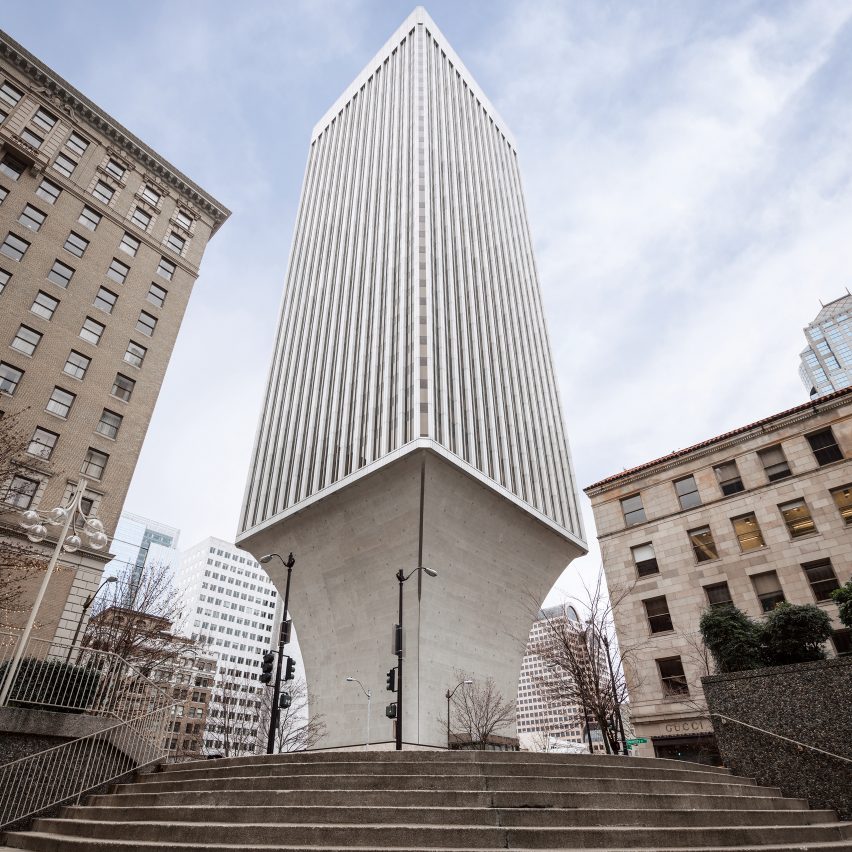
10 modernist architectural marvels on America’s West Coast

rainier-tower-minoru-yamasaki-seattle-1977-usa-roundups-architecture_sq

From the hundreds of modernist buildings, complexes and communes along the US Pacific Coast, author Sam Lubell has selected 10 of the must-see examples. Read more

http://ift.tt/2h6Imb0

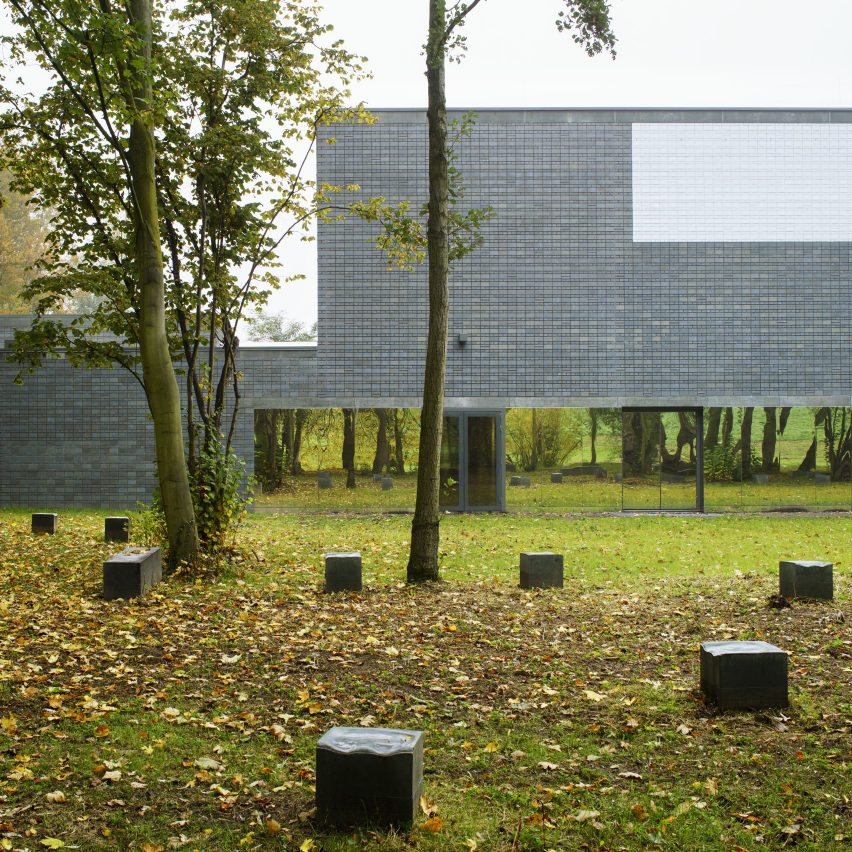
Koen van Velsen Architects uses green-grey brickwork for sports centre near Rotterdam

sportscentre-koen-van-velsen-architects-rotterdam-architecture-public_dezeen_sq

Koen van Velsen Architects used custom green-tinted brickwork, mirrored panels and glazed courtyards to help this sports centre on the outskirts of Rotterdam blend in with the greenery surrounding it. Read more

http://ift.tt/2gYf67b