Architecture
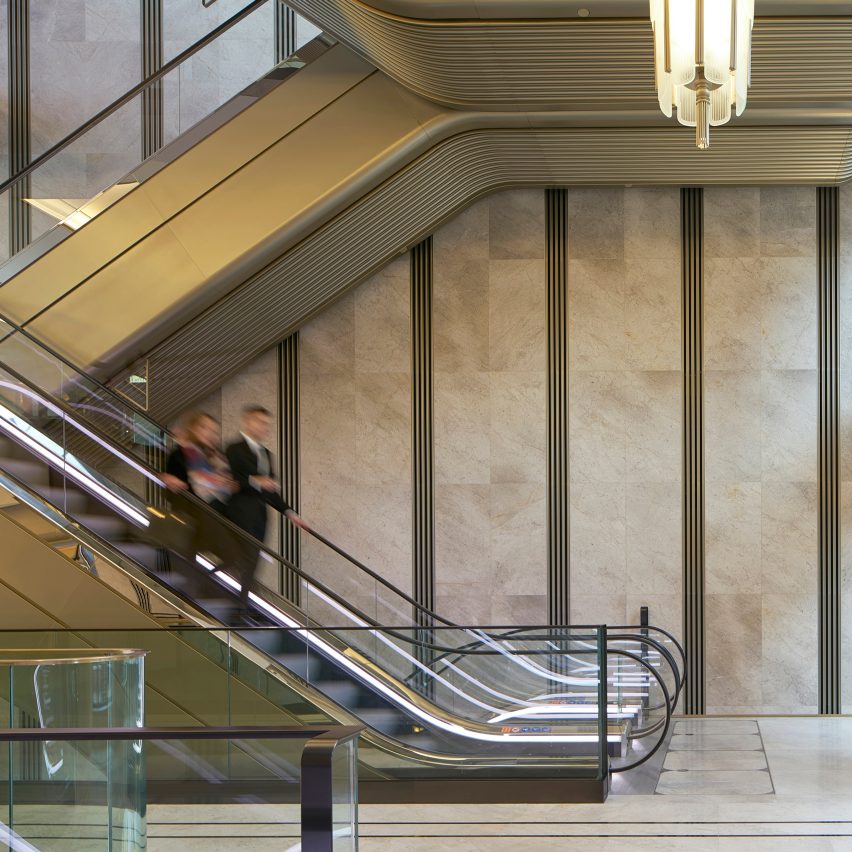
Neil Dusheiko creates home for his father-in-law featuring a wall of ceramics and glassware
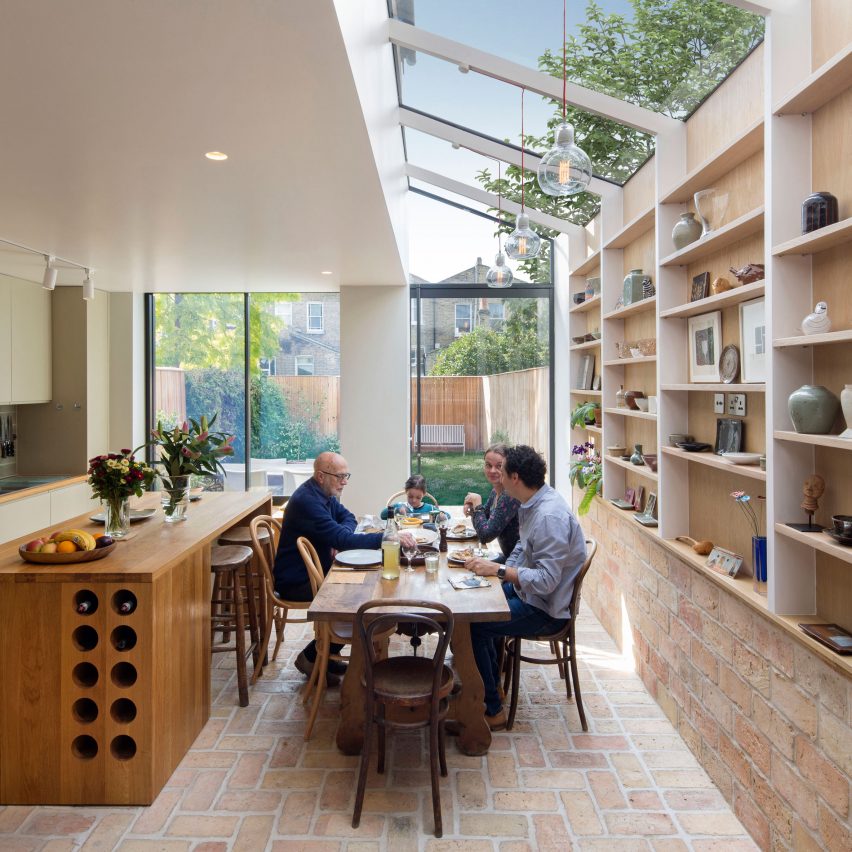
A wall of storage filled with art and ceramics features inside this house that architect Neil Dusheiko has renovated for his father-in-law, near his own home in north London. Read more
Richard Yasmine’s Plugged carafes sit atop phallic brass rods
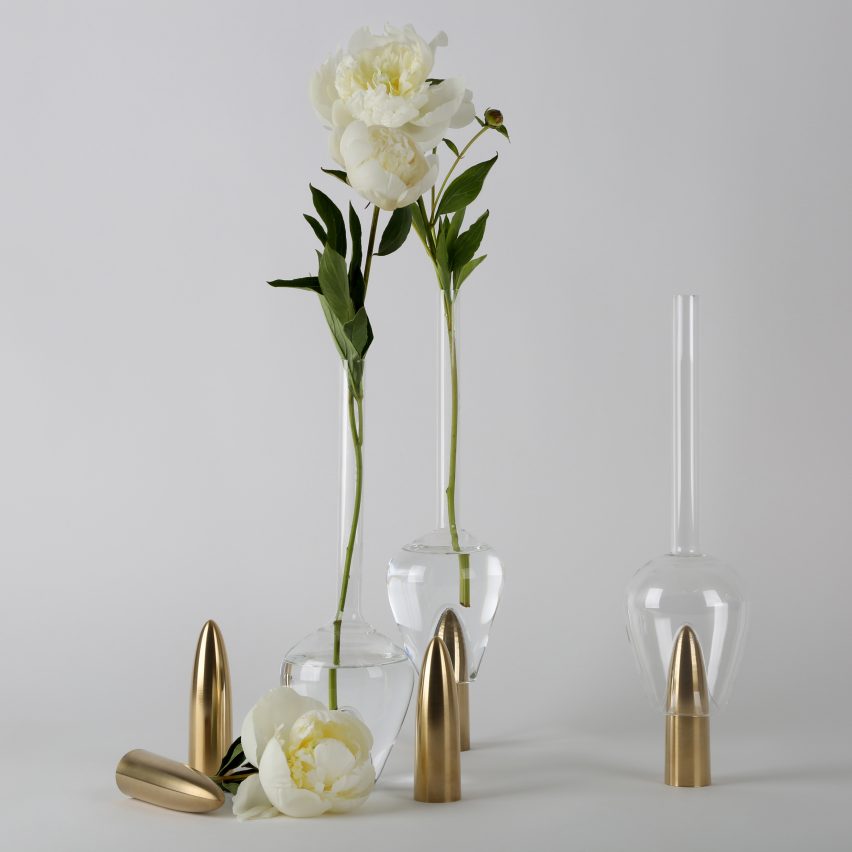
Beirut designer Richard Yasmine has created a collection of glass vessels that rest on dildo-like brass objects. Read more
RAW Architecture’s Brava Casa is a Philosophy of Life and Form

© Eric Dinardi
RAW Architecture‘s Brava Casa 99 Percent Sumarah was inspired by an Indonesian form of meditation centered on the philosophy of life. Sumarah is defined as a “total surrender,” allowing the partial ego to give way to the universal self.
© Eric Dinardi
The practice is based on developing sensitivity and acceptance through deep relaxation of body, feelings and mind. Its aim is to create inside ourself the inner space and the silence necessary for the true self to manifest and to speak to us said the architects.
© Eric Dinardi
Raw Architecture’s team explained that a total surrender to life allows one to see the real beauty in the world. They added that this cycle between mind and soul is a continuous loop, which was the inspiration behind their plan for the structure.
© Eric Dinardi
Created with polycarbonate by Danpalon, the project is connected with steel elbow and screw bolt. By creating space within space, the architects have, in essence, created life within life by filling each box with plants or fish.
Looking at the elevation of the structure resonates with the Indonesian mountains that possess sacred meanings of human achievement. Moreover, the box-like composition was influenced by the stacking system in Indonesian temples. Ancient temples, like Borobudur and Prambanan, were formed by stacking many blocks of stone.
© Eric Dinardi
The best part of the structure? Its transparency. One can see through the boxes and into other forms of its life systems.
© Eric Dinardi
News Via: RAW Architecture
HKS-Designed L.A. Stadium Will Be the Largest in the NFL

Courtesy of HKS
After 21 years of playing in St. Louis, the Rams are moving back to Los Angeles — and a new stadium will greet them. Slated to open in 2019, HKS’s new LA Stadium will be the largest in the NFL (covering three acres) in addition to the home of the Los Angeles Rams. Beyond sports usage, the structure will also host a performing arts center and sweeping public gardens.
Courtesy of HKS
The regional climate and cultural DNA of Southern California and Los Angeles are the foundation of our design, said HKS Principal Mark A. Williams, AIA, LEED AP. We have crafted a design that is responsive to its site, the community and the global stage of sports and entertainment. We believe this project represents a very important piece of architecture for Southern California and will broaden the fan experience in sports and entertainment venues.
Courtesy of HKS
After thorough research on the site’s climate, the architects created a design that adapts to its surrounding environment and provides a pleasant interior venue. The perforated metal skin that wraps around the stadium includes outdoor rooms and plaza spaces — blurring the line between inside and outside. Additionally, an ETFE (transparent roof skin that protects guests from the outside elements) canopy allows for year-round events.
Courtesy of HKS
From day one, Mr. Kroenke talked to us about his vision to elevate the fan experience, continued Williams. He challenged us to create a venue unlike any other in sports that celebrated the NFL’s return to Los Angeles.
Furthermore, the venue will provide 70,000 fixed seats, with the option to entertain more than 100,000 fans. It will also host the Super Bowl in 2021.
Courtesy of HKS
HKS, a global presence with a large repertoire, will be working with Kroenke Sports and Entertainment on this groundbreaking project. Stan Kroenke, owner and property developer of the Rams, is attributed with bringing the Rams back to Los Angeles.
As for the project’s estimated price tag? $2.6 billion.
News Via: HKS Architects
Boulevard Club West Wing Expansion / Teeple Architects

© Scott Norsworthy
- Architects: Teeple Architects
- Location: Toronto, ON, Canada
- Lead Architects: Stephen Teeple (Design Principal), Chris Radigan, Martin Baron
- Area: 29000.0 ft2
- Project Year: 2015
- Photographs: Scott Norsworthy
- Other Participants: The Boulevard Club and PHA Project Management
© Scott Norsworthy
The Boulevard Club is an iconic structure on Toronto’s western waterfront, immediately identifiable from both the land and the lake. The new West Wing expansion is a two-storey addition connected to the west side of the historic centre block building that was designed for the Parkdale Canoe Club by Molesworth West & Secord Architects of Toronto in 1923.
Plan Site
The expansion includes change rooms, a spa and wellness centre, five badminton courts, a multi-purpose gymnasium, and numerous small lounges. The volumetrically large and windowless program is creatively organized as a sculptural form on the tight site while taking full advantage of the views to the lake and respecting the water views from the north.
© Scott Norsworthy
The building continues the tradition of pavilion architecture along the western waterfront.
Section
Creativity & Ccontext
The project organizes the large, windowless volumes of the program elegantly and naturally on a very tight site and seamlessly extends the circulation flow of the existing building. The mass of the large spaces within the building are mitigated by a large, flowing roof. The roof starts low on the east to connect to the historic clubhouse and to maintain views from the Parkdale neighbourhood to the north, and then rises to the west over the large badminton courts. The roof is an iconic landmark from the water and a folly-in-the-park from the land side. The complete building is a sculptural composition of three roofs, each representative of its era: the early 20th century centre block, the exuberant mid-century modern roof of the east wing, and the computer-generated curves of the 21st century addition.
© Scott Norsworthy
Sustainability
The building is clad in a high-albedo white aluminum standing seam that is installed on thermally-broken clips that minimize cold-bridging to maximize the effect R-value of the assembly.
The site does not have access to a storm sewer system and historically rain water has been discharged directly into the lake. The project helps to protect Toronto’s western beaches and the lake by incorporating UV treatment system to reduce the amount of untreated rainwater entering the lake from the site.
© Scott Norsworthy
Good Design Good Business
The new West Wing is an important part of the club’s strategy to attract the next generation of members to the club. Newer demographics are looking for a more health and fitness focus in their club without losing the important social aspect. The West Wing incorporates social spaces into the sports facilities, such as lounge spaces within the locker rooms, a badminton viewing gallery and tournament gathering space, and gymnasium doors that open directly onto a beautiful roof terrace where yoga and fitness classes can spill outside. The social and fitness functions of the club are now much more integrated.
An increasing number of potential members want to enjoy their club experience with their children. The club is attracting young families with the addition of large family change rooms with the same luxurious finishes as the adult change rooms, and a new multi-purpose gymnasium to house the club’s summer camps that were previously in a tent on the front lawn. The project welcomes families and children by integrating them fully into the club experience.
© Scott Norsworthy
Legacy
Each of the three main blocks of the building were built two generations apart. Each faithfully represents its own era, creating an intergenerational dialogue in architecture. The new West Wing is this generation’s contribution to that dialogue.
The city has expressed a vision of the future with continuous public access along the entire waterfront. The West Wing is held back on the south to be no closer to the water than the existing building to work with the city’s vision.
© Scott Norsworthy
Product Description. Kalzip standing seam aluminum is an economical system for cladding complex and curvilinear forms. Panels of almost unlimited length are formed on site, minimizing end-to-end joints and helping to the form a fluid continuity. Thermally-broken stand-offs minimize cold-bridging through the insulation to improve building performance.
Studio Anne Holtrop Wins 2016 Challenge of the Time Prize

Dutch Waterline Museum / Studio Anne Holtrop. Image Courtesy of the International Architectural Charitable Foundation of Iakov Chernikhov (ICIF)
Dutch firm Studio Anne Holtrop has won the 2016 Challenge of The Time, an international architectural prize named by architect and artist Iakov Chernikhov. Now in its fifth iteration, the prize honors young architects up to 44 years old for the “best architectural project concepts that [feature an] innovative approach” and face “challenges to the future.”
Studio Anne Holtrop’s work varies from spatial temporary models and pavilions to extensive public buildings. For instance, over the past several years, the studio has designed the Museum Fort Behten near Utrect, and the National Pavilion of Bahrain for the EXPO exhibition in Milan, as well as for the Venice Biennale.
Trail House Temporary Museum / Studio Anne Holtrop. Image Courtesy of the International Architectural Charitable Foundation of Iakov Chernikhov (ICIF)
Two representatives from the Studio received the award at the Embassy of the Kingdom of the Netherlands in Moscow. The Studio was selected out of 74 nominees from 23 countries.
National Pavilion of Bahrain for the Venice Biennale / Studio Anne Holtrop. Image Courtesy of the International Architectural Charitable Foundation of Iakov Chernikhov (ICIF)
Laureates of the Change of The Time prize have historically gone on to become “stars of contemporary architecture,” according to the International Architectural Charitable Foundation of Iakov Chernikhov (ICIF). Laureates include Piere Vittorio Aureli and Junya Ishigami.
National Pavilion of Bahrain for the Milan EXPO / Studio Anne Holtrop. Image Courtesy of the International Architectural Charitable Foundation of Iakov Chernikhov (ICIF)
Museum Fort Echten / Studio Anne Holtrop. Image Courtesy of the International Architectural Charitable Foundation of Iakov Chernikhov (ICIF)
News via the International Architectural Charitable Foundation of Iakov Chernikhov (ICIF).
Watch Harvard GSD Celebrate Zaha Hadid in this Discussion Including Patrik Schumacher and Elia Zenghelis

In October, the Harvard Graduate School of Design (Harvard GSD) hosted “Zaha Hadid: A Celebration,” an evening of presentations and discussion around the extraordinary work and life of the late Zaha Hadid. Six months on from Hadid’s sudden passing in March, the Dean of Harvard GSD, Mohsen Mostafavi, introduced the event as the appropriate time to focus on creative recognition and “an evening of incredible celebration and enjoyment.”
Following Mostafavi’s introduction, there were three presentations from speakers who all had a different relationship to Hadid. First up was Elia Zenghelis, speaking from his experience as an early teacher of Hadid. Patrik Schumacher followed, speaking as professional partner and collaborator, and finally Zhang Xin, co-founder and CEO of SOHO China, as Hadid’s client and friend. All three speakers had much to say on both the work and life of Hadid, with personal stories woven into more architectural discussion. The event ended with a panel discussion, with all three presenters led by Mostafavi and questions from the audience.
You can watch the full 2-hour event above, or check out our summary of the highlights below to jump to the section that interests you most:
- 0:00-10:12: Introduction by Mohsen Mostafavi, Dean of Harvard GSD and also a friend of Hadid, in which he discusses meeting her on the first day of architecture school.
- 10:12-23:24: Elia Zenghelis, Hadid’s teacher at the AA, likened her loss to “losing a daughter,” even though she treated him “like a toddler.” He discusses her work as a student including her Malevich-influenced museum for the 19th Century and competition entry for the Prime Minister’s House in Ireland.
- 23:30-39:14: Patrik Schumacher prefaces his presentation by explaining how as a student, “Zaha transformed the whole discipline for me.” He discusses her “best moves” as an architect and problem solver, subtitling them under explosion, calligraphy, distortion and landscape analogy.
- 39:30-57:57: Zhang Xin gives her story as a client and friend of Zaha. She begins with her first time meeting Hadid, after she won one of Zhang’s competitions, and ends with an uncanny anecdote from her attendance at Hadid’s funeral.
- 58:28-1:41:22: Panel discussion and questions from the audience led by Mostafavi.
Arts Building for The American School in London / Walters & Cohen Architects

© Marcus Peel
- Architects: Walters & Cohen Architects
- Location: St John’s Wood, London NW8, United Kingdom
- Area: 1200.0 m2
- Project Year: 2016
- Photographs: Marcus Peel, Dennis Gilbert/VIEW, Courtesy of Walters & Cohen
- Contractor : ISG
- Building Services : Ernest Griffiths
- Structure : Price & Myers
- Project Manager : Martin Long in association with TGA
- Presentation Model : Bullfrog Models
© Dennis Gilbert/VIEW
From the architect. In 2011 Walters & Cohen won an invited competition to design a new arts building for the American School in London.
Section
Taking its cue from the mass and footprint of the listed, semi-detached villas on the site adjacent, the four-storey building is designed to resemble a single large property. The complexity of the project is heightened by its location on a prominent corner plot in the St John’s Wood conservation area, where proposed developments attract a lot of attention. We liaised with the school’s distinguished board of governors, ward councillors and local politicians, and presented the concept design in a three-day public exhibition. The scheme was extremely well received.
© Dennis Gilbert/VIEW
A range of materials for the external façades were researched and presented to the planners and governors, including recycled glass, stucco flutes and marble; stone was considered the most appropriate material on account of its elegance and traditional qualities. The resulting façade is a unique piece of design that draws on the timeless quality of stone, expressed in a truly contemporary manner. Light plays on the façade, flattening and disguising the flute pattern one minute, only to boldly express it in the next. The building has both an elegant lightness and a weight and gravitas, unique and contemporary yet effortlessly taking its place as an equal among its more mature neighbours.
Ground Floor Plan
The new building’s sculptural quality is fitting to the work that goes on inside. The ground floor provides exhibition space, with art, sculpture, ceramics and photography studios on the other three floors. An elegant concrete frame provides long span, column-free studio space at all levels, bringing in daylight from the north and south and creating a flexible, spacious and comfortable environment in which pupils can develop their art.
© Dennis Gilbert/VIEW
Product Description. Bespoke stone façade: S McConnell & Sons with Stone Cladding International Limited
The façade of the new art building at the American School in London is a unique piece of design that draws on the timeless quality of stone, expressed in a truly contemporary manner. It is the product of close collaboration between the design team and the stonemason and thoroughly embraces what modern manufacturing techniques can offer.
© Dennis Gilbert/VIEW
The stonemason S. McConnell & Sons’ skills and computer-driven manufacturing processes allowed each stone of the façade to be cut to an individual pattern, which meant there were more possibilities to design something innovative and unique to the School. The chosen motif creates a gradual fade on the vertical flutes, from 20mm deep at the base to a flat-faced stone at the head of the building. The complex 3D-modelling expertise of the stonemason made a non-linear reduction possible, meaning that the depth of the flute remains greater for the first two thirds of the building before tapering more quickly above the head of the windows.
© Dennis Gilbert/VIEW
Förstberg Ling transforms blacksmith’s workshop into house for Hem founder
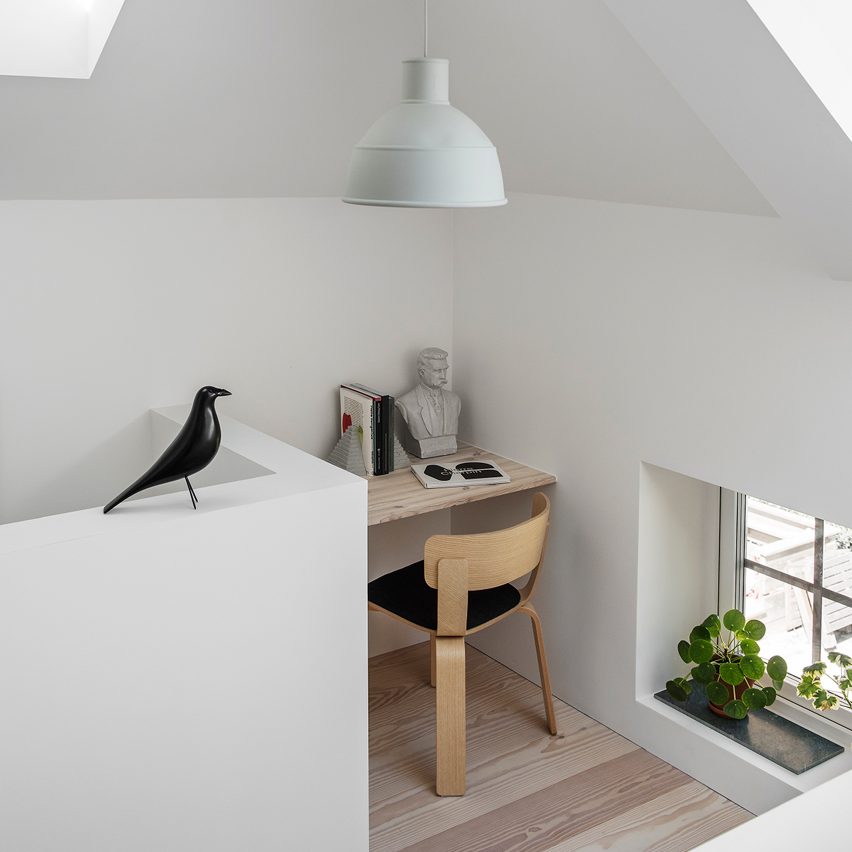
Swedish studio Förstberg Ling has converted a former blacksmith’s workshop in Stockholm to create a light-filled family home for Petrus Palmér, co-founder of furniture brand Hem and design studio Form Us With Love. Read more
 Sig Nordal