Waigaoqiao Cultural & Art Centre / Tianhua Architecture Planning & Engineering Ltd.


© Arch-Exist

© Arch-Exist


© Arch-Exist


© Arch-Exist


Exhibition. Image © Arch-Exist


Enterprisers Club. Image © Arch-Exist

  • Client: Shanghai Waigaoqiao New Town Development Management Co.,Ltd.
  • Interior Design: Shanghai XianDai Architectural & Landscape Design Research Institute Co.,Ltd.
  • Acoustics Consultant: Shanghai Acoustical Society
  • Structural Design: Deng Zhiyong, Wang Xiangjie
  • Mechanical And Electrical Design: Yu Hui, Zhao Xiangying, Yang Jun
  • Site Area: 12,000 m2
  • Green Ratio: 40%

© Arch-Exist

© Arch-Exist

Shanghai Waigaoqiao Cultural & Art Centre is located on the E-03 Plot at the center of Waigaoqiao New Town, adjacent to North Zhangyang Road to its east, just 100 meters from Zhouhai Road to its north, near the Zhouhai Road station along the Metro Line 6. 


© Arch-Exist

© Arch-Exist

Tianhua Architecture Planning & Engineering Co,. Ltd. won the bidding for Shanghai Waigaoqiao Cultural & Art Centre in 2006, ushering in a new journey that would later last one decade. 


1F plan

1F plan

The authorities emphasizes in its master plan for the New Town that it expects the site to become a central business district with office blocks, hotels, business centres, conference centres and so forth. 


© Arch-Exist

© Arch-Exist

The project is expected to create a multi-purpose cultural and art centre to host literary and art performances, conferences, film screenings, art exhibitions, cultural, science education, reading and other public activities. 


© Arch-Exist

© Arch-Exist

Located near the Waigaoqiao Free Trade Zone, the Centre is 6 kilometers away from the Waigaoqiao Port. Given that the Port is home to shipping containers, financial and trade businesses, the architects involved anticipate the Centre to become an extension of the global image of this area that mirrors its cultural life. 


© Arch-Exist

© Arch-Exist

The architects employed simple approaches to highlight the building’s characteristics under the geographic context. Based on the “container culture” typical of such ports, they created a juxtaposition of distinct volumes with glass and metal to enhance the visual effects while ensuring the building functions in an energy-efficient manner. Meanwhile a series of indoor and outdoor spaces are designed to prompt more public activities. 


© Arch-Exist

© Arch-Exist

The huge “box” for exhibitions is raised on other volumes to establish a dialogue with the outside world. Its exterior space enclosed by glass ribs provides views of its surroundings, such as the light rail trains in movement where passengers can also spot the box, getting first impression of the area. 


© Arch-Exist

© Arch-Exist

Section c-c

Section c-c

© Arch-Exist

© Arch-Exist

The theatre is designed to mainly host literary and art performances and major conferences, occasionally film screenings. 


© Arch-Exist

© Arch-Exist

The second floor which is accessible from the square connecting the out-door stair , accommodates a children’s wonderland , a multi-media corner ,a reading room and a centre for the elderly. Space on this floor brings together the activities for both children and adults, and it’s featured by a huge bay window for the children’s wonderland there.


2F plan

2F plan

The fifth floor is where spaces for entrepreneurs’ club, an exhibition hall,a wine bar and other training classrooms are located.


Exhibition. Image © Arch-Exist

Exhibition. Image © Arch-Exist

5F Plan

5F Plan

platform on the 4th floor. Image © Arch-Exist

platform on the 4th floor. Image © Arch-Exist

Construction on the Centre had to grind to a halt in 2009 for various reasons. No doubt it is an inspiration to the architects and the client that Waigaoqiao Cultural & Art Centre is eventually completed in 2016.


Urban Environment . Image © Arch-Exist

Urban Environment . Image © Arch-Exist

http://ift.tt/2fSU2Ax

Escobar Renovation / Chen + Suchart Studio


© Winquist Photography

© Winquist Photography


© Winquist Photography


© Winquist Photography


© Winquist Photography


© Winquist Photography

  • Project Manager & Project Designer: Aaron Bass
  • Construction Company: Verge Design, Joby Dutton, Contractor, Justin Novak
  • Structural Engineering: BDA Engineers – Greg Brickey, P.E.
  • New Construction Area: 7.2 sqm livable
  • Renovated Construction Area: 55.8 sqm

© Winquist Photography

© Winquist Photography

Sited in the 1930’s era neighborhood known as F.Q. Story, the Escobar Renovation represents the character and flavor of one of very few areas in the young city of Phoenix, Arizona that can be called historic.  The majority of the 602 homes that comprise this neighborhood still retain the varying architectural styles that make this district unique.  Homes in this area are distinctly smaller than today’s average homes.   


© Winquist Photography

© Winquist Photography

The Escobar Renovation is a renovation to an existing home whose architectural style can be categorized as having an English Tudor style.  With the exception of a small storage closet, this home has largely remained untouched for nearly 100 years.  As a result, the spaces of the home served a very different need indicative of that era.  The existing 1,100 square foot (SF) house was separated into many different spaces each being closed off from one another.  Codes and guidelines mandated by the City of Phoenix required that any new work to the exterior maintain the character of the historic qualities of this home and neighborhood.  


© Winquist Photography

© Winquist Photography

Section

Section

© Winquist Photography

© Winquist Photography

Our proposal for the renovation and addition to the existing home is deeply rooted in an architecture that is aesthetically and functionally of our client’s needs in today’s era.  In the main space of the public area, the decision was made to make the same footprint feel more expansive both in plan and in section.  All the walls of the existing public areas were removed to promote one larger space where the living room, kitchen and dining area became one unified space.  This unification of space was further expanded upon by taking advantage of the existing attic space as well, allowing for a vaulted area over the living room while returning to the original ceiling height for the kitchen and dining area.  This space further expanded outwards to the backyard area where the interior and exterior spaces merge as one space joined by operable sliding glass doors.  The continuous sinuous move in the ceiling plane serves to expand the sense of the space where the existing space could be perceived as something much larger.  


© Winquist Photography

© Winquist Photography

The addition of a master bedroom and bathroom occur within the construction of the new 400 SF addition.  Fundamentally, connection with the historic home needed to engage in a dialogue with the existing home’s language without being a facsimile of a different era.  Typologically, the addition is sympathetic to the existing home while distinguishing itself as something distinctly new, as an open ended gabled form.  Full height glazing and operable glass sliding doors lead out to an enclosed patio within the extrusion of this form.  A cantilevered concrete patio and walkway unify the new covered patio with a covered patio of a similar language located adjacent to the dining and kitchen area.  This addition also contains the new master bathroom where the gabled space expands skyward to a skylight while retaining privacy.  The addition is clad with a standard 22ga standing seam metal system with a charcoal kynar500 finish.  The panels continue vertically from wall surface to become the roofing surface as one unified materiality for the addition.  The configuration of the end of this metal gable further reconceptualizes the iconography of the gabled form.   


© Winquist Photography

© Winquist Photography

How does one interact with the language of a much different era within the context of the current time period, and can it be modern?  The Escobar Renovation proposes questions about language and iconography within the context of a 1930’s era home.  The proposition of an architecture which is rooted in an era nearly 100 years later became the challenge of this project.  Our renovation sought to work within the confines of the existing language while establishing a distinctly different language.  This dialogue being engaged unifies both the existing and current languages of the home, the spatial qualities and as a result, engages the perceptions of the iconography of both the modern and traditional home.  


© Winquist Photography

© Winquist Photography

http://ift.tt/2fpRjLc

Aedas Wins Two International Competitions to Design Airports in Shenzhen and Hong Kong


Shenzhen Airport Satellite Concourse, China, by Aedas. Image Courtesy of Aedas

Shenzhen Airport Satellite Concourse, China, by Aedas. Image Courtesy of Aedas

Aedas have recently won two international competitions to design international airport buildings: the Shenzhen Airport Satellite Concourse and Hong Kong International Airport Third Runway Passenger Building.

In recent years, Aedas have emerged as a leader in airport design, as they are also currently working on the Hong Kong International Airport Terminal 2 Expansion, and have previously worked on Hong Kong International Airport Midfield Concourse and North Satellite Concourse. With the two newly-won projects, Aedas hopes to reinforce their strength and growing influence in airport design.

Shenzhen Airport Satellite Concourse


Shenzhen Airport Satellite Concourse, China, by Aedas. Image Courtesy of Aedas

Shenzhen Airport Satellite Concourse, China, by Aedas. Image Courtesy of Aedas

From the architects: As an international team consisting of GDAD as the local design institute/terminal planners, Landrum & Brown as aviation planners, and Aedas as Lead Design Architect, we have been awarded the design and construction of the new Shenzhen Airport Satellite Concourse in China. Passengers arrive in the heart of the Concourse from the Auto People Mover (APM) station which allows light filled views up to the roof over. The multi-level retail and food & beverage areas provide a rich variety of environments and areas for passengers, guiding them intuitively towards the departure gates. The roof form over, inspired by the gently curving rivers of the region, further reinforces the flow of the passengers through the Concourse. Arriving passengers are orientated to the perimeter of the building allowing them to experience natural diffused daylight as they move toward the APM and onwards to the main terminal.


Shenzhen Airport Satellite Concourse, China, by Aedas. Image Courtesy of Aedas


Shenzhen Airport Satellite Concourse, China, by Aedas. Image Courtesy of Aedas


Shenzhen Airport Satellite Concourse, China, by Aedas. Image Courtesy of Aedas


Shenzhen Airport Satellite Concourse, China, by Aedas. Image Courtesy of Aedas

HKIA Third Runway Passenger Building


HKIA Midfield Concourse, Hong Kong, by Aedas. Image Courtesy of Aedas

HKIA Midfield Concourse, Hong Kong, by Aedas. Image Courtesy of Aedas

From the architects: Again as the Lead Design Architect, along with AECOM as Lead Consultant and Engineer, and OTC as Aviation Planners, is part of the successful team appointed for the New HKIA Third Runway Passenger Building Design Consultancy. The new 280,000 square-metre building is located directly north of the existing Terminal 1 and south of the new third runway and is connected back to the expanded Terminal 2 by an underground APM system. The Third Runway Passenger Building, together with the expanded Terminal 2, can serve an additional 30 million passengers annually.


HKIA Midfield Concourse, Hong Kong, by Aedas. Image Courtesy of Aedas


HKIA North Satellite Concourse, Hong Kong, by Aedas. Image Courtesy of Aedas


HKIA North Satellite Concourse, Hong Kong, by Aedas. Image Courtesy of Aedas


HKIA Midfield Concourse, Hong Kong, by Aedas. Image Courtesy of Aedas

News via: Aedas

http://ift.tt/2gh3cnm

Enniskillen Castle Museum / Kriterion Conservation Architects


© Vizz Creative

© Vizz Creative


© Vizz Creative


© Vizz Creative


© Vizz Creative


© Vizz Creative

  • Client : Fermanagh & Omagh District Council
  • Project Manager: Edmond Shipway
  • Structural Engineer: RPS Group
  • Mechanical & Electrical Engineer: Gillespie and Cummings
  • Quantity Surveyor: Edmond Shipway
  • Main Contractor: QMAC Construction 

© Vizz Creative

© Vizz Creative

Enniskillen Castle, which dates from the 16th century, sits on the banks of the River Erne in the centre of the Co Fermanagh town in Northern Ireland.  This scenic backdrop is the setting for a landmark redevelopment by Hamilton Architects which has transformed a myriad of historic buildings into a cohesive heritage Gateway to the County.


Ground Floor Plan

Ground Floor Plan

The site holds historical significance due to its location on the river bank and its role in guarding one of the main passes into Ulster. Over the centuries, its strategic importance has remained a pivotal factor, with the addition of various buildings as the site evolved from a garrison fort into a military barracks and, more recently, into a Heritage Centre. 


© Vizz Creative

© Vizz Creative

Several significant components define the historical assemblage, including The Keep, Watergate, Curved Range, Magazine, Shift House, Northern Barrack Block, Barrack Coach House. The Health Centre and Heritage Centre were much more recent additions. The site is encompassed by a perimeter wall enclosing the Castle Yard and a Rifle Range. The Keep and Watergate are monuments in State Care, while the Curved Range and the Northern Barrack Block are Listed buildings.


© Vizz Creative

© Vizz Creative

The redevelopment has revealed the significance of the site from a historical, operation and audience perspective, enabling Fermanagh County Museum to increase access to collections of local, national and international importance and to become the first port of call for learning about the county’s heritage from the Drumclay Crannog to the G8 Summit.


First Floor Plan

First Floor Plan

Four buildings within the complex – Magazine, Shift House, Barrack Coach House and Heritage Centre – were restored and refurbished to pool museum, tourism and genealogy resources and create new visitor spaces. 


© Vizz Creative

© Vizz Creative

The Health Centre was demolished to create space for a new Visitors Centre with History Hub, Genealogy Centre, Castle Viewing area, Café and Shop. The refurbishment of the Barrack Coach House accommodates four new galleries, while a link building between the Visitors Centre and Barrack Coach House allows visitors glimpses of the original castle wall. A walkway on the roof of the link building offers views of the castle site and of Enniskillen town. 


Elevation

Elevation

The design was challenging in that guidelines for the historic footprint had to be met while providing facilities appropriate to the needs of a modern museum and visitor facility. The external envelope was clad with Irish blue (flamed finish) limestone to complement the original fabric of the adjacent historic buildings.  An exterior courtyard populated with giant umbrellas provides an attractive and flexible all-weather event space.


© Vizz Creative

© Vizz Creative

Product Description.The principal material used for the external façade of the new visitor centre and armoury building was Irish Blue Limestone (flamed finish and blue/grey in colour). This limestone walling gives a light, textured finish and is built in random coursed and sized ashlar which follows the precedent of the other historic buildings within the complex.

http://ift.tt/2gi607o

View London’s Newly-Opened Design Museum Through the Lens of Interior Architect John Pawson

http://ift.tt/2fpq03u

Intimidating to design a Design Museum for designers? No, because what you’re doing is working with the challenges of the existing space.

In this new video from NOWNESS, the audience is treated to a viewing of the new Design Museum in London, courtesy of its interior architect John Pawson. Part interview and part guided tour, NOWNESS uses the unorthodox technique of giving the building’s designer his own camera, making parts of the video an intriguing insight into how Pawson sees his own work.

Designed in collaboration with OMA and Allies and Morrison, the project is a thorough renovation of the former Commonwealth Institute building, a 1962 structure by Robert Matthew, a founding partner of RMJM. Pawson dwells on the experience of working with their dramatic hyperbolic paraboloid roof, the materials used in the design, and the challenges of working on such a sensitive project.


Courtesy of NOWNESS

Courtesy of NOWNESS

Courtesy of NOWNESS

Courtesy of NOWNESS

Courtesy of NOWNESS

Courtesy of NOWNESS

Courtesy of NOWNESS

Courtesy of NOWNESS

http://ift.tt/2fs3s5z

University of Toronto Faculty of Law, Jackman Law Building / B+H Architects + Hariri Pontarini Architects


Courtesy of B+H Architects

Courtesy of B+H Architects


Courtesy of B+H Architects


Courtesy of B+H Architects


Courtesy of B+H Architects


Courtesy of B+H Architects


Courtesy of B+H Architects

Courtesy of B+H Architects

An iconic new home for the University of Toronto’s Faculty of Law, the new Jackman Law building designed by Hariri Pontarini Architects and B+H Architects, ushers in a new era for the school’s law students.


Courtesy of B+H Architects

Courtesy of B+H Architects

Situated next to the university’s famed Philosopher’s Walk and overlooking Queen’s Park Crescent, a dramatic new façade comprised of glass and nickel fins bend along the curve of the street, distinguishing themselves as the most identifiable feature of this landmark new building.


Courtesy of B+H Architects

Courtesy of B+H Architects

In total the renewal project introduces an additional 66,000 square feet, consolidating the previously dispersed faculty into one building, while also providing a new 210-student lecture hall, several seminar halls, new commons lounge and forum space, offices and food service space.


Site Plan

Site Plan

The Osler Hoskin and Harcourt Atrium emerges as the new heart of the school. It features a three storey fireplace and large seating area that acts as a social hub, embracing a collaborative environment.


Courtesy of B+H Architects

Courtesy of B+H Architects

The renovation of the outmoded and dark Bora Laskin Law Library into a luminous pavilion–naturally lit on three sides—with the stunning 2-storey Torys Hall reading room at its centre takes the notion of collaboration one step further. Gone are the days of the library so quiet you can hear a pin drop. Modern study spaces have opened up to facilitate discussion and interaction, better reflecting the conditions of today’s workplace.


Courtesy of B+H Architects

Courtesy of B+H Architects

University of Toronto’s Faculty of Law Building won the Canadian Architect Award of Excellence in 2013 and was completed in the Fall of 2016.

http://ift.tt/2gBA6Dx

Tennis Terraces / GRAS arquitectos


© José Hevia

© José Hevia


© José Hevia


© José Hevia


© José Hevia


© José Hevia

  • Author Architectes: Guillermo Reynés, Álvaro Pérez, Mayca Sánchez, Xim Barceló, Marta Wieczorkiewicz and András Papp.
  • Engennering: Andreu Ortiz
  • Tecnic Architect: Vicente Juan
  • Builder: EGOS
  • Sport Club Surface: 1.130 m2

© José Hevia

© José Hevia

From the architect. White concrete cantilevered slabs define a new tennis club in the middle of the nature that combines a social building together with tennis courts; a total of 17 courts of all surfaces: grass, clay and hard. A Master series facility.


© José Hevia

© José Hevia

The strong natural context defines the concept of the project. The topography of the land demands a terracing strategy in order to place the different courts at different levels following the slope of the hill; The building itself is therefore conceived as a continuation of that terracing: 2 floating terraces, white concrete slabs, overlooking the tennis compound.


© José Hevia

© José Hevia

By positioning the building at the highest point of the land, it works as the last terrace of the project and as a great viewpoint, balcony to the rest of the plot, specially to the Centre court, the heart of the project.


Ground Floor

Ground Floor

The Centre Court is the heart of the project. A series of terraces are carved in the hill to create a natural stone stadium, a sort of “XXI century Greek Epidaurus tennis theatre”.  The “stadium” can seat up to 1500 spectators. The terraces are built with traditional stone masonry, using solid blocks of a Mallorcan natural stone called Mares. A natural scenario combining the stone and the natural grass is created following the context of the site.


© José Hevia

© José Hevia

The clubhouse is designed not just as a social building, also as a viewing platform to watch the tennis games at the Centre Court. The building leans out to the court in order to enjoy views from all floors. White exposed concrete slabs cantilevers are created to maximize those views.


Section

Section

A fully glazed ground floor welcomes the visitor with a lounge and a restaurant. The whole facade can be opened having a continuous space “in and out” so the user can enjoy the terraces, the gardens and the pool, always surrounded by the tennis courts. At the back of the lounge, the dressing rooms and service areas are located. An open steel staircase leads up to the first floor, an open plan multipurpose room with a balcony around the whole floor. Since the room can also be used as a gym, the balcony offers the possibility to install a jogging circuit around the building. A metallic mesh wraps the whole floor to protect the runners from falling.  The balcony “enlarges” when facing Centre Court to create an extra wide terrace to seat spectators during the tournament. The full floor works as a terrace overlooking the surrounding tennis courts.


© José Hevia

© José Hevia

In connection with the deck utility of the project, the rooftop is also accessible and can be used by the general public, offering extensive views of all the courts and surroundings.


© José Hevia

© José Hevia

http://ift.tt/2gh4oee

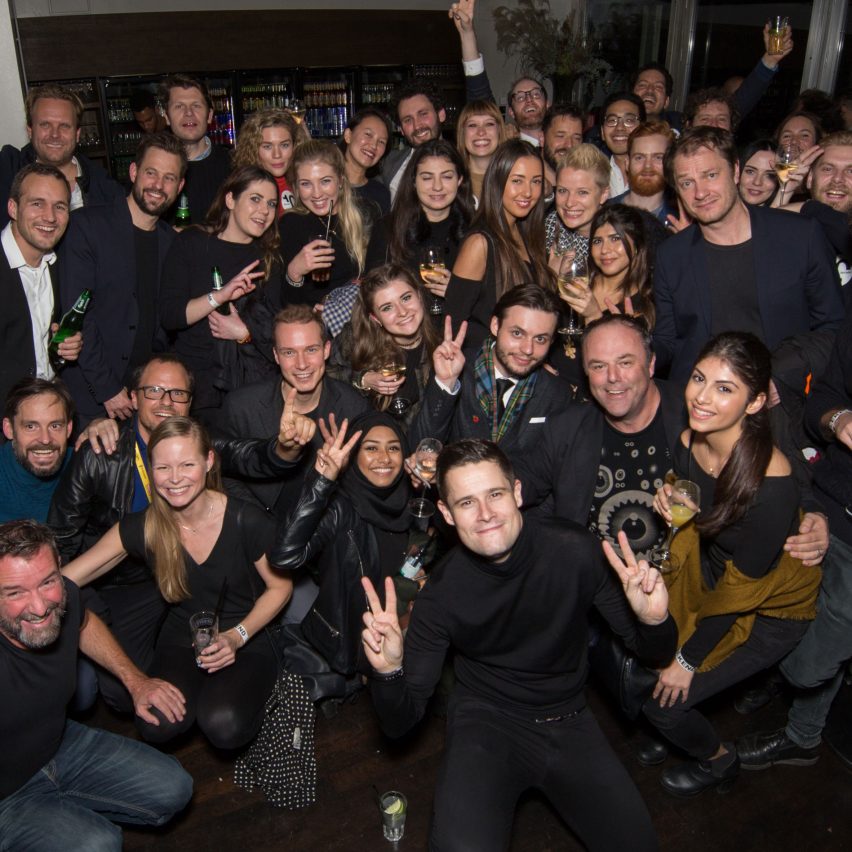
Architects celebrate launch of Dezeen Decade at Berlin’s House of Weekend

dezeen-decade-party-photographs-berlin-world-architecture-festival-sq

Architects including Will Alsop, Patrik Schumacher, Tom Kundig and Reiulf Ramstad joined Dezeen during the World Architecture Festival last week for the launch of Dezeen Decade – a year-long celebration marking our 10th birthday. See party photographs on Facebook ›

http://ift.tt/2frauYa

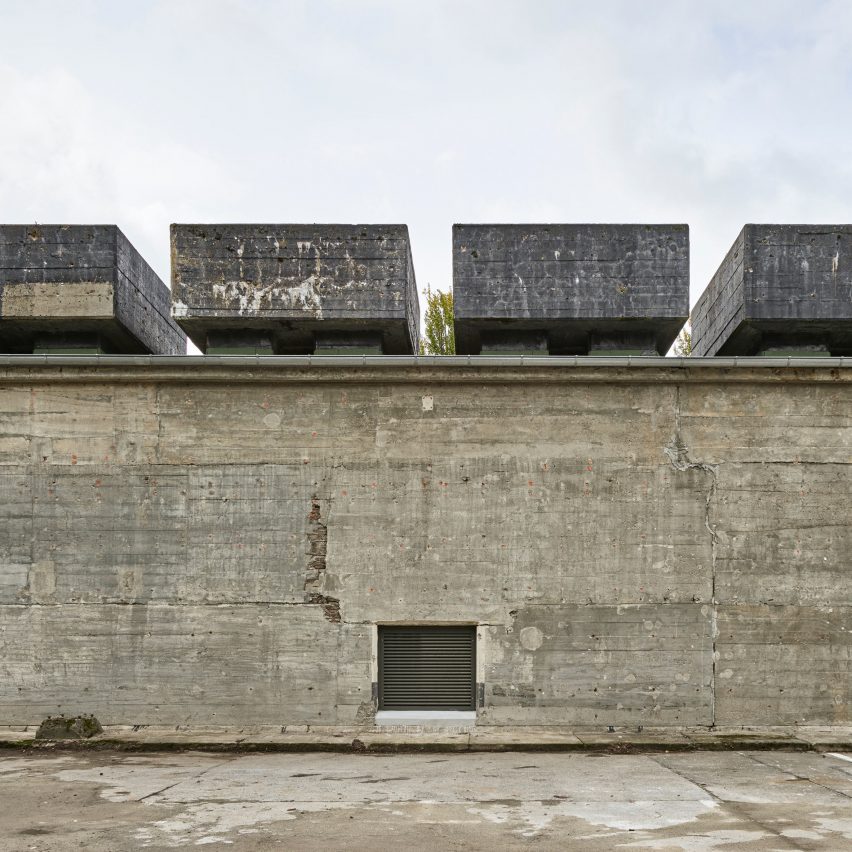
John Pawson converts WW2 bunkers into museum of Southeast Asian art in Berlin

the-feuerle-collection-john-pawson-architecture-berlin_dezeen_2364_sqc

Architectural designer John Pawson has transformed a pair of second world war telecommunication bunkers into an art and furniture museum in Berlin’s Kreuzberg neighbourhood. Read more

http://ift.tt/2fR2gt2

LG Display announces collaboration with Ross Lovegrove at WAF 2016

lg-display-oled-light-ross-lovegrove-collaboration-world-architecture-festival-2016_dezeen_sq

Dezeen promotion: electronics company LG Display has revealed its plans to create new OLED lighting designs with British designer Ross Lovegrove. Read more

http://ift.tt/2g2Sy4u