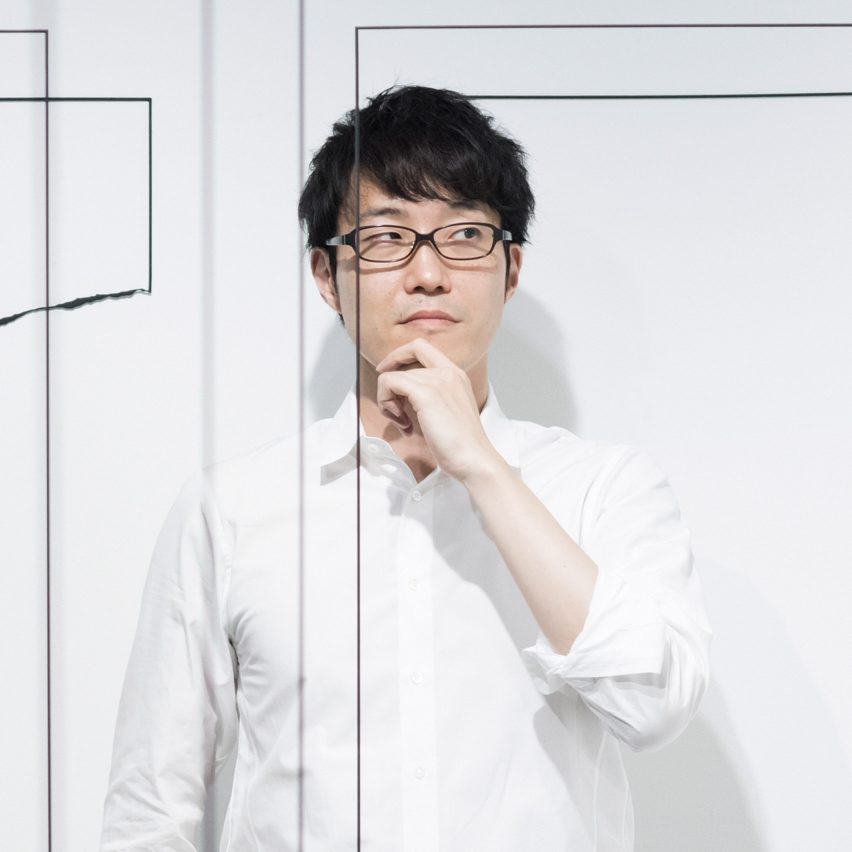
Oki Sato of Japanese studio Nendo has seen off competition from Thomas Heatherwick to claim a higher spot than any other designer on the first-ever Dezeen Hot List. Read more
Oki Sato of Japanese studio Nendo has seen off competition from Thomas Heatherwick to claim a higher spot than any other designer on the first-ever Dezeen Hot List. Read more
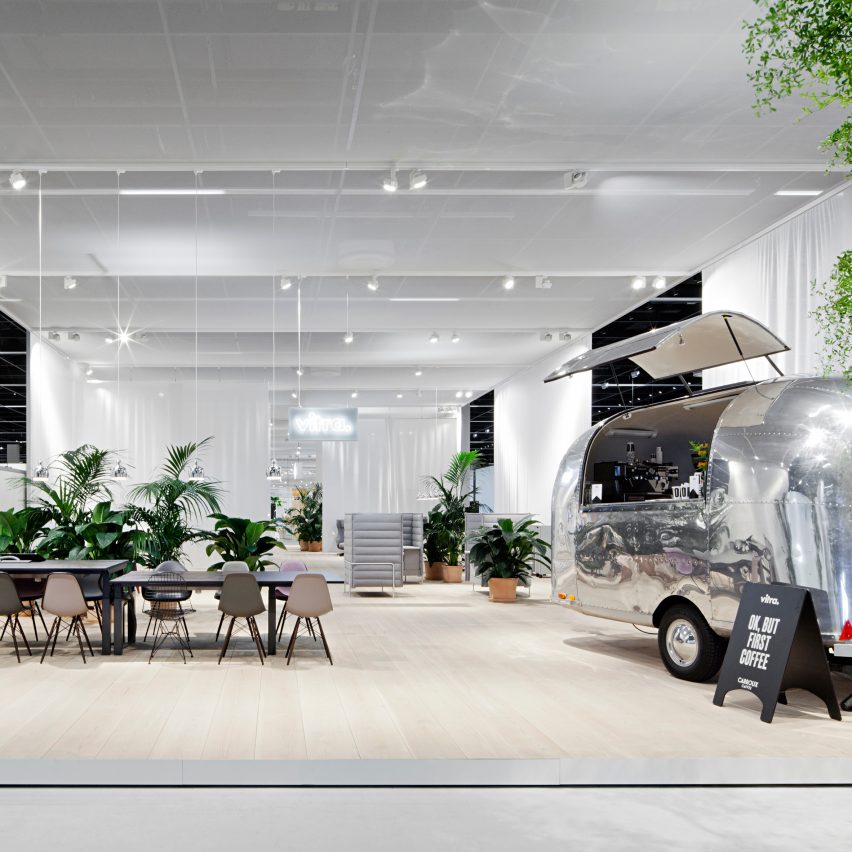
During this year’s Orgatec trade fair, Vitra took over an entire hall, filling it with products by 12 brands and small tech startups. Read more
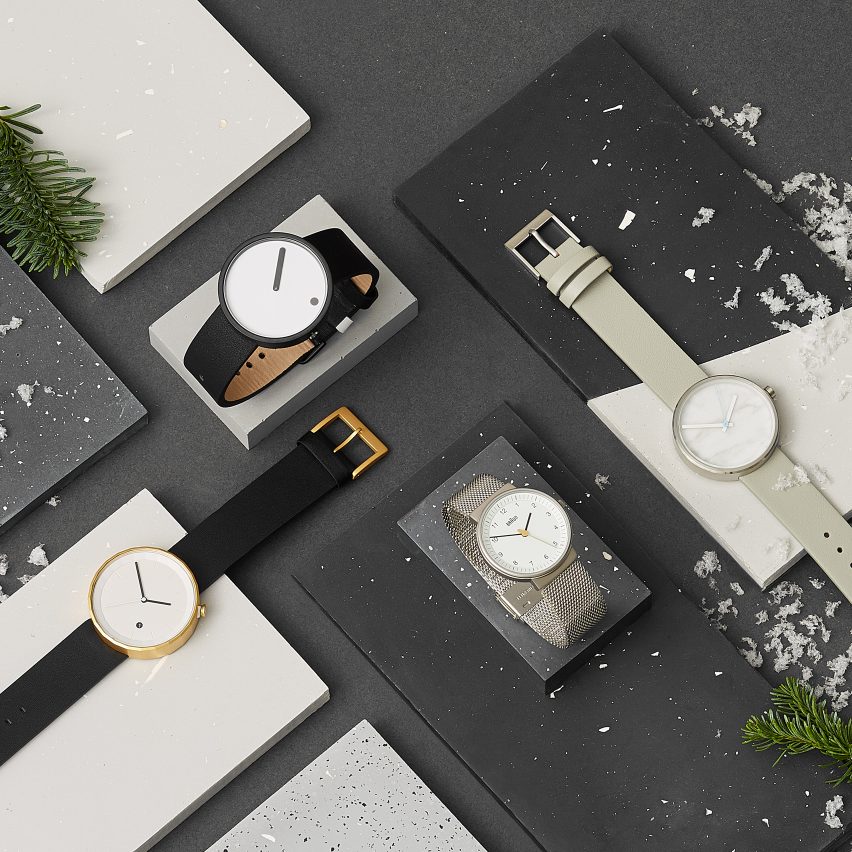
Dezeen Watch Store has introduced three new sections to its website to aid festive shopping, with each category aiming to appeal to a different style of customer. Read more

Dezeen celebrates its 10th birthday on 17 November 2016! To mark the first Dezeen Decade, we’re launching a year-long celebration. Read more
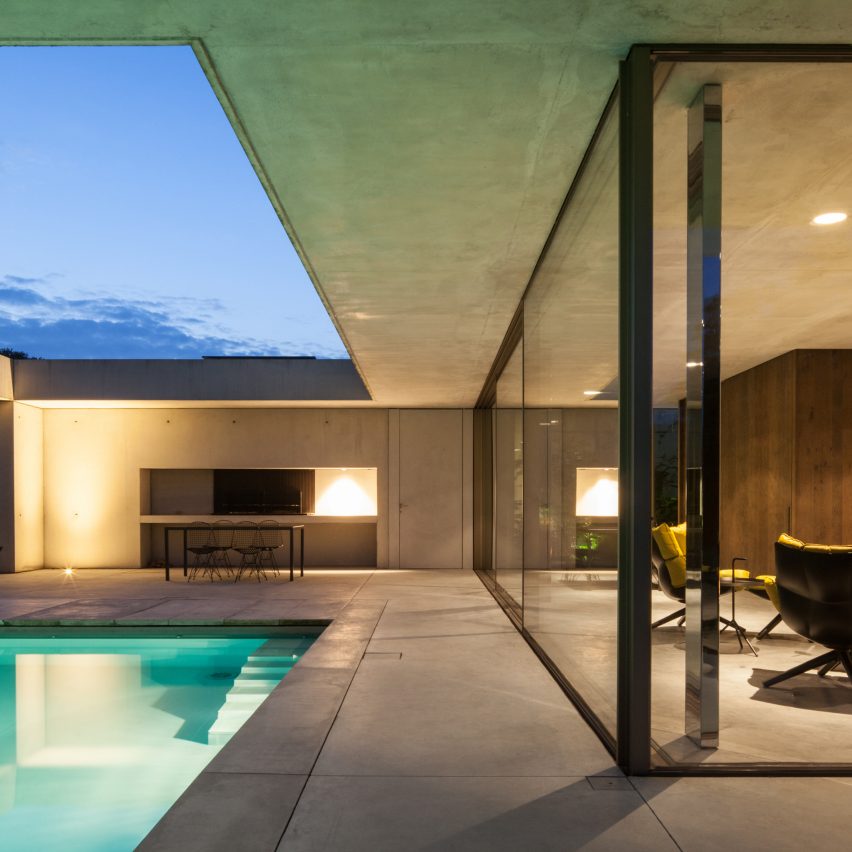
A glass box framed by a chunky concrete structure hosts a lounge at this pool house designed by Belgian architect Steven Vandenborre for a home in Bruges. Read more

The global company, Windward is best known for their data and analytics on the maritime domain. The company is a pioneer in the business as they have created the first maritime data platform, The Windward Mind. The platform analysis and organizes with the use of big data and deep shipping expertise the worlds maritime data, making it accessible and actionable across verticals. From understanding what is happening at sea – from a single ship to commodity trade flows – the platform gives unique insight in decision making across industries.
Windward has recently acquired a 1,200 sqm space for its growing team of +70 employees on the premium 35th floor in the 360 Adgar Tower. The new company’s headquarters is situated in the new emerging business centre located near the Nokia Stadium landmark – East Tel Aviv. Partnering with Roy David Architecture Studio, the acquired space needed to transcend the same language as the core values of the marine data analysis company.
The overall industrial style that the architecture firm focused on is emphasized by the use of rough wood, untreated concrete core walls and bold rusted metalwork as main materials for the new headquarters. “The space is intelligently designed so that it mimics the environment the Windward company undergoes its activity in. We wanted to shift our design strategy so that the space would not reflect a luxurious yacht design but that of the harsh industrial ports.” explains the architect and founder of Roy David Architecture, Roy David.
The design strategy is well rooted in the planning of the space. Having a circular layout, the space presented a lot of challenges that the architecture team had to solve in a small timeframe of just two months. As part of the overall design process the company wanted their layout to be open space. This strategy created a series of unique technical approaches designed in collaboration with the execution company, Shin Angel. From specially calculated open acoustic barriers to a supra-structure of 14 new rusted metal columns, each design element was added so that the companies brief was met fully.
“It’s this contrast between an industrial port atmosphere and high-end tailored made office furniture elements that sets the space apart from any other project we did. With the use of CNC rough industrial metal elements, custom designed partitions, furniture and light fixtures the space is designed in a coherent language dictated by the core values of the Windward company and the architecture studio’s vision” ,adds the architect, Roy David.

From the architect. Power Lane House is an upper level extension to a heritage family home in the inner coastal suburbs of Sydney and includes a rear laneway garage. The growing family wanted a space for the parents to retreat and additional storage for their large collection of outdoor sporting goods.
The Challenge
The design challenge was to create additional space whilst maintaining and celebrating the authenticity of the original heritage house, particularly as viewed from the front street. Additionally, the owners wanted the garage at the rear to ‘tie in’ with the new upper level extension and for light and sun exposure to be a priority throughout the property.
CHORDstudio Principles
Along with addressing the client’s brief, we believe a project should consider the context of the site and contribute to the neighbourhood character in a meaningful way. This was achieved by considering and responding to views from multiple points around the site that included the front street, side laneway, rear laneway and rear commercial shopping strip as unique opportunities.
The Resolution
The challenge was resolved by creating a habitable upper level structure for the extension which sits behind the ridgeline of the existing heritage house and angles away from the street, effectively obscuring its view from the front. Additional space is created under the new roof, and adequate ceiling height is achieved, by folding the ridgeline towards the backyard. The same ridgeline is picked up again on the garage to create continuity between the two new built forms. The garage wall which faces the house is angled back as if it is looking up at the new extension, further enhancing the connection between the two new forms. By minimising overshadowing, the form of the garage addresses the client’s wish to maintain light and sun exposure in the pool and outdoor entertaining areas and maintains enough storage area for the outdoor sporting equipment including five sea kayaks.
The structural design continues the design intent to separate the new from the old with a steel portal frame which sits over the top of the existing house, not touching any of the existing walls.
The interior design of the upper retreat captures light and sun by peeling the roof back to expose a deck and large windows. The retreat can open to create one large space which includes a deck, lounge and sleeping area and close by using large sliding doors to restrict the early morning sunlight in the sleeping area.
Light and connection to the outdoor world continues in the ancillary spaces where a double skylight sits over the hallway and is fed into both the hall and adjacent bathroom by folding a timber bulkhead on itself. The bulkhead runs north/south along the ridgeline, directing light, holding services and as the carpenter on site described it, “looks a bit like a kayak”.

From the architect. The project is easily accessible via freeways and highways. Advantageously, it is located high up, resulting in a scenic city view and the evasion of some noise pollution.
The feeling of spaciousness is the main intent behind the design. Therefore, the space in the house is divided with a symmetrical concept. Complicated lines are also pared down to promote ease of motion. Additionally, high quality materials are utilized so that it is appealing from afar and is a feast for the senses up close.
We value the wellbeing of the residents, therefore, a number of features have been implemented with this in mind. The basic wooden structure and adhesives have a very low concentration of formaldehyde. Walls are built with architectural concrete, anti-bacterial and mold resistant paint, and green building materials. On top of that, a heat recovery ventilation system is installed to maintain the air quality and inhibit noise.
This is a smart abode that boasts connectivity and remote control at one’s fingertips. Just utilizing smartphones and tablets, one is able to configure the lights, curtains, air-conditioning, surveillance system and home theater, etc. It is both modern and practical.
“Less is more” is the concept behind the design of the ceiling. Facilities such as lights, ventilation and smoke detectors are integrated to give the ceiling a clean and less crowded aesthetic. The lighting for the living room is an irregular double quadrilateral design. Open space lights can be controlled remotely due to the aforementioned smart system.

The Center for Advanced Care is a $108 million, 166,000 sf, three-story, state-of-the-art outpatient facility at Advocate Illinois Masonic Medical Center (AIMMC) housing ambulatory surgery, digestive health and cancer care. The Center improves patient access, continuity among care offerings, and enhances operational efficiencies by adjoining the new building with the existing hospital.
The design of the Center for Advanced Care aspires to demystify the healthcare experience by creating a physical space that is open, inviting and embraces the principles of Place-Making, Light and Community. A three-story glass atrium accentuates the facility’s main entrance. The sweeping, curved glass façade on the south elevation features an integral passive sunshade system that filters natural light and reduces solar heat gain. Public corridors are outfitted with open seating and waiting areas located along the softly undulating circulation spine, creating an easy-to-navigate wayfinding system connecting the new building to the main hospital. The Day Surgery Patient Care areas provide access to indirect light through clerestory glazing, and the Cancer Infusion Bays overlook the community garden on the north side of the building.
When designing such a complex building type, coordination is essential to delivering a high-performance building on-time and on-budget. The Center for Advanced Care was created utilizing a customized version of an integrated project delivery (IPD) approach, merging the design and construction teams prior to award of the project, thus enhancing the team’s communication and collaboration over the project’s duration.
The Center for Advanced Care also creates a destination point for local residents as a Community Health Resource, enhancing AIMMC’s leadership role within the community while simultaneously filling a physical void within the community fabric with a new world-class medical facility. The process of designing and constructing this new building seized the opportunity to create a signature moment for AIMMC with a vibrant contribution to both the campus and neighborhood fabric.
As the first hospital in Chicago to receive the Environmental Protection Agency’s Energy Star designation, AIMMC has always been a leader in environmental sustainability. The Center for Advanced Care has achieved LEED© Silver certification under the 2009 LEED for Healthcare: New Construction and Major Renovations rating system, promoting environmental and human health in a patient care environment.

CEMEX has announced the international and national winners of the 25th anniversary edition of their CEMEX Building Awards at a ceremony in Mexico City. The CEMEX Building Award recognizes the best projects in Mexico and the rest of the world in five categories and with four special prizes. This year, the award received 480 entries in the Mexican Edition and 62 entries in the International Edition, including buildings constructed in 20 different countries.
The 2016 Awards honor the best architecture and construction projects built during 2015 that use concrete technologies in creative and innovative ways with a focus on sustainability and social well-being. Winners were selected based on the criteria of construction process, structural and architectural solutions, integral sustainability, and value creation for users and communities.
“Through the Building Award, CEMEX recognizes the collaboration of clients, contractors, and authorities, who turn ideas into successful and sustainable construction projects,” said Fernando A. Gonzalez, CEO of CEMEX. “During the 25-year history of the Award, CEMEX has witnessed noteworthy improvements in the building industry—from the widespread use of computer systems and innovative materials to the growing awareness of the importance of sustainability in all areas of our life.”
Residential Housing
Lumina /
San Francisco, United States
Affordable Housing
Altos de la Sabana
Guatemala City, Guatemala
Building
Amanera by Aman Resorts
Rio San Juan, Dominican Republic
Collective Space
MIB
Cholula, Mexico
Infrastructure
Restitution of Embankment in Tijuana-Ensenada Highway at KM 93
Ensenada, Mexico
Universal Accessibility
CKK Jordanki
Toruń, Poland
Sustainable Building
Oak House School
Barcelona, Spain
Construction Innovation
MIB
Cholula, Mexico
Social Value
Guild House Slavonice
Slavonice, Czech Republic
Residential Housing (tied vote)
Calderón de la Barca 79 *
Mexico City
“L” House *
Queretaro, Queretaro
Affordable Housing
Bodas 82
Mexico City
Building
Hacienda Niop
Champoton, Campeche
Collective Space
MIB
Cholula, Puebla
Infrastructure
Restitution of Embankment in Tijuana-Ensenada Highway at KM 93
Ensenada, Baja California
Universal Accessibility
Manuel José Othón Theatre
Ciudad Valles, San Luis Potosi
Sustainable Building
Saqqara Residences
San Pedro Garza Garcia, Nuevo Leon
Social Value
Filamentario Chapel
Tlajomulco de Zuñiga, Jalisco
Construction Innovation
MIB
Cholula, Puebla
For the full list of winners, photos, and further details about the projects, please visit the CEMEX media center.
 Sig Nordal