Foster + Partners’ Residential Highrise to Become Miami’s Tallest Tower


"The Towers" by Foster + Partners in Brickell. Image © DBOX. via Curbed Miami

"The Towers" by Foster + Partners in Brickell. Image © DBOX. via Curbed Miami

Foster + Partners has released plans for a connected pair of skyscrapers that will provide 660 new luxury condos in the Miami’s Brickell neighborhood. Taking advantage of updated height limit regulations, “The Towers” will top out at 1,049 feet (320 meters), becoming one of 5 new buildings that will share the title of Miami’s tallest tower.

Historically, building heights in Miami have been restricted due to proximity to the Miami International Airport.

A majority of the required parking has been moved underground, opening up 56,800 square feet of public open space that will feature a “signature through-block arcade.”

“The design of these high-rise towers frees up space on the ground to create a pedestrian plaza, with shops, restaurants and art galleries that will serve the local community as well as the new residents in the tower,” said Norman Foster.

“The base of the building continues the axis of Southeast 12th Terrace, drawing life back to the bay. It is a civic response to the city’s enlightened vision, and will make an important contribution to Miami’s public spaces.”


Foster + Partners' "Faena House". Image © Faena Group

Foster + Partners' "Faena House". Image © Faena Group

The project joins a slew of new residential developments in Miami, which includes Foster + Partner’s own Faena House as well as buildings by BIG, Herzog & de Meuron, OMA, Arquitectonica and Zaha Hadid Architects.

News via Curbed Miami.

Miami’s Porsche Design Tower: A Bland Monument of Hubris in the Face of Climate Catastrophe
//cdn.embedly.com/widgets/platform.js

http://ift.tt/2dZs72d

RETOÑOS HOUSE / ESEcolectivo Arquitectos


© Lorena Darquea

© Lorena Darquea


© Lorena Darquea


© Lorena Darquea


© Lorena Darquea


© Lorena Darquea

  • Author Architectes: José de la Torre, Belén Argudo, Pablo Silva y Santiago Granda
  • Constructor: ESEcolectivo Arquitectos, Erika Muñoz
  • Structural Analysis: Patricio Cevallos

© Lorena Darquea

© Lorena Darquea

From the architect. The Retoños house belongs to a large extended family made up of several smaller families. The clients, Alvaro and María, wanted a house in which to bring together their 16 family members, including children and grandchildren. As a close-knit family, they get together very often. Until now, this took place in a small apartment in Quito, so they were looking for a quieter place far from the noise and drab environment of the city.


© Lorena Darquea

© Lorena Darquea

The piece of land is located in the suburbs, right across from one of the city’s metropolitan parks. For the first time, they are now able to enjoy their own garden within a large enough space in which to come together. The project had two purposes in mind: to take advantage of the natural surroundings, and to build a place large enough in which to congregate a large multi-generational family.


© Lorena Darquea

© Lorena Darquea

The design consists of a large two-story vertical bar that takes up a small portion of the land—a house surrounded by nature. The house stands back from the boundaries and has been placed in such a way to allow two big gardens to grow both in front and in the back. At the center of the bar, an interior garden passage joins the two side recesses with two wide folding doors. When opened, the doors allow double access to the house, so that circulation between the gardens and the house flows naturally.


Ground Plan

Ground Plan

Top Floor

Top Floor

The wooden structure acts as a portico covering the whole width of the house, reducing the number of interior walls. The result is a constant communication between the inside and outside, going from the main entrance all the way to the back garden. Unnecessary circulation and isolated spaces are avoided. Service areas such as bathrooms, laundry room, and staircase are distributed along one side of the bar.


© Lorena Darquea

© Lorena Darquea

The architectural program prioritized the common areas; the private spaces were reduced to a single master bedroom. The rest of the project is a big living space with no barriers. On the second floor, the open space can function both as a living room or closed off as a private room, with a folding door and cushions on the floor. The two levels are connected by the two-story high interior garden. A net hangs from one of these spaces, acting like a hammock.


Isometric Scheme

Isometric Scheme

Finally, the interior and exterior walls were constructed of dry panels. All the measurements were adjusted and distributed according to the standards of the panels, aiming at minimizing waste. On the outside, cement panels with socket joints were used to protect the wooden structure. On the inside OSB panels are used in the common areas and cement panels were used in the wet zones. The panels were used “as is” and any other finish was avoided to make the construction more efficient.


© Lorena Darquea

© Lorena Darquea

http://ift.tt/2eY4O5D

Federico Babina’s ARCHIPLAY Illustrations Imagine Set Designs by Master Architects

Architecture is the scenography of real world.

In this latest set of illustrations from Federico Babina, the artist envisions set designs in the styles of 27 of history’s greatest architects, using signature elements from some of their most notable works to “stage [architecture] as if it were an architectural play.”

See the entire set of ARCHIPLAY illustrations, including takes on Le Corbusier, Louis KahnRem Koolhaas and Zaha Hadid, after the break.


© Federico Babina


© Federico Babina


© Federico Babina


© Federico Babina

“In these illustrations I try to transform some famous architects in set designer of his own work,” explains Babina. “I imagine spaces set up for a performance of a show that relates the architects’ work. Stage machinery that simulate architectural illusions, which draw from the language of the characters to represent an architectural metaphor. The architecture dress up, wears makeup and is transformed to play herself in a show where the volumes and forms write the dramaturgy and relating stories.”

Babina likens the set to “a virtual theater where the scenography, the architecture, the light, the shapes and the objects create a tiny show to make a short trip with the imagination and fantasy through an aesthetic universe inspired by architecture and some of its protagonists.” 


© Federico Babina

© Federico Babina

© Federico Babina

© Federico Babina

© Federico Babina

© Federico Babina

© Federico Babina

© Federico Babina

© Federico Babina

© Federico Babina

© Federico Babina

© Federico Babina

© Federico Babina

© Federico Babina

© Federico Babina

© Federico Babina

© Federico Babina

© Federico Babina

© Federico Babina

© Federico Babina

© Federico Babina

© Federico Babina

© Federico Babina

© Federico Babina

© Federico Babina

© Federico Babina

© Federico Babina

© Federico Babina

© Federico Babina

© Federico Babina

© Federico Babina

© Federico Babina

© Federico Babina

© Federico Babina

© Federico Babina

© Federico Babina

© Federico Babina

© Federico Babina

© Federico Babina

© Federico Babina

© Federico Babina

© Federico Babina

© Federico Babina

© Federico Babina

© Federico Babina

© Federico Babina

© Federico Babina

© Federico Babina

© Federico Babina

© Federico Babina

Like these? Make sure to check out Federico Babina’s previous illustration sets.

http://ift.tt/2f6mCOO

Casa Xomali / dmp arquitectura


© Onnis Luque

© Onnis Luque


© Onnis Luque


© Onnis Luque


© Onnis Luque


© Onnis Luque

  • Architects: dmp arquitectura
  • Location: Huipulco, Ciudad de México, D.F., Mexico
  • Architects In Charge: Carlos Díaz Delgado, Carlos Díaz San Pedro
  • Area: 88.0 sqm
  • Project Year: 2016
  • Photographs: Onnis Luque
  • Collaborators: Manuel Bernal, Angel Badillo, Jonathan Álvarez , Francisco Sanchez
  • Structure Engineer : Mario Romero

© Onnis Luque

© Onnis Luque

Located in Xomalli street 153, in the town of San Lorenzo Huipulco , the xomali house it develops through two floors and a mezzanine on a plot of land of just 35.64 m2, each program element is accurate within the project settings , with the intention of re think the minimum dwelling space. The scheme has a commercial ground floor , the first floor contains the public spaces consists of the kitchen, living room, service area and a double-height study; the third floor has a mezzanine that contains the master bedroom as the most private core.


Axonometric

Axonometric

The location of the house on the street facing has made a distinction in urban silhouette, proposing a reconfiguration in integration into the context, becoming an urban reference.


© Onnis Luque

© Onnis Luque

© Onnis Luque

© Onnis Luque

In the Xomali House, our team found the possibility of materializing a growing concern of social consciousness.


© Onnis Luque

© Onnis Luque

In terms of program, the project is a single room with trading floor; but our goal was to solve the complexity of living in community. So we seek the independence of the individual, through the quality of space:


© Onnis Luque

© Onnis Luque
  • An interaction place was respected in the center of the field: a courtyard as consequence to the location of the earlier buildings and the proposed new space, an interaction space for members of the three families occupying the same land.

Section

Section

Section

Section
  • Ownership of the building, in obedience to individual complexity. In a double access, alternating a dual identity that responds to be in family, and the identity needed to be independent.

© Onnis Luque

© Onnis Luque
  • Three spaces that are one. Being, Eating and sleeping are developed in harmony within the space, articulated by a double height.

© Onnis Luque

© Onnis Luque
  • The “low cost” that does not compromise the quality. The greatness of space focuses on attention to the detail. A materiality without presumption, frank and is no stranger to the individual. Sensory appropriation of space through the correct handling of light also was one of the resources used.

Section

Section

House Xomali is a contribution to the imaginary of emergency social architecture in Mexico City. Through this exercise we reinforce the identity of a family, and support the emancipation of the individual, making easy a community life, which is a feature -and not an obstacle- of Latin American society.


© Onnis Luque

© Onnis Luque

http://ift.tt/2fANnf3

Edgley Design builds family home around 100-year-old pear tree in south London

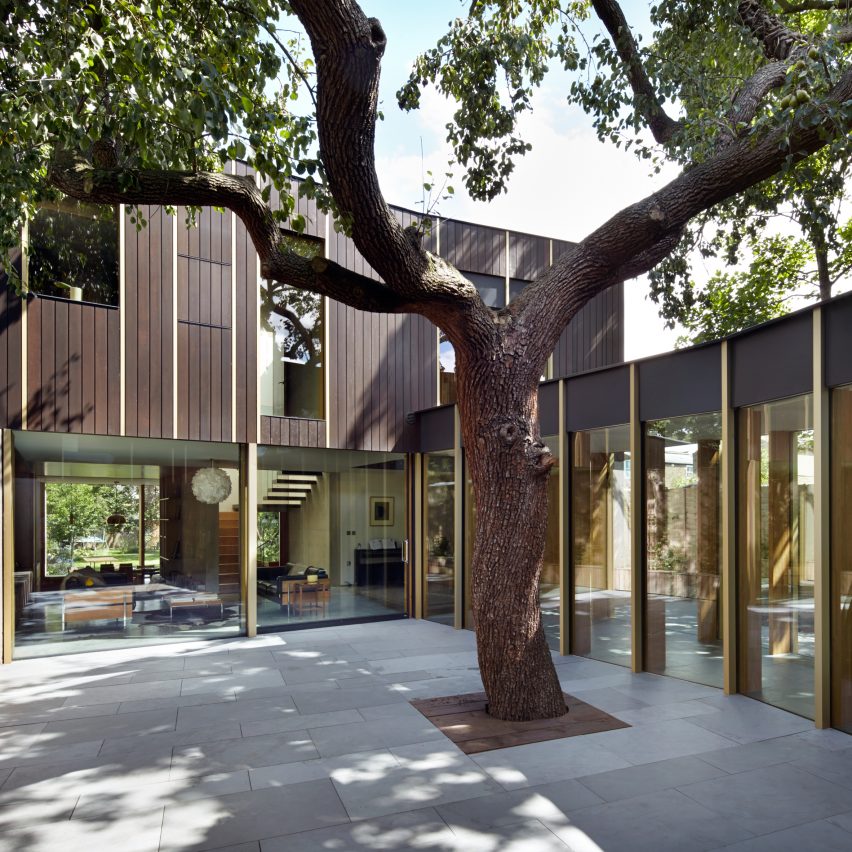
Pear Tree House by Edgley Design

This house in south London, arranged around an old pear tree, was designed by British architect Jake Edgley as a home for himself and his family. Read more

http://ift.tt/2fqHC4j

Herzog & de Meuron’s Elbphilharmonie Hamburg announces completion in lights

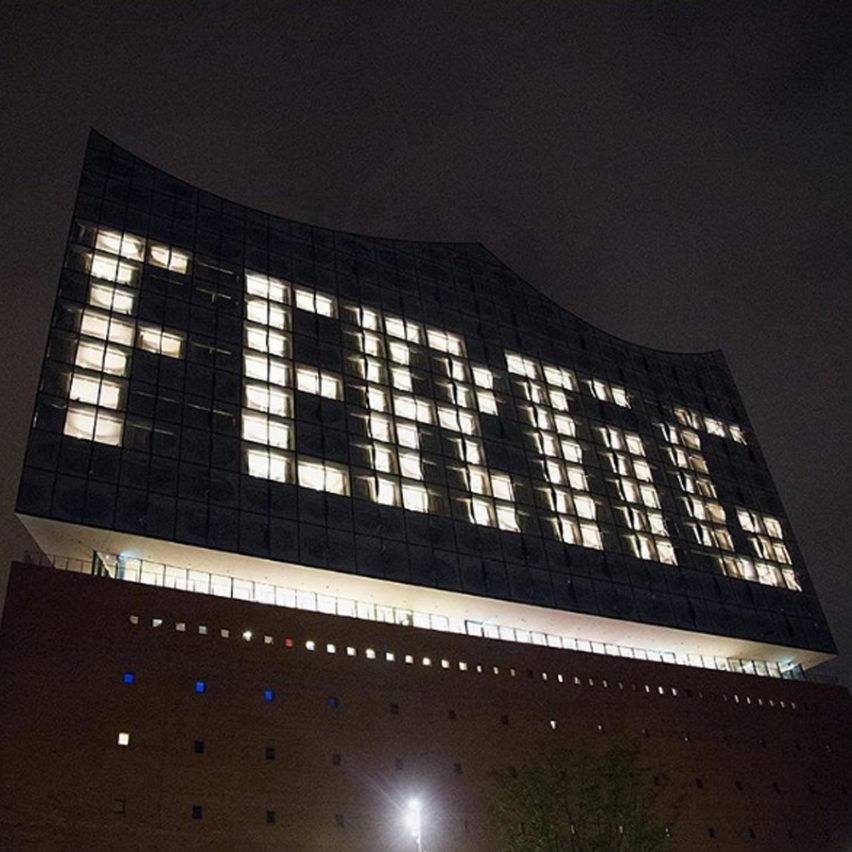
sq-elbphilharmonie-hamburg-architecture-_dezeen_2364_col_5

Herzog & de Meuron’s long-delayed Hamburg concert hall has announced its completion to the city in huge illuminated letters. Read more

http://ift.tt/2fqJzO2

Huesca’s Palace of Justice / Ingennus


© Lieya Ortega

© Lieya Ortega


© Lieya Ortega


© Lieya Ortega


© Lieya Ortega


© Lieya Ortega

  • Architects: Ingennus
  • Location: Calle Calatayud & Calle Irene Izarbez, 22005 Huesca, Spain
  • Architect In Charge: Ingennus Urban Consulting, Alberto Mendo, Daniel Olano, Ferrán Calzada
  • Area: 12218.0 sqm
  • Project Year: 2014
  • Photographs: Lieya Ortega, Victor Westfalia
  • Collaborators: Carlos Domingo (Structure), Ingeniería Torné (Instalations), Juan Pedro Fuentes (Technical Architect), María Roda (Instalations), técnicos del Departamento de Política Territorial, Justicia e Interior (Luis Faci, Alejandro Rincón y Sergio Sebastián)
  • Promoter: Gobierno de Aragón
  • Contractor: UTE Juzgados de Huesca
  • Budget: 10.500.000,00 €

© Lieya Ortega

© Lieya Ortega

From the architect. Huesca’s Palace of Justice is located on Calle Calatayud, on the corner of Calle Irene Izárbez, in Huesca.


© Lieya Ortega

© Lieya Ortega

The building follows a specific scheme in order to host the Provincial Court offices. It is developed in two different volumes that are mainly defined by a large vitrine. The first volume, with a rather strict geometry, comprises the judiciary facilities and both the Prosecution and Provincial Court Presidency Offices. The second one, the ground floor, has a more organic nature and it hosts the courtrooms and the most public spaces of the building. These formal and constructive solutions respond to the requirements of each volume and the way they are used.


© Victor Westfalia

© Victor Westfalia

The ground floor structure is made of exposed concrete with some openings. The upper floors, however, have a double aluminum panel and a curtain wall on the east-west orientation. The north-south orientation is completed with exposed concrete walls.


Section

Section

Our solution maximizes the useful surface of these floors by placing the air conditioning system between the slats and the façade, granting a simpler and more effective maintenance. The building incorporates other energy use systems, such as façades with solar control based on their orientation and photovoltaic panels.


© Lieya Ortega

© Lieya Ortega

The building’s main entrance is an urban space located on the ground floor. The other independent entrance gives access to the Summary Court and will be used when the remaining courtrooms are closed.  


© Lieya Ortega

© Lieya Ortega

The courtrooms and the main hall, used as entrance hall and waiting room, take up a big part of the ground floor. The Civil Register, the Police Court, the offices and a multipurpose room for conferences, weddings and public ceremonies are located on the remaining space of the building.


© Victor Westfalia

© Victor Westfalia

This project has been one of the 100 projects selected in the XIII Spanish Architecture and Urbanism Biennial Show (S.A.U.B.).


© Victor Westfalia

© Victor Westfalia

http://ift.tt/2fAkJuJ

Who’s hot? Find out when Dezeen Hot List launches next week

Dezeen Hot List

Which are the architects, designers, brands, schools and events that Dezeen readers most wanted to read about over the last year? We’ll reveal the answers when we launch Dezeen Hot List on 9 November. Read more

http://ift.tt/2f8HCSA

Vitra covers Eames Lounge Chair in fabric to celebrate 60th anniversary

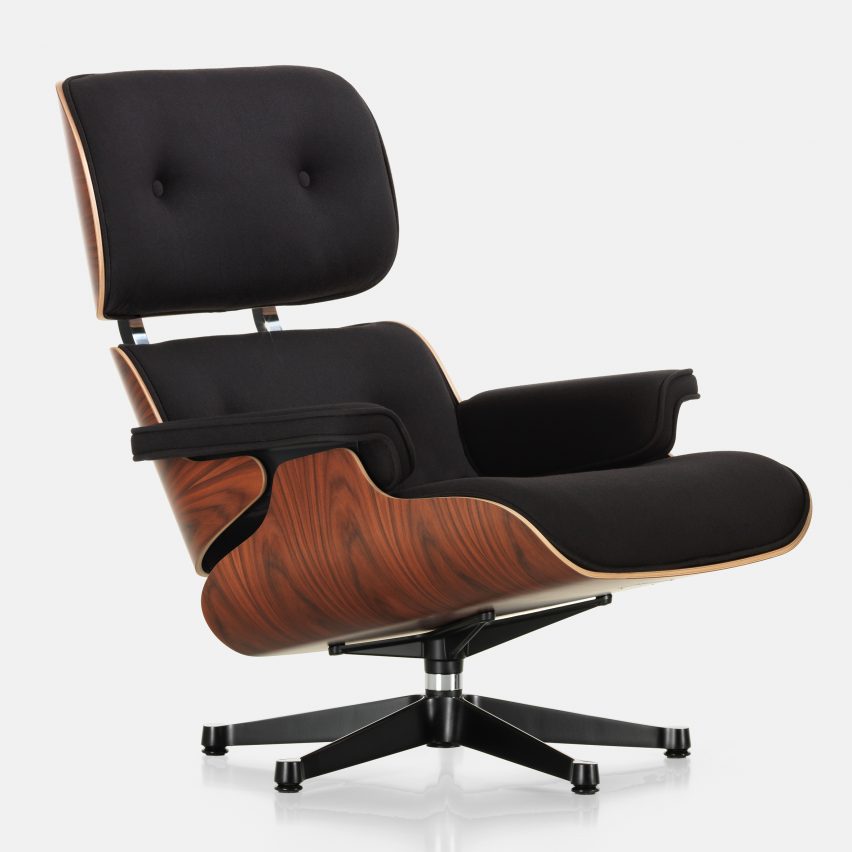
Vitra 60th Anniversary chair

Swiss furniture brand Vitra is launching a limited-edition version of Charles and Ray Eames‘ Lounge Chair to commemorate its 60 years in production. Read more

http://ift.tt/2fqxpVp

Job of the day: transport/infrastructure architects at Grimshaw

Dezeen Jobs architecture and design recruitment

Our job of the day from Dezeen Jobs is for transport/infrastructure architects at Grimshaw‘s studio in Sydney, which unveiled designs for a high-rise school earlier this year (pictured). Read more stories on Grimshaw, or browse more architecture and design opportunities on Dezeen Jobs.

http://ift.tt/2dYhjBx