Soori Bali / SCDA Architects


© Mario Wibowo

© Mario Wibowo


© Mario Wibowo


© Mario Wibowo


© Mario Wibowo


© Mario Wibowo

  • Architects: SCDA Architects
  • Location: Tabanan, Tabanan Sub-District, Tabanan Regency, Bali, Indonesia
  • Area: 22000.0 sqm
  • Project Year: 2010
  • Photographs: Mario Wibowo
  • Design Principal : Soo K Chan (Chan Soo Khian)

© Mario Wibowo

© Mario Wibowo

From the architect. Soori Bali lies within the Tabanan Regency, one of Bali’s most fertile and picturesque regions. Here, the landscape ranges from volcanic mountains and verdant rice terraces to beautiful black-sand beaches overlooking the Indian Ocean. The location provides for a complete hideaway and offers numerous quality views of the surrounding beach, ocean, mountains and rice fields. 


© Mario Wibowo

© Mario Wibowo

Soori Bali was designed with the overt principle of green sustainable initiatives in mind. The project is conceived to be both climatically and socially reactive to its locale. The design responds to the notions of climate and place, and endeavors to engage the local landscape and community. The design of the resort was approached with a sensitivity to the nuances of the site setting, and thus executed with the strategy of minimal environmental impact, minimal built footprint and with local cultural practices (religious and ceremonial processions) taken into consideration.


© Mario Wibowo

© Mario Wibowo

Site Plan

Site Plan

© Mario Wibowo

© Mario Wibowo

With an understanding that the beach is an important socio-economical aspect of the site, deliberate efforts were taken to consult and incorporate the customs and contributions of the local community within the conceptual design process. The construction methods adopted also creates training and jobs for the neighbouring villages. About 50% of the workers currently on site are recruited from the surrounding community. 


© Mario Wibowo

© Mario Wibowo

ARCHITECTURE
The resort reflects on its privileged location by adopting the predominant use of locally sourced materials, together with a careful integration of indigenous motifs, forms and elements. The result, a harmonious balance between the clean, contemporary lines of the architecture and the soothing tones and textures of the internal and external finishes and finishing. 


© Mario Wibowo

© Mario Wibowo

The design of the restaurant terrace and spa facilities incorporates terracotta screens; adapted and stylized from traditional Balinese motifs. These screens generate a marked visual contrast when combined with the dark terrazzo floors and feature walls clad in dark grey volcanic lava stones, such as Batu Candi and Batu Karangasem. 


© Mario Wibowo

© Mario Wibowo

The villas are characterized by the interplay of materials which flow from the interior to exterior spaces. Smooth terrazzo walls and floors are combined with hand brushed natural timber screens, soft silk upholstery and custom designed dark stained timber furniture to form a serene internal space. The use of timber flows into the external spaces, where timber screens wrap a private bale overlooking a private plunge pool lined with Sukabumi stone. Paras Kelating, a light grey volcanic stone is applied to feature walls along the pool edge which combine with soft hues of beige and warm grey textured paint to complete the palette.


© Mario Wibowo

© Mario Wibowo

A mixture of Villa types were sensitively designed to respond to the local climatic conditions whilst maximizing views out to the surrounding beach, sea and paddy fields. Careful consideration is given to each villa plan and its built form and details to create a comfortable, energy efficient resort style living. 


© Mario Wibowo

© Mario Wibowo

PASSIVE DESIGN ELEMENT 
The climatic parameters particular to site, sun movement and prevailing wind direction, were established to assist in the formulation of the orientation of villas and common areas, and their planning concept. 


© Mario Wibowo

© Mario Wibowo

The major building orientation is toward the North-South direction. Some are tilted a few degrees to the East to incorporate the morning sun. Openings were maximized on North-South face to encourage filtered natural light into the building whilst minimizing large openings on west side to reduce heat gain during daytime. Provision of overhanging roof eaves, roof screen systems and deep ledges were employed to reduce heat from direct sunlight.


Section

Section

Operable windows are provided on at least two sides of each room plan, and on each end of the villa to encourage effective cross ventilation and to bring in natural air to the interior spaces. Cross ventilation to all room interiors would provide natural cooling and sufficient fresh air intake in room to minimize CO2 level, thus reducing the reliance on Air Conditioning Systems. 


© Mario Wibowo

© Mario Wibowo

In addition to the siting aspect and layout design of the villas, several design elements and materials were intentionally selected to control the buildings on a micro-climate level.

Provision of a 2nd layer of timer trellis on villa roof would minimize direct heat absorption to the roof itself; the actual roof incorporates additional insulation to further reduce heat gain internally. Material finishes are using “cool colors” in both the paint and stone selections to minimize the absorption of thermal energy, local materials selected naturally respond to the local climate, for e.g. Paras Kelating, Paras Kerobokan, Batu Chandi & Batu Kali for Feature Walls throughout the resort. Location of planters and position of low shrubs and taller trees would be placed to maximize wind flow through villa and common spaces, thus avoiding creation of wind barriers.


© Mario Wibowo

© Mario Wibowo

LANDSCAPE DESIGN
The exterior hardscape and softscape designs are intended to create a seamless transition between the interior and exterior spaces, with the specific goal in preserving the natural topography. Built elements are planned to sit ‘lightly’ on the land. The selection of trees responds to both the local climate and the resort planning with tree types playing a key role in the creation of ‘shaded spaces’, private pavilions and communal areas. 


© Mario Wibowo

© Mario Wibowo

Due to the relatively severe coastal conditions which exist during certain periods of the year, the landscape design also incorporates a variety of indigenous local plants and coastal ‘hardy’ species, for e.g. Ipomoea Pes-caprae, Scaevola Taccada, Cocos Nucifera & Cerbera Odollam. This selection identifies and responds to the need for less long term maintenance and reduced water requirements for irrigation.


© Mario Wibowo
© Mario Wibowo

http://ift.tt/2dKyPqV

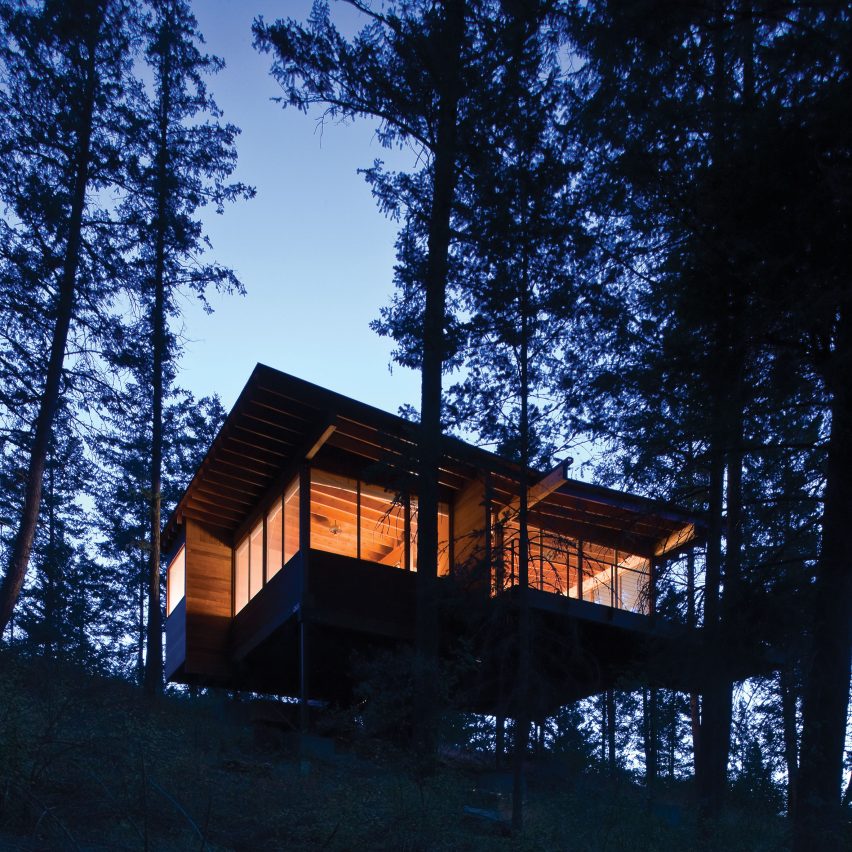
Rural Montana cabin is built on a granite cliff over Flathead Lake

Cabin on Flathead Lake by Anderson-Wise Architects

Texas firm Andersson-Wise has completed a rustic wooden cabin in the state of Montana that is raised on stilts to provide views of a nearby lake. Read more

http://ift.tt/2dKqnIy

JFGS perches white box atop glass pavilion to create Casa Gallarda

Casa Gallarda by JFGS Architecture

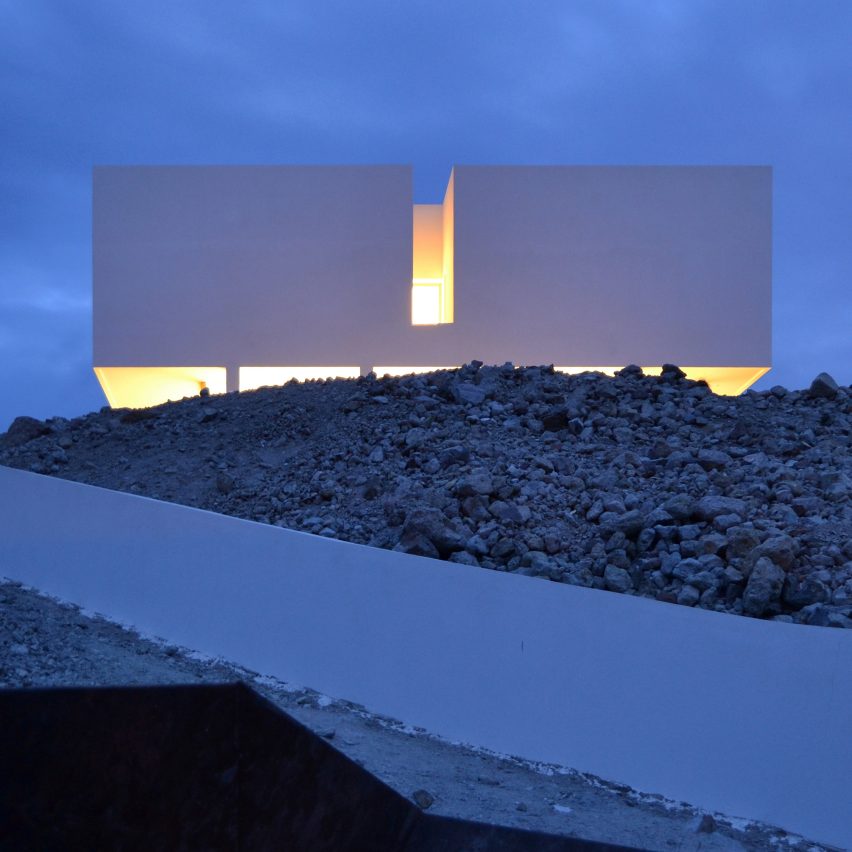
A bright white box containing the private areas of this house in Spain‘s Almería region rests on top of a glass-walled living space that provides uninterrupted views of the nearby Mediterranean Sea. Read more

http://ift.tt/2dx5VvW

CITIC Pacific High-Rise Development in Shanghai Beautifully Combines Natural With The Artificial


Courtesy of EID

Courtesy of EID

EID Architecture looks to the traditional side of Shanghai when designing CITIC Pacific‘s high-rise residential neighborhood. The Shanghai downtown area will see six new residential towers and amenities through the development.

Designs for the building encourage social interactions through its amenities, which include leisure facilities, a spa, meeting and conference spaces, and roof gardens overhead. Undulating terraces on the top of each building promote a sense of community in addition to responding to the site’s preservation of sunlight.


Courtesy of EID


Courtesy of EID


Courtesy of EID


Courtesy of EID


Courtesy of EID

Courtesy of EID

Courtesy of EID

Courtesy of EID

In vast contrast to neo-classical residential towers often seen in China, CITIC Pacific Residence aims to create a residential design sensible to the site and its context. It is unique and memorable, reflecting the ethos of evolving city of Shanghai, said EID design principal Ping Jiang, AIA. 


Courtesy of EID

Courtesy of EID

Courtesy of EID

Courtesy of EID

Courtesy of EID

Courtesy of EID

In a beautiful combination of natural and artificial, the landscape design incorporates the “duality of Chinese architecture tradition.” The fluidity of the garden space mixes with the geometric structure of the residential buildings, resulting in a contemporary yet culturally inspired project.


Courtesy of EID

Courtesy of EID

Courtesy of EID

Courtesy of EID

Pacific Residence Phase II also comprises small retail buildings and a kindergarten along the main street. Renovated Shikumen – common land houses in Shanghai — served for the new retail buildings, while the design of the kindergarten borrowed from that vernacular. 

EID is an architecture, urban planning, and interior design firm noted for its commitment to sustainability. 


Courtesy of EID

Courtesy of EID

News Via: EID Architecture

http://ift.tt/2eEIOM3

Montreal’s Oldest and Most Important Square to be Redesigned by Nippaysage


Courtesy of NIPPAYSAGE

Courtesy of NIPPAYSAGE

Viger Square, Montreal‘s first large square, is getting a makeover. The redevelopment project is being led by landscape architects NIPPAYSAGE, which will begin the first phase of redesign in 2017. 

Historically, the 30,000 square foot center has always contributed to the liveliness of the city, and it was the largest square in Canada in the 19th century. Now coinciding with the adjacent redevelopment of retail and office spaces at the Viger Hotel, the city hopes for a major revitalization of the area. 


Courtesy of NIPPAYSAGE


Courtesy of NIPPAYSAGE


Courtesy of NIPPAYSAGE


Courtesy of NIPPAYSAGE

https://www.youtube.com/watch?v=SyYGtIWpRZQ

The square’s previous design and development reflected the planning ideologies of the time, including highway-like roadways surrounding the square, the separation of the blocks with concrete walls, a large number of compartmentalized spaces, a lack of openness, light and natural sightlines, and a shortage of programming and other efforts to encourage people to use the space. All of these factors inevitably contributed to the abandonment and eventual occupation of the square by a marginalized population, said Michel Langevin, a partner at NIPPAYSAGE, in the press release.


Courtesy of NIPPAYSAGE

Courtesy of NIPPAYSAGE

NIPPAYSAGE’s goals for the project include user-friendliness, inclusiveness, anchorage of the surrounding area, and a “commemorative element.” The eastern end of the square will feature basketball courts, a skateboard park, and numerous playground structures. Another section will feature a more traditional look with sprawling parks and large trees. 


Courtesy of NIPPAYSAGE

Courtesy of NIPPAYSAGE

Courtesy of NIPPAYSAGE

Courtesy of NIPPAYSAGE

The landscape architects intended to showcase public art and lots of green. On Daudelin Block (nearby the square) a new cafe, currently under construction by Provencher_Roy architects, will also bring some energy to the area. Moreover, the square will also serve as a venue for concerts, festivals, and other types of performances. 


Courtesy of NIPPAYSAGE

Courtesy of NIPPAYSAGE

In addition, the firm has managed to preserve 18 pergolas (minus their roofs) along with the Mastodon sculpture, which were all originally designed by Charles Daudelin. NIPPAYSAGE hopes for these to add to the composition of the overall park, integrating them into its new sustainable landscape. 


Courtesy of NIPPAYSAGE

Courtesy of NIPPAYSAGE

Lighting for the square was designed by Lightemotion, who intended for the light to showcase certain works of art without overwhelming the vegetation. 


Courtesy of NIPPAYSAGE

Courtesy of NIPPAYSAGE

NIPPAYSAGE was first recognized when it won a Canadian competition for the design of the Promenade Smith in Montreal.

News via: v2com

http://ift.tt/2eEt4ZG

vPPR converts 130-year-old store into cafe with scalloped details

Cafe by vPPR Architects

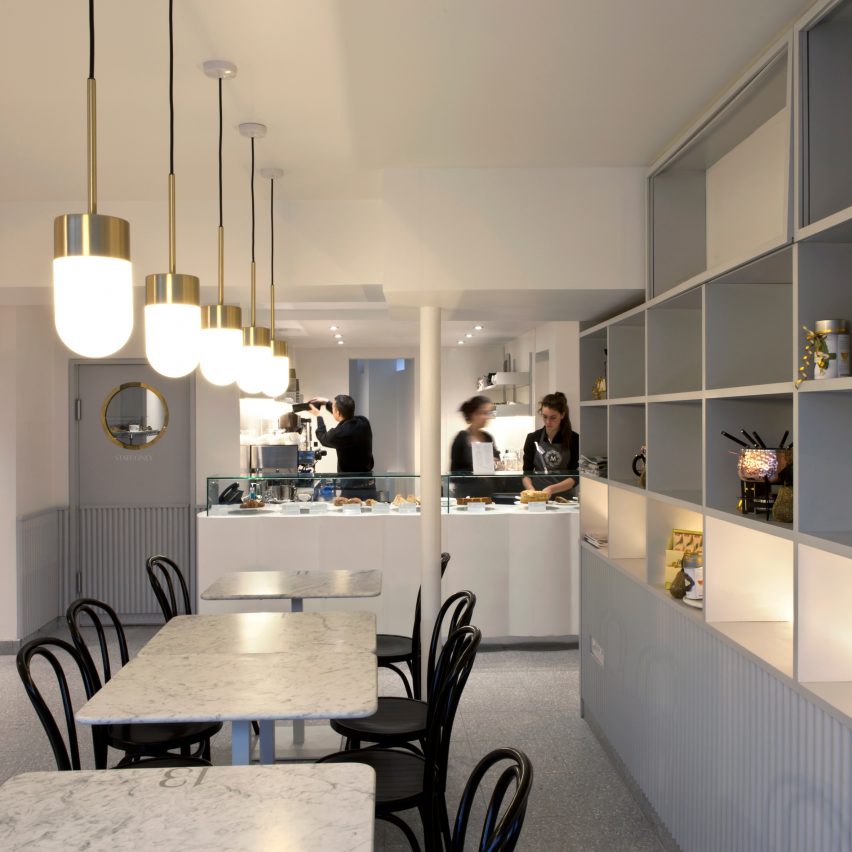
Architecture studio vPPR has borrowed architectural details from a historic department store in Surrey to design the interiors for Café M, which features a scalloped counter and pendant lighting. Read more

http://ift.tt/2dYhEju

1st Congress Tower / Costa Lopes


© Fabrice Fouillet

© Fabrice Fouillet


© Manuel Correia


© Fabrice Fouillet


© Manuel Correia


© Fabrice Fouillet


© Fabrice Fouillet

© Fabrice Fouillet

From the architect. The project equates itself around four fundamental conditions: the program for a banking institution – corporate and generic offices but with a socio-cultural area – with an inevitable intensive occupation of the available plot; the prime location in Largo Lumeji, with its strong public profile, one of the joints in the city’s urban expansion from the downtown; the near context, rapidly changing and unpredictable, with general verticalization and space closure; and the will to safeguard or even increase, a priori, the public space of the city.


© Fabrice Fouillet

© Fabrice Fouillet

In response, the project summarizes four key steps.

Within the plot size, one organizes a prismatic volume of 27 floors with a width of around 30 meters and a height of 110 meters above the ground, with five underground floors for parking. However, the office tower is lifted off the ground, resting on stilts, which three floors void, transparent and more articulated, organizes the socio-cultural areas (bank branch, auditorium and art gallery, supported by a cafeteria), expanding and qualifying the public space of Largo Lumeji. The tower rationalizes 18 floors of equipped open-space offices interrupted by 4 technical floors and topped by two floors for administration. Finally, the expression of the tower results from the programmatic contingency, striated floor to floor, with recessed glazed fronts and opaque cornices, protruding and undulating. Very elegant.


© Fabrice Fouillet

© Fabrice Fouillet

Detail

Detail

© Manuel Correia

© Manuel Correia

Day or night, even with the surrounding verticalization, the 1st Congress Tower gets strong aesthetic and urban autonomy, without disregarding the ethics of the public space. At distance, by its strong visual identity. By near, with its inherent constructive quality and, above all, the openness of inner and outer spaces of the ground floors, delivering space for the public use of citizens.


© Manuel Correia

© Manuel Correia

Section

Section

© João Freire

© João Freire

http://ift.tt/2esMINl

White Arkitekter A/S Designs Sea-Based WWII Memorial with Moving “Tides”


Courtesy of White Arkitekter A/S

Courtesy of White Arkitekter A/S

White Arkitekter A/S has revealed its plans for Arven fra Havet, or Legacy of the Sea, a World War II memorial to be built at the Mindelunden site in Ryvangen, Denmark. Arven fa Havet will honor the 2,000 Danish sailors and more than 800 Danes who died in merchant ships serving the Allies, and in Operation Overlord, respectively. 

Currently, the Mindelunden site is a graveyard bound on one side with dense bushes and trees. With the new memorial, the site will be better framed by creating a symmetrical boundary, mimicking the proportions of the low tombs, but at a larger scale to represent the common grave of all sailors, the sea.


Courtesy of White Arkitekter A/S


Courtesy of White Arkitekter A/S


Courtesy of White Arkitekter A/S


Courtesy of White Arkitekter A/S


Courtesy of White Arkitekter A/S

Courtesy of White Arkitekter A/S

Courtesy of White Arkitekter A/S

Courtesy of White Arkitekter A/S

The walls of this silent monolith hover still above a pool of water.  The profile and texture of the concrete exterior will patina, helping to embed the monument as a timeless addition to Mindelunden. Two axes cut through the enclosed space, one oriented North-South, an important direction for maritime navigation; the other directly connecting Copenhagen and Normandy, where many sailors lost their lives during ‘Operation Overlord’.


Courtesy of White Arkitekter A/S

Courtesy of White Arkitekter A/S

Inside the memorial, a narrow path restricts visitors. Beneath the surface of the pool lie other pathways, broken and shattered, which at times become accessible with the rise and fall of the water, like that of the tides. Engraved on each path are fragments of oral history: the voices of the sailors lost at sea.


Courtesy of White Arkitekter A/S

Courtesy of White Arkitekter A/S

Generally, the memorial will be a space of solitude, with the exception of one day of remembrance, when the water changes from a barrier element into an interface of connection. On this day, visitors are able to place flowers and candles on the surface of the water as a signal of respect, turning the space into a symbol of hope and confidence for the future.

News via White Arkitekter A/S.

http://ift.tt/2eiixZI

Balls of goo turn into “lively beings” in OY’s Space Diaspora music video

DMP

German animator Moritz Reichartz created a new world filled with fluid forms and dancing goo figures for a track by OY. Read more

http://ift.tt/2eSMm2o

This New Code Ensures Buildings Designs are Internet Optimized


Wired Certified Platinum - Willis Tower, Chicago, US

Wired Certified Platinum – Willis Tower, Chicago, US

When looking at a building, how good its internet is, is probably not one’s first thought. But for the tenants and companies inside it, it’s a key building service that they rely on daily.

As Arie Barendrecht explains, “it’s vital to tenants of buildings and critical to attracting and maintain new tenants – it’s a non-negotiable design component.”

Barendrecht is the co-founder and CEO of WiredScore, a company that ranks commercial buildings on their connectivity. Beginning in New York, the company has provided wired certification to over 300 buildings in the city, with further operations across several other US cities as well as London and Manchester in the UK. The company’s work is instrumental in showing architects how their designs need to prepare for the 21st century and acknowledging those that already do.

An interesting lesson from analysing connectivity across international cities is that the biggest variations aren’t found from city to city, but between buildings on the same street. While neighbouring buildings may appear physically similar on the outside, “under the hood,” they can be completely different. It’s this difficulty in gauging connective performance by the average tenant or broker that wired certification hopes to combat, by making internet infrastructure more transparent.


Wired Certified Platinum - The Leadenhall Building (the Cheese Grater) - London, UK

Wired Certified Platinum – The Leadenhall Building (the Cheese Grater) – London, UK

This transparency is perhaps a good reminder for architects that they also need to be paying attention. Even just looking at a floor plan reveals “a tonne” about the connectivity of a building. Large points of entry, considered space allocation and secure, air-conditioned telecom rooms are good to see.

Space allocation, in particular, is a critical factor. It’s not unusual for tenants wanting to upgrade their connectivity to discover they can’t, simply because there is no room for it. A common example of this seen by WiredScore is not having the floor space for wireless equipment like DAS or small cells. The space for wireless is simply not included in a lot of current building designs, but increasingly needed by tenants given the rise of the mobile workforce.

It’s also important for spaces to be flexible, not just for the potential to free up more floor area, but also to support the installation of new technologies regardless of what sort of wired or wireless infrastructure is required. This is especially relevant for new buildings where technological requirements can easily change between the time of planning and its completion.


Courtesy of WiredScore

Courtesy of WiredScore

When evaluating existing buildings, “about 25% of our evaluation is focused on the design and infrastructure of the building,” says Barendrecht. But for buildings that are still in development, design and infrastructure is the sole basis of evaluation. There are two umbrella concepts that rule good connectivity in building design – redundancy and resiliency.


Wired Certified Platinum - The Empire State Building, New York, US

Wired Certified Platinum – The Empire State Building, New York, US

Redundancy moves away from putting all your eggs in one basket, i.e. systems based on one central riser, which depend entirely on nothing going wrong. Nowadays, many companies depend on having connectivity 100% of the time, making this sole dependency especially risky. Instead, diverse conduit pathways provide an alternative backup if one side were to come under fire, flood, or other physical damage. This involves having at least two different internet providers running their cables vertically through, and horizontally out of different sides of the building.

Resiliency focuses on the protection of the equipment itself, such as placement above grade – a lesson many New Yorkers learnt following the flooding caused by Hurricane Sandy. It also covers allocating telecom in a way to prevent day to day damage, and the best-designed buildings for connectivity separate equipment from areas of the building where users could accidentally damage equipment.


Wired Certified Gold - The Wrigley Building, Chicago, US

Wired Certified Gold – The Wrigley Building, Chicago, US

Materiality also comes into play, especially their effect on wireless coverage. Energy-efficient glass, in particular, blocks external cellular networks from entering buildings. So for developers aiming for LEED certification, Arie suggests having wireless strategies in place to compensate for the typically worse cellular coverage caused by low-e glass. These strategies are likely to involve further infrastructure considerations, so it’s important these considerations come in early in the planning of a building.

In the years to come, he sees connectivity playing a larger role earlier on in the design process, something that is usually left as an afterthought. Part of the reason for this afterthought could be the physical size of connectivity equipment, which still remains less clunky and smaller than that of HVAC and plumbing.

By raising awareness, however, around the importance of connectivity through wired certification, he hopes that more will understand that “telecom isn’t something we should cut corners on”. Since the arguments for redundancy and resiliency also apply to other building services, increased thought into the integration of connectivity with other building service systems and the building itself, could perhaps come to shape a more holistic approach to everything that’s “under the hood” of a building.


Courtesy of WiredScore

Courtesy of WiredScore

WiredScore rankings range from ‘Certified’ through to ‘Platinum’, which are more widely digestible than riser dimensions and cable paths. This reflects the heart of wired certification, says Barendrecht, which is to translate “the smart technical design planning that an architect has done into a really easy language to understand”.

http://ift.tt/2dxI5eU