Project Poseidon: Gensler’s Radical Proposal for a Temporary UK Parliament


Gensler have proposed a temporary UK Parliament structure. Image © Gensler

Gensler have proposed a temporary UK Parliament structure. Image © Gensler

The British government have come to the realisation that the Palace of Westminster—the iconic UK Houses of Parliament designed by Charles Barry and Augustus Pugin—is in desperate need of full-scale restoration and renovation. The decision to move ahead with the plans will be costly and inconvenient; aside from the need to repair the structure, the UK government is bracing itself for eye-watering “relocation” fees. In response to this, Gensler have proposed a temporary parliament on the banks of the River Thames.


Gensler's proposal floating on the River Thames; the existing House of Parliament is in the background. Image © Gensler

Gensler's proposal floating on the River Thames; the existing House of Parliament is in the background. Image © Gensler

Self-described as a “radical” concept, the proposal is intended to “reduce the cost and minimise the disruption of the comprehensive refurbishment of the Palace.” Employing a modular structure to create maximum flexibility and security, the design accommodates all the principal components of the current Houses of Parliament – it maintains the relationship between both Chambers (the elected House of Commons and the unelected House of Lords), and their supporting Committee Rooms. The new modular structure could potentially be built in less than three years in shipyards across the UK and floated along the Thames to be secured and assembled on the river.

An essential element of the refurbishment proposals for the House of Parliament requires total decantation of the building for an estimated six years. The challenge has been to find a suitable location within Whitehall that can accommodate Parliament in an efficient and cost effective manner. This concept offers a unique opportunity to co-locate the House of Commons and the House of Lords together with all their supporting committee rooms in a purpose built structure at the centre of the Whitehall estate.

Security has been carefully thought through. According to Gensler, “the concept overcomes some of the initial concerns about a river location by ensuring the structure does not interrupt the navigable channel along the centre of the river.” They add that the proposal also incorporates a number of security measures that supplement the natural defence provided by the river itself.


Proposed Site Plan. Image © Gensler

Proposed Site Plan. Image © Gensler

The design takes inspiration from the magnificent hammerbeam roof of Westminster Hall, which was commissioned by Richard II in 1393 and is the largest medieval timber roof in Northern Europe. The 250-metre-long structure would be built on a series of steel platforms and the building above would be a dramatic, high-tech, wooden-framed structure covering 8,600 square metres, which would provide all the necessary environmental and acoustic containment.

AD Classics: Palace of Westminster / Charles Barry & Augustus Pugin
//cdn.embedly.com/widgets/platform.js

http://ift.tt/2emDVZq

12 Dollhouses That Trace 300 Years of British Domesticity


© Victoria and Albert Museum, London

© Victoria and Albert Museum, London

As part of a new exhibition at the National Building Museum in Washington D.C., twelve dollhouses tracing the history of British domesticity have been lent by London’s Victoria & Albert Museum of Childhood. The show—Small Stories: At Home in a Dollhouse—spans 300 years and presents a miniature-sized, up-close-and-personal view of developments in architecture and design – from lavish country mansions, to an urban high-rise.


Whiteladies House (Moray Thomas, England, 1935). Image © Victoria and Albert Museum, London


Whiteladies House (Moray Thomas, England, 1935). Image © Victoria and Albert Museum, London


Jennys Home (Tri-ang, Northern Ireland, 1960s). Image © Victoria and Albert Museum, London


Betty Pinney’s House, set in 1910s (England, 1870). Image © Victoria and Albert Museum, London

Displayed chronologically, Small Stories encompasses a stately home, a lodging house, a suburban villa, and a wartime council estate. According to the curators, the “exhibition take[s] visitors on a journey through the history of the home, everyday lives, and changing family relationships.” The imagined stories of each house are brought to life by the characters who live or work there—the owners, tenants, children, and servants—as day-to-day life is illuminated through tales of marriages and parties; politics and crime.

The Tate Baby House, dating from 1760, was owned by the same family for 170 years, passed down from mother to eldest daughter. It includes original wallpapers and hand-painted paneling. In the lying-in room all set up for a home childbirth, Joanna, the pregnant doll, is ready with clean linens and a beautiful gold and red cradle for the newcomer.


Tate Baby House (England, 1760). Image © Victoria and Albert Museum, London

Tate Baby House (England, 1760). Image © Victoria and Albert Museum, London

Tate Baby House (England, 1760). Image © Victoria and Albert Museum, London

Tate Baby House (England, 1760). Image © Victoria and Albert Museum, London

Tate Baby House (England, 1760). Image © Victoria and Albert Museum, London

Tate Baby House (England, 1760). Image © Victoria and Albert Museum, London

Tate Baby House (England, 1760). Image © Victoria and Albert Museum, London

Tate Baby House (England, 1760). Image © Victoria and Albert Museum, London

Tate Baby House (England, 1760). Image © Victoria and Albert Museum, London

Tate Baby House (England, 1760). Image © Victoria and Albert Museum, London

At Henriques House, it is an early morning in October of 1828, and a crime has just taken place. Phineas Henriques has been robbed. With the candlesticks missing, broken railings, and an open window, the evidence points to an inside job. But the servant claims his innocence…


Henriques House (England, 1750-1800). Image © Victoria and Albert Museum, London

Henriques House (England, 1750-1800). Image © Victoria and Albert Museum, London

Whiteladies House is in the style of a Modernist country villa, and was designed by artist Moray Thomas in the 1930s. Here, a house party is in full swing, and the house features chrome furniture, a cocktail bar, and artworks by British Futurist Claude Flight as well as a swimming pool and garage.


Whiteladies House (Moray Thomas, England, 1935). Image © Victoria and Albert Museum, London

Whiteladies House (Moray Thomas, England, 1935). Image © Victoria and Albert Museum, London

Whiteladies House (Moray Thomas, England, 1935). Image © Victoria and Albert Museum, London

Whiteladies House (Moray Thomas, England, 1935). Image © Victoria and Albert Museum, London

Whiteladies House (Moray Thomas, England, 1935). Image © Victoria and Albert Museum, London

Whiteladies House (Moray Thomas, England, 1935). Image © Victoria and Albert Museum, London

Whiteladies House (Moray Thomas, England, 1935). Image © Victoria and Albert Museum, London

Whiteladies House (Moray Thomas, England, 1935). Image © Victoria and Albert Museum, London

Whiteladies House (Moray Thomas, England, 1935). Image © Victoria and Albert Museum, London

Whiteladies House (Moray Thomas, England, 1935). Image © Victoria and Albert Museum, London

Whiteladies House (Moray Thomas, England, 1935). Image © Victoria and Albert Museum, London

Whiteladies House (Moray Thomas, England, 1935). Image © Victoria and Albert Museum, London

The Hopkinson House was built in the style of London County Council’s 1930s suburb, the St. Helier Estate. The interior shows a World War II-era family in intricate detail, poised for an air-raid, with miniature gasmasks, ration books and torches for the blackouts. The children are upstairs packing, preparing to be evacuated from the war-torn city.


Hopkinson House (set in 1940s (England, 1980s-1990s). Image © Victoria and Albert Museum, London

Hopkinson House (set in 1940s (England, 1980s-1990s). Image © Victoria and Albert Museum, London

Hopkinson House (set in 1940s (England, 1980s-1990s). Image © Victoria and Albert Museum, London

Hopkinson House (set in 1940s (England, 1980s-1990s). Image © Victoria and Albert Museum, London

Hopkinson House (set in 1940s (England, 1980s-1990s). Image © Victoria and Albert Museum, London

Hopkinson House (set in 1940s (England, 1980s-1990s). Image © Victoria and Albert Museum, London

Hopkinson House (set in 1940s (England, 1980s-1990s). Image © Victoria and Albert Museum, London

Hopkinson House (set in 1940s (England, 1980s-1990s). Image © Victoria and Albert Museum, London

Hopkinson House (set in 1940s (England, 1980s-1990s). Image © Victoria and Albert Museum, London

Hopkinson House (set in 1940s (England, 1980s-1990s). Image © Victoria and Albert Museum, London

Hopkinson House (set in 1940s (England, 1980s-1990s). Image © Victoria and Albert Museum, London

Hopkinson House (set in 1940s (England, 1980s-1990s). Image © Victoria and Albert Museum, London

Jenny’s Home is a 1960s high-rise, telling the story of young people in the modern city. Here lives a young couple with a new baby, a Jamaican immigrant, and Jenny, a single girl listening to a transistor radio and getting ready to go out for some late-night dancing in her “groovy” new red dress.


Jennys Home (Tri-ang, Northern Ireland, 1960s). Image © Victoria and Albert Museum, London

Jennys Home (Tri-ang, Northern Ireland, 1960s). Image © Victoria and Albert Museum, London

Jennys Home (Tri-ang, Northern Ireland, 1960s). Image © Victoria and Albert Museum, London

Jennys Home (Tri-ang, Northern Ireland, 1960s). Image © Victoria and Albert Museum, London

Jennys Home (Tri-ang, Northern Ireland, 1960s). Image © Victoria and Albert Museum, London

Jennys Home (Tri-ang, Northern Ireland, 1960s). Image © Victoria and Albert Museum, London

Jennys Home (Tri-ang, Northern Ireland, 1960s). Image © Victoria and Albert Museum, London

Jennys Home (Tri-ang, Northern Ireland, 1960s). Image © Victoria and Albert Museum, London

Jennys Home (Tri-ang, Northern Ireland, 1960s). Image © Victoria and Albert Museum, London

Jennys Home (Tri-ang, Northern Ireland, 1960s). Image © Victoria and Albert Museum, London

Jennys Home (Tri-ang, Northern Ireland, 1960s). Image © Victoria and Albert Museum, London

Jennys Home (Tri-ang, Northern Ireland, 1960s). Image © Victoria and Albert Museum, London

Other Houses in the Collection


Amy Miles’ House (England, 1890). Image © Victoria and Albert Museum, London

Amy Miles’ House (England, 1890). Image © Victoria and Albert Museum, London

Betty Pinney’s House, set in 1910s (England, 1870). Image © Victoria and Albert Museum, London

Betty Pinney’s House, set in 1910s (England, 1870). Image © Victoria and Albert Museum, London

Betty Pinney’s House, set in 1910s (England, 1870). Image © Victoria and Albert Museum, London

Betty Pinney’s House, set in 1910s (England, 1870). Image © Victoria and Albert Museum, London

Killer Cabinet Dolls’ House (England, 1835-1838). Image © Victoria and Albert Museum, London

Killer Cabinet Dolls’ House (England, 1835-1838). Image © Victoria and Albert Museum, London

Killer Cabinet Dolls’ House (England, 1835-1838). Image © Victoria and Albert Museum, London

Killer Cabinet Dolls’ House (England, 1835-1838). Image © Victoria and Albert Museum, London

Joy Wardrobe (Edmund Joy, England, 1712). Image © Victoria and Albert Museum, London

Joy Wardrobe (Edmund Joy, England, 1712). Image © Victoria and Albert Museum, London

Peggy Lines’ Dolls’ House (England, 1933-1936). Image © Victoria and Albert Museum, London

Peggy Lines’ Dolls’ House (England, 1933-1936). Image © Victoria and Albert Museum, London

Small Stories: At Home in a Dollhouse is on display at the National Building Museum in Washington D.C. from May 21, 2016 to January 22, 2017. Small Stories: Dream Homes is also on display as part of the same exhibition.

http://ift.tt/2dlSsCe

Second Dome / DOSIS


© Iwan Baan

© Iwan Baan


Courtesy of Dosis


Courtesy of Dosis


Courtesy of Dosis


© Iwan Baan

  • Architects: DOSIS
  • Location: London, United Kingdom
  • Architects In Charge: Ignacio Peydro Duclos, Isabel Collado Baíllo
  • Area: 315 sqm
  • Project Year: 2016
  • Photographs: Iwan Baan, Cortesy of DOSIS, Drones
  • Collaborators: Luis F Núñez, Irene Gigirey, Arantxa Fernández, Bruno Canales.
  • Construction: Arquitextil. Lastra & Zorrilla

© Drones

© Drones

Second Dome is an pneumatic living structure designed by the emerging Spanish architecture practice DOSIS for creative workspace provider Second Home. 


© Iwan Baan

© Iwan Baan

Axonometric

Axonometric

Courtesy of Dosis

Courtesy of Dosis

On 1 October 2016, Second Dome was inflated in London Fields in East London to host free community events for local families and children. The events were organized by the not-for-profit organization Shuffle, and include animation workshops, film screenings, pinata-designing and science experiments. 


Courtesy of Dosis

Courtesy of Dosis

This free day of activities in London Fields is part of Second Home’s commitment to supporting local communities and civic spaces.


Courtesy of Dosis

Courtesy of Dosis

Second Dome is a reconfigurable space that can transform within minutes from a single 65 sqm bubble to a multi-room structure with over 400 sqm and 8 meters high. No other type of structure can be assembled so quickly and also have the capacity to span large areas with a thickness of less than a millimeter. It is a technologic artefact that automatically responds to wind and pressure and that needs extremely low quantities of energy for fabrication and assembly. 


Courtesy of Dosis

Courtesy of Dosis

Second Dome was commissioned for Founders Forum 2016, Europe’s leading business and technology event to house a series of high-profile events including an exclusive talk on design and innovation with architect David Adjaye and iPod co-creator and Nest founder Tony Fadell.


© Drones

© Drones

http://ift.tt/2dV8kys

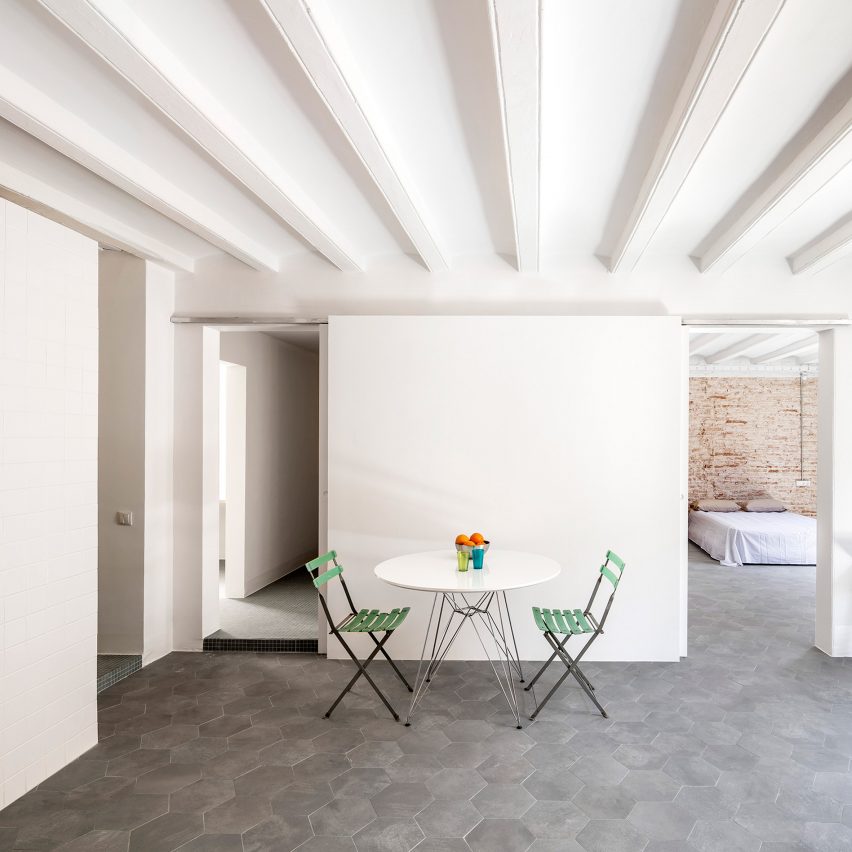
Raúl Sánchez adds pair of white boxes to La Carmina apartment in Barcelona

La Carmina by RAS studio

Two boxes covered in white tiles create new bathrooms in this Barcelona apartment, which has been overhauled by Spanish architect Raúl Sánchez to expose its original features. Read more

http://ift.tt/2eaeDQo

Union Studio Designs a Loft in a Former NoHo Factory

ZOB Pforzheim / Metaraum Architekten BDA


© Zooey Braun

© Zooey Braun


© Zooey Braun


© Zooey Braun


© Zooey Braun


© Zooey Braun

  • Architects: Metaraum Architekten BDA
  • Location: Pforzheim, Germany
  • Architects In Charge: Wallie Heinisch, Marcus Lembach, Marcus Huber, Felix Bittmann
  • Area: 10000.0 sqm
  • Project Year: 2015
  • Photographs: Zooey Braun
  • Planning Of Traffic Facilities: Mailänder Consult GmbH, Karlsruhe
  • Structural Engineering: Engelsmann Peters Beratende Ingenieure GmbH, Stuttgart
  • Lighting Design: Day & Light Lichtplanung, München

© Zooey Braun

© Zooey Braun

The city of Pforzheim, located in the Northern Black Forest in Germany, is carrying out sucessive changes to public areas surrounnding its main railway station, in order to make the space more attractive to pedestrians.


© Zooey Braun

© Zooey Braun

An essential component of the areas reconfiguration is the new bus station, which features a total of 30 platforms housed under an elegant and prominent roof.


© Zooey Braun

© Zooey Braun

Site Plan

Site Plan

© Zooey Braun

© Zooey Braun

The roofscape of the new central bus station provides form to the hitherto shapeless area between the railway station and overpass, generating a new hub for modern mobility in a high-quality urban space. Instead of a monotone sequence of roofed walkways, an urban space has emerged as a real “place” with a high recognition value. Situated a suitable distance from the central railway station, the new central bus station presents itself as an extension to the historical building – a concise urban marker that gives form to the unsociable area to the east of the railway station building.


Diagram

Diagram

Plan

Plan

Roofing concept

The 1950s formal language of the historical railway station building is augmented with modern design. The rolling edges of the roof segments are inspired by the radii and loops typical of vehicle movement; the central bus station thus visibly manifests itself as a dynamic element in the traffic landscape of which it forms an integral part. Openings above the traffic lanes allow light and sunshine to stream through to the bus stops, whilst providing structure to the views from below and creating an interesting spatial experience through the organically evolving play of shadows.


© Zooey Braun

© Zooey Braun

Elements organised in a linear fashion form a compact summary of the central bus station’s necessary functions (information signs, time display, passenger information system and seating areas). They are small and easy-to-find islands of function – “places” rather than merely scattered individual elements. This achieves optical clarity, orientation and overview, enabling passengers to locate bus stops quickly and with certainty.


Roof Plan

Roof Plan

Product Description.The internal space-defining paneling of the supporting structure is formed using movable suspended cement-bound plaster supporting plates. The “graphical“ aspect of the required expansion joints underlines the dynamically elegant nature of the roof shell.


© Zooey Braun

© Zooey Braun

The brand is “Aquapanel” cementboard by Knauf. It is related to the projects architecture in view of the fact that it is the only “cheap” material to create elegant and smooth double curved surfaces whithout creating cracks or bulges as a result of extensions caused by difference of temperatures.


© Zooey Braun

© Zooey Braun

http://ift.tt/2edGKLH

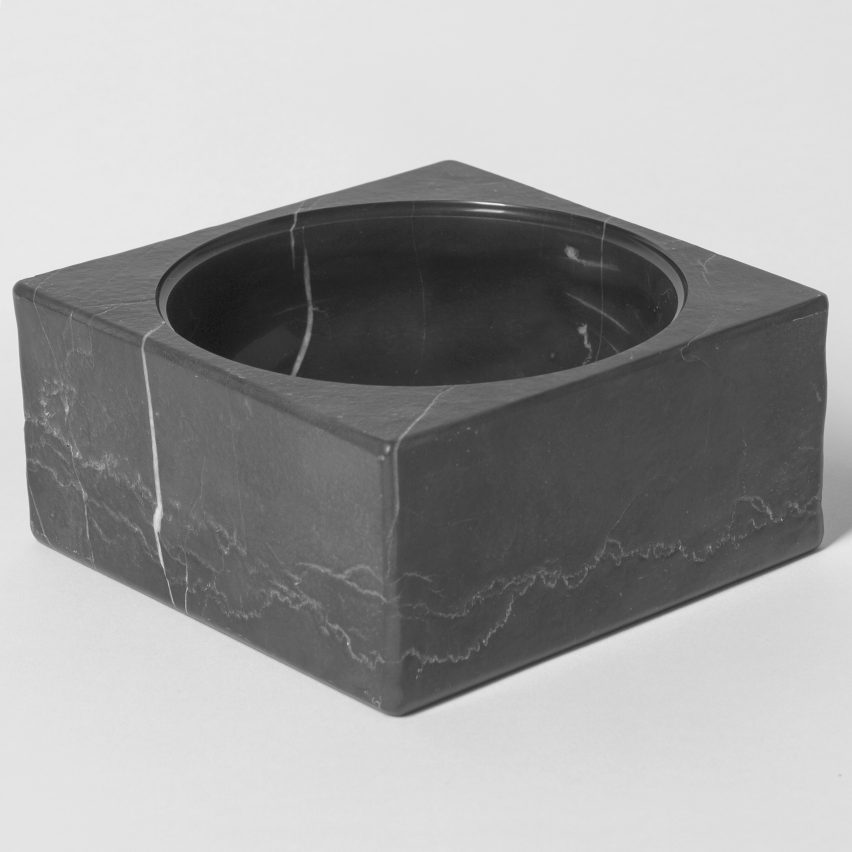
Architectmade combines former designs for new Poul Kjærholm piece

PK-Marble sculptural piece from Poul Kjaerholm PK-600 and PK-Bowl base

Danish design company Architectmade has combined elements from two previous Poul Kjaerholm pieces for its sculptural PK-Marble bowl. Read more

http://ift.tt/2emio36

MPH Block / R+D Studio


© Edmund Sumner

© Edmund Sumner


© Edmund Sumner


© Edmund Sumner


© Edmund Sumner


© Edmund Sumner

  • Architects: R+D Studio
  • Location: Jaypee Greens Kensington Boulevard Noida, Noida-Greater Noida Expy, Sector 131, Noida, Uttar Pradesh 201301, India
  • Area: 3200.0 sqm
  • Project Year: 2015
  • Photographs: Edmund Sumner , Courtesy of Unknown
  • Client: Vidya Education Foundation
  • Plumbing & Firefighting: Saviram Engineering Consultants Pvt. Ltd
  • Hvac: Abid Hussain Consultants
  • Structure Design: BMSF Design Consultants Pvt. Ltd.
  • Acoustics: Communications Media Products Pvt. Ltd.
  • Stage Design: Modern Stage Service
  • Lead Architects: Shikha Doogar, Shridhar Rao, Aditi Bhatia, Sanjoy Kumar Deb, Anshul Kapoor, Samiksha Khanna, Harshat Verma, Mudit Gupta

© Edmund Sumner

© Edmund Sumner

r+d studio was asked to design a multifunctional building for Delhi Public School on Noida Expressway. Maximising on the constricting area opportunity provided by the client, the firm was able to deliver a building design of 90 per cent efficiency and a conglomeration of six programs, as compared to the requested three. Consequently it houses a swimming pool, a 400-seater auditorium, multipurpose halls, squash courts, a cafeteria and a library, nestled within the courtyard of the academic school block. 


Axonometric

Axonometric

The varied functions are brought together through varied volumes stacked up to create a delicate balance with childlike frivolity. Seemingly on the verge of a tumble, the stack resembles a precarious tower of blocks that were hurriedly put together by a child. Simultaneously, it is designed in a way that is dichotomous to the more formal arrangements of the neighbouring classrooms. The plaza surrounding the MPH acts as an extension of this frivolity and pulls the children out to experience the amphitheatre; children’s play areas and the play grounds.


© Edmund Sumner

© Edmund Sumner

From the play areas the children can proceed towards the auditorium, cafeteria, or the swimming pool area through their individual access points, or move to the multipurpose rooms and squash courts upstairs. The separate entrances are a conscious intervention to limit internal circulation. This provides the scope for accommodating more functions into a very tight-knit space. 


Plan

Plan

From the exterior, this space can be accessed through a ceremonial ramp near the auditorium, or the steps leading to the cafeteria and the swimming pool. It is surrounded by greenery stripped across steps – which serve as an amphitheatre for outdoor projections of the events proceeding inside. While the granite facades of the MPH resonates the formality of the existing architecture, the interior bleeds a colourful contrast onto the white space. Colour is that binding element in the building that ties one block to another, as it seemingly seeps into the space through the furniture, floor, and even the structure. It serves as the playful intervention that brings the space alive, much like a child filling in bright reds and oranges into a blank outline. Given the skewed arrangement of different blocks in the building, the structure is a juxtaposition of multiple grids, and colour is the language that ties the variety together. However the auditorium has a language of its own – the interior is designed like folds striating across the walls of the room. The birch striations contrast the informality of the exteriors to create a space that is an accrual of state of art technologies and aesthetics.


© Edmund Sumner

© Edmund Sumner

Product description. With 3,500 kids using the facility it was important to address the wear and tear of the building and one of the primary areas which we felt needed attention was the flooring. We proposed to use Pandomo flooring from Ardex which is a micro-cement surface application which gives us seamless flooring in the desired colors and patterns. 


© Edmund Sumner

© Edmund Sumner

The other area where we address the materiality of the space was the Auditorium, where we introduced Birch Ply wall paneling. Brichwood is a natural acoustic material and by introducing it in the Auditorium we were able to get an optimal sound for a very reasonable price.


© Edmund Sumner

© Edmund Sumner

http://ift.tt/2dZhPQS

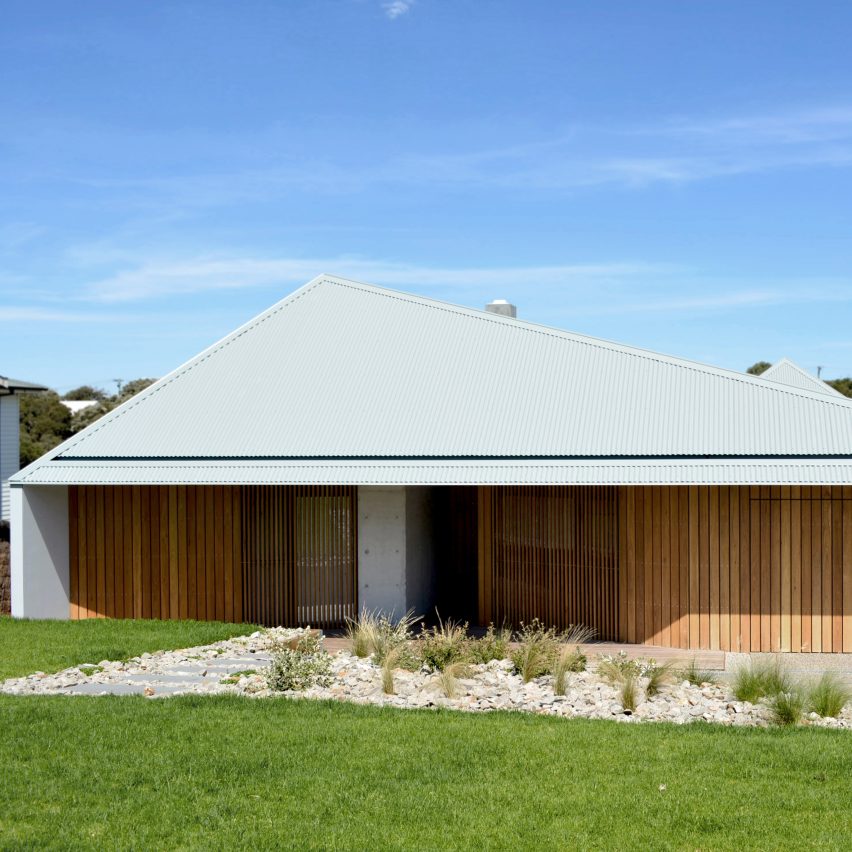
Melbourne’s Sorrento House is a modern take on Australian seaside architecture

Sorrento House 1 by Vibe Design Group

Vibe Design Group has reinterpreted the traditional Australian beach house to create a timber and glass residence sheltered beneath a folded metal roof. Read more

http://ift.tt/2dH9dsw

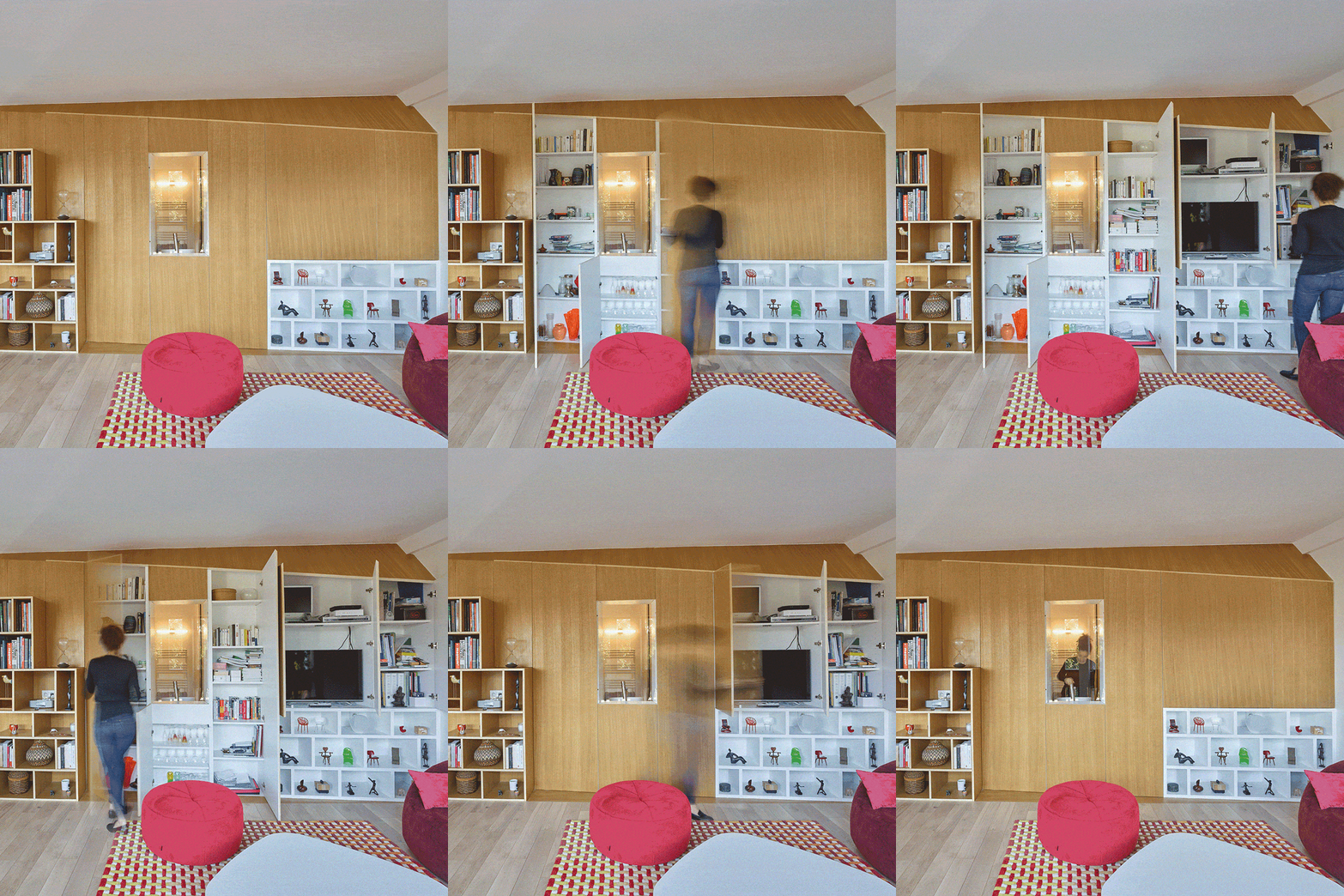
Clutter concealed within wooden walls inside French apartment

h2o architectes apartment in Sceaux

Concealed storage cabinets create a space-saving solution inside this apartment in Sceaux, which was recently overhauled by French studio h2o architectes. Read more

http://ift.tt/2dGSfdP