Kekkapää Stables / POOK


© Kuvio Ltd

© Kuvio Ltd


© Kuvio Ltd


© Kuvio Ltd


© Kuvio Ltd


© Kuvio Ltd

  • Architects: POOK Architects Ltd Finland
  • Location: Espoo, Finland
  • Architect In Charge: Katariina Rautiala, Pentti Raiski
  • Structural Design: ET-Suunnittelu Oy
  • Area: 120.0 sqm
  • Project Year: 2015
  • Photographs: Kuvio Ltd

© Kuvio Ltd

© Kuvio Ltd

The wooden stable is located in a countryside venue in the valued landscape of Northern Espoo. In addition to the stable space, the steep gabled roof also covers a free-range area, an equipment and supply space, and a manure storage area. The aim was to keep functions close to each other and ensure ease of use. All wood used in the building is unimpregnated conifer.


© Kuvio Ltd

© Kuvio Ltd

The building site is located in the valued landscape in rural Northern Espoo. Horse management is a significant part of the area’s agriculture. The area has many small stables and well-connected riding trails in the countryside. Horse keeping, for its part, allows for preservation of the fields’ current use for cultivation and grazing. Wood is a natural building material for the area.


© Kuvio Ltd

© Kuvio Ltd

The aim was to locate the building nesteled in a picturesquea great landscape; its long edge follows the direction of the forest slope and brings the building’s gable into the woods. In additional to landscape benefits, this created wind shelters in outdoor spaces to protect against the prevailing southwestern winds. Massing is based on the steep, acentric gabled roof, under which all central functions are located.


© Kuvio Ltd

© Kuvio Ltd

The functional planning of the building paid special attention to the ease of everyday activities and durability of building parts. In horse keeping everyday chores are repetitive; smooth organisation for feeding, cleaning and horse care is central. The free range area and stable are linked directly to the horses’ forest pasture, care locations are multifunctional and close by, the manure storage area opens out directly from the stalls and the free-range area, and the riding arena and connections to riding trails are located in the courtyard. The aim was to avoid unnecessary steps.


Courtesy of POOK

Courtesy of POOK

All horizontal structures and cladding were built with conifer. Sturdy floor planks were directly attached to a laminated timber floor structure. This achieved a simple structure, gave the room height, and provided natural stratification of warmth. The wooden- lattice structure ceiling is insulated with cellulose wool and ventilated from the gable. Sturdy tongue-and-groove spruce boards were used for the facade and interior cladding. Stalls and the free-range area that are exposed to direct wear from use by horses are primarily steel or concrete.


© Kuvio Ltd

© Kuvio Ltd

Unimpregnated wood was also used liberally in interior cladding because of the wood’s hygroscopic characteristics. The management of fluctuations in humidity and ensuring functional ventilation in the stable area are important to the horses’ well-being. Ventilation is primarily pressure force ventilation, with an option to increase efficiency using mechanical venting. Heat generated from horses is used in the stable spaces to supplement heating generated by hot air pumps, which are also used to decrease humidity as necessary.


© Kuvio Ltd
© Kuvio Ltd

http://ift.tt/2d6d41v

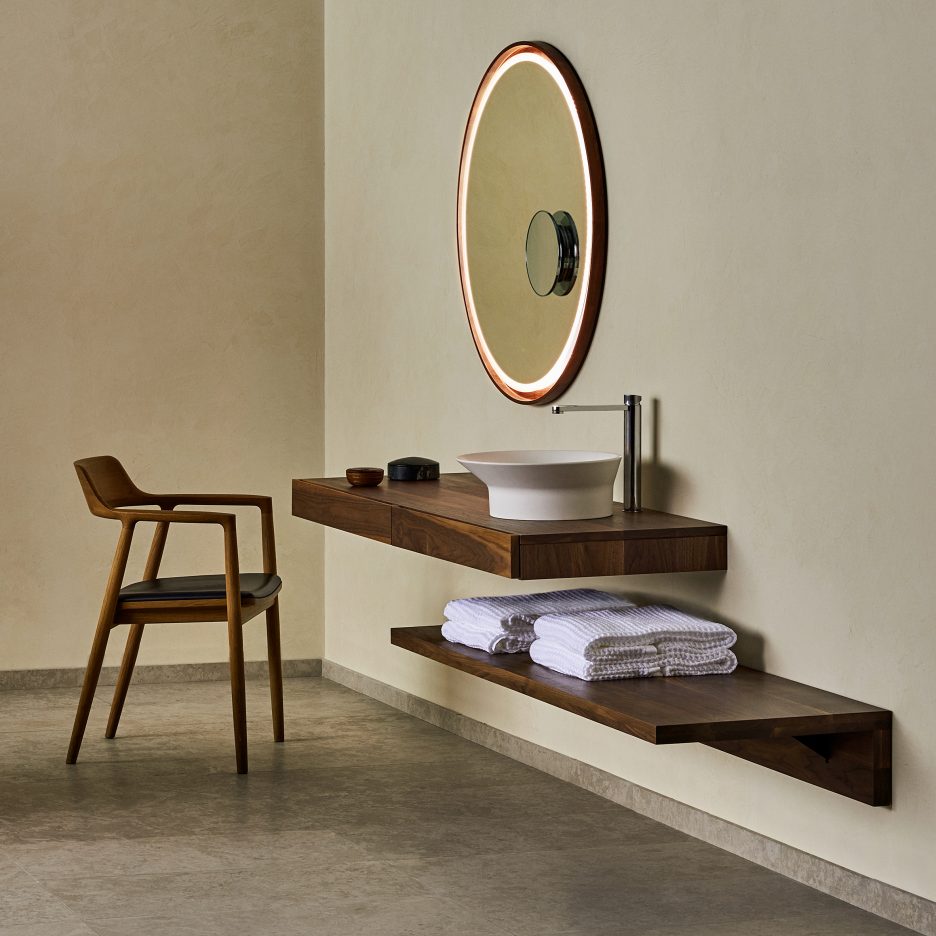
Foster + Partners designs first bathroom range for Porcelanosa


Architecture firm Foster + Partners has created the minimal Tono bathroom range for Spanish brand Porcelanosa (+ slideshow). (more…)

http://ift.tt/2ehTJiL

House of Fluctuations / Satoru Hirota Architects


© Satoru Hirota Architects

© Satoru Hirota Architects


© Satoru Hirota Architects


© Satoru Hirota Architects


© Satoru Hirota Architects


© Satoru Hirota Architects

  • Structure Architect: Nieda Atelier / Taizen Nieda, Mitsuyoshi Yoshida
  • Contractor: Watanabe Giken Co., Ltd. / Kenji Kodama

© Satoru Hirota Architects

© Satoru Hirota Architects

From the architect. This is the single-family house located in Tokyo. Restrictions on space of land and height is severe , and housing is dense. It was a difficult location to ensure privacy.


© Satoru Hirota Architects

© Satoru Hirota Architects

So consider the position and size of the opening, Adjust the sense of distance and sense of openness. It was realized the house was to ensure privacy.


Section

Section

This adjustment resulted in a fluctuation in the appearance of this house, and space of various heights has created a scene of a variety of life.


© Satoru Hirota Architects

© Satoru Hirota Architects

http://ift.tt/2dpcOvc

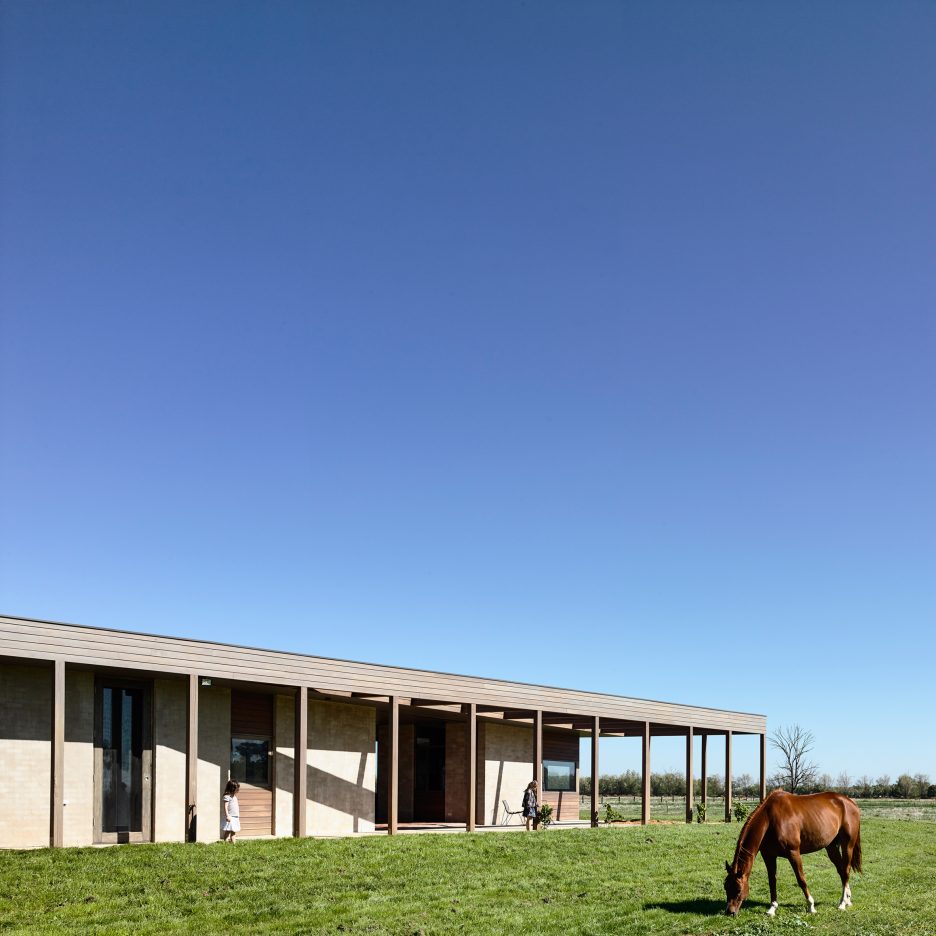
Australian country house by Rob Kennon features a colonnade and a courtyard


This single-storey house in the Australian countryside was designed by architect Rob Kennon with a sheltered veranda around the outside and a courtyard at its centre (+ slideshow). (more…)

http://ift.tt/2dYjs0X

Project of the Month: Yellow Submarine Coffee Tank


© Ketsiree Wongwan

© Ketsiree Wongwan

One of the ways that architecture must be integrated into its natural context is by maintaining the sensory experience of the place itself. This can be achieved by assigning value to a site’s spatial qualities, textures, and even by generating contrasts, to enhance and differentiate existing elements from man-made ones.

This month we want to highlight Secondfloor Architects, who turn their focus towards the interior of their project and invite us to experience the natural environment as something that is above architecture. They do this not only by designing a building that is settled in the plot, but also by creating a central element which relates to the verticality of the existing trees, while the building’s horizontal elements offer a powerfully contrasting material expression.

About the shades of black: It’s quite interesting what you mention about using a color that absorbs light but yet generates textures. What atmosphere or sensations where you after by using these specific materials in black? How did you select the different textures according to the use of the spaces?

We utilize black for two different purposes. (1.) Our intention as designer to the negative attitude people have towards the black because we wanted to prove that black contains this richness. One of the examples is at architecture schools, the use of the black is often criticized while with white, that’s not the case. (2.) Black as an emerging presence of environment. Black tends to absorb but its surface enables the presences of the the materials we chose. The black and uneven surface of the aggregate wall create this beautiful shimmery effect that is visually soothing. The blackness and glossy quality of the tiles around the tree render the reflection that visually expand the space. There’s the fading blackness of the bricks with accumulating traces that becomes more obvious through time. 


© Ketsiree Wongwan

© Ketsiree Wongwan

© Ketsiree Wongwan

© Ketsiree Wongwan

© Ketsiree Wongwan

© Ketsiree Wongwan

The project has very interesting features and design elements for being a café. Which decisions did you make for the plan, materials and project philosophy? We believe the final project has very complex elements as response to a “common” program. 

We believe that architecture should create ambience that embodies this specific space rather than standing out for its physical presence. This project wouldn’t be as meaningful as it is if it just stood on this piece of land. The proportion of the visually accessible open space is 2 out of 3, even though you feel like you’re inside the building. The 38-meter long floor plan was conceived to accentuate the difference of the steepness of the land. In the meantime, the 6.5-meter width creates the narrowness that allows one to feel the presence of the surrounding landscape. The materials we decided to use comprise of different characteristics of blackness for the environment we were going to create. The steel structure was used to emphasize the solidarity of other materials and it offered shorter construction period in terms of the structure. 


Courtesy of Secondfloor Architects

Courtesy of Secondfloor Architects

Plan

Plan

© Ketsiree Wongwan

© Ketsiree Wongwan

Besides being in a very natural context, the project seems to close on itself and letting the user concentrate on the architecture and what is happening inside but at the same time maintaining a connection with the landscape subtly in a vertical way (open spaces), rather than horizontal. How can you deepen more on this as a design premise?

This is a very good question. Thank you for noticing that. The answer to this question is very simple and I would like to answer it with this question ‘How long has it been since you looked up at a tree you stood underneath? The beauty of forest isn’t as far as you think. Like I said earlier, sometimes, enclosure offers you the chance to see more than you would ever think. 


Concept Image. Image Courtesy of Secondfloor Architects

Concept Image. Image Courtesy of Secondfloor Architects

Sketch

Sketch

Section

Section

Yellow Submarine Coffee Tank / Secondfloor Architects
//cdn.embedly.com/widgets/platform.js

http://ift.tt/2dY5agM

60 Storey Tower Maximizes Energy Capture with Photovoltaic Facade


Courtesy of Peddle Thorp Architects

Courtesy of Peddle Thorp Architects

Peddle Thorp Architects have submitted their proposal for the Moray Street Residential Tower in Melbourne for approval. At 1173.5 square meters, Sol Invictus is wrapped entirely in solar panels, attaining 10 times more solar surface area than a traditional roof covering. The facade can achieve up to 5000 square meters of solar panel array and is connected to a battery storage system. 


Courtesy of Peddle Thorp Architects


Courtesy of Peddle Thorp Architects


Courtesy of Peddle Thorp Architects


Courtesy of Peddle Thorp Architects


Courtesy of Peddle Thorp Architects

Courtesy of Peddle Thorp Architects

In addition to larger and more visually appealing apartments with more amenities, the project brief sought cutting-edge solutions in solar and wind energy. To that end, the main tower of Sol Invictus is curved for maximum exposure to sunlight and wind loads, magnifying the potential for renewable energy gains. The facade includes black photovoltaic cells, which function optimally in bright sunlight, whereas the photovoltaic glass in the vision glazing operates best in shady conditions. The top of the building houses wind turbines that absorb high wind loads.


Courtesy of Peddle Thorp Architects

Courtesy of Peddle Thorp Architects

The design mitigates other issues of site, such as by limiting the presence of the adjacent freeway with directional aspect lighting and an inset lobby that widens the street edge. Additionally, Sol Invictus fosters community by connecting the suburbs to the central city and including amenity levels.

News via: Peddle Thorp Architects

http://ift.tt/2dXtiuz

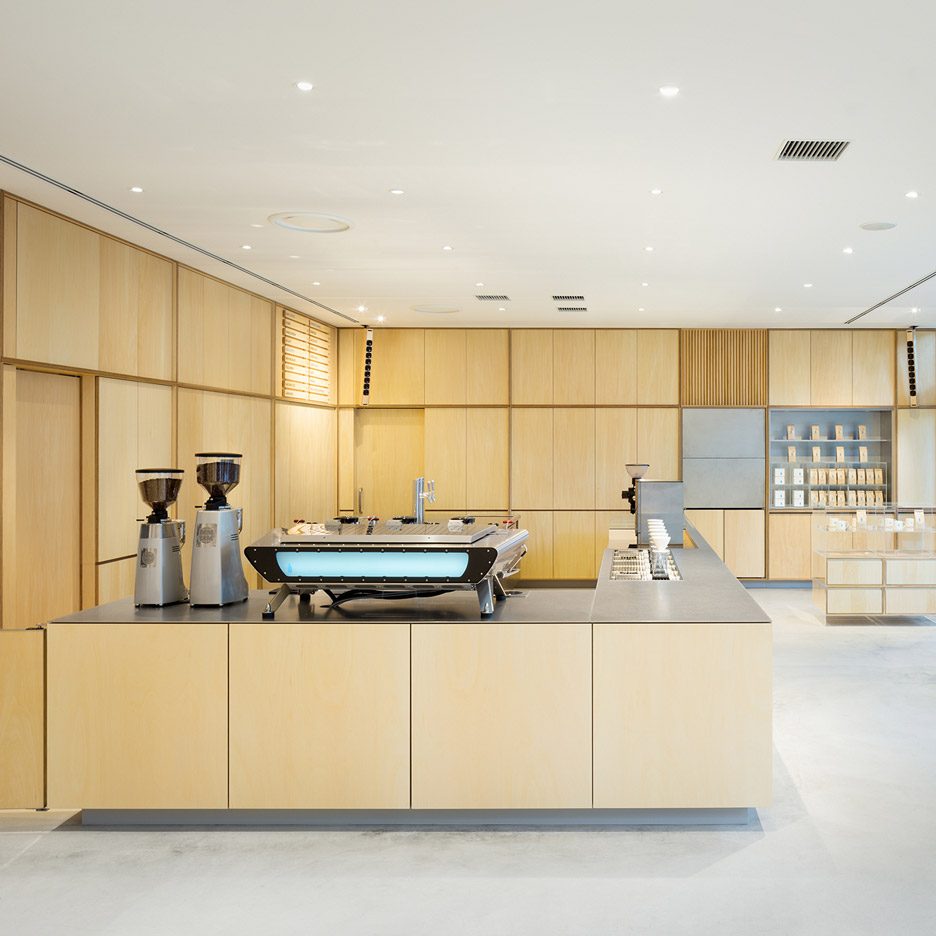
Schemata Architects creates pinewood-lined interior for Blue Bottle coffee shop


Plywood panels are used to conceal storage and serving hatches inside this Tokyo coffee shop by Schemata Architects (+ slideshow). (more…)

http://ift.tt/2dLVHoM

This Agricultural Expo Center in China is Not Only Inspired by Sesame Seeds But It is Shaped Like One


Courtesy of tvsdesign

Courtesy of tvsdesign

The team of tvsdesign and Cospace has won the competition for the design of the Zhumadian International EXPO Center, located in Zhumadian, a city known for its agricultural industry, in the Henan Province of China. The competition sought out convention center designs that could not only serve as a location to hold agricultural conventions and trade fairs but could also connect back to the city’s historic roots in order to expand the area as a rendezvous of agriculture. 

Drawing from the fact that Zhumadian is specifically known for supplying China with sesame seeds, the proposal utilizes the imagery of the seed in its shape—with rounded triangular forms—as well as in its overarching concept: “as an epicenter of activity in the agricultural industry, the convention center represents origins, life, growth, and health for the region and the people who visit the building” described the architects. 


Courtesy of tvsdesign


Courtesy of tvsdesign


Courtesy of tvsdesign


Courtesy of tvsdesign


Courtesy of tvsdesign

Courtesy of tvsdesign

Courtesy of tvsdesign

Courtesy of tvsdesign

Furthermore, the facility is oriented about a north-south axis with a design that visualizes the three elements critical to the agricultural process—earth, heaven, and people.


Courtesy of tvsdesign

Courtesy of tvsdesign

Courtesy of tvsdesign

Courtesy of tvsdesign

The new Center will be located along the western edge of an upcoming commercial development to the west of the central city, and will be the first of three cultural buildings to arise within the agricultural park area.


Courtesy of tvsdesign

Courtesy of tvsdesign

Courtesy of tvsdesign

Courtesy of tvsdesign

Courtesy of tvsdesign

Courtesy of tvsdesign

Courtesy of tvsdesign

Courtesy of tvsdesign

News via tvsdesign.

http://ift.tt/2dGUOP4

Kerstin Thompson adds intimate underground tasting room to Australian winery


A doorway discreetly set into a circular stone wall leads into this moody subterranean wine cellar that architect Kerstin Thompson has created at Australia’s TarraWarra vineyard (+ slideshow). (more…)

http://ift.tt/2doAobx

QUID Vicolo Luna / Lillo Giglia Architecture


© Salvatore & Lillo Giglia

© Salvatore & Lillo Giglia


© Salvatore & Lillo Giglia


© Salvatore & Lillo Giglia


© Salvatore & Lillo Giglia


© Salvatore & Lillo Giglia


© Salvatore & Lillo Giglia

© Salvatore & Lillo Giglia

From the architect. Named after its charmingly christened Moon Alley, the Vicolo Luna neighbourhood is an urban quarter on the edge of Favara’s town – which is a unique web of dammusi, low stone-and-lime buildings directly derived from the Roman domus, of which dammuso is the surviving archaic Sicilian word.


© Salvatore & Lillo Giglia

© Salvatore & Lillo Giglia

This project’s target is to toggle on urban and social regeneration dynamics, to the benefit of such complex network of old and new buildings, of public, private and venue spaces: squares, historical streets, alleyways, plazas, courtyards and gardens. It is indeed a manifold interaction between public and private, leading to a remarkable degree of cultural livelihood and to a striking nightlife, such as making Favara stealing the lead from neighbouring Agrigento regional capital and world-wide renowned historical city. 


Site Plan

Site Plan

Based on such premises, the present project intends to apply a selective focus to ancient and ruined house buildings together with all their annex spaces, and to re-address their function to a broad range of social events: from cuisine to AD facilities (Albergo Diffuso, Diffused Hotel), from exploiting the charm of old, quant courtyards and gardens refashioned and tuned to a fresh contemporary feel to making best use of such warm and yet intimate spaces by hosting  performance art events as well as resources and investments – A hub for energy to gather around a reborn, innovative and above all shared and community-based urban context.


© Salvatore & Lillo Giglia

© Salvatore & Lillo Giglia

The multi-faceted nature of this project contributes to an open, participated and constantly evolving, in-progress cultural improvement.


Section

Section

There are two dimensions working in constant interaction and sinergy: preservation works and innovative architectural planning. The outcome is a unique, defined, wholesome and complete architectural standard which introduces and operates on several spatial aspects.


© Salvatore & Lillo Giglia

© Salvatore & Lillo Giglia

The nature of this project consists in the creative elaboration and multifield application of the old/new contrast on a roughly 1.500 square metres town quarter.


© Salvatore & Lillo Giglia

© Salvatore & Lillo Giglia

The first phase of the project is going to be the most challenging as far as restructuring works are concerned: works will be carried out for the renovation and re-addressing of a large noble  household property with several annex buldings, among which maintenance facilities once used as tool-houses and a garden.


Ground Floor Plan

Ground Floor Plan

First Floor Plan

First Floor Plan

In the following step of the project, additional hosting facilities, currently work-in-progress, will be open to the public.


© Salvatore & Lillo Giglia

© Salvatore & Lillo Giglia

Having to comply with strict council reglations concerning the overall building size allowed, close-up, tailored, surgical interventions were carried out, drawing out and integrating with a custom and uncompromising approach. Materials and works were aimed at creating sharp and yet natural shapes blending in a rather blunt, stratified and crystallized background.  


© Salvatore & Lillo Giglia

© Salvatore & Lillo Giglia

The present project has chosen and made sure to preserve as much as possible of the original wall structures, avoiding to disrupt the original lay-out along with the characteristc elements of the building: on the groundfloor, two crossing vaults, the arches and the wooden ceiling and roof; at the first floor, the brand new beams set in their original sloping framework design.


© Salvatore & Lillo Giglia

© Salvatore & Lillo Giglia

From an architectural point of view, the target is nurturing a plus in each space, by using a minimal language, expressed by a choice of natural materials and neutral grey and white indoor environments, alternating neat and smooth outlines with unlayered, rough cement walls in specific spots. 


© Salvatore & Lillo Giglia

© Salvatore & Lillo Giglia

http://ift.tt/2d4Qu9b