Central Canteen of Tsinghua University / SUP Atelier + School of Architecture Tsinghua University


© Xia Zhi

© Xia Zhi


© Xia Zhi


© Xia Zhi


© Xia Zhi


© Xia Zhi

  • Architects: SUP Atelier, School of Architecture Tsinghua University
  • Location: Qing Hua Da Xue, Haidian Qu, Beijing Shi, China, 100084
  • Architect In Charge: Yehao Song
  • Project Architects: Yehao Song, Jingfen Sun, Dan Xie , Xiaojuan Chen, Lina Wang, Xiaolong Zhang
  • Area: 21000.0 sqm
  • Project Year: 2015
  • Photographs: Xia Zhi

© Xia Zhi

© Xia Zhi

From the architect. To improve the living quality of the campus, a new building is built with multi-functions as canteens for students and professors, lecture hall and exhibition hall for the campus, office and service hall for the Tsinghua Career Center and food storage for all the canteens at the center of the campus of Tsinghua University.


© Xia Zhi

© Xia Zhi

The project paid close attention to those points in design:

1. The former chaotic site with blind corner should be transformed and integrated as a convenient and complete public place for the campus. 


© Xia Zhi

© Xia Zhi

2. The terrain of the site should be in good use for easy accessibilities in all directions. The trees and vegetation should be preserved to keep the continuity and sustainability of the environment.  


© Xia Zhi

© Xia Zhi

3. As a public building in campus, it should be a sustainable, low cost and low energy consumption building, which means that passive strategies, local materials and appropriate construction methods are essential.  


© Xia Zhi

© Xia Zhi

4. Architecture represents the spirits of campus and will be passed down in future. The brickwork could be designed as artwork, just like painting or sculpture, which mixes art and wall together. 


© Xia Zhi

© Xia Zhi

The site of project used to be a blind corner in the center of campus, with dead end road, chaotic traffic, mixed logistic and service route, unattended courtyard. All of these were mismatched with the location. The core idea of design is to repair the urban texture in the campus context, to improve the fluency of the site, to make it easy to get in for the public from all directions. 


System 1-Sustainability

System 1-Sustainability

System 2-3D Street

System 2-3D Street

System 3-Brick Wall & Activity

System 3-Brick Wall & Activity

The section design takes the full advantage of the terrain of the site, creates a three-dimensional indoor street for the public, through ground floor on east and B1 floor on west. The north and south are also available as entrance. The entrance floor of the building on the one hand is functional and solid and on the other hand is a kind of cluster of open public space, which makes students possible to access and go across the building in all directions. Moreover, the entrance floor serves as shortcut and meeting places for students in the campus.   


© Xia Zhi

© Xia Zhi

West-East Section

West-East Section

© Xia Zhi

© Xia Zhi

The old trees and landscape terrain in the site are preserved as much as possible. The project is built on the site of former canteen and former chaotic backyard, without occupation of the former open green space and vegetation in north and west of the site. To keep the sycamores on southeast corner alive and create more nature friendly outdoor space, the outline of the building was designed to keep at least 5 meters distance away from the trunks, and provide double-deck balcony, bay window and wooden cafe terrace for people. 


© Xia Zhi

© Xia Zhi

Sustainable strategies, especially passive design strategies are adopted in the project to make the space more comfortable and reduce the cost and energy consumption in operation. 


Natural Lighting & Ventilation

Natural Lighting & Ventilation

The building above ground is divided into two main functions: canteen and career center, which are operated independently. They are connected with a public atrium, which connects public spaces on different stories, like a traditional inner Chinese courtyard. On the top of the atrium there are seven egg-shaped skylights, which bring natural daylight to the atrium. Each of the skylights has a small window on the side frame wall above the roof, which could be opened as outlet vent for natural ventilation. The 3-story high atrium works like a stack and with all inlets and outlets open, there is a stack effect to accelerate the natural ventilation and prevent the whole space from being overheated and make the atrium more comfortable in summer. Obviously, it significantly reduces the maintain cost and energy consumption for artificial lighting and air-conditioning in operation phase. 


© Xia Zhi

© Xia Zhi

The depth of the building is more than 40 meters, to improve the daylight and natural ventilation for the public space and offices, a roof garden with side windows is inserted to the 3rd floor. The glass curtain wall with grating, facing south, draw more sunlight to the atrium courtyard. The flat roof windows on the timber floor of the roof garden will bring natural light down to the lecture hall. Among which two raised boxes with side windows are used for low cost chimney to accelerate the natural ventilation for the hall. The roof garden can be used as open cafe or party for the campus. 


© Xia Zhi

© Xia Zhi

The exterior brick wall is also designed with the idea of sustainability. In this project, the brick masonry walls are built not only as enclosure wall, they are also as sun-shading system and ventilation openings. The width of the gaps between bricks could gradually change from 30 mm to 100mm, to satisfy the required aperture ratio. 


© Xia Zhi

© Xia Zhi

Bricks are constructed in more than 5 ways: in conventional way, in zigzag way, brick indented, brick overhung and brick sun-shading system. They bring various textures for exterior walls and meet different functional demands.


Tiled Wall Structure of Northwest Stair

Tiled Wall Structure of Northwest Stair

Tiled Wall Structure

Tiled Wall Structure

The brick for the sun-shading façade is using a kind of specially customized brick with two rectangular holes, every piece of which should be integrated with reinforced bar through the holes in vertical, and every 8 layers bricks will be integrated with stainless flat steel in horizontal. All the bars will be welded on the flat steel, and they will be integrated with the main structure to keep the brick sun-shading facade safe and stable. The rectangular holes are set to suit the gap between bricks, which could be changed according to the design, to meet the needs of sun- shading or ventilation, and to keep the wholeness of the brick façade. 


© Xia Zhi

© Xia Zhi


© Xia Zhi

© Xia Zhi

The masonry wall, as handmade constructed wall, could be more than a mere functional element. Some brick walls are designed as pieces of art work, to emphasize the specificity of the space. Taking the wall under the east steel porch, next to the east entrance as an example, the overhung bricks are settled like a painting, the brick wall is embodied with the capitalized characters of GHUA as part of “TSINGHUA”, the name of the university.   


© Xia Zhi

© Xia Zhi

The advantage of handicraft is adopted in the project. Since the brick walls are designed like artwork, the traditional craftsmanship is prevailing.       

http://ift.tt/2diHe5N

Siam Discovery / Nendo


© Takumi Ota

© Takumi Ota


© Takumi Ota


© Takumi Ota


© Takumi Ota


© Takumi Ota

  • Architects: Nendo
  • Location: Thailand
  • Area: 40000.0 sqm
  • Project Year: 2016
  • Photographs: Takumi Ota
  • Owner And Developer: Siam Piwat Co., Ltd.
  • Concept: The Biggest Arena of Lifestyle Experiments
  • Budget: Bht 4,000 Million

© Takumi Ota

© Takumi Ota

From the architect. Siam Discovery is The Biggest Arena of Lifestyle Experiments packed with exhilarating experiences that say ‘come play with us’ to visitors. People can come in to experiment and discover what they like and what expresses their own identity best.


© Takumi Ota

© Takumi Ota

© Takumi Ota

© Takumi Ota

Without the constraints of a particular brand or school of design, products are brought together under a single universal concept that puts customers at the centre; everything at Siam Discovery is presented by visitor’s interest. From among a choice of more than 5,000 international and local brands of every price range, customers can conveniently choose, mix, match, try, and then try again so that their purchases are in line with their taste and needs.


© Takumi Ota

© Takumi Ota

© Takumi Ota

© Takumi Ota

Among the exciting debuts at Siam Discovery is a new Loft store with a design concept that is being utilised for the first time in the world and which is conceived by world-renowned designer Nendo and Loft Japan’s designers. Nike is opening its only concept store in Southeast Asia. Issey Miyake will open its first concept store outside of Japan. It is called the World of Issey Miyake and offers a full line of products including, for the first time in Thailand, Issey Miyake’s products for men.


© Takumi Ota

© Takumi Ota

© Takumi Ota

© Takumi Ota

Home decoration brands like Hay, Tom Dixon and Kartell will open their first and only concept stores in Thailand. Artist’s Design Products from world-class artists like Yayoi Kusama and Lisa Larson will have their first and only stores in Thailand. And, Adidas will open its largest concept store in Thailand and with an interactive store concept.


© Takumi Ota

© Takumi Ota

http://ift.tt/2d4WnJP

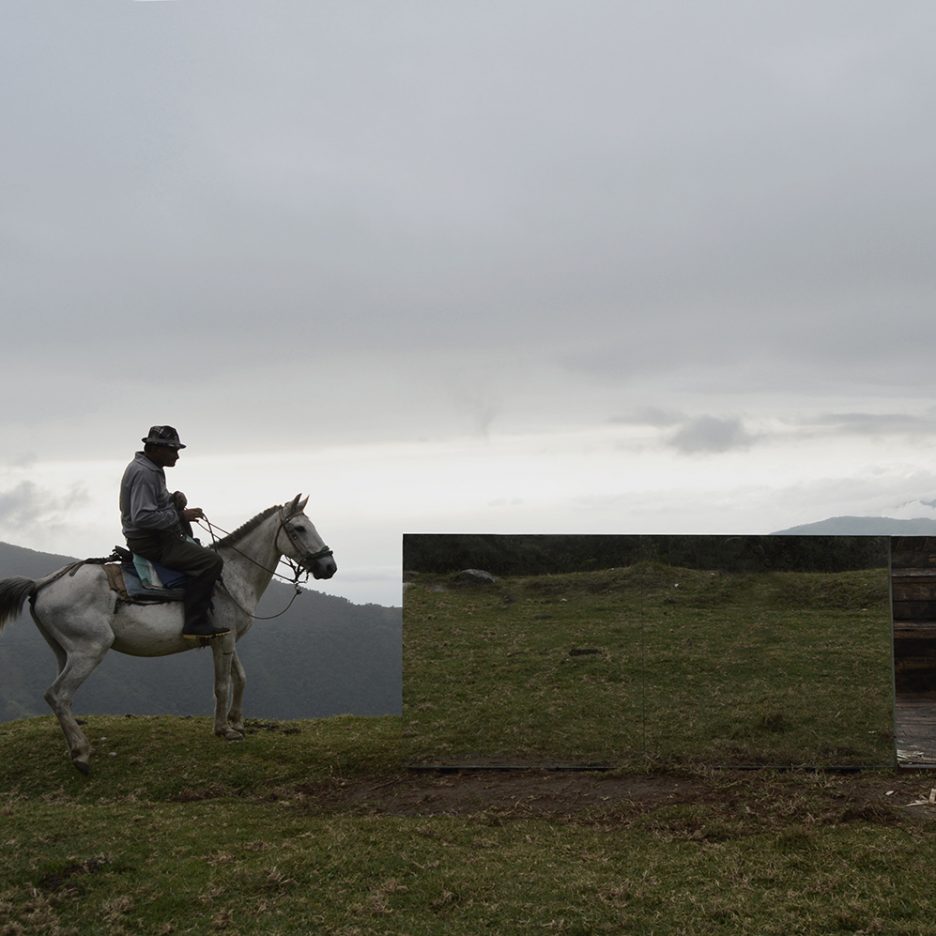
Mirrored viewing platform by Natura Futura is disguised against the Ecuadorean landscape


Projecting over a hillside in the Ecuadorean countryside, this small mirrored viewpoint was designed by Natura Futura Arquitectura as a rest stop for hikers (+slideshow). (more…)

http://ift.tt/2dxLRqh

Artisan House / Morphogenesis


© Edmund Sumner

© Edmund Sumner


© Jatinder Marwaha


© Edmund Sumner


© Jatinder Marwaha


© Edmund Sumner

  • Architects: Morphogenesis
  • Location: Delhi, India
  • Design Team: Sonali Rastogi, Neelu Dhar, Harleen Singh, Aditya Yadav, Anika Mittal, Elis Mendoza, Prairna Gupta, Silambarasan G
  • Area: 29800.0 ft2
  • Project Year: 2015
  • Photographs: Edmund Sumner, Jatinder Marwaha
  • Interior Design: Morphogenesis
  • Landscape Design: MESH Partnership
  • Sustainability: Morphogenesis
  • Structure: Manish Consultants
  • Mep: Sanelac Consultants
  • Pmc: RRA Project Management
  • Lighting Consultant: : LDP International

© Jatinder Marwaha

© Jatinder Marwaha

From the architect. Through the Artisan House project, Morphogenesis looks to revive and re-establish a patronage for traditional Indian artisanal skills. India is symbolized by the diversity of its art and culture, yet with the changing paradigm there is a great need to conserve these symbols that are under a growing threat of neglect. Craft, emergent from skill and handed-down traditions is inherent in Indian culture, and is strongly representative of the global understanding of luxury today- that of the hand-made, bespoke, one that speaks of its provenance. Additionally, luxury in this project is expressed through the dexterity and beauty of spatial configurations, lending the space an experiential quality through the incorporation of craft, material, method and design.


© Jatinder Marwaha

© Jatinder Marwaha

The design exploits the terrain on which the project is located, to create two different levels that are instrumental in segregating functions. A large house intended to include a large extended family at times of celebration and festivity, the private spaces are placed in the earth-banked lower level, and the more public areas are designated to the upper level. In keeping with traditional Indian schema, the private living is organized around a central courtyard which contains a temple, imparting a spiritual omnipresence. A strong graphic language of striation is the organizing principle of the design, to retain scale within this very large volume. These bands translate into a series of vertical surfaces, with a different story unveiling in each volume subtended between two surfaces. What is unique about this house is that it’s hard to call anything a room when looking at the planning and philosophy behind the spaces. The house evokes luxury in its play with materiality and detail. There is stone craft in one zone, metal craft in another, textiles in the next. The strategy of banding allows for the use of distinct crafts and over 50 materials without impacting the architectural sensibility or destroying the cohesive narrative.

 The striated planes notionally extend themselves beyond the edges of the built form, into the landscape and planting. So one could well be within a very stone crafted zone that extends out into a rock garden which then leads into another zone with a sculpture relief on the wall, with further leads into a water garden. There are multiple sequential exposures and experiences for the senses, so in a way there is also a luxury of experiences that this project affords. The experience created is akin to unfolding of space after space in a museum.


© Jatinder Marwaha

© Jatinder Marwaha

Floor Plan

Floor Plan

© Edmund Sumner

© Edmund Sumner

In nutshell, this project accommodates a traditional Indian family, traditional living principles and traditional craft and materials, but at the same time it was conceived as an extremely contemporary and modern house. This house represents luxury that is redefined: the luxury of handcraft, luxury in terms of freedom with experimentation which the client allowed, and finally, the luxury of different experiences.


© Edmund Sumner

© Edmund Sumner

http://ift.tt/2d82TLJ

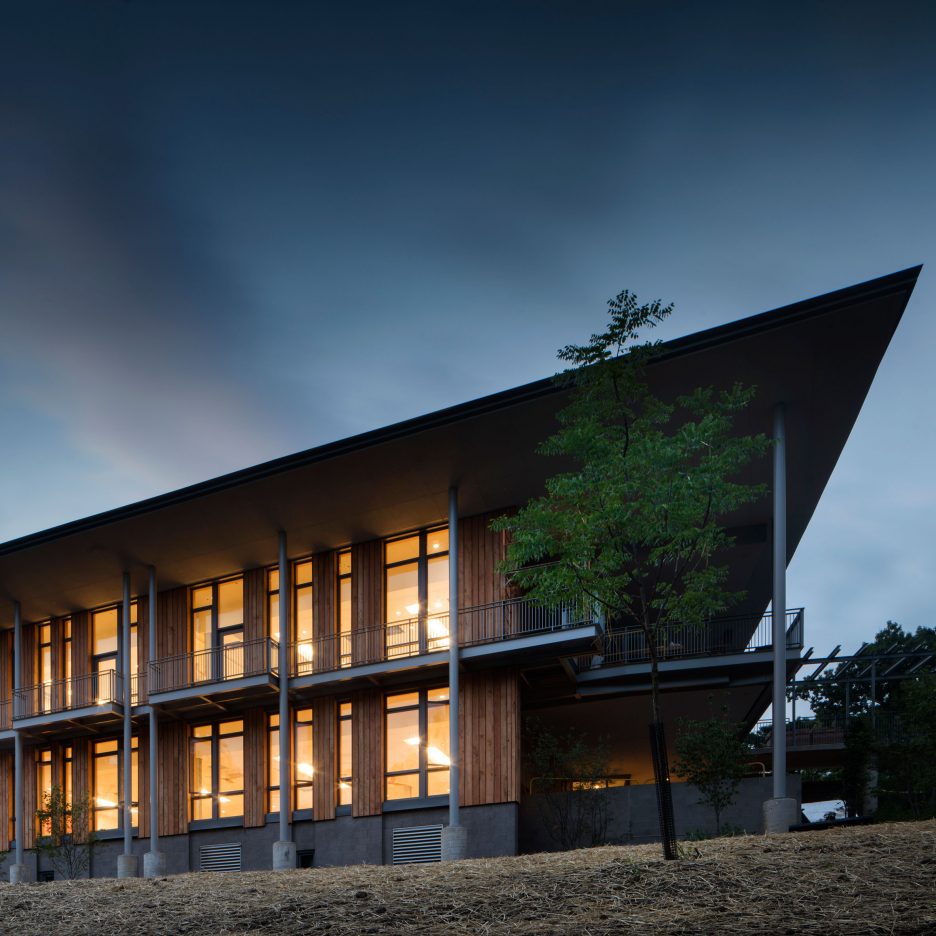
Bohlin Cywinski Jackson’s nature centre in Pittsburgh “blends with the surrounding woods”


The thin columns and wood cladding that front this educational facility in a Pittsburgh park are designed to help the building fit in with its woodland setting (+ slideshow). (more…)

http://ift.tt/2cJ7K7h

The Kite / Architecture Architecture


© Peter Bennetts

© Peter Bennetts


© Peter Bennetts


© Peter Bennetts


© Peter Bennetts


© Peter Bennetts


© Peter Bennetts

© Peter Bennetts

From the architect. A stand of silver birches marks the place. Their trunks are white heat, tempered by pools of black. Everything here is light and shade. Taking cue from their slender friends, black downpipes score the white walls of the house, disappearing into the canopy above.


© Peter Bennetts

© Peter Bennetts

Approaching the threshold, the visitor is welcomed by pockets of shade nestled among protective brick walls. A large pivot window and a large pivot door throw themselves wide open, exposing the full throat of the house to the garden.


Plan

Plan

Section

Section

Inside and out, the roof rests like a canopy. Sky and foliage are ever-present. Light filters in from all sides marking the passage of a day, while overhead, triangles beget triangles, folding and multiplying against the sky like barely tethered kites.


© Peter Bennetts

© Peter Bennetts

This house renovation stretches diagonally across the junction of its L-shaped backyard, unifying the two arms of the garden with a single gesture. Fin-walls project from the new living spaces, creating pockets of shade and shelter at the thresholds of outdoor living.


© Peter Bennetts

© Peter Bennetts

Internally, the geometry of the external canopy is drawn inside, bleeding the boundary between indoor and outdoor areas. This gesture also affords the opportunity to ‘flip’ open the rooftop, inviting shards of morning light into the living areas. Through the course of the day, sunlight penetrates the house from multiple angles, subtly marking the passage of time.


© Peter Bennetts

© Peter Bennetts

In the backyard a garage/studio building emulates the angular gesture of its sibling, though tips its hat in deference. Beneath its generous brim, a private garden provides a place of reflection for the studio space within.


© Peter Bennetts

© Peter Bennetts

http://ift.tt/2d7Mln0

Foster + Partners, Knight Architects Among 5 Firms Shortlisted for Ipswich Crossings Competition

The Royal Institute of British Architects (RIBA) Competitions has announced a shortlist of 5 teams in the competition for the Upper Orwell Crossings Project in Ipswich, England. The project brief consists of 3 new bridges spanning the Upper Orwell River that will enable the redevelopment and regeneration of several districts of Ipswich, as well as relieve congestion and improve connectivity for multiple forms of transportation.

The three bridges include:

Crossing A

A new road crossing to the south of the Wet Dock Island, which would connect the east and west banks. This crossing would be for all road users, including cyclists and pedestrians.

Crossing B

A new road crossing of the New Cut, which would connect the west bank to the Wet Dock Island. This crossing would be for all road users, including cyclists and pedestrians.

Crossing C

An improved crossing over the Prince Philip Lock, which would connect the east bank to the Wet Dock Island. This crossing would be for cyclists and pedestrians only.

After a pre-qualification phase that attracted a range of submissions from firms of varying sizes, the evaluation panel selected the following shortlisted teams:

The finalists were selected based on “experience of collaborating on major infrastructure projects, working within a multi-disciplinary team environment, and designing projects of architectural distinction with a complexity, scale and/or budget similar to that required on the Upper Orwell Crossings scheme.”

The five teams will present their designs to the Judging Panel (Chaired by Sir Michael Hopkins CBE) in mid-December 2016, with a winner to be announced in early 2017. The winning team will work with an existing project team led by WSP | Parsons Brinckerhoff, who will provide structural and civil engineering consulting for the project.

News via RIBA Competitions and Suffolk County Council.

http://ift.tt/2di229G

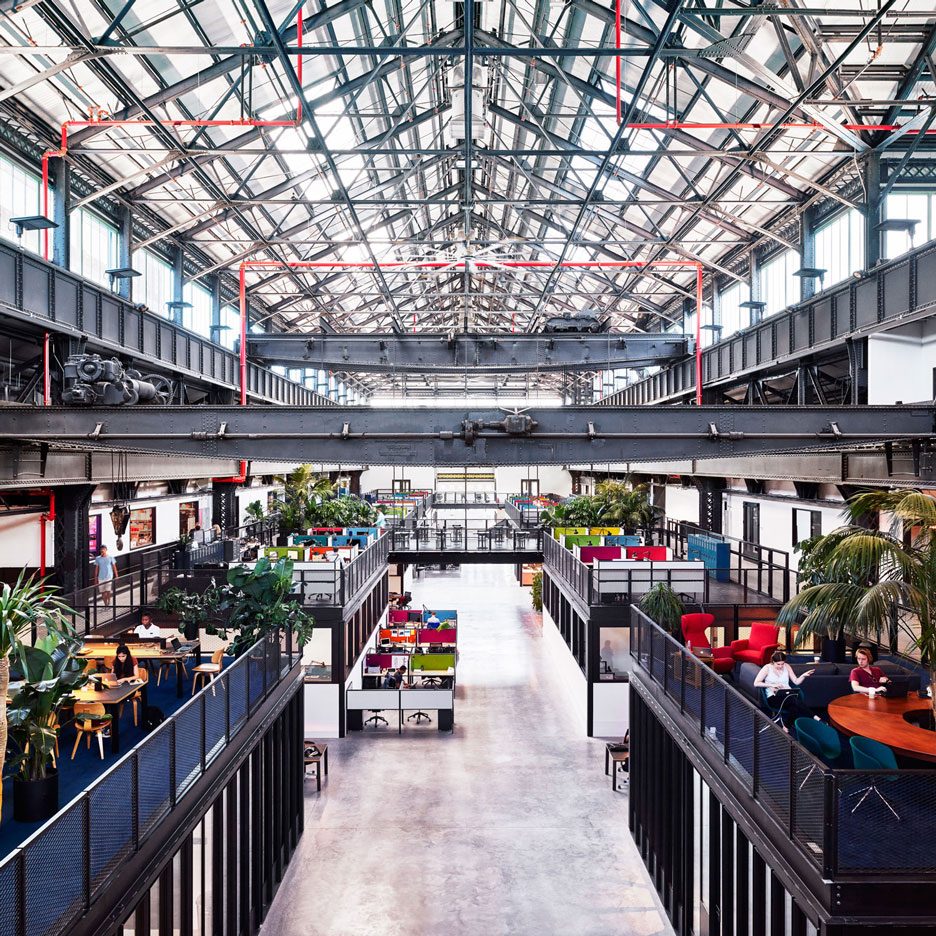
Macro Sea turns abandoned Brooklyn warehouse into New Lab co-working space


New York developer Macro Sea has turned a warehouse at Brooklyn‘s Navy Yard into a workspace for tech entrepreneurs, using the building’s “cathedral-like” steel trusswork to inform new elements (+ slideshow). (more…)

http://ift.tt/2dpEIrI

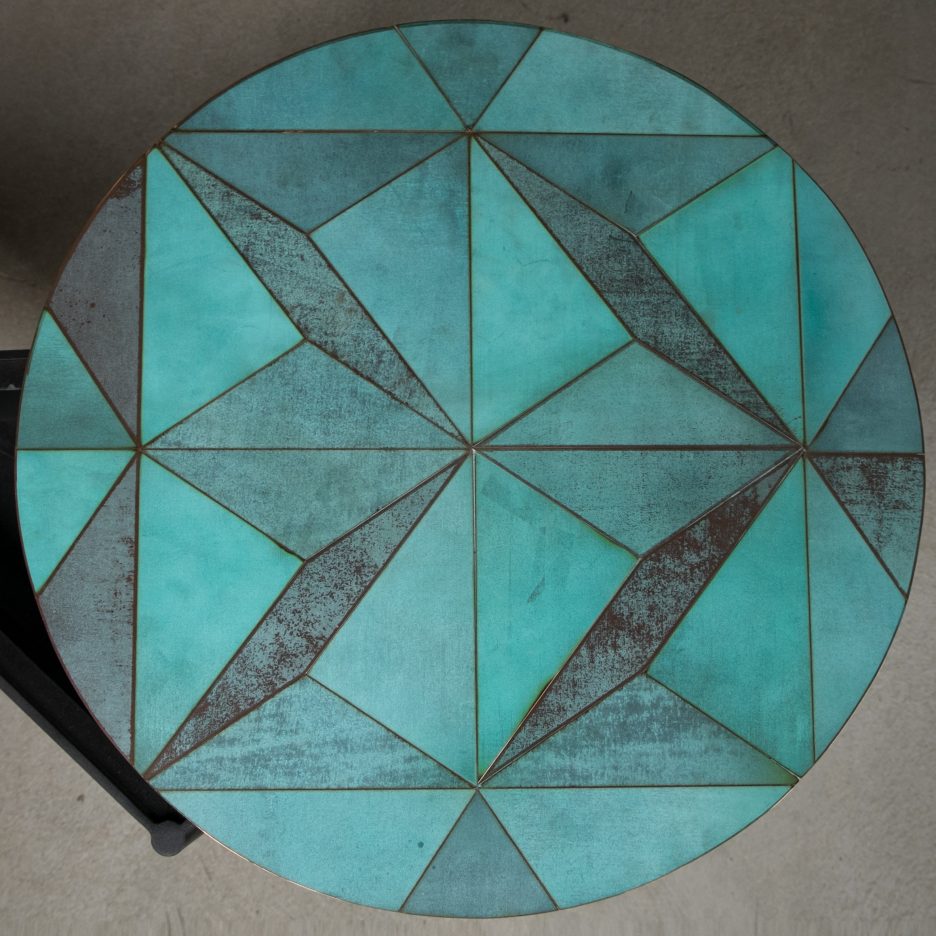
Alessandro Zambelli creates furniture inlaid with patterns of oxidised metal


London Design Festival 2016: this furniture collection from designer Alessandro Zambelli features a puzzle of metal pieces that have been oxidised to different degrees (+ slideshow). (more…)

http://ift.tt/2cISZRG

Zorgvlied Crematorion / GROUP A


© Digidaan

© Digidaan


© Digidaan


© Digidaan


© Digidaan


© Digidaan

  • Architects: GROUP A
  • Location: Amsteldijk 273, 1079 LL Amsterdam, The Netherlands
  • Team: Maarten van Bremen, Jos Overmars, Folkert van Hagen, Adam Visser
  • Area: 250.0 sqm
  • Project Year: 2016
  • Photographs: Digidaan
  • Main Contractor: Bouwbedrijf van Schaik BV, Breukelen
  • Structural Engineer: Breed ID, Den Haag
  • Structural Engineer Tent: Tentech bv, Utrecht
  • M Installations: Kemp Installatie BV, Amstelveen
  • E Installations: Hirdes Energie Techniek, Amsterdam
  • Client: Municipality Amstelveen

© Digidaan

© Digidaan

Zorgvlied Crematorion, situated in the historical Zorgvlied Cemetery in Amsterdam, opened last spring. The word Crematorion is composed of the words cremate and Orion (constellation), and represents a new approach to cremation allowing mourners to accompany the remains of their beloved ones as far as possible towards the cremation furnace. GROUP A has designed the innovative structure in such a way it facilitates this new approach.


© Digidaan

© Digidaan

A Fitting Way of Leave-taking 
The Crematorion is a stand-alone building, housing a cremation furnace and processing room, separate from the usual auditorium. The structure is designed to focus the minds on the ritual of leave-taking. It is designed to evoke personal involvement, allowing each participant to shape it and give it meaning in his or her own particular way. The farewell ceremony may be held in the auditorium of Zorgvlied or elsewhere – even at home. After this ceremony, the relatives accompany the remains of their dear deceased loved one through the beautiful grounds of Zorgvlied to the Crematorion. The next of kin get to choose whether they want to leave the casket in the special forecourt, or whether they want to enter it into the furnace themselves. The furnaces opening is connected directly to the outside. Also, unlike a regular service at a crematorium, all invitees can be present at the moment the casket enters the furnace. It allows differing cultures the opportunity of taking leave in their own way, employing the rituals they consider most appropriate.


© Digidaan

© Digidaan

Ritual in Architecture and Environment
The 16-metre high Crematorion is carefully embedded in the leafy surroundings of the cemetery and the vegetation on both sides of the path continues rising along the walls of the exterior. The Crematorion has a base made of stone and a light, tent-like superstructure over it, ending into a glass covered opening. The contrasting materials symbolise the tension between the heaviness of the earth and the insubstantiality of the heavenly and spiritual. The opening in the top is oriented to the sun and the rotation in the tent-structure stems from the difference between the incidence of sunlight and the direction of the site. Daylight comes from above into the forecourt, where it illuminates the glass mosaic wall. This wall also separates the forecourt from the technical area of the Crematorion.


Plan

Plan

Section

Section

The Final Journey
The distinctive pavilion is a friendly and recognizable building, with its subtle hints of something higher than the earthly sphere. In GROUP A’s design, the routing through the historic Cemetery – the journey of the deceased and the next of kin, from the auditorium to the Crematorion – plays an important role. The verticality of the design reinforces the idea of the spirit of the departed, rising to the imaginary stars. It helps to turn this final journey into a meaningful ritual.


© Digidaan

© Digidaan

http://ift.tt/2d4gHLg