Experience the “Brutal Faith” of Gottfried Böhm’s Pilgrimage Church in Neviges


Courtesy LOBBY Magazine. Image © Laurian Ghinitoiu

Courtesy LOBBY Magazine. Image © Laurian Ghinitoiu

This exclusive photo essay by Laurian Ghinitoiu is featured in the fifth issue of LOBBY. Available later this month, the London-based magazine—published in cooperation with the Bartlett School of Architecture—examines the theme of “Faith” as a fervent drive, a dangerous doctrine, a beautifully fragile yet enduring construct, an unapologetic excuse, a desperate call for attention and a timely consideration on architectural responsibility.

In 1986 the Pritzker Architecture Prize announced their first German laureate. In a speech at the ceremony in London’s Goldsmiths’ Hall, the Duke of Gloucester suggested that the prize “may not guarantee immorality,” inferring, perhaps, that not even the most prestigious award in architecture could compete with an œuvre so compact, focussed and enduring as that of Gottfried Böhm – a “son, grandson, husband, and father of architects.”


Courtesy LOBBY Magazine. Image © Laurian Ghinitoiu


Courtesy LOBBY Magazine. Image © Laurian Ghinitoiu


Courtesy LOBBY Magazine. Image © Laurian Ghinitoiu


Courtesy LOBBY Magazine. Image © Laurian Ghinitoiu

The Pilgrimage Church in Neviges (a small hamlet close to Dusseldorf, Germany) was conceived in the context of an invited international competition—issued in 1962—and a progressive client: the Archdiocese of Köln and, to be precise, Archbishop Josef Cardinal Frings. The resulting structure, which required 7,500 cubic metres of concrete and 510 tons of steel-reinforcing bar—along with its Via Sacra and surrounding buildings—is one of the most decisive, significant and unsung spaces of the twentieth century.


Courtesy LOBBY Magazine. Image © Laurian Ghinitoiu

Courtesy LOBBY Magazine. Image © Laurian Ghinitoiu

Courtesy LOBBY Magazine. Image © Laurian Ghinitoiu

Courtesy LOBBY Magazine. Image © Laurian Ghinitoiu

Courtesy LOBBY Magazine. Image © Laurian Ghinitoiu

Courtesy LOBBY Magazine. Image © Laurian Ghinitoiu

Courtesy LOBBY Magazine. Image © Laurian Ghinitoiu

Courtesy LOBBY Magazine. Image © Laurian Ghinitoiu

Courtesy LOBBY Magazine. Image © Laurian Ghinitoiu

Courtesy LOBBY Magazine. Image © Laurian Ghinitoiu

Courtesy LOBBY Magazine. Image © Laurian Ghinitoiu

Courtesy LOBBY Magazine. Image © Laurian Ghinitoiu

Courtesy LOBBY Magazine. Image © Laurian Ghinitoiu

Courtesy LOBBY Magazine. Image © Laurian Ghinitoiu

Courtesy LOBBY Magazine. Image © Laurian Ghinitoiu

Courtesy LOBBY Magazine. Image © Laurian Ghinitoiu

Courtesy LOBBY Magazine. Image © Laurian Ghinitoiu

Courtesy LOBBY Magazine. Image © Laurian Ghinitoiu

Courtesy LOBBY Magazine. Image © Laurian Ghinitoiu

Courtesy LOBBY Magazine. Image © Laurian Ghinitoiu

Courtesy LOBBY Magazine. Image © Laurian Ghinitoiu

Courtesy LOBBY Magazine. Image © Laurian Ghinitoiu

Courtesy LOBBY Magazine. Image © Laurian Ghinitoiu

Courtesy LOBBY Magazine. Image © Laurian Ghinitoiu

Courtesy LOBBY Magazine. Image © Laurian Ghinitoiu

Courtesy LOBBY Magazine. Image © Laurian Ghinitoiu

Courtesy LOBBY Magazine. Image © Laurian Ghinitoiu

Courtesy LOBBY Magazine. Image © Laurian Ghinitoiu

Courtesy LOBBY Magazine. Image © Laurian Ghinitoiu

Courtesy LOBBY Magazine. Image © Laurian Ghinitoiu

Courtesy LOBBY Magazine. Image © Laurian Ghinitoiu

Courtesy LOBBY Magazine. Image © Laurian Ghinitoiu

Courtesy LOBBY Magazine. Image © Laurian Ghinitoiu

Courtesy LOBBY Magazine. Image © Laurian Ghinitoiu

Courtesy LOBBY Magazine. Image © Laurian Ghinitoiu

Courtesy LOBBY Magazine. Image © Laurian Ghinitoiu

Courtesy LOBBY Magazine. Image © Laurian Ghinitoiu

Courtesy LOBBY Magazine. Image © Laurian Ghinitoiu

Courtesy LOBBY Magazine. Image © Laurian Ghinitoiu

Courtesy LOBBY Magazine. Image © Laurian Ghinitoiu

Courtesy LOBBY Magazine. Image © Laurian Ghinitoiu

Courtesy LOBBY Magazine. Image © Laurian Ghinitoiu

Courtesy LOBBY Magazine. Image © Laurian Ghinitoiu

Courtesy LOBBY Magazine. Image © Laurian Ghinitoiu

Courtesy LOBBY Magazine. Image © Laurian Ghinitoiu

Courtesy LOBBY Magazine. Image © Laurian Ghinitoiu

This photo essay was originally published by LOBBY Magazine in advance of their fifth issue, Faith. You can find out more about the issue, which launches on the 30 September 2016, here.

About LOBBY #5: “Faith”

People, no matter how different, have always felt protected under the aegis of a common belief and have united to accomplish the unthinkable. But faith can too easily become a fossilised creed, begging the question, at what point do inspiring and everlasting morals turn into inescapable dogmas carved into old stones? In 21st Century architectural discourse, where does our faith lie? The fifth issue of LOBBY aims at a critical reflection on the theme of “Faith” as a fervent drive, a dangerous doctrine, a beautifully fragile yet enduring construct, an unapologetic excuse, a desperate call for attention and a timely consideration on architectural responsibility. Exclusive features in the issue include interviews with Caroline Bos (UNStudio), Jason Surrell and Maurizius Staerkle-Drux.

LOBBY #3: Meaningful Defiance in a Disengaged Culture

‘Defiance’ manifests itself in many forms: riots in Baltimore, makeshift housing in Rwanda, Pink Floyd in Venice and plants growing where they ought not sprout. To defy the norm is an act of rebellion and in architecture, doubly so.

//cdn.embedly.com/widgets/platform.js

LOBBY #2: Projecting Forward, Looking Back
//cdn.embedly.com/widgets/platform.js

LOBBY: The Spectacle Of The “Un/Spectacle”
//cdn.embedly.com/widgets/platform.js

http://ift.tt/2cy7ckn

Szeged Cathedral Renovation / 3h architecture + Váncza Muvek Studio


© Tamás Bujnovszky

© Tamás Bujnovszky


© Tamás Bujnovszky


© Balázs Danyi


© Balázs Danyi


© Balázs Danyi

  • Project Architects: Tamás Békesi, Zsuzsanna Kolláth, Orsolya Pataj
  • Project Team: Dorottya Garay-Kiss, Anna Sára Kiss, Zsombor Fehér, Zoltán Lang, Márk Váncza
  • Structural Engineer: Balázs Puskás (TERRAPLAN’97 Mérnökiroda Kft.)
  • Sanitary Engineering: János Bukovics (G&B Plan Kft. Épületgépész Mérnökiroda)
  • Electrical Engineering: Gábor Kun (Hungaroproject Mérnökiroda Kft.)
  • Fire Protection Engeneering: Béla Nagy (Tűzterv Bt.)
  • Construction Details: Gergely Dobszay dr, László Kakassy dr (Kakassy és Társa Mérnöki Kft.)
  • Acoustics: Andor Fürjes (aQrate Kft.)
  • Landscape Architecture: Enikő Kapás (Departer Kft.)
  • Preliminary Work (Art History): Ferenc Bor
  • Main Diagnostician Coordinator: Csaba Németh (3C Kft.)
  • Soil Mechanics: Endre Kelemen Ács (3C Kft.)
  • Structural Diagnostics: János Laczkovics (3C Kft.)
  • Building Structures: Gergely Dobszay dr, László Kakassy dr (Kakassy és Társa Mérnöki Kft.)
  • Picture–Restorer And Glass Mosaic Diagnostics: Mária Brutyó, Kornélia Forrai, Ildikó Jeszeniczky
  • Main Contractor: West Hungária Bau Építő Kft. Kalotherm Zrt. konzorcium
  • Archeology: Orsolya Lajkó, József Szarka (Museum Móra Ferenc, Szeged)
  • Picture Restorer: Dóra Verebes, András Seres (MentArtis Kft.)
  • Lead Glass Restorer: László Hefter, Brúnó Hefter (Hefter Üveggaléria és Stúdió Kft.)
  • Glass Mosaic Restorer: Flóra Verebes, Ferdinánd Horváth (MentArtis Kft.)
  • Metal Restorer: Attila Páhi (Cellin-Art Kft.)
  • Wood Restorer: Mihály Győri (Framart Kft.)
  • Stone Restorer: Attila Kovács (Ancien Bt.)
  • Silicate Restorer: Klára Csáki (Csáki és Társa Bt.)

© Balázs Danyi

© Balázs Danyi

From the architect. In the international discourse on contemporary architecture it seems to be evident that intervention into historic buildings is always a sensitive issue. This is particularly the case when the project is not only a simple renovation, but there are alterations or additions to the original building – it is always difficult to find the balance between past and present, between the attitude of sheer preservation of a monument and the voice of contemporary architecture. Additions copying eariler times and contemporary impacts that ignore their context are the two extremities to avoid – the desireable solution lies somewhere in between. There is no ultimate recipe, the questions need to be asked and answered in every particular case. 3H architercture has refurbished the Cathedral of Szeged in southeastern Hungary and managed to find solutions worthy of note.


© Balázs Danyi

© Balázs Danyi

Ground Floor Plan

Ground Floor Plan

© Tamás Bujnovszky

© Tamás Bujnovszky

The city of Szeged is located in flooded area and underwent many reconstructions during its history. The challenge was to explore the borders in the historically densely layered urban structure and bring new spirit to the long-used spaces. Being built at the dawn of modernism, the church is an interesting mixture of historical and modern structures, styles, and construction methods – the current architectural concept has made an attempt to clarify the relationship between the original building and the additional layers. Besides restoring the original conditions, the architects considered the building as an open artefact consisting of layers of different eras, to which they added the contemporary layer as equivalent in value. As a result, one can sense a gentle progress in the case of the alterations of the already excisting parts, while the newly constructed elements bear a strong contemporary touch, nonetheless relate to their context.


© Tamás Bujnovszky

© Tamás Bujnovszky

The main contradiction that needed to be cleared was between modern and historical architecture’s relationship to ornament and decoration. The densely decorated interior of the cathedral stands in direct contrast with the modernist aesthethics, which got rid of any decoration and finds beauty in clearly visible structures and in the material itself. Although contemporary architecture does not stick rigidly to these century-old principles, applied decoration of the past is still alien to it. The main advantage of the current changes is that they did not ignore decoration entirely, but rather keep them under control: the additions in the liturgical space all fit into the context, show, however, a gentle shift towards a sleeker style – they bring a bit of relief into the thickness of the space. In case of the new furniture, the ornament is integrated into the material.


© Tamás Bujnovszky

© Tamás Bujnovszky

Section

Section

© Balázs Danyi

© Balázs Danyi

In other spaces, like in the crypt an inverse solution comes into effect: the formerly abandoned spaces were given a new quality. The heavy pillars received unified white plastering and rhythmical illumination, the alteration of light and shadow gives contemporary aesthetics to the old space.


© Tamás Bujnovszky

© Tamás Bujnovszky

© Balázs Danyi

© Balázs Danyi

These solutions shape the spaces in an organic way toward the needs articulated in the present – the refurbishment did not dissolve the building into fragments, but rather managed to develop it continually, adding meaning and functions relevant to contemporary users.


© Balázs Danyi

© Balázs Danyi

http://ift.tt/2cWjeDl

Wilkinson Eyre adds mirrored laboratory and sports hangar to Dyson’s countryside campus


Wilkinson Eyre has added an assortment of new buildings to the headquarters of technology company Dyson, aiming to create a campus to rival “those in Silicon Valley and Singapore“. (more…)

http://ift.tt/2d4S8M4

Lüleburgaz Bus Station / Collective Architects


© Engin Gerçek – Ahmet Kazu

© Engin Gerçek – Ahmet Kazu


© Engin Gerçek – Ahmet Kazu


© Engin Gerçek – Ahmet Kazu


© Engin Gerçek – Ahmet Kazu


© Engin Gerçek – Ahmet Kazu

  • Interior Design: Dicle Hökenek Architecture
  • Totem Design: Caner Bilgin
  • Client: Municipality of Lüleburgaz

© Engin Gerçek – Ahmet Kazu

© Engin Gerçek – Ahmet Kazu

From the architect. Transportation building is the entrance point of the city. Thus, it should has not only symbolic value but also memorizable and unique. Our purpose is to design a functional and social transportation complex in Lüleburgaz by using the potential of land and realize that its nature as a landmark.


© Engin Gerçek – Ahmet Kazu

© Engin Gerçek – Ahmet Kazu

The land of the building is on the Edirne-Istanbul mainroad that is between Murat Hüdavendigar St. and İstiklal St. which is placed the old bus station. By using the same enter-exit point with the old one, different circulation route is desgined in the land. Also, the building is located on east-west axis which gives an opportunity to be seen directly the building from the mainroad.


Site Plan

Site Plan

Intercity bus platforms are located at the south side of the building, although regional bus platforms are located in north side. The seperation between those platforms is been provided by building itself.


© Engin Gerçek – Ahmet Kazu

© Engin Gerçek – Ahmet Kazu

The main idea of interior design is getting one place without any separation between departure and arrival areas, so ticket sales offices and shops are placed between waiting lounges.  That idea provides transformation of the building in future.


© Engin Gerçek – Ahmet Kazu

© Engin Gerçek – Ahmet Kazu

West point of the building ,the access point from the city, canopy is designed as an effective public front space with different sloped roof system. Restaurant, cafe and commercial spaces are located at that part not only for passengers but also public use.


Detail

Detail

Consequently, the design aim is to integrated waiting areas within public spaces and create a landmark for Lüleburgaz.


© Engin Gerçek – Ahmet Kazu

© Engin Gerçek – Ahmet Kazu

http://ift.tt/2dogmBE

Evolve Designs a Modern Day Living Home in India

S Residence by Evolve (1)

S Residence is a residential project designed by Evolve. It is located in South Mumbai, India. S Residence by Evolve: “This is a Modern day Living Home designed by Evolve in South Mumbai with Splash of Fresh Colours in each area The Living : Its very elegant and classy with use of Xorel on wall behind L-Shaped Sofa and Pattern behind Dining Area The Kitchen : Being relevant with Parallel..

More…

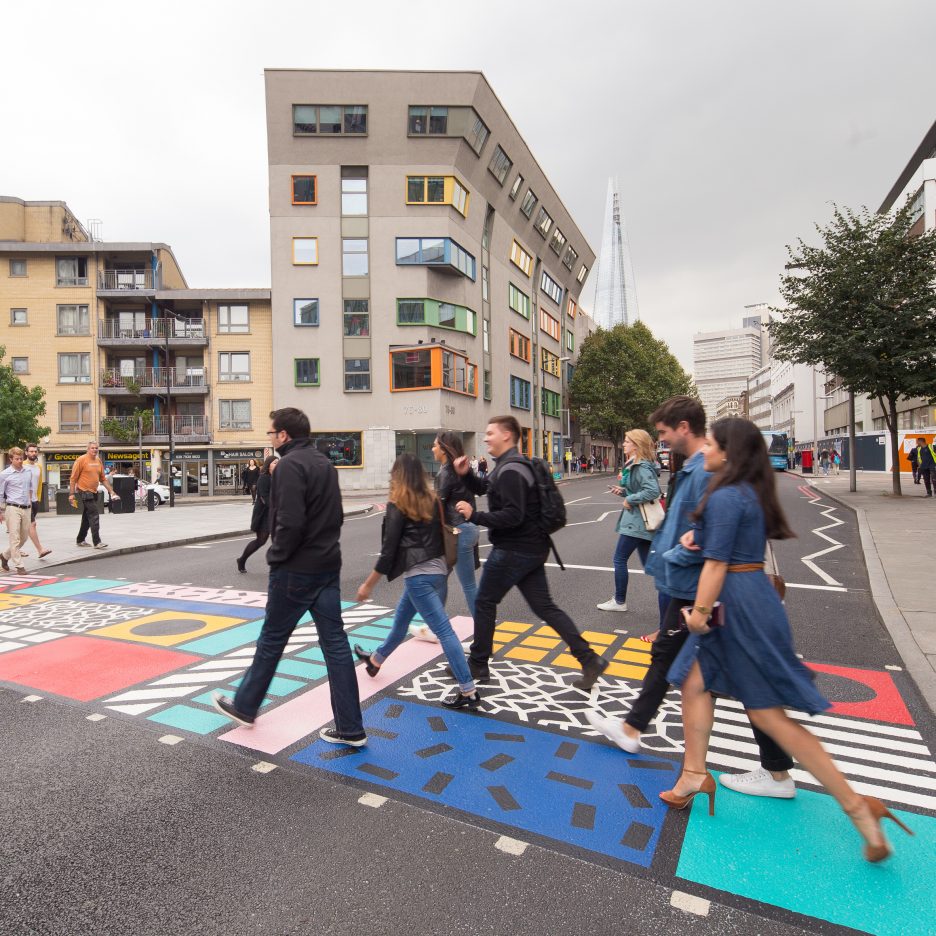
Camille Walala creates multicoloured pedestrian crossing for London street


London Design Festival 2016: artist Camille Walala has applied her signature graphic style to a pedestrian crossing in south London (+ slideshow). (more…)

http://ift.tt/2d4DCEh

Paras Cafe / The Swimming Pool Studio


© Peter Dixie

© Peter Dixie


© Peter Dixie


© Peter Dixie


© Peter Dixie


© Peter Dixie

  • Interior Designer: The Swimming Pool Studio
  • Lighting: The Swimming Pool Studio

© Peter Dixie

© Peter Dixie

From the architect. Located in the Hongqiao Vanke Center in Shanghai, the Paras Cafe is an attracting and fancy place which providing a leisure space to the working stuff and residents around.


© Peter Dixie

© Peter Dixie

© Peter Dixie

© Peter Dixie

The design inspiration came from the amazing scene of the Mediterranean Sea where the  blue sea and the white sands make people feel relaxing and fresh. The designer integrated the clear feature with modern design philosophy and keep a perfect balance by creating a series of changes and connections. Under the modern style with blue and white tone,a variety of geometrical elements  line out the simple and clear shapes, bringing the space a unique sense of future.


© Peter Dixie

© Peter Dixie

Tiles, metal meshes and plain cement are selected as the main materials by doing which control the cost. The reception table made up by marble integrated into the environment perfectly and enhance the overall quality of the space.


© Peter Dixie

© Peter Dixie

© Peter Dixie

© Peter Dixie

It’s worth mentioning that the round mirrors hung on the wall add the interests to the cafe while making the space more variable.


© Peter Dixie

© Peter Dixie

http://ift.tt/2d8rfrZ

Conversion of a Sake Warehouse / Jorge Almazán + Keio University Almazán Lab


© Montse Zamorano

© Montse Zamorano


© Montse Zamorano


© Montse Zamorano


© Montse Zamorano


© Montse Zamorano

  • Architects: Jorge Almazán , Keio University Almazán Lab
  • Location: Ichikawamisato, Nishiyatsushiro District, Yamanashi Prefecture, Japón
  • Design Team: Jorge Almazán, Gaku Inoue, Shota Takayama, Nozomi Shimizu, Tomoya Tsuji, Maho Sugiyama, Moe Kusano, Rieka Hara
  • Project Year: 2016
  • Photographs: Montse Zamorano, Cortesía de Keio University Almazán Lab

Courtesy of Keio University Almazán Lab

Courtesy of Keio University Almazán Lab

From the architect. This project is a conversion of a kura, a traditional Japanese warehouse, into a community space. In cooperation with a local community group, we restored and renovated this building with the broader goal of contributing to the revitalization of the area. Located in Ichikawamisatocho, a Japanese provincial town in Yamanashi prefecture, the warehouse is part of a former sake brewery compound. The main building of the compound faces the shopping street, and the warehouse faces a back alley. The restored structure is the only remaining of a longer warehouse that existed along the back alley. Due to its state of decay, the owner decided to partly demolish it, leaving only a portion of the warehouse. The walls of this remaining part of the warehouse were nevertheless severely damaged, and the resulting urban space after the demolition left an unstructured urban void without character. We proposed to re-use the remaining warehouse and the surrounding space, conceiving the whole as a public space open for the local community.


© Montse Zamorano

© Montse Zamorano


© Montse Zamorano

© Montse Zamorano

As a result of several months of brainstorming sessions with the local community group, we proposed to introduce new public uses into the sake warehouse, to convert it into a multi-purpose community space for exhibitions, meetings, conferences, and performances. Our goal was not only preserving the old warehouse, but giving it a new life while keeping its historical and architectural character. For this purpose, in our design we use a Japanese traditional repertoire of materials and elements, but giving them new forms and uses.


We restored all walls, fixed the openings, and repaired the roof, trying to keep as much as possible the original roof tiles. We introduced a new wooden wainscot, a traditional element found in many kura warehouses, to protect the lower part of the walls. Besides these restorations works, our intervention in the warehouse was focused on providing character and use to the main urban void left on the western side of the site. We conceived this void as a small plaza with a stage emerging from the warehouse.

The stage is two-sided, connecting the interior and the exterior of the warehouse, enabling the celebration of indoor and outdoor events. In order to integrate it with the warehouse, we designed this new stage with the same wood and height as the surrounding wainscot. The wainscot seems to change its dimensions and become naturally a platform for performances.


We also intervened in the interior of the warehouse to accommodate exhibitions. We installed new lighting fixtures, such as lighting rails for spotlights, and brackets to illuminates the roof structure at night.


© Montse Zamorano

© Montse Zamorano

As for the surrounding space, we designed a new public circulation connecting the main shopping street to the back alley, offering the public the opportunity to enjoy the garden surrounding the warehouse. The new public circulation is facilitated by another traditional element, often found in Japanese gardens: stepping stones. This time, however, the stones are artificial: custom-made in poured concrete. We introduced diverse sizes and shapes of “stones”: small ones to mark paths, giant stones to mark staying places in front of the stage. We examined on-site and in real size each shape and size, and we built the formwork with curved veneer wood. As real natural stones, each one has a different shape and size. Their position, size and shape was designed to subtly reinforce activities and movement in the garden.


© Montse Zamorano

© Montse Zamorano

This project, realized in close collaboration with a local community group, creates in an inner-city derelict site a new public space. It gives people the opportunity to gather in this town where public life is almost extinguished due to urban sprawl and the hollowing of the built-up areas. By reinterpreting traditional architectural elements, like the stepping stones and the wooden wainscot, and incorporating new uses, we integrated the new and the old. Beyond the positive impact on this local community, we hope that this project will become an inspiring model to re-inject new life into many neglected traditional warehouses found in provincial Japanese cities.

http://ift.tt/2d44oMX

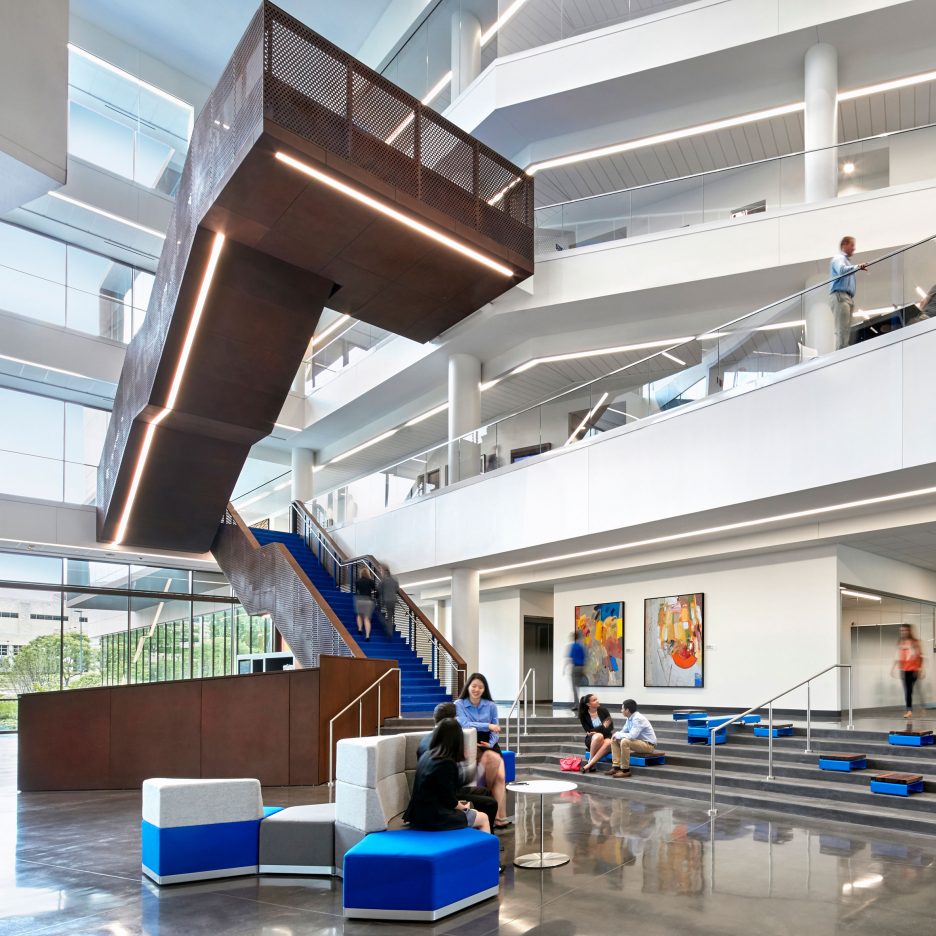
Gensler creates opportunities for “chance encounters” inside Kansas business school


Global firm Gensler has completed a university building in Kansas that consists of volumes clad in concrete, glass and weathering steel, and interior spaces intended to promote unexpected interactions (+ slideshow). (more…)

http://ift.tt/2cxiS75

A Garden by the Side of a Wetland—Xixi International / GAD work


© Su Shengliang

© Su Shengliang


© Su Shengliang


© Su Shengliang


© Su Shengliang


© Su Shengliang

  • Architects: GAD work
  • Location: Hangzhou, Zhejiang, China
  • Design Team: GAD (Zhejiang Greentown Architectural Design Co., Ltd.)
  • Area: 80345.0 sqm
  • Project Year: 2016
  • Photographs: Su Shengliang

© Su Shengliang

© Su Shengliang

From the architect. Xixi International, located on the periphery of the traditional business area in the west of Hangzhou city, is only 0.5km away from the Xixi Wetland. It is designed to extend the sight-gallery of the wetland to the north hoping to put the central axis of the garden together in a coherent manner via introversive type and ecological architectural language so as to build the garden into a compatible and open landscape garden.


Before

Before

The garden type office concept we want to express is actually an exploration of humanized office mode which pays attention to integration of office and scenes of life. The transparent facade design blurs the boundary line of interior and exterior space and integrates the buildings and landscape into one in an invisible manner. Therefore, we can feel the freshness and coziness of the nature even when handling business affairs in the office. 


© Su Shengliang

© Su Shengliang

In the project practice, we complete the integrated design from planning to building, interior and landscape for the first time. Based on deep mining of potential demands of users, we expect to create a quiet, elegant, modest and humble atmosphere in the garden. In design, we make a perfect explanation of the idea of architectural and ecological development from different levels through laying emphasis on the openness and public character of bottom elevated corridor and providing perfect supporting facilities. It is the fully integrated design mode that enables our design concept to penetrate into everywhere of the garden, which brings about hard-won integrality of the final completion effects. 


Site Plan

Site Plan

The road system of semi-separation of man from vehicle is integrated with the landscape axis into one, which is considerate and convenient for users. 

Six main buildings distributed in a scattered manner, mix together with the central courtyard to form a spatial pattern rich in hierarchies. 


© Su Shengliang

© Su Shengliang

Simple and transparent facade design blurs the interior and exterior boundary line. You can enjoy the green scene even when handling business affairs in the office. 

The design of elevated connective corridor of the first floor puts all functional groups together in a coherent manner to form a continuous visual corridor in the garden. 


© Su Shengliang

© Su Shengliang

© Su Shengliang

© Su Shengliang

The open and shared courtyard design provides people with ramble touring experience. 

The entrance full-height atrium design creates infinite possibilities of visual collision and communication.


© Su Shengliang

© Su Shengliang

Based on integral architectural view, gad adopts the integrative design mode from beginning to end of building of Xixi International and finally realize the idea of garden type office. In various designs of us, high-level residences or commercial office buildings, we always make efforts to create more significant works for the city in our own way. 


© Su Shengliang

© Su Shengliang

http://ift.tt/2dnAgg0