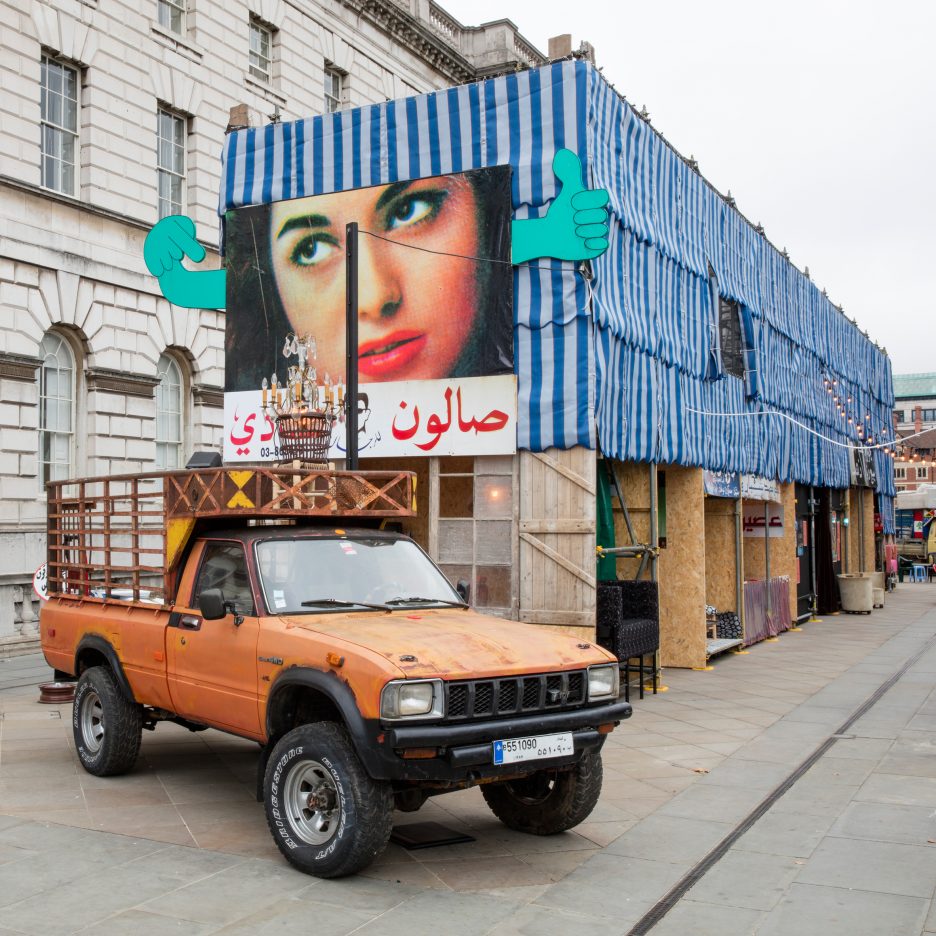
London Design Biennale 2016: a Lebanese street market and an archive of “forgotten” Soviet designs are among the winners of the first London Design Biennale medals. (more…)
London Design Biennale 2016: a Lebanese street market and an archive of “forgotten” Soviet designs are among the winners of the first London Design Biennale medals. (more…)

From the architect. VIΛ 57 West, designed by BIG-Bjarke Ingels Group for the Durst Organization, introduces a new typology to New York City: the Courtscraper. The 830 000 sq ft highrise combines the density of the American skyscraper with the communal space of the European courtyard, offering 709 residential units with a lush 22 000 sq ft garden at the heart of the building.
VIΛ occupies nearly a full city block at the corner of West 57th Street and the West Side Highway, with uninterrupted views towards the Hudson River Park and the waterfront. The Durst Organization commissioned BIG to design a building for the site in the spring of 2010, and construction commenced in 2011. The 32-story building has welcomed residents since May 2016 with the construction completing this Fall. Earlier this year, the Council on Tall Buildings and Urban Habitat (CTBUH) named VIΛ the Best Tall Building in the Americas as part of its 2016 Tall Buildings Award.
“We are very excited about the building, and the activity has exceeded our expectations in terms of velocity and the rents. We always were thrilled with the building but even more so now.” Douglas Durst, The Durst Organization
The VIΛ Courtscraper is a hybrid between the European perimeter block and the traditional American highrise. The building peaks at 450 feet at its north-east corner, thereby maximizing the number of apartments and graciously preserving the adjacent Helena Tower’s views of the river. VIΛ’s volume changes depending on the viewer’s vantage point. From the west, it is a hyperbolic paraboloid or a warped pyramid. From the east, the Courtscraper appears to be a slender spire.
The shared green space at the heart of the block is derived from the classic Copenhagen ‘urban oasis’. The courtyard has the exact same proportions as Olmsted’s park, just 13,000 times smaller – a bonsai Central Park. In a similar accumulation of natural landscapes, the courtyard transforms from a shaded forest in the east, to a sunny meadow in the west. Designed by landscape architecture firm Starr Whitehouse, it features 80 newly planted trees and lawns, and 47 species of native plant material.
“In recent decades, some of the most interesting urban developments have come in the form of nature and public space, reinserting themselves back into the postindustrial pockets, freeing up around the city; the pedestrianization of Broadway & Times Square; the bicycle lanes, the High Line and the industrial piers turning into parks. Located at the northern tip of the Hudson River Park, VIΛ continues this process of greenification allowing open space to invade the urban fabric of the Manhattan city grid. In an unlikely fusion of what seems to be two mutually exclusive typologies – the courtyard and the skyscraper, the Courtscraper is the most recent addition to the Manhattan skyline.” Bjarke Ingels, Founding Partner, BIG.
By keeping three corners of the block low and lifting the north-east portion of the building, the courtyard opens views towards the Hudson River and brings the low western sun deep into the block. While the courtyard is a private space and a sanctuary for residents, it can still be seen from the outside, creating a visual connection to the greenery of the Hudson River Park.
The building is predominantly residential units of different sizes with cultural and commercial program at the street level and the second floor. The lower levels of VIΛ have a strong relationship to the courtyard. The lobby is connected directly to the courtyard via a grand stair which invites residents into the courtyard space. The generous amenities at VIΛ include lounges and events spaces, a golf simulator, movie screening room, a pool, a basketball court, gym and exercise studios, and game rooms for poker, ping pong, billiards and shuffle board, and are all constructed around the courtyard to create a strong physical and visual connection between the interior and exterior communal spaces.
At the upper levels, the apartments are organized on a fishbone layout, orienting the homes towards the view of the water. Large terraces are carved into the warped façade to maximize views and light into the apartments, while ensuring privacy between the residents.
The material concept for the interior design of the project is “Scandimerican”, another layer of the European-American hybridity. They blend classic modern Scandinavian material sensibility blended with local New York materials. The primary materials of the apartments are oak wood floors and cabinets, and white porcelain tiles in the bathrooms.
As an ultimate union of Scandimerican design, the event spaces feature the Via57 chair, designed in collaboration with BIG and KiBiSi for Danish heritage brand, Republic of Fritz Hansen. The design translates the distinct tetrahedronal shape of the building into a multi-functional piece of furniture, bringing a piece of the Manhattan skyline into shared spaces for VIΛ residents.
The building also features a complementing eight-story sculpture by Stephen Glassman entitled “Flows Two Ways,” anchored on the façade of the adjacent Helena tower. Once completed, the ground floor commercial space will host such public amenities as a restaurant from the Livanos Restaurant Group, a Landmark Theatres movie cinema and the first U.S. retail store for the American Kennel Club.
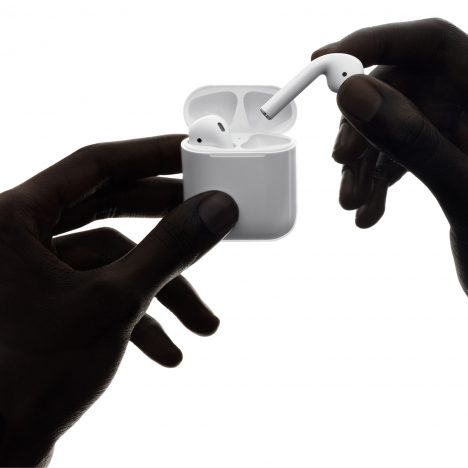
Comments update: has Apple lost its touch? This special edition of our regular comments update focuses on reader reactions to the tech giant’s latest product announcements, including criticisms of its new wireless headphones (pictured) and the eagerly anticipated iPhone 7. (more…)

From the architect. Hortes de Baix is a heritage irrigation space of 3.7Ha annexed to the historical center of Caldes de Montbui, a thermal city founded by romans near Barcelona. This space has suffered the gradual environmental and social degradation of its landscape. This characteristic process of the peripheral landscapes of the twentieth century is here mainly caused by the water pollution of the stream that supplies the irrigation system, the poor accessibility to the space and the breakdown of the irrigation community.
These vegetable gardens were historically watered with the surplus of thermal washing places and the stream rainwater that poured into the main irrigation canal. This canal, formed by stone walls almost 3m high, is the main element of the irrigation system. But with urban growth the stream was covered and poured much of the sewage from the urban center. The canal has become an open sewer. This has caused health risk for the horticultural production as well as for its public accessibility (extreme bad odors and visual effect). The limited availability of clean water triggered the claim for water as a public good asset, as a heritage to reintegrate into the citizen imaginary.
The project was born within the municipal Public Space Board, which gives voice to local initiatives to improve it. The City Council commissioned the assignment to solve the need of more clean water for irrigation, to channel the wastewater open flow and to facilitate accessibility from the city center. We proposed: to recover the private horticultural landscape as a new public space that encourages food self-sufficiency; to co-design the process with the irrigation community and stakeholders; and to recognize the key value of traditional water management as a tangible and intangible heritage.
With the 70 gardeners community, we detected an inadequate management of the water surplus from private thermal spas poured into the stream; so we proposed to reuse it for irrigation as well as the surplus water from thermal washing places. Through two years of participatory action research process, the irrigating community was recovered and empowered to agree on some bounded interventions without altering the existing irrigation system or its social management. The project was executed with 93,881€ and a Municipal Employment Plan. The maintenance is taken over by the irrigation community.
This project has been developed through two phases: the sustainable management of the irrigation system and the walkway to improve accessibility. As part of the community process, the surplus water from thermal spas was recovered to irrigate orchards ensuring water supply. For that, a new public pool is built there to accumulate and cool thermal water. From there, we keep and recycle the existing irrigation system to deliver flooding turns by gravity operation, avoiding introducing any new mechanized device. Wastewater is channeled to the sewage collector allowing to recover the existing main canal with a new walkway to improve access to the area. This is supported inside the stone walls to not alter the canal traces appearance.
The presence of elements from horticultural self-construction identity is enhanced: granite stones, ceramic handmade bricks, manual floodgates, wire meshes and fences. We reintroduce live willow, formerly used to make willow baskets heated by thermal water. Finally, an innovative pilot system is developed: phytotreatment with macrophytes planted on floating gardens, to absorb residual organic material without altering the pool’s oscillation condition.
We evaluate the project at three levels. Political: The Government has committed itself to dignify this place and to the long and intense participation process that culminates with the creation of a gardeners association hitherto nonexistent. A board with commissions is created to ensure self-management on the irrigated space, the establishment of internal rules, the communication with the city council, the visibility of its historical heritage and the necessary intergenerational transfer of local knowledge. Productive: obtaining clean water allows the practice of organic farming and increases irrigation turns. In the long term visitors would be expected to consume the cultivated products. Civic: the vegetable gardens become an open public space, promoting recognition, inclusion and education of the agrarian space.
The new community and ecological approach also challenged the architecture team to assume the role of mediators and observers, adopting innovative conceptual references from complementary discipline fields and integrating external collaborators. This has allowed us to develop new tools of decision-making and communication of the technical aspects of the project.

For a few months spanning from 2014 to last year, the Guggenheim Helsinki museum competition was the hottest topic in architectural media. Even as Moreau Kusunoki’s more contextually-driven design was selected as the competition winner, debate raged on over whether the search by yet another city for an iconic building to call their own was ultimately good or bad for architecture as a whole. But now, funding for the project has been rejected by the Finnish government, putting the museum in danger of not being built at all.
The proposed museum, which would be located along the Helsinki waterfront, was estimated to cost between 120-140 million euro ($134-$156 million) to construct, 40 million euro of which was expected to be covered by Finnish taxpayers, according to the plan outlined by the Guggenheim Foundation.
However in the past few years, the political climate of Finland has shifted as a result of a decade-long economic downturn, giving rise to the conservative Finns Party. Now with the second largest number of seats in the Finnish Parliament, the party was able to reject funding for the project from going through.
Finns Party chairperson Timo Soini has gone as far as declaring that the project will not be brought up in budget sessions again, equating efforts to raise government support to “pouring water on cold sauna rocks.”
“This is the end of the matter, we have ruled out state funding (for Guggenheim) once and for all, for this government,” said Sampo Terho, the parliamentary head of the Finns party, speaking to Reuters. “We are not opposed to the project as such, we just don’t think it is something that the state should participate in.”
The Guggenheim Foundation has said they will continue in talks with the more progressive Centre and National Coalition Parties in efforts to find alternatives for the funding, as the museum is considered to be too costly to be financed by the city and private donors alone.
For now, the foundation is holding out hope, but with the reservation of the waterfront property expiring at the end of the year, action must be taken soon to prevent the project from being scrapped altogether.
Said Guggenheim deputy director Ari Wiseman, “We understand that it takes time. That said, we are disappointed that the project was not included in the budget.”
News via Reuters, Helsinki Times. H/T Architect’s Newspaper.
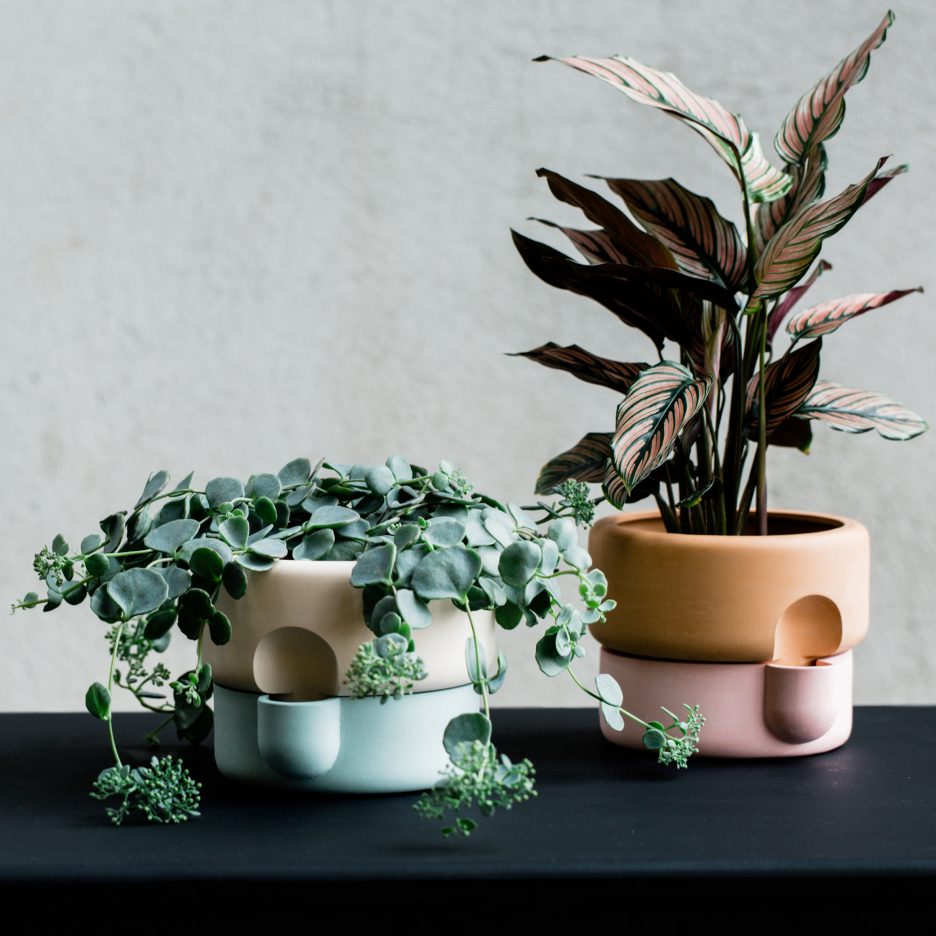
Dezeen promotion: this year’s London Design Fair will feature 15 country pavilions, 250 independent designers and 200 global brands (+ slideshow). (more…)
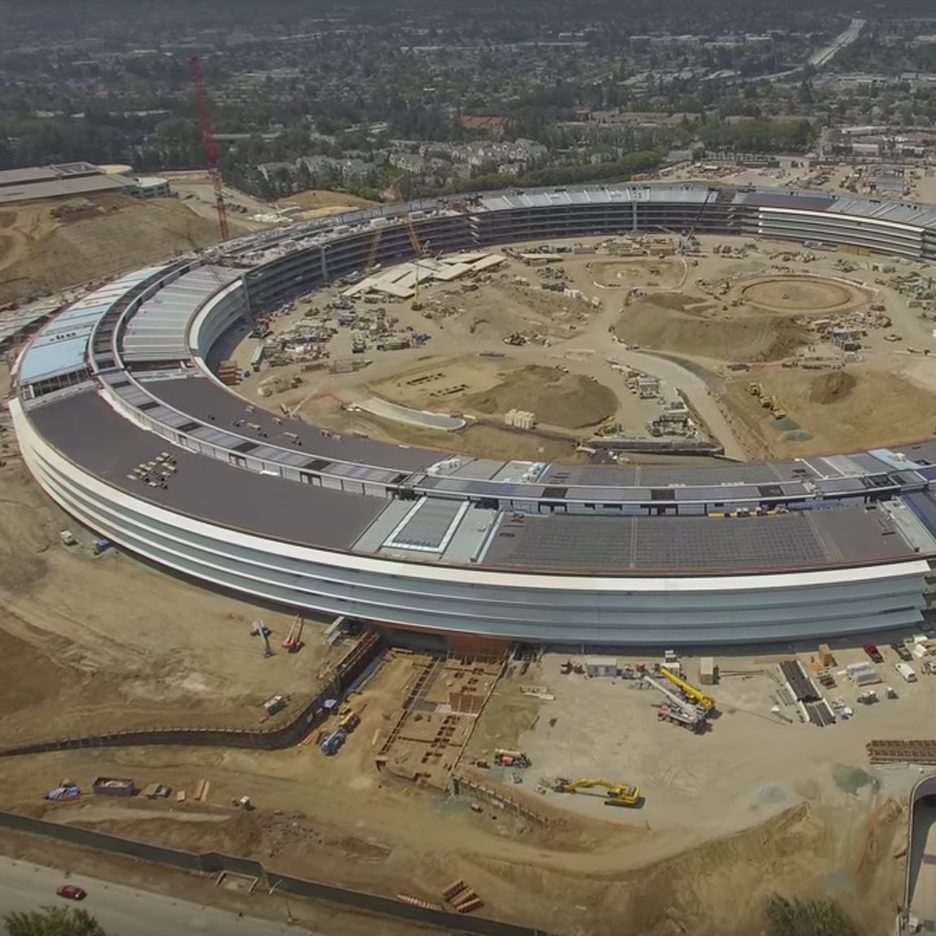
This unofficial drone video captures the construction of Foster + Partners’ Apple headquarters in California as the outer shell of the campus nears completion (+ movie). (more…)
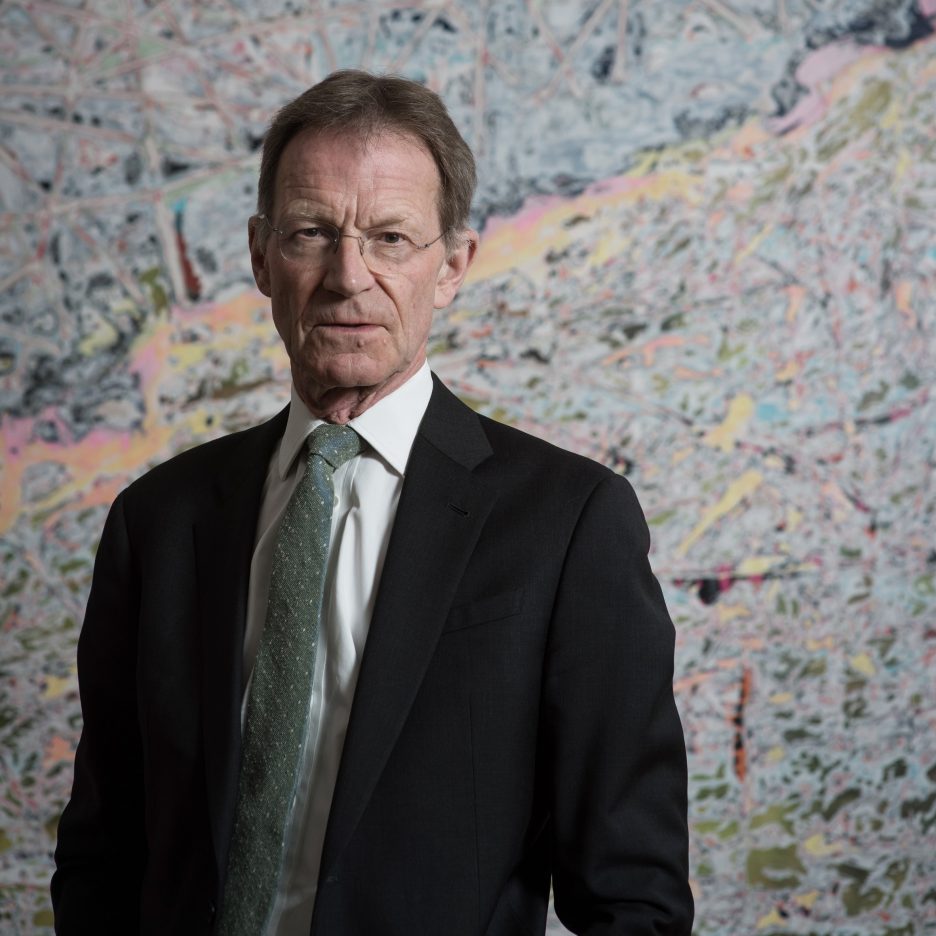
Nicholas Serota, who was responsible for the launch of the Herzog & de Meuron-designed Tate Modern and its recent Switch House extension, is stepping down as director of the Tate organisation after 28 years. (more…)

From the architect. In line with the owners’ aspirations, a basic parameter guided the project for this farmhouse in Porto Feliz, São Paulo: to create a country home that emphasized its integration with the landscape, preferably by means of a lightweight structure, with large openings and glazed surfaces.
So the architecture created here differs from the surrounding houses, for its contemporary language and structural boldness. Measuring 700m², the steel framed house follows the shape of the terrain. The spaces, in turn, were laid out so as to offer a view of the lake and the golf course from every single on.
The whole façade is made from seamless sliding panes. Few and refined materials, such as wood, stone and glass reaffirm the project’s essentiality. At sunset it becomes completely permeable to the view: a large light box reflected on the swimming pool water.
In terms of architecture, special attention was paid to the design of the concrete pillars to impart the project with more lightness. There are two clear volumes: the main one, where the living area, kitchen and master suite are and the side one, with 4 guest suites.
Given the plentiful daylight most of the spaces were fitted with zenithal lighting, while the cross ventilation system implemented throughout the living area, combined with the fully-opening panes that create a seamless transition between indoors and outdoors provide excellent ventilation conditions.
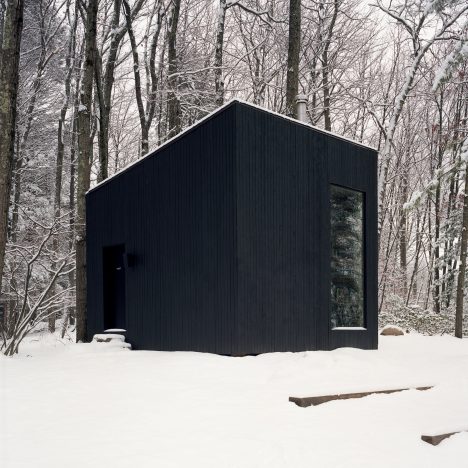
Apple’s latest product announcements, the abrupt closure of the world’s longest glass bridge and a tiny black woodland cabin filled with books (pictured) feature in this week’s issue of Dezeen Mail.
Read Dezeen Mail issue 322 | Subscribe to Dezeen Mail

