Architecture

Welton Becket’s Dorothy Chandler Pavilion stars in Kenzo perfume advert
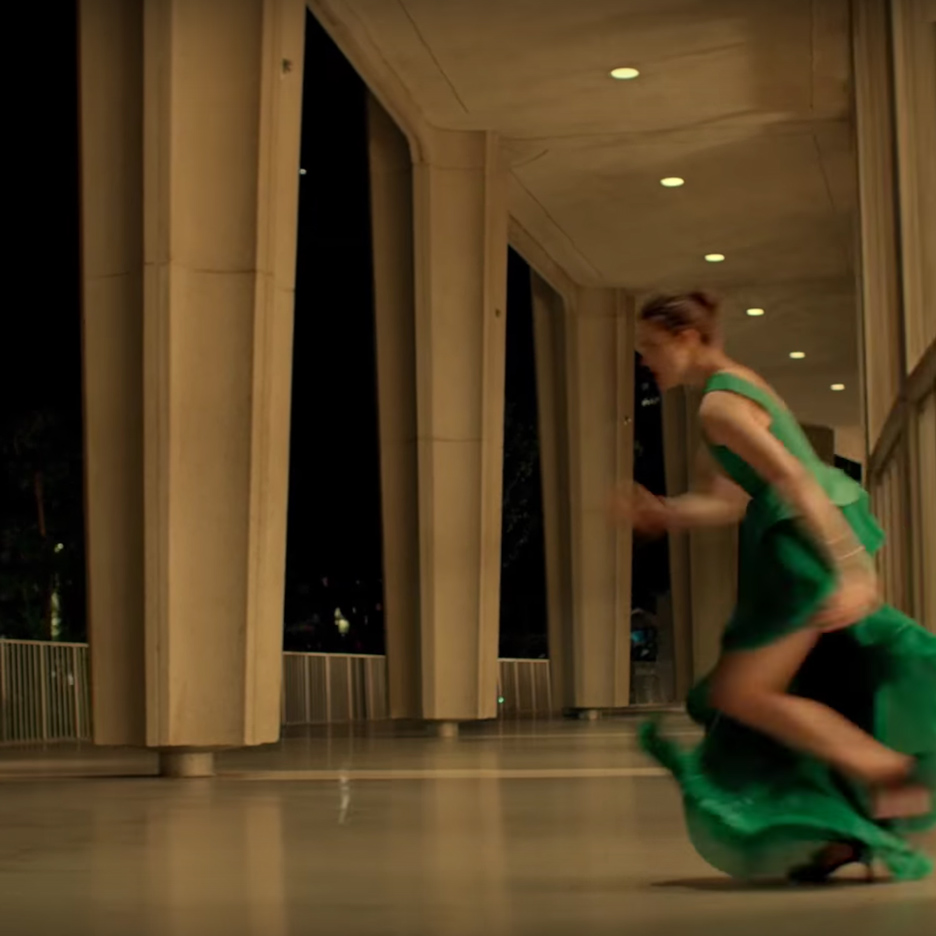
American director Spike Jonze has used an iconic Los Angeles music hall by Modernist architect Welton Becket as the venue for a four-minute perfume advert for French fashion house Kenzo (+ movie). (more…)
CMTarchitects Remodel a Fifteenth-Century Villa in Monteriggioni, Italy

Villa in Monteriggioni is a private home designed by CMTarchitects. Completed in 2016, the home is located in Monteriggioni, Italy. Photos by: Centrofotografico
“Vyborg looks like Helsinki might after a long, drawn out war”
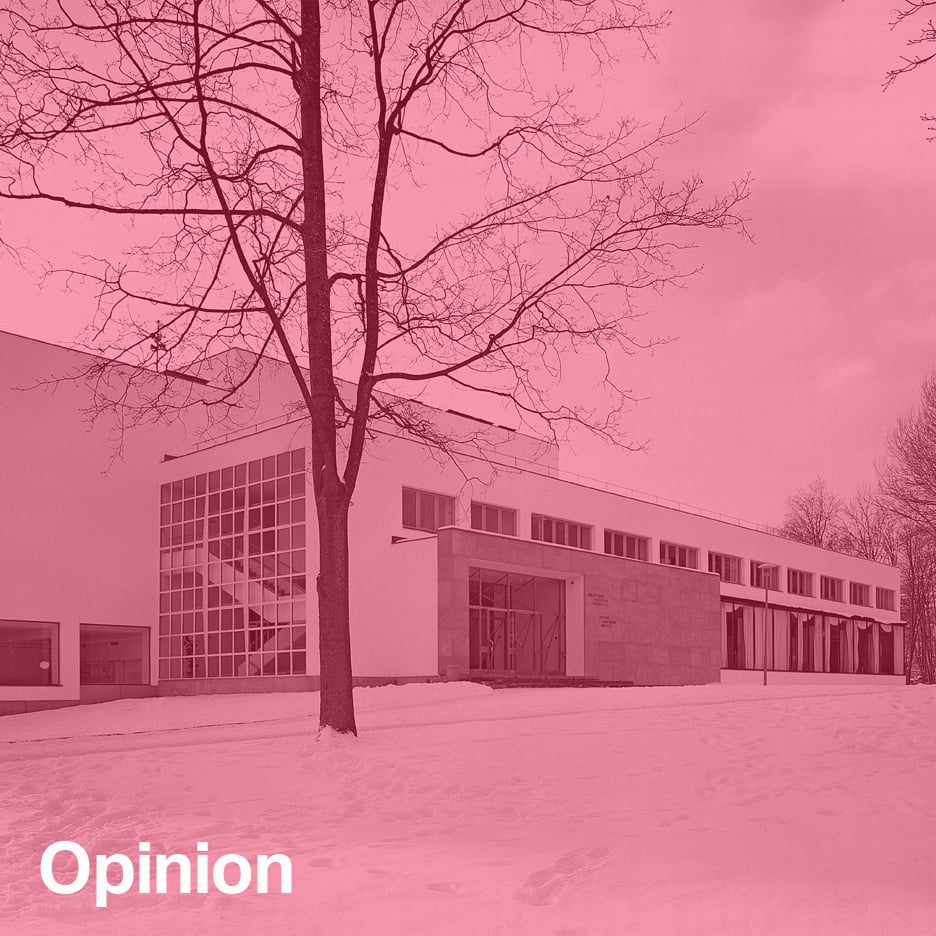
Opinion: with the exemplary restoration of Alvar Aalto’s seminal Viipuri/Vyborg Library, Finland has schooled Russia in how to treat its neglected 20th century buildings. Now they need to restore the rest of the city, says Owen Hatherley. (more…)
Experience the Hustle and Bustle of New York City in This 8K Resolution Time-Lapse

From the skyline of the Financial District, to the Flatiron Building, Grand Central Station, the Brooklyn Bridge, and St. Patrick’s Cathedral, Kyoung Sop Choi from Jansoli Photography has captured New York City in spectacular 8K high-definition resolution. During a winter trip to the City, Choi filmed streets, buildings, and pedestrians in a series of time-lapses to express the colors of New York. Experience the bustle and vibrancy of the city by watching the video, above.
Bruno Lucas Dias adds timber skeleton to Portuguese accessories boutique
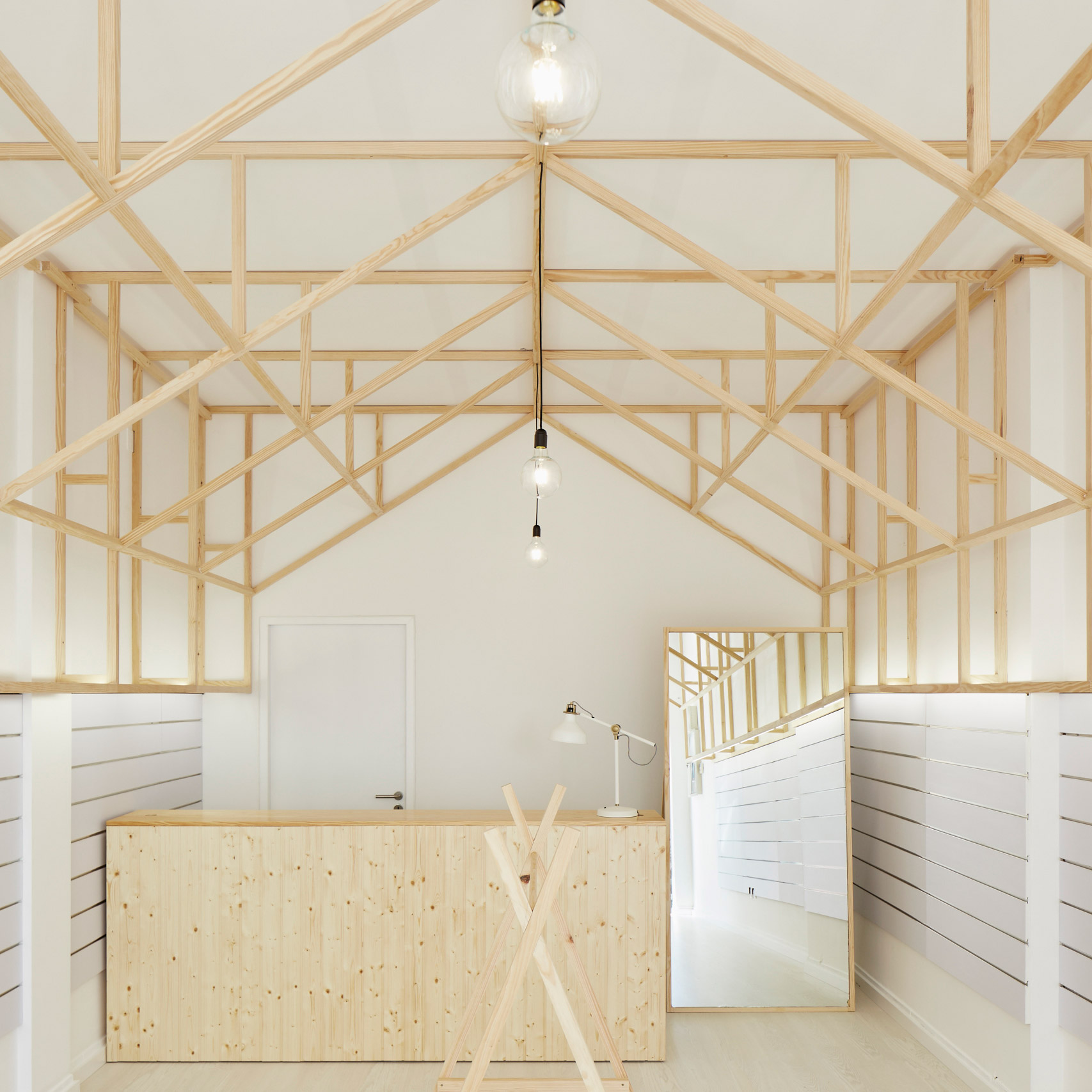
Items are displayed upon a series of pine structures inside this accessories store in Ansião, Portugal. (more…)
Home Kisito / Albert Faus

© Giovanni Quattrocolo
- Architects: Albert Faus
- Location: Ouagadougou, Burkina Faso
- Collaborators: Ferran Grau, Miquel Feliu, Miquel Comadran, Octave Petit
- Client: Nasaras by Home KisitoArea Association
- Area: 235.0 sqm
- Year Of Project: 2015
- Photographs: Giovanni Quattrocolo, Albert Faus
- Structure Calculations: Antoni Espona
- Lighting: Meritxell Vidal
- Management: Llum Álvarez, Patricia Urdampilleta
- Exterior Area: 45h
- Budget: 49.500 €
© Giovanni Quattrocolo
HOME KISITO is a Residential Childcare for babies 0-24 months. Recent years some children have come presenting disabilities result of encephalopathy, which is why it has been impossible to find a host family until now. The orphanage is permanently at the limit of its capacity which forces babies and infants with disabilities to share resting place. As the responsible explained, this practice makes the center incurs malfunction because children need a specialized and differential treatment.
© Giovanni Quattrocolo
In the summer of 2012 four young women held a volunteer at the orphanage. The day with the creatures and their carers and the discussions with the religious head of the center led them to propose the construction of the house for children with specific needs of HOME KISITO.
Plan
Section
The pre-existing building consists of a central structure and two other volumes located in the eastern third of the plot. The new construction takes a substantially centered position on the empty space remaining, parallel to the facade of the main edifice of the orphanage, and along an axis defined by the powerful visual reference that represents the high water tank. The resulting area between the two buildings becomes the entrance square to the center, site for receptions and future playground in the shade of the mango trees.
© Giovanni Quattrocolo
© Giovanni Quattrocolo
The program was defined based on the demands of the Principal Sister and with the estimating donations aspired to achieve. It consists of a field access, a treatment, a block of services and accommodation wing.
© Albert Faus
© Albert Faus
The design and construction of the building attempt to alleviate the constraints of the local climate, such the long periods of high average temperatures with low relative humidity and the rain accompanied by strong easterly winds in summer. To the east of the main façade is a thick stone wall, which acts as a protective screen for the storms and the uppermost of the twin roofs exceeds the height of the building by some 2.5m, creating at the same time a shady perimeter and lowering the nearby outside temperature. Different lines of evergreen trees are planted perpendicular to the direction of the prevailing breezes (east to west), which, in addition to humidifying the air, provide protection from the afternoon sun (flamboyant), reduce the height to a scale more in line with the kiddies (cashew) and provide an abundance of fruit (mango).
Details
The interior of the building is kept cool thanks to the compressed earth walls, vaulted ceilings and flooring. The coloured “insect screens” on the façades allow the vestibule to be configured as a protected, permanently ventilated internal passageway, permitting cross ventilation and emitting warm rising air. This effect is accentuated with the openings at the opposing ends of this corridor (north-south) and at the level of the terraces (east-west), as well as in the vertical plane, with the interruption of BTC in the central vaults being replaced by an insect screen on metal frame.
The work has been carried out in a “choral” process, seeking the optimal actor at the lowest possible cost in each phase. The excavation and concrete elements were awarded to a company which agreed to reduce profit margins, taking the social nature of the project into account. The walls were built by young trainees and the ceilings by a highly experienced crew. The stonework and metallic structure was entrusted to teams who had already worked on previous projects, such as the group of women who rendered the interior stone facing by hand with clay plastering. And finally, we adapted the local technique to make chairs and loungers weaving with colored plastic mesh to get the “mosquito nets” of facades and corridor, working with an association of blind and partially sighted people.
© Giovanni Quattrocolo
Fragmentos de Arquitectura Remodel a Home in Cascais, Portugal

Cascais P272 is a private home designed by Fragmentos de Arquitectura. It is located in Cascais, Portugal, and was completed in 2016. Cascais P272 by Fragmentos de Arquitectura: “The location of the plot: with its proximity to the sea, the aim to optimize sun exposure and the relation with the surrounding garden, were some of the issues which determined the type of intervention to be carried out. Opening the indoor..
AD Round-Up: 10 Sacred Spaces

Courtesy of Flickr user Flemming Ibsen under CC BY-NC 2.0
Religion, in one form or another, has formed the core of human society for much of our history. It therefore stands to reason that religious architecture has found equal prominence in towns and cities across the globe. Faith carries different meanings for different peoples and cultures, resulting in a wide variety of approaches to the structures in which worship takes place: some favor sanctuaries, others places of education and community, while others place the greatest emphasis on nature itself. Indeed, many carry secondary importance as symbols of national power or cultural expression.
AD Classics are ArchDaily’s continually updated collection of longer-form building studies of the world’s most significant architectural projects. The collection of sacred spaces collated here invariably reveal one desire that remains constant across all faiths and cultures: shifting one’s gaze from the mundane and everyday and fixing it on the spiritual, the otherworldly, and the eternal.
Grundtvig’s Church / Peder Wilhelm Jensen-Klint (1940)
AD Classics: Grundtvig’s Church / Peder Wilhelm Jensen-Klint
//cdn.embedly.com/widgets/platform.js
Named for a 19th Century Danish pastor, politician, and philosopher, it is perhaps unsurprising that Grundtvig’s Church embodies the same nationalist romanticism as its namesake. The monument, utilizing design elements of traditional Danish country churches on the scale of a cathedral, is one of the world’s greatest examples of Expressionist architecture. The surrounding community, having been designed by the same architect as the church at its core, utilizes similar aesthetic styles in a flexible medieval layout.
Parish of the Holy Sacrifice / Leandro Locsin (1955)
AD Classics: Parish of the Holy Sacrifice / Leandro V. Locsin
//cdn.embedly.com/widgets/platform.js
The fusion of indigenous and colonial cultures finds Modernist expression in the form of the Parish of the Holy Sacrifice. Dubbed the “Flying Saucer,” the Parish echoes qualities of the traditional Filipino bahay kubo (“cube house”) in a thin concrete shell dome. As Grundtvig’s Church is for Denmark, the Parish of the Holy Sacrifice stands as a monument to the cultural history of the Philippines – a potent statement in a republic that had only been independent for nine years at the time of the chapel’s opening.
North Christian Church / Eero Saarinen (1964)
AD Classics: North Christian Church / Eero Saarinen
//cdn.embedly.com/widgets/platform.js
With its dramatic spire standing at 192 feet tall, the North Christian Church was the last building ever designed by Finnish architect Eero Saarinen. Leery of the manner in which secondary program buildings tended to draw focus away from worship spaces in contemporary churches, Saarinen strove to ensure that the sanctuary—and, by association, the act of praising God—would be the unmistakable centerpiece of his creation. Accordingly, all accessory spaces in North Christian Church are submerged beneath the cavernous sanctuary, the hexagonal form of which radiates out from the altar at its center. Visitors must climb stairs from the ground level to enter this space, further emphasizing the elevated importance of worship itself.
Thorncrown Chapel / E. Fay Jones (1980)
AD Classics: Thorncrown Chapel / E. Fay Jones
//cdn.embedly.com/widgets/platform.js
The slender pine trusses of the Thorncrown Chapel seem to form a forest within a forest. Conceived as a non-denominational chapel where visitors could quietly “think [their] best thoughts,” Thorncrown was built by young architects and craftsmen out of local timber with the intent of minimal site impact in mind. The chapel draws over 2000 visitors every day, and has been named one of the American Institute of Architect’s top ten buildings of the 20th Century.
La Sagrada Familia / Antoni Gaudí (1882)
AD Classics: La Sagrada Familia / Antoni Gaudi
//cdn.embedly.com/widgets/platform.js
The Sagrada Familia, one of the best examples of Catalan Modernism, has been under construction since 1882. Although it follows a cruciform plan typical of a Gothic cathedral, the temple’s hyperboloid vaults and angled columns are a radical departure from Gothic stylings. Three of the building’s façades represent the Glory, Nativity, and Passion of Christ; the fourth will feature a tower representing the Virgin Mary. Generations of collaborative design and construction work are expected to finally be complete in 2026 – 144 years after the project was begun.
Lotus Temple / Fariborz Sahba (1986)
AD Classics: Lotus Temple / Fariborz Sahba
//cdn.embedly.com/widgets/platform.js
With its 27 marble-sheathed “leaves” shining white above verdant landscaping, the Lotus Temple is one of the most prominent and celebrated examples of architectural biomimicry on Earth. Inside the temple, visitors can admire the exposed concrete structure of the leaves, as well as the dramatic steel and glass skylight between their tips at the apex of the worship space. Primarily a Bahá’í temple, the temple is open to practitioners of all faiths, and has seen over 70 million worshipers since its opening in 1986.
Church of the Light / Tadao Ando (1999)
AD Classics: Church of the Light / Tadao Ando
//cdn.embedly.com/widgets/platform.js
Thanks to Tadao Ando’s minimalist design aesthetic, the Church of the Light is almost entirely devoid of the ornamentation typically found in church buildings; the purpose of the almost featureless concrete structure is only betrayed by the cross cutting a void in the mass of the eastern wall. The Church is an exercise in spatial duality: the solids and voids of the building call to mind the gap between the secular and the spiritual. Great care was taken both by Ando and the master carpenters working on the project to ensure the smoothness of the concrete surface and joints, providing no distraction from the symbolic qualities of form, light, and space.
Cathedral of Brasilia / Oscar Niemeyer (1960)
AD Classics: Cathedral of Brasilia / Oscar Niemeyer
//cdn.embedly.com/widgets/platform.js
The iconic columns of the Cathedral of Brasilia, bridged by enormous stained glass windows, earned architect Oscar Niemeyer the Pritzker Prize in 1988. The 16 parabolic steel columns, branching up from a diameter of 70 meters, are intended to represent a pair of hands in worship. With bells donated by Spain and an altar donated by Pope Paul VI, the Cathedral of Brasilia stands as the representation of the church’s power and influence in the capital of Brazil.
First Unitarian Church of Rochester / Louis Kahn (1969)
AD Classics: First Unitarian Church of Rochester / Louis Kahn
//cdn.embedly.com/widgets/platform.js
Louis Kahn’s approach to the First Unitarian Church of Rochester revolved around a question mark: the sanctuary, in which the questions that gave birth to Unitarianism arose. Wrapped around the central sanctuary are the classrooms, in which these questions were raised for discussion. This symbolic layout, in combination with the heavy brick and concrete construction, made it challenging to bring light into the sanctuary; Kahn’s solution was to place four light towers at the space’s corners, filling the space with constantly changing natural illumination.
USAFA Cadet Chapel / Walter Netsch of Skidmore, Owings, & Merrill (1962)
AD Classics: USAFA Cadet Chapel / Walter Netsch of Skidmore, Owings, & Merrill
//cdn.embedly.com/widgets/platform.js
Built for the United States Air Force Academy, the Cadet Chapel required three chapels to represent the three dominant faiths in American society: Protestant Christianity, Catholicism, and Judaism. The seventeen rows of spires, comprising over 100 identical tetrahedrons, are framed with tubular steel and clad in aluminum sheeting. The stained glass windows between each triangular unit become progressively brighter as they approach the altar, drawing the eye along the 92-foot tall nave to its end. The USAFA Cadet Chapel is an icon of Modernist sacred architecture, and was named a United States National Historic Landmark in 2004.