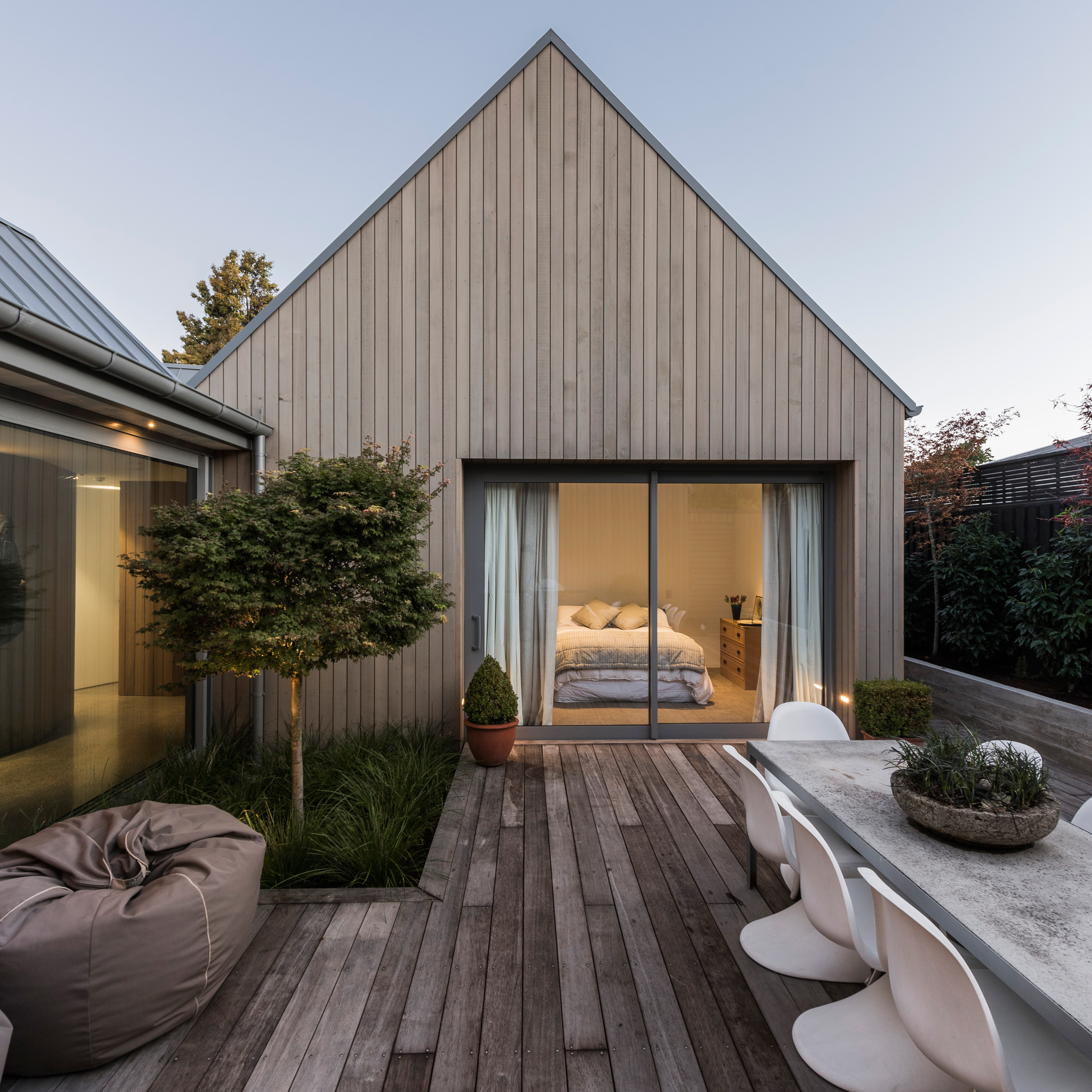
House-shaped blocks and courtyards make up this cedar-clad residence in Christchurch, New Zealand, which architect Case Ornsby designed to replace another destroyed in the 2011 earthquake (+ slideshow). (more…)
House-shaped blocks and courtyards make up this cedar-clad residence in Christchurch, New Zealand, which architect Case Ornsby designed to replace another destroyed in the 2011 earthquake (+ slideshow). (more…)

From the architect. The site of Hotel Doban is located in the middle of the village, Byeonsan-ri, deeply in Baekbyonbong Mountain looking down the South Han River and the downtown of Yangpyeong. All sides around the terraced landscape, which are surrounded by the ridge led from Baekbyonbong, enclose a quiet retreat like a folding screen. The end of the ridge and the earth of the terraced slope open far toward the South Han River and Yangpyeong city, such as standing on the mountain observatory, to provide a resting place overlooking the complicated everyday lives.
Terraced Landscape
The earth around the site is a terraced landform by the height of 5~6m as a newly developing area. In order to strengthen the sense of overlooking platform and minimize the loss of natural terrain using the existing landform, the terraced landscape was planned. The terraced floor inside the building, following from the flow of surrounding landscape, differentiates functional space through different heights and depths in a single independent space without walls.
Unfolded Spaces
The group of units is unfolded geometrically sliding down the slope. As a result, it provides guests with a totally individual space which has a different view and space independently for each unit. The individual unit functions as a view frame for independent activities open to the outside, and have a private external Jacuzzi space open to the sky in between units. The assemblage of units was delicately designed to create a separate axis without any focal points while mixed into one building.
Continuous Roofscape
The roofscape, like a ridge around the site, is surrounding units with successive lines. The continuous roof surfaces maximize the effects of continuity through repetition, by interlacing the flow of roof enclosing the individual units. The individual units compose the whole together, which creates a unique appearance inspiring the rocky mountain behind the site. The building form can be seen easily at a distance from the entrance of Byeongsan-ri valley, which was intended to be a landmark of this area.

Lilas, Zaha Hadid Architects’ design for the 2007 Serpentine Gallery pavilion, has be reinstalled at a new location on the south lawn of Chatsworth House, the Derbyshire home of the Duke and Duchess of Devonshire. The mushroom-like pavilion has been put on display as part of Sotheby’s annual Beyond Limits sculpture exhibition, and is for sale through the international auction house.
Already having designed the inaugural Serpentine Gallery Pavilion in 2003, for the 2007 edition, Zaha Hadid Architects designed Lilas after rising steel prices delayed the construction of the proposed design from Olafur Eliasson and Kjetil Thorsen.
//platform.instagram.com/en_US/embeds.js
Former Serpentine director Julia Peyton-Jones, the mastermind behind the Serpentine Pavilion program, remembered feeling relief after Hadid offered to step in.
“It was one of those little miracles,” she said. “It was uncomfortable to be in the position of not having a pavilion on time that year – [but] stuff happens and it is how you deal with it that is the major issue. As a result we had this gorgeous project that was unexpected and it was an absolute little gem… so typical in its simplicity and so relevant to her work.”
//platform.instagram.com/en_US/embeds.js
Now re-erected at Chatsworth House, the pavilion can be appreciated in a new light through the contrast with its traditional surroundings, a juxtaposition of styles Sotheby’s curator Simon Stock says “complement in a way the pyramid does at the Louvre.”
//platform.instagram.com/en_US/embeds.js
A cost for the structure has not been released, but it is expected to fetch upwards of £500,000, the amount reportedly exchanged for Sou Fujimoto’s 2013 pavilion.
News via The Guardian.
//platform.instagram.com/en_US/embeds.js
Round-Up: The Serpentine Pavilion Through the Years
//cdn.embedly.com/widgets/platform.js

Forest Lodge is a new home with a difference. This is a mobile dwelling built to comply with the Caravan Act 1968 which restricted both the construction and size of the dwelling.
The clients, who had been living in a static caravan for 15 years on their stunning five acre property in the New Forest National Park, approached local Award Winning practice PAD studio in 2009. A key requirement of their brief was to create a new, very low energy dwelling, flooded with light and with a strong connection to the surrounding landscape: Importantly, the new dwelling should not resemble or feel like a mobile home. PAD studio spent considerable time researching the mobile home market and familiarising themselves with the nuances of constraining legal requirements.
PAD studio’s approach to design is deeply rooted in place and they spend time visiting the site at different times of the day to experience the light, views and surroundings. This particular site, located at the edge of a clearing in the heart of the New Forest is accessed from a long gravel track that slowly revealed views of the existing property. This journey through the landscape became a generating idea for the new home which continues the route, inviting nature into the home through carefully placed window openings. These large apertures focus and frame the stunning views, displaying them internally as if paintings on large canvases.
Approaching from the East, the house is glimpsed and slowly revealed through mature trees. The trees verticality and the texture of their bark are echoed in a variety of timber treatments used on the homes cladding. Vertical panels of dark stained sweet chestnut provide a rhythm to counterpoint unstained horizontal chestnut cladding that wraps and unifies the whole. By utilizing a gradual level change across the site, the architects have allowed the northern end of the home to float above the landscape, resting and projecting dynamically over a limestone plinth. The western wall of the property is almost completely glazed affording a feeling of light and spaciousness and opens onto a large terrace and lawn beyond.
Internally, the material pallet is restrained and natural with oak, limestone and white panelled walls. This deliberately muted array of materials provides a backdrop which is painted by the forest’s changing light and rendered by the colour of the landscape beyond the building. Architect designed locally crafted bespoke joinery, thoughtful details and connection with the landscape give this home a feeling of solidity, serenity and permanence; far removed from the client’s previous home.
PAD studio has exceeded the client’s aspiration for a low energy house by designing this building to meet the rigorous Passivhaus standard. The home is essentially a self-sufficient dwelling with a 3.8kW Photovoltaic array on the roof to generate electricity and air source heat pump to provide hot water for an under floor heating system. A sewage treatment plant manages waste and rainwater is collected in an underground storage tank and used to water new landscaping surrounding the house that was also designed by PAD studio. It is difficult to imagine that this ‘mobile home’ was prefabricated, built away from site and craned into position in two separate pieces. Forest Lodge is an excellent example of what can be achieved through imagination, innovation and careful consideration.
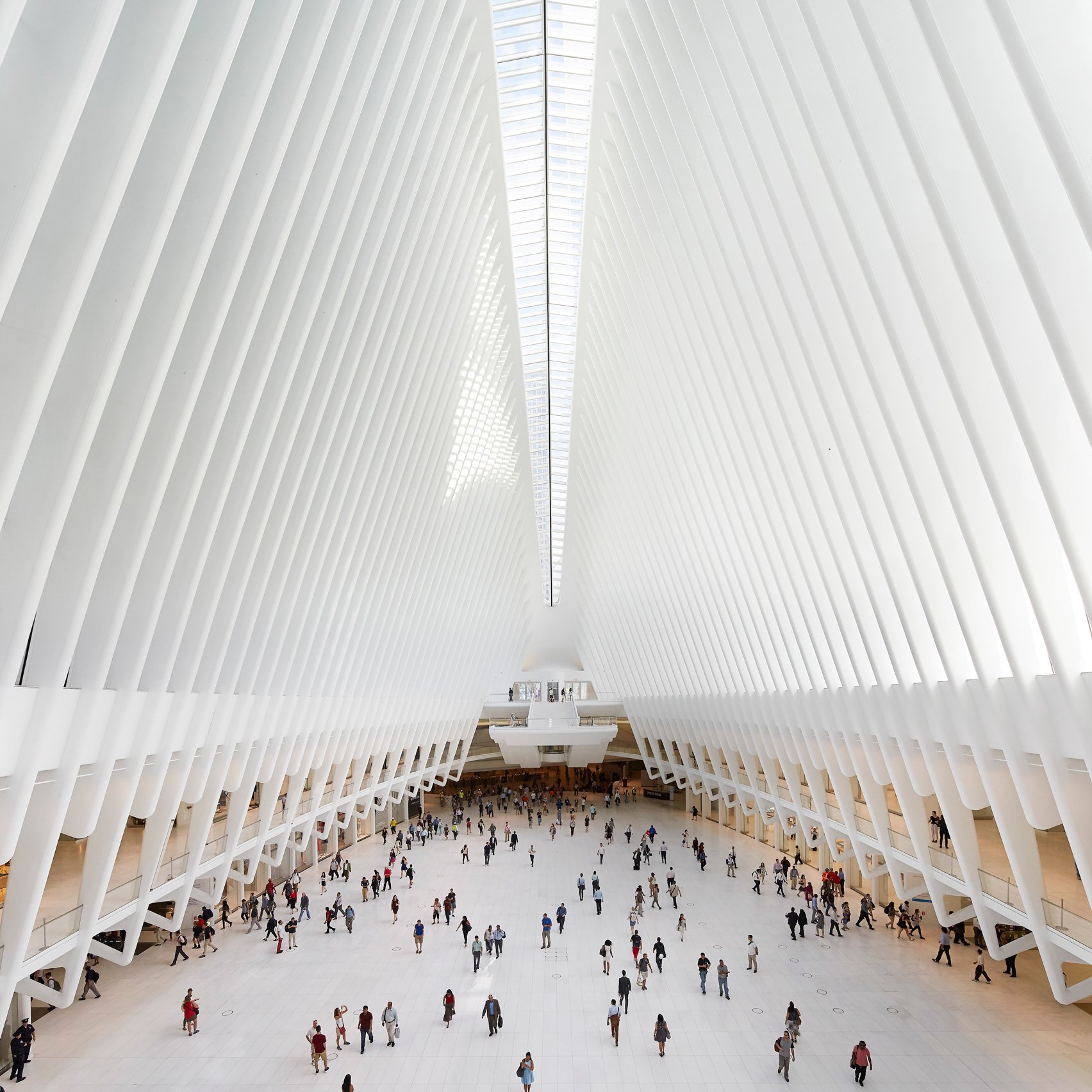
Spanish architect Santiago Calatrava‘s vast ribbed structure that soars over the World Trade Center Transportation Hub in New York is captured in these images by British photography duo Hufton + Crow (+ slideshow). (more…)

Thailand’s new tallest building, MahaNakhon, has opened to the public with a spectacular light show highlighting the pixelated-design of the 314 meter tall building. Designed by Büro Ole Scheeren, the 77-story mixed-use skyscraper contains space for a hotel, retail, bars, restaurants and an observation deck, as well as 200 condominium units managed by Ritz-Carlton Residences with unparalleled views out onto the Bangkok skyline and beyond. The building’s distinct appearance is created through carving a pixelated spiral up the building, creating “an architecture that encloses and protects its inhabitants while revealing the inner life of their city.”
Continue for more images of the completed building.
//platform.instagram.com/en_US/embeds.js
//platform.instagram.com/en_US/embeds.js
//platform.instagram.com/en_US/embeds.js
//platform.instagram.com/en_US/embeds.js
//platform.instagram.com/en_US/embeds.js
//platform.instagram.com/en_US/embeds.js
//platform.instagram.com/en_US/embeds.js
//platform.instagram.com/en_US/embeds.js
Now Thailand’s tallest tower, MahaNakhon’s reign may not last long, as a much taller structure, the 615 meter tall Super Tower, is planned to feature on Bangkok’s skyline in 2019.
The #MahaNakhon building is now #Bangkok's tallest building at 313.4 meters. However, next up will be 615 meters! http://pic.twitter.com/mdXcFArhFA
— Richard Barrow (@RichardBarrow) August 29, 2016
//platform.twitter.com/widgets.js
Renderings and more information on the design can be found here.
News via Bangkok Post.

From the architect. Zambeze is an apartment building with four living units. Designed for a family that required every unit to have similar interior and exterior areas. That was resolved by placing one single apartment on the first floor, having open areas around it. As the building sits on a hill, the next two floors are occupied by two duplex units that have their exterior spaces on the back and sides of the lot. Finally, the remaining unit located on the fourth floor, had its exterior space created by covering the terraces on the second floor of the two duplex apartments. This creates a double story porch that is visible on the frontal facade.
The Miravalle area, where the building is located at, has the privileged views of the Cumbaya valley towards the East. This is why the frontal façade, which faces this direction, is very open, taking advantage of these views.
The structure of the building is made of cast-in-place concrete. Its columns, beams and ceilings are all exposed in the interior of the apartments. Artisanal brick was used to build the perimeter of the building, which was left exposed in the interior and exterior walls. Other materials used were wood for the screen that hides the vehicular access to the building and becomes an important element of the facade, and iron for the stairs of the duplex apartments and the hand railing of its terraces.
Important design details are the spaces creating tension on the side facades. These spaces help transition materials and divide volumes when they change in height. These height variations happen as the building responds to the positive gradient of the hill. Other important aspects are the green and brick combination on the terraces. Said terraces were designed in such way to allow trees to grow in every level of the building. Additionally, the side walls of the double story porches of the duplex apartments are made of artisanal brick. However, they are placed leaving spaces between them allowing more daylight in and, at the same time, giving privacy from its close neighbors.
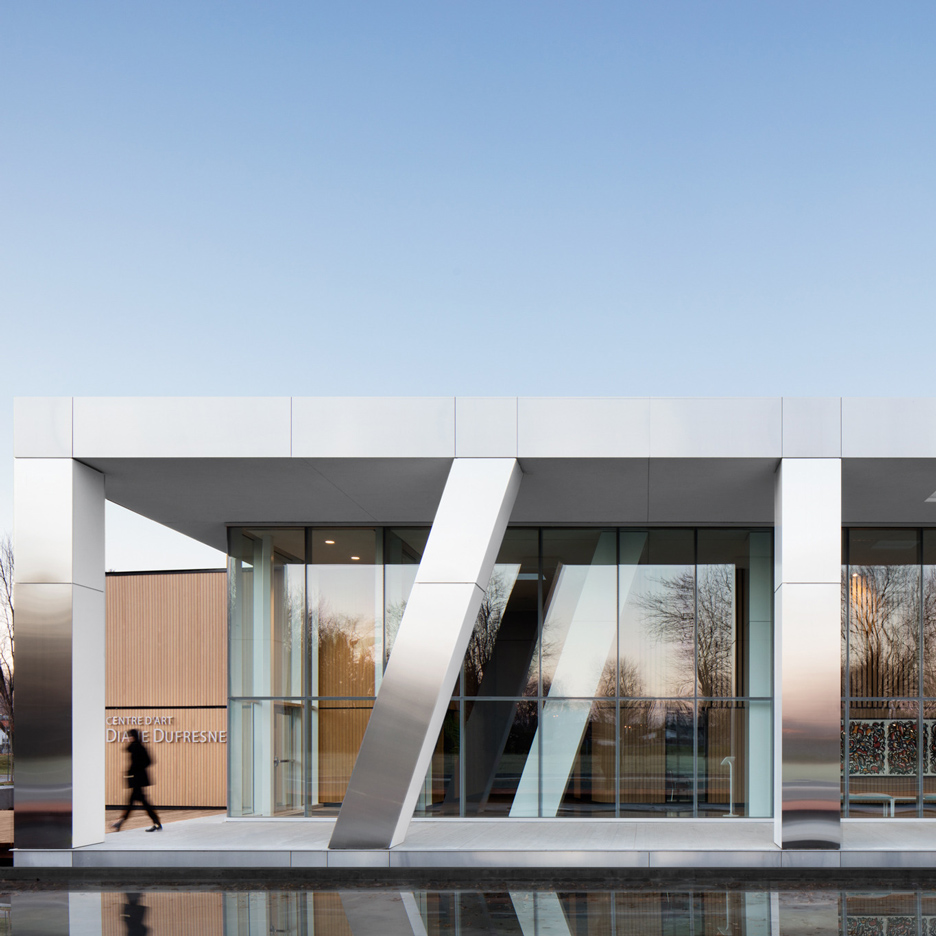
Montreal firm ACDF Architecture has created a new arts centre in the suburbs, fronted by a colonnade of vertical and angled stainless steel supports (+ slideshow). (more…)

Wood has always been one of the essential materials used in construction, and with the ongoing trend of timber-framed tall buildings, it has become more important than ever to be conscious of the impacts on the environment from the types of wood we source.
Currently, there exist more than 50,000 tropical timber species in the world, yet only a small percentage of those are utilized in construction projects. This has led to the exploitation of the more well-known timber species, altering the diversity of the world’s tropical forests and putting those species in danger of disappearing completely. But what if we began building with the full range of species available to us?
In efforts to increase awareness for the multitude of timber varieties available on the market, The Forest Stewardship Council of Denmark (FCS Denmark) have developed an online database of lesser known timber species (LKTS).
The website allows users to search through more than 200 species and 50 case studies of current applications of LKTS (and will be constantly updated as new cases and data become available), providing inspiration and guidance for architects and designers looking to use wood in their projects. The database gives technical descriptions of the capabilities of each species, as well as their practical applications and examples of existing projects in which they have been used. By making this information publicly available, FCS Denmark hopes that designers will begin to employ a more diverse selection of wood types as an alternative to the more well-known ones.
“It is our goal to create a more diverse timber market and break with the conventional thinking that dominates the industry today. We are not telling people to stop using well-known timber species like teak or cumaru – as long as they come from sustainable sources. However, if we can substitute some of it with lesser known species, it will make sustainable forestry much more profitable for the forest owners,” says Kristian Jørgensen, project coordinator at FSC Denmark.
FSC Denmark also welcomes users to submit their own LKTS case studies to help grow the database and support the goal of developing a “more diverse timber market to support sustainable forestry, improved pricing and regional development through the commercialization of a greater variety of wood species.”
You can check out the database for yourself, here.
If you want to upload your own FSC certified LKTS projects or if you have any questions, please contact Kristian Jørgensen from FSC Denmark at kristian@fsc.dk. For more information about FSC, please visit the organization’s international website.