
Model: Jefry Arianto
Place: Kota Tua, Jakarta
Place: Kota Tua, Jakarta


WEBSITE | INSTAGRAM | FACEBOOK |
©2016 Marco Grassi, All Rights Reserved. This image is not available for use on websites, blogs or other media without the explicit written permission of the photographer.
“Entrepreneurship and Failure” https://www.linkedin.com/pulse/entrepreneurship-failure-sig-nordal-jr- by @SigNordal on @LinkedIn
You’ve worked to improve morale and improve revenue using all of your leadership skills and tactics but your company still has room for growth and improvement. You’re at a point where you should consider a good executive coaching program. What should you look for in an executive coaching program?
First, choose a program that fosters creativity and thinking outside the box. It’s easy to fall prey to apathy during a PowerPoint presentation, but putting your corporate team in challenging and energizing situations guarantees fully engaged minds. Maybe ropes training, maybe white water rafting, or mountain climbing, or a softball game, any activity involving challenge that allows the application of effective communication, human performance, accountability, or delivery can give your team the morale and skill boost they need to excel.
Second, make sure the program offers expert one-on-one advice and training for your organization’s needs. A good executive coaching program will cater to you and will strive to become a trusted and capable advisor that adapts to your needs as your company grows. Also, a good executive coaching program will have advisors able to offer you industry specific consultants capable of delivering guidance concerning technical issues.
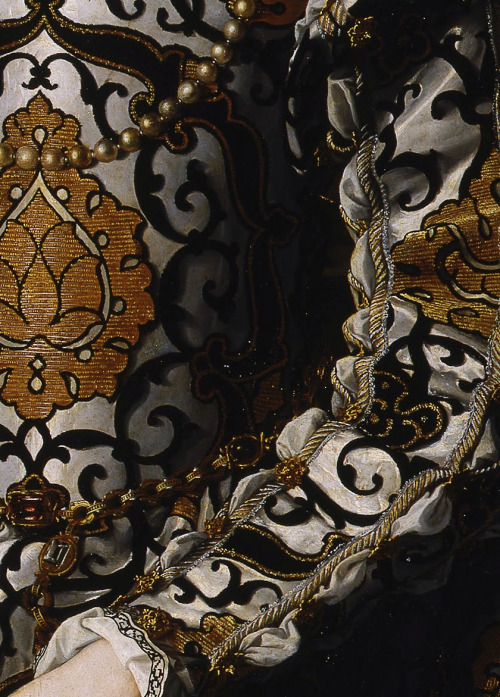
This is a Portrait of Eleonora di Toledo by Bronzino, from ca. 1545. The details of this work is astonishing. Can you imagine that this is almost a 500 year old painting?
“Power tends to corrupt, and absolute power corrupts absolutely.” is a statement and an observation from John Emerich Edward Dalberg-Action.
Sir John Dalberg-Action’s was writing from the perspective of historian and politician as well as writer. He understood the lessons of history regarding the use and abuse of power by those with power.
The founding fathers, in an effort to escape the European models and their inevitable fall into the hands of those with an excess of power, deliberately created a system of government divided into three separate branches: The Congress, The Supreme Court, and The Presidency. By ensuring that all three branches and those operating within those branches were accountable to the people and to one another, they eliminated the chance of any one branch becoming too powerful and unaccountable.
Today we take for granted that any one person can be elected to two terms as president at the most. But surprisingly, it was long a matter of custom and not a ratified amendment until February 27th, 1951. This long held tradition was perhaps upheld in respect to the ideas of liberty and democracy and a matter of pride in a government that held itself as the opposite of all the horrors of despotism witnessed throughout history.
The 22nd Amendment mandates – “No person shall be elected to the office of the President more than twice, and no person who has held the office of President, or acted as President, for more than two years of a term to which some other person was elected President shall be elected to the office of the President more than once.”
By limiting the number of terms that any one person could run for the office of president the idea that America would ever be subjected to a ‘would-be king’ or a ‘president for life’ was soundly rejected.
For over 200 years the American system of government has operated as it was intended. The reins of power have been passed peacefully, though often contentiously. Indeed, it is one of the most peaceful and orderly systems of federal administration in the history of the world.
Are leaders born or bred? The general consensus is that leadership can be taught. While most of us have not been formally trained or mentored in leadership, we have all been called upon at one time or another to assume positions of leadership. Leadership is foremost about who you are as an individual, not what you do, and character best describes the core characteristic of a leader. Character is the sum total of an individual’s principles and values: loyalty, respect, integrity, courage, fairness, honesty, duty, honour and commitment.
While character is the sum of our principles and values, ethics is the application of those principles and values. According to Aristotle, ethics is a moral virtue attained through practice and habit. He believed that we weren’t born with moral virtues naturally, but that we become moral and virtuous by embracing moral virtues and perfecting them through application until they are habit. Leadership training stresses that understanding leadership values and attributes is but the first step in becoming an exceptional leader.
After 25 years of working with some of the most exceptional people in Business Development within the power generation industry, we have observed unique characteristics that set them at the top 3% of professionals in their field. We have found that these people excel no matter what the economic climate, the client base, the services, or organization they work for. Aside from learning how to set strategic and operational objectives in planning, aside from being visionaries who see opportunities where others do not, aside from mastering the 12 Core Competencies, they are also great leaders who have adopted the character of leaders.
 Sig Nordal