Housing for the Elderly / Óscar Miguel Ares Álvarez


© Jesús J. Ruiz Alonso / Pedro Iván Ramos Martín

© Jesús J. Ruiz Alonso / Pedro Iván Ramos Martín


© Jesús J. Ruiz Alonso / Pedro Iván Ramos Martín


© Jesús J. Ruiz Alonso / Pedro Iván Ramos Martín


© Jesús J. Ruiz Alonso / Pedro Iván Ramos Martín


© Jesús J. Ruiz Alonso / Pedro Iván Ramos Martín

  • Technical Architect: Javier Palomero Alonso
  • Collaborators: Bárbara Arranz González, Jesús J. Ruiz Alonso, Dorota Tokarska

© Jesús J. Ruiz Alonso / Pedro Iván Ramos Martín

© Jesús J. Ruiz Alonso / Pedro Iván Ramos Martín

The housing for the elderly in Adeamayor de San Martin (Valladolid) can not be understood without its context. Located on the border of a saline hidden wetland (Salgüeros de Aldeamayor) the aridity of the terrain and the infinite horizontality of the Spanish agricultural esplanade – dotted with small masses of pine trees – dominates the landscape, conditioning the implementation of any structure or artifact. In turn, our approaches were held by insistent ideas: provide our elderly with kind environment which promote to be in touch with nature, with the sun, but also enhancing the close relation between inhabitants of the building; the neighborly relations among chairs in the front door of the houses that are so recognizable in the rural areas of Castilla y León.


© Jesús J. Ruiz Alonso / Pedro Iván Ramos Martín

© Jesús J. Ruiz Alonso / Pedro Iván Ramos Martín

On the arid plain of the Castilla y León landscape we have placed a building formed by white concrete blocks paired in a striated way, marking an intense but subtle border with the ground.


© Jesús J. Ruiz Alonso / Pedro Iván Ramos Martín

© Jesús J. Ruiz Alonso / Pedro Iván Ramos Martín

Floor Plan

Floor Plan

© Jesús J. Ruiz Alonso / Pedro Iván Ramos Martín

© Jesús J. Ruiz Alonso / Pedro Iván Ramos Martín

The exterior is abstract and hard, as the environment. A seemingly insurmountable barrier, a shell to protect the interior that becomes kind, warm and complex. The external severe geometry contrasts with the inner complexity. The rooms are generated as small cells that clump together organically around the courtyard, creating interstitials and areas of relation, both to the courtyard itself as the interior. The perimeter corridor becomes a place rich in nuances and spaces in the manner of a small town where people can speak in front of the door of their room-houses fleeing the classic configuration of such centers more close to lugubrious hospitals than to kind and welcoming buildings. We wanted places that would allow the close relationship between inhabitants; the neighborly relations among chairs in the front door of the houses that are so recognizable in the rural areas of Castilla y León. More than a residence, the project aims to search for be a real home, so that psychological factors had to be essential in the project approach.


© Jesús J. Ruiz Alonso / Pedro Iván Ramos Martín

© Jesús J. Ruiz Alonso / Pedro Iván Ramos Martín

Section

Section

© Jesús J. Ruiz Alonso / Pedro Iván Ramos Martín

© Jesús J. Ruiz Alonso / Pedro Iván Ramos Martín

These cells make up the internal connecting paths of the building and coexist with public areas: activity room, fitness room, medical consultations and the large room where has been to create a careful spatiality natural lighting to create a peaceful and seductive atmosphere.


© Jesús J. Ruiz Alonso / Pedro Iván Ramos Martín

© Jesús J. Ruiz Alonso / Pedro Iván Ramos Martín

The whole work has been governed by the use of simple and cost-effective materials, without fanfare. Geometry, spatiality, light and careful treatment color and textures to get a warm and cozy interior protected by an abstract and rhythmic limit to the exterior.

http://ift.tt/2i1T6J7

LOT-EK Designs a Single Family Residence for an Artist, a Gallerist and their Daughter

City Center Tower / CAZA


© Frank Callaghan

© Frank Callaghan
  • Architects: CAZA
  • Location: Manila, Metro Manila, Philippines
  • Architect In Charge: Carlos Arnaiz, Esteban Y.Tan
  • Project Team: Carlos Arnaiz, Jessy Yang, Tzu-Yin Wang, Laura del Pino, Jeian Jeong, Franklin Romero
  • Area: 56.82 m2
  • Project Year: 2016
  • Photographs: Frank Callaghan
  • Consultant: Jones Lang La Salle
  • General Contractor: Manny Sy Associates
  • Client: W Group

© Frank Callaghan

© Frank Callaghan

From the architect. CAZA (Carlos Arnaiz Architects), a Brooklyn-based architecture and design firm with offices in Bogotá, Colombia; Lima, Peru; and Manila, Philippines, is pleased to announce the opening of the City Center Tower located in downtown metro Manila. With construction completed this month, the 27-story-tall mixed-use building will feature three floors of commercial retail and dining space while also serving as the corporate offices for several prominent international companies. 


Diagram

Diagram

CAZA’s design sought to defy the average core and shell design of standard corporate office buildings by introducing refreshingly unexpected geometries that produce new experiences for users. By infusing a series of concentric circles extended across the horizontal axes of each floor, the tower’s exterior façade marries the structured shape of a cube with the free-form organic pattern of a wave. The resulting visual impact elicits efficiency and innovation while retaining a sense of light playfulness.


© Frank Callaghan

© Frank Callaghan

“In the last fifteen years, office development in the Philippines has experienced an unthinkable explosion due to the arrival of the BPO industry,” remarks Carlos Arnaiz, Principal and Founder of CAZA Architects. “As architects, we are searching for an expression of this new sociocultural paradigm. The City Center Tower could be one of the first projects in the Philippines that represents the changing nature of the workplace, where nature and offices interact in this 24-hour cycle—accentuating the reality of how the BPO office environment operates.”


© Frank Callaghan

© Frank Callaghan

Visitors are welcomed to the tower by an airy and illuminated double-height lobby that is circumscribed by two floors of commercial retail space, establishing the tower as a vivacious center that is both accessible and enlivened by public activity. Hovering above these retail sections are spacious elevated parking areas that align with a functional cooling tower, designed to accommodate a passive cooling system that is responsive to the tropical heat of the Philippine metropolis. On the fifth floor, atop the retail zone and parking areas, the lofted rooftop restaurant overlooks the building’s adjacent park with an expansive balcony area that will feature an urban beach with a wading pool, hammocks, and lounge spaces.


Diagram

Diagram

Above the five stories of commercial space at the ground level are the corporate offices accommodating the building’s multinational tenants. Each floor of the upper-level corporate zone is designed with a concentric circular pattern, layering together to compose the exterior’s iconic wave-like façade that distinguishes the unique tower. The circular patterning gradually forms a series of balconies and bulging metallic mullions that provide the office spaces—which are traditionally closed and inwardly-focused—with a lush green overgrowth that invites employees to look outwards towards the vista and orient themselves within the metropolitan yet verdant landscape of Manila.


© Frank Callaghan

© Frank Callaghan

Among the notable tenants of the new building are Wallace, an American human resources firm; Globe Telecom, the largest Philippine telecommunications syndicate; the inaugural Philippines-based office for Cardinal Health, an American healthcare company; and Google’s headquarters for the Philippines.


© Frank Callaghan

© Frank Callaghan

http://ift.tt/2ipw1iE

Danxia Exhibition Center / West-line studio


 © West-line studio

© West-line studio


 © West-line studio


 © West-line studio


 © West-line studio


 © West-line studio

  • Architects: West-line studio
  • Location: Chishui, Zunyi, Guizhou, China
  • Design Team: Haobo Wei, Jingsong Xie , Ke Zhou
  • Area: 3900.0 m2
  • Project Year: 2014

 © West-line studio

© West-line studio

From the architect. Danxia landform is a unique red rock landscape located in southern China. Chishui Danxia, in the north of Guizhou province, can be classified as ‘young Danxia’, which is one of the most impressive phases. With an extension of more than 700㎞², it is also the largest Danxia landform in China. The characteristic red color is given by a reddish accumulation of sandstone, shaped into spectacular peaks, pillars, cliffs and imposing gorges. Chishui Danxia is also famous for its waterfalls; which together with this amazing red landscape make this area a popular tourist attraction.    


 © West-line studio

© West-line studio

Floor Plan

Floor Plan

 © West-line studio

© West-line studio

The Exhibition and Tourist Center is located in Fuxing Town, inside the Danxia landform area and on the main tourist routes. The site highlights the typical characteristics of this particular area, with its complicated morphology. The whole building has been designed following the movement of the soil in a circular route around the central open courtyard.


 © West-line studio

© West-line studio

Danxia Red Stone

According to their area of origin, Danxia stones present different characteristics. The high-porosity stone causes strong hygroscopicity. Different mineral compositions cause various anti-corrosion effects, weather resistance, and also visible color alterations. The side of the material untouched by the sun tends to turn a glowing red with strong black components, while the outside stays a shiny, blood red.


 © West-line studio

© West-line studio

Architects exploited various Danxia stones for different parts of the building, according to their particular characteristics. Wall stones are treated with a permeability-reducing protective admixture, a natural moisturizer which keeps the strong reddish color even after cutting and welding. The sloping roof is made from high porosity stones to encourage the growth of a thin layer of green moss, which makes the building appear to be growing from the soil.  


 © West-line studio

© West-line studio

This use of the Danxia stone, which respects and takes advantage of its peculiar natural characteristics, gives the building its unique ‘red personality’, making it part of the surrounding landscape. 


 © West-line studio

© West-line studio

http://ift.tt/2i1o4kJ

Sinkeh / VERITAS Architects


Courtesy of VERITAS Architects

Courtesy of VERITAS Architects


Courtesy of VERITAS Architects


Courtesy of VERITAS Architects


Courtesy of VERITAS Architects


Courtesy of VERITAS Architects

  • Architects: VERITAS Architects
  • Location: 105, Lebuh Melayu, George Town, 10100 George Town, Pulau Pinang, Malaysia
  • Contractor: Mr. Ch’ng Ewe Hong / Genesis Projects Sdn Bhd / Genesis Decor
  • Project Year: 2015
  • Photographs: Courtesy of VERITAS Architects

Courtesy of VERITAS Architects

Courtesy of VERITAS Architects

From the architect. Located at the edge of the Core Heritage Zone of the UNESCO World Heritage city of Georgetown, this multi-functional arts space and lodging house is converted from a late 19th century 2-storey Straits Chinese shophouse.


Courtesy of VERITAS Architects

Courtesy of VERITAS Architects

The design aspires to bring together the past and present by inserting an entirely new 3-storey steel pavilion at the rear of the typical long and narrow shophouse site while preserving the front block with its historical street façade and original timber floor structure.


Elevation

Elevation

Having been used as a warehouse, the back of the house was much deteriorated and modified, justifying its complete rebuilding.  The old timber joists were salvaged and recycled to replace worn-down timber elements at the front section.


Courtesy of VERITAS Architects

Courtesy of VERITAS Architects

A distinguishing feature of this existing shophouse is its long narrow tapering site resulting in a narrow gap with its neighbour. The design exploited this as an opportunity to insert a narrow light well along the entire length of the building, thus bringing in daylight and natural ventilation into the typically dark and brooding interiors of most shophouses.


Courtesy of VERITAS Architects

Courtesy of VERITAS Architects

Courtesy of VERITAS Architects

Courtesy of VERITAS Architects

All the rooms in the building now open out onto this light slot along its side, bringing in light and natural ventilation to all the rooms. Similarly on the other side, the new steel structure is pulled away from the party wall, thereby disengaging the new structure from the party wall and allowing daylight to filter all the way to the ground floor whilst also facilitating the new bakau pile foundation to be done without intervening with the old party wall foundation.


Ground Floor Plan

Ground Floor Plan

1st Floor Plan

1st Floor Plan

2nd Floor Plan

2nd Floor Plan

The courtyard is where the old wing of the front portion confronts the new, where one will be able to experience fully the unapologetic intervention of a modern steel structure with a historical 19th century shophouse, where the present engages the past.  It is also the space where indoors and outdoors merge in celebration of the tropical climate.  Here one constantly experiences the light of the sky, the moving shadows of rapid passing clouds and the energy of the monsoon rains, creating a constant connection with the nature deep in the historical dense city centre.


Courtesy of VERITAS Architects

Courtesy of VERITAS Architects

http://ift.tt/2i1cOF9

Brick House / Verri & Galvão Arquitetos


© Lauro Rocha

© Lauro Rocha


© Lauro Rocha


© Lauro Rocha


© Lauro Rocha


© Lauro Rocha

  • Architects: Verri & Galvão Arquitetos
  • Location: Maringá – Floriano, Maringá – PR, Brazil
  • Architect In Charge: Aníbal Verri Junior
  • Design Team: Eduardo Lopes Verri, Daniele Tezin
  • Structure: Ingaplan J. Bordini & Cia
  • Hydraulic: Maria Regina Crachineski
  • Electrical: Moran Projeto
  • Area: 759.3 m2
  • Project Year: 2015
  • Photographs: Lauro Rocha

© Lauro Rocha

© Lauro Rocha

From the architect. This single family house, built in a residential condominium, was developed from 2011 to 2015. We took responsibility for the architectural and furniture projects, as well for the construction monitoring.


© Lauro Rocha

© Lauro Rocha

The rectangular projection of the house, with 7 meters front setback, occupies two plots that together add up to approximately 1200 m², with its largest dimension parallel to the street in a north-south direction. The interior space opens to a garden at the back of the plot, where, in addition to the visuals to city and the beauty of the vegetation, they are bathed by the rising sun.


Ground Floor

Ground Floor

The volumetric conception of the house is expressed by the strong inclined line of the roofs, that starts in the extreme north of the lot, descending to south, an inclination that is present in the internal rooms, with wood-lined ceilings and which have indirect artificial light.


© Lauro Rocha

© Lauro Rocha

In the space organization, the different functions were gathered with social area and services on the ground floor and intimate rooms on the superior floor. From the social access, a large room opened to the garden, containing the spaces of fireplace, living, meal and cellar. The dining area and kitchen can be isolated from the social spaces with folding doors of ipê wood. Articulated with the garden and positioned on the side of the kitchen, a veranda with the grill. The kitchen connects to the services, pantries, dependencies of employees and a garage for services on the right side.


© Lauro Rocha

© Lauro Rocha

The span of 11 meters to shelter the cars is positioned on the left side, also allowing access to back of the lot, where in a half-buried level, there is a workshop for the client’s hobby, covered with green roof, which in a way mimics in the garden. The void for the garage is structured by a beam that stands from the left border and connects with the volume of the office, providing the scale of the access with orthogonal lines to the composition. Due to the business activity of the client, the office has access by the street and independence of the daily routine of the house, opening to a front courtyard.


Section

Section

Section

Section

The upper floor shelters three bedrooms with its bathrooms, besides an home theater, and it is accessed by elevator and two stairs, positioned at the social access and at the services sector.


© Lauro Rocha

© Lauro Rocha

The house hasn’t much openings to the street, ensuring complete privacy for the residents, but it is totally bathed with natural light. The volumes received, externally, facing ceramic bricks from the region, which are made with the characteristic red land from the place, a necessary condition to control the incidence and the reflection of the light on the exterior walls and to refer to the color of the ground, so accentuated in the north of paraná.


© Lauro Rocha

© Lauro Rocha

http://ift.tt/2ioIPFR

Pentagram-designed branding aims to help eradicate “tampon tax”

period-equity-pentagram-paula-scher-design-branding-usa_dezeen_sqb

A partner at New York agency Pentagram has created the visual identity for an organisation set up to lobby the US government on the controversial tax on menstrual products. Read more

http://ift.tt/2i0PEi6

Costa House / João Tiago Aguiar Arquitectos


© Fernando Guerra | FG+SG

© Fernando Guerra | FG+SG


© Fernando Guerra | FG+SG


© Fernando Guerra | FG+SG


© Fernando Guerra | FG+SG


© Fernando Guerra | FG+SG


© Fernando Guerra | FG+SG

© Fernando Guerra | FG+SG

From the architect. The house where our intervention took place consists of a villa located in the seaside resort city of Costa da Caparica. This is a specific and surgical intervention in a highly deteriorated villa from the seventies. Although the refurbishment seemed urgent the financial contention demanded that the substantial architectonic intervention was limited to the 1st floor, attic and terrace over the garage, the rest of the house being renovated in a simpler and more convenient way.


© Fernando Guerra | FG+SG

© Fernando Guerra | FG+SG

The kitchen was open to the living room thus enlarging the living area both physically and sensorially by allowing the entrance of natural light through the kitchen window. The presence of the kitchen elements was eased by designing a cabinet block as a black volume poked to one side of the new living room and separated from the dining area by a white Estremoz marble kitchen island which praises and qualifies the new atmosphere.


© Fernando Guerra | FG+SG

© Fernando Guerra | FG+SG

First Floor Plan

First Floor Plan

© Fernando Guerra | FG+SG

© Fernando Guerra | FG+SG

The whole interior flooring was replaced by a plank floor giving a warm and cozy atmosphere. In the lower ceiling areas such as kitchen, bathrooms and circulations, light-boxes were placed in order to emit a very comfortable surrounding lighting.


© Fernando Guerra | FG+SG

© Fernando Guerra | FG+SG

Section

Section

© Fernando Guerra | FG+SG

© Fernando Guerra | FG+SG

In the bathrooms, the varnished cement was largely used on floor, walls and ceiling, thus creating a clean and homogeneous environment with a very unique identity. In order to establish some principles of continuity the use of cement was extended to more informal exterior spaces such as the roof of the garage (used as terrace) and the attic.


© Fernando Guerra | FG+SG

© Fernando Guerra | FG+SG

The state of the roof of the garage was distressing with an informal shelter in a totally unhealthy asbestos-cement. A new roof that would work as an extension of the existing veranda and do the bridge between the terrace and the house was idealized. Though in order not to compromise the lighting of the outside space, two skylights were opened on the designed roof in a simple and functional single gesture. This roof was held to the volume of the composing elements of the barbecue such as work surface, cupboards, grill and chimney, combining all these elements in one single piece that would define the exterior space. We sought to install some clarity and serenity in an environment that confronts with quite often disorganized and chaotic patios. 


© Fernando Guerra | FG+SG

© Fernando Guerra | FG+SG

http://ift.tt/2hkrmlX

Dezeen’s top 10 transport designs of 2016

renault-trezor-concept-car-paris-motor-show_dezeen_1704_sq-644x644

With 2016 drawing to a close, we’re continuing our review of the year by looking back on some of the best transport designs, including a driverless car with a lift-up roof, a motorcycle that can’t fall over and a 3D-printed wheelchair. Read more

http://ift.tt/2iao5m7

Four centuries of eyewear design go on display at Design Museum Holon

overview-eyewear-exhibition-design-museum-holon-design-exhibition-_dezeen_sqa

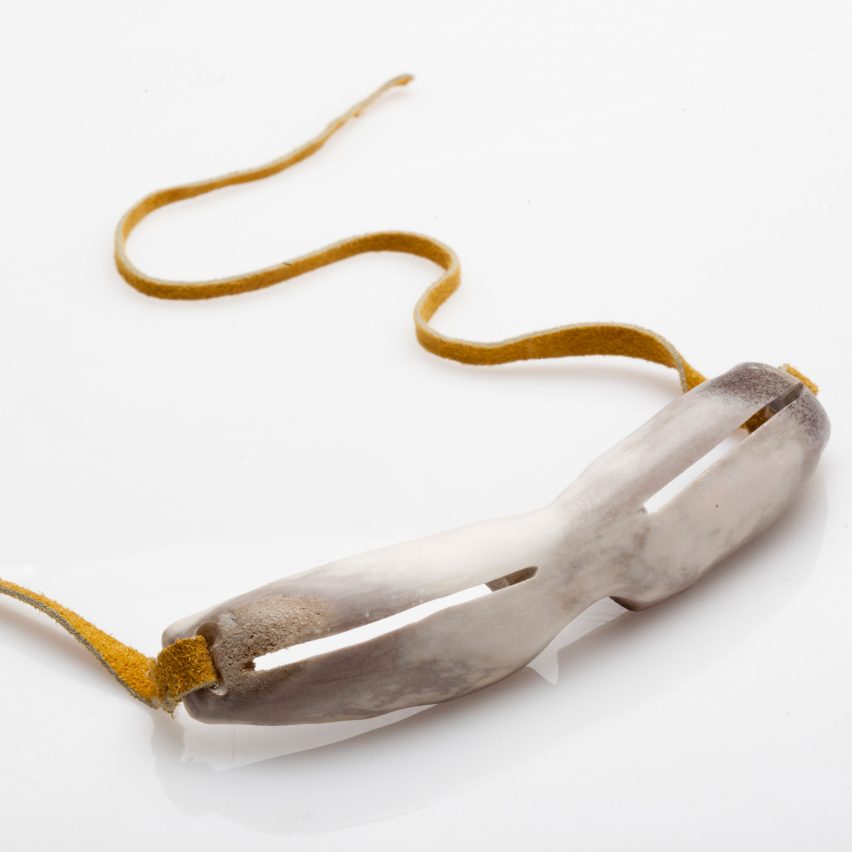
Inuit snow goggles, opera glasses disguised as ladies’ handheld fans and experimental sunglass designs from the 1960s feature among a trove of historical eyewear that has gone on display at Design Museum Holon. Read more

http://ift.tt/2h9tcBd