Quelen Ark / Susana Herrera + FACTORIA


© José Luis Saavedra

© José Luis Saavedra


© José Luis Saavedra


© José Luis Saavedra


© José Luis Saavedra


© José Luis Saavedra

  • Team : Gerson Cuevas
  • Client: Quelén Centro Turístico

© José Luis Saavedra

© José Luis Saavedra

To attract more visitors to Lanalhue Lake, in western Chile, tourism entrepreneur Pedro Durán commissioned architect Susana Herrera and her team FACTORIA to create a symbol for the region. In return, she designed a catamaran that rises from the water like a cluster of cattail leaves. 


© José Luis Saavedra

© José Luis Saavedra

“We wanted this Artisanal foliage to emerge from the very nature of the lake, from its marsh grasses, from the wild nature of its shoreline, like woodwater creature coming in and out the natural fog, always present in the mystical legends of the lake”, she says.


© José Luis Saavedra

© José Luis Saavedra

She challenged a team of PolyteSolet and more than 15 local artisans to build the boat, by integrating nature, technology and sustainability; the result is the 10-by-4.5-metre Arca de Quelén, a catamaran that can carry up to 40 passengers plus crew. Crafted from laminated bay laurel and cypress, and equipped with a bar and a boutique that sells local products and handicrafts, the vessel has already grown into a source of local pride. And while it navigates a far-flung lake, it aims to attract travellers from overseas to experience its singular design.


© José Luis Saavedra

© José Luis Saavedra

Floor Plan 01

Floor Plan 01

© José Luis Saavedra

© José Luis Saavedra

We needed to give connectivity between the various touristic entrepreneurs of the lake, and at the same time deliver a memorable and unique experience.  We wanted the ark to move almost in a secretive and smooth way, to alter as little as possible the fauna surround, so the double-hulled catamaran gave the stability and safety we needed.


© José Luis Saavedra

© José Luis Saavedra

Just as the Mapuche ancestors built their canoe like Wampos from a carved log, this vessel had to be built on wood and made tribute to those that inhabit the lakes way before us.  


© José Luis Saavedra

© José Luis Saavedra

Section

Section

© José Luis Saavedra

© José Luis Saavedra

This project, must incorporate additional parameters beyond those for architecture, and that was very attractive design wise.  We had to get familiar with aspects of computer lofting, 3D modelling, hydrostatic calculations, and creation of boat layouts.  In terms of design process, it approaches both, computer-aided design and the craft of woodworking.  


© José Luis Saavedra

© José Luis Saavedra

Resilient strength, permanent watertightness, and graceful marsh grasses lines are part of the design theme.  The structural ribs highlight the verticality of the ship, dematerializing itself as they touch the sky on the second ledge.  In addition, they give an integrated image to the two levels of the boat. The first level closed by a skin of curved polycarbonate sliding windows that allows a 360 panoramic view of the surroundings during winter and another completely open to the landscape on the second level. This contributes to breaking the tourist seasonality.  The intentions is to think of this vessel as highly organic expressions of nature, architecture and design reflecting the specificity of this lake by hand crafted means, including natural materials, software systems and laminated wood methods of fabrication.


© José Luis Saavedra

© José Luis Saavedra

We combined traditional boatbuilding methods with cold-moulded wood construction. The technique involves laminating together layers of wood veneers and wood sticks to create a hull that is watertight, extremely strong, and lightweight.  We embraced wood and woodworking techniques with an emphasis on hand tool usage as well, bringing an experience of close contact with wood, enabling us to get to know and work with its grain structure and complex joinery.


© José Luis Saavedra

© José Luis Saavedra

http://ift.tt/2gK2Zc7

Pei Partnership Architects Wins Competition for Nanhai Cultural Center


Courtesy of Pei Partnership Architects

Courtesy of Pei Partnership Architects

Pei Partnership Architects, in collaboration with Guangzhou HSArchitects, has been selected as the winner of an international design competition for the Nanhai Cultural Center in the Nanhai District of Foshan, China. The winning design seeks to create a “New Civic Plaza” connecting a variety of cultural program elements through a balance of structure and void.


Courtesy of Pei Partnership Architects


Courtesy of Pei Partnership Architects


Courtesy of Pei Partnership Architects


Courtesy of Pei Partnership Architects


Courtesy of Pei Partnership Architects

Courtesy of Pei Partnership Architects

To be located on a 400 meter long, 150 meter wide lot facing the Qiandeng Lake Park, the 130,000 square meter (1,400,000 square foot) complex will contain a library, arts and science exhibition spaces, sports facilities, and performance halls, among other cultural amenities. Bound by heavily trafficked roads, subways and bus station transit hubs, the design challenge was to go beyond architectural building design into organizing of the greater urban fabric.


Courtesy of Pei Partnership Architects

Courtesy of Pei Partnership Architects

Courtesy of Pei Partnership Architects

Courtesy of Pei Partnership Architects

This is achieved by a creating a balance of structure and void within the cultural complex, a philosophy that is inherent to the Chinese concept of space and cultivation of culture

“The concept of space in the Chinese language describes that the open void is no less important than the physical being. Similarly, Chinese calligraphy emphasizes a balanced void and stroke, sometimes even a deliberate void that complements the stroke to enhance its existence,” explain the architects.

“The space which enables the people to gather and exchange ideas freely is the key element of the formation of culture. Most importantly, it shall be an open assembly space without predefined programs.”


Courtesy of Pei Partnership Architects

Courtesy of Pei Partnership Architects

Courtesy of Pei Partnership Architects

Courtesy of Pei Partnership Architects

“Based on the perception of cultural formation and the dialogue with the contextual urban fabric, we conclude that the central space of Nanhai Cultural Center should be a “void” that provides a welcoming gesture to the public at all times: a 24-7 opened yet sheltered “New Civic Plaza”. Thus, the most essential core area of the cultural center is dedicated to the open public and it shall be a sincere architectural response for the community.”


Courtesy of Pei Partnership Architects

Courtesy of Pei Partnership Architects

Courtesy of Pei Partnership Architects

Courtesy of Pei Partnership Architects

The “New Civic Plaza” will be pervasive throughout the complex, organized around a “decentralized” unit typology inspired by vernacular architecture that allows southeastern wind to pass through each unit and offers shaded areas to protect visitors from the blazing sun.

“Capturing the mountain, the river, and the cloud of Guangzhou Lingnan region along with the imprint of local traditional dwellings, we try to elevate the poetic grace in the project for Nanhai through implementation of the metaphysical instead of the physical form,” the architects explain.


Courtesy of Pei Partnership Architects

Courtesy of Pei Partnership Architects

Courtesy of Pei Partnership Architects

Courtesy of Pei Partnership Architects

“The historical heritage is carefully interpreted and preserved in the New Nanhai Cultural Center for generations to come.”

News via Pei Partnership.


Courtesy of Pei Partnership Architects

Courtesy of Pei Partnership Architects

Courtesy of Pei Partnership Architects

Courtesy of Pei Partnership Architects

Courtesy of Pei Partnership Architects

Courtesy of Pei Partnership Architects

Courtesy of Pei Partnership Architects

Courtesy of Pei Partnership Architects

Courtesy of Pei Partnership Architects

Courtesy of Pei Partnership Architects

Courtesy of Pei Partnership Architects

Courtesy of Pei Partnership Architects

Courtesy of Pei Partnership Architects

Courtesy of Pei Partnership Architects

Courtesy of Pei Partnership Architects

Courtesy of Pei Partnership Architects
  • Architects: Pei Partnership Architects
  • Location: Qiandeng Lake, Denghu W Rd, BaoLi ShuiCheng, Nanhai Qu, Foshan Shi, Guangdong Sheng, China
  • Pei Partnership Architects Llp Team: Chien Chung Pei, partner in charge; Cheng-hsun Wu, Principal in charge; Chulhan Jung, project manager; Keonwoo Kim, designer; Chloe Pu, intern
  • Guangzhou Hs Architects Team: Qunning Xu, project director; Guangde Shi, project manager; Xin Liu, project architect; Zhiheng Liu, designer; Rongjun Lee, designer
  • Client: Land Urban Construction and Water Conservancy Bureau of Nanhai District, Foshan City, Guangzhou, China
  • Area: 130000.0 m2
  • Photographs: Courtesy of Pei Partnership Architects

http://ift.tt/2hCZ0Tj

Galpão Sim! / Alan Chu


© Djan Chu


© Djan Chu


© Djan Chu


© Djan Chu

  • Architects: Alan Chu
  • Location: Campinas – State of São Paulo, Brazil
  • Project Team: Anita Meduna, Pablo Rezende
  • Structure: Eng. José Otavio Rosolen
  • Builder: Ederson Pereira Alves
  • Area: 92.0 m2
  • Project Year: 2015
  • Photographs: Djan Chu

© Djan Chu

© Djan Chu

From the architect. Located at the rear of brazilian actor Eduardo Okamoto’s home, the building houses the theater producer’s office of SIM!Cultura as well as the owner’s studio. 


© Djan Chu

© Djan Chu

© Djan Chu

© Djan Chu

These premises provide ample working space for research as well as theatrical rehearsals and experimentation.


© Djan Chu

© Djan Chu

The working space is inside a masonry white box which also contains a guest room / dressing room on the ground floor and an office on the upper floor. 

This white masonry box is located inside a warehouse which has hinged doors at the front and rear constructed of aluminum overlaid with alveolar polycarbonate sheet.


© Djan Chu

© Djan Chu

In addition to serving as closures and providing both illumination and ventilation as needed, these doors also can be opened and closed as part of a theatrical performance. 


© Djan Chu

© Djan Chu

In the actor’s own words expressing his appreciation to the architect:

“… And, most importantly, beyond its beauty I feel the space will save me years in theatrical research. The architecture, condensed as it is to its essential core opens new scenic perspectives and truly stirs my emotions. Many times I look at these studio shapes and lose myself in meditation and the simplicity of the architectural lines calm me. Soon I hope to persuade the architect to design sceneries for my stage plays.”


© Djan Chu

© Djan Chu

http://ift.tt/2hDwgaB

I.M. Pei’s Le Grande Louvre Wins AIA 25 Year Award


© Koji Horiuchi. Courtesy of AIA

© Koji Horiuchi. Courtesy of AIA

The American Institute of Architects (AIA) has selected The Grand Louvre – Phase I as the recipient of the 2017 AIA Twenty-five Year Award. Designed by I.M. Pei with his firm Pei Cobb Freed & Partners, the project is notable for its 71-foot-tall glass and stainless steel pyramid, which according to the AIA, “now rivals the Eiffel Tower as one of France’s most recognizable architectural icons.”

The award is presented annually to a project that has “stood the test of time by embodying architectural excellence for 25 to 35 years.”


© Benoit Perrin. Courtesy of AIA


© Koji Horiuchi. Courtesy of AIA


© Koji Horiuchi. Courtesy of AIA


© Pei Cobb Freed & Partners. Courtesy of AIA


© Benoit Perrin. Courtesy of AIA

© Benoit Perrin. Courtesy of AIA

“Greeted with hostility and derided as a Modernist affront when it was first proposed as the main entrance to Paris’ Musée du Louvre, the project was born of President François Mitterrand’s quest to modernize the Louvre in the early 1980s,” commented the AIA. “Pei’s pyramid thrust the 800-year-old Palais complex into the modern era while simultaneously making the museum more accessible to larger crowds. To execute the project, Pei wove together an unprecedented amount of cultural sensitivity, political acumen, innovation, and preservation skill.”


© Koji Horiuchi. Courtesy of AIA

© Koji Horiuchi. Courtesy of AIA

© Pei Cobb Freed & Partners. Courtesy of AIA

© Pei Cobb Freed & Partners. Courtesy of AIA

This year’s jury for the award included: Mark Reddington, FAIA (Chair), LMN Architects; Gregory P. Baker, AIA, HNTB Architecture; David Cordaro, AIAS Representative; Leslie K. Elkins, FAIA, Leslie K. Elkins Architect; Timothy J. Johnson, AIA, NBBJ; William Q. Sabatini, FAIA, Dekker/Perich/Sabatini; Adrian D. Smith, FAIA, Adrian Smith + Gordon Gill Architecture; Beatrice Spolidoro, Assoc. AIA, Rothschild Doyno Collaborative and Marilyn Terranova, PhD, Interim Superintendent, Pocantico Hills CSD.


© Koji Horiuchi. Courtesy of AIA

© Koji Horiuchi. Courtesy of AIA

The project will be honored this April at the AIA National Convention in Orlando. You can read more about this year’s award winner, here.

News via AIA.

AD Classics: Le Grande Louvre / I.M. Pei
//cdn.embedly.com/widgets/platform.js

Spotlight: I.M. Pei
//cdn.embedly.com/widgets/platform.js

http://ift.tt/2gJeroB

Police Station in Salt / Josep Ferrando + Sergi Serrat


© Adrià Goula

© Adrià Goula


© Adrià Goula


© Adrià Goula


© Adrià Goula


© Adrià Goula

  • Builder: Construccions Alsina SA
  • Architects Team: Marc Nadal, Ramon Subirà, Anne Hinz, architect
  • Structural Engineer: NB-35 Barcelona
  • Collaborators: Marc Nadal + Ramon Subirà + Anne Hinz
  • Client: Ayuntamiento de Salt
  • Budget: 1.700.000 €

© Adrià Goula

© Adrià Goula

The site

The new police station is located on the outskirts of the neighborhood in a zone reserved for council buildings. The proposal is placed in a pre-existing grove of magnificent beech trees that determine the main decisions for the project. The main building mass is concentrated at the north end of the site, in the unoccupied area, while the car park is organized around the grove. The remainder of the site forms a green cushion that separates the building from the road becoming a transition space for the visitors.


Site Plan

Site Plan

The building

The building is separated from the street by no more than a wooded garden. There are no railings to bar the public. The police should be seen to be accessible and friendly. A compact, horizontal, abstract and introverted volume is proposed due to the requirements of high-security, use and flexibility of the program. The public entrance is formed by raising the head at one of the ends of the building forming a large access porch. The staff entrance is placed at the opposite end of the main facade.


© Adrià Goula

© Adrià Goula

© Adrià Goula

© Adrià Goula

The materiality

Once inside everything changes. A system of double height spaces and patios organize the private zones and flood the interior with light. The color white becomes the main player. Its texture changes to differentiate the different walls: textured concrete for the exterior, polished stone on the floor, white brick and wood for the walls, perfect white for the ceiling…


© Adrià Goula

© Adrià Goula

The briefing

The lightness of the interior is also reflected in the organization of the building. The program is ordered around strict hierarchical and functional criteria.


© Adrià Goula

© Adrià Goula

A longitudinal spine-like scheme ordered around the patios orders the program in plan and establishes a clear transition between the public and the private.


Plans

Plans

http://ift.tt/2gJflRK

Snøhetta unveils visitor centre for world-famous Lascaux cave paintings

lascaux-snohetta-architecture-cultural-museums-france_dezeen_sqb

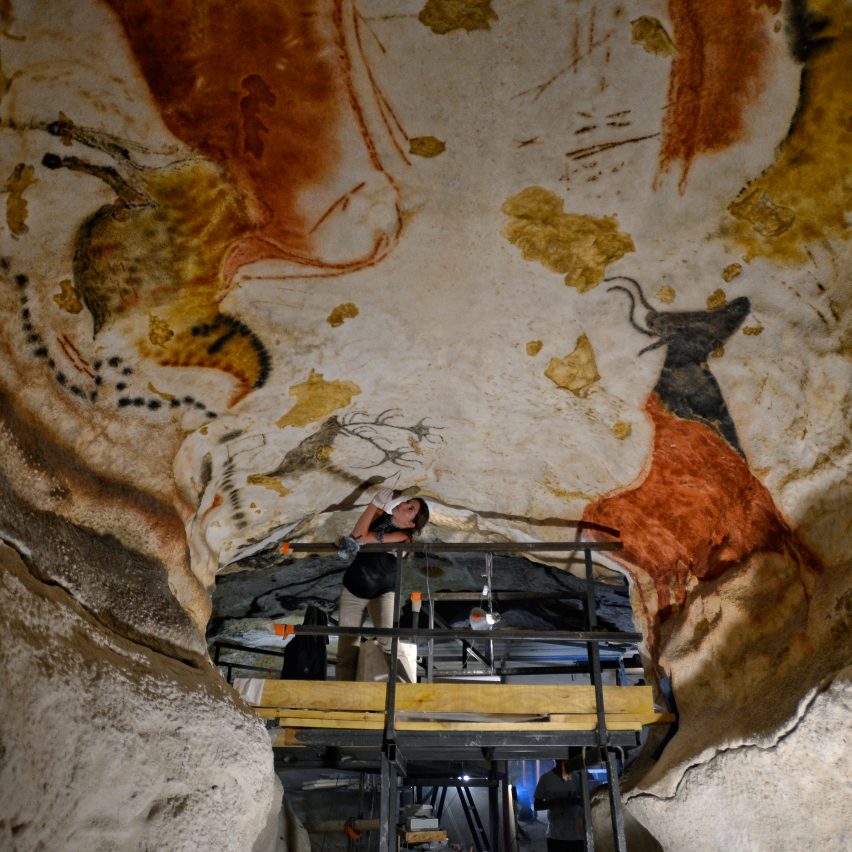
A major new building by architecture firm Snøhetta has opened in the south of France, framing a huge replica of one of the world’s most important examples of prehistoric cave art. Read more

http://ift.tt/2gS6EcX

Marble powder creates seamless finish for World Interior of the Year says designer Weng Shang Wei

black-cant-system-dezeen-inside-sq

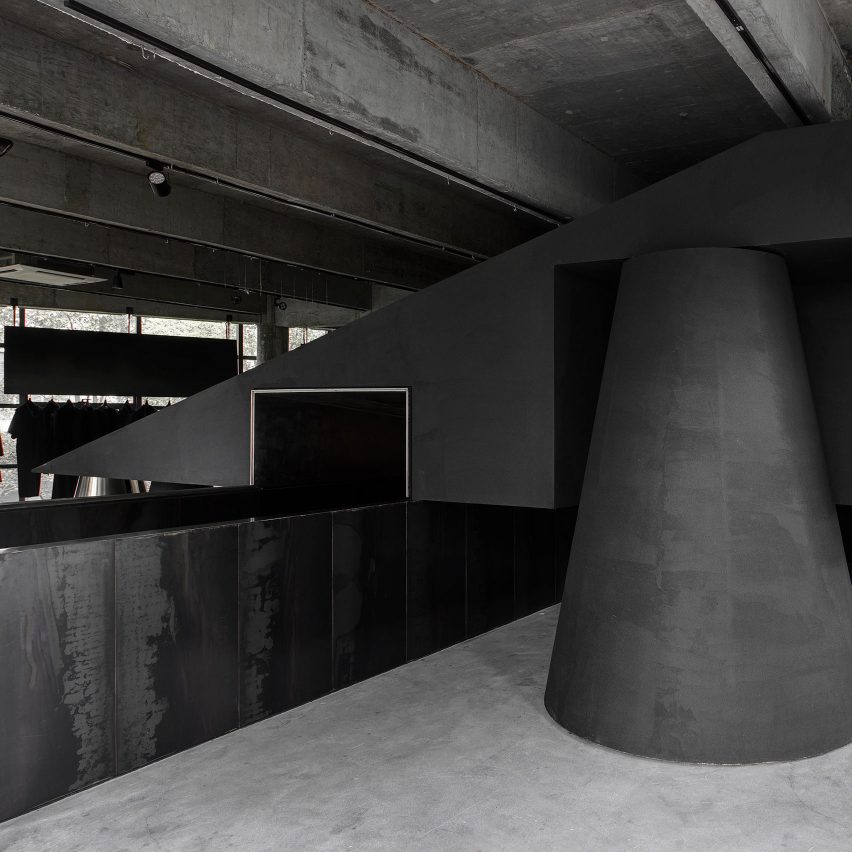
In this exclusive movie, designer Weng Shang Wei explains how he achieved the deep, uniform shade of black inside the Hangzhou fashion store that was named World Interior of the Year at Inside 2016 last month. Read more

http://ift.tt/2hVQJ9A

EU headquarters features glass box containing curvaceous glowing “lantern”

european-union-headquarters-brussels-samyn-partners-architecture-_dezeen_sqa

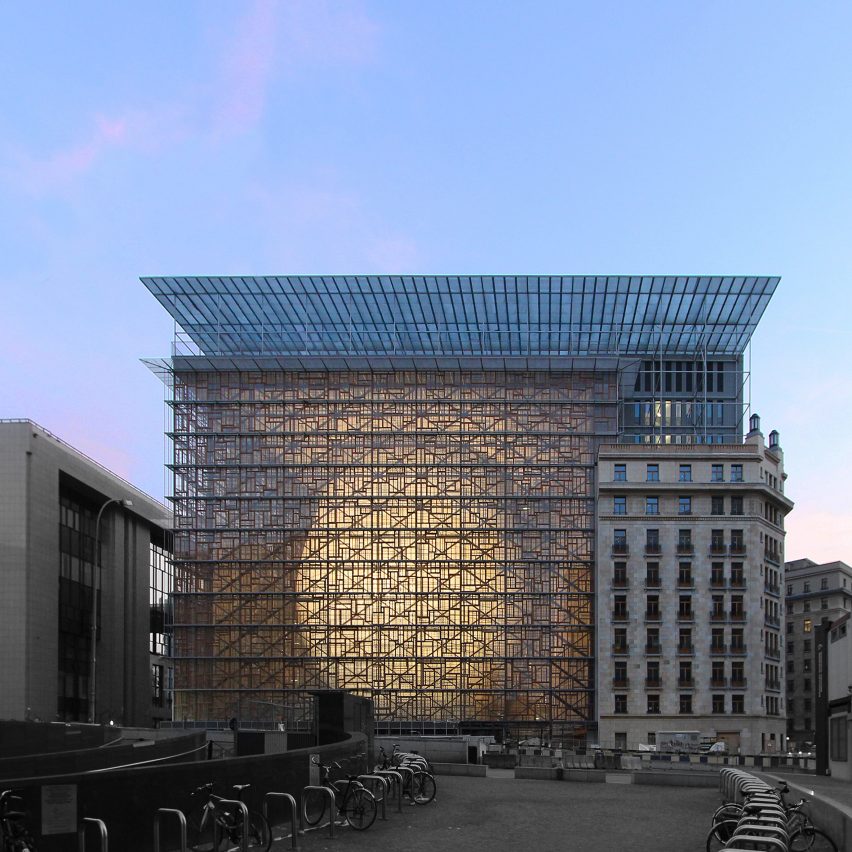
The European Union is moving into a new headquarters in Brussels, which features a huge glass atrium enclosing a bulging, lantern-like structure. Read more

http://ift.tt/2gIrdUi

House 28 / Equipe Lamas


© Haruo Mikami

© Haruo Mikami


© Haruo Mikami


© Haruo Mikami


© Haruo Mikami


© Haruo Mikami

  • Architects: Equipe Lamas
  • Location: Smdb Conjunto 28 – Lago Sul, Brasília – DF, Brazil
  • Architect In Charge: Samuel Lamas
  • Design Team: Samuel Lamas, Ruy Lamas, Anderson Magallães
  • Area: 850.0 m2
  • Project Year: 2016
  • Photographs: Haruo Mikami
  • Engineering And Incorporation: Ruy Lamas
  • Engineering: Eng. Ruy Lamas, Eng. Júlio Novita, Eng. Vladimir Barbán
  • Interior Design Collaborator: João Carlos Ramos Magalhães
  • Paisagismo: João Fausto Maule

© Haruo Mikami

© Haruo Mikami

From the architect. The architecture of the House 28 presents as an extension of the arid and lush landscape from the Cerrado Biome. A family that sought tranquility and connection with nature commissioned this urban refuge located 10 minutes away from the national congress of Brasilia.


© Haruo Mikami

© Haruo Mikami

The area of ​​7000 m2 enabled to spread 850m2 of construction on the ground. Gardens permeate the volumetry and generous windows of wood and glass connect the experience to the landscape.


© Haruo Mikami

© Haruo Mikami

Varieties of perspectives are revealed while walking through the house. The rooms have different heights that confirm a spatial hierarchy. Extensive walls, coated with polymer mortar, define fluid spaces and openings positioned in all directions integrate the living areas. The large windows frames are mostly positioned east west and the walls north south. This orientation allows a dramatic natural light effect during Sunshine / sunset and open views across the house.


© Haruo Mikami

© Haruo Mikami

Independent bedrooms facing east ensure privacy for family members. All three suites have a balcony and a metal trellis for climbing plants. The Windows there, when opened, serve as seats either for the bedroom and balcony.


© Haruo Mikami

© Haruo Mikami

The landscape colors continue in the house materials: the tile floor and walls coated fulget has the same color of the reddish earth of Brasilia. The window frames and the lining of Ipe wood, confirm the sense of belonging. The metal roof structure in corten steel also mimic among vegetation.


© Haruo Mikami

© Haruo Mikami

There are three Colored Carpets tiles with geometric designs where the use of traditional woven carpet would be impractical: entrance, kitchen and dining room.


Ground Floor

Ground Floor

Next to the terrace under an old Jatoba tree, there is a rectangular pool coated with white regional marble. It is a conversation pool with a bench along its entire length and flanked by wooden deck. 


© Haruo Mikami

© Haruo Mikami

The house has mixed structure: concrete pillars and cover in metallic structure. Rainwater collected by the coverage is directed to an underground reservoir serving the garden irrigation during dry period. Solar panels heat the water and the pool throughout the year and tilting windows allow cross ventilation and natural light in every room.


© Haruo Mikami

© Haruo Mikami

For the interior, a playful and relaxed spirit with pieces designed by the architect Samuel Lamas and masters of Brazilian and international design: Sergio Rodrigues, Jorge Zalszupin, Tenreiro, Jean Gillon, Geraldo de Barros, Lucio Costa, Lina Bo Bardi, Campana brothers, Vico Magistretti, Charles Eames, Antonio Bonet, Pollock and Achile Castiglioni among others.  


© Haruo Mikami

© Haruo Mikami

The landscaping is an extension of the Woods with native trees and shrubs masses that flourish throughout the year to attract birds. In the central garden, a native tree Erythrina Mulungu, known as coral tree, will often bring to the Entrance hall, the view of a carpet of red flowers.

http://ift.tt/2hW2pcB

Jan Gehl 5 Rules for Designing Great Cities


Copenhagen, Denmark. Image © Flickr User: Forgemind ArchiMedia. License CC BY 2.0

Copenhagen, Denmark. Image © Flickr User: Forgemind ArchiMedia. License CC BY 2.0

Danish architect Jan Gehl is a world renowned expert in all things related to urban design and public spaces. He obtained this expertise by publishing numerous books, and later, from his consulting firm Gehl Architects that he founded in Copenhagen, his hometown, to make cities for people. The firm celebrated its 50th anniversary in 2016.

During a recent visit to New York, Gehl gave a lecture at the Van Alen Institute, which takes a very similar approach to the importance of design in the quality of life of people. The architect discussed five tips that were published by Fast Co.Design and explained what he believes is the way to go about having livable, healthy, safe and sustainable cities.

The 5 points he mentioned are:

1. Stop Building ‘Architecture for Cheap Gasoline’ 


Las Vegas, United States. Image © Flickr User: Jan Buchholtz. License CC BY-NC-ND 2.0

Las Vegas, United States. Image © Flickr User: Jan Buchholtz. License CC BY-NC-ND 2.0

Climate change and public health are two factors that Jan Gehl says should be of utmost importance to planners, especially considering that “for 50 years, we made cities in such a way that people are almost forced to sit down all day in their cars, in their offices, or in their homes. This has led to serious situations health-wise.”

What causes that? According to Gehl, it is cars and the availability of cheap gasoline that created the suburban construction period, but when gas starts to become more expensive, it’s no longer a good idea. 

This line of thinking is reflected in a recent study published in The Lancet which found that those living in city centers have a longer life expectancy than those living in the outside areas because they walk more often over the course of their lives when making their daily commutes. 

The research was conducted on 6,822 people from 14 cities in ten countries with participants who were between 18 and 66 years old. The studied noted, among other things, each person’s ability to walk and their access to public transport and parks. 

2. Make Public Life the Driver for Urban Design


Superkilen Park, Copenhagen. Image © Flickr User: Forgemind ArchiMedia. Licencia CC BY 2.0

Superkilen Park, Copenhagen. Image © Flickr User: Forgemind ArchiMedia. Licencia CC BY 2.0

In 2009, the City of Copenhagen enacted “A Metropolis for People“, a plant inspired by a theory from Gehl Architects that allowed for the design of a vision and goals for urban life in the Danish capital in 2015. 

Thanks to that, we’re able to see that six years ago public figures in Copenhagen set out to make it the most livable city in the world, ie. a sustainable city in which, through their public spaces, people are invited to have a unique and diverse life. 

To move towards this goal, the plan was structured in three main components: walking more, spending more time in public spaces and getting out of “private cocoons” more. As Gehl explained during his stay in New York, this made the city more exciting, interesting and safer, as well as promoted social inclusion. 

3. Design for Multisensory Experiences


Venicde, Italy. Image © Flickr User Ștefan Jurcă. License CC BY 2.0

Venicde, Italy. Image © Flickr User Ștefan Jurcă. License CC BY 2.0

To explain this point, Gehl uses Venice and Brasilia as examples, stating that if you want to have an experience where the senses are active and therefore, more pleasing, you should visit the former. However, if you don’t want something like that, go to the Brazilian capital city. 

These examples show how people living there have lost the opportunity to enjoy their surroundings through their senses, since as Gehl says “we have broken all the rules to make automobiles happy.” 

In contrast, what cities should be doing is building around the body and senses of human beings to take advantage of our capabilities, so that people can enjoy their cities to their fullest potential. 

4. Make Public Transportation More Equitable

Promoting equality in cities has become a mission in various parts of the world. We can achieve more equality if public transport becomes accessible, efficient, and a reasonable alternative to cars. 

This way, people who live in the suburbs, because the land there is cheaper and more suited to their income, don’t need to spend so much of their budget on transportation, something that people who currently live in city centers don’t need to worry about. 

5. Ban Cars


Traffic in Singapore. Image © Flickr User Lynac. License CC BY-NC 2.0

Traffic in Singapore. Image © Flickr User Lynac. License CC BY-NC 2.0

According to Gehl, the car is not a smart way of getting around, especially in cities that have populations of 10 million or more, like in South America, Africa, and Asia. 

In the latter region, Gehl uses Singapore as an example, by saying that it is a very small island, and as a result of the large number of cars there is almost no more free space on the streets, even when in a dense city it’s possible to get everywhere much faster either on foot or by bicycle.  

He also argues that “it is no secret that the good days of the automobile are over.”

http://ift.tt/2hVVyjd