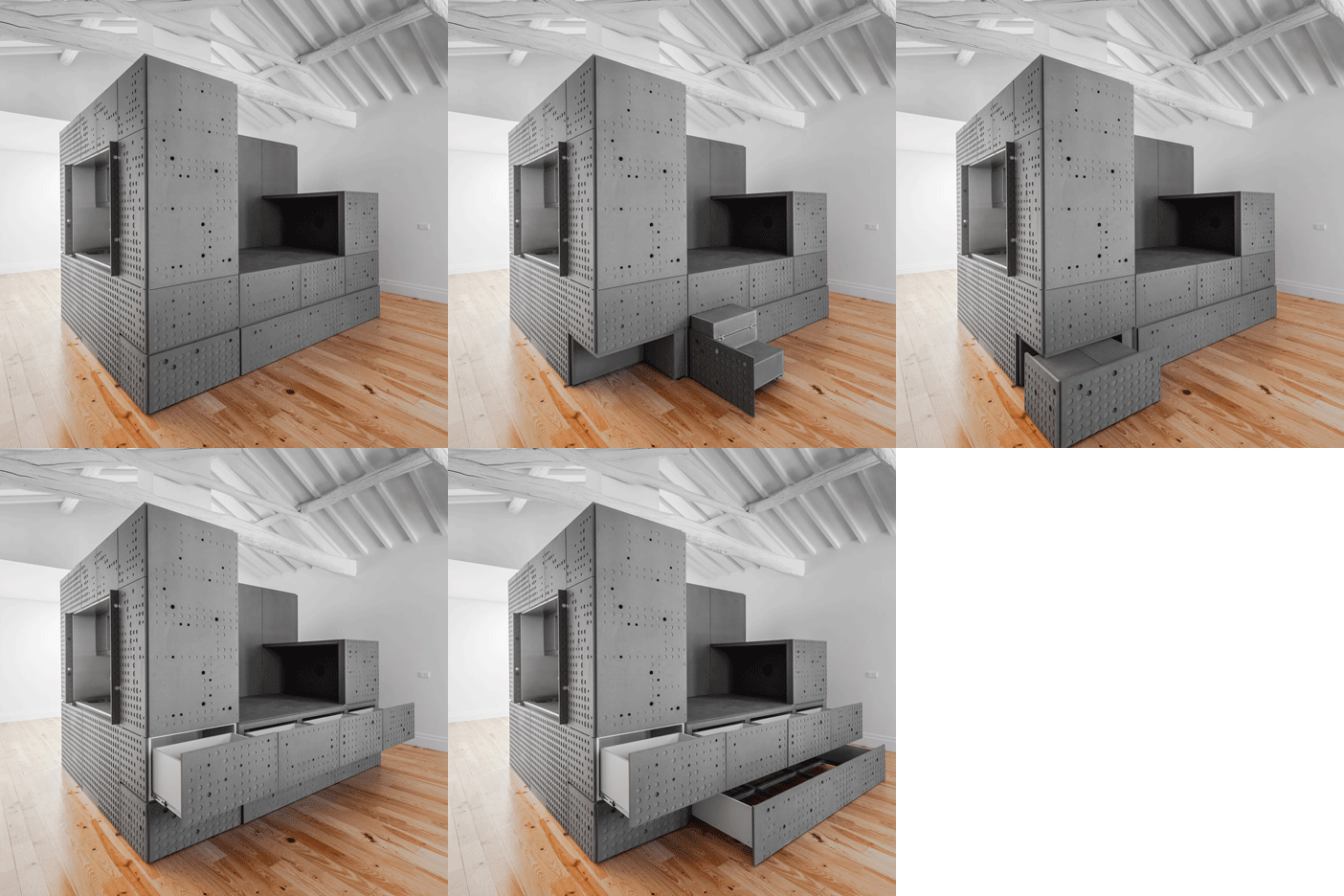
A copper-clad volume covered in hatches and a space with rotating walls feature in this roundup, which spotlights apartments with reconfigurable interiors from Dezeen’s Pinterest boards. Read more
A copper-clad volume covered in hatches and a space with rotating walls feature in this roundup, which spotlights apartments with reconfigurable interiors from Dezeen’s Pinterest boards. Read more
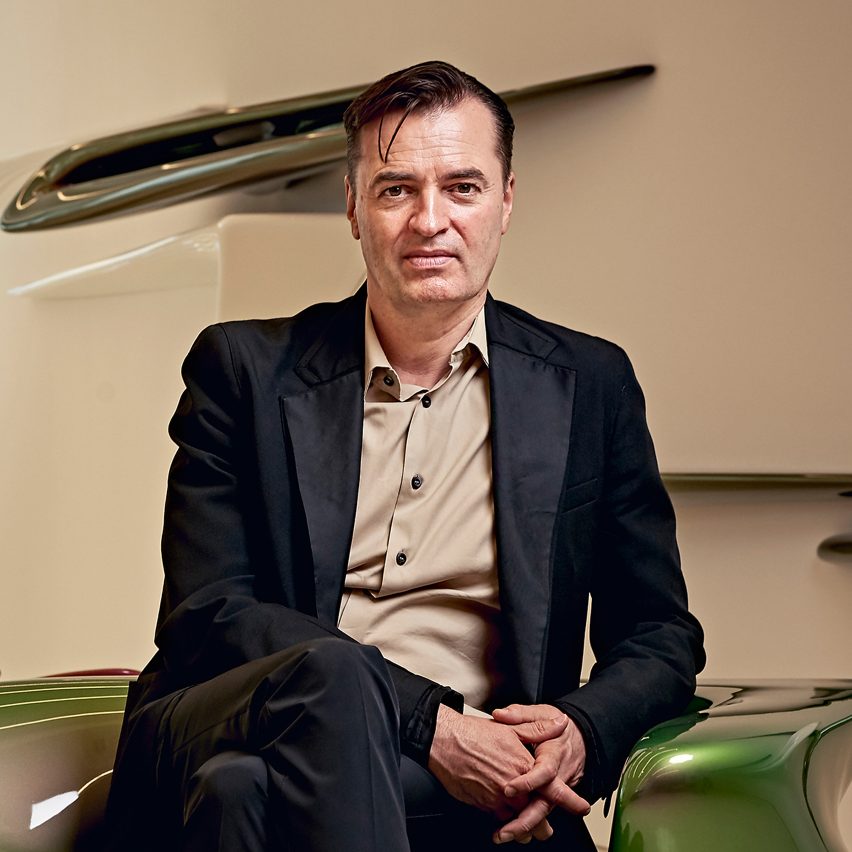
Zaha Hadid Architects director Patrik Schumacher has mapped out a solution to London’s housing crisis that involves getting rid of regulations, privatising all public space and scrapping social housing. Read more

Hewitt Studios LLP have recently completed the first phase of the conversion and refurbishment of a former nuclear research and engineering building at Berkeley Centre on the Severn Estuary in the UK.
The project provides SGS College with a renewable energy and engineering skills centre supported by both local enterprise funding and international technology partners, such as Schneider, Welink and Bosch.
The delivery of a reinvigorated, dynamic and sustainable facility is key to this offer – the building is designed to become an exemplar of regenerative investment and an education tool in its own right.
Elements of the building fabric will be used to deliver specific areas of curriculum (e.g. solar pv and timber construction), whilst the responsible re-use of an existing building sets a low-carbon precedent for future developments to follow.
Green initiatives include an integrated photovoltaic (BIPV) facade, thermally efficient envelope, innovative heat-recovery ventilation system, LED lighting and low-impact timber structure.
The Laminated Veneer Lumber solution was chosen for a variety reasons:
– It allowed for a rapid on-site build and limited the associated environmental disruption.
– It was effectively self-finished, requiring no lining or applied finishes.
– It gave the flexibility for services to be fixed anywhere.
– It was carbon-sequestering, with only certified timber from sustainably managed sources used.
– It created a better environment than a steel-framed building; warmer / softer / quieter.
– It was cost-comparable with a steel frame (when ‘knock-on’ savings considered)
– It provides a striking contrast with the existing structure, helping users to read the building’s story.
Elsewhere, the design employs sustainable timber cladding, minimising waste through use of plywood in standard 1200mm sheets. Its distinctive pattern is based upon the dazzle camouflage of World War I warships. Rather than ‘daze and confuse’, it is here intended to reduce the visual mass of the lower levels of accommodation. It is also perforated and backed with acoustic material to suppress reverberation within the main hall.
BIPV panels will shortly be to a screen suspended from the building envelope. They will not only generate electricity, but will shade the glazing behind from the southerly sun and act as a wind-break in the exposed estuary location. They use latest generation thin-film solar cells which offer a cost-effective power output (c.100kW) and good low-light performance.
Hewitt Studios are also developing plans for a site-wide renewables package with the ultimate aim of becoming a zero-carbon campus. This includes a government-backed solar at scale scheme (with building, car park and ground mounted pvs), tidal power, wind generation and battery storage. Impact will be minimised with significant areas of habitat creation (supported by the Gloucestershire Wildlife Trust) and a comprehensive green transport strategy including a cross-campus electric minibus infrastructure.
The result will be an exciting new hub for the sustainable energy industry; raising aspirations, attracting young people to stem careers and providing skilled people to fill the technology skills shortage, all within a sustainable and low-impact environment.
Product Description. Steel would have been the obvious choice for the structural modifications, but Hewitt Studios instead chose a combination of HESS Laminated Veneer Lumber (LVL) beams, glued-laminated (GLULAM) columns and cross-laminated (CLT) floors and balconies. This palette of pre-fabricated, sustainable and attractive timber products was chosen for its speed of construction, ease of fixing / finishing, carbon-sequestering credentials and excellent thermal and acoustic properties.

From the architect. This house is a detached house, size of 148.76㎡, built in Ilsan, Gyeong-gi Province.
General floor plan for three-member-family consists of the main living room, three bedrooms, two bathrooms, one dress room, kitchen and a workshop; a detached house of 148.76. This house, so called a Light – House, represents the characteristic of owner’s occupation. The land condition for this Light-House was created by land division of about twenty-house-size. Five houses are already completed, and others are currently under construction. Light-House is aims for something higher than a physical housing where you simply eat and sleep; it pursues co-existing of nature and humanity through continuous relationship via interior and exterior of the building. Predicting this region to be crowded with houses in a near future, Light-House is designed to protect owner’s private life from others’ eyes. The three land sides that are touched by other residents’ are equally divided so that they can be entirely surrounded by the exterior wall of the housing. For the last side, an open view of whole window is installed towards the beautiful landscape, created by the thorough design of terraced heights of the housing complexes. Moreover, in accordance with owner’s lifestyle, Light-House is designed for the frequent use of outdoor space in warm seasons. We hope our residents to have a peaceful and protected space where you can enjoy your rest in an outdoor space and courtyard, separated from others’ view.
The exterior wall of Light-House is finished with white cement render. It faces a clear, open courtyard which you can naturally meet entering the building along with the wall. Residents can enter the building as they walk along the courtyard. The courtyard, due to the fake wall installed for blocking the attention, is both an inside and an outside of the building, which is a traditional architectural concept of Oriental Architecture, intentionally applied to the sequence of Light-House spaces. Therefore, residents can experience a flexible relationship with inside and outside following the natural spatial flow. In the Light-House, two big courtyards and one small courtyard – three in total – are designed, and they allow you to enjoy the fresh air and sunshine totally alone in your own space. Moreover, two exterior terrace spaces are located closely with each room in outdoor, in which the identical finishing to the floor is used, which also makes it difficult to distinguish inside from outside.
Light-House, in order to maximize the energy efficiency of natural temperature control, has its big windows directed towards south so that whole house can be heated through sunlight in winter. Also, to use energy efficiently, radiant heating system is installed in newly constructed concrete floor. Moreover, you can almost feel the inside of house as the part of outside, due to the reflected natural light thanks to finishing the whole with white-colored interior and the ceiling installed on the roof which leads the light into the deep space of its house.

adidas HOME OF SPORT is currently located in a new building of Krylatsky Hills Business Park where it occupies 20,000 sq. m. Three of six floors house offices, two floors accommodate a fitness centre, and the adidas Academy is on the last floor. The architects from ABD architects were challenged to design a complex of spaces for different functions and purposes, to organize an understandable and comfortable structure and communication for various streams of visitors. In addition, such a brilliant company as adidas should have a catchy and dynamic office, and should inspire employees and guests to change everyone’s life through sports. While developing the design concept, the architects were guided by the Adidas corporate style and logos of the companies within the Group. This resulted in basic colours and combinations — black and white with bright colour accents. Three office floors are made in different colours: orange, green and blue. This facilitates navigation and creates a specific mood and atmosphere on each of the floors.
When designing the interior, the architects sought to reflect the Adidas logo. On each floor at the same place, there are white capsule meeting rooms which, when seen from the atrium, resemble three iconic stripes. At the same time, when seen while walking about the floor, they resemble a well-known trefoil. Each of the three meeting rooms is installed at an angle, is made in black and white colours, and is well noticeable.
When designing the interior, the architects also sought to reflect the company’s focus on active lifestyle and love for sports. For example, this led to the idea with scooters: on each floor there are tracks and parking lots — anyone can use scooters to move about the office area. Also this triggered the idea of a lighting pattern — a pattern of a traditional soccer ball. Most of the partitions on the office floors are transparent, and blank walls are decorated with adidas graphics and motivating quotes.
The central part of the office floor is active in colour and in function: small and large meeting rooms, furniture for individuals to work, areas for informal socializing and networking, coffee points. Design of work stations in the areas located closer to the whole glazed walls with panoramic view on Moscow is calmer: white tables and black chairs. The tables are arranged very comfortably, there is enough space between the rows to accommodate mobile file pedestals with seat cushions on the top and to organize internal negotiations. In addition to stationary workplaces, in the office there are temporary workplaces with high tables and ergonomic bar chairs.
Much attention in adidas HOME OF SPORT was given to the acoustic comfort: privacy screens and cubicle partitions; acoustical panels; additional meeting rooms are made of sound absorbing material.
The central reception hall resembles a real sport stadium. The focus was made on a big media screen with a running text line and a display for videos, and two big lighting fixtures resembling lighting towers. Reception desk and turnstiles are in the depth of the hall and do not catch the eye as they usually do in traditional offices. From the main lobby people can access two shops, and, without passing through turnstiles, to the reception room of the fitness centre. The BASE, a premium class fitness centre, is made in the loft style: open communications, large industrial fans, brutal and monochrome colours.
adidas Academy is a space for a company’s new and unique project intended to incorporate sports to daily life and to change life for better. Adidas gathered a team of professional coaches and developed a programme which helps people to better learn themselves and their abilities, as well as to find time for sports activities. The Academy includes a reception room, a number of classrooms and lecture halls separated by transformable partitions. The Academy also has a kitchen to deliver master classes for preparing right and healthy meals.

BAPS is a charitable organization with holistic and spiritual education as one of its key goals. This Trust approached the architect with a brief to build a self contained Girls school campus on the outskirts of the city of Gandhinagar, very close to Ahmedabad. The school campus is conceived as low-rise network of buildings and landscape spaces that encourage encounter & communication.
The concept is driven by the central spine or street as organizing device along which a series of linear blocks are attached. Used by students from all the blocks, this central street creates porous zones of interaction that flow into each other. Along this spine, the sequential visual journey also matches the structure of program- Administration, School, Sports hall, Residential in that order. Upstairs the corridors layer the learning spaces and allow Diffused natural light and ventilation by means of a GRC Jalli designed with a distinct graphic pattern. This custom pattern was designed to resonate with the Trusts iconography and identity.
The corridors are spaced with concrete walls with round geometric openings. These shaded pockets allow pause spaces and relief from the harsh sun glare during summers. The exposed concrete facades draw architectural inspiration from the institutional heritage of Ahmedabad. The Material Pallette is very restrained , neutral, in shades of grey and is meant to be a backdrop to the colorful artwork and uniforms of the school children.
Product Description.To match with the palette of the Concrete building façades – Matt finish Grey vitrified tiles for flooring were used manufactured by Restile

Robert Konieczny + KWK Promes’ National Museum in Szczecin – Dialogue Centre Przełomy has been named the World Building of the Year 2016 as the World Architecture Festival (WAF) in Berlin comes to a close. The project consists of an atmospheric underground museum below an expansive, undulating public plaza, adjacent to Barozzi Veiga’s Mies van der Rohe Award-winning Philharmonic Hall Szczecin.
The National Museum in Szczecin – Dialogue Centre Przelomy is now the ninth project to hold the World Building of the Year title. Last year, the award was given to “The Interlace” by OMA and Buro Ole Scheeren.
Winners of the year’s Future Project, Landscape, and Small Project awards were also announced. Read on to see the winning projects with comments from the jury.
National Museum in Szczecin – Dialogue Centre Przełomy / Robert Konieczny + KWK Promes
The judges, chaired by Sir David Chipperfield, gave the following commendations:
“This project enriches the city and the life of the city. It addresses a site with three histories, pre-World War II, wartime destruction, and post-war development, which left a significant gap in the middle of the city.
“This is a piece of topography as well as a museum. To go underground is to explore the memory and archaeology of the city, while above ground the public face of the building, including its undulating roof, and be interpreted and used in a variety of ways.
“This is a design which addresses the past in an optimistic, poetic and imaginative way.”
South Melbourne Primary School / Hayball
The school is a new model of vertical school responding to the specific inner-urban context of the developing Fishermans Bend urban renewal area in the city. Accommodating 525 students, the new school will be an integral component of the Montague Precinct within Fisherman’s Bend providing an education and community focus as the area is developed.
WAF’s Future Project super-jury, comprising Kim Nielsen, Ole Scheeren and Coren Sharples selected the project for “the way the space interprets and promotes pedagogy” commending it for the way it connects indoor and outdoor teaching areas and differentiated learning environments. The judges felt the architects overcame the challenges of designing a vertical school, using a central staircase as a point of interaction and as a gathering space.
ZCB Bamboo Pavilion / Chinese University of Hong Kong School of Architecture
The public event space was built for the Construction Industry Council (CIC)’s Zero Carbon Building (ZCB) in the summer of 2015 in Kowloon Bay, Hong Kong. It is a four-storey-high, 37 metre spanning, bamboo gridshell structure with a usable area of approximately 350m2 and a seating capacity of 200 people, placed in the ZCB Garden Area. It is built from 473 large bamboo poles that are bent onsite to shape the structure and that are hand-tied together with metal wire using techniques based on Cantonese bamboo scaffolding craftsmanship. Recognised by judges as “an excellent architectural outcome” the project was commended as a “brilliant example of cutting edge simulation and modelling combined with delightful traditional craft and skill.”
Kopupka Reserve in New Zealand / Isthmus
The project is a hybrid park, where a storm water reserve has been combined with an urban park, playground and skate park, all made possible by dovetailing the masterplanning of the streets with the green infrastructure of the 22-hectare reserve. Judges praised the project as “a successful translation of Maori traditions that succeeded in being both poetic and imaginative in its creation of a landscape that captures the soul and nature of the area.”
News and descriptions via WAF.

Hangzhou AN Interior Design’s design for the retail brand Heike has been named the world’s best interior of 2016. Announced at the INSIDE World Festival of Interiors in Berlin, which took place alongside the World Architecture Festival, the winner of the prize was selected from among 9 category winners, which in turn were picked out of a shortlist totaling 62 projects. The Black Cant System was also the winner of the retail category.
Described by the designers as a “glum interior” with a “futuristic melancholy atmosphere” for the retail brand, the centerpiece of the design is a large, dark wedge housing many of the store’s functional components such as fitting rooms and staircases.
Read on for more images of, and for the full list of category winners.

From the architect. Located at Tamsui City overlooking the estuary of Tamsui River under Mount Guanyin and featuring a private home spa pool in each unit, this famous luxury residential tower manifests a housing concept comprising pool views, river views and sea views. To extend into the interior magnificent scenes of colorful water ripple reflections during Tamsui sunset, a creative design approach has been adopted with Italian Memento antiqued-effect porcelain tiles paved on the floor in great areas interpreting genus loci, a pervading spirit of the place, while handmade faux stone uneven finish echoes the ruffling tiny waves on water surface. With magical power exerted by time, all activities and moods in this vacation residence seem to be slowing down. Things though sharing the same space and time, illusion of time dilation appears.
A distinctive atmosphere of frozen timelessness in the place is what we aspire to catch with the flowing river in front and the passing sun overhead left as the only moving things. Neutral colors and earth tones, such as beige in the leather main wall, beige grey in floorings, light brown green granite back wall and off-white in travertine main wall have been used to convey moods of placidity and steadiness of the space, while the shared feel and warmth of these grained materials as well as the perpetualness communicated by their being simple and unadorned respond to Piet Mondrian’s usage of primary colors. Colors help set boundaries to a space rather than decorate it.
Pattern of manifestation is based on De Stijl, or Dutch neoplasticism: pure abstraction and simplicity with appearances reduced to essentials of forms but ignoring curves and natural forms while visual balance is attained via precise manipulation of planes, lines and rectangles. Inspired by works of Piet Mondrian and eliminating colorfulness, the design of back wall in living room creates rhythmicity with asymmetry bringing equalitarianism and dynamic equilibrium into the picture. Constructivism has been employed in shoe cabinet design near the entrance. Instead of building one bulky cabinet, it is deconstructed and reorganized into four separate cabinets allowing light with rhythmic feelings to come in between introducing the space layout. In contrast to the open river view, interior of the apartment is a comparatively closed space and an approach has been attempted to create outward oriented openness in all directions producing an effect of extending to infinity. Hence, all activities, including cooking and exercising, have been guided to be conducted facing the Tamsui River. Broadened passageways and free-standing furniture, including sofa, kitchen islands and exercising equipment, ensure continuous traffic flow without blocked views in any direction.