Maison Stéphane Hessel / JDS Architects


© Julien Lanoo

© Julien Lanoo


© Julien Lanoo


© Julien Lanoo


© Julien Lanoo


© Julien Lanoo

  • Architects: JDS Architects
  • Location: Lille, France
  • Author: Julien De Smedt
  • Project Leaders: Kamile Malinauskaite, Renaud Pereira
  • Area: 6.98 m2
  • Project Year: 2016
  • Photographs: Julien Lanoo, Courtesy of JDS Architects
  • Project Team: Valentine Gruwez, Wouter Dons, Sandra Fleischmann, Weronica Wojcik, Felix Luong, Lea Fournier, Adrien Mans, Boris Tikvarski, Bartolomiej Zaboj, Mateusz Góra, Edgar Rodríguez , Lionel Roullet, Mathilde Dutilleul, Olfa Kammoun
  • Structural Consultant: Egis Bâtiments Nord
  • Façade: Demathieu & Bard

© Julien Lanoo

© Julien Lanoo

The competition for a new mixed-use building in Lille piqued our interest both in its unprecedented mixture of program and its prominent triangular site in the heart of the new district of Porte de Valenciennes. The brief outlined a 70-cradle nursery, a 200-bed youth hostel, and an office dedicated to social and economic innovations all collected under one unified roof; a tall order even by multifunctional building standards. Rather than simply dividing horizontally by level or vertically by mass, our solution combines efficient organization with a programmatic strategy that converts the geometric constrictions of the site into social amenities, and resolves the seemingly contradictory functions in an intertwined social spiral.


© Julien Lanoo

© Julien Lanoo

Ground Floor Plan

Ground Floor Plan

© Julien Lanoo

© Julien Lanoo

Over the past twenty years Lille has become a European hub; a destination for business and congress, a great place to study and live and also a tourist destination. It is a city with a turbulent history of conquest and reconquest, a heritage as an important medieval city and later on enjoyed and sometimes suffered the title of Northern France industrial capital.


Courtesy of JDS Architects

Courtesy of JDS Architects

Courtesy of JDS Architects

Courtesy of JDS Architects

Courtesy of JDS Architects

Courtesy of JDS Architects

The Maison Stéphane HESSEL  emerges from the idea of creating an urban catalyst, designed to accommodate the three ages of mankind, from birth, through adolescence, and into adulthood; a volume that captures the stages of human growth. 


© Julien Lanoo

© Julien Lanoo

By placing each program at a separate point of the triangle, we maximize privacy at the edges with a continuous gradient of programmatic overlap towards the central, uniting courtyard space which becomes a calm cloister of retreat from the city. The corners of the building are lifted to invite neighborhood interaction and provide spaces for public activities, extending the function of the building beyond its walls and intentionally blurring the line between private and public. 


© Julien Lanoo

© Julien Lanoo

Designed to meet strict energy efficiency targets, the Maison Stéphane HESSEL is an environmentally conscious and socially responsible intervention which responds to an ambitious brief with an equally ambitious solution; a hybrid structure that facilitates the life of its users, from nursery to nursing home.


Courtesy of JDS Architects

Courtesy of JDS Architects

http://ift.tt/2fXSjYP

SMA254 / SMA Studio


© Nguyen Thai Thach

© Nguyen Thai Thach
  • Architects: SMA Studio
  • Location: Cầu Giấy, Hanoi, Vietnam
  • Area: 10.0 m2
  • Project Year: 2016
  • Photographs: Nguyen Thai Thach, Courtesy of SMA Studio

© Nguyen Thai Thach

© Nguyen Thai Thach

Context
SMA254, located on an area of just 10m2 in Cau Giay District (Hanoi), is the remnants of Hanoi’s rapid development. Its narrow facade overlooks a 1- meter-long alley and other sides are neighbors’ houses. Its small surface area, with a size of 2.5×4 meters, causes many difficulties. The status quo is deteriorated and needs renovating with low costs and fast construction that does not affect the surrounding neighbors. 


© Nguyen Thai Thach

© Nguyen Thai Thach

Diagram B

Diagram B

© Nguyen Thai Thach

© Nguyen Thai Thach

Concept
It poses a question for the architects of SMA Architecture Studio of how to ensure a small yet flexible house that uses both natural light and ventilation for maximum energy savings. The original idea was to use stacked-up cubic modules with different proportions to create spatial interactions from every direction and to make it possible those living in the house to see each other from any floor.


© Nguyen Thai Thach

© Nguyen Thai Thach

Materials
Materials such as iron, sheet metal and steel are painted white. Not only does this make the house look airy and spacious but this also has a reflective effect, helping to spread the light throughout the floors and mezzanines. The mezzanines are made of rubber wood combined with white sheet metal and grey concrete floor, creating a contrast between modern and rustic.

Space
All spaces in the house are flexibly linked together from floor to roof. The house consists of 2 main floors. In-between is mezzanines with different heights so as to create ventilation and to ensure the compliance to building regulations. The spaces are shared to avoid stuffiness. There are floor ventilation and glass floors between the spaces to help raise interactions and create airiness for the house. Thanks to the natural light and ventilation, lamps and air-conditioners are not needed, which saves a lot of energy. The facade area is windows which can open up to 70%. These windows are combined with balconies, turning the indoor space into an open one to create maximum interactions with the outside, especially in nice weather. Since we are young architects, we use iron ladders not only to save space but also increase physical activities.


© Nguyen Thai Thach

© Nguyen Thai Thach

The house is currently a workspace of an architecture studio, however, it can be turned into a family house when needed. The first floor consists of a reception room and a restroom; the second floor a working space, a versatile space and a kitchen. The rooftop is a relaxing space with a garden and a BBQ area.

The pots on the house’s rooftop use the automatic irrigation system made of lightweight materials with different heights and sizes. These pots help shadow the house and are a place for the architects to relax during working hours.


© Nguyen Thai Thach

© Nguyen Thai Thach

http://ift.tt/2f2mFat

Anne Sophie Goneau creates stark office for digital design company in Montreal

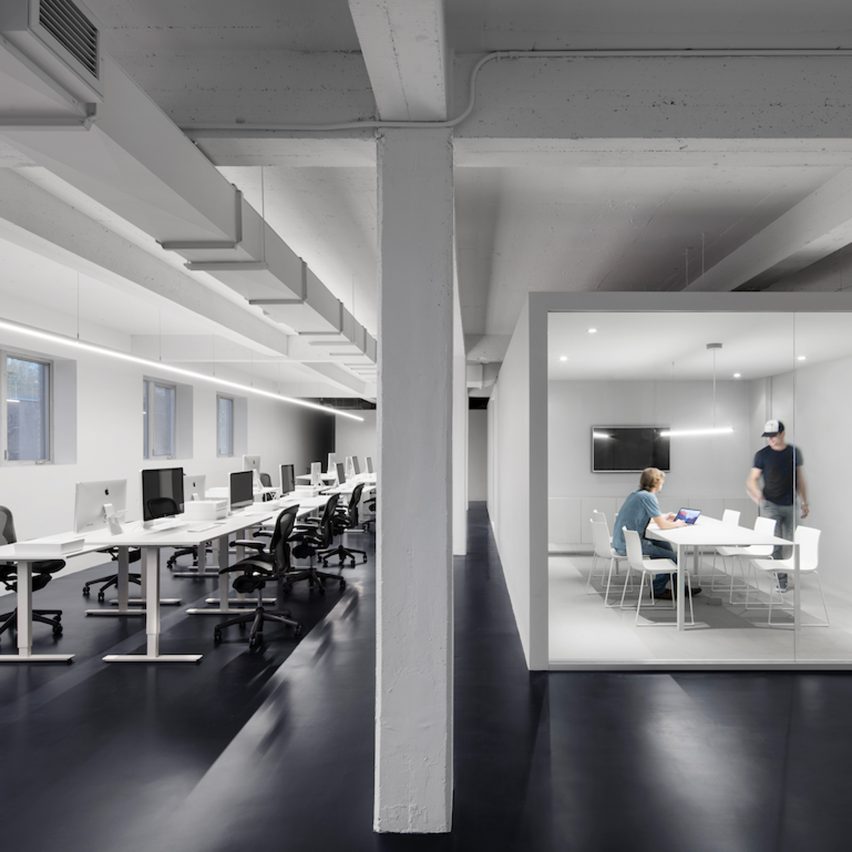
Dynamo’s office by Anne Sophie Goneau

Canadian designer Anne Sophie Goneau has transformed part of an old building into a minimalist workspace for a tech company, featuring a restrained palette of materials and colours. Read more

http://ift.tt/2fy1pgy

Microsoft targets architects and designers with Surface Studio digital drawing board

Microsoft Surface Studio

Tech company Microsoft has unveiled a hinged computer designed to turn a desk into a digital drawing surface. Read more

http://ift.tt/2fWZgrQ

BIG and Heatherwick Studios to design Google’s London headquarters

thomas-heatherwick_bjarke-ingels_dezeen_sq

Bjarke Ingels Group and Thomas Heatherwick have been confirmed as the designers of Google’s new London headquarters at King’s Cross, following rumours of their involvement. Read more

http://ift.tt/2f14X76

Best buildings of 2016 revealed at day one of World Architecture Festival 2016

house-house-mm-oh-lab-world-architecture-festival_dezeen_sqb

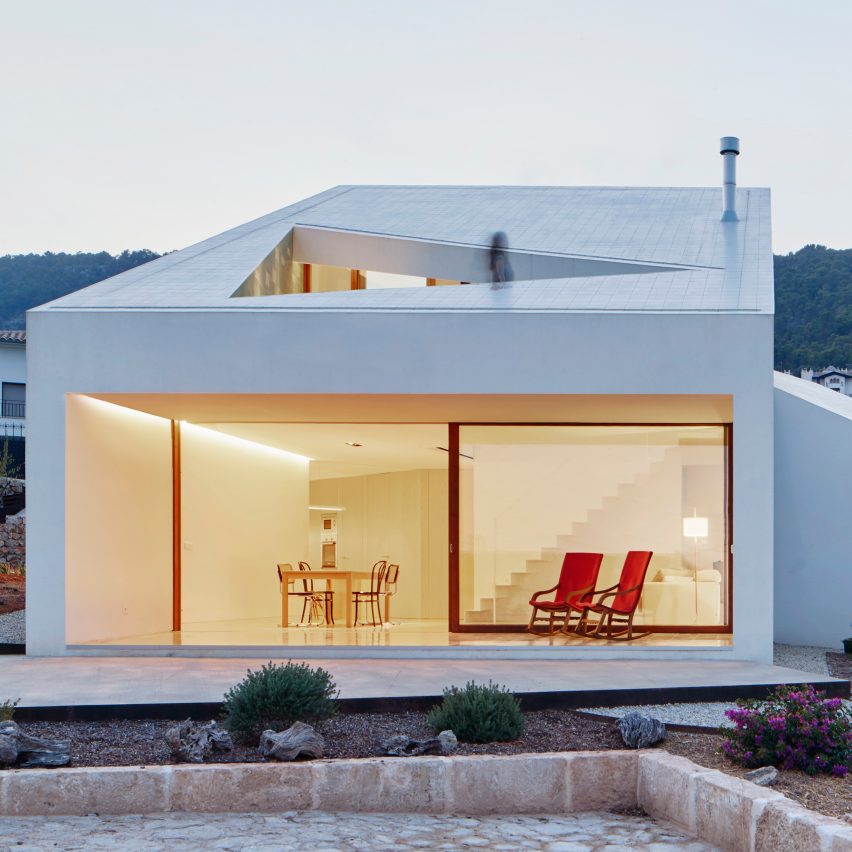
A Mallorca house made up of four white blocks, a Swedish cultural complex and a renovated Turkish library are among today’s category winners at this year’s World Architecture Festival awards. Read more

http://ift.tt/2ghvja1

Hongkun Art Auditorium / penda


© Xia Zhi

© Xia Zhi


© Xia Zhi


© Xia Zhi


© Xia Zhi


© Xia Zhi

  • Architects: penda
  • Location: Beijing,China
  • Design Team: Chris Precht, Dayong Sun, Jing Wang, Li Pengchong, Wen Xu, Bai Xue, Mingxue Sun
  • Area: 270.0 m2
  • Project Year: 2016
  • Photographs: Xia Zhi

© Xia Zhi

© Xia Zhi

From the architect. Penda recently finished a Project for an Art Auditorium on the Southern 3rd Road in Beijing. The venue is located at Xi Da Wang Lu, an upcoming cultural area with Galleries and Museums in its neighbourhood. Next to it Art Auditorium, penda completed the “Hongkun Museum of Fine Arts” in 2013.   


© Xia Zhi

© Xia Zhi

Penda was asked by Residential and Cultural Developer Hongkun to design a meeting space that hosts lectures, readings, small exhibitions and and area for trading artworks. Within this cultural district, there was a desire to connect the public to artists as well to create a direct link to art itself. Visitors enter the Art Space through a monolithic facade that connects its appearance to the neighbouring Museum. From outside, the facade is mirrored in its centre offering identical doors through the solid exterior on the left and right side. 


Model

Model

Model

Model

The topic of a centred and mirrored space continues to the interior. Penda inserted a lively box of arches, mirrors and steps that can host lectures or team meetings, and is used as a grand entrance to guide visitors to the lower floor. Here the space accommodates an exhibition and art-depo area. Walking around the box on the left side, guests will reach a art-selling lounge on the first floor, where paintings and art-pieces are traded and a small bar invites costumers to an informal talk. On the right side of the box, a staircase lead employees to an office space on the second floor.  


© Xia Zhi

© Xia Zhi

The solid centre-cube offers a warm, wooden contrast to its grey concrete-plastered background.  The wooden cube is seen from every space in the building and has round cutouts for visitors to peak into the main lecture space. 


© Xia Zhi

© Xia Zhi

© Xia Zhi

© Xia Zhi

Within the box, visitors immerse into a landscape of wooden arches and circles that are mirrored on each sides and on the ceiling. Inspired by artworks of Dali and Escher, the reflective landscape creates a skewed and distorted reality and connects visitor to art in a direct and interactive way. Rather than looking at an artwork, people can experience the artwork physically to widen their imagination


© Xia Zhi

© Xia Zhi

The use of arches is a signature element in many of penda’s projects. The neighbouring Hongkun Museum of Fine Arts features Arches and Counter-Arches as one inviting entrance-ribbon to guide people into the Gallery. To connect the Gallery and the Auditorium, penda continued this formal expression of arches  and counterarches into the auditorium.


© Xia Zhi

© Xia Zhi

 “Our love for arches as a structural element, but also as a welcoming gesture and symbol of entrance manifested itself in this project. With the reflective walls, the arches transform from a physical to a intangible element and connect with each other to one endless swing. A space that connects reality and imagination.’ 


© Xia Zhi

© Xia Zhi

http://ift.tt/2g0iSNx

Seletar Park Residence / SCDA Architects


© Aaron Pocock

© Aaron Pocock


© Aaron Pocock


© Aaron Pocock


© Aaron Pocock


© Aaron Pocock

  • Architects: SCDA Architects
  • Location: Singapore
  • Architect In Charge: Soo K. Chan
  • Design Team: Malcolm McCulloch, Edward Lau, Lee Kit Hung, Lilian Dirgantoro, Steve Kan, Ivan Soh Chermink, Lois Kok, Janice Kwa, Wahyuni Kurniawati
  • Area: 24440.0 m2
  • Project Year: 2015
  • Photographs: Aaron Pocock
  • Developer: Asplenium Land Pte Ltd
  • Main Contractor: Rich-Link Construction Pte Ltd
  • Structural Engineer: WEB Structures Pte. Ltd.
  • M&E Engineer: Bescon Consulting Engineers Pte Ltd
  • Quantity Surveyor : Rider Levett Bucknall Pte. Ltd.

© Aaron Pocock

© Aaron Pocock

From the architect. A meaningful engagement with nature was the driving thought behind the conceptualization of Seletar Park Residence. Upon arrival at the site, the entrance is lined with mature rain trees, greeting the visitor almost ceremoniously before the space extends onwards to open into a clearing embraced by the surrounding terrain. This theme is recurring and impressed – preserved in the design to create a home that first welcomes and lateroffers experiences with nature. Providing a backdrop of simple elegance, the fine edges and sharp lines of the rectilinear forms break down the massing of the blocks while offering a textured fabric through repetition of frames, sun-shading ledges, façade fins and trellises. Rigorous in its application, this fabric lines the site boundaries, forming a canvas onto which a central landscaped court is strongly expressed.


© Aaron Pocock

© Aaron Pocock

Plan

Plan

© Aaron Pocock

© Aaron Pocock

To create intimacy in the vast court, the ground plane is separated into two, one of which is sunken and leads down into the basement level via a set of landscaped stairs. The main pool is placed on the higher plane, creating a reflecting vista towards the feature clubhouse, which is furnished for the residents’ enjoyment.


© Aaron Pocock

© Aaron Pocock

Section

Section

© Aaron Pocock

© Aaron Pocock

The water element then breaks down into cascading pools in the sunken half, with large planters interspersed to appear as floating landscapes, and culminates in a tranquil reflective pool and shaded court shared with the other communal facilities of the clubhouse. Spatially, each apartment is provided with a balcony or private enclosed space stretching across the entire length of the unit, thus extending the interiors to the outdoors. These intermediate spaces are finished in timber, allowing the palette of natural materials and colours to flow from private to communal spaces. The interaction of the living spaces with the lush gardens and water courts engenders a sensuous engagement with the elements, resulting in a calming, peaceful environment.


© Aaron Pocock

© Aaron Pocock

http://ift.tt/2eHBowm

Walden Dos School / Miguel Montor


© Onnis Luque

© Onnis Luque


© Onnis Luque


© Onnis Luque


© Onnis Luque


© Onnis Luque

  • Architects: Miguel Montor
  • Location: Huixquilucan, Estado de Mexico, 53598 Naucalpan de Juárez, Méx., Mexico
  • Team: Mónica Mateos, Francisco Iván Bustillos
  • Area: 1335.0 m2
  • Project Year: 2016
  • Photographs: Onnis Luque
  • Collaborators: Regina De Hoyos, Paloma Envila, Juan Manuel Armendáriz, Aremi Miranda, Ana Laura Cardoso, Sebastián Bidault.
  • Construction: Lorenzo Farfán Villegas
  • Landsacpe: Taller de paisaje entorno. Tontatiuh Martínez, Hugo Sánchez, Renata Gallegos.
  • Client: Eduardo Hermosillo Fuster

© Onnis Luque

© Onnis Luque

Walden Dos School is located in northwest Mexico City, near the border between Huixquilucan and Naucalpan, in the middle of Interlomas, a highly commercial and constantly growing area; its facilities offer daycare and kindergarten.


© Onnis Luque

© Onnis Luque

Sketch

Sketch

© Onnis Luque

© Onnis Luque

Even though the site provides the project with an incredible commercial potential, it also represents a big challenge, due to specific conditions. It is an urban node, limited by one of the most important avenues of the area on the front and by a river on the back, which makes pedestrian transit almost impossible. Additionally, the surroundings include many vertical-housing buildings that block natural sunlight from the project, at different times of day. These are just some of the determining points that led the way to a proper design for the school.  


© Onnis Luque

© Onnis Luque

The project is based on the renovation, recovery and enlargement of a pre-existing school that needed a new architectural design to fit the new owner’s educational program. This became the perfect opportunity to come up with a fresh design for the site, providing not only a new image, but also a better response to the difficulties of its location.


© Onnis Luque

© Onnis Luque

Children are the main character in this project because they are the ones who inhabit the space. They travel across courtyards, halls, classrooms and gardens, weaving the pre-existing spaces with the new ones. These spaces are constantly flooded with natural light, which allows them to transform throughout the day and become different places every hour. Such spaces are replacing old and dark hallways that are now sunbathed gardens that offer a variety of experiences.                                         


© Onnis Luque

© Onnis Luque

Ground Floor Plan

Ground Floor Plan

© Onnis Luque

© Onnis Luque

By means of multiple perforations made along the building, we provided a sense of orientation, allowing constant visual connection between the inside and the outside, thus giving its users a feeling of safety, which is essential for the proper function of any school.


Sketch

Sketch

Most of the classrooms were designed to have direct connection with the courtyard – gardens, thus enabling outdoor activities during any class as well as keeping in touch with nature.  

Without a doubt, another important element in the design was betting on a palette of low maintenance materials with low environmental impact, which added to the landscape design and defining this project as being more sensitive to it natural context.


© Onnis Luque

© Onnis Luque

The chosen color palette is meant to contribute to the school´s educational model. It is subtle and simple and it lets children relate its colors to the ones they see natural context like wood, stone, water, vegetation and light, replacing the classic bright and pastel colors found in most schools.

We believe that all these intentions define Walden Dos School as an elegant and simple project, committed to improving its student’s lives and their environment. 


© Onnis Luque

© Onnis Luque

http://ift.tt/2fXdQj2

ARoS Art Museum Expansion Project: SHL Architects and James Turrell will Raise an Impressive Semi-Subterranean Dome in Aarhus


Rising Sun. Image Courtesy of Schmidt Hammer Lassen Architects

Rising Sun. Image Courtesy of Schmidt Hammer Lassen Architects

With the aim of creating a new civic experience at a central point in the city of Aarhus, Denmark, the ‘Next Level’ project by Schmidt Hammer Lassen Architects expands the interior capacity of the ARoS Art Museum through a 1,200 square meter subterranean gallery and a huge semi-subterranean dome. The €40 million expansion plan was born from a collaboration with renowned American artist James Turrell, generating a unique experience of color and light.

The horizontal underground space will extend 120 meters below the surface, allowing the visitors to pass through a string of galleries and exhibition spaces before arriving at the Dome. “With its 40 meter diameter, the Dome will form one of the most spectacular spaces ever built into an art museum,” explain the architects.


Aerial. Image Courtesy of Schmidt Hammer Lassen Architects

Aerial. Image Courtesy of Schmidt Hammer Lassen Architects

The ARoS Art Museum has been promoting the union between art and architecture for several years. In 2011, Danish-Icelandic artist Olafur Eliasson created ‘Your Rainbow Panorama‘, an impressive multicolored lookout constructed over the original building that functions as a visual link between the museum roof and the Aarhus skyline.


Arrival. Image Courtesy of Schmidt Hammer Lassen Architects

Arrival. Image Courtesy of Schmidt Hammer Lassen Architects

In 2020, the building will be reintervened by Schmidt Hammer Lassen, its original designers, avoiding the current tendency to build vertically in order to integrate with the natural flows of the city at the pedestrian level, from the river to the square of the Aarhus Music Hall. ‘The Next Level’ will extend from the current main entrance of ARoS to the courtyard of the neighboring square Officerspladsen.


Corridor. Image Courtesy of Schmidt Hammer Lassen Architects

Corridor. Image Courtesy of Schmidt Hammer Lassen Architects

“The Dome will rise nine meters above ground level. Whilst the first two underground galleries are almost completely hidden, only a change in the landscape hints at the larger building hidden under the ramp,” add the architects.


Ganzfeld. Image Courtesy of Schmidt Hammer Lassen Architects

Ganzfeld. Image Courtesy of Schmidt Hammer Lassen Architects

The Next Level project will open to the public in 2020.


Site Plan

Site Plan

Plan

Plan
  • Architects: SHL Architects
  • Location: Aros Allé 2, 8000 Aarhus C, Denmark
  • Cost : 40 million EURO excl. VAT
  • Competition: Direct commission
  • Status: To be completed in 2020
  • Client: Aarhus Municipality ARoS, Aarhus Art Museum
  • Client Consultant: Kuben Management A/S
  • Engineer & Subconsultant: COWI A/S
  • Artist Collaboration: James Turrell (US)
  • Landscape Architect: Schmidt Hammer Lassen Architects
  • Contractor: Per Aarsleff A/S
  • Visualisations: Beauty & The Bit
  • Area: 5000.0 m2
  • Photographs: Courtesy of Schmidt Hammer Lassen Architects, Morten Fauerby Montgomery

http://ift.tt/2fWXqqY