Adaptable Bamboo Geodesic Domes Win the Buckminster Fuller Challenge Student Category 2016


Courtesy of CHHAT

Courtesy of CHHAT

Launched in 2007, The Buckminster Fuller Challenge has quickly gained a reputation for being what Metropolis Magazine once called “Socially-Responsible Design’s Highest Award.” This year, for the first time, a Student Category was reviewed separately from the general applications, however still based upon the same criteria: comprehensiveness, feasibility, replicability, ecological responsibility, and how verifiable and anticipatory the project is. Students from the Centre for Human Habitat and Alternative Technology (CHHAT) claimed the prize with their adaptable and lightweight modular domes, made from natural, local or recycled materials.


Courtesy of CHHAT


Courtesy of CHHAT


Courtesy of CHHAT


Courtesy of CHHAT

CHHAT is a student-led initiative founded at Vadodara Design Academy in Gujarat, India. Participants of their projects span all five years of the academy’s architecture program, as well as academic and professional mentors, led by Professor Nirav Hipara. Co-founder Sapan Hirpara, currently a student at CEPT University in Ahmedabad, India, submitted the program to the challenge in the hopes that their designs for rapidly deployable shelters could help to make inadvertent human habitation more functional and economical.


Courtesy of CHHAT

Courtesy of CHHAT

Currently, the domes are being used to meet immediate needs on the Vadodara Academy Campus, but are envisioned to serve as temporary spaces for rural and agrarian activities, as well as shelters for homeless migrant workers and people living in informal urban areas. Their short construction time also makes them ideal for emergency shelters after natural disasters, such as floods or earthquakes. In addition to this, the bamboo structures can then continue to be used as communal areas in schools, or as exhibition spaces or medical camps.


Courtesy of CHHAT

Courtesy of CHHAT

Steel joints link the bamboo structures, which are then covered in bamboo mats and an insulating Styrofoam layer, and finally covered in a waterproof PVC flex sheet. Spanning the entire perimeter of the dome is a gap nearly the height of a person, providing a well-ventilated environment and open atmosphere. The bamboo skeleton of the larger design can be constructed in about five and a half hours, taking another four hours to be completely covered and ready for habitation. CHHAT has also developed a tent for fewer inhabitants, in addition to the communal dome, that takes only ten minutes to assemble. However, circular canopies remain their focus and expertise, having studied and constructed various dome alternatives over the past six years, culminating in their Fuller Challenge submission.


Courtesy of CHHAT

Courtesy of CHHAT

Courtesy of CHHAT

Courtesy of CHHAT

The locally sourced materials and easy-to-use tools have made it possible for the students to involve regional craftsmen that can contribute to the program, demonstrating how good design can bring communities together and give back to society. Hopefully these advantages of the geodesic domes will allow the temporary structures to succeed in areas where craftsmen may not be readily available, widening the possibilities for anyone lacking some of our most basic human needs: safety, protection and shelter. As Buckminster Fuller put it: “All of humanity now has the option to ‘make it’ successfully and sustainably, by virtue of us having minds, discovering principles and being able to employ these principles to do more with less.”


Courtesy of CHHAT

Courtesy of CHHAT

http://ift.tt/2eUslGD

House A / Igor Petrenko


© Kate Brichkovskaya

© Kate Brichkovskaya


© Kate Brichkovskaya


© Kate Brichkovskaya


© Kate Brichkovskaya


© Kate Brichkovskaya

  • Structural Engineer: Valery Zhukovets

© Kate Brichkovskaya

© Kate Brichkovskaya

House A is located near the border of Minsk.

The main objective was to project a comfortable and functional home for one family. The house had to be designed without unnecessary decoration with the use of “clean” natural and beautifully-aging materials, such as wood, concrete, glass. Later, the owner of the house has formulated the title of this style as “functional minimalism”.


© Kate Brichkovskaya

© Kate Brichkovskaya

The house is a cube, embedded into the hillside. Wall materials are reinforced concrete (the outer walls of the 1st floor) and a brick. Floor slabs are monolithic reinforced concrete. Vertical surfaces between the windows and wooden facades are made of cement-fiber panels with concealed fastening. The main material of the facade finishing is larch saturated with a substance, which protects from ultraviolet radiation, but does not prevent natural aging. This allows the house to appear differently in each of the seasons.


Second Floor Plan

Second Floor Plan

In the western part of the site, from the side of the road, there is a guest parking and entrance to the house. On the ground floor is a garage, hallway, storage room, boiler room, exit the sauna room to an outdoor terrace with a swimming pool, which is adjacent to the house on the east side. On the second floor are two bedrooms, living room and kitchen-dining room. Fireplace in the living room with a bar is designed according to the proportions of the facade of the house. The lower part of the fireplace is a sheet of stainless steel, hovering above the floor.


© Kate Brichkovskaya

© Kate Brichkovskaya

On the east side of the house, a living room and a kitchen-dining room have access to an outdoor terrace with swimming pool and barbecue area. Cover terrace made of larch. The sculpture, which combines the functions of a barbecue and a table, was made of stainless steel with a thickness of 10mm with inserts in teak.


© Kate Brichkovskaya

© Kate Brichkovskaya

On the third floor there are two bedrooms and an open library with living room view. Above the third floor is a terrace with a magnificent view of the surrounding area.


© Kate Brichkovskaya

© Kate Brichkovskaya

Product Description. With Schüco Structural Glazing I wanted to create the effect of a solid glass cube held on all four sides with massive wooden surfaces.


© Kate Brichkovskaya

© Kate Brichkovskaya

http://ift.tt/2eUgetl

Serie Architects Releases RCA Battersea Campus Proposal


Courtesy of Serie Architects

Courtesy of Serie Architects

Serie Architects has released its proposal for the Royal College of Art’s (RCA) campus in Battersea, London. Designed for the campus’ competition—which was won by Herzog & de Meuron—the 15,000-square-meter project would house the schools of architecture, material, and fine art, as well as specialist research centers and entrepreneurial incubators. 

In an effort to create a spatial model that encourages collaboration across academic disciplines, the proposal centers on the idea of stacked planes, or “tables,” each of which defines a particular space, but which is not enclosed. The resulting space, through the overlapping of tables and double- and triple-height ceilings, creates an open and highly visible environment.


Courtesy of Serie Architects


Courtesy of Serie Architects


Courtesy of Serie Architects


Courtesy of Serie Architects


Courtesy of Serie Architects

Courtesy of Serie Architects

Courtesy of Serie Architects

Courtesy of Serie Architects

A single, five-story volume spanning the length of the site contains individual school programs, and research programs are stacked in a ten-story tower. Between these two spaces is a narrow set of spine-like “shelves,” which contain all shared programs like classrooms, faculty rooms, and small workshops.


Courtesy of Serie Architects

Courtesy of Serie Architects

Courtesy of Serie Architects

Courtesy of Serie Architects

All elements of the project are flexible and reconfigurable, allowing for accommodation of future changes in the school. For instance, table structures can be added and removed, and partitions in the shelves can be adjusted.


Courtesy of Serie Architects

Courtesy of Serie Architects

Courtesy of Serie Architects

Courtesy of Serie Architects

The entrance to the campus is marked along Battersea Bridge Road, in order to integrate the campus into the neighborhood and form a center for the wider community.


Courtesy of Serie Architects

Courtesy of Serie Architects

Courtesy of Serie Architects

Courtesy of Serie Architects

[The project] encapsulates the two challenges that were given to us by the RCA, said Christopher Lee, principal at Aerie Architects. Firstly, the challenge to think of an architecture whereby when a student encounters it, she will be inspired by the incredible possibilities and resources that RCA has to offer and secondly the challenge to be inventive in finding an appropriate and yet radical spatial model that will meet the demands of learning, making and researching today and the future.


Courtesy of Serie Architects

Courtesy of Serie Architects

News via Serie Architects

http://ift.tt/2g2UXA4

Angled glazing frames range of views from Ghent house by Steven Vandenborre and Mias Sys

abeel-house-miass-sys-architecture-residential-belgium_dezeen_sq

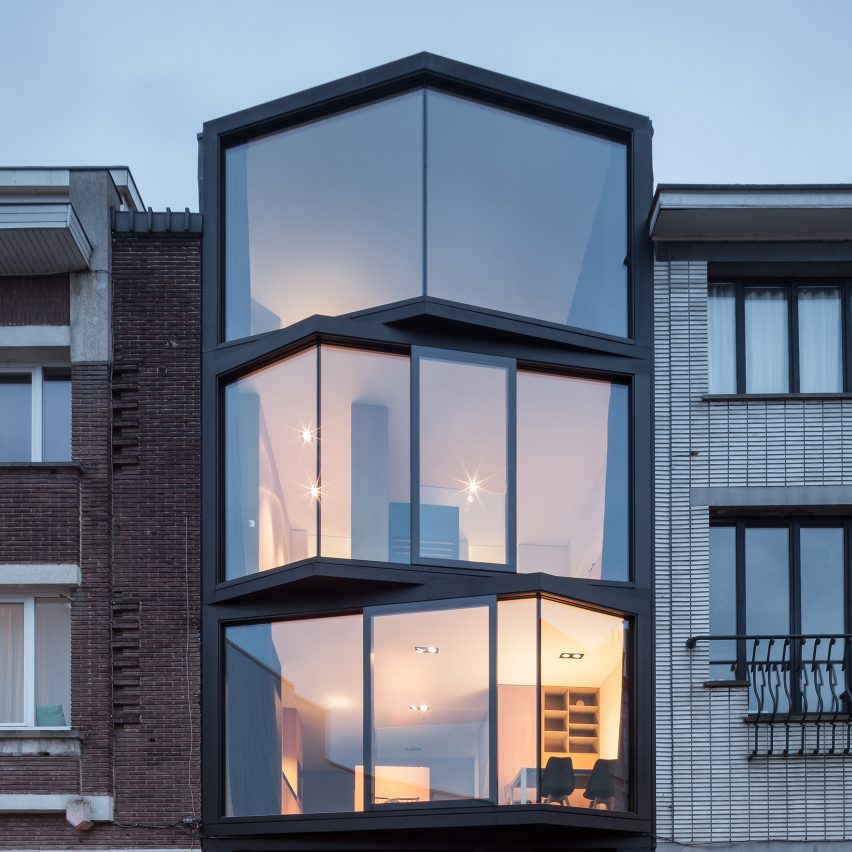
Windows angle out from the front of this family home in Ghent by Belgian architects Steven Vandenborre and Mias Sys, giving multiple perspectives on the street and city below. Read more

http://ift.tt/2g2Su91

Tara Theatre / Aedas


© Philip Vile

© Philip Vile
  • Client: Tara Arts

  • Director: Julian Middleton
  • Main Contractor: HA Marks Ltd
  • Fire Consultant: Trenton Fire Ltd
  • Number Of Seats: 100

© Hélène Binet

© Hélène Binet

Tara Theatre in London, UK, designed by Aedas Arts Team, has won the ‘Project Design of the Year’ award at this year’s London Construction Awards.


Section

Section

Recently reopened, Tara Theatre is the new state-of-the-art home for the acclaimed Tara Arts, the oldest multicultural theatre company in the UK. The new incarnation of Tara Theatre fuses the global and the local, creating an inspirational space for the country’s first cross-cultural theatre to create art from the dialogue between East and West.


© Philip Vile

© Philip Vile

Oriental elements were integrated into the design to pay homage to the history of the theatre being Asian-led and owned – and to express the unique identity of Tara Arts in the English theatre landscape. The motif of the Banyan Tree refers to India’s ‘tree of life’ – and the shade it offers a place to meet as a focus of community life. ‘Tara’s Tree’ wraps around the façade and is pargeted, a traditional English craft, which resonates with Indian decorative techniques. It invites audiences into the theatre to hear and share stories, whilst externally providing a lively and engaging urban marker. 


Plan

Plan

Tara Theatre features a superbly equipped and flexible auditorium with a doubled capacity of 100 seats, a new fully soundproof rehearsal room and other supporting facilities to fulfil the contemporary needs of performances and audiences. The performance space features an adaptable earth floor to offer an original, alternative surface as well as to give a tangible expression of Asian culture in London.


© Philip Vile

© Philip Vile

7,500 original bricks from the demolition were reclaimed and reused in the new auditorium, whilst materials were sourced locally wherever possible. The ‘Tara’s Tree’ on the façade is composed of 96% recycled ash. The internal spaces enjoy plentiful natural light with glare control by colourful window blinds. Unusual for a performance space, the main auditorium can be naturally lit through the high level windows. 


Elevation

Elevation

The Project Design of the Year award celebrates projects that have been designed in such a way to be sympathetic to the environment and surroundings, functional for purpose and innovative in style.


© Philip Vile

© Philip Vile

http://ift.tt/2fJ3W5T

Vattier Design Creates a Contemporary Home in Hsinchu, Taiwan

Erdem Selek’s Corrugated Ruler “soothes eyes” when not in use

Corrugated Ruler by Erdem Selek

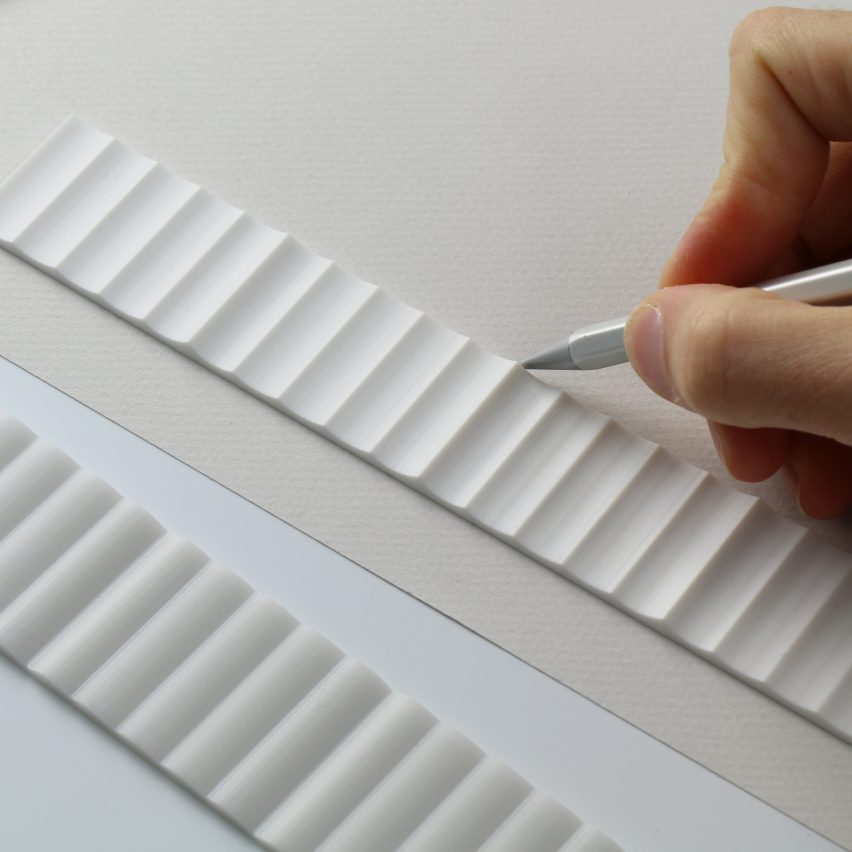
This ridged ruler created by Turkish designer Erdem Selek is made to help “distracting” offices become places of concentration. Read more

http://ift.tt/2fvn1rz

Our latest Pinterest board spotlights the Dezeen Hot List top 10

Arguelles Apartment Refurbishment / Carrascal•Blas


© Guiomar Martín Domínguez

© Guiomar Martín Domínguez


© Guiomar Martín Domínguez


© Guiomar Martín Domínguez


© Guiomar Martín Domínguez


© Guiomar Martín Domínguez

  • Carpenter: MELO OTERO
  • General Contractor : MAGAREST

© Guiomar Martín Domínguez

© Guiomar Martín Domínguez

From the architect. An awkward distribution, typical of speculative architecture in 1950s Madrid, constituted the point of departure in this renovation, as much as an opportunity to re-think domestic inner space. The commission aimed at the thorough transformation of a 95-square-meter apartment in the central district of Argüelles, which was very much conditioned by the dwelling’s unusual depth, i.e. a considerable distance between the entrance and the main, exterior rooms. The design responded by introducing unexpected relationships while valuing uncommon spaces, often deemed residual. Such a strategy results, in the first place, in a careful articulation between the entrance, the kitchen plus office, and the hallway. The latter’s spinal role within the flat made it worthy of a special treatment through geometry, so reflecting the layout’s irregularity, as well as by a play of quivering textures integrated in the continuous panelling of the surrounding walls and lattices, all in lacquered wood.


Sketch

Sketch

Isometric

Isometric

In second place, the renovation seeks to preserve the flat’s identity by the modulation of light, the use of warm tones in wooden overlays and hydraulic tiling, or the restoration of the traditional, hard-wood floors, in a herringbone pattern with edgings.

In the main rooms, the ampleness of the original height is emphasized by lowering the hallway and server spaces, as well as by particularizing the ceilings at different places: entrance (pyramid), office (pitched roof) and dining room (gilded, with a curved moulding). The combination of different textures and tones in wood, along with the variation among stances result in a spatial interplay of surprise and familiarity.


© Guiomar Martín Domínguez

© Guiomar Martín Domínguez

Including demolitions, the work had to be ready in barely three months, so leading to the use of dry solutions for the partition walls and their facing. Speed was thus made compatible with the high quality of detailing and materials in the final result.


© Guiomar Martín Domínguez

© Guiomar Martín Domínguez

http://ift.tt/2etmqKa

Project of the Month: Casino and Hotel Ovalle


Courtesy of Turner Arquitectos

Courtesy of Turner Arquitectos

Geography and climate are two important conditions that determine how people can live in a certain environment. When we add to this the cultural characteristics of a region, what appears, as Carl Sauer would say, is a “cultural landscape,” a result of humankind’s settlement and adaptation to the territory. When architecture adopts a sensitivity to these conditions, and concerns itself with what the environment offers, living conditions take on a quality of lasting comfort.

For October’s Project of the Month we want to highlight the Casino and Hotel Ovalle by Turner Arquitectos, which adopts an aesthetic pertinent to the geography and cultural landscape of its location. ArchDaily en Español spoke with the project’s architects to find out more about their design.

The project’s site seems like a very powerful location. We would like to know more about how you translated the cultural context of the area into the design—what comfort strategies did you use in the face of the extreme climate?


Courtesy of Turner Arquitectos

Courtesy of Turner Arquitectos

Courtesy of Jadue Livingstone

Courtesy of Jadue Livingstone

On the numerous trips that we made during the process of design and construction of the project, from Santiago to the Limarí Valley, we went North via Route 5. On this 400-kilometer journey, you can observe how the landscape of Mediterranean climate in the central zone becomes more and more arid and radical as one moves towards the North. Turning eastwards towards Ovalle, the geographical features are accentuated, forming impressive arid plateaus and gorges, where human beings have sought shelter for centuries.


Courtesy of Turner Arquitectos

Courtesy of Turner Arquitectos

The geographical and cultural context that characterizes the Limarí Valley is so powerful that, however commercial the program included the commission, the design should communicate with its surroundings and form a “settlement”—where its visitors are protected from the arid climate and Northern landscape, but at the same time where they can understand the local culture and topography while inside the building.


Courtesy of Turner Arquitectos

Courtesy of Turner Arquitectos

Courtesy of Turner Arquitectos

Courtesy of Turner Arquitectos

The description of the building in formal terms is simple because it imitates the geographical location of the city of Ovalle and the surrounding villages. Just as water, by means of erosion, once formed the ravines and gullies of the place, we wanted to propose a large regular volume, into which we carved a diagonal gully which the building’s functional spaces open toward. The openings in the outer faces of this volume, on the other hand, are small and precise, thus protecting the inhabitant from the extreme climate.


Courtesy of Jadue Livingstone

Courtesy of Jadue Livingstone

Courtesy of Jadue Livingstone

Courtesy of Jadue Livingstone

Is this proposed hermeticism a response to the programmatic requirements of security and traffic control within the complex? What were the requirements and restrictions regarding the hotel and casino program?


Courtesy of Turner Arquitectos

Courtesy of Turner Arquitectos

A casino by definition needs high standards of security to improve its games, so the volume that housed this program had to be quite closed. To design the hotel, spa and the rest of the enclosures we had complete freedom when proposing orientation, degrees of openness and materials. Despite this we repeated the concept of closedness for the rest of the programs, although to a lesser extent, because we believed it was the best way to guard visitors and make them feel as if they are inside a series of caves carved into the edges of the main ravine.

The way to unify the multiplicity of programs was, on the one hand, to choose common materials for all volumes; the stone, concrete and metal seen are present in all the buildings, in both the facades and the interiors. On the other hand, there is the central ravine that constitutes the main pedestrian walkway and meeting point of the project.


Courtesy of Turner Arquitectos

Courtesy of Turner Arquitectos

Respect for the surrounding material environment seems to be an important part of your formal approach. Could you delve deeper into how the indigenous culture influenced the realization of the envelope and how the building was constructed?

Looking at the palette of colors and materials present in the surroundings, we decided to use the most characteristic ones. The predominant use of low stone walls to delimit plantations, stables and other terrains led us to think of a large stony base from which the different volumes emerged. On the other hand, we wanted to recover the positive side of the aridity and coarseness of the northern landscape, using materials and coatings with thick textures and ocher and gray tones which, used correctly, give warmth to the spaces. That’s why we kept all the concrete visible and textured it using rough wood moldings.


Courtesy of Turner Arquitectos

Courtesy of Turner Arquitectos

We also did some research on the geometric patterns present in the impressive ceramics of the Diaguita indigenous population. We did several facade studies looking for a way of imprinting these patterns on the envelope, trying not to fall into exact reproduction but instead to use these patterns to deconstruct and to disorganize the openings resulting from the hotel rooms, which generally produce motionless, monotonous facades. Therefore, the zigzag shapes of the chosen Diaguita pattern allow the reading of an entire volume, which is not marked externally by walls or slabs.


Courtesy of Turner Arquitectos

Courtesy of Turner Arquitectos

http://ift.tt/2eTxnDe