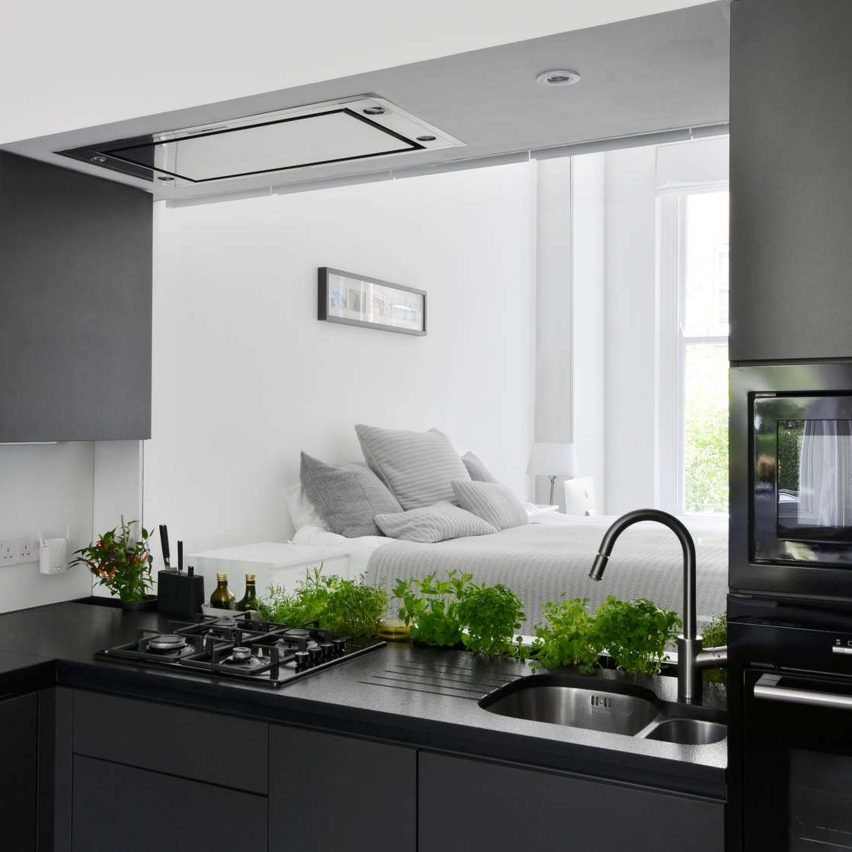
A+Awards: this apartment in London, which won an Architizer A+Award last year, has a large window between its black kitchen and light-toned bedroom. Read more
A+Awards: this apartment in London, which won an Architizer A+Award last year, has a large window between its black kitchen and light-toned bedroom. Read more
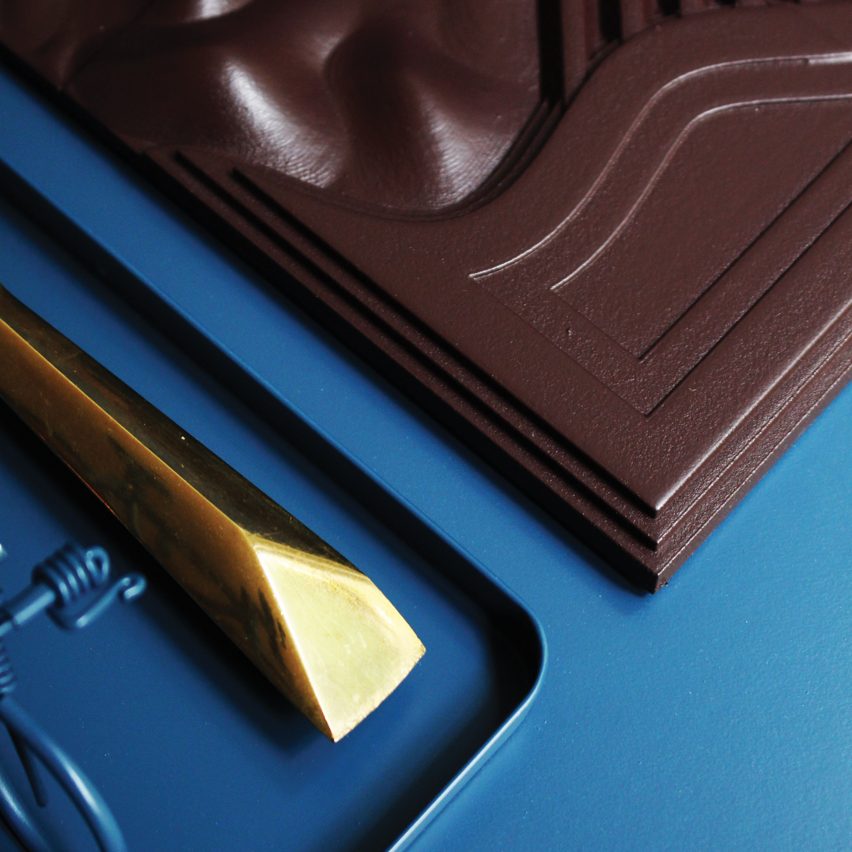
Studio Appétit has designed a range of chocolates for hotel goers to enjoy, including bars engraved with guests’ initials and blocks that could be used to stage a treasure hunt. Read more

Alkiviadis Pyliotil and Evangelos Fokialis have won Second Prize in the European architectural competition for the new Cultural Village of Lemba, in Paphos, Cyprus, which called for spaces dedicated to the production of ideas and art to support the expansion of the village.
Entitled Inherent Simplicity, the proposal centers on spatial arrangements of fundamental architectural archetypes, as well as “the importance of outdoor life, social osmosis, and the vital relationship with nature to the condition necessary to artistic creation.”
As requested by the competition brief, the project utilizes both old and new buildings, creating a spatial dialogue.
“The forms of the proposed buildings display a distinct architectural vocabulary with regard to the existing ones, without any tendency to imitate the stone buildings or be consolidated with them. The tracing follows the natural incisions of the site. The slender building components are ‘touching’ the ground without leveling it. Solving operational needs and building spaces of exceptional quality is achieved with minimal intervention. In this proposal, old and new are conversing by means of an inherent simplicity.”
Generally, the proposal consists of three pieces—a square, a school, and a guesthouse—all of which will be used by the Cyprus College of Art. The main school building consists of three parts: three shear walls of rammed earth, two panels, and two rectangular prisms.
Learn more about the project here.
News via Alkiviadis Pyliotis.

The project was developed for the working floor of Vizor Interactive company – one of the leading international developers of multiplayer games for browser, social networks and mobile platforms with its headquarters in Minsk. The interior was created in collaboration with the guys from Facultative.Works (St. Petersburg), who were responsible for space graphic design and separate interior details.
The interior concept is defined by industrial yet light, cheerful and neatly balanced stylistics keeping up with modern design and architecture trends. It is a place where you will find the openness of loft and minimalism, the nuance application of color and light, as well as graphic compositions inspired by avant-garde design.
Our principal objective was to transform a standard and mundane layout of a typical business center into a creative space for an ingenious development team, a space characterized by comfort and inviting to productive work. Despite using a number of certain patterns, the space features quite a diversity and intrigue with each of the premises showing its own individuality. All this creates vivacious atmosphere and has a favorable effect on the team’s work.
The interior was structured around the central rectangular block housing the kitchen, WC facilities and the server room, which became the main graphic and color focus of the work space. The block is paneled with plywood and tinted MDF of two colors. The ceiling is open and painted white, thus demonstrating the elegance of structures and communication lines. The floor on the entire level as well as the ceiling is made in one technique – it is a self-leveling floor with marble chips filling, which forms an unusual graphic texture. As a result the top and the bottom shape a stylistic entity of space.
The rest can be described as a synthesis of various materials. The prevailing color of walls and partitions is white. Some of the reinforced concrete structures are left untouched. The meeting room is arranged inside a glass box. The game room is fitted with acoustic panels for sound absorption. The work premises are airy, open and well insolated. The ladies’ and men’s rooms differ only in the interior lighting color. The sink cabinets have been designed specifically for this project. Plywood panels and green plants add comfort and coziness to the interior, whereas colorful panels, neon installations and accent details attenuate sternness and austerity. The colors and bright but complex.
We are trying to create something truly valuable for those who appreciate the concept of aesthetics and are ready to experiment.
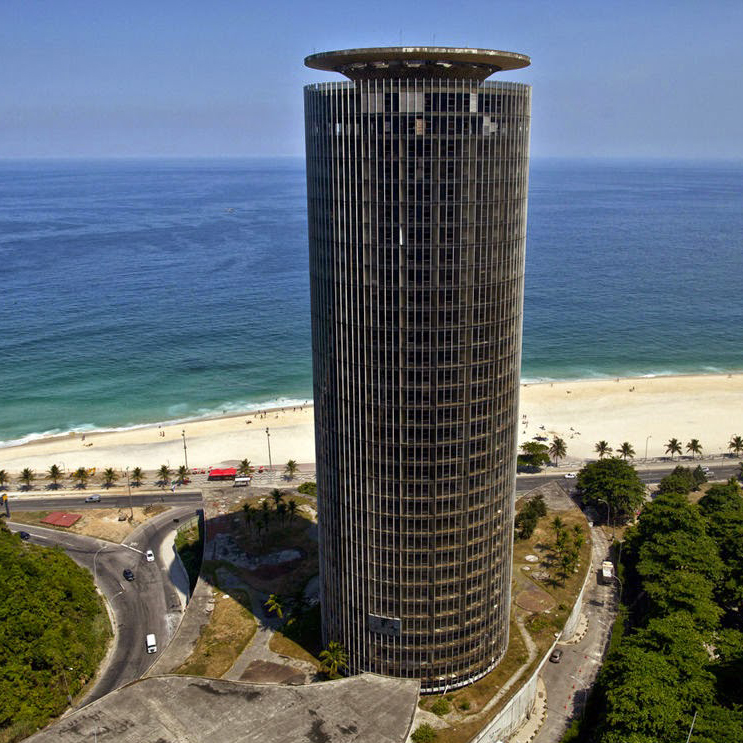
A hotel designed by famed Brazilian modernist Oscar Niemeyer has reopened as a luxury resort in Rio de Janeiro, after being closed for over 20 years. Read more

From the architect. In a modern society in which we all enjoy immediate access to information 24 hours a day, 7 days a week, then what should a library for the 21st century look like and what should it offer to the public? This was the simple question which The Word, National Centre for the Written Word seeks to answer.
It was clear to us that to respond to this challenge would require a reinterpretation of the building typology.
The site for The Word is an extremely prominent gateway to the town centre. It provides a strong link between the Ferry Terminal and South Shields town centre and serves to link the riverside character area with the town centre and historically important market place in South Shields.
The building concept adopts a simple circular form to reinforce the pedestrian link and views between the Harton Quays Riverside Park and market place. The building’s appearance is inspired by the fanning out of the pages of a book, and includes the introduction of two large glass walls providing superb views of the River Tyne and creating a natural place for the building’s entrance, responding to the public realm of the market place.
The central atrium forms the entrance gateway into the building, expressed externally as a modern portico with full height glazing, creating a strong and contextual relationship with the market place, The Old Town Hall and St Hilda’s Church.
The Word provides a rich array of volumes ranging from the grand social forum in the central atrium to the most private and individually concentrated reader spaces at the perimeter of the building. An array of interactive activities are positioned close to the inner circle of the building providing easy and quick access to these attractions. The Word is not a temple for silence, but a place for sharing knowledge, where the young can learn from the old and the old can learn from the young.
The Word’s design is truly transformative in every sense. It not only helps to transform the character of the site and context, but also helps to transform a visitor’s perception of what a library can be and how it can form part of a larger cultural venue of regional and national significance. It recognises the crucial importance of people, books, traditional media and interactive technologies, and the dynamic relationship and complex interactions between them.
The human-centric design approach places the individual at the heart of the building and celebrates the opportunity to inform, delight and interact. Libraries are of vital importance – they allow us to engage with stories. This in turn allows us to see the world through someone else’s eyes, to see their point of view – enabling us to be more understanding, more tolerant and more human, helping to create a more cohesive and inclusive community and society. The design of The Word empowers this strategy by creating a significant and civilised building which points to the future and underlines the importance of the library within our modern society.
Product Description. – The Word – National Centre for the Written builds upon the long tradition of a circular building form to accommodate a library function. There is a fine architectural tradition of the synonymous relationship such as the Bodleian Library in Oxford or Manchester’s Central Library. To achieve the circular building form and to respond to the site’s sensitive context a 140mm wide vertical terracotta baguette was selected as the building’s main external cladding. Three colour tones of terracotta panels were adopted to respond to the colour of the stone used in the construction of the listed buildings which surround the site. The vertical module enabled the circular form of the building to be achieved without the use of curved panels – this combined with a structurally insulated panel (SIPs) helped to create an elegant and economic envelope solution.

From Oscar Niemeyer’s iconic Edifício Copan to Lina Bo Bardi’s influential glass house, Brazil has long been notable for its residential architecture. Part of that success has been driven by the strength of Brazilian interiors, as many of the country’s designers have an astute understanding of and appreciation for materials. Many designs sensitively fuse both rough, raw elements with luxurious details—an approach that is can be cleverly adjusted to suit a wide variety of clients and budgets. Here we showcase ten projects, published on both ArchDaily and ArchDaily Brasil, that respond to the needs of different clients and different ways of living to provide a cross-section of interior architecture in Brazil.
Below are the 10 selected projects.
Maria Carolina / Flavia Torres + Pedro Freire + Sub Estúdio
Apartamento Jardins / Tavares Duayer Arquitetura
Copan Apartment / Felipe Hess & Renata Pedrosa
Apartamento Rua Pirapetinga / Piratininga Arquitetos Associados + JPG.ARQ
GN Apartment / Studio Arthur Casas
Riachuelo Apartment / 0E1 Arquitetos
AM Apartment / SuperLimão Studio
Paulista Apartment / Triptyque

England is often commended for its unique city homes, proudly showing off old historical buildings crammed together with character in the streets of London and boasting old fashioned exteriors that contrast well with the modern makeovers the apartment has received inside. We wouldn’t be doing the country’s residential architectural feats justice, however, if we didn’t also take a look at the breathtaking homes creative designers have built and refurbished in..
The post Ström Architects Design a Family Holiday Home in England appeared first on HomeDSGN.

Designing and building a project is a challenge in itself. However, once the project is complete there are also challenges in expressing the project so that it can be understood by a new audience. This is especially true in digital media, where online readers don’t necessarily spend the same time reading an article as in print media. This way, drawings and all visual representation and it’s new forms -such as the animated Gifs- play an important role in the project’s understanding
At ArchDaily we push ourselves as editors, as well as the architects in our network, to get the best out of the projects we receive and share with the world so that we can deliver knowledge and inspiration to millions of people. The drawings we chose are not only visually entertaining but they serve as a way of educating and learning on particular issues where architectural representation is fundamental.
Regardless if they are digital or hand-drawn, all the architectural drawings we have selected this year have a sensitive expression, whether it be artistic, technical or conceptual, they all aim to express and explain the project using simplicity, detail, textures, 3D and color as main tools.
This year we want to highlight a selection of 90 drawings arranged under eight categories: Architectural Drawings, Axonometrics, Context, Diagrams, Sketches, Animated Gifs, Details and Other Techniques.
The Best Architecture Drawings of 2015
//cdn.embedly.com/widgets/platform.js

 Sig Nordal