I can’t start this evening without a mention to Zaha. When we got the news last week, we just couldn’t believe it. Or maybe we didn’t want to believe it. As Rafael Iglesia, an Argentinian architect who also died too early of a heart attack, last year, said once, “It is always very sad when a person who still has a lot to offer, dies prematurely.” From here we send our condolences to her relatives, friends, and colleagues.
Zaha received the Prize in 2004 acknowledging the fact that her work has been a great contribution to architecture. Her work, as well as the work of the other laureates, many of them in this room tonight, is celebrated by this Prize as the highest level that architecture has been able to achieve. The sum of their work builds an incredible body of knowledge that I as a student only dreamt – and I’m not saying even to produce – only dreamt, from a distant Chile, just to experience in person and not just through the pictures of the very few magazines that made it to that corner of the world. At the time, we studied architecture in Chile, by looking at pictures and photographs. Pritzker Prize winners for us in the mid-eighties were not architects; they were myths. That is why I did not see this Prize coming at all, not for a second.
It was actually a Saturday morning when I got a text message from Martha Thorne [Executive Director of the Pritzker Architecture Prize]. I don’t work on weekends so under normal circumstances I wouldn’t have responded until the coming Monday, but I was finishing a text for the Venice Biennale and I wanted to get rid of it to be able to enjoy the weekend. Martha’s message coincidentally started like this, “Alejandro, hi! I received a message from the Biennale and need your advice on the matter. Are you available for a brief phone call?” I thought, no, what now! Not another problem to solve. I had so many fronts to take care of for the Biennale. I answered, “Okay, let’s talk now.” The phone rang and she said, “Hi Alejandro, I don’t want to take too much of your time, I have three questions about the Biennale.” Okay. “Would you accept to be the 2016 Pritzker Prize Laureate?” For a couple of seconds, if not for an entire minute, I couldn’t understand what that question had to do with the Biennale. My brain was hitting a wall, I couldn’t make sense out of it, trying to understand the connection which there was not. That is how unexpected it was. When I began to process it, I began to cry. The rush of emotion was just too much. Too much life compressed in an instant. For as much as ten minutes we had a non-conversation over the phone. More than speechless, I was thoughtless. My mind was absolutely useless. I could only feel, not think.
The kids were playing around in the living room and saw me crying. “What happened?” they asked. “Nothing, but it’s a good thing,” I said. I went upstairs, my wife was still sleeping, woke her up and said, “Me gané el Pritzker!” And for one hour or so, we looked at each other speechless, thoughtless. And to tell the truth, I still can’t today. But as days have passed, my feelings began to evolve in three different directions: gratitude, when looking backwards; freedom, when looking into the future; and joy, when in the present.
So I thought a lot about the fact that the ceremony is at the United Nations. What a great place to deliver a message about how architecture can contribute to improve the quality of the built environment and by doing so, correct inequalities and improve people’s quality of life. For looking into the future, there will be time tomorrow here at the U.N. too, when in conversation with previous Pritzker Laureates we will debate about the challenges ahead. So today will be about the present and how I got here, it will be about joy and gratitude.
First of all, I would like to thank the Pritzker family for their vision and understanding that an award may be a powerful tool to influence the development of the built environment in the right direction. You have done this not only with generosity, but also and mainly with quality. You have done it just right. And this is a very powerful contribution to improve people’s quality of life.
I would also like to thank the jury, and I want to think of the words of the citation as a brief, as a navigation chart, a path to follow, more than facts about our work. We will keep your words in our minds.
This prize is for a body of work. And the work in architecture is a collective task. To start with, it is not that I wake up in the morning with an irresistible desire to do, let’s say, an office building. In architecture, somebody has to need something and desire something first. Only then can we start working. Architecture takes a lot of time, a lot of effort, a lot of money and energy, so we are very thankful to all the clients that have trusted us with a great amount of resources, private and public, to translate those needs and desires into buildings.
In our particular case, not only is the starting point outside ourselves, but the ending point too. Many of our projects are not finished by us, but by the families themselves. So we are really thankful to those families that have completed and added their resources, ideas, and dreams to the walls and roofs that we have set only as a frame.
Architecture is about a lot of disciplines coming together concurring with the knowledge and expertise to get a building built. I would not know how to do it on my own and yet an architect has to be able to discriminate among which of the approaches is better than the other. Good will and professional flexibility is crucial to negotiate all the forces pulling in opposite directions in a single building. But in addition we architects do not build our projects with our own hands; we rely on the skills of many crafts, but even more, on the physical strength of workers. To all of them that withstand tough work on the construction site, we’re very grateful as well.
In our particular case at ELEMENTAL, projects, ideas, solutions and visions only appear while thinking out loud in-group. It is a team creative process. This is not just a saying or a politically correct statement. It’s a fact. That is why I believe the partners of ELEMENTAL are as much winners as I am of this Prize; so I would like to ask to stand up — Gonzalo Arteaga, Juan Ignacio Cerda, Victor Oddo and Diego Torres. Each of them is brilliant and could have had their own practice, but chose to stay at ELEMENTAL. Thanks for that.
But we went through hard times; choosing to stay was not evident at all. It meant a decision that involved each of your families. So I want to acknowledge the importance of wives and spouses to have supported our work: Andrea, Isa, Ale, and Sole. Finally, to all the people at the office who may be following this on streaming in Chile: Cristian Martinez, Su Yin Chia, Matias Magnelli, Clemence Pybaro, Pedro Hoffmann, Euge Morales, Francesca Moroni, and all the interns at the office, thank you to you all.
Some of our projects require a dedication and a level of innovation that the market and governments are not willing nor prepared to support. It was in 2005 when after a successful first project in Iquique, the Quinta Monroy, we had seven other projects in different stages of development throughout Chile, some under construction, some still fighting to get building permission, when we ran out of money. For a year we had to work for free, because we couldn’t abandon the families halfway in the process. We had very little to show and even less proof that we would succeed. That is why we are so thankful to the Angelini family, Roberto and Maurizio, who trusted us and had the confidence that we would use architecture to produce a public good. That is when ELEMENTAL became a company, to make our contribution to people’s quality of life a sustainable endeavor. Thank you.
Those who had the idea to contact them were Jorge Bunster, Arturo Natho, and Alejandro Hormann, the last two, here in the room and on our board still today. They still contribute with brains and strategies and financial and administrative questions that I still don’t understand, but that might be correct since we have never needed extra money since 2006.
Before becoming a company, ELEMENTAL was an academic initiative. It all started when I was invited to teach at Harvard, and that was Jorge Silvetti’s call. He may have seen something that not even I myself was able to see. At the time I had just one building built and a book written. I actually arrived at Harvard having no idea about what to teach and eventually used my own ignorance and self-embarrassment as an asset. In a country where 60 percent of what is being built used some kind of subsidy, I had no idea what a subsidy was. It was embarrassing.
When you don’t know about something, there are two possibilities: you study or you partner with somebody who knows. I did the latter. At a dinner party in Cambridge I met a transport engineer who was doing his Masters at the Kennedy School of Government: Andres Iacobelli. He was kind of famous because he combined two attributes that are rarely found together – he was brilliant and he was a nice guy. So the conversation started with him saying, “So, seems that Chilean architecture is doing really well, isn’t it?” And I say, “Well, kind of, yes.” “A lot of awards, eh?” “Yes. A lot of international recognition, eh?” “Yes!” And I was kind of growing in pride about an engineer acknowledging an architect. And he said, “But if Chilean architecture is so good, why is social housing so bad?”
That hurt. But immediately afterwards he proposed, why don’t we do something with social housing? In my architect’s mind, “do something” meant a book, a seminar, an exhibition, and in my wildest dreams, a 1:1 full-scale prototype of a unit. In his engineer’s mind, “do something” meant a company that should start building at least 100 units accepting every single constraint of the existing policy – budget, size, time frame – and prove the market wrong within its own set of rules. That is how ELEMENTAL started as a “Do Tank” and not as a “think tank.”
But I learned many more things from him, like think well about people. If somebody is successful, it’s because he or she did something good, not something wrong. This is not even close to being the prevailing attitude. I don’t know if it’s a Chilean thing or an architect’s thing, but suspicion and envy are so much more common. And this is something that until today is at the very core of the spirit of ELEMENTAL. Don’t waste time fighting or even paying attention to the bitter ones; celebrate and learn from the proactive ones.
Talking about learning, I had the fortune of having very good teachers and very good classmates at the Universidad Católica where I studied architecture. I owe a lot to my professor Fernando Perez. He not only taught me how to think carefully and how to respect the accumulated layers of knowledge of architectural history, balancing how to be humble and self-confident at the same time, in front of that knowledge. He also gave me the first opportunity. He bet on me to do my first ever project: the Mathematics School at the Universidad Católica. Given where I come from, I would have never had the possibility to get any kind of commission if it were not for the blind trust of somebody.
In addition to that, I had to survive university. You may not get this here in the U.S., but at the time I studied in Chile, only one out of four students finished. Nobody survives alone. That’s why my classmates became lifetime friends. Claudio, Alfonso, and Charlie – we encouraged each other, night after sleepless night, working on each other’s projects. Back then I knew collaboration in its most pure and disinterested form.
Making it to the university in the mid-80’s in Chile was very hard. If you didn’t go to a private high school, the chances to study at the university were extremely low. And this is where family made a difference. My parents, Carmen and Gaston, both school teachers, worked extremely hard to allow us – my brother Cayo and my sister Loreto and me – to have the opportunity to study. To pay for education did not leave a lot of money for leisure and entertainment. That is how we learned to take pleasure in very simple things. Playing on the street with whatever may explain why we created such a primitive bond with my childhood friend Coné. Over time, we have become an extended family – Sole, Teo Noé, Simon, Elo – thanks for joining.
So after having moved backwards I would like to come back to the present, which is almost entirely taken by my wife and my children. What I have achieved in architecture has allowed me to pay attention to the other dimensions of life. Instead of developing the professional dimension to unheard, unseen levels, I have been trying all this time just to have a balanced life. Xu, Americo, Malu, and Rita. You are my grounding cable; dedicating a lot of time to our everyday life and ordinary activities is a great antidote to prevent one to be too full with oneself. You have introduced the absolute present in my life. Right here, right now. Niños, ustedes me enseñan cada dia a distinguir lo que importa de lo que no importa. Since you were born, to distinguish what matters and what doesn’t matter in life became self-explanatory. Xu, you have been generous and illuminating. If it was not for you, my life would be poorer and less fun. You have forced me to develop. Thanks to my family, I have dedicated less time to architecture and more time to life.
But to come a bit back to architecture, what we architects model is not bricks or stones or steel or wood, but life itself. Architecture is about giving form to the places where people live. It is not more complicated than that but also not simpler than that. And life ranges from very basic needs to very deep desires, from ordinary activities to extraordinary events, from the self to the collective. So I guess that is why we should have a life in the first place; to know the subject we are trying to host, take care of and enhance, is a must.
Sorry for having taken so long but I guess I was trying selfishly to make this marvelous present moment to last. Thank you very much. Gracias.
This one was taken during heavy down pours at Ottawa bluesfest in 2015. Was worth getting my gear all wet to snap this shot of Samuel belting it out in the rain. Their set was cut short, not long after taking this photo.
#TorontoMusicPhotography
I bought the Apple Watch a year ago. I stopped wearing it two months ago, and I’m not sure if I’ll ever wear it again. That’s because it doesn’t really do anything that anyone needs, and even when it does, it doesn’t always work like it’s supposed to.
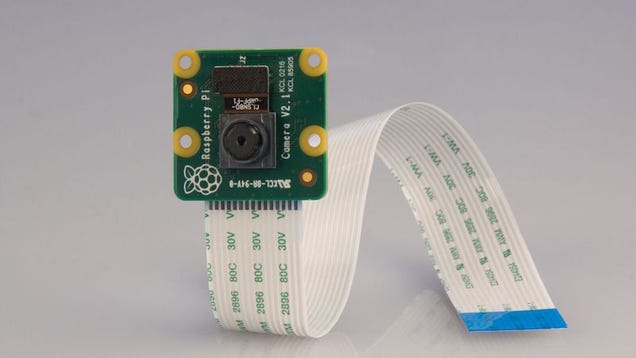
Adding a camera to a Raspberry Pi is as easy as plugging in the official module. The original Raspberry Pi camera module was just a measly 5 megapixel camera. Today, it’s been upgraded to an 8 megapixel camera made by Sony.
Sometimes it seems like higher education has become so ingrained in our culture that it’s simply a platitude to suggest anyone go back to school. That said, only 39.4 percent of Americans between the ages of 25 and 64 hold college degrees, meaning that the benefits of higher education must not be as apparent as we may think. Let’s examine three concrete benefits derived from continuing your education: higher pay, better work and greater happiness.
Continuing Your Education Helps You Earn More Money
Let’s begin with what’s likely the most commonly cited benefit of pursuing higher education: making more money. But exactly how much more money are we talking about? Median wages at our baseline, a high school diploma, are $668 a week, or $34,736 a year. A bachelor’s degree raises those numbers to $1,101 a week, or $57,252 a year – an increase of almost 65 percent. A master’s degree improves things even further, bumping median weekly wages to $1,326 and annual wages to $68,952 – almost 99% percent over our baseline. It takes a high school graduate two days to earn what a master’s degree holder earns in one. Now that’s value!
Continuing Your Education Can Get You a Better Job
Higher wages are a result of better job opportunities, which require greater educational attainment.
Let’s start at the bottom of the equation with unemployment. The unemployment rate at high school graduates is 6.0 percent. That’s nearly double the rate for bachelor’s degree holders, which is 3.5 percent, and more than double for master’s degree holders, which is about 2.8 percent. Without higher education, you’re twice as likely to not have a job, period. Indeed, it’s predicted that by 2018 almost two-thirds of all occupations in the United States will require a college degree.
Beyond winning you a job, higher education can get you more work. Underemployment, or being employed only part time when seeking full time work, is less frequently discussed than unemployment, but it is much more pervasive. Underemployment of high school graduates currently stands at 12.9 percent – more than twice the rate for holders of bachelor’s degrees, at 6.2 percent, and thrice that of master’s degree holders, at 4.2 percent.
Seventy-four percent of American adults believe a postsecondary degree is essential to getting a good job, but what do the people making hiring and promotion decisions think? The same! Companies themselves attest to this, a third of managers surveyed say they have sent workers to back to school for higher education, 81 percent of them even picking up part of the tab. That is a win-win!
Continuing Your Education Can Make You Happier
Now this may be something you haven’t heard before, but higher education may not just be the key to more money and a better job, but to greater happiness. That’s a big statement that the numbers support: When examining well-being levels across American cities, researchers found that happiness has the closest relationship not with wages, unemployment or output, but with educational attainment, measured as the share of the population with a bachelor’s degree or higher. Similarly, educational attainment has been shown to boost happiness early in life and keep it that way, unlike income, which raises over time but does not increase happiness.
More money, a better job, greater happiness — you can have it all, and higher education is the way to start.
Roslyn Tate is an editor on the 2U Inc. website. A recent Goddard College MFA she enjoys helping people achieve their goals through academics and art. 2U partners with leading colleges and universities to offer online master’s degree programs to students around the world.




 Sig Nordal