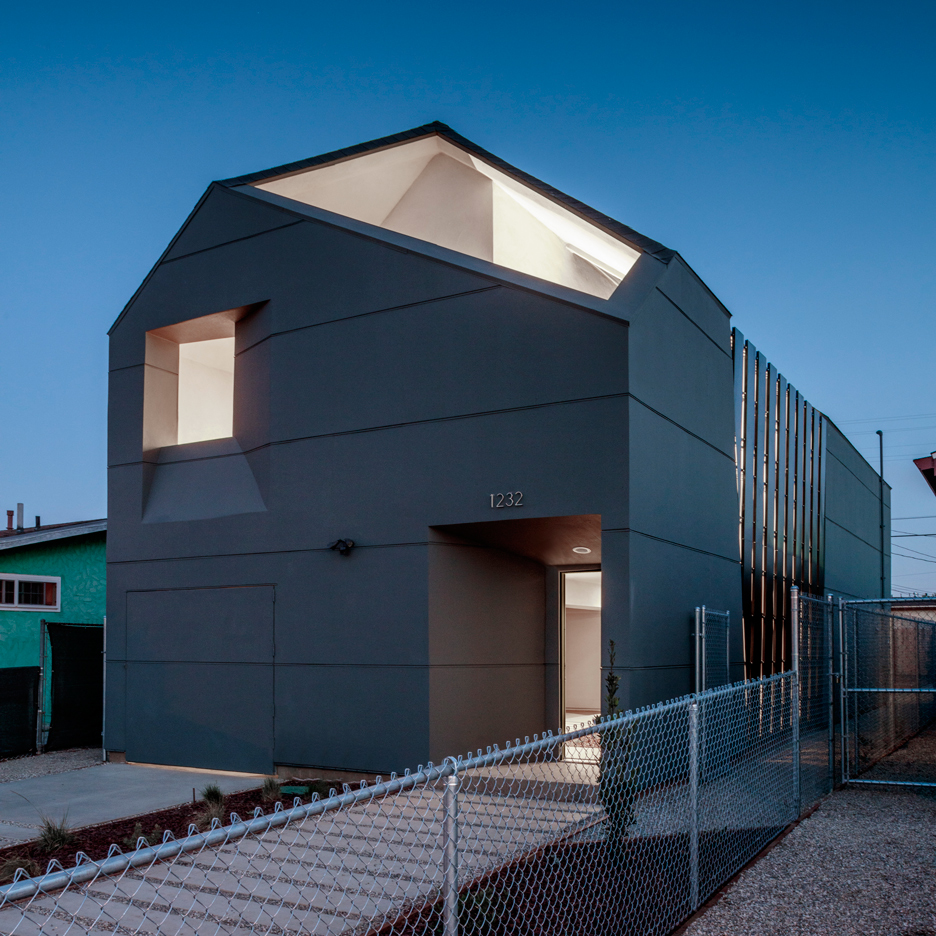
Located close to Sagamihara station, approx. 40 min. from central Tokyo, “TRAYS”, a two-story apartment of 12 residential units stands in suburb residential area mixed with large apartment complexes and detached houses. Being designed within the framework of two-story wooden apartment building in architectural regulations, “TRAYS” materializes a quality comfort of privacy and space in living by introducing the concept of “TRAY”, a residential unit complete with dwelling unit, balcony, and porch as a detached house. “TRAY”s are stacked on top and aligned to form an apartment building.
“TRAYS” is built on maximum building coverage ratio as well as setback-line limit, utilizing the maximum volume allowed within the building condition of the premises. Porch, sandwiched between walls with arch shape opening, is a space in front of the door where tenants can put their bikes which also serves as corridor in continuation with “TRAY”s.
Diagram
Tenants need to go through the porches of other tenants to go outside the apartment, leaving ambiguity of the privacy of porch. With the limited number of tenants, 6 in each floor, we considered sharing porches is within the acceptable range. Glass wall facing the porch gives visible access to and from the interior, which can be adjusted with blinds.
Interior of “TRAY” is finished in white, partitioned by grey wall to segment porch, dwelling unit, and balcony. All residential units have lofts and high ceiling, making the maximum height of the two-story apartment almost 10 m. In proportion to the height of the apartment, outer walls of “TRAY”s are also high to secure the privacy from outside while diagonally cut walls in the balcony and porch allow intake of light and wind, defining unique form of the building.
As two-way evacuation route is not required by Building Standards Act, there is no evacuation route between the balconies, which contributes to the privacy of the balconies. The only openings in the balcony are glass wall, doors and window to the dwelling unit, and the balcony can be utilized as part of the dwelling unit.
The building condition of the premises allows three-story reinforced concrete apartment building, however two-story wooden apartment was chosen in consideration of rent balance. Being categorized as two-story wooden apartment with loft in building regulation, this apartment was designed as quasi-maisonette with better access to loft space which is spacious and habitable.
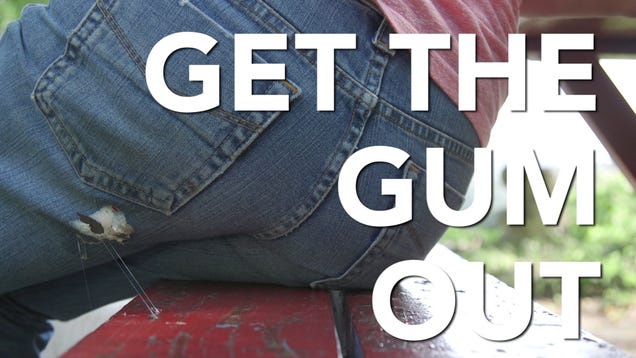
If you accidentally sit on some gum, there’s still hope for your favorite jeans. With a little Bengay and a sandwich bag, you can break down the gum’s stickiness and pick it right off.
What is the difference between people who have achieved great success, and those of us who have not? Off the top of your head you might think intelligence, education, the benefits of possibly coming from a rich family, and hard work. What you may not know is that many successful people do have the same traits, but many of them are actually quite weird.
They Don’t Always Finish School
Many successful people including entrepreneur and billionaire Richard Branson and boxing legend turned spokesperson George Foreman both left school to pursue their careers. In many cases, successful people are quite brilliant at what they do, but they don’t always function well when they are asked to sit in a classroom. Others, are so determined to pursue their dreams as early as possible that they view school as a hindrance. It is important to note that most successful people do place a lot of value on learning, even if it is not in a formal setting.
They Struggle With Substance Abuse
It’s a sad truth that many successful athletes, entertainers, and businesspeople struggle with drug and alcohol addiction. There are believed to be a few reasons for this. Some use alcohol and drugs to cope with the stress that comes with great success. Others may have a natural inclination to seek a lot of stimulation and excitement. Some get a natural high by participating in adventure travel or sports. Sadly, others turn to substance abuse.
They Are Musical or Athletic
Successful people are passionate, dedicated, and hardworking. These are exactly the traits that are needed to become a successful athlete or an accomplished musician. Many successful entertainers were impressive athletes (some still are), and many have been known to dabble in music. Condoleezza Rice, for example is a classically trained pianist while actor Kevin Bacon has played in a blues rock band for decades. Actor Terry Crews played for several seasons in the NFL as did Mark Harmon.
They Give up Quickly
Successful people might not be quitters when it comes to pursuing their dreams, but they are quick to give up on an approach that they know isn’t working. Instead of doing the same thing over and over again, successful people learn a valuable lesson, figure out what did work for them, and then they move on with a new plan. In addition to this, many successful people also give up when they realize that something is not in their area of talent. The ability to delegate and get help – a common attribute of successful people is something that even the newest job seeker can emulate.
They Think About The Big Picture
Before a successful person makes any decision, they step back and take a look at the big picture. In some cases this means passing up on an opportunity with immediate benefits in order to gain bigger and better things in the long run. Former President Johnson made the decision to pass up on a chance to get involved with the oil industry. He believed that it would be a hindrance on his political career.
They Wear The Same Thing Everyday
Go to Google and do an image search on Mark Zuckerberg. What you will notice is that he wears the same thing all of the time. The same can be said of the late Steve Jobs. Many other well-known successful people also follow suit. What’s the deal? Think of it as priority of thought. The idea is that the fewer choices you have to make, the more likely you are to make good choices when it comes to the important things. Because of this, many successful people take the choice out of their wardrobe and simply wear the same or similar things each day.
—–
Elaina Meiser is a graduate student and an enthusiastic blogger at ResumesCentre. Elaina loves creative arts, different tips & tricks guides, excursion and backpacking trips. You can follow her on Twitter @ElainaMeiser.
Courtesy of The Council on Tall Buildings and Urban Habitat
The Council on Tall Building and Urban Habitat have announced the winners of the 15th edition of the CTBUH Tall Building Awards. From over 100 submissions, the best buildings from four regions – the Americas, Asia & Australasia, Europe and Middle East & Africa – were selected, along with recipients of the Urban Habitat Award, the Innovation Award, the Performance Award and the 10 Year Award. The CTBUH will pick a global winner from the regional selections later this year.
The towers were chosen by a panel of architects from world-renowned firms and were judged on every aspect of performance, looking in particular for “those that have the greatest positive impact on the individuals who use these buildings and the cities they inhabit.”
“VIA 57 West is an inspired hybrid of the traditional courtyard block and high-rise tower. Its complex and intelligently orientated architecture maximizes occupants’ views to the Hudson River and activates the New York City waterfront with a dynamic new standard for integrated urban infill development.” – Juror Michael Palladino, Design Partner, Richard Meier & Partners Architects
“Shanghai Tower shows the greatest commitment to communal space in a tall building since Commerzbank Tower completed in 1997. It contains the world’s first truly ‘inhabitable’ double-skin façade on a skyscraper, which is not only remarkable for its intended greenery, but its incorporation into the tower’s overall ventilation strategy. The sacrifice of valuable floor area to realize this social amenity proves that the aspirations for Shanghai Tower went far beyond mere commercial gain.” – Juror Antony Wood, Executive Director, CTBUH
Yiorgis Yerolymbos, courtesy of Nice Day Developments. ImageThe White Walls / Ateliers Jean Nouvel
“The White Walls is a truly groundbreaking exercise in materiality, serving as a successful expression of the architectural and environmental values of the Mediterranean across the vertical axis. Extensive vegetation on the north façade and the presence of loggias on the south façade create a very real connection with nature, while the tower’s punctured concrete walls quite literally ‘bleed green’ with tangles of local plant species.” – Juror Karl Fender, Director, Fender Katsalidis Architects
“The Cube indicates a clear alternative to the extruded box typology that defines the majority of residential high-rises around the world, instead comprising a stack of completely unique villas in the sky. The tower is particularly successful in its structural design, which features a system of elegantly framed girder walls that add visual flair and allow for completely unobstructed floor plans.” – Juror Hashimah Hashim, Executive Director, KLCC Property Holdings Berhad
“The Wuhan Tiandi Mixed-Use Development demonstrates that a master plan for a tall building neighborhood can include vibrant public spaces that offer a high level of intimacy, walkability, and social design. The disposition of tall buildings combined with an animated public realm creates a vibrancy that is rarely found in newly created communities. The Wuhan Tiandi complex offers a high quality of life for those that live, work, and visit – a quality of life that rivals long established tall building neighborhoods found elsewhere in the world.” – Juror James Parakh, Urban Design Manager, City Planning Department of Toronto
“Walking along the base of Hearst Tower, you might not even realize that you are right next to one of New York’s greatest architectural achievements of the 2000s. Built directly on top of a 1920s office relic, the tower made the world reexamine what’s possible in terms of preserving historic low-rise buildings in a dense downtown core. There’s also something cathartic about the juxtaposition between its classically reserved base and contemporary diagrid structure above.” – CTBUH Trustee Timothy Johnson, Design Partner, NBBJ
“It is rare to see a commitment to upgrade an existing building to this level of environmental performance. The extensive documentation of its energy upgrades and sustainability initiatives speaks for itself; TAIPEI 101 has been the subject of a tireless and exhaustive effort to become one of the most sustainable tall buildings in the world, and it has been successful in this mission. In addition to a comprehensive set of green technologies and systems installed throughout the building, a rigorous occupant engagement program really puts this project in a league of its own.” – Technical Juror Bill Browning, Co-Founder, Terrapin Bright Green
“The Pin-Fuse system opens the door to realizing increased resilience in buildings constructed in highly active seismic regions. By providing just the right amount of give under pre-determined axial loads, the system is innovative for its tested impact on repair frequency, costs, and structural longevity for buildings that have experienced an earthquake.” – Technical Jury Chair SawTeen See, Managing Partner, Leslie E. Robertson Associates
For more information on the 2016 CTBUH Awards, visit their website here.
Anker’s brand new PowerCore 10000 is part of your favorite line of USB battery packs, and you can pick one up on Amazon today for just $22, which is $8 less than usual, and an all-time low. Not to be confused with the older PowerCore 10000, this model includes Quick Charge 3.0 (backwards compatible with 2.0), which should feed power into your compatible phone like a firehose.






 Sig Nordal