Skewers and kebabs are easy to make, and assembling them isn’t hard, but anyone who’s poked themselves on a skewer knows it can still suck. Luckily, all you need to speed up the process (and make it safer) is an onion—one you may be using anyway.
Skewers and kebabs are easy to make, and assembling them isn’t hard, but anyone who’s poked themselves on a skewer knows it can still suck. Luckily, all you need to speed up the process (and make it safer) is an onion—one you may be using anyway.

I’ll be honest, when it comes to brownies, I tend to favor the box mixes, mainly because I haven’t found a homemade recipe that gives you that gorgeous, crackly, shiny crust. King Arthur Flour has cracked the shiny code however, and the secret is chocolate chips.
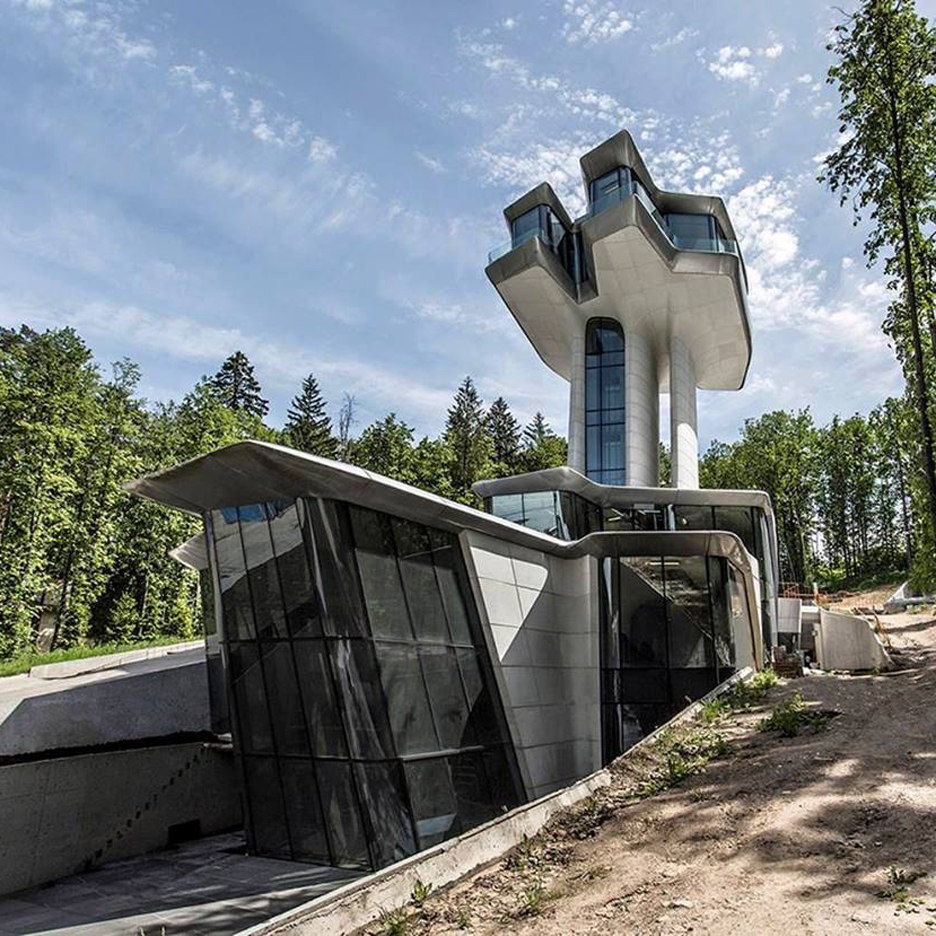
Zaha Hadid 1950-2016: Norman Foster reflects on Zaha Hadid‘s Capital Hill Residence in the first of a series of interviews with top architects, which Dezeen and Architizer filmed for our video tribute to Hadid last month (+ movie). (more…)

via 500px http://ift.tt/1UAHMAK

via 500px http://ift.tt/1t6e3Y5

via 500px http://ift.tt/1PqZaZZ

A few hours later and after a bit a rock scramble we were on location and ready to shoot our sunset over one very big block of blue ice – Grey Glacier.
via 500px http://ift.tt/20XdRor

ArchDaily is continuing our partnership with The Architectural Review, bringing you short introductions to the themes of the magazine’s monthly editions. In this introduction to the May 2016 issue on Indian architecture, Editor Christine Murray highlights just some of the challenges facing the world’s second most populous country, arguing for a more respected architecture profession that will be well-equipped to solve those problems.
When I think of Indian architecture, visions of Chandigarh dance in my head. India has long been a country in which to build out dreams. But with a legacy of outsourcing design to the West, for too long it has been subject to the long-arm imposition of utopian ideas.
From Lutyens to Le Corbusier, rarely have these idealistic foreign interventions made adequate provision for the nation’s rapid urbanization and vast numbers of urban poor.
The masterplan for Delhi as a new capital city, inspired by England’s garden city movement and led by New York architect and planner Albert Mayer, was supposed to be free of slums and poverty – in fact half of the 18 million residents now live in informal settlements.
India’s incredible growth story over the past twenty years sees it vying with China to be the fastest growing major economy in the world. Proof that economic growth does not ensure prosperity for all: just 40 per cent of the country’s population has access to sanitation facilities, including pit latrines. The government of India has failed to invest in infrastructure and social housing, leaving private developers to do its work, and badly. The cities are choked, sprawling, besmirched with freshly grown orchards of mediocre constructions.
But amid the rampant building, the impulse to import architectural styles has persisted to detrimental effect. In this edition, Mumbai architect Sanjay Puri voices his outrage at cities falling victim to an international blandness that is undermining the diverse sense of place and sustainability. This impulse is not only harming the architectural fabric, but the profession itself. With 423 architecture schools, as A Srivathsan points out, the local profession is a thriving, globally networked community, but opportunities to create good buildings are not as lucrative and plentiful as they should be.
A further aggravating factor is the second-class treatment of local architects compared with international firms in India. The Guardian recently reported on revelations that international staff in the humanitarian and development sectors are paid nine times more than their Indian colleagues for the same job in the same office. The study went on to describe the effect socio-economic lines so fiercely drawn can have. It has been suggested by Srivathsan that this vast disparity in pay may also be true in architecture. I must echo Srivathsan’s call for fairer relations – India has more to offer than call centers and back-of-house.
From a London vantage point, our idea of an Indian architecture is permeated with the Modernist language of Kahn and company. But the complex architectural roots of the projects featured in this edition are more nuanced and varied. At times there is the lingering specter of the International Style, but more often there is a break with this dubious lineage in favor of regional traditions blended with a fresh outlook.
In this time of rapid growth and urban poverty, local talent must be fostered and nourished with commissions, and empowered to develop solutions to the many pressing issues, not least housing and infrastructure. To create longevity and a thriving culture beyond the boom, the government must invest in its cities – and its architects too.

via 500px http://ift.tt/1sSaVOO