Ingenhoven Architects’ Marina One Tops Out in Singapore


© Doug and Wolf V5. Courtesy of Ingenhoven

© Doug and Wolf V5. Courtesy of Ingenhoven

Ingenhoven Architects have released images of Marina One, a high-density mixed-use complex for the new Marina Bay Financial District in downtown Singapore. The plan consists of two office towers, two residential towers and a retail podium set between two large urban parks. The project’s centerpiece is the “Green Heart,” which upon completion will become the largest public plaza in the central business district. Construction has currently topped out, with an expected completion date falling sometime in 2017.


Courtesy of Ingenhoven Architects


© Doug and Wolf V5. Courtesy of Ingenhoven


© M + S Pte Ltd. Courtesy of Ingenhoven


© Alexander Schmitz. Courtesy of Ingenhoven


© Alexander Schmitz. Courtesy of Ingenhoven

© Alexander Schmitz. Courtesy of Ingenhoven

The design of Marina One is green in both the literal and figurative sense of the word. The inner faces of the four towers feature vertical plantings centered around a multi-level biodiversity garden. To maximize airflow and create a comfortable microclimate, the buildings have been designed with strategically placed openings and are shaped to capture air currents.

The two 30-story office towers meet LEED Platinum criteria and as well as the local designation of “Green Mark Platinum,” and feature sky gardens and two floors of high-density occupancy, which will be the largest “Grade-A” office floors in Singapore.


© M + S Pte Ltd. Courtesy of Ingenhoven

© M + S Pte Ltd. Courtesy of Ingenhoven

The other two 34-story towers house 1,042 luxury residences ranging in size from one to four bedroom units and penthouses. The residence towers are penetrated by air wells and slots, allowing all units to receive natural ventilation, increasing building efficiency. The facade consists of an external sun-shading system and high-performance glazing to reduce solar gain into the building, and PV panels will provide energy from the sun.

Additional spaces in the complex include a variety of restaurants and cafes, a fitness club, a food court, a supermarket and several event spaces. These venues are accessed through a series of open public terraces. Direct connection to the MRT line and bus routes will allow the complex to become a new public destination for the city.


Courtesy of Ingenhoven Architects

Courtesy of Ingenhoven Architects
  • Architects: Ingenhoven Architects
  • Location: Marina Bay Financial Centre, Singapore
  • Design Team: Christoph Ingenhoven, Martin Reuter, Christian Kawe, Olaf Kluge, Jae Man Bae, Arzu Bastug, Mario Böttger, Mehmet Congara, Darko Cvetuljski, Justyna Fleszar, Matthias Hemmrich, Gerald Huber, Ben Hughes, Ingo Jannek, Raphael Keane, Melik Kekec, Moritz Krogmann, Rosario Ligori, Stephan Lücke, Haitao Ma, Javier Martinez Martin, Christian Monning, Kenzo Nakakoji, Gillian Neumann, Danny Piwko, Peter Pistorius, Michael Rathgeb, Michael Reiß, Viviane Rosenbaum, Ulrike Schmälter, Markus Stöcklein, Zakiah Supahat, Jun Teraoka, Matthias Thoma, Thomas Weber, Jan Wesseling, Jhon Jairo Zamudio, Bibiana Zapf, Ivona Zelic
  • Client: M+S Pte Ltd. Singapore, a company owned by Khazanah and Temasek
  • Project Management: UEM Sunrise Berhad, Malaysia; Mapletree Investments Pte Ltd., Singapore
  • Project Architect: Architects 61, Singapore
  • Main Contractor: Joint venture company owned 60:40 by Hyundai Engineering & Construction and GS Engineering & Construction
  • Structural & Me: BECA Carter Hollings & Ferner, Singapore
  • Quantity Surveyor: Langdon & Seah, Singapore
  • Residential Interior Designer: Axis ID, Singapore
  • Facade Consultant: Arup, Singapore
  • Lighting Consultant: Arup, Singapore
  • Piling Contractor: Sambo E & C, Singapore
  • Landscape Architecture: Gustafson Porter LLP, London
  • Area: 341000.0 sqm
  • Project Year: 2017
  • Photographs: Doug and Wolf V5. Courtesy of Ingenhoven, Courtesy of Ingenhoven Architects, M + S Pte Ltd. Courtesy of Ingenhoven, Alexander Schmitz. Courtesy of Ingenhoven

http://ift.tt/29CjObn

Orange Lighthouse – Breiðafjörður – Iceland by Nonac_eos…

Orange Lighthouse – Breiðafjörður – Iceland by Nonac_eos Breiðafjörður is a large shallow bay, about 50 km wide and 125 km long and located in the west of Iceland. It separates the region of the Westfjords (Vestfirðir) from the rest of the country. Breiðafjörður is encircled by mountains, including glacier Snæfellsjökull the Snæfellsnes peninsula on the south side and the West Fjord peninsula to the north.

You may want to press “L” to see it large on black. http://flic.kr/p/aubp2U

http://ift.tt/29E8UyT

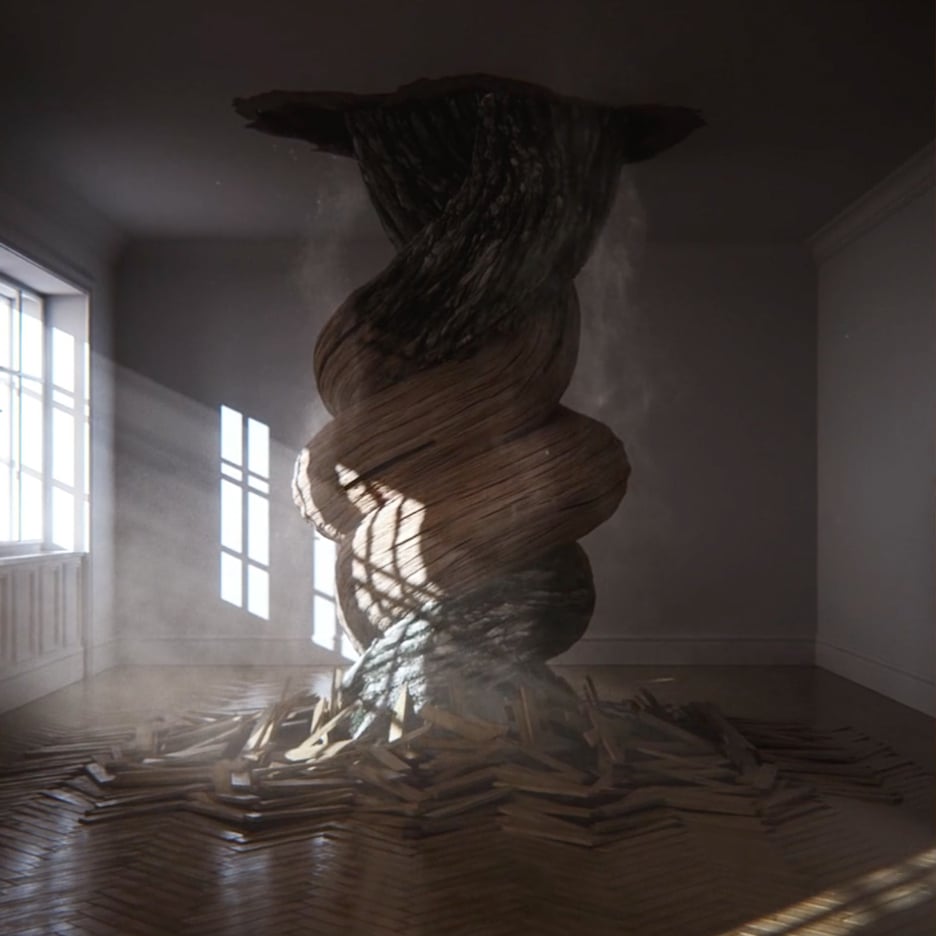
Ikea and Hay tease 2017 collaborative collection with abstract movie


Swedish furniture giant Ikea and Danish design brand Hay have released a short teaser film that shows the materials to be used in their upcoming collaborative furniture and homeware range (+ movie). (more…)

http://ift.tt/29wtt13

House in Mexico / Peter Pichler Architecture


© Oscar Hernandez

© Oscar Hernandez


© Oscar Hernandez


© Oscar Hernandez


© Oscar Hernandez


© Oscar Hernandez


© Oscar Hernandez

© Oscar Hernandez

The project is located in Jalisco, Mexico on the West Coast of the Pacific Ocean. It embraces a full conversion of an existing house of the 1960s.


© Oscar Hernandez

© Oscar Hernandez

The site of the house is on a silent road close to the beach on a rectangular plot, surrounded by small and typical 2 storey houses. A little garden at the entrance of the house on the west side creates an open space that can be used for parking as well.


Plan

Plan

Plan

Plan

The volume of the two-storey building is cut by three atria in order to let in natural light and a double height ceiling at the entrance of the building. The first floor is mainly for a living and kitchen area as well as guest rooms and two bathrooms. The upper floor has two bedrooms as well as two bathrooms and a big terrace facing the seaside. A balcony from the master bedroom faces a small courtyard. 


© Oscar Hernandez

© Oscar Hernandez

The big facade openings on the west side with sliding doors offer maximum daylight and can be closed with white aluminium shutters for sun shading and to protect against trespassing. 

Interiors are made by wood elements and raw concrete, that is used for the floors and even for furniture pieces like the bed or the sinks in the bathroom. 


© Oscar Hernandez

© Oscar Hernandez

The entire front facade of the building (and some parts of the courtyard) is covered by custom handmade tiles that are inspired by a traditional Mexican pattern. The use of the tiles within the project should reflect a vernacular tradition that is expressed through contemporary design.


© Oscar Hernandez

© Oscar Hernandez

http://ift.tt/29AjEhn

This is what happens to the bodies of competitive eatersIt’s not…

Watch as James Corner Field Operation’s “Icebergs” Comes Together at the National Building Museum

Building on the popularity of Snarkitecture’s popular BEACH last year and BIG’s massive Labyrinth in 2014, the National Building Museum‘s 2016 Summer Block Party installation has returned this year with “ICEBERGS,” designed by James Corner Field Operations. ICEBERGS is an interactive underwater environment of glacial ice spanning the museum’s Great Hall, and invites in the public to escape the hot Washington D.C. summer by exploring climbable bergs, ice chutes, caves, grottos and more.

Take a look at this time lapse video to see how the project came together.

Video courtesy of Work Zone Cam.

http://ift.tt/29V77V6

Dead Space and Ruins exhibition questions the future of Soviet architecture


The decaying architecture of the Soviet Union is the subject of an exhibition that opened this week at the Calvert 22 Foundation in London (+ slideshow). (more…)

http://ift.tt/29sBmUG

Urban Cabin / Suyama Peterson Deguchi


© Michael Burns

© Michael Burns


© Michael Burns


© Michael Burns


© Michael Burns


© Michael Burns

  • Project Team: Jeff King, Sarah MacDonald, Aya Sakurai
  • Interiors: George Suyama FAIA, Heidi Epstein
  • Landscape Architect: George Rudko, R. David Adams Associates
  • General Contractor : ESMB
  • Structural Engineer: Swenson Say Faget
  • Site Area: 29,090 sf

© Michael Burns

© Michael Burns

Urban Cabin was designed for a retired couple interested in downsizing and simplifying their lives. The couple lived on the site for 26 years, creating and nurturing their private yet urban sanctuary. The challenge was to design an appropriate response to the ideals of living with less in a neighborhood which is prone to excess. Conceptually, the design was inspired by a picnic shelter in a forest. The ideas of a primitive picnic shelter gave direction to both the building’s form and minimal program requirements. All program elements were reduced of excesses and distilled down to the elemental.


© Michael Burns

© Michael Burns

Plan

Plan

© Michael Burns

© Michael Burns

The house is composed of a simple sheltering roof, supported on the east by a solid wall, which protects the inhabitants from a busy public park. Informed by the topography, the house was slightly recessed into the landscape, engaging a visual connection to the site.


© Michael Burns

© Michael Burns

The remaining west-facing elevations are composed of windows and doors which embrace the surrounding garden and ponds. The deep overhangs at the ends of the long roof create an extension of space beyond the glass enclosure. Terraces are tucked under the shed roof to reinforce a connection to the beautiful landscape beyond. The exterior siding on the long east wall continues through the interior spaces, and with the minimal window details, blurs the boundaries of inside space. 


© Michael Burns

© Michael Burns

http://ift.tt/29suVRn

How the AIA’s Committee on the Environment Can Ensure Its Own Obsolescence


The Edith Green – Wendell Wyatt Federal Building, designed by SERA Architects with Cutler Anderson Architects, the 2016 AIA/Cote Top Ten Plus Winner. Image © Nic Lehoux

The Edith Green – Wendell Wyatt Federal Building, designed by SERA Architects with Cutler Anderson Architects, the 2016 AIA/Cote Top Ten Plus Winner. Image © Nic Lehoux

This article by Kira Gould was originally published by Metropolis Magazine as “The Case for COTE’s Obsolescence.”

Recently the American Institute of Architects Committee on the Environment published, for the first time, a comprehensive report about the winners from the debut year (1997) through 2015: “Lessons from the Leading Edge.” Its lead author, a current COTE advisory board member, Lance Hosey, set out to review two decades of Top Ten winners as a group to see how performance is changing over time, how the winners size up (scale, cost, type), and more.

The result is a compelling report. It reveals that these high-performing projects skew small. That performance gains and metrics, particularly real-time performance metrics, are improving each year. That the leading projects tend to be expensive. On average, they come in at $537 per square foot. “The cost data shows us that we need more compelling examples of lower-cost, higher performance projects,” Hosey says. Clearly, more exemplars at greater scale, type, and cost variation would be beneficial to both the profession and the market.


The Dixon Water Foundation Josey Pavilion, designed by Lake|Flato Architects, a 2016 AIA/Cote Top Ten winner. Image © Casey Dunn

The Dixon Water Foundation Josey Pavilion, designed by Lake|Flato Architects, a 2016 AIA/Cote Top Ten winner. Image © Casey Dunn

This report has been produced as the AIA Committee on the Environment celebrates its 25th year. Its longevity is peculiar, in a certain way, because so many of its leaders over the years have suggested that real success would mean the group’s obsolescence. (That includes me: I served as an Advisory Group member for AIA COTE, as well as its chair, in 2007.) If and when the AIA and the profession fully embrace the integration of design excellence and sustainability, we have long argued, then COTE’s reason for being might evaporate. Unfortunately, we’re nowhere near that.

How to get there? There are steps the AIA could take.


Exploratorium at Pier 15, designed by EHDD, a 2016 AIA/Cote Top Ten winner. Image © Bruce Damonte

Exploratorium at Pier 15, designed by EHDD, a 2016 AIA/Cote Top Ten winner. Image © Bruce Damonte

First, this leading edge program—and the projects and the teams who create its recognized exemplars—should be more visible and accessible. The report suggests an “online portal that updates Top Ten performance analysis every year; [a]n annual education track at the national convention with ten sessions featuring deep dives into the winners; [r]egular or occasional conferences devoted to the leading edge of sustainable design; [c]loser study of the effects of the size, structure, and culture of high performance design firms.” The online portal would allow these exemplars to be living, real-time examples of what’s working and what’s not. Tracking how architecture functions for the people who use it would be a tremendously valuable tool for owners, occupants/users, and designers.

Another? It is long past time that these measures and metrics be fully integrated into the AIA Honor Awards. To be clear, the COTE recognition program was started because Honor Awards were a beauty contest that neglected performance. In this century, that weakness persists: while a few of the COTE measures were finally integrated into the Honor Awards starting three years ago, the associated performance metrics are requested but not required. (This leaves it up to the jury to decide whether attractive buildings that are regionally inappropriate—or worse—can earn recognition. Thus far, few entrants have provided metrics and the program does not publish the information that winners provide, as Top Ten does.)


J. Craig Venter Institute, designed by ZGF Architects LLP, a 2016 AIA/Cote Top Ten winner. Image © Nick Merrick

J. Craig Venter Institute, designed by ZGF Architects LLP, a 2016 AIA/Cote Top Ten winner. Image © Nick Merrick

Design excellence without accountability is far short of excellence. And isn’t excellence—actual functioning excellence in architecture, the kind that shows the relevance and leadership of the profession itself—precisely what the AIA Honor Awards are meant to recognize?

AIA Names Top 10 Most Sustainable Projects of 2016//cdn.embedly.com/widgets/platform.js

http://ift.tt/29nOt6h