Month: July 2016
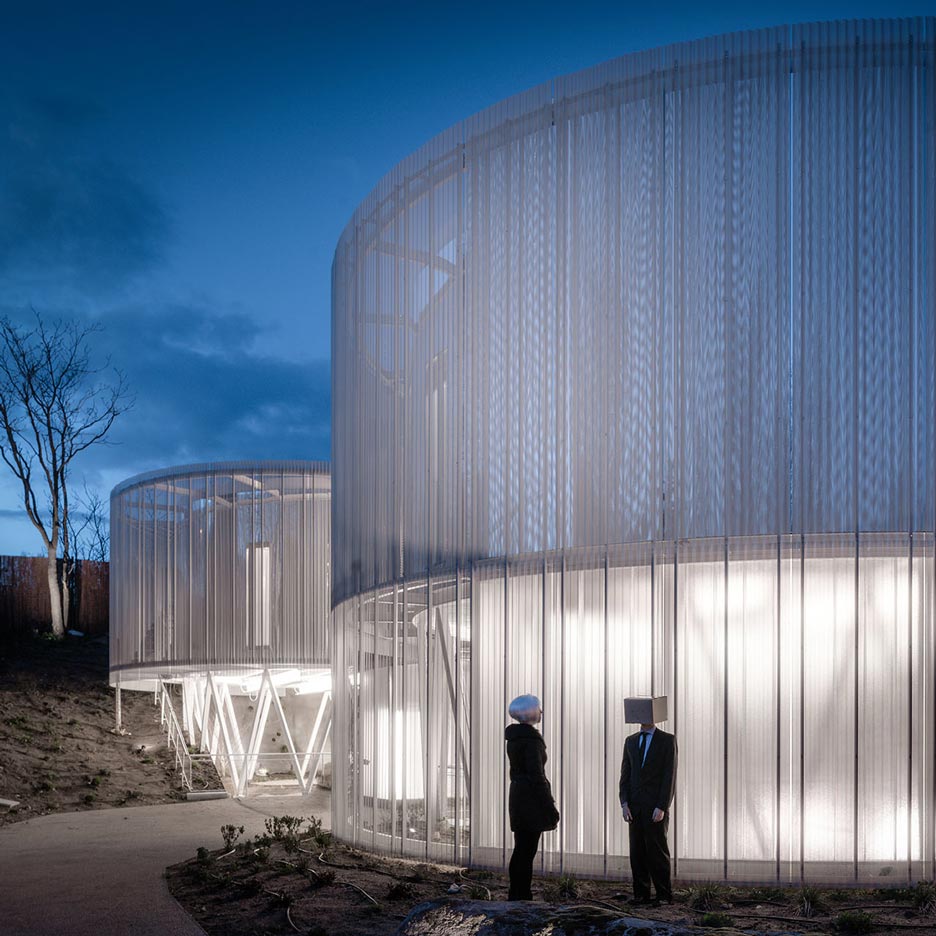
FAHOUSE / Jean Verville architecte

© Maxime Brouillet
- Architects: Jean Verville architecte
- Location: Québec, Canada
- Area: 1900.0 ft2
- Photographs: Maxime Brouillet
- Collaborators: Jessica Bouffette, Olivier Grenier, Martine Walsh
- Contractor: Ulys Collectif
© Maxime Brouillet
From the architect. Nestled in the privacy of a hemlock forest, FAHOUSE presents an amazing building that seems to emerge from a children’s story. Exploiting the contrasts between opacity and light, the architect Jean Verville develops a graphic assemblage, which rises like two giant conifers, intensifying the dreamlike aspect of this architectural proposal. Derived from the archetypal figure of the house, the double triangular prism perfectly illustrates childhood characterizing the whole development of this project.
© Maxime Brouillet
© Maxime Brouillet
Conceived for a couple of young professionals and two children, the cottage revisits the family home settings to explore an imaginary closely linked to the site, its occupants and their actual way of living the family life. The close complicity with these clients during the design process, and the playfulness distinguishing their parent-children relationship, empower the architect to design a new way of living their reality. Throughout the construction, the collaboration between the architect, the family and the entrepreneur promotes a shared enthusiasm resulting in building quality and flawless finishing.
© Maxime Brouillet
The two houses profile emerges. The architect emphasizes the elongated shape of the land by a promenade along the blind wall of the first volume. A wide exterior staircase revealing the natural slope leads to the ground floor and welcomes newcomers under an imposing cantilever defining the covered terrace. The large opaque door opens into a vibrant lobby that extends to the mysterious forest. The living area enjoys glass walls, which seem to dematerialize and eliminate the boundary between architecture and landscape, allowing nature to fabulously slip inside. Already the house comes to life and the magic of the place operates.
© Maxime Brouillet
Sections
© Maxime Brouillet
The architectural deployment of the staircase articulates the ground floor while governing the access parade to the perched areas of the two houses. The first, the toddlers’, nestled in the enchanted forest, displays a large bunk bed welcoming friends to share fantastic nights. A few stairs jump leads to the second, the parents’ house, which looks like a beehive composed of a succession of cells each offering a distinctive ritual. In a surprising mirror effect, the bedroom doubles as a bathroom offering two simple and soothing volumes suspended between earth and sky. In contrast, the graphic display of the impressive family shower room promises a different experience for daily ablutions. The upper floor evokes the lair of the whale to brighten the imagination and allow for a colorful world of unbelievable adventures.
© Maxime Brouillet
via v2com.
Biasol Designs a Bright and Stylish Home in Melbourne, Australia

PRK Residence is a private home located in Melbourne, Australia. It was designed by Biasol. Photos courtesy of Biasol
George Riding’s Wire Series coffee table comes with integrated accessories
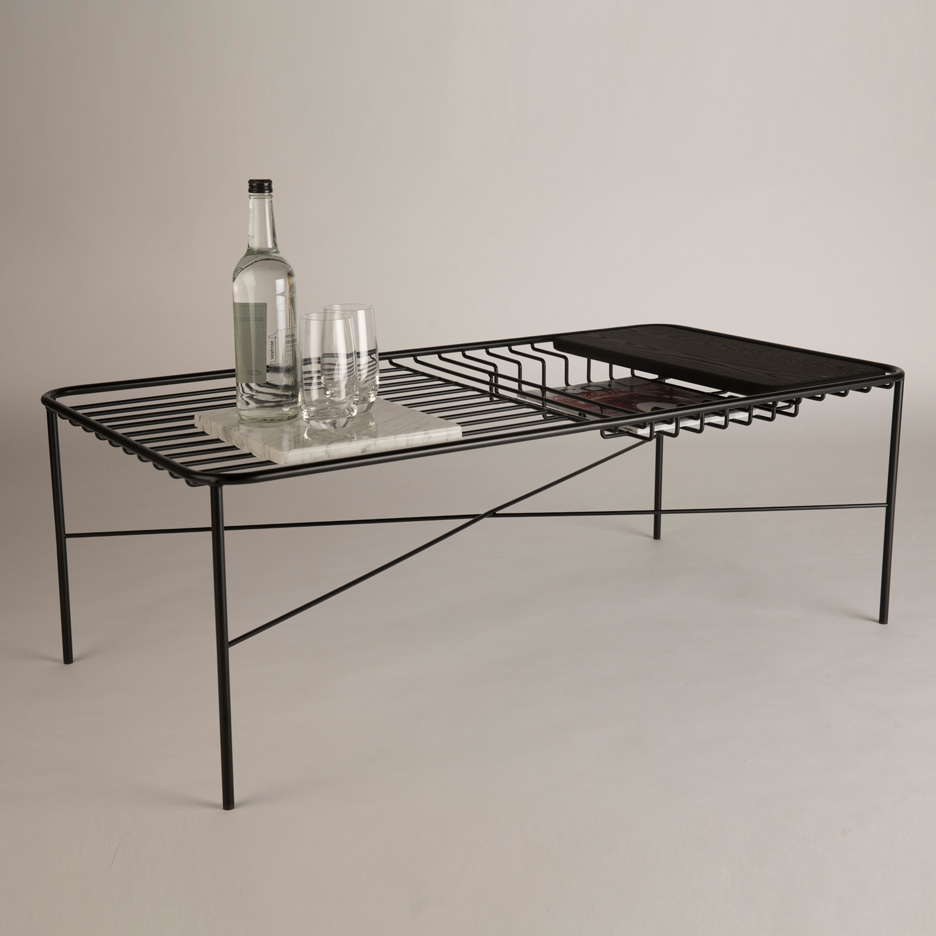
Graduate shows 2016: this coffee table by Northumbria University graduate George Riding features objects that nestle into the furniture’s metal framework (+ slideshow). (more…)
Pennsylvaniaphoto via stephanie

Wind and Rain Bridge / Donn Holohan – The University of Hong Kong

Courtesy of HKU
- Design: Donn Holohan – The University of Hong Kong
- Location: Peitian Village, Fujian Province, China
- Construction: Peitian Community Craftsmen
- Funding: Supported by the Gallant Ho Experiential Learning Fund, HKU
- Project Team: Jiang, Hejia (Team Leader) Man Ho Kwan, HKU Architecture Students
- Cost: 85,000RMB
- Area: 20.0 sqm
- Project Year: 2016
- Photographs: Courtesy of HKU
Courtesy of HKU
From the architect. Situated on the outskirts of Peitian Village, Fujian Province, China and designed to be constructed without the use of mechanical fasteners, “Wind and Rain Bridge” is a reciprocal interlocking timber structure which draws on the long tradition of wooden buildings native to the region. Each of the bridges’ 265 elements is unique and integral, assembled under the supervision of traditional carpenters, who number some of the few remaining exponents of their craft.
Site
Plan
Peitian is one of a number of isolated rural villages distributed throughout the mountainous regions of southern China, which, following severe flooding in early 2014 saw much of the infrastructure linking its disparate communities destroyed. This project aims to reconnect Peitian village to that historic network of routes that link these isolated settlements.
Courtesy of HKU
The bridge creates a community space, located in the heart of the village’s fertile farmland, where local people can socialize and exchange. Opening outward towards the village, the bridge negotiates the variable terrain and provides a place of respite from Peitian’s changeable climate.
Courtesy of HKU
This project seeks to offer an alternative mode of community redevelopment that references local crafts and traditions, and utilizes sustainable materials and methods, to create both social and physical infrastructure. Critical to this process is the integration of digital design methodologies, which allow for the planning and testing of complex assemblies. The high level of training and labor associated with these assemblies has been a barrier to the continued viability of complex, long-span, timber structures in China and other developing and transitioning economies.
BB Section
Courtesy of HKU
CC Section
Supported by the Gallant Ho Experiential Learning Fund, and integrated within the University of Hong Kong’s introduction to architectural design course, The Peitian bridge project took 70 students to southern Fujian to aid in the construction of this community structure.
Tower Block Hybrid / Frits van Dongen

© Kim Myoung Sik
- Architects: Frits van Dongen
- Location: Gangnam District, Seoul South Korea
- Client: Korea Land & Housing Corporation
- Area: 180000.0 sqm
- Project Year: 2015
- Photographs: Kim Myoung Sik, LH Group
- Architects In Charge: Frits van Dongen (van Dongen-Koschuch Architects and Planners), at that time: De Architekten Cie.
- Design Team: Jason Lee, Jan-Willem Baijense, Rui Duarte, Laura Mezquita Gonzalez, Nam Dong Ho, Mathew Winter, Sasha Hendry, Andrea Sooyoun Kim, EunSong Park
- Landscape Design: Frits van Dongen (van Dongen-Koschuch Architects and Planners) at that time: De Architekten Cie.
- Sustainability Consultant: Transsolar, Stuttgart
- Volume: 498.000m3
© Kim Myoung Sik
From the architect. In the hills of the Gangnam district south of the city centre of Seoul is a residential area of 1500 households realized. The initiative for the housing complex of 180.000m2 was launched by the Korea Land and Housing Corporation (KLHC) in April 2010. The objective of the KLHC was providing affordable public housing for low income families with the focus on providing a new public housing prototype in Korea.
© Kim Myoung Sik
Van Dongen-Koschuch Architects has developed an urban plan for the Gangnam District that is based on the topography of the landscape of the site. Within the sloping green hills of Gangnam lies an ensemble of urban blocks, a layout that is not seen often in the housing market of Seoul. The design of the urban block is a new typology called ‘Tower Block Hybrids’, conceiving not only housing units but also public roads and private inner courtyards.
Plan
© Kim Myoung Sik
Plan
The design of the Tower Block Hybrid proposes not to be another housing tower of just suburban ‘Sleeping City’ but to be a real neighborhood: a community which is connected to Seoul but largely self-sufficient. The existence of a community is based on the possibility for social interconnection and the sense of ownership, a pride of place. To achieve this the Tower Block Hybrid has a clear distinction between public and private outdoor space. Each individual block has its own courtyard that serves as a communal space with sport facilities, playgrounds and gardens. The housing units have a range of different typologies, serving a variety of income levels, households and lifestyles. Each house has a broad view over the landscape providing not only far reaching views but also regulating behavioural control within the block.
© Kim Myoung Sik
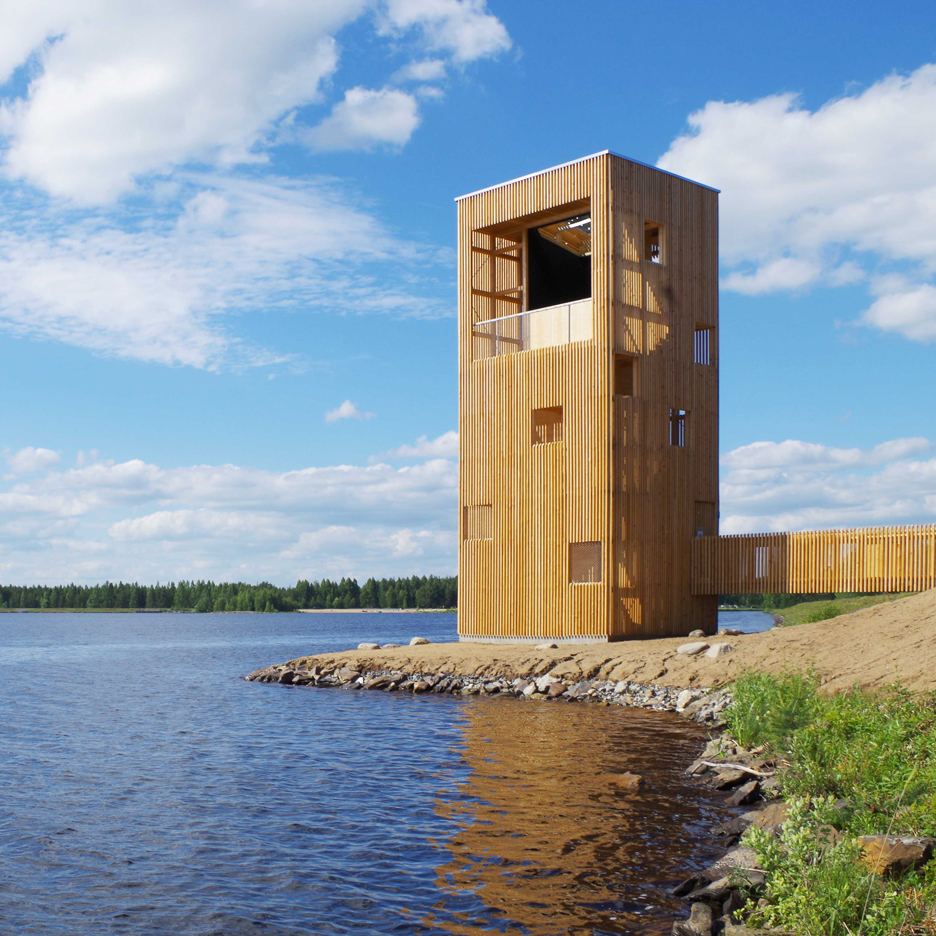
OOPPEA builds wooden Periscope Tower beside lake in Finland
Estes Park, Colorado photo via brea

Helix Garden—Lily Nails Salon / ArchStudio

© Jin Weiqi
- Architects: ArchStudio
- Location: Yau Tang Square, Chaoyang District, Beijing, China
- Design Team: Han Wen-Qiang, Song Hui-Zhong, Huang Tao
- Area: 66.0 sqm
- Project Year: 2016
- Photographs: Jin Weiqi
© Jin Weiqi
From the architect. Lily Nails is a nail and eyelash salon that owns numerous chain stores in Beijing and Shanghai. To meet the needs of environmental upgrade of the brand, Arch Studio was commissioned to do the design for the brand’s new store in Yau Tang Shopping Centre, Beijing. The store is a rectangular space with an area of more than 60㎡.
© Jin Weiqi
The design gets rid of the symbolic method of over deco which was typically used while designing this type of store. The starting point of this design is to create a relaxed, cozy and natural experience environment, where customers can relax themselves and feel like being in a garden. A circle of 8mm thick white perforated steel plate extends from the mall corridor to the inner store; this helps to create a soft and pure curved space.
© Jin Weiqi
© Jin Weiqi
Different from seat arrangement of traditional nail salon, the six seats here ares enables customers communicate happily while doing their nails.LED light film together with spiral steel plate creates soft and well-distributed interior light. As the green background of the whole space, the plant wall makes the new space full of vitality. The gap between helical curve and the original square store forms other ancillary spaces naturally such as front desk display area, plant landscape and employee service area.
© Jin Weiqi

