BAOBAO / Linehouse


© Dirk Weiblen

© Dirk Weiblen


© Dirk Weiblen


© Olivier Hero Dressen


© Dirk Weiblen


© Dirk Weiblen


© Dirk Weiblen

© Dirk Weiblen

Linehouse was commissioned to create a new branded architectural language for 甘其食BAOBAO, the first of many stores to line the streets of China and the US, selling the traditional Chinese street food baozi – steamed bread buns filled with meat, vegetable or sweet stuffing.


© Dirk Weiblen

© Dirk Weiblen

Linehouse created a spatial narrative that married with the brand’s ethos: from garden to plate, using the freshest vegetables in handcrafted baozi. In doing so they played with the concept of inserting a glass greenhouse building for the exhibition and growth of plants.


Plan

Plan

Elevation

Elevation

Linehouse proposed a series of house frameworks. The chefs occupy the greenhouse and their performance of rolling, handcrafting and steaming the baozi is framed by this insertion. At high level, a shelf wraps the framework with drooping greenery and branded icons stamped on the back surface. At lower level a high leaner also wraps the structure, with hanging lights allowing guests to linger and observe the activities within the kitchen.


© Dirk Weiblen

© Dirk Weiblen

The greenhouse is composed of hand glazed green tiles, two tones of wood and glass. This house extends out to the street, operating as a leaner for guests, and further framing the activities within to the exterior.


© Dirk Weiblen

© Dirk Weiblen

The cashier / service area plays on the idea of ​​a wheelbarrow and garden tools, allowing the menu boards to hang from above. Bluestone cobbles line the floor in the customer area creating a sense of the garden path, and the streetscape beyond. Two leaner tables sit adjacent to the greenhouse. Wood panels rest on a framework, with white metal threading through to become a mechanism for the lights to hang upon.


© Dirk Weiblen

© Dirk Weiblen

Linehouse was commissioned to develop the branding and graphics for BAOBAO. Bold graphics of a wandering pig, a family of vegetables from the garden and BAOBAO are repetitively stamped on the adjacent glass. The BAOBAO logo is embossed in a darker tone of wood into a pivoting panel on the façade and a wood cut out logo is displayed on the shelf on the exterior.


© Dirk Weiblen

© Dirk Weiblen

With six new BAOBAO shops now open at locations including Alibaba campus in Hangzhou and in Shanghai’s former French Concession, the newest BAOBAO is nestled among the greenery of Tongji University. The angular greenhouse structure extends above an exterior terrace, framed with layered graphics on sliding wooden panels.   


© Dirk Weiblen

© Dirk Weiblen

http://ift.tt/29ik6kZ

abandoned barracks in leipzig by iotas http://flic.kr/p/gd73i

via Abandonedforgotten http://ift.tt/29riDe5

Leighton Beach Facilities / Bernard Seeber


© Douglas Mark Black

© Douglas Mark Black


© Douglas Mark Black


© Douglas Mark Black


© Douglas Mark Black


© Douglas Mark Black

  • Structural Consultant: Wood & Grieve Engineers
  • Electrical Consultant: Wood & Grieve Engineers
  • Hydraulic Consultant: Hydraulics Design Australia
  • Cost Consultant: Erik Postmus QS
  • Building Surveyor: Building Lines
  • Builder: CPD
  • Total Site Area : 2440 sqm
  • Kiosk Building Area : 92 sqm

© Douglas Mark Black

© Douglas Mark Black

From the architect. Leighton Beach has been undergoing significant redevelopment including infrastructure, housing and beachfront facility.  The City of Fremantle has provided Public Facilities to the redevelopment in the form of Access, Landscaping, a Kiosk and Changerooms.


© Douglas Mark Black

© Douglas Mark Black

The site historically has had changeroom and kiosk facilities present however over the years these had been neglected and with recent redevelopment works in the immediate surrounding and adjacent areas The City of Fremantle recognised the existing facilities no longer provided adequate service.


Site Plan

Site Plan

Access to recent developments and the beach has being re-established.  Particular attention to Universal Access is included to provide for users generally and for the frequent use by the Disabled Surfers Association of Western Australia.


© Douglas Mark Black

© Douglas Mark Black

Landscaping has re-instated the immediate dune structure while accommodating Universal Access and the broad re-instatement and augmentation of indigenous vegetation has provided a sustainable recreational environment.


© Douglas Mark Black

© Douglas Mark Black

The Kiosk provides for the user Public generally and in particular it supports adjacent picnic and park facilities.  New covered and shaded seating are provided for free Public access.  Building architecture is informal and adaptable in keeping with the beach culture and expected growth through use.  Timber, the prime building material has been adopted in response to the need for a maintainable while changeable technology.


© Douglas Mark Black

© Douglas Mark Black

The Changerooms connect public space and lead to beach access.  They provide external showering and internal change, showering and toilets. Family and Universally Accessible facilities are specially provided for.  The Architecture is robust and open.  The building is positioned immediate to the first dune formation and is protected and provides protection.  Planning follows the dune and is linear enabling connection in the landscape while facilitating separation of users through a single point of securable access.


© Douglas Mark Black

© Douglas Mark Black

Careful consideration of the building position, planning and formation has resulted in an Architectural solution that sits in sympathy with the surrounding natural environment and uses features of the natural environment to enhance the architecture. Natural ventilation, light and shade have all been achieved in this intelligent architectural solution.


Ground Floor Plan

Ground Floor Plan

Effective planning and use of materials ensure ease of long term maintenance, servicing and vandalism control.


© Douglas Mark Black

© Douglas Mark Black

A carefully considered and restrained palette of materials has ensured that the changeroom structure sits quietly within the dune landscape allowing the activity of user groups to add the dynamic quality whilst the vibrant ‘orange’ of the Kiosk acts as a marker allowing this to be referenced as a location and meeting point for the public and site it’s reference to adjacent open park space.


© Douglas Mark Black

© Douglas Mark Black

http://ift.tt/29fom24

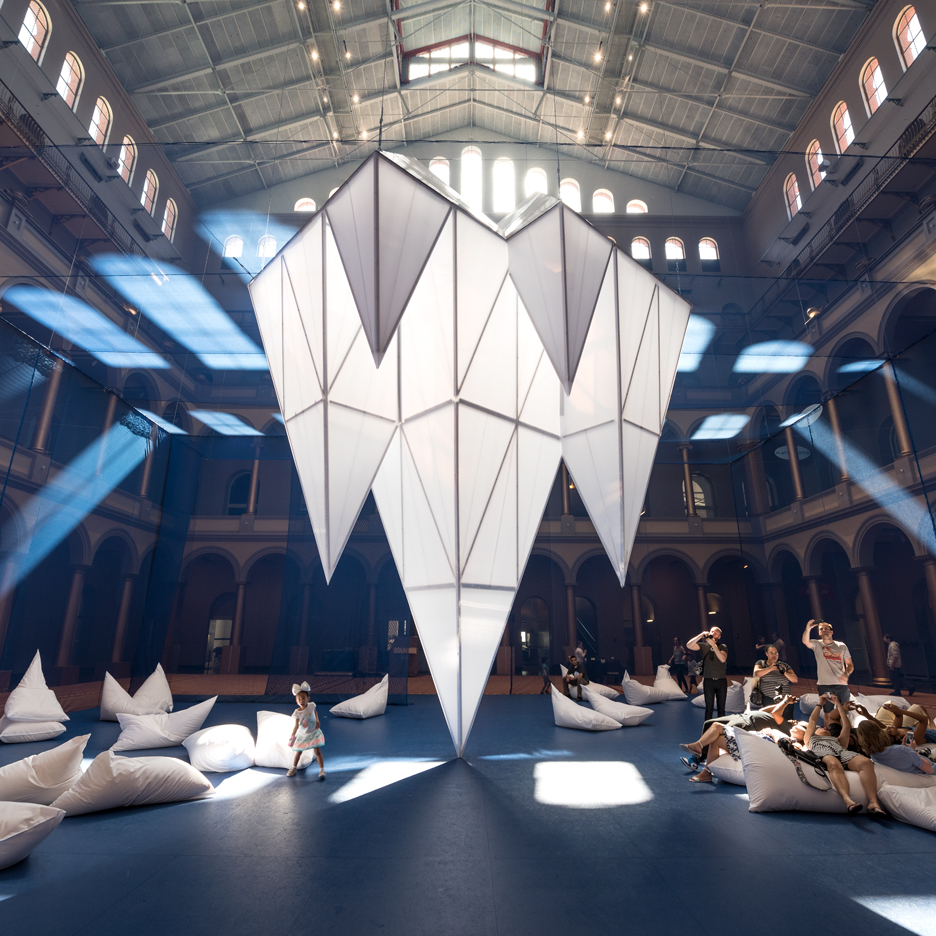
James Corner Field Operations installs over 30 “icebergs” in Washington DC museum


US studio James Corner Field Operations has created an installation for the National Building Museum in Washington DC that evokes a glacial landscape, with giant shard-like forms that jut upward and downward (+ slideshow). (more…)

http://ift.tt/29e44FW

Lake District, Englandphoto via devon

Lake District, England

photo via devon

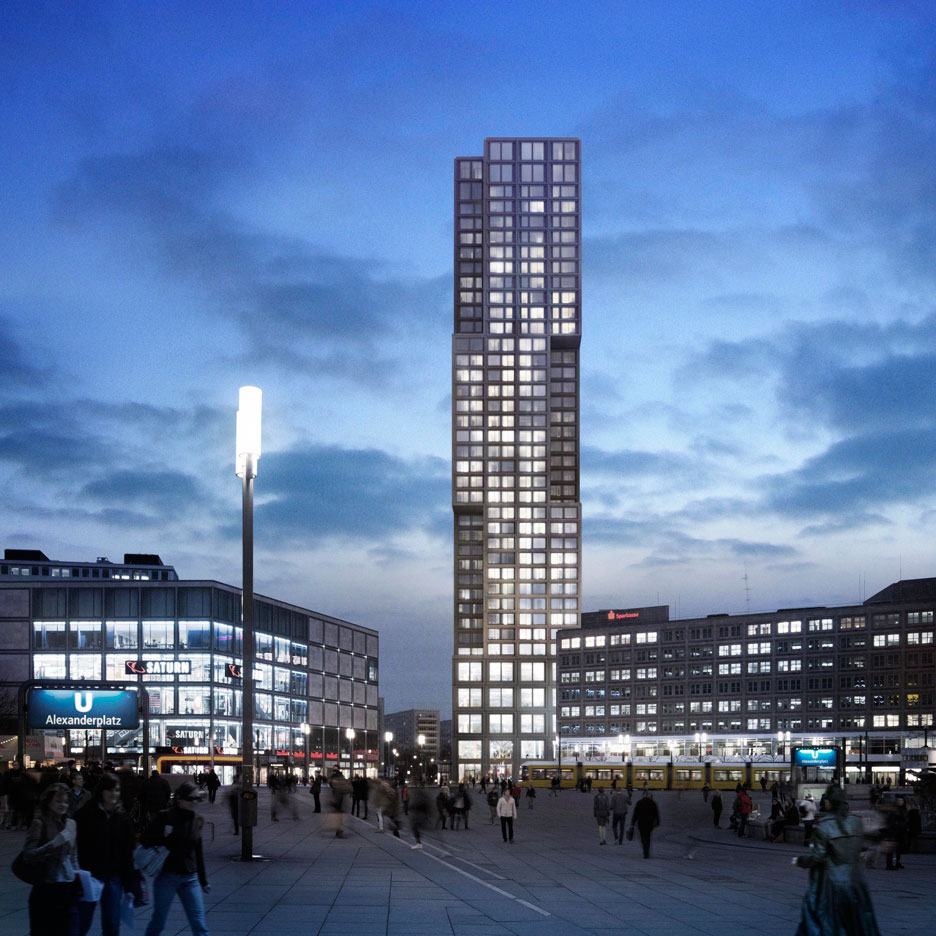
Designs submitted for Berlin’s tallest skyscraper


German property developer Bewocon has unveiled plans for a 150-metre-high skyscraper in Berlin, which could become the city’s tallest building. (more…)

http://ift.tt/29iKtbQ

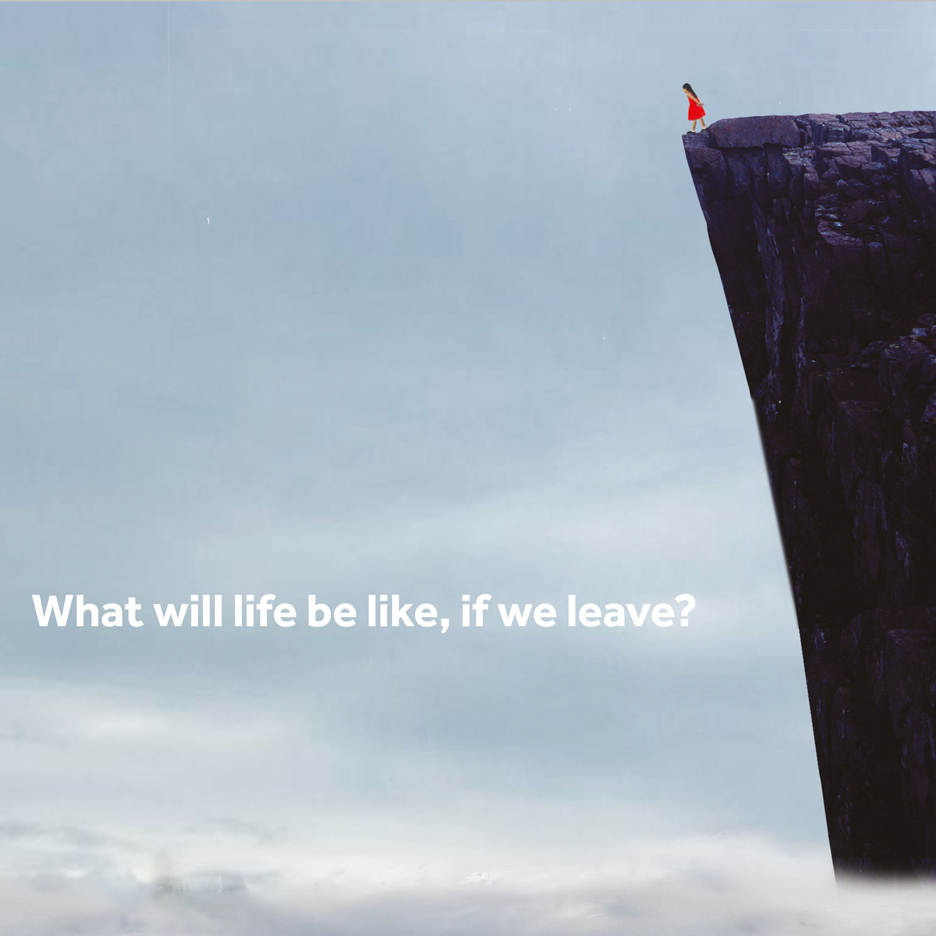
Advertising agencies unveil rejected Remain campaign posters


Brexit crisis: the agencies behind the Remain advertising campaign have shared their unsuccessful designs and described a “frustrating” process that was “doomed” to fail (+ slideshow).  (more…)

http://ift.tt/29fboBC

The Claude Bernard Overpass / DVVD Engineers Architects Designers


© Luc Boegly

© Luc Boegly


© Luc Boegly


© Luc Boegly


© Luc Boegly


© Luc Boegly

  • Architects: DVVD Engineers Architects Designers
  • Location: 19th arrondissement, Paris, France
  • Team: Paula Castro, Céline Cerisier, Vincent Dominguez, Toma Dryjski, Bertrand Potel, Louis Ratajczak, Daniel Vaniche
  • Project Manager: Clément Carrière, Nicolas Didier
  • Area: 392.0 sqm
  • Project Year: 2015
  • Photographs: Luc Boegly, Nathalie Prébende
  • Contractors: Segex
  • Structural Works: Razel-bec
  • Contracting Authority: SEMAVIP

© Nathalie Prébende

© Nathalie Prébende

Simple as a brushstroke, slender in form, the Claude Bernard overpass elegantly spans the boulevard Périphérique between Aubervilliers and Paris. This arched timber structure, nearly 100 metres in length, connects the Parc du Millénaire to the Claude Bernard urban development zone, the very embodiment of an emblematic site. In this rapidly-changing district, a  agship for development policy in the north-east of the Ile-de-France, o ce blocks and residential buildings rub shoulders with a cinema, a nursing home, a nursery, a school, sports facilities, a multi-mode transport hub (incorporating the RER E rapid transit line, four bus routes, and routes 3 and T8 on the tram system), a park and a


© Luc Boegly

© Luc Boegly

shopping centre. This developmental diversity has dictated a fresh approach to the consideration of urban density, multi-functionality and compactness, further accentuated by an overall environmental approach which is consistent with the objectives of the climate action plan of the City of Paris. One change leads to another: a change in the status of the city ring road, now conceived as an urban boulevard. The scale of this challenge was therefore to support this local dynamic through the provision of an overpass. More than just a bridging structure, this needed to be a unifying and symbolic feature. This brief has been perfectly realized by the architects at the DVVD architecture, design and engineering agency.


Plan

Plan

A technical project such as an overpass involves constraints which are not run-of-the-mill. The requirement for the least possible disturbance to vehicle tra c, for example, dictated an unusual installation procedure: once the pile- mounted abutments with their associated stairways were in place on either side, the central section, fully- tted with its timber cladding and decking, was mounted on its permanent supports in a single night. This arduous operation involved the deployment of a mobile crane of exceptionally high capacity, of a virtually unique type in Europe. This crane was positioned on the outer Boulevard Périphérique,  tted in record time with the numerous counterweights required to increase its load-bearing capacity, completed the lifting operation, then disappeared, allowing tra c to resume under a new crossing structure. With the same idea of optimization in mind, the de nition of the geometry of the overpass as a continuous arch, with no drops, and the design of its metal framework structure have been executed using sophisticated digital tools. The objective was to lighten its structure, optimize the budget, economize on raw materials and facilitate the lifting operation.


© Luc Boegly

© Luc Boegly

The scheduling of the night-time lifting operation, on 14th May 2015, was planned minute-by-minute by the prime contractor and the project contractors. The installation of the walkway involved the simultaneous closure of carriageways on the inner and outer Boulevard Périphérique for three hours – an operation which had never been undertaken since its opening. This precision-engineering project was conceived in partnership with the services of the City of Paris and the Prefecture.


© Luc Boegly

© Luc Boegly

Section

Section

http://ift.tt/29hpKqs

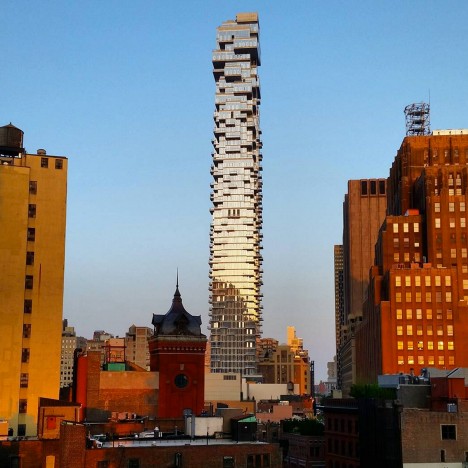
Today we like: American skyscrapers

56 Leonard by Herzog & de Meuron

America may no longer be home to the world’s tallest building, but the country that invented skyscrapers is still pioneering their design with skinner, greener and more unusually shaped structures.

We’re celebrating this 4 July – US Independence Day – with a look back at some of the most recent examples, including Rafael Viñoly’s already iconic 432 Park Avenue and Herzog & de Meuron’s “Jenga tower” (pictured). See more US skyscrapers »

http://ift.tt/29tzOto