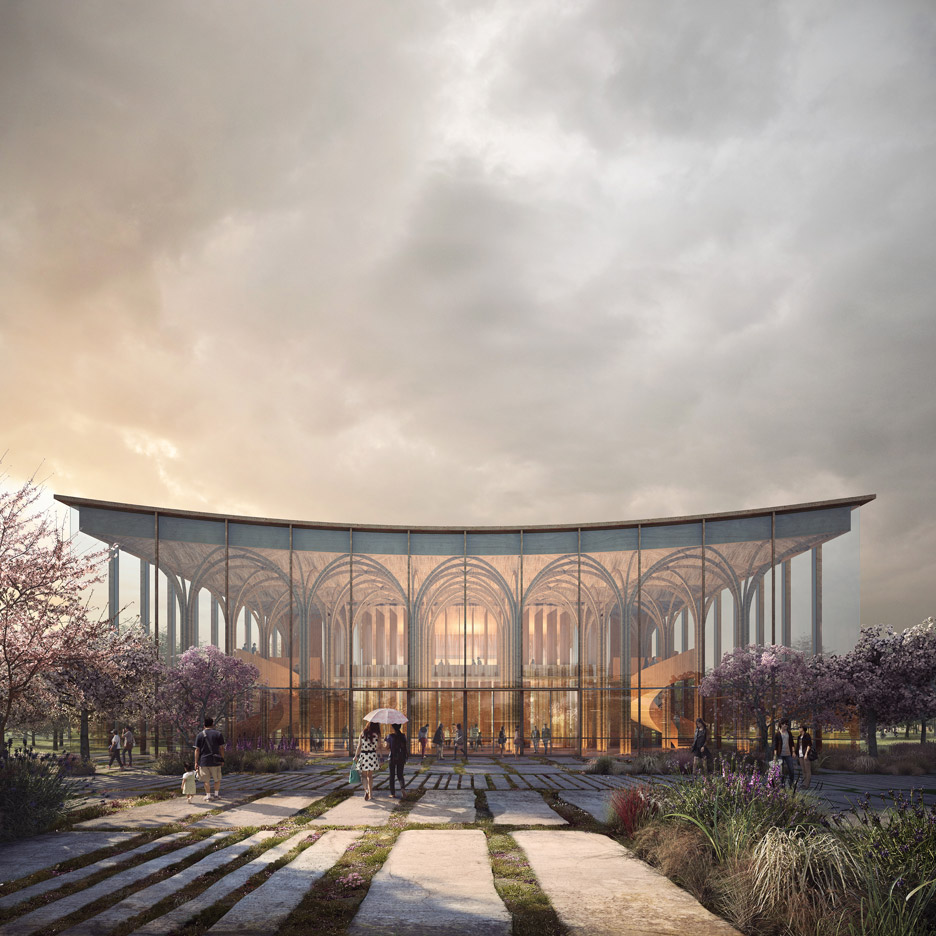
What Makes a Good Project? Your Guide to a Successful WAF Entry


World Building of the Year 2015 Winner: The Interlace (Singapore) / OMA and Ole Scheeren. Image © Iwan Baan

World Building of the Year 2015 Winner: The Interlace (Singapore) / OMA and Ole Scheeren. Image © Iwan Baan

The following is taken from ‘Design Review’, written by Peter Stewart for the Commission for Architecture and the Built Environment (CABE), 2002. Stewart gives a few tips on What Makes a Good Project? Your Guide to a Successful WAF Entry. 

The Roman architect Vitruvius suggested that the principal qualities of well- designed buildings are ‘commodity, firmness and delight’:

  • Commodity – buildings should be fit for the purpose for which they were designed
  • Firmness – they should be soundly built and durable
  • Delight – they should be good-looking; their design should please the eye and the mind. 

These three criteria remain as a sound basis for judging architecture now as when they were conceived. Just as each design decision affects many others, so the three criteria are intertwined with the design process. Many aspects of a project which need to be taken into account when evaluating it will touch on all three.
These include the following:

Order 

Order in architecture, wrote Geoffrey Scott in ‘The Architecture of Humanism’ (1914), . . . enables us to interpret what we see with greater readiness; it renders form intelligible by making it coherent; it satisfies the desire of the mind; it humanises architecture.

Order can manifest itself through symmetry (or asymmetry) and balance; through repetition of organisational or structural elements such as the grid, the frame or the bay; and through resonance between elements of different scales. 

Clarity of organisation
If the organisation of the plan and section are clear, the much else about a project will fall into place.

Expression and Representation
A building’s appearance can tell us something about what purpose it serves; about its place in the order of the town or city; about how it is organised and put together.


World Building of the Year 2015 Winner: The Interlace (Singapore) / OMA and Ole Scheeren. Image © Iwan Baan

World Building of the Year 2015 Winner: The Interlace (Singapore) / OMA and Ole Scheeren. Image © Iwan Baan

Appropriateness of Architectural Ambition 
Architecture can be too noisy or too quiet. There are places for fireworks and places for modesty within the built environment – in relation both to a project’s context and to its purpose and status. 

Integrity and Honesty
Is what you see what you get? If so, the plans, sections, elevations and details will all visibly relate to each other and build up to a coherent picture of the design.

Architectural Language 
The design of a building will involve choices about matters such as whether to express it primarily as a wall or as a frame structure, about patterns of solid and void and light and shade, and so on. In a good design, such choices will seem compelling and inevitable, with a recognisable relationship to the broad concept of the project and its setting; in a poor project, such choices will often seem arbitrary.

Conformity and Contrast 
A good designer will consider the relationship of a design to its context. This is not to imply that one of the aims of a design should necessarily be to ‘fit in’; at its worst, this can be little more than an excuse for mediocrity. Difference and variety can be virtues in new proposals as much as sameness and conformity, and of course, different contexts themselves may be more or less uniform in their nature. 


World Building of the Year 2015 Winner: The Interlace (Singapore) / OMA and Ole Scheeren. Image © Iwan Baan

World Building of the Year 2015 Winner: The Interlace (Singapore) / OMA and Ole Scheeren. Image © Iwan Baan

Orientation, Prospect and Aspect 
A building’s orientation should take into account the implications for energy use as well as urban design issues. In relation to prospect and aspect, the design should consider what happens at different times of day and night and at different times of the year. The view from the window, and opportunities to see the sky and weather are as important in buildings such as offices and hospitals as they are in dwellings.

Detailing and materials 
The quality of the plans, sections and elevations should be carried through to the level of detail – it is disappointing to see a promising project fail because of the lack of refinement in the detailing. The choice of materials is equally important and relates to an understanding of context as well as to questions of maintenance, durability, sustainability and the way the building can be expected to age.

Structure, Environmental Services and Energy Use 
In a building of any complexity, these aspects of the project need to be taken forward as an integral part of the scheme design from the beginning. In a well-designed project, it is likely that the strategies for dealing with these aspects of the design will be apparent from the plans, sections and elevations. 


2015 Winner: Hotel Hotel Lobby and Nishi Grand Stair Interior / March Studio. Image Courtesy of March Studio

2015 Winner: Hotel Hotel Lobby and Nishi Grand Stair Interior / March Studio. Image Courtesy of March Studio

Flexibility and Adaptability 
The purposes for which a building and the parts of a building will be used are likely to change over its lifetime. The technologies it contains will change as well. A good design will be flexible (able to accommodate changing requirements without major alterations) and adaptable (capable of being altered or extended conveniently where necessary). 

Sustainability 
Taken in the round, a project should use natural resources responsibly.


2015 Winner: Hotel Hotel Lobby and Nishi Grand Stair Interior / March Studio. Image Courtesy of March Studio

2015 Winner: Hotel Hotel Lobby and Nishi Grand Stair Interior / March Studio. Image Courtesy of March Studio

Finally, we should not be afraid to ask about a building: Is it beautiful? If it is, then the resulting lifting of the spirits will be as valuable a contribution to public well- being as dealing successfully with the functional requirements of the building’s programme. 

Key questions:

  • Will the accommodation proposed meet the functional needs of the brief?
  • Is it likely that the building’s users – of all kinds – will be satisfied with the design?
  • Is the design likely to enhance the efficiency of the operations to be contained in the building?
  • Can a stranger or visitor find the entrance and then find their way around the building? Is orientation clear enough not to need signs or maps?
  • Are the plans, sections, elevations and details all of a piece, visibly related to each other and to underlying design ideas?
  • Does the design demonstrate that thinking about the requirements of the buildings structure and construction and environmental services has been an integral part of the design process? Is there evidence that the different design disciplines are working as a team?
  • Will the building be easy to adapt or extend when the requirements of the building’s users change? Are the floorplates suitable for other uses in the future?
  • Does the design take into account whole-life costs?
  • What will the project look like in different conditions: in sun and rain; at night; over the seasons? Will it age gracefully?
  • Can one imagine the building becoming a cherished part of its setting? 

2015 Winner: Hotel Hotel Lobby and Nishi Grand Stair Interior / March Studio. Image Courtesy of March Studio

2015 Winner: Hotel Hotel Lobby and Nishi Grand Stair Interior / March Studio. Image Courtesy of March Studio

Some alarm bells:

  • Lack of evidence of client commitment to a quality outcome,
  • Lack of a clear brief,
  • Contradictory aims and objectives,
  • Lack of viability; projects may promise more than anyone believes they can realistically deliver,
  • No evidence of understanding the nature of the site,
  • Adequate context analysis, but no evidence of it informing the design,
  • Projects which appear mean, pinching or obstructive in their approach to the public realm,
  • Lack of clarity about what is private and what is public,
  • Projects where it is hard to work out from the drawings what is actually proposed: confusion on paper is likely to correspond to confusion in reality,
  • No effort to give clear and realistic illustrations of what the projects will look like • No effort to illustrate the project in context, and
  • No effort to show an approach to landscape design where this is important. 

To submit an entry follow Entry Guide 2016.

News Via World Architecture Festival

http://ift.tt/29dOAlp

Sunset over the rocks. by Kjartan Guðmundur …

Sunset over the rocks. by Kjartan Guðmundur http://flic.kr/p/unc28i

http://ift.tt/29eIO3H

Beautiful Europe

Budapest, Hungary (by xenia)

http://ift.tt/1lsocZL

Black Mass / Stephen Phillips Architects


© Tim Griffith

© Tim Griffith


© Tim Griffith


© Tim Griffith


© Tim Griffith


© Tim Griffith

  • Architects: Stephen Phillips Architects
  • Location: United States, San Francisco, CA, USA
  • Project Team: Sam Clovis, Cameron Helland, Richard Porter, Andrew Wright, David Stamatis, Franco Zaragoza, Stephen Becker, Domini Padua, Trevor Larsen
  • Area: 4200.0 ft2
  • Project Year: 2016
  • Photographs: Tim Griffith
  • Contractor: Kevin Webb Construction
  • Structural Engineer: Double D Engineering
  • Client: Hayes Valley Properties

© Tim Griffith

© Tim Griffith

From the architect. Challenging the local San Francisco vernacular with powerful contemporary style, this new apartment building designed by Stephen Phillips Architects (SPARCHS) plays with viewer perception to create dramatic visual and spatial effects.


© Tim Griffith

© Tim Griffith

Linden Street, a back alley to Hayes Valley’s boutique San Francisco mixed-use commercial and residential district, incorporates an eclectic group of traditional one- to four-story Victorian and Edwardian houses. The immediate neighborhood, spanning from Octavia Park to cafes on Laguna Street, has been steadily transforming since nearby freeways were removed. Hired to design a speculative infill duplex for a local landowner, Stephen Phillips Architects (SPARCHS) aimed to challenge normative San Francisco housing typologies.


Floor Plans

Floor Plans

Adapting local vernacular with contemporary sensibility, this design maximizes building area on a minimal lot with expansive circulation spaces connecting street life clear through to rear rooftop open spaces. By creatively interpreting local zoning codes (bay window, awning, cornice, and balcony) Stephen Phillips Architects (SPARCHS) generated a unified building facade with unique optic and haptic spatial characteristics.


© Tim Griffith

© Tim Griffith

Notably, angular exterior metal surfaces wrap around and through large panels of glazing on the interior and exterior confounding spatial and perceptual boundaries—blurring distinctions between inside and outside as well as horizontal and vertical orientation. Designed to weather from black to soft grey, zinc panels mark the passage of time on both the interior and exterior. As a black mass, the building form is at once powerful, indiscernible, and provocatively complex, revealing itself through the perceived movement of light, shade, and shadow on its varying buildings surfaces. 


© Tim Griffith

© Tim Griffith

A curved mansard-type roof was designed by the architect to mitigate building height while creating dynamic interior spaces. Strategically locating living spaces along the front and back of the building, open floor plans and double-height vertical circulation spaces were designed to create an open flow between rooms. Custom teak cabinetry, concrete and marble counters, bleached white oak floors, and artisan metal panels and railings—activate, warm, and enliven the interior clear through and open to the exterior urban spaces.


© Tim Griffith

© Tim Griffith

Sections

Sections

© Tim Griffith

© Tim Griffith

http://ift.tt/29qDU7R

Internet Marketing Mistakes Making You Lose Sales

Seven common Internet marketing mistakes that small businesses make. These mistakes lead to lost business and lost sales.

http://ift.tt/29dMs1r

How to Use Testimonials to Boost Business

Here are the best places to use testimonials from satisfied customers so potential customers will be assured that your business is one they can trust.

http://ift.tt/29ezYCP

CGI artist Forbes Massie unveils “completely seductive” renderings in London exhibition


Visualisation artist Forbes Massie has exhibited a series of architectural renderings with a painterly rather than photorealistic aesthetic at the Protein Studios gallery in east London (+ slideshow). (more…)

http://ift.tt/29h9PIE

Zeller & Moye Wins Competition to Design Martin Luther Memorial in Berlin


© Zeller & Moye

© Zeller & Moye

Zeller & Moye, working alongside artist Albert Weis, have been selected to design the new Martin Luther Memorial in Berlin. The competition, initiated by the Protestant Church of Berlin and the Berlin City Administration, asked entrants to design a memorial to Luther in central Berlin at the former Neuer Markt next to the St. Marienkirche—in the same location as a previous memorial to Martin Luther that was constructed in 1895 and destroyed in the Second World War. The brief also required designers to incorporate the existing statue of Martin Luther that survived from the earlier memorial.

In response to this brief, Zeller & Moye has envisaged a memorial based on the mirroring of the 1895 memorial: a negative form of the original plinth is carved into the ground in medium-gray concrete, while the statue of Luther is joined by a second, slightly abstracted replica, cast in aluminium with a mirrored finish.


© Zeller & Moye

© Zeller & Moye

This inversion of the original memorial was intended by Zeller & Moye to subvert the traditional memorial typology, promoting 21st century values of dialog and communication over the 19th century values of veneration. Standing on small plinths within the hollowed-out memorial space, the two statues appear from a distance to be standing on the street. “In contrast to the memorial of the 19th century that justified its importance through an elevation that rises above the level of the citizens,” explains Zeller & Moye’s press release, “the new memorial remains on ground level inviting pedestrians to a dialog.”


© Zeller & Moye

© Zeller & Moye

This dynamic is reinforced by the inclusion of the replica statue, which faces the original statue in a gesture of communication. In this way, say the architects, “the one-directional heroicizing of the original Luther figure is replaced by a new dialogic and reflexive approach symbolizing the communicative society of the 21st century.”


© Zeller & Moye

© Zeller & Moye

The floor of the memorial also features 10,000 LED lights which will be used to communicate messages to passers-by in the form of inspiring quotes from 21st century role models. Currently three quotes are planned:

  • “Nicht in der Flucht der Gedanken, allein in der Tat ist die Freiheit.” (Not in the escape of thoughts, alone in doing is freedom.)Dietrich Bonhoeffer
  • “Ungerechtigkeit an irgendeinem Ort bedroht die Gerechtigkeit an jedem anderen.” (Injustice anywhere is a threat to justice everywhere.)Martin Luther King
  • “Der alte Grundsatz Auge um Auge macht schließlich alle blind.” (That old law about an eye for an eye leaves everyone blind.)Martin Luther King

“Our design is an invitation for the city dweller to engage with the new space,” explains Christoph Zeller of Zeller & Moye. “Visitors can seek a dialogue with the figures; can rest on the integrated seating; or in passing, receive a message delivered by the light field that may accompany them through the whole day.”


© Zeller & Moye

© Zeller & Moye

Project information:

Project Name: Luther Memorial Berlin
Location: St. Marienkirche, Karl Liebknecht Strasse, Berlin, Germany
Client: Evangelischer Kirchenkreis Berlin Stadtmitte (Protestant Church of Berlin) and Bezirksamt Berlin-Mitte (Berlin City Administration)
Design: Zeller & Moye (Architects) and Albert Weis (Artist)
Area: 170 m2
Status: 1st Prize in the international competition ‘Luther-Denkmal 2017′

http://ift.tt/29Igx6e

The 3 Simple Steps to a Perfect Daily Routine (and how they can change your life)

You’re reading The 3 Simple Steps to a Perfect Daily Routine (and how they can change your life), originally posted on Pick the Brain | Motivation and Self Improvement. If you’re enjoying this, please visit our site for more inspirational articles.

how to create a daily routine

how to create a daily routine

People want to see changes in their life.

Every single day.

People want to have a better job, intellectual improvement, or, more generally, to accomplish any goal they set.

People don’t understand, however, how naturally you can change your life to include more productivity, energy, and concentration, from a few little changes in your daily routine.

In particular, productivity comes from small changes that happen to our health. There are three basic habits to practice through the day to vastly improve your health.

These habits are not actually regarding your research for a better job, or a sudden change in your life, they act on a deeper level inside of you.

Indeed, these habits have another role in your life, and when incorporated consistently, they can literally change your life.

They will allow you to understand the basics of a life devoted to success and continuous self-development; and, we all know that if you are pursuing a healthy life, you are undoubtedly pursuing a life full of accomplishments and ongoing personal improvement, expressly at the intellectual level.

Adjustments in your life will happen if you are on the right path – one that lets you live a healthier life.

What path is that? It’s composed of three main routines:

1) Physical Activity

This almost goes without saying – and yet it is imperative enough to repeat time and again. It’s not about preparing to climb Mount Everest (although that would be cool!) or having the most ripped body at the beach though. The habit of physical activity has much farther reaching implications – and, best of all, it takes just a 20-minute practice every day to improve health. “Mens sana in corpore sano” is a Latin byword that literally means: “The more you practice physical activities and keep your body healthy, the more your mind will be aiming towards productivity and success.”

Concentrated physical activity (having an elevated heart rate for 20 + minutes) – helps both your body and your mind, and is imperative to strike a balance, long term. Find a couple of exercises that stimulate you (a combo of both indoor and outdoor activities is best) and get to work! The benefits will begin almost immediately.

2) Meditation

Even for this routine (and in the next case too) the requested amount of time spent practicing it is about 20 minutes. You don’t have to be an expert. You can do it perfectly just as a beginner, following those simple steps:

– Take your time, evaluate how much time you need to feel more relaxed and with a clear vision of your situation. Meditative sessions can last from 10 to 30 minutes, so it’s up to you to understand your necessity.
– Concentrate on your situation, which is definitely this: follow your breath, focus on it and let your thoughts go away.
– You can help yourself repeating a word (i.e. a mantra). Check up on the wiki’s what are the most used mantra for meditation.

The benefits of meditation are well-known. The levels of endorphin are higher than usual. The endorphins are covering a significant role in activating the immune system of the body; then, they increase the amount of antibodies, that help to fight disease. In stressful situations, you have immediate benefits due to a feeling of peace and satisfaction. Meditation helps at the physical level in the prevention and treatment of diseases that are difficult to heal concerning mental and emotional therapies. It contributes to achieving spiritual balance and to achieve the highest level of enlightenment too. Those who practice meditation easily stop smoking, stop drinking and stop taking drugs, leading a healthy life to happen. They will enjoy more their life and will find interests and new hobbies continuously, resulting in a well-balanced life and in a great mood.

3) Reading

This could sound a little bit odd, but I would definitely suggest this routine.
Why?
Because after we have supported both our body with physical activity and our spirit with meditation, we have to feed our mind.
You can take just 20-30 minutes of your time, per day, to improve your language, your IQ, your critical sense. Having a good case of knowledge, acquired by the books you are more interested into, is the only motivational goal you have to reach, every day, to pick up the fundamentals pieces of a successful life and start to build it.

However, this process is not free. You have to pay. What’s the price?

You have to pay all this process with a constant willpower.

You have to be determined in following the three mentioned routine, at least every two days, to guarantee a healthy life.
If you are not able to sustain those habits because you are lazy or use to practice bad habits, you are driving on the wrong way.

Keep your health at the best levels and your life will be astonishing and full of rewards.

You’ve read The 3 Simple Steps to a Perfect Daily Routine (and how they can change your life), originally posted on Pick the Brain | Motivation and Self Improvement. If you’ve enjoyed this, please visit our site for more inspirational articles.

http://ift.tt/29jryvy