5 Tips To Keep You Sane In A Crazy World

Unless you live under a rock, you know of all the tragedies going on in the world. Bombings, shootings diseases, starvation, fires, droughts, floods, you name it, it’s happening. Wouldn’t we all love to be able to save the world one person at a time. It breaks our heart and rips us apart inside to hear of all the devastation happening. Our first thought? We feel helpless and hopeless. What on earth can we possibly do to alleviate the sadness all around us?

We all do our part in helping to make the world a beautiful more loving place but obviously we can’t save everyone by ourselves. Often it may even feel like your efforts are wasted or have gone unnoticed. They aren’t and haven’t. it’s not even just the tragedies going on around the world, it can also be the stress and conflict within your own world either at home or work. The traffic, the 60-hour work week, the business trips, the kids are fighting. It seems to never end. When does it, when will it ever stop?

saneIt can and it will but it starts with you. Here are a few tips to help keep you relatively sane in this zany world.

1. Random act of kindness.

Go do this. Do this lots. Every day every hour if you want. The world needs more kind people. Be one and when people watch you perform your acts of kindness they will be more inspired to follow suit. That’s how the world changes, one person at a time. These acts can be as small as holding the door open for someone, with a smile, or buying a homeless person food. Babysitting for a single mother so she can go to the movies with friends or mowing the lawn at the senior’s home. Choose your weapon of mass kindness and do it.

2. Avoid drama at all cost.

I know that may seem almost impossible to do but trust me, it’s not. As soon as you feel or hear and see drama coming on or starting, simply walk away. You don’t have to take part in any of that, ever. It’s your choice. Even if it’s your family, you still have the choice to walk away. You don’t have to stay and listen or engage in their shit talk. Go and be a part of a conversation that makes you happy.

3. Smile lots.

As much as you can. All day if you want. It’s really up to you how much you want to smile. The more you smile, the happier you will feel and the more at peace your mind will be. Do it while you are alone or walking down the street. Spread some cheer. The world needs more of that.  Eventually, as you keep smiling it will become a brilliant habit and you will automatically do it without even thinking about it or realize you are doing it. It will just become a part of you. the result? You will just feel happier and so will the recipients of your smile.

4. Shut them down.

Your worrisome negative thoughts that is. Your mind will go into overdrive if you give it the green light to do so. Don’t let it. You control your mind and your thoughts. Feed your mind with positive happy thoughts. Soon as you feel something negative coming on, immediately switch it off. You can do it. This will take some practice but it can be done. This could be negative thoughts about the horrible events around the world or even your boss. Turn that negative thought into something you are grateful for.

5. Unplug all devices.

Not literally but physically step away from cell phones, iPad, computers, tvs and anything else that may be delivering horrible news to you. We don’t want any part of that. Everything is still going to go on even if you don’t know what’s going on all over the world.  If it’s something you need to be concerned with I’m sure someone will inform you. You’ll find out. The rest of the stuff, you can’t really do anything about. Send out a healing prayer and let it go. Put on some fun light music instead and go for a nice walk in the park or read a love story, do a puzzle, whatever makes your heart sing. Do more of that.

You can see in this crazy zany world of ours, there are still ways to stay happy and sane. You can choose to get caught up in drama or just be in peace. Choose wisely.

The post 5 Tips To Keep You Sane In A Crazy World appeared first on Change your thoughts.

http://ift.tt/2aH2e28

“abandoned windmill at dusk” by Karel Hrouzek P H O…

via Statues in Focus http://ift.tt/2abbAoi

Labour leadership: Owen Smith questions Corbyn’s patriotism – Politics live

Rolling coverage of all the day’s political developments as they happen

8.47am BST

Good morning. Owen Smith, who is challenging Jeremy Corbyn for the Labour leadership, has until now been been quite complimentary about Corbyn’s values – he has criticised Corbyn’s leadership skills, rather than his beliefs – but there was a change of tack on Newsnight last night when he questioned Corbyn’s patriotism.

Smith said that Corbyn’s “metropolitan” politics meant he did not understand the importance of national identity. He told the programme:

One of the weaknesses we have had recently is that people worry that Labour isn’t serious about security, that it is a lesser issue for Jeremy. I’m not sure that’s right, but he has certainly got a different perspective on some of those things – on patriotism if you like; and on security, on defence I think I have got a more traditional Labour perspective on that – an old-fashioned Labour perspective, if you like.

I think Jeremy, to be honest, doesn’t really understand sometimes the way in which people have a very strong, perhaps socially conservative sense of place, sense of where they are from. I am not sure I’ve heard him talking much about Scotland and identity or about Wales and identity or indeed about England and identity.

I am saying that I think it is something that is not core to his set of beliefs. He has got a set of liberal perspectives and left perspectives on things and nationhood and nationalism and patriotism aren’t really part of his make-up.

Continue reading…

Politics blog | The Guardian http://ift.tt/2amMaDP

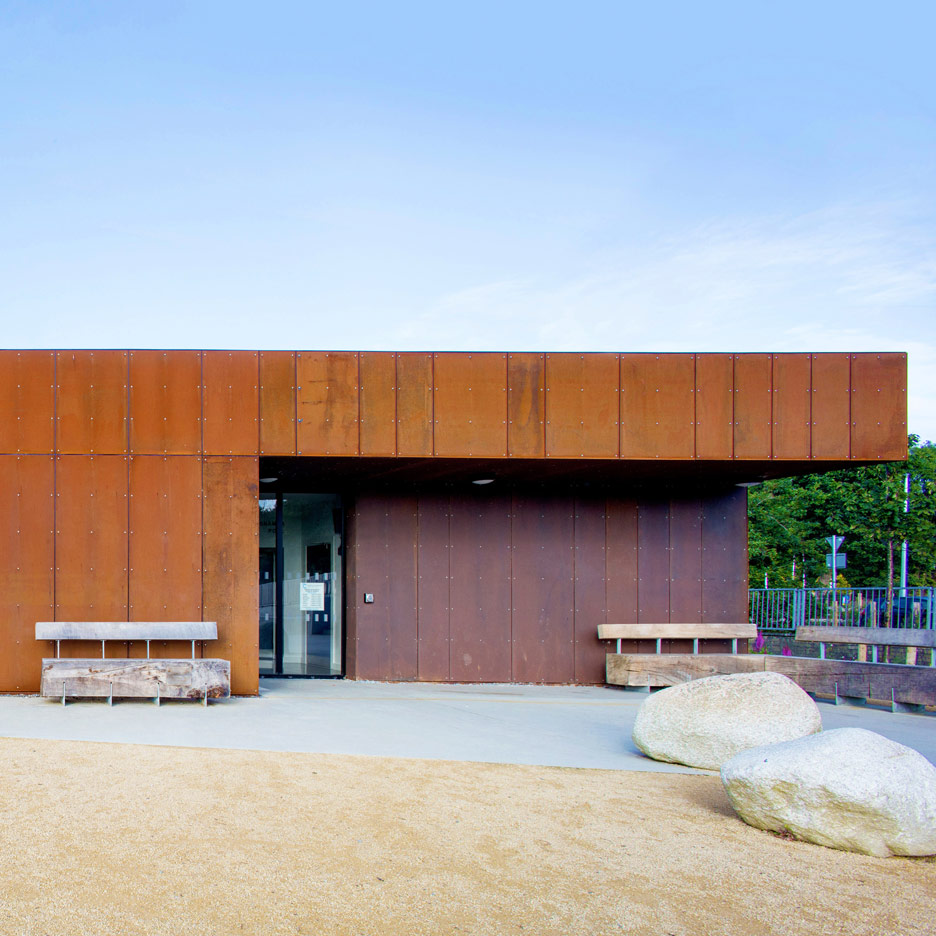
ABK updates 1960s leisure centre with new Corten-steel facade


Architecture firm ABK has overhauled an ageing leisure centre in County Tipperary, Ireland, with the addition of a new weathering-steel facade (+ slideshow). (more…)

http://ift.tt/2adDpNa

Beyazıt State Library / Tabanlioglu Architects


© Emre Dörter

© Emre Dörter


© Emre Dörter


© Emre Dörter


© Emre Dörter


© Emre Dörter

  • Architectural Project Team: Hande Pusat, Derya Genç, Irem Çatay, Kıvanç Cucur, Nazlı Tınaztepe, Deniz Manisalı
  • Interior Design: Hande Pusat, Derya Genç, Irem Çatay, Kıvanç Cucur
  • Restoration: Budowa Mimarlık, Yaman İrepoğlu,
  • Structural: Celal Erdem
  • Survey: Budowa Mimarlık, Yaman İrepoğlu,
  • Mechanical: GN mühendislik
  • Electrical: HB Teknik
  • Lighting: Studio dinnebier

© Emre Dörter

© Emre Dörter

Tabanlıoğlu Architects, known for producing internationally relevant, contemporary architecture across the world has embarked on the restoration works of Istanbul’s oldest and the largest library, the Beyazit Public Library.


© Emre Dörter

© Emre Dörter

First founded in 1884, the State Library building was originally the soup kitchen and Caravanserai of a complex that included a kitchen, a primary school, a hospital, a madrasah and a hammam. The library is a section of the Kulliyah of the Beyazıt Mosque- the oldest surviving imperial mosque in the city- built by Sultan Beyazıt II and completed in 1506. The complex (Kulliyah) spatially surrounds and defines the historic Beyazıt Square. 


Plan 1

Plan 1

Adjacent to Beyazıt Mosque, the Library is located in theBeyazıt Square that is connected to the spine of the historical peninsula, Divanyolu, and is one of the most vibrant spaces in the old part of the city. 


© Emre Dörter

© Emre Dörter

The quarter, where the State Library sits, is infused with historical connections of a literary nature; the old-book bazaar (bouquiniste) that is set in a courtyard leads toBeyazıt Gate, one of the main entrances of the Grand Bazaar. The front façade of the library backs the monumental plane tree under which is the traditional open air coffee shop serving since the Ottoman times.


© Emre Dörter

© Emre Dörter

The exemplary updating and fine-tuning of the State Library involved the sensitive re-organization of the interior and careful restoration of the building fabric with its prominent multi-domed roof.  In place of the former concrete roof, Tabanlioglu Architects installed a light and transparent inflatable membrane structure which covers the courtyard, filtering the daylight and providing a controlled atmosphere. In the renovated shell of the building, the black glass boxes devoted to the manuscripts,stand as a monolithic object of awe that are of a stark contrast to their surroundings.


Section

Section

Section

Section

Lighting Design by studio Dinnebier, echoes the spatial and historical qualities of the complex, introducing geometric harmony with its surroundings, while the soft lighting at the edges of the raised floor, that follows the wall contours introduce another layer of depth to the spaces. 


© Emre Dörter

© Emre Dörter

The flow through the building was modified in order to best serve its modern function with the main entrance now through the courtyard. A modest extension, respectful of the scale of the existing building, has been added to the northeast façade of the existing Library. Modern Turkish publications sit on the second floor and periodicals on the first, while the ground level houses the rare book collection, publications in the Ottoman era and other Ottoman, Arabic and Persian manuscripts that are now kept in air conditioned transparent cabins exclusively designed to fit in the intense atmosphere while preserving the legacy.


Plan 2

Plan 2

The ‘minimal intervention’ approach ensures the spirit of the place survives while modern facilities are grafted onto the historic fabric.The project aims further for environmental betterment, and urban regeneration of the public realm by reviving all the traces and capacities, principally the Beyazıt Public Square.


© Emre Dörter

© Emre Dörter

http://ift.tt/2ar3Elw

LLI Design Refurbishes a 1970s Home in Highgate

Southwood by LLI Design (3)

Southwood is a private residence renovated by LLI Design. It is located in Highgate, London, England. Southwood by LLI Design: “LLI Design recently completed a total redesign and refurbishment of a 4 story 1970’s townhouse in Highgate, a leafy and desirable part of London. The house had tremendous potential and the new owners, a young professional couple, wanted to embrace the 1970’s feel, rather than try to ignore it, albeit..

More…

Ginko / Hessamfar & Vérons


© Arthur Péquin

© Arthur Péquin


© Arthur Péquin


© Arthur Péquin


© Arthur Péquin


© Arthur Péquin


© Arthur Péquin

© Arthur Péquin

From the architect. This project involves building 93 multi-family and mid-range housing units in the Berges du Lac-Ginko development area, which forms part of the urban renovation scheme for the north of Bordeaux.


© Arthur Péquin

© Arthur Péquin

Context

Widely referred to as Ginko, this new district sets out to redefine the components of urban life: the place occupied by cars, how people get around, the distribution of energy, the shape of the urban fabric, the relationship with nature, and so on.


Floor Plan

Floor Plan

On the scale of the city block, we thought carefully about how to arrange habitually separate programmes—residential buildings, mid-range housing, row houses, and detached houses—in the most appropriate way.


© Arthur Péquin

© Arthur Péquin

Architectural approach

The juxtaposed « cascade » arrangement both attenuates the block-like effect typical of long, low-rise developments and avoids urban sprawl. This fragmented massing makes it easier for residents to appropriate the homes, and we have ensured that most of the units command views of the lake.


© Arthur Péquin

© Arthur Péquin

So that pedestrian movements take precedence over vehicular traffic, the ground floor homes have private gardens that surround the car park inside the block and make the street more attractive.


© Arthur Péquin

© Arthur Péquin

The car park roof on level 1 is designed as a communal garden: this makes it possible for residents to walk around inside the block and between the buildings.


Section

Section

Because the lobbies are at ground floor level, each building thus has three entrances: from the street, from the car park itself, and from the landscaped car park roof.


© Arthur Péquin

© Arthur Péquin

Dividing the buildings into four lots has made it possible to offer dual-aspect flats and corner balconies.


© Arthur Péquin

© Arthur Péquin

http://ift.tt/2aqWIVq

Roxanne Flick bases ceramic tea set on the shape of flamingos


Graduate shows 2016: Pforzheim University graduate Roxanne Flick has created a porcelain tea set that resembles the long necks and bodies of flamingoes. (more…)

http://ift.tt/2a9TTT0

The Brain of a Genius: 5 Surprising Characteristics of The World’s Greatest Minds

You’re reading The Brain of a Genius: 5 Surprising Characteristics of The World’s Greatest Minds, originally posted on Pick the Brain | Motivation and Self Improvement. If you’re enjoying this, please visit our site for more inspirational articles.

traits of genius mind

traits of genius mind

“No great mind has ever existed without a touch of madness.” – Aristotle

When we see people do incredible things, it’s natural for us to want to know how exactly how they’ve done them.

We watch the news or follow world affairs and see people accomplishing incredible feats all the time, and one thought often plays in the back of our minds.

Could I do that?

We hear about the achievements of household names such as Albert Einstein, Nelson Mandela, Oprah Winfrey, Helen Keller and Mahatma Gandhi, and they seem otherworldly – superhuman almost.

But there isn’t anything divine about these people and what they’ve done. They simply have, by chance or intention (usually a bit of both), been able to develop great minds that they direct towards a certain goal.

And fortunately for us, there is a method to their genius, an anatomy to their thoughts, attitudes, and behaviors that we can try to replicate.

So here are 5 characteristics of the world’s greatest minds.

1. A clinical obsession with their field of study

The greatest minds don’t just have a fleeting interest in whatever they’re directing their attention to.

In fact, successful people from Charles Dickens to Nikola Tesla, Michelangelo to Beethoven and even Michael Jackson, all have one thing in common. There were all believed to have had obsessive-compulsive disorder (OCD)!

While this doesn’t mean you need to develop OCD to be successful, what it does mean is that geniuses are often walking the thin line between passion and obsession, and to become great you must become obsessed.

2. An intense belief in a higher purpose

Having a belief in a higher purpose is what drives anyone to unimaginable feats.

The purpose may be religious or it may not, it doesn’t matter. As long as it is something that is bigger than you and bigger than your own ego, it can fuel you to great heights.

Alexander Graham Bell, for example, was driven by his determination to find a way to allow his deaf mother to hear – this caused him to become one of the most prolific inventors of his time.

3. The focus of a monk

When geniuses focus their mind on something, they don’t get distracted.

With a higher purpose leading their ideas and visions, they have pin-point focus and are able to create goals, follow them, and course correct without getting caught off-track.

Another benefit of having such intense focus is that they don’t get dissuaded by the opinions of others in the same way most people do.

Steve Jobs is an example of someone who had incredible focus. Influenced heavily by Zen Buddhism, it was said that one of Jobs mantras was “focus and simplicity.”

He never let the criticism of others get in the way of his ideas, even when he was fired from the company he himself built, he stayed set on his vision. He was later re-hired and went on to build the culture-shifting Apple that we all know today.

4. A childlike curiosity

When we are children we are able to absorb everything like a sponge. Partly because our brains are still growing by also because we haven’t yet been conditioned out of our innate curiosity.

19th-century French poet Charles Baudelaire put it well when he said:

“Genius is nothing more nor less than childhood recaptured at will.”

When you are able to look at the world through the eyes of a child you will see links where everyone else may miss them. Your attitude will be more soft and playful and your ideas will be more vibrant and creative.

5. They keep a journal with them constantly

The world’s greatest minds get their thoughts out on paper. This allows them to refine them, separating the valuable from the not so valuable, and calming the tendency to become neurotic.

Everyone from John D. Rockefeller to John Adams, Benjamin Franklin to Winston Churchill, Virginia Woolf to Frida Kahlo, all kept a journal.

Richard Wiseman best explains why this works from a psychological perspective in his book 59 Seconds: Think a Little Change A lot:

“Thinking and writing are very different. Thinking can often be somewhat unstructured, disorganized, and even chaotic. In contrast, writing encourages the creation of a story line and structure that help people make sense of what has happened and work toward a solution. In short, talking can add to a sense of confusion, but writing provides a more systematic, solution-based approach.”

What characteristics do you think make up a genius mind? Let us know in the comments!

Attention Pick the Brain Readers!

Do you want to start your mornings off with the same habits that were used by the world’s greatest minds?

Then grab a free copy of our new eBook: MORNING MASTERY: The Simple 20 Minute Routine For Long Lasting Energy, Laser-Sharp Focus, and Stress-Free Living.

———————————————————————————

Ben is a freelance writer, and the co-creator of Project Monkey Mind—a blog that helps you learn practical ways to live a productive, fulfilling and world-changing life in the digital age.

You’ve read The Brain of a Genius: 5 Surprising Characteristics of The World’s Greatest Minds, originally posted on Pick the Brain | Motivation and Self Improvement. If you’ve enjoyed this, please visit our site for more inspirational articles.

http://ift.tt/2acNYx5