The law courts of Caen redefines a new domain of urban planning in the centre of the City. The original design from the office of Christian Hauvette & associés was revised by Baumschlager Eberle Architectes together with the Atelier Pierre Champenois a former partner of Christian Hauvette.
It comes with a simple geometry which comprises several duties and responsibilities: the cube underlines the importance of jurisdiction by the means of its architectural form. The fundamental necessity of justice and the elementary methods of architecture correspond with each other as is the long tradition in Europe. The cube also clearly reflects its location and surroundings. The building and its public spaces constitute a self-confident district within an area which is under development.
An orthogonal pattern constitutes the base for the internal organisation of the law courts. The main rooms are adjacent to the facades; the corridors throughout the building always terminate at the facades. This results in good lighting and comfortable working areas. But this pattern involves more than a pragmatic and optimized organisation of the building – it involves an experience of interior space. The circular centre spans all 5 floors; it is the heart of the law courts, a landmark and also a parameter for the interior area. A horizontal band highlights the first floor where the court rooms are located. In so doing, the new law courts of Caen in Northern France communicate a message both to its users and to pedestrians: transparency, stringent shape and essential architectural means. Therefore it is not so far away from what a European civilisation expects from jurisdiction. But our civilisation today expects even more from a building – it should simply add to the longevity of our world.
The buildings sustainable strategy is driven by two axis: the project offers both high comfort to the users and optimal energy performance. The passive and active strategies ensure the building achieves low energy consumption: a very compact volume, a double skin façade system and a bioclimatic atrium which helps to reduce heat loss while increasing thermal inertia. This project is part of the Ministry of Justice’s goals to provide the courts a contemporary environment, corresponding to the current requirements of functionality, safety and serenity, while providing optimal public reception conditions.
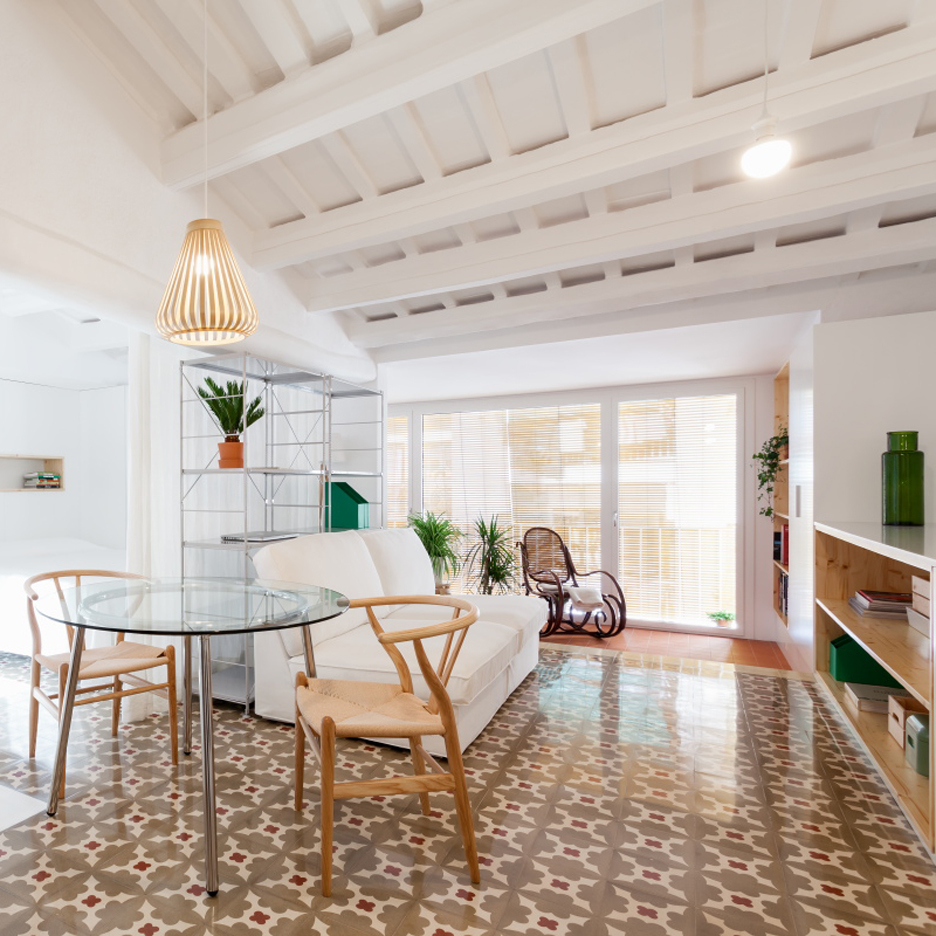
Oriol Garcia has overhauled a derelict apartment in Barcelona, removing walls he deemed “light barriers” to create a bright and spacious home that celebrates its historic details (+ slideshow). (more…)
From the architect. Just like the Siedlung Halen did back then, the “urban island” on the Areal Giessen site on Lake Zurich translates the village motif into a contemporary form. Ten houses with 34 freehold ats and up to eight commercial units were built in Meilen in to- tal. Even though the design is clearly based on the countryside character of the place, its abstract, geometrical shape creates a dialectic tension with the surrounding landscape. The residential units have been arranged densely on a narrow rectangular plot, forming an island in the landscape of Lake Zurich. The residential buildings have been arranged on the plot like on a chessboard and in a staggered order, so that all ats have a view of the lake. The terraces and staircases provide a range of different vistas on the lake.
Floor Plan
The new residential site is characterised by its compact urban design and the interaction between narrow alleys and broad, semi-private open spaces. A network of paths and streets as well as a small public square with sycamore trees at the centre of the estate give the Areal Giessen site an urban feel.
This deliberate arrangement of public and private spaces also extends into the buildings. Different spatial layers within the ats, ranging from the private area of the bedrooms to the living and dining areas facing towards the south, provide a 180-de- gree view of the surroundings. The ats on the Areal Giessen site have sizes of up to 257 sqm and contain 2.5 to 7.5 rooms each. Every at has its own individual, generously sized outdoor area facing to the south – either a roof-deck, a loggia or a pri- vate garden. Beneath the buildings, hidden under the slope, there is a basement garage from which all ats can be accessed. Every building also has a separate entrance. Sustainability, good noise insulation, and accessibility as well as spacious eleva- tors were important factors in the design process.
This seems so obvious but very difficult for most people to do. Most people hate themselves and their lives. They hate their looks, their jobs, their country and sometimes life itself. This attitude greatly affects their outlook on life and they see
negativity in everything.
This is simply because they’ve not accepted their realities. You have to love yourself the way you are and accept whatever life has dealt you. Accepting yourself enables you to stop feeling sorry about yourself and take responsibility. Before you can love others genuinely, you must love yourself, your imperfections, your strong points and your life.
2. Never Ever Call Yourself A Failure
People who have developed very good mental health never see themselves as failures. Even when they try and fail in any activity, they refuse to call themselves failures, but rather learn from their mistake and try again.
You must never ever call yourself a failure. It doesn’t matter how many times you think you’ve failed. You must make up your mind to learn, improve and keep trying. Many people will be willing to call you a failure, but you must never say that about yourself.
3. Engage With Your Environment
To develop good mental health, it is important to find time to interact with your surroundings. Even though alone time is important, you have to make out time to be around people, no matter how small.
We are social creatures and we’re dependent on one another. Don’t allow your work or disposition keep you from making out time for friends, family and associates. If you don’t have friends, it’s very easy time make one, just be there for someone.
4. Don’t Allow Anyone But Yourself To Control Your Life
It is important you take absolute control over your life and your situations. Desist from blaming other people, your government or the society for your troubles. Taking control of your life means taking full responsibility, making your own rules and directing your life.
When you speak, you must speak your mind and when you want to make a choice, it must be YOUR choice. You should listen to advice from others, but make sure your final decision is something you really want.
5. Always Face Your Fear With Courage
Mentally strong people have formed the habit of facing their worst fears and taking risks. The courage to take a risk alone improves mental health and makes you more alert and aware. Often times, the fears we face are illusory. They only exist in our minds.
To develop good mental health, you must learn to challenge yourself to face your fears. You either get it right or learn from getting it wrong. Being afraid to try keeps you in the same situation and that doesn’t help your mental health.
6. Don’t Try To Please Everyone
You have to understand that trying to please everybody is quite impossible here on earth. People will always have different ideas and opinions and there is no way to please one person and not offend the other.
Therefore, you should not try to please everyone because that will drain you of precious energy and make you lose direction. Rather you should learn to really listen to yourself and do what you’re convinced is right.
7. Stay Present, Don’t Live In The Past or Future
You must learn to stay in the present moment rather than dwell in the past. A major cause of sadness and depression stems from too much worry over the past or the future.
Learn to forget about the past, thinking about it pulls you back and makes you miss opportunities flooding the present. Same thing goes for the future. You waste time worrying about it instead of using the present moment to prepare for it. Let worrying about the past or future go! Let it go! Just use the present to rewrite the past and create the future.
8. Expect Nothing from No One
Yeah, I want you to remember this last line “No one owes you anything!” I repeat “No one here on the planet owes you any damn thing!” Poor mental health is caused by too much expectation from life, people, etc.
You shouldn’t expect anything from anyone, rather you should take up responsibility in the line of your passion and create value. People with good mental health are creators who offer value to the world not needy people waiting for someone to give them something. Expectation leads to disappointments. You’d rather expect nothing and be surprised at it rather than expect it and not get it.
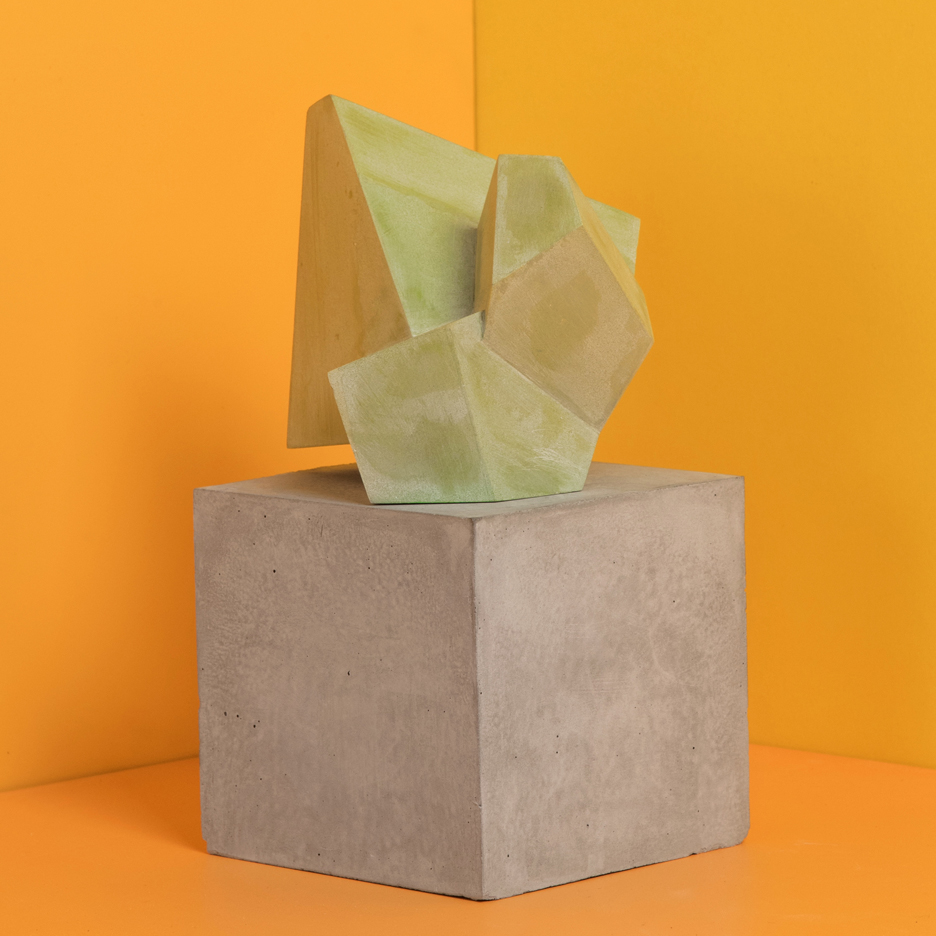
An exhibition at the Archivo gallery in Mexico City is exploring “the most important” part of the design process – the development stage (+ slideshow). (more…)
From the architect. The story of the J House originates from its surroundings. The view from the street to the entrance reveals a resolute stone path, a sidewalk, asphalt and an outdoor wall, all forming one complete composition. After a moment, tension is created by the realization of the slope downward from the street and the ambitious reach of the roof upwards – a roof noted by its whiteness, long window and sense of levity.
The contrasting lines of the ascending roof and descending land foreshadow the inner scheme of the home. For example the iron white lattice whose hollow spaces serve the light pouring in from diagonal roof – shadowy shapes appear to swim amidst reflections of light. An iron white staircase lends itself to the general atmosphere of the home- prismatic, multi-dimensional, exposing its occupant to the light and air wafting about the home. A frozen dance full of play – transparency and her opposite – are always picture perfect.
Ripples of water, the lines of glass, cable rails, and patches of light, all become actors in a domestic tableau. The pace of their movements is dictated by the sun – every degree of movement changes the light and the sequence of reflections and shape – the existing choreography of the home amplifies a visitor’s sense of being as either an additional source of movement or the beholder thereof.
The choreography of the home is not just a dramatic tableau – it is full of humor as well. There is free-wielding hand of movement that creates virtuosic freedom wherever one roams. The freedom of design is intimately connected to its complexity across levels – two floors of private bedrooms intersected by common split-levels – the higher one is the busiest hub for visitors. It showcases the fallen garden whose greenery embellishes the intricate shadows and provides vantage to the pool, surrounding walls and outdoor lounge.
These aspects, integrated into the design, play across levels and enhance the dimension of movement of the entire architecture – the lowered seating area, the English yard, reflecting pools and the entrance bridge. These are borne of the same logic – to enforce the visitor’s experience of presence in the space.
Thus, the visitor is an agent in their experience – that is to say – it is incumbent upon them to understand the ongoing transformation – every look, every movement, every use of space requires sensory awareness and wakefulness. Every moment is a new one-time occurrence, where sunlight falls on the building components providing a never before seen unique performance. Dance envelops in the visitor’s presence as it does even without them.
From the architect. Davich Optical Chain is one of Korea’s representative eyeglass chains, having hundreds of stores throughout the nation and supplying consumers with eyeglasses at all prices. The client for this project asked us to symbolize their own brand with more unique and architectural identity, in addition to being as a special retail store for eyeglasses. In other words, they wanted that a more luxurious feel and upgraded image (selling culture products) are to be added to this chain, not just an ordinary optician’s for selling products.
An early concept started from a circle, shape of glasses. The repetition of circles creates diverse patterns of façade which glasses are overlapped, and it was intended to remind of a specific image through groups of such repetition. The image made from groups of overall patterns symbolizes the flow of a river. The shape of the river in the hometown of the founder who established Davich Optical Chain was combined with a pattern of the circle, creating a major motive of the façade.
Its premise is located at the representative residential area in Gangnam, Seoul. This area is quite busy with ordinary citizens and students due to a lot of residential buildings and a lot of prestigious schools. Despite of high residential rates, commercial facilities such as department stores, various retail shops have been built around this area. 8-land roads play an important role in connecting key areas of Gangnam to each other, which lead many vehicles to pass by here. The building owner desired to renovate this building which symbolizes Davich Optical Chain and enables consumers to have various kinds of cultural experiences.
Ground Floor Plan
2nd Floor Plan
3rd Floor Plan
In addition to the front side exposed, the other three sides are focused to be renovated. The building is set to increase its height in order to highlight the symbolism of the architecture, being almost the same height as other neighboring buildings. The back side on the 1st floor is designed with parking lots pursuant to the laws, and rooftop with upper terrace of various functions.
Areas with four floors above ground and a basement will be used as a specialized optician, offering consumers various brands of eyeglasses at all prices. The 1st floor has a main entrance, displaying low and middle priced general brands. Consumers who visit here move at the flow designated. After being accepted at the optician, consumers follow a certain process, such as selecting glasses frame, checking vision, standing by at the coffee shop for reexamination. Properly displaying various types of eyeglasses by considering the flow was a very important factor for this project. There are various brand shops on the 2nd floor, luxury brand products (eyeglasses and sunglasses), and hearing aids and premium brands (eyeglasses) on the 4th floor. A contact lens shop and coffee shop are located in a basement, which enables consumers to wait until their glasses are made. For a barbecue party and external events, a mini garden with a beam projector is designed on the rooftop.
Façade consists of triple panels. Due to the characteristics of this building, windows to outside are not necessary, thus sides near the structures perform a function as a background panel for waterproof and lighting. 3,600 panels with glasses pattern interact over such primary side, forming the façade.
Panels with glasses pattern which determines the external image consist of inner and outer panels, which are placed alternately. Combining with panels in different sizes of openings leads coverings to have the rich texture of the façade and in-depth sensitivity. A flow of various light beams makes the surface look different slightly. To enhance the aesthetic effect, anodized coatings are to be applied over 2mm aluminum.
As inner and outer panels whose shape are glasses are intercrossed, the assembly order and configuration method of brackets which support the panels were considered an important part of the construction. The vertical structure which supports 3,600 panels and horizontal brackets which are bugled vertically and LED lights are to be constructed according to certain procedures and rules.
The façade is to be constructed in order of panels for waterproof and lighting, inner panels, and outer panels. One of difficult parts especially in configuration of this façade was to set a space for lighting installation and maintenance. The wall grazer light which shines the back panel is an important device that projects light onto the back side of glasses and lets a certain patterned image come out between gaps of glasses. This shines a wide variety of light sensitivity at the rear-end panel according to the LED dimming function. Furthermore, it is designed to change images in different colors according to color variations of RGB programmed. During the daytime, it helps stay true to the feeling of aluminum (raw material), and at night create various images of outer pattern in accordance with the certain LED program.
For interior finish, we intended to form the façade with the glasses pattern, same as the motive of glasses pattern on the outside. In other words, the Galvalume panels which become the motive of glasses form the main façade of the interior space which displays glasses. Such laser cut façade and black iron plate create a linear feeling for major space. Also for floors, epoxy lining is applied over concrete and mortar, intended for materials used to mingle with each other. We have selected the furniture with a unique streamlined design, representing the interior space. The show room across the interior space is furnished with consultation tables and vision measuring machines, etc.
This entire building is characterized by its commercial use and non-windows on outside, thus consists of closed façade without windows on three sides of outside. Triple panels are very effective in maintaining an appropriate temperature for diverse climate changes in Korea. These triple panels, also known as multiple layer panels, absorb the heat of the sun in summer in a regular pattern. Moreover side and rear windows as well as the air-conditioning and heating system help supply and exhaust air regularly in the building. We have considered not only using LED lights with great excellent thermal efficiency against an enormous amount of power spent for image advertising at night, but also their installation and maintenance costs for reasonable consumption.
For this renovation program, it is quite important to secure the emergency exits in case of fire. In addition to the main exit on the 1st floor, a sub exit is prepared at the parking lot in the back of the building. Signs and other sign graphics for evacuation guide people to exits promptly in case of fire. As fire extinguishers and detectors are installed in main stairs of interior space, safety is concerned for fire. This building is equipped with CCTVs, which enables people to effectively manage and cope with safety issues. As such safety and security systems are managed as an integrated circuit; they can be under control by the supervisor.





 Sig Nordal