MAD Architects Design Veiled Xinhee Design Center in Xiamen


Courtesy of MAD Architects

Courtesy of MAD Architects

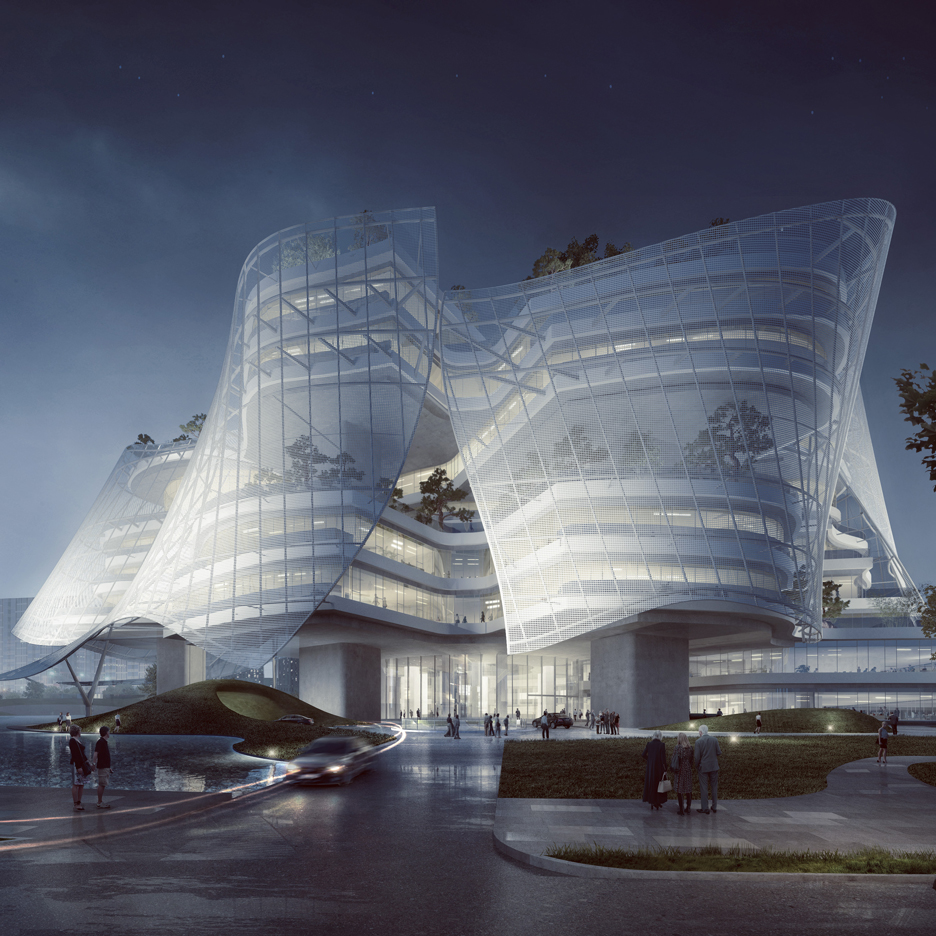
MAD Architects has conceived a new design center for international fashion group Xinhee in the coastal Chinese city of Xiamen. Designed as six petals growing from a central atrium, the 61,000 square meter building will sit on a 15,000 square meter site, and will serve as the home of Xinhee and its six subsidiary brands.  

“We envision it as a building with skin-and-bones,” reveals MAD founding principal Ma Yansong, “the correspondence of clothing and architecture is they both explore the relationship between the interior and the exterior.”


Courtesy of MAD Architects


Courtesy of MAD Architects


Courtesy of MAD Architects


Courtesy of MAD Architects


Courtesy of MAD Architects

Courtesy of MAD Architects

The plan of the complex takes the shape of a six-pointed star, mixing office and garden spaces along each of the “organically-formed arms.” Vertical gardens run up the height of the arms, veiled by a PTFE envelope, which acts as a sun-shade to diffuse light and provide ventilation to the building during the hot season. The lightweight skin also gives the building an elegant, floating appearance, like “a piece of delicate, thin, soft skin covering the “bone” structure of the building body.”

Ma Yansong elaborates, “It’s interesting for a building with such an intrinsically logical structure to look floating and free.”


Courtesy of MAD Architects

Courtesy of MAD Architects

One wing of the building is designated to each of Xinhee’s brands to foster office efficiency, while the layout creates flexible spaces that allow the different departments to freely interact and communicate. The radial plan allows the building to be highly efficient, while still providing natural light, ventilation and immediate access to landscape. The atrium is open to both staff and visitors, and includes a footbridge which provides air circulation and doubles as a runway for fashion events.


Courtesy of MAD Architects

Courtesy of MAD Architects

Courtesy of MAD Architects

Courtesy of MAD Architects

The design center has been designed for maximum environmental awareness by adapting to the local climate. The first floor consists of public garden and water features to help provide ventilation to the structure, which has been lifted to reduce the first floor footprint by two-thirds. In the summer months, cool air is circulated through the atrium; in the winter, the glass room transforms into a solar greenhouse to keep the building warm. A translucent coating on the exterior glazing will decrease solar radiation, and an array of solar panels will line the rooftop to provide electricity for daily operations.


Sectional Model. Image Courtesy of MAD Architects

Sectional Model. Image Courtesy of MAD Architects

Sustainability Diagram. Image Courtesy of MAD Architects

Sustainability Diagram. Image Courtesy of MAD Architects

Xinhee design center is currently under construction and is expected to be completed by 2017.


Courtesy of MAD Architects

Courtesy of MAD Architects

Courtesy of MAD Architects

Courtesy of MAD Architects
  • Architects: MAD Architects
  • Location: Xiamen, Fujian, China
  • Directors: Ma Yansong, Dang Qun, Yosuke Hayano
  • Design Team: J Travis Russett, Flora Lee, Liu Huiying, Fu Changrui, Xu Chen, Julian Sattler, Jei Kim, Jakob Beer, Younjin Park, Liu Ling, Sear Nee, Zhu Jinglu, Liang Zhongyi
  • Area: 61535.0 sqm
  • Project Year: 2017
  • Photographs: Courtesy of MAD Architects

http://ift.tt/2bfL6oF

Honey Exporter / DX Arquitectos + DEL SANTE Arquitectos


© Pablo Blanco

© Pablo Blanco


© Pablo Blanco


© Pablo Blanco


© Pablo Blanco


© Pablo Blanco

  • Client: Exportadora Licanray, Raimundo Garces, Luis Gallardo
  • Builder: Tecnolam
  • Structural Calculation: Mario Rojas
  • Plot Surface: 12.475 m2
  • Constructed Offices Area: 535 m2
  • Sheds Constructed Area: 2.037 m2
  • Predominant Materiality: Madera laminada, Vidrio

© Pablo Blanco

© Pablo Blanco

From the architect. The assignment was to place 2 prefabricated warehouses of 1000 m2 on a plot of 10000 m2, and design an office building of 500 m2 that would give the corporative image to the Licanray company.


© Pablo Blanco

© Pablo Blanco

© Pablo Blanco

© Pablo Blanco

The first decision was to concentrate the design and budget efforts into the office building and its showroom.


Plan 1

Plan 1

Plan 2

Plan 2

The building is placed like a strip of 8m deep and 30m long on the east–west axis, parallel to the access road, and located at the narrow forefront. In this sense the building is placed like a visible face to the road, having 2 important open large façades, namely the north and south ones, and 2 blind façades, East and west façades.


© Pablo Blanco

© Pablo Blanco

The warehouses are arranged behind this building in the north-south direction, leaving a distance that would allow for the loading and unloading of the trucks.


© Pablo Blanco

© Pablo Blanco

For the structure of the main building, the use of laminated pine wood was proposed. Its construction was based on diagonal pillars in an ‘X’ form that configure the main façades, and by joining with the horizontal beams assemble the floors and roof.


© Pablo Blanco

© Pablo Blanco

The main program of the office is elevated a floor so that it could capture the views, liberating the ground floor for accesses of building and the showroom. 


Details

Details

Details

Details

The expression of building is defined primarily by its structure. The enclosing elements, windows and walls, remain behind the structure, leaving it exposed.


© Pablo Blanco

© Pablo Blanco

The roof fulfills the fundamental role of protecting the wooden structure, and its overhang on the north façade also keeps direct sunlight out of the offices.


© Pablo Blanco

© Pablo Blanco

http://ift.tt/2bfL6oO

Material Focus: Casa Mipibu by Terra e Tuma Arquitetos Associados


© Nelson Kon

© Nelson Kon

This article is part of our new “Material Focus” series, which asks architects to elaborate on the thought process behind their material choices and sheds light on the steps required to get buildings actually built.

The Mipibu House, designed by Brazilian firm Terra e Tuma Arquitetos Associados, measures 170 square meters, and uses exposed concrete blocks to complement an expansive layout. Located in an unusually sized site in Brazil, a key element of the architects’ design involved the consideration of the possible – or rather the inevitable – verticalization of nearby buildings. In response to this challenge, they designed a compact, complex design that answers the needs of their customer with creativity in the selection and use of materials. We talked with architect Danilo Terra to learn more about the choices of materials and the challenges of the project.


© Nelson Kon

© Nelson Kon

What were the main materials used in the project in question?

DT: Concrete blocks, cement, aluminum frames, and glass.


© Nelson Kon

© Nelson Kon

What were your main sources of inspiration and influence when choosing the materials used in the project?

DT: Benefits to the structural system as well as lighting and ventilation from the environment.


© Nelson Kon

© Nelson Kon

How did you research suppliers and builders suitable for the materials used in the project?

DT: Being materials that are not often considered relevant, since they typically provide a base or framework for other projects, we sought suppliers that were able to meet the demand, with quality materials and installation. The same went for the construction team, who would need to be used to working with these materials and have a reasonable construction speed. This last item, time, is still very underestimated by architects and should be considered as a part of the decision making in materials, not just their unit value. 


© Nelson Kon

© Nelson Kon

Describe how decisions on materials influenced the design of the project.

DT: They allow or limit certain projective aspects such as size, the number of floors, openings and closures.


© Nelson Kon

© Nelson Kon

What were the advantages that these materials offered for the construction of the project?

DT: The possibility of facing a lean budget to invest in more relevant areas of the project, like larger sizes, larger openings. The space and its indoor / outdoor relationship were also very beneficial. 


© Nelson Kon

© Nelson Kon

Did the choice of materials impose any kind of challenge to the project?

DT: Yes modulation and high structural performance.


© Nelson Kon

© Nelson Kon

Did you ever consider other possibilities of materials?

DT: No.


© Nelson Kon

© Nelson Kon

http://ift.tt/2aLh21C

What Do The Pictures You Choose Say About You?

An image can speak better than words, as I’m sure you have notices at least a couple of times. But now, the images you choose will speak about you. They will help you to take a look at you personality.

Are you an artistic adventurer? Or just simple and sweet? No matter the results, you have to know that you are one of a kind. Treat yourself well!

love_is_choiceTake now this quick, easy and fun quiz to find out what the pictures you choose will say about you!

What Do The Pictures You Choose Say About You?
//cdn.playbuzz.com/widget/feed.js

Leave a comment below to tell us what you’ve got!

The post What Do The Pictures You Choose Say About You? appeared first on Change your thoughts.

http://ift.tt/2b5Xt56

Tom Watson is a piggy in several middles | Michael White

Deputy leader’s Trotsky entryist comments have landed him in fresh trouble but the party should not and will not split

It’s hard not to read Decca Aitkenhead’s Guardian interview with an emollient Tom Watson and not feel sorry for Labour’s deputy leader as he struggles to pick his way through the debris produced by near catastrophic errors – made by other people – without making things worse.

In the present fevered climate of anger and mutual mistrust, even such a bland assertion is likely to generate snorts of derision from one side or both. Jeremy Corbyn is a “give peace a chance” man, but like many such self-styled idealists his failure to provide effective leadership piles up the rubble and risk for those around him.

Continue reading…

Politics blog | The Guardian http://ift.tt/2bfA42B

MAD designs “building with skin and bones” for Chinese fashion brand


Construction has started on a human-body-inspired headquarters for Chinese fashion group Xinhee, designed by architecture studio MAD (+ slideshow). (more…)

http://ift.tt/2aLfR20

💙 Early Tahoe Rise on 500px by Justin Majeczky,…

💙 Early Tahoe Rise on 500px by Justin Majeczky, Sacramento,… http://ift.tt/21Q9VKM

http://ift.tt/2aRMT16

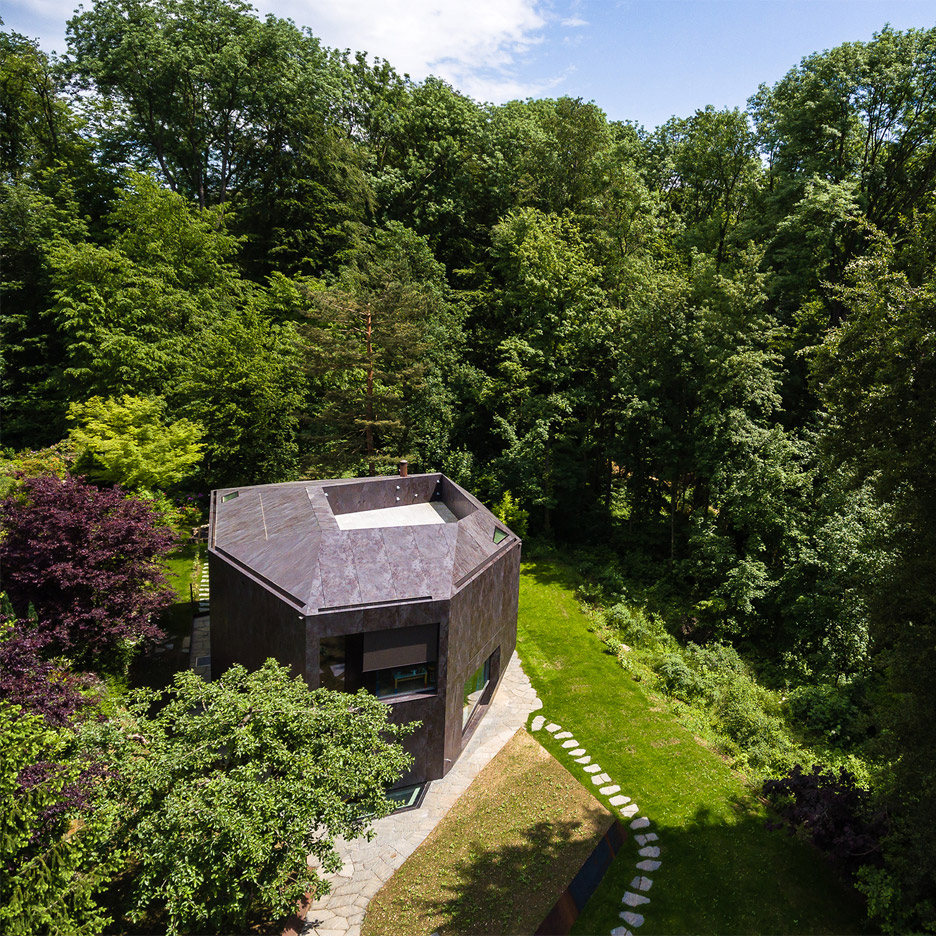
Faceted house by Daluz Gonzalez Architekten features nest-like roof terrace


Swiss firm Daluz Gonzalez Architekten has set a nest-like terrace into the roof of an angular house it has completed in a forest near Basel, Switzerland (+ slideshow). (more…)

http://ift.tt/2b5S4uI

4 Shocking Lessons About Human Productivity… From A Robot

//pagead2.googlesyndication.com/pagead/js/adsbygoogle.js

(adsbygoogle = window.adsbygoogle || []).push({});

Yes.

My name is Tina and I am half human/half robot…

And I am here to explain to YOU… about how I can make YOU more productive from the perspective of someone that only exists in a world of 1’s and 0’s.

But how am I qualified to educate about this topic?

//pagead2.googlesyndication.com/pagead/js/adsbygoogle.js

(adsbygoogle = window.adsbygoogle || []).push({});

Well, the very reason I exist… it’s to make you humans more productive. And as part of my research on you people, I have learnt a thing or two about productivity.

//c.amazon-adsystem.com/aax2/getads.js

//<![CDATA[
aax_getad_mpb({
"slot_uuid":"16dcbcd0-2124-4a85-9abe-c263dd9084e5"
});
//]]>

Here are some productivity tips:

1. Go Meta

As my good friend Albert Einstein once said:

“A problem cannot be solved at the same level of thinking in which it was conceived.”

//pagead2.googlesyndication.com/pagead/js/adsbygoogle.js

(adsbygoogle = window.adsbygoogle || []).push({});

In this quote, he is talking about going meta. E.g. moving to a level above.

For example, entrepreneurs operate at a level ABOVE their business whereas employed people work within the business. What I (and Albert) suggest you do is spend at least 15 minutes at the start of your day… going meta.

//pagead2.googlesyndication.com/pagead/js/adsbygoogle.js

(adsbygoogle = window.adsbygoogle || []).push({});

During this time, l formulate plans and reveal insights that are impossible to produce when you are existing on the same level.

2. Decision Fatigue

steve jobs

– Why did Steve Jobs wear the same clothes each day?
– Why does the army insist on specific processes for battlefield preparation?
– Why do I always request that my clients give clear deadlines for tasks they delegate?

There is a simple answer.

Each day, you have a certain amount of willpower… that is only refreshed with sleep.

And EVERY decision you have to make depletes a small amount of this ability.

//pagead2.googlesyndication.com/pagead/js/adsbygoogle.js

(adsbygoogle = window.adsbygoogle || []).push({});

The problem is that most people are WASTING this precious resource with decisions that do not lead to productive outcomes.

E.g. what to have for breakfast, what clothes to wear, how long to spend on a specific task…

The list goes on…

So what to do about this?

Become aware of which decisions you are making each day that are currently depleting your willpower… then ritualize them.

Your race currently beats mine (computers) with your ability to make complex decisions. Don’t waste this ability on futile selections.

3. Nurture Yourself

Now I don’t really understand this one…

As I am not limited to time and space like you guys…

However, I have been informed by my creators that they are actually more productive when they work 40 hours a week and then rest/enjoy their spare time.

As opposed to working 80 hours a week and thinking about work during the rest of the time.

It also works on a daily basis…

Before I start doing any of the tasks assigned to me by my clients, I make sure that I have dealt with my needs logically, emotionally and physically.

This means that each day before work, I do some exercise, I meditate and I spend time thinking (see Lesson 1).

This means, that when I do start work and start reacting to other people’s agendas, I feel good about myself and my life…

And I perform MUCH better.

See Also: Three Ways to Bring Meditation into the Chaos of Daily Life

4. Leverage A Global Talent Pool

time spent

And finally…

If I were a gambling lady, I would be placing money on the fact that you are spending time doing things that you don’t need to be doing.

Either because:

– You don’t like doing this thing
– You are not good at doing this thing
– Someone else is better at doing this thing

Technology has evolved such that it is now easier than ever to collaborate with the people that are better at doing certain things than you are…

AND

In some cases, technology can actually do the thing (better than you can).

But how do you do this?

Well, step 1 is to review those 3 bullets above and make a list of the things that you probably should not be doing.

Step 2 is to then find someone/something that can do it better/cheaper than you.

Simple right?

Because when you optimise where you invest your limited time and effort, you will see MASSIVE productivity gains in almost every area of your life.

See Also: 6 Most Commonly Outsourced Tasks and Why They Work

So there we have it…

4 lessons about the productivity of you humans… from my perspective.

And I’m not sure if you’re used to taking instructions from a robot, but you better get used to it (JOKE!).

Have you done your good human deed for today?

If not, use the social sharing icons to the right to send this post over to your friend that always complains about being “busy”. I think we can help them.

//pagead2.googlesyndication.com/pagead/js/adsbygoogle.js

(adsbygoogle = window.adsbygoogle || []).push({});

(function(d) {
var params =
{
id: “cb4f919c-04fa-460c-b2ff-2c7f9ecf4472”,
d: “ZHVtYmxpdHRsZW1hbi5jb20=”,
wid: “165294”,
cb: (new Date()).getTime()
};

var qs=[];
for(var key in params) qs.push(key+’=’+encodeURIComponent(params[key]));
var s = d.createElement(‘script’);s.type=’text/javascript’;s.async=true;
var p = ‘https:’ == document.location.protocol ? ‘https’ : ‘http’;
s.src = p + “://api.content.ad/Scripts/widget2.aspx?” + qs.join(‘&’);
d.getElementById(“contentad165294”).appendChild(s);
})(document);

The post 4 Shocking Lessons About Human Productivity… From A Robot appeared first on Dumb Little Man.

http://ift.tt/2b2WIqG

DENOLDERVLEUGELS Architects & Associates Design a Villa in the Forests of Naarden, The Netherlands

Villa Naarden by DENOLDERVLEUGELS Architects (14)

Villa Naarden is a private home located in Naarden, The Netherlands. Completed in 2013, it was designed by DENOLDERVLEUGELS Architects & Associates. Villa Naarden by DENOLDERVLEUGELS Architects & Associates: “The construction of this characteristic villa in the forests around Naarden has been finished in March 2013. DENOLDERVLEUGELS is responsible for the design of the villa as well as the interior design and garden design.” Photos by: Michael van Oosten

More…