Lyons and m3architecture Selected to Design Sustainable Futures Building at the University of Queensland, Australia


Courtesy of Lyons and m3architecture

Courtesy of Lyons and m3architecture

Firms Lyons and m3architecture have been selected to design the Sustainable Futures Building at the St Lucia campus of the University of Queensland.

The new building will house the School of Chemical Engineering, and is intended to amplify the University’s profile as a hub of chemical engineering leadership in Australia, the Asia-Pacific region, and a global stage.


Courtesy of Lyons and m3architecture

Courtesy of Lyons and m3architecture

The design concept creates a physical environment and identity that reinforces the School’s distinctive strengths—outwardly open and transparent, and inwardly intense and focused said the main architect at a press release. 

Sustainability efforts for the project mimic this concept, as the building features a highly energy-efficient glass skin façade, while energy-intensive research areas are offset by renewable energy photovoltaics on the roof.


Courtesy of Lyons and m3architecture

Courtesy of Lyons and m3architecture

The design of the exterior of the building is inspired by “the confluence between chemical engineering and the campus itself,” and thus is an evolution from sandstone to glass, representing the technological advances of chemical engineering.

The project additionally features open connecting stairs, shared collaborative spaces, and “blurred overlapping boundaries between learning, research, and industry.”

News via Lyons and m3architecture.

http://ift.tt/2aSqle4

Sunset on the rocks by _olasso The biggest rock of course being…

Sunset on the rocks by _olasso The biggest rock of course being Snæfellsjökull glacier in the distance 🙂 http://flic.kr/p/4M6B5z

http://ift.tt/2aJg8TL

Radar Architecture&Art Wins Second Place in ‘Activate’ North Carolina Housing Competition


Courtesy of Radar Architecture&Art

Courtesy of Radar Architecture&Art

Radar Architecture&Art has won second place in the ACTIVATE North Carolina 2016 Housing Competition, which sought out innovative ways to reinvent urban housing for the 21st century. 

Through its design, Radar proposes a “new way of inhabiting” and “a new sense of community” via a hybrid structure of public, semi-public and private space.


Courtesy of Radar Architecture&Art


Courtesy of Radar Architecture&Art


Courtesy of Radar Architecture&Art


Courtesy of Radar Architecture&Art


Courtesy of Radar Architecture&Art

Courtesy of Radar Architecture&Art

On the ground floor, the project features a maze of narrow, 3.7-meter-wide, translucent volumes, which host public and semi-public functions, as well as community living spaces of private houses. This creates a series of intimate and interconnected open spaces. These spaces additionally form an urban plaza, community plaza, commercial boulevard, playground, and garden area, in a mixture of typically urban and suburban spaces.

Above the maze, private residential volumes are placed, completing the “porous” fabric of the project.


Courtesy of Radar Architecture&Art

Courtesy of Radar Architecture&Art

Courtesy of Radar Architecture&Art

Courtesy of Radar Architecture&Art

The combination of living and working spaces located on one portion of the project contribute to the urban atmosphere of the proposal, creating a space where networking, cooperation, and synergy can flourish.


Courtesy of Radar Architecture&Art

Courtesy of Radar Architecture&Art

Courtesy of Radar Architecture&Art

Courtesy of Radar Architecture&Art

The urban aspect is further reinforced by the presence of facilities such as a restaurant/cafe, shops, community co-working spaces and children indoor spaces. The family dwellings on the other hand, provide typical aspects of the suburban life-style – closeness to nature with the possibility of barbequing, gardening, outdoor sports and relaxation, but in an environment that in a sense surpasses the limits of the suburbs being lively, community-like, with urban characteristics. – Radar Architecture&Art  


Courtesy of Radar Architecture&Art

Courtesy of Radar Architecture&Art

News via Radar Architecture&Art.

http://ift.tt/2bctUfQ

How to Find a Good Mechanic in the Age of Social Media

//pagead2.googlesyndication.com/pagead/js/adsbygoogle.js

(adsbygoogle = window.adsbygoogle || []).push({});

Finding a skilled and reliable mechanic isn’t easy, and it can be stressful to be faced with a task of choosing someone you trust to fix only what’s broken, and at a reasonable price. The good news is that the Internet and social media can be a helpful tool in finding a trustworthy and experienced mechanic when you need one.

Here’s how to vet a new mechanic in the age of social media, and how to hold on to a good mechanic once you have found him.

What to Look for in a Mechanic

auto mechanic

Finding a reputable automotive service center online is a good place to start, but you’ll need to drill down deeper than positive reviews for the business itself. Auto repair shops employ multiple mechanics so taking your vehicle into the best service center in town won’t do you any good if your vehicle is assigned to a new technician in training. You’ll need to find out who the star players are in this service department.

//pagead2.googlesyndication.com/pagead/js/adsbygoogle.js

(adsbygoogle = window.adsbygoogle || []).push({});

Good technicians often certify themselves through the ASE (Automotive Service Excellence) program. This testing platform allows mechanics to display their knowledge in specialized areas.

//c.amazon-adsystem.com/aax2/getads.js

//<![CDATA[
aax_getad_mpb({
"slot_uuid":"16dcbcd0-2124-4a85-9abe-c263dd9084e5"
});
//]]>

However, as an auto mechanic, I can tell you there’s no substitute for experience. Mechanics learn something new every day. The more days they spend fixing cars, the more they learn about them. When faced with a complex diagnosis on a complicated car, these veteran mechanics can reach into their bag of experiences to find the answers.

With that said, I’m willing to trade years of experience for pinpoint education on my particular automobile. If I drive a late model Chevy, I would choose a Chevrolet certified technician with three years of experience over a mechanic at an independent facility with 10 years under his belt.

Keep in mind that many dealership-trained mechanics wind up working at independent and franchise auto repair centers later in their careers. When vetting a new mechanic, push for a conversation with him to see if he has ever worked on your specific year, make and model.

//pagead2.googlesyndication.com/pagead/js/adsbygoogle.js

(adsbygoogle = window.adsbygoogle || []).push({});

The Tools to Use

Facebook can be a good tool as a first step in finding a mechanic: Ask your friends for recommendations to get you started.

But, keep in mind that your Facebook friend might have a Toyota Corolla that almost fixes itself, while your Cadillac is much more complicated. It’s also possible to have a good experience with a bad mechanic.

//pagead2.googlesyndication.com/pagead/js/adsbygoogle.js

(adsbygoogle = window.adsbygoogle || []).push({});

As the saying goes, a broken clock is right at least twice a day. Cross-reference these recommendations from your social media friends with sites like Yelp or Angie’s list that have dedicated sections for auto repair.

But don’t stop there. When vetting a new mechanic, try using additional tools that aren’t as well recognized. As an example, the people at Car Talk have put together a local research tool called The Mechanic Files . Here you can enter your city and state to find out more about shops in your area. This tool is designed to show the good mechanics at the top of the list, as the reviews are listed in descending order of satisfaction.

Another research tool I prefer over the big players is provided by RepairPal. This service also provides location-based information and verified reviews. However, it also supplies important information at a glance.

Some of this data includes the business owner’s name, how long the shop has been open, the number of ASE certified technicians working in the establishment, and the total years of experience.

See Also: DIY: Skip the Mechanic for Simple Car Tasks

Hang on to that Technician for Dear Life

automotive technician

//pagead2.googlesyndication.com/pagead/js/adsbygoogle.js

(adsbygoogle = window.adsbygoogle || []).push({});

Now that you spent a fair amount of time finding a good mechanic, you don’t want to let him go without a fight. Mechanics often move around in search of the best pay for their skills, so don’t take it for granted that your favorite technician will stay at the same repair shop.

Being a mechanic is a tough job, and it takes a lot of initial training before they see their first paycheck. Not only is the training expensive, but the tools required to work on automobiles cost even more.

To make matters worse, the average mechanic only makes around $37,000 a year. The one thing automotive technicians have on their side is job security. So they are always shopping for the best offer in exchange for their skills.

There are two things that an automotive consumer should do when they find the right mechanic.

First, let them know you appreciate their hard work, professionalism and skill level. The verbal compliments will go a long way, but back up your words with a physical demonstration of sincerity. Take the time to interact when you pick up the vehicle and slide them a monetary tip.

The second thing you want to make clear is that your loyalty lies with the mechanic and not the business. This way when they move to a greener pasture you’ll get an invitation to follow along.

See Also: Check Out The Top 10 Garage Door Trends For 2016

If you maintain your relationship, you’ll be saved from going through the arduous process of finding a trusted technician all over again. And don’t forget to pay it forward—recommend your great find to your friends on social media, so they can benefit from your research.

//pagead2.googlesyndication.com/pagead/js/adsbygoogle.js

(adsbygoogle = window.adsbygoogle || []).push({});

(function(d) {
var params =
{
id: “cb4f919c-04fa-460c-b2ff-2c7f9ecf4472”,
d: “ZHVtYmxpdHRsZW1hbi5jb20=”,
wid: “165294”,
cb: (new Date()).getTime()
};

var qs=[];
for(var key in params) qs.push(key+’=’+encodeURIComponent(params[key]));
var s = d.createElement(‘script’);s.type=’text/javascript’;s.async=true;
var p = ‘https:’ == document.location.protocol ? ‘https’ : ‘http’;
s.src = p + “://api.content.ad/Scripts/widget2.aspx?” + qs.join(‘&’);
d.getElementById(“contentad165294”).appendChild(s);
})(document);

The post How to Find a Good Mechanic in the Age of Social Media appeared first on Dumb Little Man.

http://ift.tt/2b13zol

Rio 2016 Olympic Handball Arena / OA | Oficina de Arquitetos + LSFG Arquitetos Associados


© Leonardo Finotti

© Leonardo Finotti


© Leonardo Finotti


© Leonardo Finotti


© Leonardo Finotti


© Leonardo Finotti

  • Architects: OA | Oficina de Arquitetos, LSFG Arquitetos Associados
  • Location: Rio de Janeiro, Rio de Janeiro, Brasil
  • Authors: Ana Paula Polizzo, Gustavo Martins, Geraldo de Oliveira Lopes, Gilson Ramos dos Santos e José Raymundo Ferreira Gomes
  • Collaborators: Felipe Monnerat, Vitor Garcez, Juliana Sicuro, Igor Pio, Janaina Nagot, Jean Boechat, Cristiano Vieira,Honório Magalhães e Jorge De Miguel Maza
  • Project Year: 2016
  • Photographs: Leonardo Finotti

© Leonardo Finotti

© Leonardo Finotti

This architectural project, developed for the venue that will host handball games in the 2016 Olympics and Goalball games in the 2016 Paralympics both to be held in Rio de Janeiro, has the target to search for suitable solutions in diversified interfaces in the complex system composed of sports equipment for the games and its legacy. Unlike other arenas located in the Olympic Park, this Olympic arena right after the games will become four public city schools. Therefore, the team has developed such a building that could prioritize in its construction concepts like flexibility, mutability and adaptability.


© Leonardo Finotti

© Leonardo Finotti

The core of the project consists of an octagonal area, where the games will be played, and its stands. There is also an independent and temporary metallic structure. It has an octagonal shape so that this structure can adapt to several spatial organizations which favor economicity and the possibility to reuse modular structures in order to build four schools in the city of Rio de Janeiro. 


© Leonardo Finotti

© Leonardo Finotti

Among the structure compounds, we highlight the presence of a building skin composed of brises made of recycled wood enveloping the building. This system is intended to filter external light and absorbs the landscape silhouette showing the geographic fluidity of the environment. 


Section

Section

Diagram

Diagram

This arena has the capacity of 12,000 spectators, for the Olympic module it reaches 11,959 people whereas for the Paralympic module it will have 5,204 people. The total built-up area is 24,214 m². 


© Leonardo Finotti

© Leonardo Finotti

It is fundamental to emphasize that the project for this Arena must not only be understood as a mere sports venue but also as an area that offers a rich capacity of transformation. We might state that its mutability is an important legacy for the city.


© Leonardo Finotti

© Leonardo Finotti

http://ift.tt/2bcnxJ9

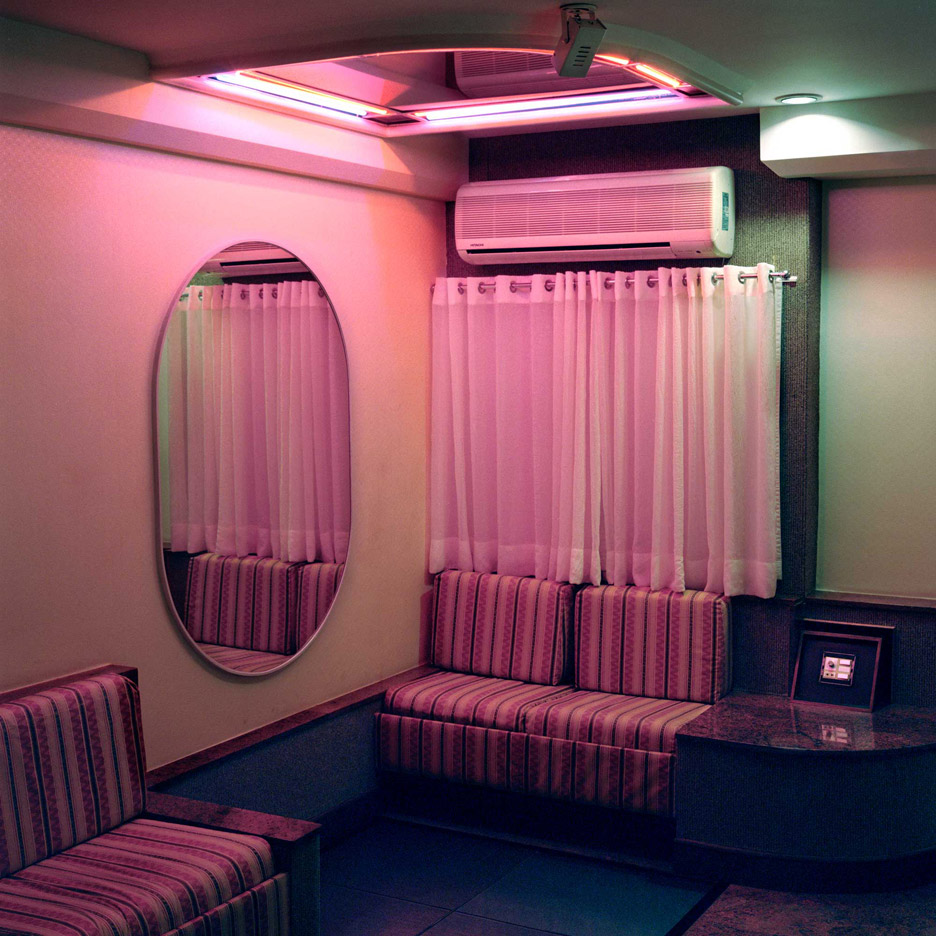
Love Land Stop Time photography series shows Brazil’s “tantalising” motels


Photo essay: worried that Brazil‘s love motels would fall foul of Olympic development, Dutch duo Vera van de Sandt and Jur Oster visited the pay-by-the-hour rooms to capture the moods of these intimate spaces (+ slideshow). (more…)

http://ift.tt/2aEK8mb

Ennead Architects Makes Progress on New University of Michigan Biological Sciences Building


Courtesy of Ennead Architects

Courtesy of Ennead Architects

Ennead Architects has recently celebrated the completion of the steel core of a new 295,000-square-foot Biological Sciences Building (BSB) and Museum of Natural History with a topping out ceremony at the University of Michigan. Due to open in 2018, the BSB will bring together the departments of Molecular, Cellular and Developmental Biology, Ecology and Evolutionary Biology, the Research Museums of Paleontology and Zoology, and a re-envisioned Museum of Natural History. 


Courtesy of Ennead Architects

Courtesy of Ennead Architects

In order to foster intimacy and collaboration, the building has been designed with small, interconnected “lab neighborhoods” sized appropriately for specific research endeavors.


Courtesy of Ennead Architects

Courtesy of Ennead Architects

Two glazed atriums unify the building’s three volumes, allowing for visual connectivity between research and museum spaces.


Courtesy of Ennead Architects

Courtesy of Ennead Architects

With an education-focused mission, the museum space within the project will exhibit collections that communicate the research conducted at the University. Specialized programs, such as two investigative libraries, a multimedia presentation space, and a seventy-seat digital dome theater will be incorporated into the Museum.


Courtesy of Ennead Architects

Courtesy of Ennead Architects

The building will complete a new “Science Neighborhood” for the University, unifying a residential zone, the life sciences quad, and the main axis through the campus, the “Diag.”

News via Ennead Architects

http://ift.tt/2aErU0X

Boston Road / Alexander Gorlin Architects


© Michael Moran

© Michael Moran


© Michael Moran


© Michael Moran


© Michael Moran


© Michael Moran

  • Participants : Breaking Ground

© Michael Moran

© Michael Moran

From the architect. Boston Road provides 154 units of housing for formerly homeless people, many of them seniors and living with HIV/AIDS, as well as low-income working adults from the South Bronx.  


© Michael Moran

© Michael Moran

The building’s internal layout places equal emphasis on private rooms and communal spaces. Shared areas include multi-purpose rooms to accommodate social services and tenant meetings. In addition, there is a large patio and garden, a roof terrace, computer lab, exercise room, bicycle storage and laundry.


Diagram

Diagram

The colored metal panels in the façade both animate its surface and serve to recall the history of the site. The building stands in the Morrisania neighborhood, on the site of the farm owned by James Morris who was a signer of the Declaration of Independence. Morris offered the farm to the new government as the future Capitol of the United States, however Washington DC won out.


© Michael Moran

© Michael Moran

The waving ceiling of the lobby also refers to the geology and topography of the site, where a large rock of schist stood exposed to the weather.


© Michael Moran

© Michael Moran

Ground Floor Plan

Ground Floor Plan

© Michael Moran

© Michael Moran

The building has been designed for Energy Star rating. Energy-efficient elements include a green roof and a building management system that regulates electrical, cooling, and lighting systems. Low and non-VOC content finishes are used throughout the interiors to provide a healthy environment for tenants.


© Michael Moran

© Michael Moran

Floor Plan

Floor Plan

© Michael Moran

© Michael Moran

http://ift.tt/2b4an5a