Jewels of Salzburg / Hariri & Hariri Architecture


© Bryan Reinhart

© Bryan Reinhart


© Bryan Reinhart


© Eric Laignel


© Eric Laignel


© Bryan Reinhart

  • Design Team: Jenny Shoukimas, Liv Marit Naess, Marlene Kwee, Neda Pourshakouri
  • Architect Of Record: Arinco planungs+consulting gmbh (Traun), Peter Schaufler (Geschaftsfuhrer), Oliver Fischer (Projektleiter)
  • Structural: Schindelar ZT GmbH, Petschnigg ZT GMBH
  • Mechanical: TB Heiling
  • Building Physics: TAS Bauphysik
  • Landscape: Karin Standler
  • Lighting: Herbst GmbH
  • Acoustical: TAS Bauphysik
  • Building Services: TB Heiling
  • General Contractor: Porr GMBH

© Bryan Reinhart

© Bryan Reinhart

Inspired by the defining natural elements of the City of Salzburg, this proposal takes form. The master plan of this development abstractly mimics the city and becomes the Microcosm of the city of Salzburg itself, with the defining mountains and Salzach River flowing through.


© Eric Laignel

© Eric Laignel

Section

Section

© Bryan Reinhart

© Bryan Reinhart

To create a dialogue and a personal, meditative experience we have cut a narrow creek at the edge of the rock wall, which guides and invites the public through the site. Just like the Salzach River, it creates a new boundary, provides movement and extends the nature into the site. The old path is incorporated in this sequence where the water travels from the highest elevation on the site through series of water falls and becomes the collector of melting snow water, Icicles, and rocks. This pedestrian path is carefully designed to allow the public to enjoy the natural beauty of the forest and the rock face without disturbing the privacy of the residents. This water canal also provides a place for exhibition of outdoor water sculptures.


Plan

Plan

© Bryan Reinhart

© Bryan Reinhart

Plan

Plan

Architecturally this project simulates the rock formation, deposits and random composition of a quarry site where pieces of rocks are chiseled from the mountain and then cut to smaller pieces stacked up in a random fashion. Each block then becomes a container, a wrapping enclosure of smaller blocks or apartments within, allowing each living unit to be unique with magnificent views. With this approach the mountain becomes a “generator” rather than a “backdrop” The buildings we have proposed here are set back from the rock-face. They hover over their bases just enough to create a tension from where one could almost reach out and touch the rock.


© Eric Laignel

© Eric Laignel

One hundred luxury residences will occupy the six new structures on the site, none of which reach more that eight stories in height. The program also includes exhibition space for the House of Architecture, a gallery and lecture space in the old brewery’s underground vaults. Covering the subterranean facility will be a public green space punctured by sculptural skylights jutting from the ground.


© Tobias Kreissl

© Tobias Kreissl

http://ift.tt/2aMvabH

Paul de Ruiter Architects & Chris Collaris Work Together to Create a Lively Townhome in Rotterdam, The Netherlands

Townhouse Kralingen by Paul de Ruiter Architects (8)

Townhouse Kralingen is a project completed jointly by Paul de Ruiter Architects & Chris Collaris. It is located in Rotterdam, The Netherlands. Townhouse Kralingen by Paul de Ruiter Architects & Chris Collaris: “In one of the oldest streets in Rotterdam we designed the renovation of a monumental townhouse. We transformed the former museum of Kralingen into a luxury home. While maintaining the existing framework of the villa, we completely restructured..

More…

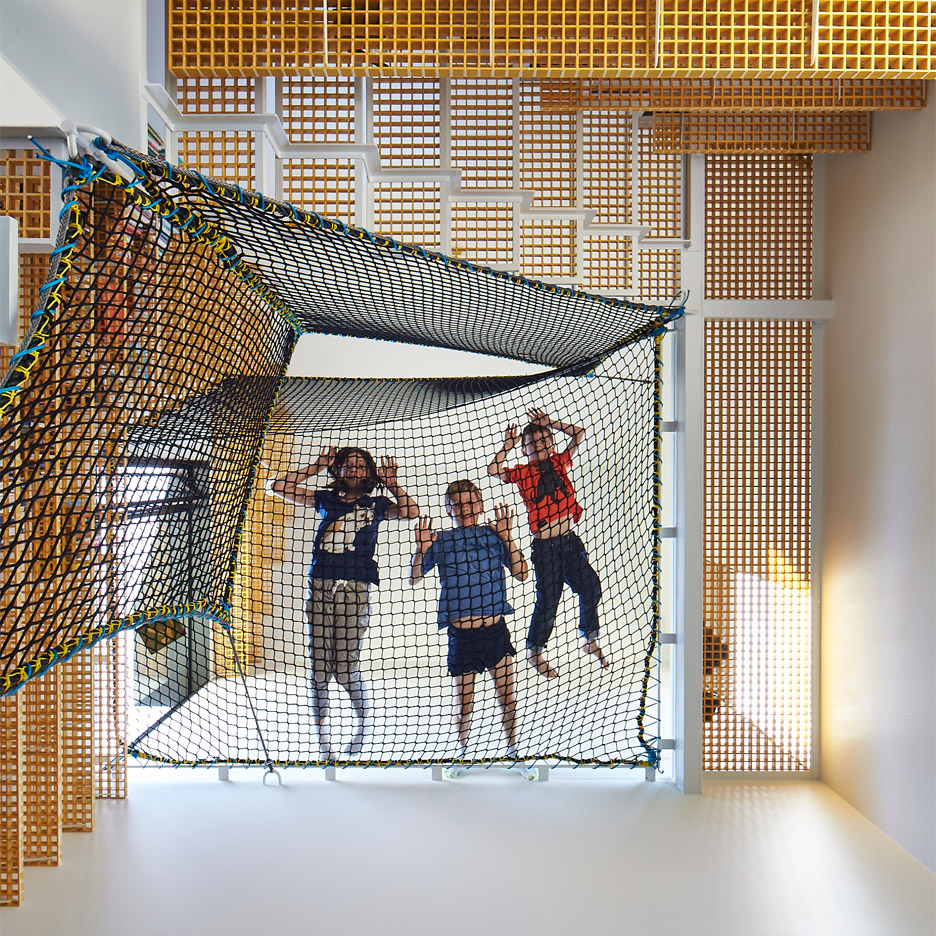
Six homes that use nets to create suspended play spaces for children


Architects are increasingly using nets to make the most out of spare space in houses, creating giant hammocks that children can use for work, rest or play. Here are six of the best examples (+ slideshow). (more…)

http://ift.tt/2aheYQb

the-girl-with-cold-hands-blog: The Girl With Cold HandsIf…

the-girl-with-cold-hands-blog:

The Girl With Cold HandsIf you… http://ift.tt/1QrsgFJ

http://ift.tt/2aMOmXk

What Makes A Good Follower

I have already penned a few articles here on my opinion of what makes a good leader, the traits shown by our best managers and boss es to get the job done with dignity and enthusiasm and inspire us all to work more productively.

But there’s another side of the coin as well – being a good follower. As much as a good leader is essential to team performance, being a good student is just as important. It’s the difference between having a good attitude at work and a poor attitude; between showing respect and earning respect. A poor follower drags the team down and leaves a bad example for the others, hopefully not to be replicated. A poor follower demonstrates abilities that leave us all wondering, “how did you get hired here?”. And we don’t want to be that guy!

followerBeing a good follower, a good employee, is the best way to stay a firm course through your position at work now, and the best way to make yourself a candidate for recognition and promotion. And who doesn’t want to look good?

1. Leave the ego at home

I remember getting over this hurdle when I was in my early twenties. As soon as we start working and begin reaching our prescribed milestones we develop a sense of achievement. This can affect our ego with long lasting effects if we don’t realize it happening and nip it in the butt.

Many kids continue on a stream of reaching their set goals without any let, as they reach new salary levels and job positions quickly. This develops an ego of invincibility into adulthood and develops the leaders that we do not like. It makes someone feel like they have always been the best at what they do, which may not be false, but does not allow room for outside influence to improve themselves as much as it should. They shut down other ideas because their ideas already work.

If you want to be a good follower, you must leave the ego at home. Even if you have achieved all you want, one must be humble to accept ideas and solutions from others and keep a level temperament.

2. Being a good listener

Being a good listener does not mean just following the rules, but thinking about them, observing them, enforcing them and using that framework to embetter the workplace for everyone. It means taking an idea that has been suggested and not only doing it, but succeeding it by passing it to others and in course, leading by the example set forth. To be a good follower is to listen to the rules but to be a good leader is to start here by influencing others.

3. Keep a level head

We have to deal with bosses, we have to deal with people below and above us. Our greatest strength at this level is the ability to keep a level temperament throughout the day while we deal with the mirth of people we have to associate with, from customers to upper management. Showing our rigidity in a number of situations makes us look powerful and stern. We are mature enough to handle the ebb and flow of work and life and not be raised too much in any one way throughout the day.

People who cannot keep a level head during times of momentary stress throughout the day seem inexperienced or even immature. To recognize that we all have good and bad days is an essential quality of the working day because we do. To be able to accept all of that with a smile and fight through it is our strength.

4. Leave the issues at home

This is hard to do if we have a heavy burden at home, but it is important to show to our colleagues and supervisors that we can stay focussed at work and not bring others into our dramatic life equations. If your home or social life is so disturbed that you cannot focus at work, perhaps you should take an absence (although I think work is the best way to get your mind off things!). However, staying strong and determined through your work day demonstrates strength through fire and your peers will look up to you for motivation in the future as they see you endure your struggles. You will inspire others, and what better way to overcome something than that?

5. Doing the dirty work

This goes with #1’s point about ego. Remember that no matter how high you are, you are never above doing the work below you. If he/she can do it, so can you. I knew one girl who tried to leave a well paying waiting job to start a wedding planning business. Due to market oversaturation her business failed quickly and she went back to the restaurant with her tail between her legs, making a few jokes along the way. It seemed to others that she was above serving tables, despite the high pay and relative ease. It’s a bad example to set for others. You are never above doing the “dirty work,” we are all in this together.

The post What Makes A Good Follower appeared first on Change your thoughts.

http://ift.tt/2aSdBVS

abandoned bureau by rocco del anno http://flic.kr/p/sjcyt8

via Statues in Focus http://ift.tt/2arTU6I

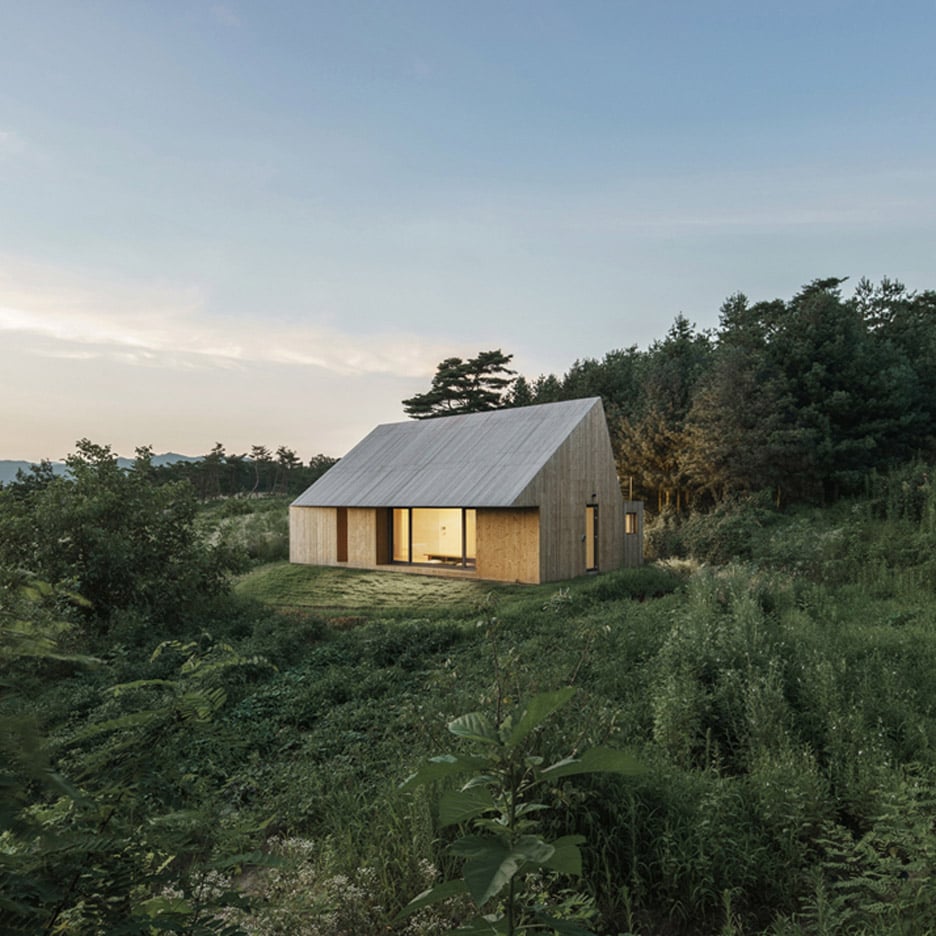
STPMJ completes rural cabin with a swivelled roof in South Korea


From one side this wooden house in South Korea looks like a typical gabled cabin, but from the other side its roof appears to be misaligned (+ slideshow). (more…)

http://ift.tt/2akqYMd

Fine Arts Museum / Barozzi Veiga


© Simon Menges

© Simon Menges


© Simon Menges


© Simon Menges


© Simon Menges


© Simon Menges

  • Architects: Barozzi Veiga
  • Location: Chur, Switzerland
  • Architect In Charge: Fabrizio Barozzi , Alberto Veiga
  • Project Leader: Katrin Baumgarten
  • Area: 4000.0 sqm
  • Project Year: 2016
  • Photographs: Simon Menges
  • Project Team: Paola Calcavecchia, Shin Hye Kwang, Maria Eleonora Maccari, Anna Mallen, Verena Recla, Laura Rodriguez, Ivanna Sanjuan, Arnau Sastre, Cecilia Vielba
  • Local Architect: Schwander & Sutter Architekten
  • Project Manager: Walter Dietsche Baumanagement AG
  • Landscape Architect: Paolo Bürgi Landschaftsarchitekt
  • Structural Engineer: Ingenieurbüro Flütsch
  • Services Engineers: Waldhauser Haustechnik AG Brüniger + Co. AG Niedermann Planung GmbH
  • Façade Consultant: x-made SLP
  • Lighting Consultant: MichaelJosefHeusi GmbH
  • Museum Expert: BOGNER.CC – die museumsplaner
  • Building Physics: Kuster + Partner AG
  • Security Consultant: Mullis+Cavegn AG
  • Fire Protection Consultant: Balzer Ingenieure AG, AFC – Air Flow Consulting AG
  • Door Consultant: Brütsch Elektronik AG
  • Signage: Weiersmüller Bosshard Grüninger WBG | AG

© Simon Menges

© Simon Menges

The extension of the Villa Planta, which will accommodate the Bündner Kunstmuseum, is an exercise of integration within an urban ensemble. Despite the stringent limitations of the plot, the design strives to minimize its exterior volume by inverting the program’s logical order. Hence, a new public space is generated that incorporates the garden that surrounds the Villa and is integrated with the gardens of the nearby buildings.


© Simon Menges

© Simon Menges

This programmatic reversal consists of situating the exhibition spaces below ground level, in such a way that the emerging volume, above street level, contains only the public access spaces. The volume’s reduced footprint makes it possible to extend the existing garden and improves the cohesion of the ensemble.


Plan 0

Plan 0

Plan -1

Plan -1

The extension is understood as an autonomous building, independent from the historical building, even though the design’s main e orts are aimed at reinterpreting those concepts that allow an architectural dialogue to be established between the two buildings in a clear and coherent relationship that is a continuum between the Villa Planta and its extension.


© Simon Menges

© Simon Menges

This dialogue between the new and the old buildings is based upon the equilibrium that exists between their classical structures, a clear reference to the Palladian in uence in Villa Planta, and to its ornamentation. As for their spatial organization, both buildings present a central symmetrical plan and both use geometry as a tool for cohesion. In the extension, this classical con guration also makes it possible to simplify the structural system and to organize the exhi- bition halls on the lower levels.


Elevation

Elevation

Section

Section

As for the ornamentation system, the Villa Planta’s ornaments speak of the Oriental in uences of its origins, while in the extension, the compositional system of the facades reinforces its expressivity and autonomy with respect to the Villa. Each building displays its own identity, based on common principles (structure and ornament), to reinforce the idea of a whole.


© Simon Menges

© Simon Menges

The process of the purging of super uous elements which began with the designs for Piloña and Lausanne reaches a point of maturity in the Bündner Museum. Here, the design strips away everything that is not structure, construction and programmatic division, all united in a single whole.


© Simon Menges

© Simon Menges

http://ift.tt/2ah9vJ5

PDM Design a Classic Elegant Home in Kaohsiung City, Taiwan

‘Simone Veil’ Group of Schools in Colombes / Dominique Coulon & associés


© Eugeni Pons

© Eugeni Pons


© Eugeni Pons


Courtesy of Dominique Coulon & associés


© Eugeni Pons


© Eugeni Pons

  • Architects Assistants: Guillaume Wittmann, Emilie Brichard, Jean Scherer
  • Client : Ville de Colombes
  • Structural Engineer: Batiserf Ingénierie
  • Electrical Engineer: BET G.Jost
  • Mechanical Plumbing Engineer: Solares Bauen
  • Cost Estimator: E3 économie
  • Acoustics: Euro Sound Project
  • Ergonomist: Defacto
  • Kitchen Expert: Ecotral
  • Landscape : Bruno Kubler
  • Budget: 16 300 000 € H.T
  • Structure, Earthworks, Water Proofing Roofing, Elevator, Metal Works: SNRB

© Eugeni Pons

© Eugeni Pons

From the architect. The ‘Simone Veil’ group of schools forms a structural element in the urban composition of the new eco-neighbourhood. It is tightly embedded in the dense urban fabric, opposite a park and straddling the maintenance workshops for the new tram line.   


© Eugeni Pons

© Eugeni Pons

Diagram

Diagram

© Eugeni Pons

© Eugeni Pons

The building is on three levels. The plot of land is small, and the roof areas are used to house the elementary school’s classrooms and educational gardens. The group also includes a sports hall, a canteen, a library, and out-of-school childcare facilities. The building is very thick; the hollows scooped out of the facades serve as facets, attracting the light and reflecting it back. Many of the traffic routes are lateralised, making them varied and bright. A number of patios irrigate the heart of the building, bringing natural light into its thickness. Internal transparencies add extra richness to traffic routes.


© David Romero-Uzeda

© David Romero-Uzeda

Diagram

Diagram

© Eugeni Pons

© Eugeni Pons

On the town side, the building offers a rustic texture. Strips of untreated wood (with the bark left on) emphasise the corresponding roughness. The ground floor has the advantage of transparency through the covered courtyard, offering a glimpse of the multi-coloured playground, which is intended to be a very autonomous and artificial universe. The bright colours transform the space, expanding it to create a place for educational stimulation.


© Eugeni Pons

© Eugeni Pons

Plan 0

Plan 0

© Eugeni Pons

© Eugeni Pons

This project avoids all form of repetition. The light, the materials used, and the traffic routes create micro-events. These fragments come together in a joyful chaos.


© Eugeni Pons

© Eugeni Pons

http://ift.tt/2atzzCb