Orvis Battenkill Fly fishing reel by LooLoo2_photos Orvis…

via Statues in Focus http://ift.tt/2bR66PB

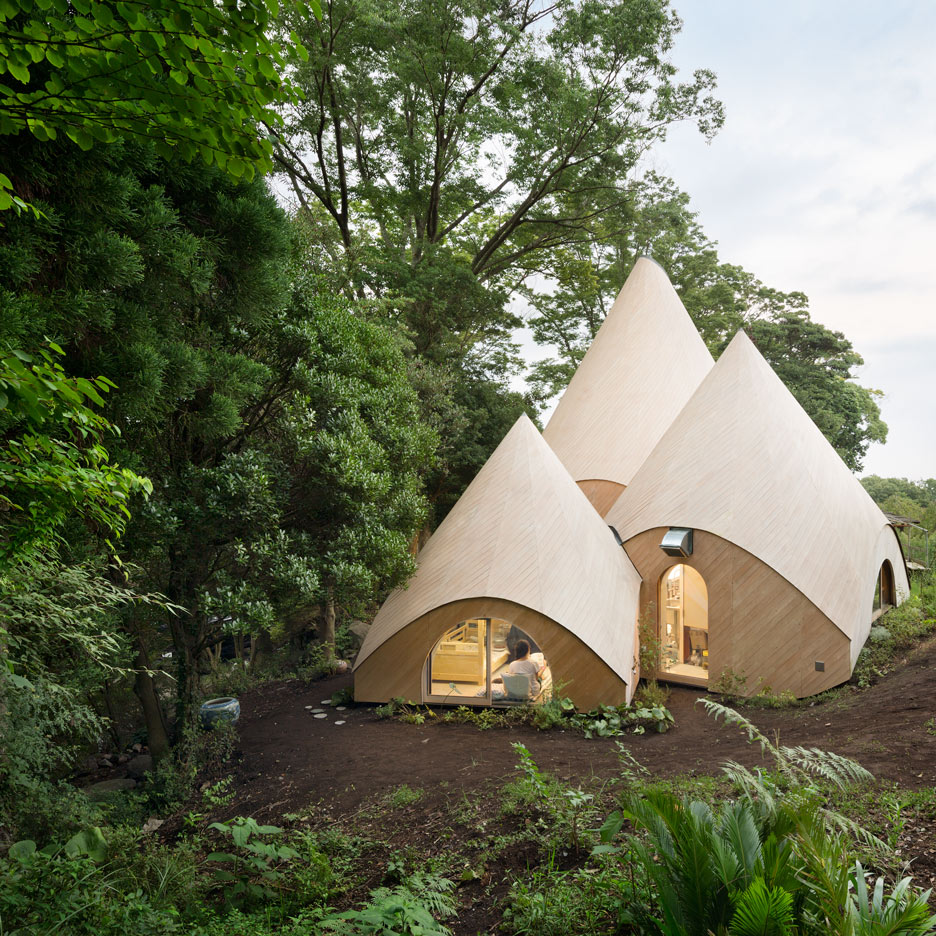
Teepee-shaped buildings by Issei Suma house community kitchen and spiral-shaped pool


This cluster of tent-like structures was designed by Tokyo architect Issei Suma to provide meals and accommodation to the elderly residents of a small Japanese community (+ slideshow). (more…)

http://ift.tt/2bibJqD

Royal Collections Museum / Mansilla + Tuñón Arquitectos


© Luis Asín

© Luis Asín


© Luis Asín


© Luis Asín


© Luis Asín


© Luis Asín

  • Architects: Luis M. Mansilla, Emilio Tuñón
  • Location: El Pardo, 28048 Madrid, Spain
  • Area: 50000.0 m2
  • Project Year: 2015
  • Photography: Luis Asín
  • Client: Patrimonio Nacional.
  • Collaborators: Carlos Brage, Rubén Arend, Matilde Peralta, Andrés Regueiro, Clara Moneo, Teresa Cruz, Bárbara Silva, Jaime Gimeno, Stefania Previati, David Nadal, Oscar F. Aguayo, Carlos Martinez de Albornoz, Asa Nakano, Coco Castillón, Javier González Galán, Mila Moskalenko.
  • Principal Engineerings: J.G. Asociados, Alfonso Gómez Gaite
  • Civil Engineers: INTEMAC (Roberto Barrios I.C.C. y P.).
  • Sideboard: Santiago Hernán y Luis Baena, arquitectos técnicos.
  • Construction: F.C.C. (Fases I,II Y III) y Dragados (Fase IV)
  • Competition Date: 1999,2002.
  • Design Project Date: 2003.
  • Beginning Of Construction: 2006
  • Budget: 150.000.000 euros

© Luis Asín

© Luis Asín

From an urban perspective, the project is based on two fundamental principles: on the one hand, the Royal Collection  museum should be part of the natural-artificial landscape of Madrid’s western edge, and on the other, it is necessary to maintain the open, public nature of La Almunena and preserve views of the parks and gardens beneath the western lip of the city. The Museum, in its linear structure as an inhabited containment wall, tries to reduce the objective (physical and subjective (collective subconscious) environmental impact on the monumental plinth of the Royal Palace.


© Luis Asín

© Luis Asín

We try to produce a building that is invisible from La Almudena Square by occupying a buried space that is yet to exist. The Royal Collection Museum contains the plinth of the Royal Palace, constructing a linear space that follows the lines of the Palace itself. A simple, compact building, a construction that is aware that maximum flexibility and potential is only possible within a strict order, which uses the materials of the Royal Palace and its dignified construction as a feature, with a modern layout, heavy yet light, opaque yet transparent.


© Luis Asín

© Luis Asín

The three exhibition levels, equal yet different, hold three differentiated collections: first: tapestries, second: paintings, sculptures and various items and third: carriages. Each space is organised like a warehouse measuring one hundred and fifty by twenty metres, flanked by the remains of the Arab wall  to the east and a monumental lattice composed of massive granite pillars open to the west above the Campo del Moro Royal Gardens. 


© Luis Asín

© Luis Asín

Section

Section

© Luis Asín

© Luis Asín

The views across the gardens are the space between the structures, just as the pillars are matter between voids. The space is the rhythm of the beams, and the installations are the interface between what holds the building up. Structure, illumination, views, space, and infrastructure all have blurred edges and exchanged attributes.


© Luis Asín

© Luis Asín

Site Plan

Site Plan

© Luis Asín

© Luis Asín

The Royal Collections Museum is a plinth for the Palace from the outside; a frame for views of the gardens and the interior features. The most important part already exists; our job is to make it visible.


© Luis Asín

© Luis Asín

Detail

Detail


© Luis Asín

© Luis Asín

http://ift.tt/2bQ5Q24

Weiss/Manfredi Design a Private Residence in Tuxedo Park, New York

McCann Residence by Weiss/Manfredi (7)

McCann Residence was designed by Weiss/Manfredi 2014. It is located in Tuxedo Park, New York, USA and covers an area of 4,800 square feet. McCann Residence by Weiss/Manfredi: “The McCann Residence is located on a former hunting-and-fishing preserve oriented around three glacial lakes and distinguished by a number of estates designed by prominent architects at the turn of the 19th century. Dense forests and rocky outcroppings characterize this landscape in..

More…

House in a House / Plural


© Daniela Dostálková

© Daniela Dostálková


© Daniela Dostálková


© Daniela Dostálková


© Daniela Dostálková


© Daniela Dostálková

  • Landscape: LABAK
  • Structural Engineer: GEOSTAT, Samuel Šimonovič
  • Custom Interior Objects Design: Ľubica Segečová

© Daniela Dostálková

© Daniela Dostálková

From the architect. The family house is located in a stabilized area of detached houses and garden plots. Set back from the street, it has the same position as a former garden house. This provides certain intimity and isolation. The central situation of the house splits the plot into the front and rear garden. While the front garden is concieved as lush, informal vegetation, the rear garden hidden behind the house has a more functional character.


Model

Model

The house itself is divided into two concentric parts – the inner and the outer. The inner part is comprised of basic dwelling components and laid out on a Palladian 3×3 grid with a vertically accented dining room in its centre. The outer part consists of the additional programme – patios of different size and proportion, garage, pool and storages. It forms an in–between space, neither a house, nor a garden. It serves as a mediator between both of them.


© Daniela Dostálková

© Daniela Dostálková

http://ift.tt/2bHhmhT

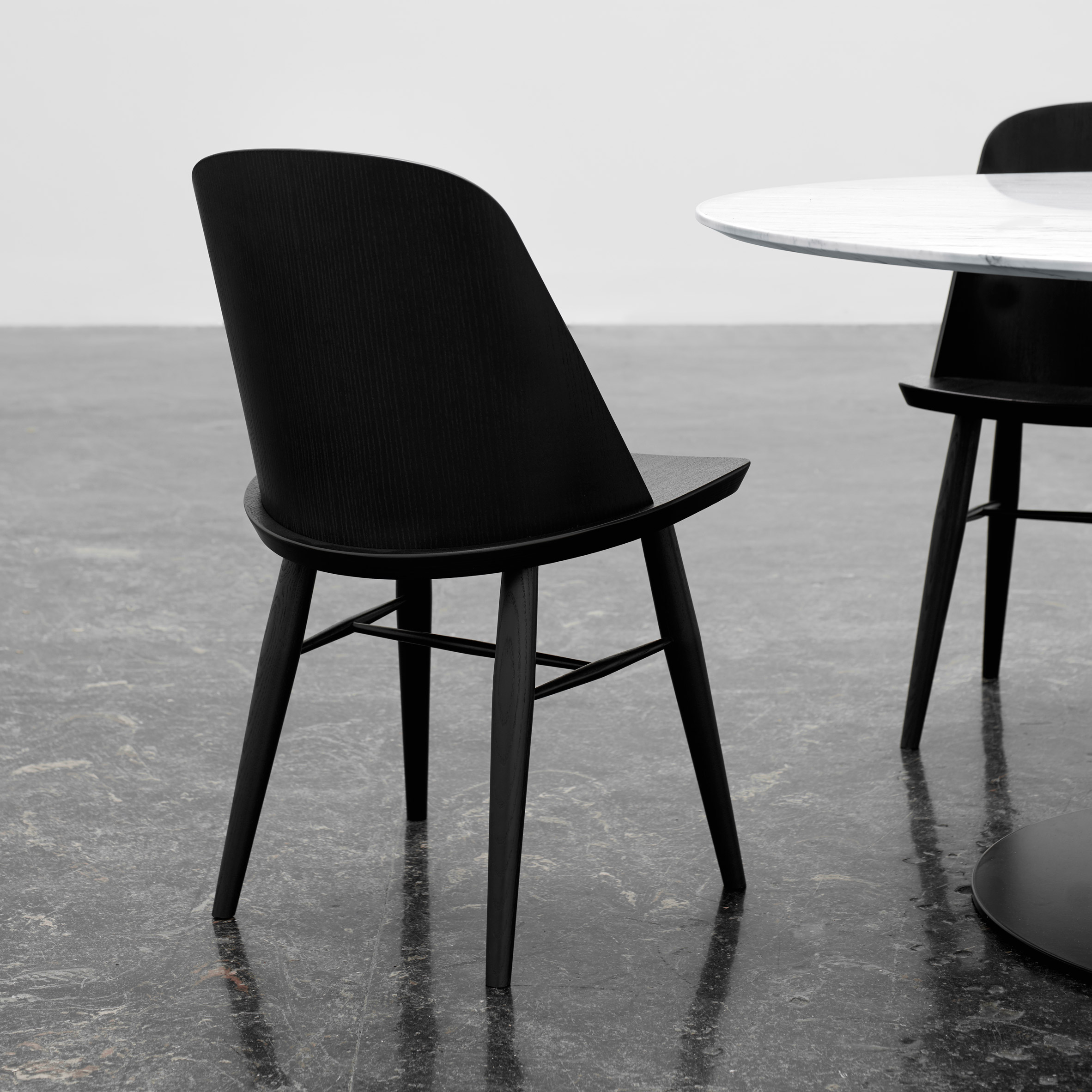
Falke Svatun designs thin-backed Synnes Chair for Menu


Norwegian designer Falke Svatun has created a dining chair with a thin backrest that curves around its sitter like a shell (+ slideshow). (more…)

http://ift.tt/2bPQ7Qs

From Pipedream to Reality: 4 Simple Steps To Make It Happen

You’re reading From Pipedream to Reality: 4 Simple Steps To Make It Happen, originally posted on Pick the Brain | Motivation and Self Improvement. If you’re enjoying this, please visit our site for more inspirational articles.

From Pipe Dream To Reality: 4 Simple Steps To Make It Happen

how to make your dreams come true

“A single dream is more powerful than a thousand realities”   JRR Tolkien

“Sail round the world …!”

Sound familiar? It’s a common answer to the question – ‘What would you do if anything was possible?’

It’s exactly what Heidi said to me on a self-confidence course about 18 months ago. Then in the next breath she called it a pipedream … “impossible in reality because I’ve got zero sailing experience”.

But wait! Since then she’s successfully completed a 3,600 mile Leg of the Clipper Round the World Yacht Race.  16 days at sea in the South Atlantic racing from Rio de Janeiro to Cape Town …

Something didn’t add up.

Sailing might not be your thing. It doesn’t matter. The principle is the same if you want to turn a dream into a reality.

Heidi pushed the boundaries. Here’s how she made it happen.

“Begin with the end in mind”  Stephen Covey

  1. Dare to dream

Be brutally honest. Do you ever think seriously about what you want to achieve during your lifetime? Do you ever take time to reflect and ask yourself if you’re making the most of your life?

Or are you, dare I say it, ‘normal’, like the vast majority of people – existing day to day, busily doing the things that need to be done but never really thinking seriously about why you’re doing them?

Coming to terms with this and working it out does matter. Especially if you want to convert a dream into a reality.

This was how it started for Heidi.

Try projecting your thoughts into the future. Look between two and five years ahead. Look ‘strategically’ at your life. Most people don’t ever do this …

And then they wonder why their dreams never come true.

Open your mind. Think about what you’d like to achieve over this strategic period of time. A lot of people struggle with this. Heidi certainly did. She told me she ended up staring at a blank piece of paper for ages. I suggested she tried a mind map. It worked. Here’s how she did it …

Mind mapping is a practical creative thinking process; it means brainstorming and jotting down all of the things you’d like to achieve.

Don’t write a list. Get a blank piece of paper and write the title in the middle (something like … ‘Ideas for the next X years’. Have a free-for-all. Let your mind go wild. Create a map with lines linking ideas. This will help you to think creatively. Mind maps only work if you think positively and challenge yourself to be bold and imaginative.

You must dare to dream.

Pipedreams aren’t out of bounds on your map. Don’t be scared to write down everything you’d like to do. You’re not ‘contracted’ at this stage to achieve anything. You haven’t promised yourself anything. You’re just generating ideas.

One of Heidi’s ideas on her map was to sail round the world.

  1. Get Real

Your dreaming has achieved what you needed. It’s presented you with ideas.

Now’s the time to inject a degree of reality. The time to get real.

Reality comes in the form of credible aspirations. Right now, you’ve probably got a piece of paper with ideas scribbled all over it. Filtering your mind map and coming up with credible aspirations will help you to convert the scribble into something meaningful. Let’s call these aspirations ‘objectives’.

Creating personal objectives helps you to reconcile your dreams. Sounds a bit weird I know. But it’s the best way to find the balance between striving for something aspirational and setting yourself up for failure.

So challenge yourself but don’t be so ambitious that deep down you know you’re just kidding yourself.

Heidi did exactly this. She started to get real. She accepted that sailing round the world was a big Ask. But daring to dream in the first place created the spark for a more credible personal objective.

She decided she would aim to complete one Leg of the Clipper Round The World Race. She investigated the possibilities and worked out that it was feasible. She didn’t need any sailing experience.

She applied for the South Atlantic Leg and got accepted.

Her pipedream had led to a credible aspiration which had become a reality.

Now she started to think shorter term. It was happening!

  1. Knuckle down

Knuckling down means working out what you need to do in the shorter term to gets things moving. Heidi started to think about what she needed to do over the six months before the Race.

She created some specific ‘tactical’ goals for each month. From these she worked out what she’d need to do day to day – Attend sail training sessions, get fit, buy clothing and equipment etc.

To some this might seem like a very regimented approach. And that’s exactly what it is. Heidi knew exactly what she needed to do. Being crystal clear about your tactical goals will help you to feel more motivated to achieve them.

Following these three logical steps; mind map, strategic objectives, tactical goals, helps you to feel more in control of your life. It disciplines you to break down your strategic plans into manageable chunks that actually feel achievable and believable.

It’s the secret to converting dreams to reality.

  1. Use your gears

Life is life; things change. It may well be that something completely unforeseen happens that you could never have predicted when you created one of your personal objectives. Don’t let this affect your self-esteem and don’t use it as an excuse to give up.

Just reflect on what it means for the objective and reset it. In other words, change gear; you might even have to engage reverse gear if necessary. You’re better off having a plan that changes than no plan at all.

So review your objectives regularly, take account of any unforeseen eventualities, make amendments where necessary and set new objectives and goals when others have been achieved.

Heidi’s now building her own house on the coast in West Wales, UK. She came up with this ‘dream’ while she was on watch one night in the South Atlantic.

You are never too old to set another goal or to dream another dream”  Paulo Coelho


Mike McClement, Founder Think Confidence, Self-confidence Author and Coach. Passionate about helping people achieve their potential and enjoy life to the full. Creator of the 4 Step online Confidence Plan.

You’ve read From Pipedream to Reality: 4 Simple Steps To Make It Happen, originally posted on Pick the Brain | Motivation and Self Improvement. If you’ve enjoyed this, please visit our site for more inspirational articles.

http://ift.tt/2bGRWkD

Sayama Forest Chapel / Hiroshi Nakamura & NAP


© Koji Fujii / Nacasa & Partners Inc.

© Koji Fujii / Nacasa & Partners Inc.


© Koji Fujii / Nacasa & Partners Inc.


© Koji Fujii / Nacasa & Partners Inc.


© Koji Fujii / Nacasa & Partners Inc.


© Koji Fujii / Nacasa & Partners Inc.


© Koji Fujii / Nacasa & Partners Inc.

© Koji Fujii / Nacasa & Partners Inc.

From the architect. Sayama Lakeside Cemetery is open to various religions and denominations.  It is located in a nature-rich environment adjacent to the water conservation forest, and the site itself is in front of a deep forest. I envisioned an architecture that reflects on the way of life as it lives by the water conserved by the forest, and eventually returns to this place after death.  Thereupon, I found the forest to be the subject of prayer that is mutual to various religions and conceptualized an architecture that prays to the forest while surrounded by trees.


© Koji Fujii / Nacasa & Partners Inc.

© Koji Fujii / Nacasa & Partners Inc.

Section

Section

© Koji Fujii / Nacasa & Partners Inc.

© Koji Fujii / Nacasa & Partners Inc.

The site is a small triangular plot of land that is adjacent to a municipal road with a low traffic and a non-legal street with almost no pedestrian.  Therefore, I have decided to create a space that devotes to the forest that is transcendent in its existence, by tilting the wall inward to avoid the tree branches and leaves.  It forms a traditional Japanese Gassho- style structure composed three-dimensionally as two leaning beams set against each other are developed in every direction.  The roof is covered with cast-aluminum tiles with ripple-like textures each made by hands of craftsmen.


© Koji Fujii / Nacasa & Partners Inc.

© Koji Fujii / Nacasa & Partners Inc.

The floor inclined towards the forest by 1 centimeter guides people towards the departed and the forward bending posture for praying.  The patterns and seams of the slate extend towards the vanishing point deep into the forest to help one concentrate the mind on the forest. When one prays, a small warm space is created within the hands as the fingers gently join. It seems as if that small space of prayer was taken out to form the architecture.  As people pray, so does the architecture.  For those who are in deep grief and inconsolable, how can architecture nurture them?  With this in mind, I designed buildings that gently surround them and support their intentions.


© Koji Fujii / Nacasa & Partners Inc.

© Koji Fujii / Nacasa & Partners Inc.

http://ift.tt/2bBpE8I

Avadh Shilpgram / Archohm


© Andre J. Fanthome

© Andre J. Fanthome


© Andre J. Fanthome


© Andre J. Fanthome


© Andre J. Fanthome


© Andre J. Fanthome

  • Architects: Archohm
  • Location: Lucknow, Uttar Pradesh 226002, India
  • Architect In Charge: Sourabh Gupta
  • Design Team: Suboor Ahmad, Jeevan Das, Dhanbeer Rawat
  • Area: 29784.0 sqm
  • Project Year: 2016
  • Photographs: Andre J. Fanthome
  • Structural : Lkt Engineering Consultants Ltd.
  • Electrical : Archohm Consults
  • Civil : Avas Evam Vikas Parishad
  • Landscape : Bios Ecology And Art Landscape Architecture
  • Plumbing : Techno Engineering Consultants
  • Client: Avas Evam Vikas Parishad

© Andre J. Fanthome

© Andre J. Fanthome

From the architect. The architecture of urban bazaars works on a scheme of a mélange; it seems to be the leitmotif for such programmes, introducing a kind of ride through spaces and experiences that are controlled and enhanced through architectural forms and materiality. The visual mélange produces an architectural scenario for the activity of leisure and pleasure, an indulgence in shopping as well as the feeling of partaking in actions related to craft and culture. It creates an urban scope that inserts itself within a different reality; like in an amusement park, a bubble of reality within the everyday reality of the city outside.


© Andre J. Fanthome

© Andre J. Fanthome

During the design process, the layout of the twenty-acre Awadh Shilpgram evolved organically from the commercial, cultural, social and leisurely interactions of people. An elliptical form enables a smooth corner-free circulation; it narrows down while spiralling inward, and emulates the density and vibrancy of the Lucknowi Bazaars of yesteryears; the bazaars with the streets that got progressively narrower.The built environment is an interpretative collage, a gesture saluting the unique traditional architecture of the Roomi Darwaza and the Imambaras.Adequate daylighting, proper air circulation through cross ventilation further adds the dimension of comfort to the design. Its articulation has been realised through a contemporary interpretation of traditional elements of arches and Jaalis.


Plans

Plans

With nearly two-hundred craft shops of which some are air conditioned, craft courts, a dormitory hostel, an auditorium, and a food court with stalls serving cuisine from different states, Avadh Shilpgram indeed provides generous facilities to visitors and artisans.


© Andre J. Fanthome

© Andre J. Fanthome

The arch, being an important element of the architecture of the city of Lucknow, is introduced as a skin to the inner face of the buildings.It is given a ‘make-over’ in a contemporary style even while continuous access is allowed beneath it. 


© Andre J. Fanthome

© Andre J. Fanthome

An independent structure is arranged to look like an integrated one. Each arch allows entry into the corridor at the ground-floor level. The zigzag form of jaali arches is derived by modifying the basic lines of traditional mughal arches from which one can pass through in the corridors; the double height nature lets one experience the grand feeling of arches like in the Buland Darwaza at Agra. The steel structure is clad with Red Agra sand stone in a Jaali pattern, with motifs inspired by the renowned Lucknowi embroidery craft called ‘Chikan kari’


© Andre J. Fanthome

© Andre J. Fanthome

 The unique concept along with the form, scale, materials and elements that render the architecture give an iconic building to the city of Nawabs and the people of Lucknow.


© Andre J. Fanthome

© Andre J. Fanthome

http://ift.tt/2bxBOT2