
House in Mumbai is a 2,000 square foot apartment designed by Evolve. It is located in Mumbai, India. House in Mumbai by Evolve: “This is a 2000 sq.ft Apartment in Mumbai with 4 Bedrooms which are all different in terms of design theme. The Living area is long rectangular cube which also includes the Dining Area and Puja Room which is again well organised and separated by Passage in between…
BMW Vintage Museum / Crossboundaries

© YANG Chao Ying
- Architects: Crossboundaries
- Location: Beijing, China
- Architect In Charge: Binke Lenhardt, DONG Hao
- Design Team: Maria Francesca Origa, Hayger Chan, LI Zhenyu
- Area: 3600.0 sqm
- Project Year: 2016
- Photographs: YANG Chao Ying
- Client: China Zheng Tong Auto Services Holdings Ltd.
- Collaborator: BMW China Design Team
© YANG Chao Ying
From the architect. A museum of vintage BMWs is opening this month in Beijing, China. Crossboundaries’ design for the gallery space brings forth the exclusiveness of the cars while it references the Chinese collector with a local touch.
© YANG Chao Ying
diagram
© YANG Chao Ying
The museum exhibition starts on the 3rd floor. Entering through an inviting, almost two floors high and bright area, passing the reception zone, whose vertical surfaces are accentuated with horizontal lighting strips interpreting the motion of speed, the visitor is being absorbed into a lower, more cozy “transitional” lounge.
diagram
Through layers of red fabric in the imitation of a Chinese gate, the exhibition opens up behind. The exhibition area is subdivided into different zones with diverse qualities, some of display and some of lounging.
© YANG Chao Ying
White, light and slightly transparent fabric banners are hung from the open ceiling on this floor. While the fabric’s verticality reduces the high ceiling to a more human scale, the vast amount of white textile surfaces indicates generority and the “Chinese red gate” as backdrop transmits an imperial feeling.
© YANG Chao Ying
The neutral white brings emphasis on the few exhibition pieces here, underlining their exclusiveness.
The horizontal lighting strips continue into the main exhibition area and information walls, with integrated screens for multimedia presentations at the perimeter walls of the space. Projections can be also screened on to fabric banners in the middle of the space where seating areas are provided around the exhibition pieces.
© YANG Chao Ying
The 4th floor offers a different experience. Walking up a centered freestanding staircase, the visitor accesses the 4th floor and arrives at the front of two long car display platforms. Having more cars to show on this floor, a key feature here is the car display. The space is structured by several long platforms out of white back painted glass surfaces with integrated stainless steel strips and edges. Similar to the 3rd floor, the metal lines mimic the lighting strips on the walls and the information walls reappear on the perimeter of the space.
© YANG Chao Ying
The ceiling of stainless steel mirrors the elevated platforms, allowing the space to appear higher and more spacious. The special lighting for illumination of the cars is also integrated here. Parallel to each other, the platforms offer the visitor a clear route through the history of cars and more interaction.
© YANG Chao Ying
A movie theater, game room and an exhibition display for smaller items round off the experience. They are located at the end of the exhibition area, where natural light leads you towards the elevators.
© YANG Chao Ying
Ferm Living unveils collection of minimal furniture and homeware
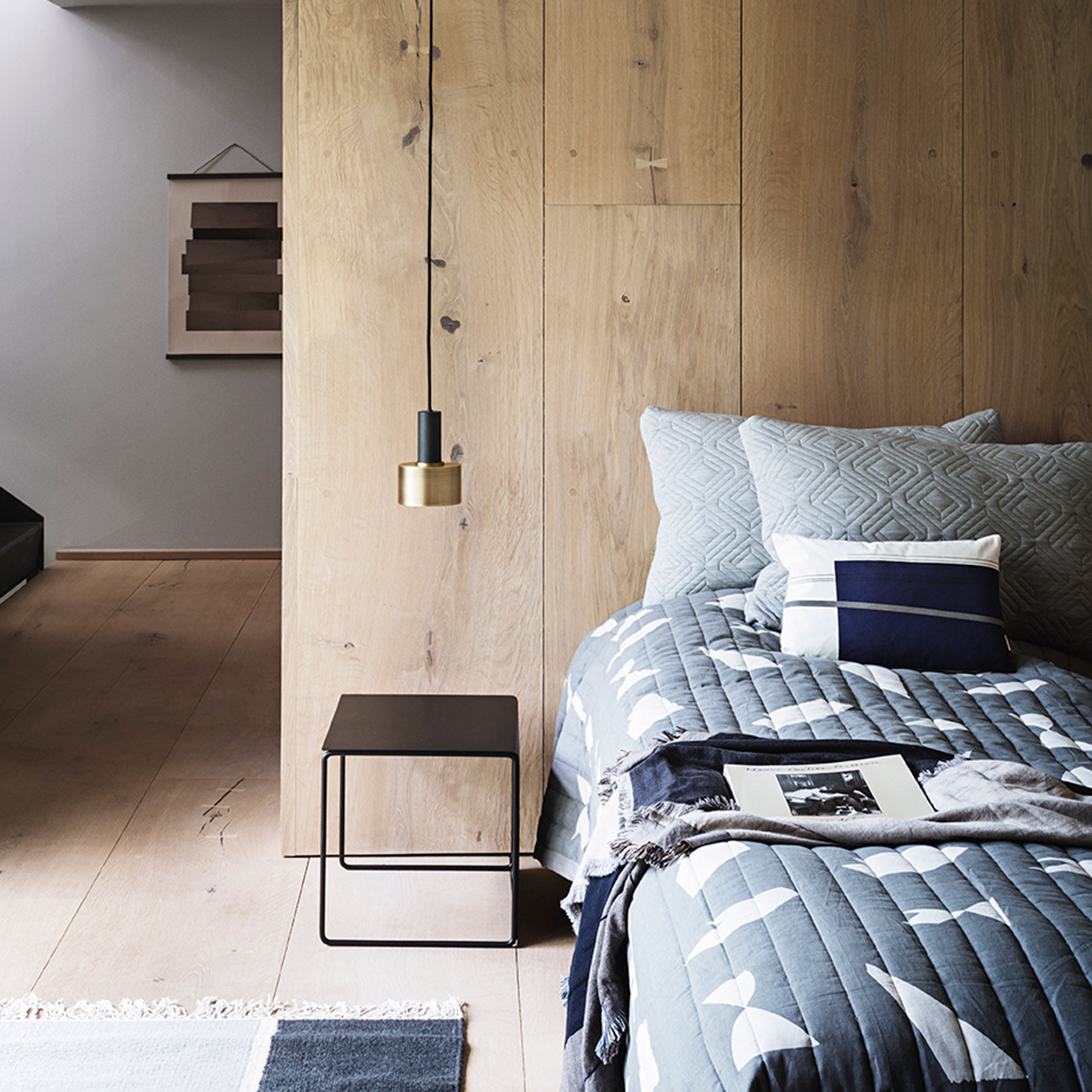
Northmodern 2016: glass-fronted cabinets and pick-and-mix lighting systems feature in Danish brand Ferm Living‘s Autumn Winter 2016 collection (slideshow). (more…)
5 Steps To Defeating That Annoying, Manipulative Voice In Your Head

You’re reading 5 Steps To Defeating That Annoying, Manipulative Voice In Your Head, originally posted on Pick the Brain | Motivation and Self Improvement. If you’re enjoying this, please visit our site for more inspirational articles.
You are just about to do something major. Maybe you are planning to start your own online business or you are trying to lose 50 pounds of weight.
Whatever it is, you are motivated. You are psyched up. Nothing can stop you. You feel like you grabbed life by it’s throat and now you are demanding change.
And when you are just about to start improving yourself or building something big, that voice in your head appears…
It is that manipulative negative voice that tries to doubt and downgrade every plan or task you want to accomplish.
Just when you are about to start something life transforming or something that requires a plethora of effort, that voice awakens and tells you that…
You don’t have what it takes. It literally sucks the motivation soul out of you. All that motivation built up inside is obliterated by that little voice and if you don’t defeat it, it will trap you as a slave for the rest of your life.
You will never have the freedom to live life to your ultimate potential.
So, how do you defeat that manipulative voice in your head that undermines your potential success?
Well there are actually 5 practical steps you can take to start defeating it promptly.
Step 1: Prove To Yourself That You Can Succeed By Accomplish Tasks
To defeat that annoying demeaning little voice in your head, you first have to understand why it is even there.
The voice is not there unjustifiably. It is there, because it is scared for your survival. Before civilization, our ancestors lived in a violent world.
Everything our ancestors did had a consequence. If a tribe member decides to do something out of the ordinary, the tribe leader might kill him. As a result, our psychological brain adapted to remind you that you shouldn’t do something radical.
Nowadays, you really don’t have to fear your life when you are about to do something radical or out of the ordinary.
As a result, you have to teach your brain that it doesn’t have to fear the potential of success and you do that by regularly accomplishing tasks or goals you set yourself.
Everyday when you wake up, write 3-5 goals or tasks that you must accomplish before going to bed that night. You don’t have to set major goals that is impossible to accomplish within a day.
For example, if you want to start your own online business, you can make daily goals such as
- Pick A Blog Niche Today
- Read About Monetization Techniques
- Come Up With 5 Topics For Your Blog
No matter what, by the end of the day, you would have to accomplish all these goals. If you don’t, you are teaching your brain that you can’t succeed at even minor tasks.
As a result, don’t come up with daily goals that are unaccomplish-able. You have to make sure that you can in absolute certainty perform and accomplish the goals.
Step 2: Build Discipline
This relates to the above point. No matter what goal you set yourself, make sure to accomplish it at the end of the journey.
Don’t say you will lose 20 pounds in the next 2 months, and then stop after 2 weeks. It will have a psychological effect on you that will cause your brain to fear trying to lose weight.
So, the next time you again plan to lose some weight, that little voice will pop up stronger than ever reminding of that time you failed at losing weight.
Discipline is the utmost important quality if you want freedom from that annoying little voice. Discipline means that you do what it takes to succeed at the goal you set yourself, whether or not you like the path to that goal.
That is why most self improvement gurus tell you to set goals that are achievable. If you set goals that are gigantic, and you don’t have, yet, the willpower to climb that goal, you will ironically make that little voice stronger, by giving him evidence that you suck at something.
Failure is important and it does teach you life-lessons, but to defeat that little voice, you have to make sure that you are at least succeeding at 80% of the goals that you set yourself.
Step 3: Read/Watch About Other People Succeeding At Your Goal
It might not be the best way to defeat that annoying little voice in your head, but it does work mightily.
When you see other people succeed at your goal, you will have the benefit of tow important things:
- You Get Motivation and Most Importantly…
- You Can Replicate Their Success
For example, let’s say you are about to start an online business and that voice pop-ups and tells you that you don’t have what it takes to succeed.
You either fight and prove to your brain that you can do it by succeeding at starting your own blog, or if you, yet, don’t know how, you can start reading about other people’s stories and how they succeeded at starting their own online business.
By reading their success, you can replicate and motivate your potential glory.
Step 4: Make Your Planning Accountable For Failure
Let’s say you fail at your goal even though you followed the last three steps. You can either accept it and never try again (which tells that little voice in your head that it was right and that you are a wuss) or…
You stand up and confront why you failed and come up with a reasonable action against your failure.
For example, let’s say you planned to lose 10 pounds in the next month, but at the end of the month, you only lost 5 pounds. It is progress but you see it as failure.
You identify why you failed at losing an additional 5 pounds and you set another goal. Don’t accept yourself as the reason for the failure; accept your lack of planning and executing your goal as the cause.
Yes, it might seem bigoted, but if you always take failures as your own personal fault, you will just feed that voice in your head.
Instead of saying “I don’t have it within me”, you can instead say that my plan sucked and I need to reevaluate. This feeds your motivation rather than that demeaning voice.
Step 5: Succeed
Yes, it is not as easy as is said. Succeeding requires a lot of effort by your part. From identifying your goal to coming up with the perfect plan for capturing that goal, it requires will-power to succeed at major tasks.
To succeed you usually need three steps
- Come Up With An Actionable and Practical Plan
- Study and Learn As Much About The Goal You Are Trying To Accomplish
- Build Discipline
- Eventually, You Will Succeed If You Don’t Mess Up In Between The Above Steps.
Succeeding is the cure for that little voice. In step 1, you succeeded at daily goals which will treat that voice. Step 2 will keep that voice at bay. Step 3 will allow you to learn about the cure for that voice and step 4 will stop it from coming back up again if you potentially mess up.
And Ultimately succeeding will kill it at the end of the day.
It’s Time You Finally Stood Up To That Voice
Don’t let your own mind enslave you. Instead, prove to your own brain that you have what it takes to succeed and that voice will start leaving you alone.
It will take time, but it is absolutely worth it. You will feel freedom at its finest.
If you want to take this to the next level, you can also get the guide: “Supreme Goal Planning: Build Discipline And Success The Right Way + 5 Free Ebooks” so that you know how to plan and set goals that are achievable.
Yohan Michael is the author of Dynamiteblogging, where he teaches people how to build a successful online blog, through practical and efficient methods. Get his collection of 6 eBooks, which includes the supreme goal planning manifesto, to finally start building a successful life.
You’ve read 5 Steps To Defeating That Annoying, Manipulative Voice In Your Head, originally posted on Pick the Brain | Motivation and Self Improvement. If you’ve enjoyed this, please visit our site for more inspirational articles.
Cambridge, Englandphoto via maria

Family Retreat for Devasiris / Palinda Kannangara Architects

© Sebastian Posingers
- Architects: Palinda Kannangara Architects
- Location: Malabe, Sri Lanka
- Area: 760.0 sqm
- Project Year: 2015
- Photographs: Sebastian Posingers
- Quantity Surveyor: Sunanda Gnanasiri
© Sebastian Posingers
Located close to paddy fields and fringed by distant woodland this second home on 30 perches ( 760 sqm) has been conceived of as a retreat for a couple who had spent a significant part of their life in a Colombo city house and desired for a tranquil space away from the hectic bustle of the city and that would enable them to live in close proximity to nature. This retreat provides a space for the owners to pursue their individual passions for gardening and writing. The owner is a scholar of Buddhist Philosophy and is working on a book.
© Sebastian Posingers
Plan
© Sebastian Posingers
The old building was a neglected 1980’s house with limited ventilation, dark interiors and no connections to the paddy landscape that surrounded the house. The new building kept the structure of the old, while reorganizing to maximize views, opening out to allow light and to integrate the built with the landscape. The existing levels were retained and made use of. The new house is built on the same footprint as the old. The foreground to the existing structure too was retained along with the marvelous canopy trees that were on the site (all saved), and a new living and service block was added, interior layout was revised with the requirements of the clients.
© Sebastian Posingers
The lower level which overlooks paddy fields contains the living dining spaces, a pantry, a study and master bedroom separated from the service block through a paved courtyard (which accommodates informal dining). The upper level has a family /tv lounge extending into a verandah that overlooks the large garden, canopy trees, lily pond, bamboo groves and apart from a bedroom replete with a balcony that projects into the trees.
Section
The entire house is passively ventilated, serene courtyards, pond, green roofs and green wall (with native ferns and mosses), and large canopy trees all ensure cool microclimate within this house. And green roof over the utility area planted with native plants attracts biodiversity and captures storm water.
© Sebastian Posingers
Locally available materials, including a combination of reclaimed and custom designed were used. A simple but tactile material palette was adopted and the colors and textures of the architecture blend into the environment of the canopy trees and the paddy fields.
© Sebastian Posingers
Kim Boi Bamboo Restaurant / Tran Ba Tiep

© Hoang Le Photography
- Architects: Tran Ba Tiep
- Location: Kim Bôi District, Hoa Binh, Vietnam
- Area: 700.0 sqm
- Project Year: 2016
- Photographs: Hoang Le Photography
© Hoang Le Photography
From the architect. The project is the highlight in the ecotourism resort offering charming natural landscape in northern Vietnam. The investor attaches special importance to preservation of environmental landscape, natural ecology of the region and wishes to build a resort which is typical of Vietnamese villages.
© Hoang Le Photography
© Hoang Le Photography
Unique architecture of the restaurant is inspired by an image of traditional conical hat closely connected to the beauty of Vietnamese women, simple but no less luxurious.
© Hoang Le Photography
The project with the ground in the shape of a twelve-sided polygon and of concrete structure is unfinished and has been abandoned for many years due to economic crisis. Take advantage of these concrete columns and beams available, the architects have researched to design the roof supporting structure with 12 bamboo frames leaning against the floor and 24 frames on concrete beams. This structural solution brings people a romantic outside scenery view which is not obstructed. The restaurant in the shape of a conical hat has an area of more than 700m2 and is 15 meters high.
Section
Bamboo is connected together with lashing and bamboo bolt to form a frame on the floor before being erected by crane. Bamboo frame connected with the foundation and concrete beams with metal pipes, iron pins makes the structure stable. This construction technique is easy to make by low-skilled worker with simple tools.
© Hoang Le Photography
The type of bamboo used is iron bamboo (solid bamboo, local name is “tầm vông”) with the appropriate mechanical properties such as high pressure resistant, easy to bend. The roof is made of natural leaves which are very light and easy to shape. In the middle, there is a skylight of 1.56 meters in diameter to get natural light.
© Hoang Le Photography
The widest span between two columns is 24.6 meters and the largest diameter of the conical hat-shaped restaurant is 32 meters. The project has expressed great spanning ability of bamboo structure that it is not weaker than iron and steel in spite of low-technical requirement. Moreover, bamboo bearing structure is also a decorative element making interior space more unique.
© Hoang Le Photography
Double Roof House / SUEP

© Kai Nakamura
- Architects: SUEP
- Location: Yamaguchi Prefecture, Japan
- Architects In Charge: Hirokazu Suemitsu, Yoko Suemitsu
- Area: 1308.53 sqm
- Project Year: 2013
- Photographs: Kai Nakamura
- Other Participants: DE.lab
© Kai Nakamura
Create a cool space controlling sunlight like in a huge “SUDARE” (a reed screen).
A one-story house is built on a large site in the middle of the residential area, surrounded by low hills. As the neighboring buildings are mostly low-rise houses, almost none of the shadows fall on the site, and in the result the site is always exposed to the sunlight during daytime.
© Kai Nakamura
Therefore we thought to suspend a huge “SUDARE” on the site to create cool energy in its shadow and then locate four boxes that forming house at its bottom. The upper roof is made out of 75 mm by 75 mm thinned wood arranged in a checkerboard pattern. The span between its ends is approx. 40 m.
© Kai Nakamura
Plan
© Kai Nakamura
To allow such as extension we used a PC steel rod system such as in suspended bridge construction, hanged on the steel beam located on concrete pilaster. This “SUDARE” has a role to cut off sunlight that falls on the roof surface. In the gap between the four buildings under the huge “SUDARE” was created a comfortable, half outdoor space. With overlapping of the conical landscape made out of remaining soil and the scenery of slightly elevated hills, the huge SUDARE formed into curved by its gravity creates a beautiful appearance.
Detail
Norwayphoto via bbb

 Sig Nordal