6 Reasons Why You’re Being Mistreated By The People Who Love You

Why did he just do what he did? Why on earth would she say that to me? What was that all about? Ever find yourself asking some of these questions and maybe others because of something someone just did or said to you. And not just anyone, but someone who claims to love you. It’s often said that the people who are closest to us, or the ones who love us, are usually the first ones to hurt us. Funny how that works.

Why though, if they love us, do they continually mistreat us? These are the people who we should be able to go to no matter what, and trust wholeheartedly. But we can’t, and we don’t. We find ourselves lashing out to them or to others about them and the horrible way they are treating us. So why does this happen and when does this vicious cycle ever stop. Below are a few reasons why this might be happening.

stale_relationshipJealousy.

Topping off the list is jealousy and for good reason. Most people who love us really are secretly jealous of us for whatever reason. Some reasons, in their mind, are valid, others are just plain ridiculous. No one ever needs to be jealous of anyone else. We are all very gifted and special in our own ways. However, with that said, you may have something they want which results in them lashing out at you.

Resentment.

Much like jealousy but with a bit of an angry twist to it, they just may be harbouring ill feelings towards you about something from the past. For any of us, if we don’t resolve issues from our past, they will continually creep up and bite us in the arse. When doing this, it often is someone else’s arse they are chewing on too. Figure out where the anger comes from and maybe it can be diffused in the future.

Submissive.

You are way too submissive and many bullies or angry people will gladly take advantage of you simply because they can. You are their dart board, their angry venting board. They can yell, snap, disrespect and treat you poorly because you let it happen and let it go. They will always gravitate to you as an easy target. For some submissive people, this rolls off their back like water on a duck, for others, it’s painful.

Dislike.

They really just don’t like you, period. There is no easy way around this one. If you are a family member and they really dislike you, you’re pretty much doomed until you decide to distance yourself from this person and surprisingly, many people won’t because it’s family. We think because Jane is our sister or Tom is our brother we have to put up with them and their mistreatment. You don’t. Stay away from them until they learn respect.

Bullies.

Bullies come in all shapes and sizes. Some have motives, others just do it because they can get away with it. careful of the bully with motives. They will mistreat you because they think they can get something out of you and they will continue to be mean to you until you cave in and give them what they want. Learn to say no to this person and stand your ground. They’ll eventually back down and away.

Angry.

Some people are just angry. Plain and simple. They are angry at the government, angry at their spouse, angry at the weather, you name it, this person is pissed off. These are the ones who lash out for no reason and could not care less about doing it either. I mean, the world owes them, right? There is little anyone can do to help the angry person. It’s best to just stay away from this one until they recognize the anger in them.

Though these reasons don’t justify their actions it certainly helps to put things into a bit of perspective so we know better in the future how to handle the mistreatment and to try to come from a place of love and understanding. It’s still important to stand your ground and say no to this treatment and let them know, under no circumstances, is it acceptable. They’ll catch on eventually.

The post 6 Reasons Why You’re Being Mistreated By The People Who Love You appeared first on Change your thoughts.

http://ift.tt/2bZyuAG

AD Round-Up: 10 Sacred Spaces


Courtesy of Flickr user Flemming Ibsen under CC BY-NC 2.0

Courtesy of Flickr user Flemming Ibsen under CC BY-NC 2.0

Religion, in one form or another, has formed the core of human society for much of our history. It therefore stands to reason that religious architecture has found equal prominence in towns and cities across the globe. Faith carries different meanings for different peoples and cultures, resulting in a wide variety of approaches to the structures in which worship takes place: some favor sanctuaries, others places of education and community, while others place the greatest emphasis on nature itself. Indeed, many carry secondary importance as symbols of national power or cultural expression.

AD Classics are ArchDaily’s continually updated collection of longer-form building studies of the world’s most significant architectural projects. The collection of sacred spaces collated here invariably reveal one desire that remains constant across all faiths and cultures: shifting one’s gaze from the mundane and everyday and fixing it on the spiritual, the otherworldly, and the eternal.


Courtesy of Flickr user Arian Zweger under CC BY 2.0


Courtesy of Flickr user Futo-Tussauds under CC BY-NC-SA 2.0


© Expiatory Temple of the Sagrada Familia


Courtesy of Flickr user Naoya Fujii under CC BY-NC 2.0

Grundtvig’s Church / Peder Wilhelm Jensen-Klint (1940)

AD Classics: Grundtvig’s Church / Peder Wilhelm Jensen-Klint
//cdn.embedly.com/widgets/platform.js

Named for a 19th Century Danish pastor, politician, and philosopher, it is perhaps unsurprising that Grundtvig’s Church embodies the same nationalist romanticism as its namesake. The monument, utilizing design elements of traditional Danish country churches on the scale of a cathedral, is one of the world’s greatest examples of Expressionist architecture. The surrounding community, having been designed by the same architect as the church at its core, utilizes similar aesthetic styles in a flexible medieval layout.

Parish of the Holy Sacrifice / Leandro Locsin (1955)

AD Classics: Parish of the Holy Sacrifice / Leandro V. Locsin
//cdn.embedly.com/widgets/platform.js

The fusion of indigenous and colonial cultures finds Modernist expression in the form of the Parish of the Holy Sacrifice. Dubbed the “Flying Saucer,” the Parish echoes qualities of the traditional Filipino bahay kubo (“cube house”) in a thin concrete shell dome. As Grundtvig’s Church is for Denmark, the Parish of the Holy Sacrifice stands as a monument to the cultural history of the Philippines – a potent statement in a republic that had only been independent for nine years at the time of the chapel’s opening.

North Christian Church / Eero Saarinen (1964)

AD Classics: North Christian Church / Eero Saarinen
//cdn.embedly.com/widgets/platform.js

With its dramatic spire standing at 192 feet tall, the North Christian Church was the last building ever designed by Finnish architect Eero Saarinen. Leery of the manner in which secondary program buildings tended to draw focus away from worship spaces in contemporary churches, Saarinen strove to ensure that the sanctuary—and, by association, the act of praising God—would be the unmistakable centerpiece of his creation. Accordingly, all accessory spaces in North Christian Church are submerged beneath the cavernous sanctuary, the hexagonal form of which radiates out from the altar at its center. Visitors must climb stairs from the ground level to enter this space, further emphasizing the elevated importance of worship itself.

Thorncrown Chapel / E. Fay Jones (1980)

AD Classics: Thorncrown Chapel / E. Fay Jones
//cdn.embedly.com/widgets/platform.js

The slender pine trusses of the Thorncrown Chapel seem to form a forest within a forest. Conceived as a non-denominational chapel where visitors could quietly “think [their] best thoughts,” Thorncrown was built by young architects and craftsmen out of local timber with the intent of minimal site impact in mind. The chapel draws over 2000 visitors every day, and has been named one of the American Institute of Architect’s top ten buildings of the 20th Century.

La Sagrada Familia / Antoni Gaudí (1882)

AD Classics: La Sagrada Familia / Antoni Gaudi
//cdn.embedly.com/widgets/platform.js

The Sagrada Familia, one of the best examples of Catalan Modernism, has been under construction since 1882. Although it follows a cruciform plan typical of a Gothic cathedral, the temple’s hyperboloid vaults and angled columns are a radical departure from Gothic stylings. Three of the building’s façades represent the Glory, Nativity, and Passion of Christ; the fourth will feature a tower representing the Virgin Mary. Generations of collaborative design and construction work are expected to finally be complete in 2026 – 144 years after the project was begun.

Lotus Temple / Fariborz Sahba (1986)

AD Classics: Lotus Temple / Fariborz Sahba
//cdn.embedly.com/widgets/platform.js

With its 27 marble-sheathed “leaves” shining white above verdant landscaping, the Lotus Temple is one of the most prominent and celebrated examples of architectural biomimicry on Earth. Inside the temple, visitors can admire the exposed concrete structure of the leaves, as well as the dramatic steel and glass skylight between their tips at the apex of the worship space. Primarily a Bahá’í temple, the temple is open to practitioners of all faiths, and has seen over 70 million worshipers since its opening in 1986.

Church of the Light / Tadao Ando (1999)

AD Classics: Church of the Light / Tadao Ando
//cdn.embedly.com/widgets/platform.js

Thanks to Tadao Ando’s minimalist design aesthetic, the Church of the Light is almost entirely devoid of the ornamentation typically found in church buildings; the purpose of the almost featureless concrete structure is only betrayed by the cross cutting a void in the mass of the eastern wall. The Church is an exercise in spatial duality: the solids and voids of the building call to mind the gap between the secular and the spiritual. Great care was taken both by Ando and the master carpenters working on the project to ensure the smoothness of the concrete surface and joints, providing no distraction from the symbolic qualities of form, light, and space.

Cathedral of Brasilia / Oscar Niemeyer (1960)

AD Classics: Cathedral of Brasilia / Oscar Niemeyer
//cdn.embedly.com/widgets/platform.js

The iconic columns of the Cathedral of Brasilia, bridged by enormous stained glass windows, earned architect Oscar Niemeyer the Pritzker Prize in 1988. The 16 parabolic steel columns, branching up from a diameter of 70 meters, are intended to represent a pair of hands in worship. With bells donated by Spain and an altar donated by Pope Paul VI, the Cathedral of Brasilia stands as the representation of the church’s power and influence in the capital of Brazil.

First Unitarian Church of Rochester / Louis Kahn (1969)

AD Classics: First Unitarian Church of Rochester / Louis Kahn
//cdn.embedly.com/widgets/platform.js

Louis Kahn’s approach to the First Unitarian Church of Rochester revolved around a question mark: the sanctuary, in which the questions that gave birth to Unitarianism arose. Wrapped around the central sanctuary are the classrooms, in which these questions were raised for discussion. This symbolic layout, in combination with the heavy brick and concrete construction, made it challenging to bring light into the sanctuary; Kahn’s solution was to place four light towers at the space’s corners, filling the space with constantly changing natural illumination.

USAFA Cadet Chapel / Walter Netsch of Skidmore, Owings, & Merrill (1962)

AD Classics: USAFA Cadet Chapel / Walter Netsch of Skidmore, Owings, & Merrill
//cdn.embedly.com/widgets/platform.js

Built for the United States Air Force Academy, the Cadet Chapel required three chapels to represent the three dominant faiths in American society: Protestant Christianity, Catholicism, and Judaism. The seventeen rows of spires, comprising over 100 identical tetrahedrons, are framed with tubular steel and clad in aluminum sheeting. The stained glass windows between each triangular unit become progressively brighter as they approach the altar, drawing the eye along the 92-foot tall nave to its end. The USAFA Cadet Chapel is an icon of Modernist sacred architecture, and was named a United States National Historic Landmark in 2004.

http://ift.tt/2bZxaOl

Living life in Carnota by Chus Nartallo http://flic.kr/p/A9tfmW

via Statues in Focus http://ift.tt/2bFrq8D

Corbyn set to win Labour leadership with increased majority, poll suggests – Politics live

Rolling coverage of all the day’s political developments as they happen

9.02am BST

The polling company YouGov has a huge panel of of people who participate in its online polls and, because it knows which of them belong to political parties, it finds it relatively easy to carry out party membership polls. It polled Labour members during the leadership contest last summer and its findings were a reliable guide to the final result. (A poll in August had Jeremy Corbyn on 53% of first preference votes, more than 30 points ahead of his nearest rival, Andy Burnham; a month later Corbyn won with 59% of first preference votes, 40 points ahead of Burnham.) And so, on the basis of today’s Times spash, Corbyn would be entitled to conclude that he is home and dry.

The Times reports the findings of YouGov’s latest Labour membership poll. And they suggest Corbyn is on course to win by an even bigger margin than he did last year.

Wednesday’s Times front page:
Corbyn on course to win bigger mandate#tomorrowspaperstoday #bbcpapers http://pic.twitter.com/mqGQEmpEv7

New YouGov/Times Labour leadership poll of the party selectorate: Corbyn 62%, Smith 38% https://t.co/KVojr7PZfQ http://pic.twitter.com/2mtNFgW8gA

Labour leadership poll: Corbyn leads among each part of the selectorate https://t.co/FQjhIqw49Y http://pic.twitter.com/TSp6xDXZgy

Among those who joined before May last year, support for Mr Smith is at 68 per cent compared with 32 per cent for Mr Corbyn, according to the YouGov poll. It drops to 28 per cent for Mr Smith among those who joined between May and September, and to 14 per cent for those who signed up after September, underlining Mr Corbyn’s popularity among newer members.

A further 129,000 paid a one-off £25 fee to become registered supporters and eligible to vote in the leadership election. The challenger’s hopes of unseating Mr Corbyn rest on winning over this group. However, Mr Smith is attracting only one in four, with 70 per cent opting for Mr Corbyn and the rest undecided.

Continue reading…

Politics blog | The Guardian http://ift.tt/2bR6OPI

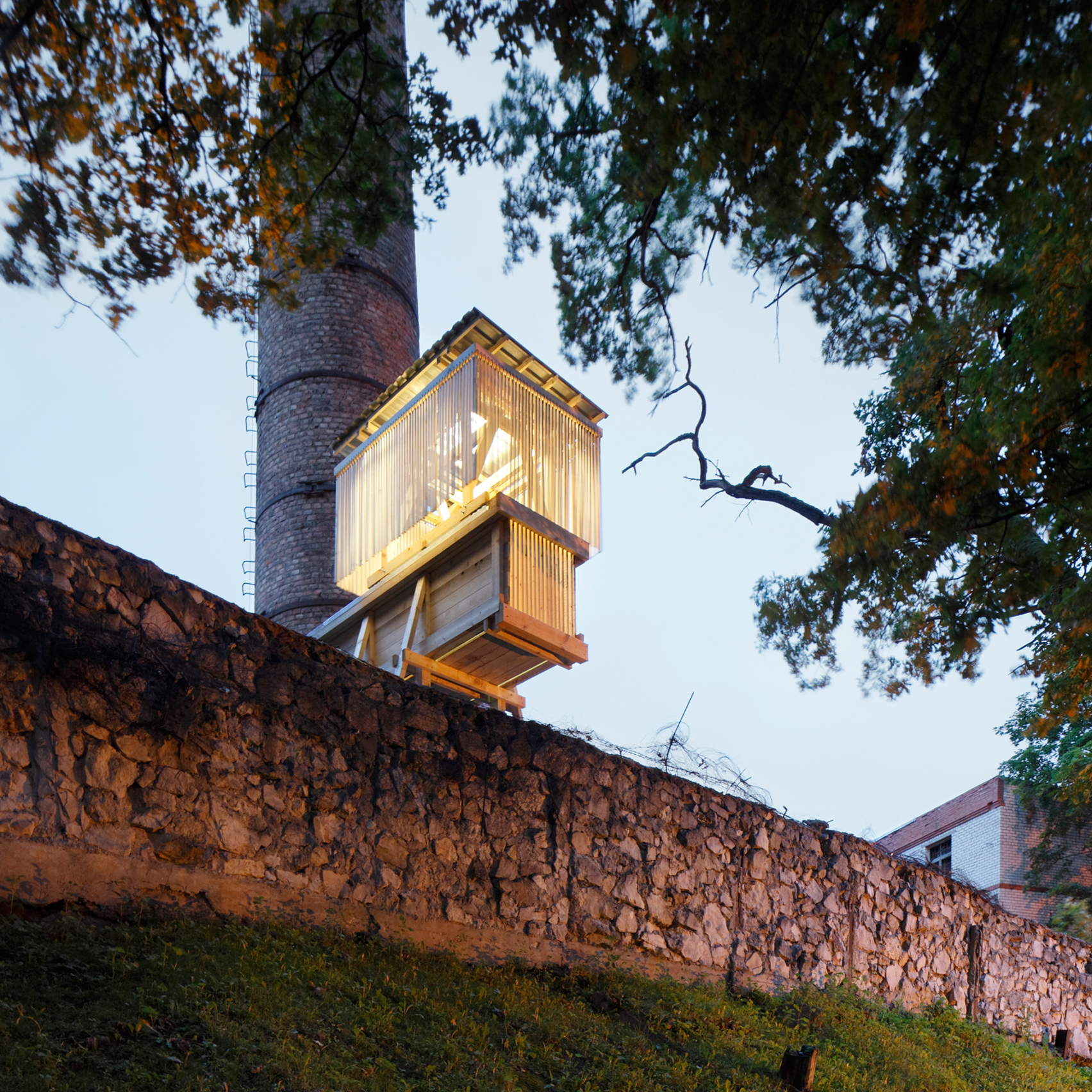
Students create Night Train party pavilion for former brewery in Latvia


Architecture students have built a train-inspired party pavilion in the grounds of a former factory, featuring a glowing wooden carriage that shuttles along a raised platform (+ slideshow) (more…)

http://ift.tt/2cdKgbg

Villas Jonc / Christian von Düring


© Thomas Jantscher

© Thomas Jantscher


© Thomas Jantscher


© Thomas Jantscher


© Thomas Jantscher


© Thomas Jantscher

  • Engineers: EDMS SA
  • Contractor: ATBA SA

© Thomas Jantscher

© Thomas Jantscher

This project of 3 attached houses follows the principals of sustainable development in an effort to minimize the impact on the environment during the entire life cycle of the building, ensure individual comforts while encouraging social relationships between neighbors, secure a long-term return on investment and keep maintenance and running costs low.


© Thomas Jantscher

© Thomas Jantscher

One of the objectives of the project is to foster the advantages of shared living while maintaining the individuality of each dwelling.  By the position of the garages and the portal definition of the entrances, each house is discovered by means of a passage through a private courtyard.  On the opposite side, the terraces give onto a common garden and the expression of the individual houses is erased to give the feeling of one big house.


© Thomas Jantscher

© Thomas Jantscher

Section

Section

© Thomas Jantscher

© Thomas Jantscher

By the structural layout and choice of materials, the project is conceived for maximum flexibility.  Each house can vary its layout and express its own individuality. And at the level of the entire structure, the possibility exists for future evolution, even to an eventual transformation into a small apartment buildingby adding two stories, thereby maintaining its sustainability and potential integration into a future town planning.


© Thomas Jantscher

© Thomas Jantscher

In this project, the use of natural materials was preferred (rammed earth, terracotta masonry & wood), choosing materials according to their level of gray energy and their durability. The construction is composed of a series of masonry walls on the ground floor, which support a wooden volume above.  As inspired by local rural construction, the masonry protects the wood from the ravages of ground humidity and at the same time compensates for the wood’s lack of inertia.  Furthermore, a rammed-earth monolith, made from the earth excavated for the basement, penetrates each dwelling from top to bottom.  It adds a passive regulation of temperature and humidity.  In addition to the windows on the facade, a central skylight ensures that every room benefits from natural lighting and ventilation. Finally, by the manual opening of a trap window, cool temperate air from the lower level is drawn through the house and out the skylight to act as a natural cooling system.


© Thomas Jantscher

© Thomas Jantscher

 Plan 1

Plan 1

© Thomas Jantscher

© Thomas Jantscher

These examples illustrate how the project minimizes complex automated regulation systems and gives preference to passive solutions, thereby optimizing energy consumption during all four seasons.


© Thomas Jantscher

© Thomas Jantscher

http://ift.tt/2bI1iM3

Amitzi Architects Design a Private Residence in Bnei-Dror, Israel

Bnei-Dror House by Amitzi Architects (6)

Bnei-Dror House is a private home located in Bnei Dror, Israel. The home was completed by Amitzi Architects in 2011. Bnei-Dror House by Amitzi Architects: “The house was designed for a family with 3 children, in a high-density neighbourhood. The street facade is modest and lower than the adjacent houses, and the lofty, one-and-a-half storey high interior is unexpectedly revealed only when entering the house. The exposed concrete ceiling floats..

More…

M Woods Entrance Revitalization / Vector Architects


© Xia Zhi

© Xia Zhi


© Xia Zhi


© Xia Zhi


© Xia Zhi


© Xia Zhi

  • Architects: Vector Architects
  • Location: Beijing, China
  • Architect In Charge: Gong Dong
  • Design Team: Dongping Sun, Yinxi Lu
  • Project Year: 2016
  • Photographs: Xia Zhi
  • Structural Consultant: Lixin Ji
  • Site Architect: Dongping Sun

© Xia Zhi

© Xia Zhi

From the architect. M Woods Entrance Revitalization is an urban renewal project in Beijing 798 Art Zone. The site was an abandoned industrial warehouse originally and it was used as an art museum since two years ago. The museum operators expect to have a façade and entrance renovation in order to refine visiting experience, and to improve the recognition of the museum’s public image.


Before

Before

© Xia Zhi

© Xia Zhi

In the past two decades, Chinese cities have experienced a rapid development: a substantial amount of old buildings, streets, historical blocks, and even topography were wiped out and replaced by newly “designed” urban appearances. Our living environment becomes more generic but unfamiliar progressively, and this separates our emotion from the settlement we live on. Therefore the key issue of the design is to rethink the urban renewal. Although our existing structure is not a historical heritage, such old architecture is still precious, since it reflects the trace of time.


© Xia Zhi

© Xia Zhi

Sketch

Sketch

© Xia Zhi

© Xia Zhi

Our primary strategy is not to reform the exiting facade, but to add a layer of translucency on it. Hence people are able to sense the old when they experience the new, and read the historical information of the city. Another challenge is time and budget. The project has to be implemented within 40 days from design to construction. Due to this critical condition,we choose the “galvanized iron wire mesh” as main material. By taking advantage of its light weight and self-support quality, a big number of stud works were eliminated. In addition, translucency and reflectivity of the metal mesh turns the entrance façade into a more lively condition, since the mesh can bring sunlight to where it is in shadow.


© Xia Zhi

© Xia Zhi

Plan-New

Plan-New

© Xia Zhi

© Xia Zhi

We revitalized not only the M Woods entrance but also a “negative” green belt which is enclosed by a fence across the street. We opened it up, and embedded a small plaza there. This plaza is under a metal mesh canopy with same material as the entrance, unifying surrounded space with the museum. It becomes a public resting area and children’s play ground in 798 Zone. Meanwhile, some public art activities will take place occasionally here, besides a regular Sunday Farmer’s Market. After revitalization, this area becomes a vivid city node which enlivens the block with culture and arts, and brings out a more energetic urban lifestyle.


© Xia Zhi

© Xia Zhi

http://ift.tt/2bAMDF6

Designs of the Year 2016 nominees announced


Herzog & de Meuron’s Tate Modern Switch House, Ikea’s flatpack refugee shelter, and the artwork for David Bowie’s final album are among projects nominated for the Design Museum‘s Designs of the Year awards 2016 (+ slideshow). (more…)

http://ift.tt/2bAH8q9

10 Quick Tricks to Stop Panic Attack From My Grandma (It’s works)

You’re reading 10 Quick Tricks to Stop Panic Attack From My Grandma (It’s works), originally posted on Pick the Brain | Motivation and Self Improvement. If you’re enjoying this, please visit our site for more inspirational articles.

10 Quick Tricks To Stop Panic Attacks (From My Grandma)

how to survive a panic attack

Presentation is a normal activity in our modern life. We have to present our tasks in school, and then we have to present our ideas in the workplace. With those experiences since our school days, you should be used to performing by now. Unfortunately for people with panic attacks, this task is challenging because they don’t know when their attack is going to come.

When a panic attack comes, you stop hearing and seeing things around you. You become lightheaded and disoriented. What if the attack comes in the most undesirable times – like in the middle of business meeting or in the middle of presentation in class? You should be able to halt the the attack so you can continue your task at hand, or at least so you can excuse yourself to calm down. So…follow these 10 tricks to quickly stop panic attack:

1.     Remember to Breathe

When you forget your surroundings, it’s easy to forget yourself too. Sometimes, when everything stops, you stop breathing, causing you to gasp for air and trigger even more panic. So, when the feeling comes, remember to breathe. Put this reminder in the front of your mind so it will be the first thing you think when everything stops.

When you remember to breathe, inhale and exhale the oxygen slowly. You can count from 5-7 when you inhale, count from 1-3 when you hold, and then count 7-9 when you exhale. You can shorten the count, but remember to always exhale longer than inhale.

2.     Think of Good Things

The next thing that debilitates your recovery from panic is the negative thoughts. Your fear of failing your performance and receiving judgement from people make you afraid to face them. When the negativity starts clouding your vision, conjure good thoughts to fight it away.

Think of your family and friends who have supported you, think of your reason to do this, think of what will happen if you succeed. Imagine yourself performing your best effort and everyone’s reaction to it. Thinking these happy thoughts will make you feel better, and as the result, make you calmer.

3.     Relax Your Body

When the panic attacks you, your body will feel the impact. Your muscles will tense, your body will shake, your mouth will be dry, and your eyes will lose focus. To soften the severity of the attack, relax your body. When you do that, your brain will receive the message that everything is back to normal and there is no longer need to panic.

Start by quickly scanning your body and feel what is happening to each part. Focus your eyes on something in the room and observe it. Relax your muscles, especially your neck and shoulders. Finally, grab your hands to force them from shaking.

4.     Ground Yourself

Feeling disoriented after an attack is normal. Suddenly, your awareness of where you are and what are you doing vanishes. When you realize it, you don’t know where you are or what to do, then it is time to reorient yourself by grounding.

Take a good look around you and notice things. Who are the people in the room? Where is this room? What are you doing in this room? What do you want to do in this room? Answer these question to pull you from daze and come back to your situation.

5.     Question Yourself

Anxiety comes from not being able to understand and control your surroundings. To further increase your understanding, and therefore your control toward the situation, ask yourself these questions:

  1. What is it that you’re afraid of?
  2. Are any of those fears happening? If yes, why do you think so?
  3. Is there any evidence that these fears are really happening?
  4. If something does goes wrong, is it fixable?

Often, the situation is not as dire as you think. These questions will help you realize that the situation is in fact under control. You will understand that your worry is not happening, and even if it is, you can fix it. This understanding will arouse your sense of control.

6.     Reassure Yourself

When you finally gain awareness of your surroundings, it is time to get your confidence back. Words of encouragement will boost your faith in yourself. Who can offer you these words in this situation? It is none other than yourself. Self reassurance is also called affirmation and it is a legit psychological trick that is proven to work.

Tell yourself that everything is okay, there is nothing wrong, and you will give the best performance. Tell yourself that you have prepared everything beforehand so you are ready to take on anything. Then, praise yourself for your better qualities, such as your intelligence, your eloquence, your adaptability, your quick thinking, and so forth. In the end, tell yourself that even if something goes wrong, you will still be okay and you will still love yourself.

7.     Decide to Stay or Rest

Now that you are able to think clearly again, you can make a decision. Can you continue your performance or do you need to step back for a while? If you’ve gained back your awareness, control, and confidence, it is safe to get back to your game.

But if everything you’ve tried is not enough to halt the attack, then there is nothing wrong when you want to step back. Forcing yourself will only bring more panic. Excuse yourself calmly and politely, explaining what you need and when you will return.

8.     Get Some Fresh Air

Panic attacks can be suffocating, literally and figuratively. Stepping out of the room to get a breath of fresh air can dismiss this feeling, both literally and figuratively too. The air outside will feel fresher to you, easing you to take a deep and even breath. It will also release you from feeling trapped and make you relaxed.

Choose a quiet place where you can find your peace without being distracted. If possible, step outside to feel the nature as that has a psychological effect to calm us down. Or, if it isn’t available, find a place where you can see the outside. It will release the suffocating and claustrophobic feeling and broaden your view.

9.     Call Trusted Someone

When everything else doesn’t work, then it is time to ask for help. It is okay to request help, because nobody can live alone. Call your trusted someone – your spouse, your family, or your close friends. Tell them what happened.

Their comforting and encouraging words can be a source of strength within yourself. Remember that no matter what happen, you will not be alone. Remember that you have people who care about you, who will accept you no matter what happen.

Remember, asking for help IS a sign of strength.

10.     Get Physical Contact

If available, instead of calling your trusted someone, meet them instead. Face to face contact is more beneficial than mere calling, because human brain recognize other people’s face better than their voices. Furthermore, when you meet them, you can touch them and get physical contact. Studies suggest that physical contact help to ground people and calm them down.

A mere hand holding can suffice. It is a gesture of support and you will feel stronger when you know that you have someone to count on. A hug can release oxytocyn, a hormone that can calm your nerves and make you feel happier.

These 10 tricks are quick and easy to do when you have a panic attack in the middle of an important moment. You just have to practice and remember these steps so the next time you get the attack, you know what works to halt it. Do you have your own tricks to add into the list? Tell us about it in the comment section below.


——–

Azhar,  Founder freeitout,  I believe our quality of life could rise just as dramatically if we all began practicing personality hygiene, can you imagine what would world be like if everyone was psychologically healthier ? I DO.


You’ve read 10 Quick Tricks to Stop Panic Attack From My Grandma (It’s works), originally posted on Pick the Brain | Motivation and Self Improvement. If you’ve enjoyed this, please visit our site for more inspirational articles.

http://ift.tt/2bESi8L