Month: August 2016
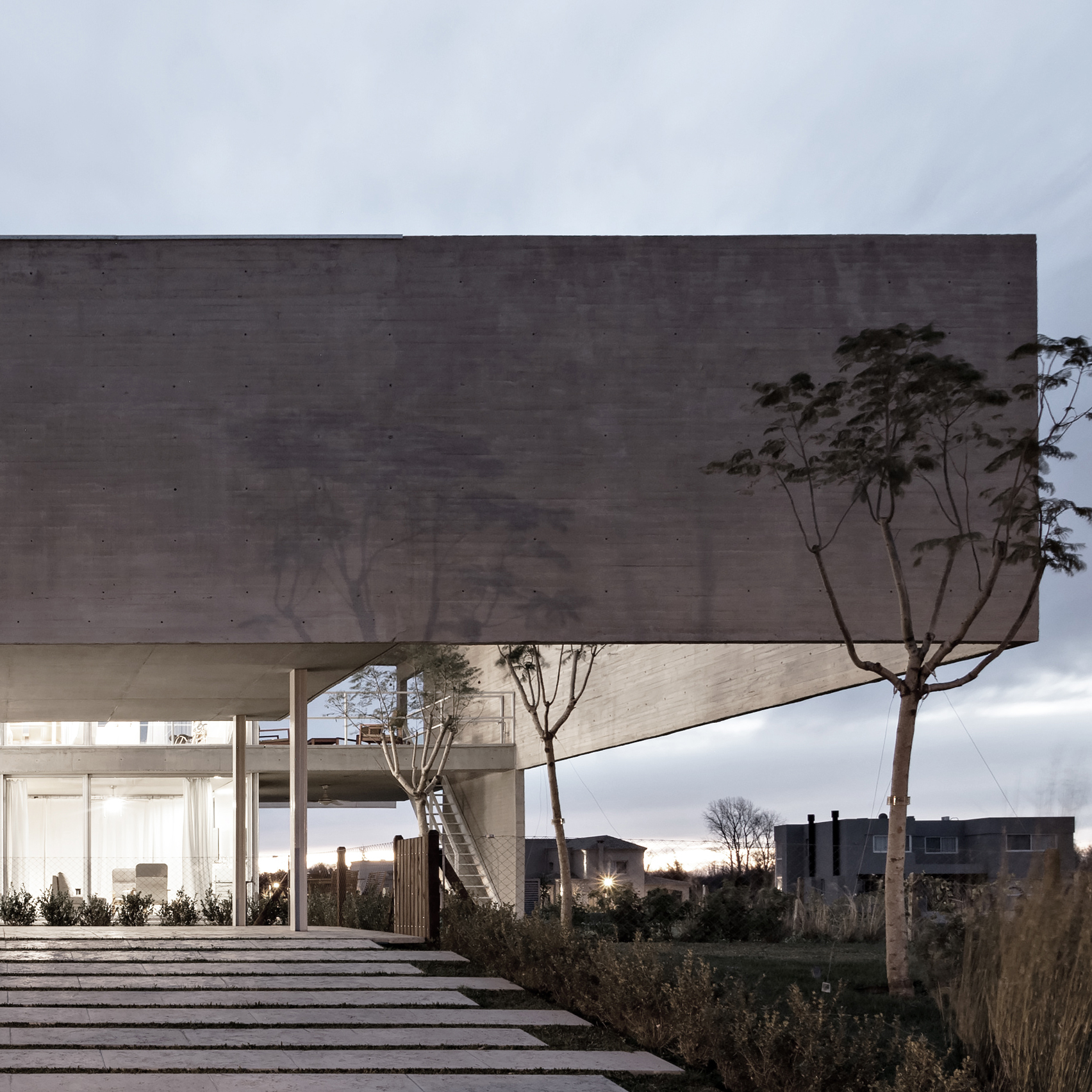
Quietness / Wei Yi International Design

© James
- Architects: Wei Yi International Design
- Location: Shanghai, China
- Architect In Charge: Shin-Yuan Fang
- Area: 165.0 sqm
- Project Year: 2014
- Photographs: James
© James
From the architect. China, the ancient oriental culture synonymous. Through history of thousands of years, it bred the profound cultural conversation. From history, culture, art to architecture, to explore all aspects of the breadth and depth of its coverage, unfathomable. This project is patterned elements, Chinese landscape painting and construction, the use of the concept, which is vital to a ring.
© James
© James
In Chinese culture of painting, landscape plays a significant role. One single color ink can be manipulated through its saturations, accompanied by charm of the strokes, to bring out the whole prospect of view. Just like in a landscape painting, the space in this case is similar to the ink. The utilization of the ink’s saturation and lightness together with layers of the scenery give viewers the feeling of being inside of the painting. The texture of the space includes the elements of Chinese architecture, such as window lattice, grey-white, and white walls, like the scenery in the painting. Dwelling, besides fulfilling the function, it is also a part of the culture’s extension. It is fundamental and the most important part of the whole structure.
Plan
The dialogue among the shadow, materials and saturation is so straight-forward and pretentious, and that brings it all back to the nature. The implication between the vertical and horizontal insinuates the harmony and goes way back to the original thought.
© James
© James
When witness the essence of the space, it’s coexisting with everything around it with a balance and modest relationship, and then makes our 5 senses calm with its relaxing and sensational attitude.
© James
Favreau Design Creates a Vibrant Modern Home in San Francisco, California

Modern Home is a private residence renovated by Favreau Design. It is located in San Francisco, California, USA. Modern Home by Favreau Design: “This project in the Noe Valley neighborhood of San Francisco was a complete teardown of an existing wooden structure from the 1930s. The owner wanted a sleek, modern home that would take full advantage of the amazing San Francisco skyline views. We were going for optimal square..
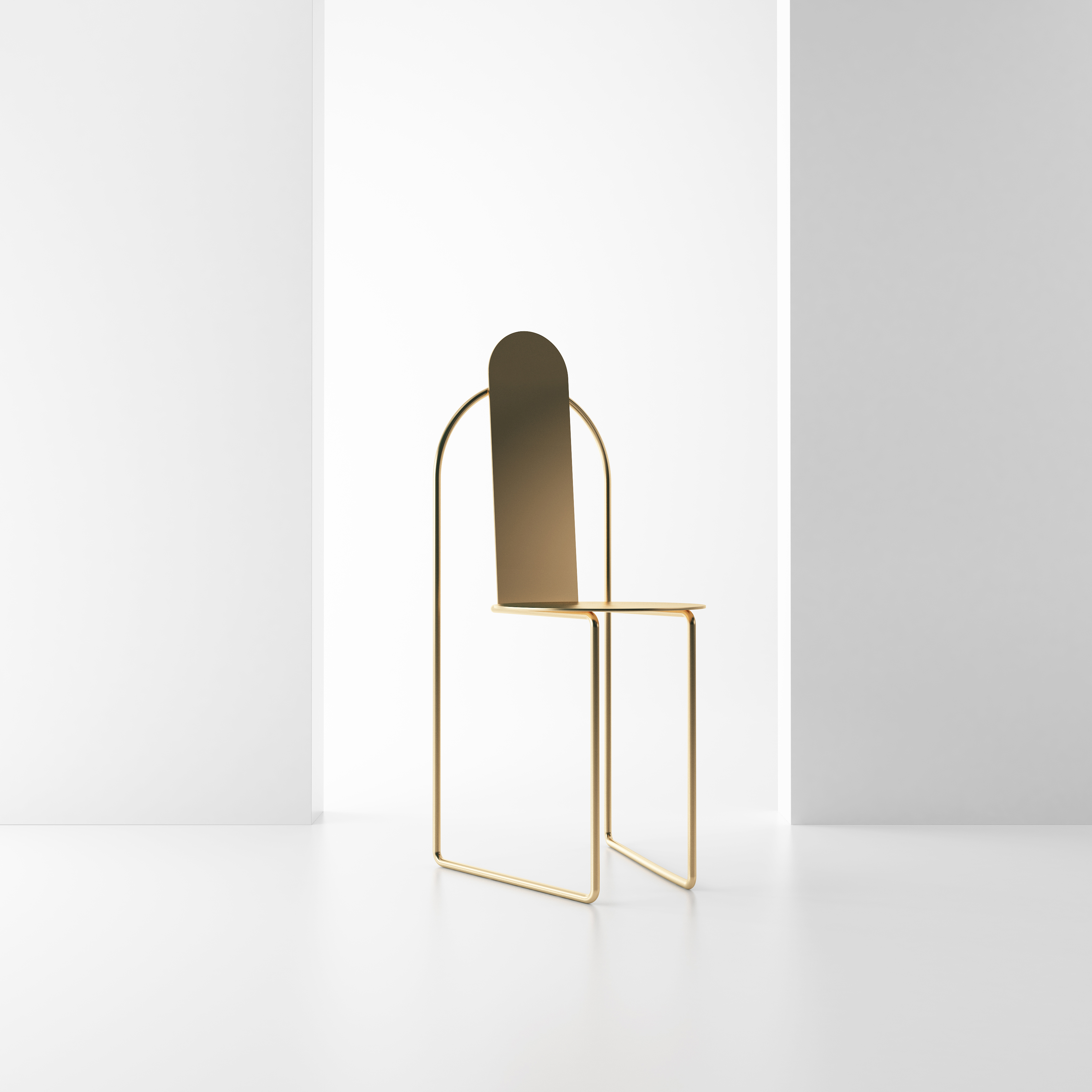
Pedro Venzon bases stackable Pudica chair on Brazil’s colonial architecture
11 Reasons Why Your Relationship With Money Is Keeping You Poor

You’re reading 11 Reasons Why Your Relationship With Money Is Keeping You Poor, originally posted on Pick the Brain | Motivation and Self Improvement. If you’re enjoying this, please visit our site for more inspirational articles.
What are your beliefs about money (and success) that are keeping you back? Here are 11 false beliefs about money and what to do about them.
You Serve Money
First and foremost, get this relationship correct: Money serves you, never the other way around.
If you believe that you are a slave then you will carry an undercurrent of bitter resentment.
Rather, think of money as your faithful, good, and obedient servant. Money is a vehicle that allows you to live comfortably and helps you to do good in the world.
The Rich Are Crooked
Many people incorrectly believe that the rich acquired their wealth through ill-gotten ways. I can hardly blame them. Turn on the news and you hear about white-collared crooks swindling billions of dollars from thousands of investors.
Yet, I have also met many wealthy people who just want to make a difference in the world with what they have to offer. Many support philanthropic causes.
I Don’t Want to Become a Snob
Having money hardly makes one snobby. Yet, some people do hold the belief that the affluent are picky, prissy, prim, and too proper for the rest of society. This is as far removed from the truth as television is a reflection of reality. Most wealthy and successful individuals are humble and very giving.
Money Isn’t Everything
Usually, people who say this also believe that money can’t buy happiness. They mistakenly think that in order to be happy they must also live in poverty. Or at the very least, just enough to get by.
I don’t know about you. But I would rather be wealthy and miserable than poor and miserable. With money, I can always buy time so that I can find what brings me joy and happiness.
Living with an abundant mindset means having the best of both worlds. It means to be wealthy and happy.
I Don’t Know How to Receive
Do you know what your services are worth if you were to run your own business? Do you know how to ask for money?
After removing malware from a friend’s computer at her place of business, she wanted to pay me for my services. I didn’t know how to ask for money at the time so I said to forget about it since it took me less than an hour to do so. Fortunately, I would learn a lesson that day about how much my services are worth
She insisted on paying me, and it was then that I realized that you have to ask in order to receive. I also relearned a basic tenet of providing services: Sure, it might have taken me less than an hour to fix her computer. But it took me twenty years of concentrated study and countless hours in front of a computer to learn these skills, among many others.
Lack of Gratitude
Just as I didn’t know how to receive, I also failed to express gratitude whenever I would find a dime or quarter just laying on my garage floor. Having an attitude of gratitude is important to reframing your mind in order to expand your awareness and start looking for what’s possible. Too many of us hold a narrowness of mind by concentrating on what we don’t want.
It is in expressing gratitude that we open ourselves more to receiving.
So now, whenever I find a quarter on the floor or a dollar in a pair of freshly laundered jeans, I express gratitude.
Poor Self-Image
How you view money, your relationship to it and the value you provide to facilitate its reception is important, too.
If you believe yourself undeserving of money, then you will push it away long before it ever comes your way. If you want someone to offer you a six-figure salary, then you better believe that you are deserving this number long before you ever ask for it.
Money Tore My Family Apart
Folks whose parents struggled to make ends meet, living from paycheck to paycheck, likely believe that money tears families apart. I held a similar belief. My parents worked twelve hours a day, six days a week, all to just remain at the poverty line. As a result, I hardly ever saw them or spent time with them. For us, money was always that mysterious entity that was elusive to come by.
Overtime, I have come to accept money as an inanimate object. My failings with money are just that—my failures. It was up to me to adopt a different set of beliefs and to see money as nothing more than just pieces of paper to which we assign value, be they good or bad.
I dedicated myself to study and specialization, for the world pays handsomely and well for specialized knowledge in which you help to solve problems. After all, that is the reason businesses exist.
I Know Jack Sh!t About Money
This was a hard one for me to accept. Yet, once I accepted responsibility for my own shortcomings things started to change for the better. I adopted a whole new set of beliefs about money, such as the ones you read about today. I also realized that money is simply an indicator of success. The more specialized knowledge we hold and the more we are able to apply that knowledge, the more successful we are.
Wrapping up
Astute readers likely noticed a common thread running through the above reasons: blame. We tend to blame money for our problems. It’s silly to blame pieces of paper and metal for our own problems. When we stop living as victims and start taking the initiative then wonderful things start happening in our lives.
We set goals, but realize that goals aren’t about getting. They are about growing. In the end, as Earl Nightingale puts it, “Success is the progressive realization of a worthy ideal or goal.”
Benson was at one time in his life feeling down and out. Through humbling experiences, a pioneering spirit, and just plain stubbornness, Benson dug himself out of that deep, dark hole. Now, he chases his dreams much more confidently and self-assuredly. If you want more success and confidence so you can chase after what really matters, claim your audioset blueprint today.
You’ve read 11 Reasons Why Your Relationship With Money Is Keeping You Poor, originally posted on Pick the Brain | Motivation and Self Improvement. If you’ve enjoyed this, please visit our site for more inspirational articles.
Venice, Italy photo via laura

BRG House / Tan Tik Lam Architects

© Mario Wibowo
- Architects: Tan Tik Lam Architects
- Location: Bandung, Bandung City, West Java, Indonesia
- Area: 750.0 sqm
- Project Year: 2014
- Photographs: Mario Wibowo
- Principal: Tan Tik Lam
- Junior Architect: Priesto Naray, Ade Sumi Santoso
- Project Architect: Romi Aprianda
- Ass Architect: Maman Lesmana
- Contractor: Pipih Pryatna
- Structure Consultant: Hermanto Subagijo
- Site Area: 25.000 sqm
© Mario Wibowo
© Mario Wibowo
Size and location are main concern while designing this premises, we consider to separate two functions, garage and main house.
While approaches to the house either by walk or golf cart were suggested.
© Mario Wibowo
Plan 1
© Mario Wibowo
We designed as one floor living concept and service quarters were one floor down in one section since topography level were already give us solution to all that we’re conceptually about.
© Mario Wibowo
Aleph in Domoon / studio_GAON

© Yong Kwan Kim
- Architects: studio_GAON
- Location: Sokcho-si, Gangwon-do, South Korea
- Architect In Charge: Hyoungnam Lim, Eunjoo Roh in studio_GAON
- Area: 203.55 sqm
- Project Year: 2013
- Photographs: Yong Kwan Kim, Youngchae Park
- Project Team : Sangwoo Yi, Minjung Choi, Seongwon Son, Sungpil Lee, Hanmoe Lee, Joowon Moon, Haein Choi
- Construction : Starsis
- Supervision : studio_GAON
© Yong Kwan Kim
From the architect. In Jorge Luis Borges’ novel of same title, ‘El Aleph’ is the one site which contains all the places in the universe, as well as all stars, all lamps, and all sources of light. It is also the first character of Hebrew, and the beginning locus of every memory.
© Youngchae Park
Designing the house in Domoon was just like being in Aleph, a project to transcend time, to share memories and places. Going through the process was like solving a puzzle; putting odd pieces together to make a complete whole.
© Yong Kwan Kim
Sokcho region is a port city in the east coast of Korea, surrounded by chain of Seorak Mountain. You can gaze ocean and mountain in one frame, a place showing every color under gaudy sun and wind.
Site Plan
One day a gentleman came from Sokcho to erect a house. The site was in Domoon-dong, which is an old town near the mouth of Seoraksan Mountain approach road.
© Yong Kwan Kim
Domoon means a door(moon, 門) to enlightenment(do, 道). There are two aged legends about the origin: One stars a monk who found great illumination in this place to open ‘the door of enlightenment’, and another is that this place is the first gateway into where monks go into Seoraksan Mountain to cultivate their religious awakening. Hence, Domoon-dong is the oldest town in Sokcho.
Floor Plan
The site was quite large, and there was a tiny old house in the corner. The exterior of the old house was finished with wood instead of plaster, which made this house special inside, compared to other old houses around the area. The space inside was arranged as traditional Korean house in cold region, ‘Kyup-Jip(겹집)’, with space arranged in stacking shape(田).
© Youngchae Park
Old wooden finishing were discolored beautifully over the years, and the rusted tin roof was old but natural. With a bit of repair, people could live in an instant.
© Yong Kwan Kim
In most of the cases, when we remove inside walls and ceilings of an old house in Korea, we would find a panel on the girder, put on the day of roof-raising construction process, to record the history of the house. The panel (sort of time capsule) would show us various information about the house including when it was built. But unfortunately, we couldn’t find any clue about this house inside.
Section
Section
Then one day, an old passer-by told us that he was born in this house and this house was actually moved from original location and rebuilt about a hundred years ago from a monk’s lodging near Ulsanbawi Rock in Seoraksan Mountain. It transpired that this house was older than a century. And during the difficult construction, we found there are two Seongju-sin (house god) in this house. One god came from the original house in Ulsanbawi, and the other one was in Domoon-dong. The god from Ulsanbawi was high in rank, so he insisted that he is the owner of this house to the Domoon-dong god. Even worse, he kicked the house to threat the Domoon-dong god to make him leave.
© Yong Kwan Kim
This story was all from the dream of the carpenter. Everybody may laugh this story off to think the carpenter was merely inspired by the hundred-year-old house. But the carpenter, owner, and we didn’t laugh off and took this story seriously.
© Youngchae Park
One night afterwards, the carpenter met the Domoon-dong god in dream and the god bowed his thanks for mending the old house. And the god said that if this construction ends, he will be driven out from the Ulsanbawi god, so he asked the carpenter earnestly not to finish and put a little aside.
© Youngchae Park
The carpenter awaked from the vivid dream, and changed his mind of leaving halfway since the work was too tough. After hearing the story, we decided to enshrine each two god’s mortuary jar in the hall and the room, and move the Domoon-dong god’s jar to the new house after completion. In any case, there are lots of things that we don’t know or can’t see but exist out there.
© Youngchae Park
That was how we restored the past of the land. After winter, when spring was just around the corner, the house was completed and people offered sacrifice to spirits on a snowy day. That night, the owner found one tiger butterfly turning up, circling around the house, and flopping out.
© Yong Kwan Kim
We are not sure if the Seoungju-sin (house god) really exists, but we think that building a house or meeting a land is not a mere coincidence, but happens through a string of amazing relationships. We don’t want to bet that a simple result of coincidence became these series of process: the owner was planning to tear down the old house to use the lot as a parking spot, but meeting us changed his mind and eventually saved the old house.
Sometimes when we rescue houses from tearing down, we feel that there exists some complicated and bottomless ego in old houses. Usually, building a house is a process between the owner, architect, and land exchanging opinions, making concessions, and giving self-assertiveness. It’s like solving a complicated equation.
© Youngchae Park
Fixing an old house is like inserting another ego named house barging in the relationship of the land, owner, and architect, and it makes the equation much more complicated. It’s this moment for the architect to listen carefully to each story and convey it between them and synthesize, to deduce a result carefully not to make a quarrel between them. The old house in Domoon-dong became neat and warm again, though we don’t know how much the gods or the owner are satisfied.
While renovating the old house, the owner changed his mind about the shape of the new house. The original idea was to build it in a big, rigid form, but he became to ponder about a suitable size for living and comfortable materials. The final shape resembled the old house and also the surrounding mountains.
© Youngchae Park
First, we divided the house into two and arranged them toward south side to let the sun in. One became a main building(Anchae, 안채) with kitchen and rooms, and the other one became the guest house(Sarang-chae, 사랑채) with livingroom-cum-music salon and attic. In so doing, there became three houses soaring upwards like mountains from the land.
© Yong Kwan Kim
When designing and building a house, we encounter some unexpected situations or unsuspected stories. Onto the framework of time and memories, the will of human and land are placed, to frame present and future. In that respect, architecture is a complicated and multidimensional structure.
© Yong Kwan Kim
Doors lead us to go somewhere in or out. Gaze of eyes go in and out through windows and space cross between doors. The door let us enter into a new world like the rabbit hole of Alice. Architecture is a door to let us cross the border of world and family, past and present, or present and future.
France photo by cyrill

Yangzhou Zhongshuge / X+Living

© Shao Feng
- Architects: X+Living
- Location: Yangzhou, Jiangsu, China
- Architect In Charge: Li Xiang
- Design Team: Liu Huan, Fan Chen, Tong Ni-Na
- Area: 1000.0 sqm
- Project Year: 2016
- Photographs: Shao Feng
© Shao Feng
Water, the cradle of everything, and the breeding ground of culture. Yangzhou was born near water. In the past,guiding by water, many literati and poets visited and gathered here. Also, this was a place loved by wits and beauties. In the book “A Dream of Red Mansions”, when Lin Dai-Yu is missing her hometown, the verses“Spring flower and autumn moon, green hills and clear water; twenty-four bridges, relics of the Six Dynasties”will come to her mind; this verses had raised so many people’s imagination about twenty-four bridges. In 2016, Zhongshuge was attracted by this beautiful and ethereality place, and hoped to enrich the beauty of Yangzhou with its own charm!
© Shao Feng
Yangzhou Zhongshuge is located in Zhen Yuan which is next to waterside and in front of the trees. While inheriting the previous solemn and dramatization, we added arch bridge- an indispensable element of this historical and cultural ancient city- in our design concept. It used to be the guiding factor of culture and commerce, and it represents that bookstore is the bond between human and books at the same time.
plan
Walking into the front door of Zhongshuge, it is the lobby. Through using the concept of arch bridge, the designer extends the visual sign of world of books. Rivers on the floor and in the sky which flow forward lead readers to go deeper into the vast ocean of knowledge. Bookshelves on the two sides extend the shape of the skyline with graceful arcs,just like a bridge over the streams setting up the bridge of mind between readers and books. Keep walking forward and you will find a broader land of books on your right side. Through studying the relationship between arc bridge and river, the designer got a mirrored space relationship. The designer used all kinds of arch to connect all areas,giving a sense of shock to every reader who comes into this space. And the sense of mystery created by the soft light makes all readers thinking of the river under the bridge sparkling in the sun; it helps them to enjoy the happiness of reading with a peaceful mood. The wavy space maintains enough room for readers to sit and share ideas together during Reading Activity.
© Shao Feng
The children’s Picture Book Pavilion is right opposite to the study. Bookshelves are built in the form of disassembled and movable toys to reflect the naive nature of kids. The bottom part of the bookshelves on the wall could be taken off from the wall and used as book display table. When room is needed, they could be put back into the bookshelves and form the pattern of city view which carries the culture of street view of Yangzhou. The whole space is liven up by these vivid colors. Once the kids come into this space, they will feel like being in a cartoon-versioned Yangzhou. Going out from a corner of the children’s Picture Book Pavilion you will find an exquisite toyshop , where all kinds of school things for adults and kids are displayed neatly. This is the rich and varied Yangzhou Zhongshuge that inheriting the cultural stories of Yangzhou.
© Shao Feng
 Sig Nordal