Abandoned Hospital 4 by Snelvis The now abandoned Morisset…

via Abandonedforgotten http://ift.tt/2aSveTr

Lucas y Hernández-Gil reconfigures 19th-century Madrid apartment to let in light


Spanish architecture studio Lucas y Hernández-Gil removed compartmentalising walls inside this Madrid apartment to allow light to flood in from its nine balconies (+ slideshow). (more…)

http://ift.tt/2aMfHsP

ONZ Architects and MDESIGN Design Ecological Corridor in Turkey


Courtesy of ONZ Architects and MDesign

Courtesy of ONZ Architects and MDesign

A combination of geographical features has seen the city of Sivas remain one of the greatest focal points of settlement and transit in the Greater Anatolia Region of Turkey.  The region is divided in two by the Kızılırmak River, the longest river entirely within Turkey, and it has long been regarded as a barrier to unification. Due to access and safety concerns,  Kızılırmak River has been separated from Sivas, perceived as something outside of the city perimeter. Now, advancements in flood mitigation have opened up the possibilities for the river to be re-integrated into the city fabric. 

To investigate the possible role of the river in holistically reuniting the two halves of the area, the Sivas Municipality opened a competition to design a six million square meters of land adjacent to the waterfront. A scheme from a team comprised of ONZ Architects and Mdesign took an approach which equally considered the site in terms of its biological and cultural possibilities. Their design establishes the Kızılırmak River Corridor as an “ecological and recreational spine,” managing the floodplain and integrating vital public program throughout. 


Courtesy of ONZ Architects and MDesign


Courtesy of ONZ Architects and MDesign


Courtesy of ONZ Architects and MDesign


Courtesy of ONZ Architects and MDesign


Courtesy of ONZ Architects and MDesign

Courtesy of ONZ Architects and MDesign

One of the key objectives of the design was to maintain a stronghold over the flow of the river, using flood mitigation techniques to ensure that the flood problem does not prevent future use of the waterfront. Seasonal fluctuations in the flow and level of the river due to melting snow or extreme heat had to be considered and accounted for. Once the floodplain has been stabilized, the area around the waterfront can be selectively accessed, and a series of pedestrian corridors can bring people back to the riverbank. 


Courtesy of ONZ Architects and MDesign

Courtesy of ONZ Architects and MDesign

To allow users to interact with all of the components of a healthy ecological corridor – diverse terrestrial and aquatic ecosystems, wetlands, and flora – the pedestrian pathways make these spaces habitable. One of the corridors leads from the city center to the waterfront, taking care to not interrupt or displace ecological features along the way. The flow of these ecological corridors encourages the movement of air, with biological matter producing oxygen which is carried upwards during the day and reversed at night. This movement is directed through the corridors which flow through the city, carrying the polluted air away and replacing it with fresh air. 


Courtesy of ONZ Architects and MDesign

Courtesy of ONZ Architects and MDesign

Eco-tourism is an important aspect of the design, and engaging built spaces such as exhibition rooms and installations are interlaced within the waterfront. Naturally occurring tourist points, such as bird watching spots or lookouts are also accentuated in the design.  


Courtesy of ONZ Architects and MDesign

Courtesy of ONZ Architects and MDesign

Rather than eliminating the eight existing bridges which span over the river, this scheme uses them as integral historical objects to drive the design forward. The architects described them as “important traces and transportation channels,” which have continuing value to Sivas. A new pedestrian bridge is added, allowing the transmission of both people and fauna across the ecological corridor.


Courtesy of ONZ Architects and MDesign

Courtesy of ONZ Architects and MDesign

A cultural program features heavily in the design, a city library has been designed to serve both the citizens and national school students, as well as students from neighboring universities. Its program is interlaced with the reading gardens and recreational areas nearby. A museum and art center informs visitors about Sivas’ history whilst exhibiting works from local students and artists. Local craft studios and indoor exhibition halls are located nearby, and the outdoor exhibition hall and sculpture garden integrate the building back into the surrounding landscape.


Courtesy of ONZ Architects and MDesign

Courtesy of ONZ Architects and MDesign

The “City Gate” will contain a high-speed train station, designed for maximum efficiency for new visitors to the city to reach the city center directly. Opera, theater shows, and ballet will be housed within the large multi-purpose hall, and smaller scale spaces to host workshops and culture functions are dotted through the scheme. Boathouses and rowing clubhouses are also integrated into the design, taking advantage of the river for rowing and canoeing.


Courtesy of ONZ Architects and MDesign

Courtesy of ONZ Architects and MDesign

The essential public facilities such as restaurants, cafes, toilets and tea gardens are distributed across the scheme, creating interconnected pockets of activity. Landscape elements including thematic gardens, aromatic, endemic or medicinal plant gardens and picnic areas create a variety of conditions for users throughout the year, ensuring maximum functionality of the site for the inhabitants of Sivas.

  • Architects: ONZ Architects, MDesign
  • Location: Sivas, Sivas Merkez/Sivas, Turkey
  • Design Team: Onat Öktem, Murat Z. Memlük, Zeynep Öktem, Mehmet Çıkrık, Mehmet Feyzi Nilüfer, Sevgi Çalı, Melih Tokaç, Seda Özçelik Koç, Ebru Dehmen, Okan Mutlu Akpınar, Faruk Ünlü, Ayça Sapaz, Dilara Tuncer
  • Consultants: Zafer Kınacı,Tuncay Demirci
  • Project Year: 2016
  • Photographs: Courtesy of ONZ Architects and MDesign

News via ONZ Architects and MDesign.

http://ift.tt/2bv8DSH

Aurora Borealis by Steinar Hugi Northern lights at Thingvellir…

Aurora Borealis by Steinar Hugi Northern lights at Thingvellir national park

Prentanir
Þessa mynd geturðu keypt prentaða og upplímda á foam plötu á góðu verði.
Sendu póst á steinar@steinar.is ef þú hefur áhuga. http://flic.kr/p/4pRJa4

http://ift.tt/2bgbL4p

La Serena House / Sebastián Gaviria Gómez


© OLMO Fotografía

© OLMO Fotografía


© OLMO Fotografía


© OLMO Fotografía


© OLMO Fotografía


© OLMO Fotografía

  • Structural Design: Ing. Edwin Marino Betancur
  • Site Direction: Ing. Lina María Gómez
  • Construction: FASE G Proyectos S.A.S.

© OLMO Fotografía

© OLMO Fotografía

From the architect. La Serena is located in a mountainous area of eastern Antioquia near the municipality of El Retiro 2,350 meters above sea level. Being on top of a hill, surrounded by extremely steep slopes became the most important project constraint, the form is the result of a proposal on how to strengthen the relationship between the user and the landscape through the building. It is a building in which displacement is encouraged, to travel from one room to the other, the “architecturale promenade”, the walk along the architecture establishing a contemplative relationship between man and territory, the landscape.


© OLMO Fotografía

© OLMO Fotografía

Section

Section

© OLMO Fotografía

© OLMO Fotografía

The program had to be developed mostly on a single level, and in turn to have some open space at that level. Due to the steep slope of the site and to avoid the exterior space ending up as something residual, we chose to propose an interior courtyard, a space that is protagonist and epicenter of the house. It is accessed through the courtyard, which constitutes a threshold, a transition between exterior and interior, a kind of ceremonial space that one must pass before entering the domestic. Due to the topographic and climatic conditions of the place, the courtyard also provides shelter from strong winds. The house is entered around the circumference of the courtyard. In the design process, there was a profound reflection on the relations established with the territory. The house is in a visually privileged place, and its mostly radiated form follows the strategy adopted to maximize the contemplative relationship with the landscape. Thus the views framed by the openings inside the house change from space to space.


© OLMO Fotografía

© OLMO Fotografía

We design the eastern facade, which is the most exposed to the views from the road, with very small and discreet windows so as not to expose the privacy of the home. To the west, where there are no external views of any kind, we design large open windows, not only to promote the relationship with the landscape but to receive the afternoon sun needed throughout the year so that there is a comfortable temperature inside. La Serena is an architectural proposal that seeks its foundations in the obvious, intended from the understanding of the place and through the building to promote and enhance the possible relationships between the user and the territory.


© OLMO Fotografía

© OLMO Fotografía

General Plan

General Plan

© OLMO Fotografía

© OLMO Fotografía

http://ift.tt/2aUa7WK

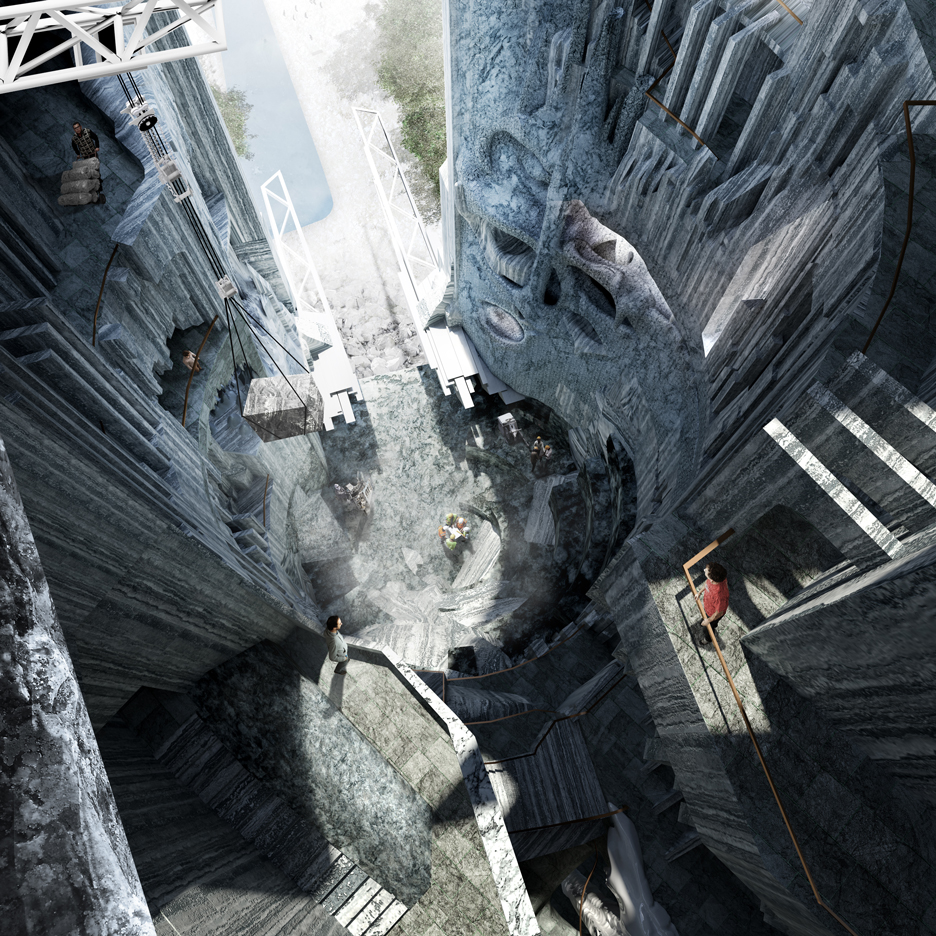
Adrian Yiu’s Anthropophagic Territory is a conceptual self-sustaining quarry


Graduate shows 2016: Bartlett graduate Adrian Yiu has proposed revitalising a disused quarry in Rio de Janeiro‘s oldest favela to create an independent enterprise zone for local people (+ slideshow). (more…)

http://ift.tt/2aLWKXf

3 Tips To Stop Making Excuses and Start Getting Spiritual

You’re reading 3 Tips To Stop Making Excuses and Start Getting Spiritual, originally posted on Pick the Brain | Motivation and Self Improvement. If you’re enjoying this, please visit our site for more inspirational articles.

how to find your spirituality

how to find your spirituality

Have you ever considered doing something “spiritual,” like a yoga class or meditating, but didn’t because you don’t think of yourself as “that kinda person?” Or have you ever caught yourself five episodes deep in some TV series thinking about how much that choice clashes with your spirituality? Or how about the reverse–have you ever stopped yourself from doing something you felt to do because you thought it wasn’t spiritual enough?

No matter what siphons us off from either our spirituality or our desires, there’s a common thread: the belief that spirituality is a compartmentalized area of our lives. From that belief comes the idea that some of us are spiritual, and some of us are not. Some things are spiritual, and other things are not. And the further along we go on that trip, the more that belief becomes an excuse for not going deeper into our spirituality and living a more full life.

The thing is, real spirituality is when the spiritual practice is all of life itself, from eating pizza, watching TV, and finding ourselves in arguments to meditating, being with friends, and communicating with love. Indeed, when we are fully present with these moments, and we are soaking them up for all they are worth–willing to learn, grow, be accountable, and keep returning to love–then we are in an intimate union and a reverent flow with life that can only be spiritual.

To be sure, spiritual experiences aren’t all bliss, glitter, and angelic harps on repeat. That idea only fuels the excuse that when there isn’t obvious sacred beauty, then well, this isn’t meaningful or spiritual and therefore, it has no value for me. Let’s be clear, spiritual experiences include all of it: the dirt, the tears, the confusion, the mundane, the profane, and the glorious. The meaningfulness is always there for us to tap into, so long as we are present, vulnerable, and accountable for ourselves.

So, what can we do to more easily connect the sacred meaningfulness of life through the less obviously “spiritual” moments?

1. Get Present

In most moments, we are in the past or the future and anywhere but here. We are present when we collect all of our attention and orient completely into the moment that is here, now. When we engage with the mundane moments of life as an opportunity to anchor our presence in our bodies, then we are helping ourselves to remain in that space of clarity that serves us so greatly in our lives. For example, as you drink your morning coffee, drink it slowly—feel the warmth of the liquid on your tongue—feel it slide back your tongue and into your throat. Breathe deeply in between your sips. This is the way of anchoring your presence in your body, and you can do it in every moment of life.

2. Confront Your Ideas

Most of us have all sorts of ideas about nearly everything. The thing is, those ideas often prevent us from clearly seeing what is actually happening in the present moment. When you catch yourself being limited by a belief, such as I shouldn’t be honest about how I feel (because that would be unsafe/inappropriate) or, another common one, I should work 24/7 because that is what it takes to be successful (and therefore, I must sacrifice my needs), be bold enough to face it. Be courageous enough to explore the possibility that it is not true. Be brave enough to experience what happens when you allow that belief to fall away, and instead, allow yourself to simply be present, vulnerable, and open to whatever the moment is inviting you into for your growth and your joy.

3. Explore Your Vulnerability

We are all vulnerable beings, from the sternest CEO to the most sensitive child. Denying or rejecting our vulnerability only makes us feel cut off from our divine nature and the kindness of life. So first, accept the simple fact that you are vulnerable.

Once we have accepted our vulnerability, we are in a place to discover meaning. For example, if I feel angry when my partner goes out with his friends, perhaps when I explore that feeling, I might discover that it is triggering an abandonment wound from childhood. Because of that insight, I would have an opportunity to help any old pain be released and resolved. Or perhaps I discover that I feel anger because I am in need of more quality time with him, and for realizing that, have an opportunity to express that in a healthy way.

The point is, only once our vulnerability is explored can we walk the bridge to meaning. It is always taking us deeper into ourselves and into our power to live a life that fulfills our hearts.

So rejoice, we’re all spiritual and it’s all spiritual, and that means we have endless opportunities to co-create with life in a way that fulfills our hearts. I’ll drink to that!


Teyha Sky is a published author. Here new book A Ceremony Called Life is out now!

Ceremony-Called-Life_CVR (1)

You’ve read 3 Tips To Stop Making Excuses and Start Getting Spiritual, originally posted on Pick the Brain | Motivation and Self Improvement. If you’ve enjoyed this, please visit our site for more inspirational articles.

http://ift.tt/2aLWaZz

Photos Released of Snøhetta’s Recently Completed MAX IV Laboratory Landscape


© Mikal Schlosser

© Mikal Schlosser

Snøhetta has released new images of their MAX IV Laboratory Landscape Design as it opens in Lund, Sweden. Winning the commission for the project in 2011, Snøhetta’s design transformed 47-acres (19 hectares) of formerly agricultural lands northeast of the city into an undulating earthwork aimed at “creating a functional landscape solution for the high-performance synchrotron radiation laboratory MAX IV.”


© Mikal Schlosser


© Mikal Schlosser


© Mikal Schlosser


© Mikal Schlosser


© Mikal Schlosser

© Mikal Schlosser

The landscape design was conceived based on a set of strict parameters determined by the performance requirements for the facility’s various laboratories, including measures such as mitigating vibrations in the ground from a nearby highway, stormwater management, and meeting the ambitious sustainability goals outlined by the city.


© Mikal Schlosser

© Mikal Schlosser

© Mikal Schlosser

© Mikal Schlosser

The MAX IV laboratory is the first stage of a urban planning project for northeast Lund striving to create a ‘Science City’ for southern Sweden.

To find out more about the design process and see in-progress photos, follow this link.

Additional information on the project can be found here.


© Mikal Schlosser

© Mikal Schlosser

© Cecilia Holm

© Cecilia Holm

http://ift.tt/2aLQmPW