3 Management Books Every Upcoming Entrepreneur Must Read

//pagead2.googlesyndication.com/pagead/js/adsbygoogle.js

(adsbygoogle = window.adsbygoogle || []).push({});

Some books can linger in your memory for a long time. There are books that can shake you from within while others can make you a better human being.

The books in this list did all those things to me. Through them, I felt I became a better decision maker and communicator. It also helped improved my self-confidence.

If you are struggling with any of these things, these are the most recommended management books you need to check out.

1)The Decision Book: 50 Models for Strategic Thinking

the-decision-book

The first on my list is The Decision Book. Since it is a mix of psychology and management, I really find it helpful when I’m facing challenging situations. I have used many of the models in the book from time to time in finding my way out of problems.

//c.amazon-adsystem.com/aax2/getads.js

//<![CDATA[
aax_getad_mpb({
"slot_uuid":"16dcbcd0-2124-4a85-9abe-c263dd9084e5"
});
//]]>

These models can help you understand and improve yourself and other people. From the Swiss Cheese Model to The Eisenhower Matrix, the book is filled with so many helpful ideas. You can think of it as a great reference with over 50 models and illustrations.

One thing to keep in mind, however, is that the book briefly touches each model.  It doesn’t explain in detail why and how these models work. If you are not much into psychology, you might need help in applying its models in real life.

//pagead2.googlesyndication.com/pagead/js/adsbygoogle.js

(adsbygoogle = window.adsbygoogle || []).push({});

My favorite models: “The Eisenhower Matrix and The Prisoner’s Dilemma Method”.

See Also: 5 Business Books Recommended By Top Entrepreneurs 

2)The Virgin Way: Richard Branson

the-virgin-way

Few people in today’s time are as flamboyant and unique as Sir Richard Branson. Many people have extreme hate,  love, and respect for the man because of his personality. In reality, however, if you’re going to compare his management style with any of the famous employers, you’ll see untamed passion in his style.

I would suggest you read this book if you are an introvert or if you’re having confidence issues. At first, you’ll probably find this book as a brash advertisement for his business and quite fluffy. However, if you know how to read between the lines, this book is actually a nice read.

In fact, a lot of businesses are using his strategy. They are creating e-books as a part of their content marketing and indirect business promotions. This book can help your businesses in terms of promotion, lead generation, sales and much more.

My favorite quote from the book: – “If more of us could ‘enlist’ the art of remaining ‘silent’ in order to ‘listen’ we would, in one fell swoop, dramatically improve our ability to learn and get a lot more out”.

3)The One Minute Manager – Ken Blanchard

the-one-minute-manager

This book by Ken Blanchard, founder and chairman of The Ken Blanchard Companies, has been translated in more than 25 languages and has sold over thirteen million times. If you are into management books, there’s a good chance you’ve come across this one before.

//pagead2.googlesyndication.com/pagead/js/adsbygoogle.js

(adsbygoogle = window.adsbygoogle || []).push({});

The book is actually divided into 3 parts: one-minute goal setting, one-minute praising and one-minute reprimanding. These things basically sum up what effective management is. It is a must-read for managers, team leaders, entrepreneurs and even junior staff members who are aiming to be successful in their careers.

My favorite quote from the book:We are not just our behavior. We are the person managing our behavior”.

Parting Words

Every person has his own favorite books.  Personally, I love to read anything and everything on psychology. Other than that, I also like to read management books from time to time to help me with my profession.

After reading these books, I didn’t only become better at making decisions at work but I also became more confident and positive. They are my all-time favorite books because they helped me become a better person.


//pagead2.googlesyndication.com/pagead/js/adsbygoogle.js

(adsbygoogle = window.adsbygoogle || []).push({});

(function(d) {
var params =
{
id: “cb4f919c-04fa-460c-b2ff-2c7f9ecf4472”,
d: “ZHVtYmxpdHRsZW1hbi5jb20=”,
wid: “165294”,
cb: (new Date()).getTime()
};

var qs=[];
for(var key in params) qs.push(key+’=’+encodeURIComponent(params[key]));
var s = d.createElement(‘script’);s.type=’text/javascript’;s.async=true;
var p = ‘https:’ == document.location.protocol ? ‘https’ : ‘http’;
s.src = p + “://api.content.ad/Scripts/widget2.aspx?” + qs.join(‘&’);
d.getElementById(“contentad165294”).appendChild(s);
})(document);

The post 3 Management Books Every Upcoming Entrepreneur Must Read appeared first on Dumb Little Man.

http://ift.tt/2ctdkL6

Little Nothing

Little Nothing Cover Crop

Marisa Silver’s fourth novel, Little Nothing, is a marvelous book. I mean “marvelous” in the this-critic-approves sense, sure: Her command of character, style, and storytelling is expert and sustained. But I also mean it in the sense of being full of marvels: Its story is suffused with magic, lycanthropy, circuses, and cliffhanger incidents of good luck and bad. We’re already awash in stories like this, especially at the multiplex, where we’re dazzled to be distracted. Silver, however, grasps that the best stories dazzle us to guide us to a deeper sense of being. “Sometimes this life is hard to believe,” muses one character, and Silver’s most impressive accomplishment is that her hard-to-believe incidents feel as stark and clear as thunderbolts.

To put this more simply: It’s a fairy tale. Its hero, Pavla, is a girl born in a rural town in an imaginary Balkans-ish place — the midwife who delivers her speaks Slovak, though all we know for certain is that the homeland is “routinely tossed back and forth between sovereign empires as a consolation prize for greater losses.” She is born a dwarf, much to her parents’ despair, and their despair means her childhood is stockpiled with cruelties, not least the doctor who recommends she be half-buried in the ground and exposed to hot oil treatments that theoretically would, “in combination with the moist earth, cause her skin to become elastic.”

Between the burns she suffers from that foolishness and the useless and brutal rack she is placed upon by her doctor — real-world medical quackery, both mental and physical, is the dark magic in this tale — Pavla has little choice but to use her damage and difference to her advantage, joining a circus to support her family. There, she has transformed from a small but pretty girl to a tall young woman but with wolfish features. From Jeckyll and Hyde to Twilight, werewolves have been symbols of humanity’s high and low, cultivation and ferality. Silver offers a more provocative spin: As Wolf Girl, Pavla is all low, “the synthesis of two things men have a need to routinely destroy: animals and women.” And when the circus keeper attempts to assault her, Pavla fights back by becoming fully wolfish.

That scene, like much of the novel, is constructed out of viscera and damage. War, explosions, gunfire, imprisonment, and abuse are all part of Little Nothing‘s milieu — Pavla is in a hunter’s sights more than once. But Silver’s grim backgrounding — the stuff of contemporary serious novels — is braided with and softened by the once-upon-a-time tone Silver uses to depict it. Terrible things happen, but her avuncular style (“When most people hear of a dwarf, they imagine court jesters or circus clowns . . . “) suggests that these terrible things are in service of a fable of transformation that accommodates uplift alongside its tragic turns.

Such a tone can risk making Pavla’s plights seem absurd, or minor — rubbery G-rated characters are forever getting out of scrapes at the multiplex, with kindly narrators holding kids’ hands through them. But Silver fully inhabits the fairy tale’s mission to speak to “the need to be loved and the fear that one is thought worthless, the love of life, and the fear of death,” as Bruno Bettelheim wrote in his landmark 1976 book, The Uses of Enchantment. Anybody who knows the Grimm Brothers’ original tales, where Little Red Riding Hood is devoured and Cinderella’s stepsisters mutilate their feet to fit in that glass slipper, knows that “grown-up fairy tale” can be a redundancy. That’s the spirit of Little Nothing; the upside of Pavla’s journey is less about the childhood fantasy of triumphantly conquering enemies than the grown-up work of conquering her internal fears.

She’s not alone in her labors. Following Pavla is Danilo, the doctor’s assistant who once strapped her to that miserable table but then fell in love with her. Though he remains stubbornly human, he’s awash in symbolism, too — he is the hunter, the outcast, the man who is missing his twin brother, a good man wrongly accused of madness. As Silver pairs his story with Pavla’s, she suggests that her physical transformation and his mental and social difference are two sides of the same coin. What Pavla feels internally is what Danilo receives externally from the war, and from his awareness that there is more to the world than his simple upbringing: “It is possible to become new.”

Fairy tales essentialize the world, package them into straightforward conflicts that, as Bettelheim suggested, make our emotional seas navigable to us. But they can also crack open the everyday, infuse it with a host of mysteries of shape-shifting and magic and change and unfairness. In Pavla and Danilo, Silver invents a pair who encompass that narrowness and widening, merging the realist-novel assertion that we are functions of our circumstances and the magical-marvelous assertion that we become more when we look beyond those circumstances. “The obvious question is the wrong question,” Danilo thinks at one point. “And that to interpret the world by way of its most available and reasonable clues will only lead him further down the narrow path that has, thus far, defined his existence.” Little Nothing is steeped in strangeness, but it’s driven by a basic question that frees the best novels and their heroes when the time comes to explore their worlds: What if there’s something else out there?

The Barnes & Noble Review http://ift.tt/2coNlCY

Yayoi Kusama plasters red dots across Philip Johnson’s Glass House


Japanese artist Yayoi Kusama has continued her residency at the iconic Glass House in Connecticut by sticking red polka dots all over its transparent walls (+ slideshow). (more…)

http://ift.tt/2ct5XUe

Institute of Mathematics – University of Karlsruhe / Ingenhoven Architects


© Ingenhoven Architects

© Ingenhoven Architects


© Ingenhoven Architects


© Ingenhoven Architects


© Ingenhoven Architects


© Ingenhoven Architects


© Ingenhoven Architects

© Ingenhoven Architects

The Center of Mathematics at the University of Karlsruhe was built in 1964 and needed to be refurbished both architecturally and energetically. Located close to the historic center and due to its location on the edge of the university campus the building works as “showcase” of the university to the city. The rectangular, five-storey building encloses an elevated mezzanine patio, open to the east and west on ground floor. 


© Ingenhoven Architects

© Ingenhoven Architects

Plan

Plan

© Ingenhoven Architects

© Ingenhoven Architects

The refurbishment and extension of the building focuses primarily on the exchange of contaminated components such as PCB-contaminated blankets, system walls with formaldehyde and spandrel panels made of asbestos. The house has gotten a new facade with significantly improved thermal insulation and energy efficient building services. The use of daylight was improved and the building is passively air-conditioned. To expand the usable area to 2.200 m², a recessed mezzanine was topped. The new roof is a lightweight steel structure; the courtyard is covered with a light foil. It works as a heat buffer which minimizes energy loss in the winter and creates a a pleasant, cool climate in the summer. 


Section

Section

On ground floor all public areas of the faculty are accommodated – such as tutorial and seminar rooms, group work areas, cafeteria and the faculty library. In addition to office space for the institutes there are also located seminar and meeting rooms and project areas in the upper floors. Whereas in the basement seminar rooms, PC pools and a part of the faculty library are provided. The concept of the building pursues to improve communication. It combines art and architecture. Max Bill’s „family of five hemispheres“ was cleaned during the construction phase and integrated harmoniously after the completion. 


© Ingenhoven Architects

© Ingenhoven Architects

http://ift.tt/2coywk1

Statue of Liberty – New York – USA (by Berigraf)

Statue of Liberty – New York – USA (by Berigraf)

Who is Secretly in Love With You?

“Love is all around!” said the song. And so it is. We might not notice, but for sure every one of us has one or maybe more secret admirers. Those in a relationship might not be interested, but those that are single, maybe should take a look around.

This quiz is just for fun, but let’s pretend that is serious and let’s dream a bit with our eyes wide open.

quotes_on_loveTake now this quick and fun quiz and find out who is secretly in love with you!

Who is Secretly in Love With You?

//cdn.playbuzz.com/widget/feed.js


Leave a comment below to tell us what you’ve got!

The post Who is Secretly in Love With You? appeared first on Change your thoughts.

http://ift.tt/2csUTWT

Aedas Reveal Dynamic New Design For The Shenzhen Luoho Friendship Trading Centre


Courtesy of Aedas

Courtesy of Aedas

A department store in Shenzhen, China, is currently undergoing a major transformation into what the architect describes as an “a new sustainable and iconic design for the city.” Designed by Aedas, the Shenzhen Luoho Friendship Trading Centre will include a new skyscraper and a “vibrant and porous” 7-story retail podium. Integrated landscaping and green balconies turn the development into an “urban oasis” in the heart of the city.   


Courtesy of Aedas

Courtesy of Aedas

The project sits in the central zone of Luohu, and partially takes its formal attributes from the surrounding urban fabric. The sweeping, staggered profiles of the retail podium respond to the bustling streets surrounding the Centre, as if the podiums were sculpted by these dynamic forces. The design also takes reference from naturally occurring forms, as described by Aedas in their press release: 

Architectural form drew inspiration from nature and imitates a beautiful Calla Lily. The curtain wall wraps around the tower and resembles the elegant petals as the translucent podium rooftop. The generous petal roof brings natural daylight deep into the open-air, multiple-plane retail arcade and induces air flow current for natural ventilation.


Courtesy of Aedas

Courtesy of Aedas

The “petals” provide shading for leisure and activities in the terraces, and integrated landscape through the complex introduces crucial green space. Several green balconies dotted across the retail podium break up the visual bulk of the building. These green balconies extend along one face of the tower, increasing the building’s image as a “green oasis” in the city skyline.  

  • Architects: Aedas
  • Location: 63 You Yi Lu, RenMin NanLu, Luohu Qu, Shenzhen Shi, Guangdong Sheng, China, 518040
  • Director: Wai Tang
  • Area: 130000.0 sqm
  • Project Year: 2020
  • Photographs: Courtesy of Aedas

News via Aedas.

http://ift.tt/2ckIUbe

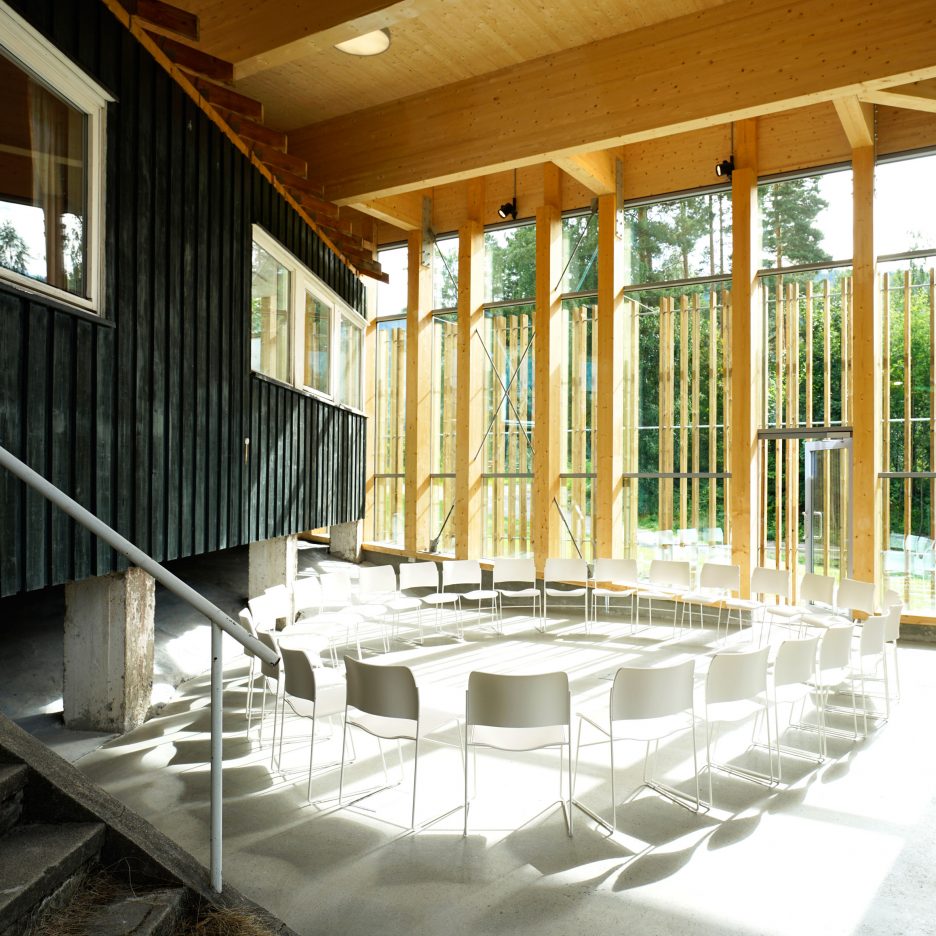
Utøya massacre site given “new beginning” by architect Erlend Blakstad Haffner


The cafe building where 13 people tragically lost their lives in the Norwegian terrorist attacks of 2011 has been enshrined within a new learning centre by architect Erlend Blakstad Haffner (+ slideshow). (more…)

http://ift.tt/2cbTO5i

💙 Columbia River Scenic Byway on 500px by Mandar…

💙 Columbia River Scenic Byway on 500px by Mandar Deshpande,… http://ift.tt/1SPw1ZY

http://ift.tt/2cB1E9B

Top 7 Ways to Improve Your Productivity

//pagead2.googlesyndication.com/pagead/js/adsbygoogle.js

(adsbygoogle = window.adsbygoogle || []).push({});

When you have a lot of things to work on, maintaining your productivity level can be a struggle. You can easily feel exhausted and bored to the point that you’ll find it hard to even finish a single task. If this sounds exactly like you, here are some of the way you can boost your productivity.

1. Get organized

If you are the type of person who likes keeping hard copies of your bills, there’s a good chance you can be keeping piles of paper on your work desk or home, too. To make sure these things don’t block your productivity, it’s a good idea to store them in dedicated folder racks and holders. You can create labels for them so you’ll know right away which ones should be prioritized and which needs to be thrown away.

2. Take a simplistic approach

Listing down your tasks doesn’t have to be overwhelming. You don’t need a lot of planning software and apps just to get your work done. In fact, it can be as simple as using a pen and paper.

When creating your list, it will be helpful if you can break it down into specific activities. If you’re scheduled to clean your room on a Sunday, you can create sub-tasks, such as making your bed, taking out the curtains and vacuuming the carpet.

See Also: 7 Great Productivity and Time Management Tools to Keep You On Track

//c.amazon-adsystem.com/aax2/getads.js

//<![CDATA[
aax_getad_mpb({
"slot_uuid":"16dcbcd0-2124-4a85-9abe-c263dd9084e5"
});
//]]>

3. Reward yourself

coffee-reward

Instead of taking a 5-minute break each time you’re starting to feel bored with your tasks, promise yourself уou’ll get a reward after the day’s goal is done. It can be a short trip to your favorite shop or your favorite cup of coffee. With the reward you’ve set, it’ll be easier for you to work hard and stay focused on what you are working on.

4. Keep a daily to-do list

//pagead2.googlesyndication.com/pagead/js/adsbygoogle.js

(adsbygoogle = window.adsbygoogle || []).push({});

You can lose tons of time trying to figure out what you’re supposed to be doing if you don’t have a list sitting in front of you. Personally, I find keeping a running to-do list on a dry erase board by my desk helpful in keeping me focused on my tasks.

5. Prioritize your goals

Listing down your tasks is one good way to boost your productivity. However, if you’re going to try to do everything at once, there’s a good chance you won’t be able to finish anything on time. It’s easy to feel overwhelmed, particularly if you have a lot of important things to accomplish for the day.

A good solution is to prioritize your goals. Put any tasks due at the top of your list. It can help if you can write down the top three things you need to accomplish for the day. If you have any extra time, you can start working on tasks due for the next day.

6. Set aside time for your email

To make sure you stay focused, try to ignore your inbox while you’re working. For productivity, you can check your email in the morning, after you take your lunch and about half an hour before you leave your work. Unless there’s an emergency, it’s best if you can leave your inbox alone.

See Also: 10 Productivity Musts for Freelancers

7. Schedule your day in blocks

work-schedule

It’s tempting to check your Facebook and phone after spending several hours on the same project. Instead of giving in to this temptation, it’s a good idea if you can set aside a specific time for it.

Break your day into blocks. You can spend half an hour on an important task and when that time is up, you can take a short break. You can check your social media accounts or take a quick walk outside. After your break, you can get back to what you were working on. This approach can boost your productivity while giving your body and mind enough time to rest.


//pagead2.googlesyndication.com/pagead/js/adsbygoogle.js

(adsbygoogle = window.adsbygoogle || []).push({});

//pagead2.googlesyndication.com/pagead/js/adsbygoogle.js

(adsbygoogle = window.adsbygoogle || []).push({});

(function(d) {
var params =
{
id: “cb4f919c-04fa-460c-b2ff-2c7f9ecf4472”,
d: “ZHVtYmxpdHRsZW1hbi5jb20=”,
wid: “165294”,
cb: (new Date()).getTime()
};

var qs=[];
for(var key in params) qs.push(key+’=’+encodeURIComponent(params[key]));
var s = d.createElement(‘script’);s.type=’text/javascript’;s.async=true;
var p = ‘https:’ == document.location.protocol ? ‘https’ : ‘http’;
s.src = p + “://api.content.ad/Scripts/widget2.aspx?” + qs.join(‘&’);
d.getElementById(“contentad165294”).appendChild(s);
})(document);

The post Top 7 Ways to Improve Your Productivity appeared first on Dumb Little Man.
http://ift.tt/2cAUIcE