MVRD’s masterplan foresees the development of a vast site of which hotels, conference halls, offices and start-ups, laboratories, research facilities and parking will occupy the site.. Image Courtesy of MVRDV
MVRDV with co-architects morePlatz have won a competition to design the masterplan of the Hamburg Innovation Port, a new 70,000 square meter waterfront development that will add to the high-tech hub of Channel Hamburg in Hanse City, Hamburg. The plan for the mixed-use development uses a fusion of existing port typologies and dynamic architectural interventions to create a network of buildings containing hotels, laboratories, research facilities, offices for start-ups and a conference center.
The roofs of some buildings are partly green and partly used for terraces and solar cells.. Image Courtesy of MVRDV
Located on the site of the old Harburger Schloss waterways, the planned development has been organized around a system of alleys between the street and harbor basin. A three-story plinth containing a variety of public spaces borrows from the harbor typology, and in a later phase, will connect to surrounding buildings via a series of skybridges. On top of the plinth, increasingly glazed facades provide light and views to laboratories, and higher up, flexible office spaces. In the building’s center, special program volumes will contain restaurants, cafeterias and libraries.
On the building roofs, occupiable green spaces have been arranged to create a park-like atmosphere linked by the skybridges, while arrays of solar cells will help provide energy to the complex. The interiors of the bridges feature flexible space that can be adapted to create large office areas. Parking, meanwhile, has been placed underground and out of sight, and is accessible through one communal entrance.
Part of the plan is the idea of a diverse public space in which each part has its own strong character inviting the office workers to have outside meetings and al fresco luncheons. . Image Courtesy of MVRDV
Most of the complex will be ground-up construction, but one existing hall on site will be transformed to be used for temporary activities and to support construction of future phases. An additional floating building accessible via a jetty with contain a hotel.
“Part of the plan is the idea of a diverse public space in which each part has its own strong character,” explain the architects in a press release. “There is a park, a boulevard, a square, shared spaces and a waterside promenade featuring wide stairs towards the water that invite the office workers to have outside meetings and al fresco luncheons.”
A total surface of 70,000m2 will transform the waterways of the Channel Hamburg development, the southern high-tech hub of Germany’s northern metropolis.. Image Courtesy of MVRDV
“At Hamburg Innovation Port we envision a very high density to create a vibrant neighbourhood and to make the best use of this fantastic location at the waterside, a former cattle food factory site,” says MVRDV founding partner Jacob van Rijs. “The density is FAR3.3, comparable to a typical Berlin city block with its courtyards and outhouses, but designed in a way to offer daylight and vistas.”
The plan is designed to be built in stages with the flexibility for possible program changes as the construction progresses. This will allow each of the five buildings to be realized independently.
The competition was organized by Hamburg construction company HC Hageman. Hadi Teherani Architects have also been selected to build one of the architectural projects. The total budget for the project is estimated at 150 million euros.
Angels are our guardians and guides. They are divine spiritual beings of love and light that work with humanity to help us in this lifetime, brining us messages, guidance and help for our highest good. Guardian angels are unique to each person; we each have our own team. For some people this may be one angel, for others it may be many; and you can always ask for more if you feel the need.
Angels abide by the spiritual laws of the universe, because those laws are for all of humanity. The Law of Free Will means we each get to freely choose what we want to create in our lives and that the angels will not directly interfere in your life (unless you ask or if your life is in danger before your time). When you ask for guidance, your angels will mostly communicate through your intuitive feelings and signs that support your intuitive feelings.
When you ask your angels directly for help with something, you create a strong connection of co-creation. Our angels can help us with manifesting pretty much anything. This does not mean that you ask for $1,000,000 and it magically appears; that is not co-creation. Think of it this way, if your child asked you for help with doing something, like homework for instance, you wouldn’t just do it for them. You would help them with advice, resources, ideas and support. This method works because the experience of learning and creating is valuable and results in growth and expansion; the same is true for the process of manifesting.
When we ask the Angels for help, especially with manifesting something we clearly know we want and that is for our highest good, they conspire on our behalf by giving or sending us inspiration, ideas, signs, resources, opportunities, helpers, and lots of other serendipitous circumstances; all leading to making our intentions a reality. For your part, you have to act on whatever comes your way; if you don’t, you won’t create anything.
Our prayers or intentions will be answered, but how won’t be up to us. What is up to how we respond; with action or with dismissal. Taking responsibility for your part in creating your life is crucial. It is also crucial to understand that, in truth, we are manifesting all the time. This is the Law of Attraction in action; all day, every day, without exception. Becoming aware of this fact, that we constantly create our reality, and making conscious choices about what we are creating makes a huge, life changing impact. What the Angels bring to the party is serendipity, guidance, miracles and supremely high vibrating energy that can truly accelerate and amplify the creation of your intentions and dreams.
Here are 6 ways your angels can help you with manifesting:
1. Ideas and inspiration
When you ask the Angels for help with manifesting, one of the first ways they begin to assist is with new ideas and divine inspiration. The Angels communicate with us through our intuition, giving us a download of information that can help create the path to our dreams. Do not dismiss new ideas that come to mind once you have asked your angels for help. It can be as simple as making a phone call to someone or as in depth as starting a business. Whatever the light bulb or aha moment is; don’t ignore and do act on it.
2. Helpers
Once you know what you want, and you ask your angels for help, they begin to conspire on your behalf. The Angels frequently work through other people; those who, in some way can give you information, support or collaboration. The Angels can put you on the mind of people who can help you in unexpected ways. If you directly ask for just that, get ready for offers of help from people you could never imagine and be sure to accept them.
3. Resources
The Angels are masters at serendipity. When you ask them for help with manifesting, definitely focus on what you want, and leave how they will help you to them; this leave the door open for u limited possibilities. The resources you need for any endeavor will fall together and come to you much more easily if you can surrender. When you push and give instructions, instead of intentions, you create roadblocks to resources. The Angels see the big picture, they know what you need and, more importantly, when you need it. Expect the unexpected as resources like financing, materials or products (and more) come your way without you needing to struggle, strife or worry. Take action and use these resources; if you feel uncertain, ask for a sign
4. Opportunities
When opportunity knocks, you need to answer! When you ask the Angels for help, there will be new and even unexpected opportunities that come your way. The biggest issue people seem to have with this form of help is acting on them; usually out of fear or a lack of faith (primarily in themselves). Seizing opportunity mainly requires that you believe in yourself and have faith to move forward. The timing is right and the opportunity will help, if you believe it. Seizing an opportunity will accelerate the manifesting, avoiding it could impede your progress. Just believe in yourself; your angels do.
5. Clarity
Being clear on what we truly want is utterly the most vital part of manifesting; if you aren’t completely sure about what you want, you cannot create it. It can be a struggle to have this level of clarity; feelings of doubt tend to hold people back from giving voice to what they truly want, so they settle from the beginning and never fully create from their truest intentions. When you ask the Angels for help, they consistently nudge you toward the big dreams; not the smaller ones you are willing to settle for and accept. The Angels do not play it small, and they give you help so you won’t either. They are also excellent at uncovering issues within your intentions that may be blocking your manifesting process. For example, let’s say you find the home of your dreams and want to buy it, but you need to sell your current home. Many people focus all their time, energy and intention on the sale of the current home; this can lead to becoming stuck in the selling phase. Clarity of intention means you focus on what you truly want, not the path to it. In this case, focus is better placed on the dream home; visualize decorating it and focusing all time and energy on that home. Clarity takes you to the destination so your intention is clear; making the path to it unfolding easier.
6. Blocks
It would seem odd that a block would help us with manifesting, but it can be very valuable In certain circumstances. While the Angels will send opportunities to us when we ask for help, we are also attracting opportunities all the time with our own vibration. Sometimes, we may attract an opportunity that is not really for our highest good; one that will inevitably waste our times and cause stress. This can happen as a result of our own lower vibrating energy that stems usually from impatience and doubt or maybe we want to take the easy way. When these kinds of opportunities show up, you will experience blocks to them. Maybe you won’t have the resources you need (like money), or maybe communication is difficult (you cannot get in touch with the people involved), or maybe strange things happen (your car won’t start when you have to go to a meeting), of perhaps a good friend questions the opportunity (confirming your own feelings about it), or maybe you feel tension in your stomach (your Solar Plexus Chakra responding to low vibrating energy). You might even experience all of these blocks in a short time; pay attention and let it go. Manifesting should be a process that flows with inspired action, not one you need to push with impatience.
How to ask (I AM READY!)
Asking your angels for help does not require any formal ritual or prayer. The best way to do it is from a place of surrender; asking for their help without giving instruction. A great technique is the “I am ready” statement. These 3 words are powerful, and “I am” is a definitive statement that lines up energy to support it. Use this technique with the following intention to ask your Angels for help:
I am ready to create (you fill in your intention). Please bring me the resources, ideas, inspiration and opportunities that can help bring this into reality. Please put me on the minds of people that can help me as well. Thank you.
Using a Vision Board in conjunction with your I AM READY request adds positive energy to the process as well. Include some images of angels on it as a reminder that they are with you, guiding you and helping you co-create your dreams. The I AM READY statement makes your intention very clear. When we ask the Angels for help, especially with manifesting something we clearly know we want and that we are ready to have, they conspire on our behalf to make it a reality. Happy manifesting!
Cais das Artes / Paulo Mendes da Rocha & METRO. Image Courtesy of Paulo Mendes da Rocha
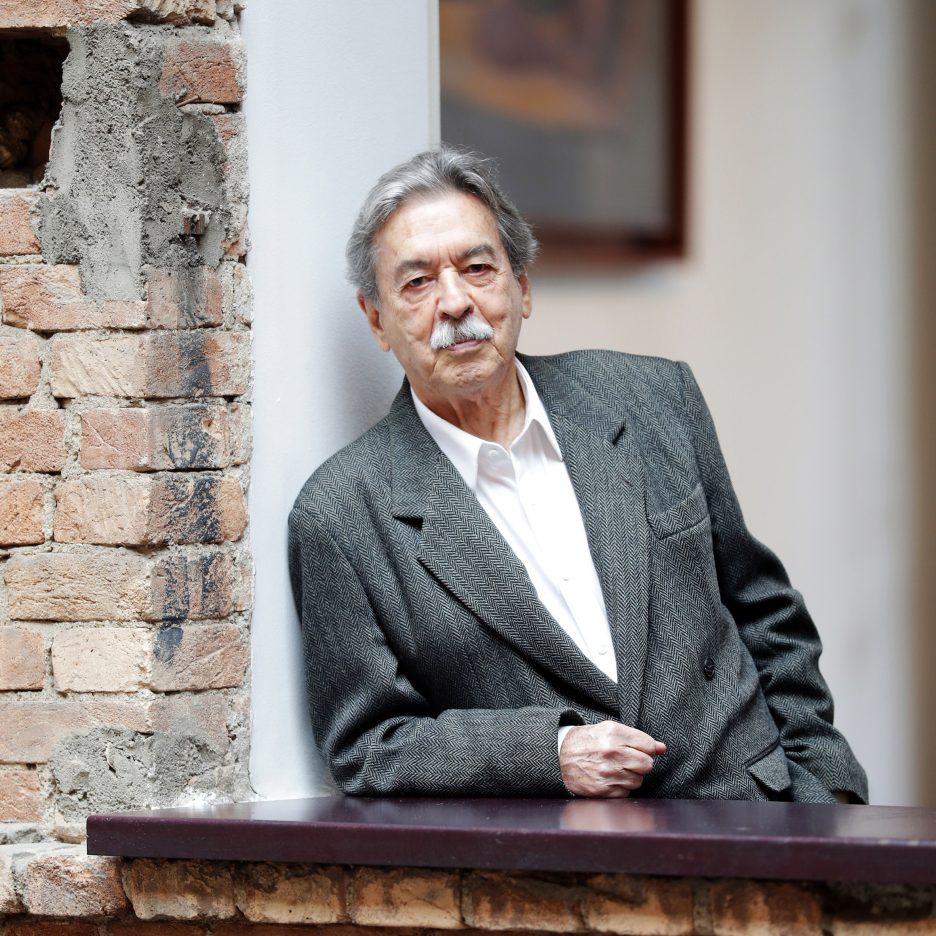
The Japan Art Association (JAA) has named Brazilian architect Paulo Mendes da Rocha as the winner of the 2016 Praemium Imperiale International Arts Award. Often credited as a founder of the Brutalist movement in São Paulo, 2006 Pritzker Prize Winner Mendes da Rocha was praised by the jury for his commitment to honoring “locality, history and landscape” in his projects and his ability to utilize “simple materials like concrete and steel to structure space to maximum effect.”
The recipients will be awarded at a ceremony in Tokyo on October 18, 2016. Imperial Highness Prince Hitachi, honorary patron of the Japan Art Association, and his wife Imperial Highness Princess Hitachi will present each Praemium Imperiale winner with a specially-designed gold medal, along with a testimonial letter and a 15 million yen (approximately $143,000) prize.
Design of the architectural project for the Barroca Museum began in 2014 and featured as its core premise the reorganisation of a building located on the Barroca Estate just outside the Portuguese town of Mora.
The building, that had been recently restructured before this intervention, had retained its origins within the Alentejan vernacular architectural style of which it represents a fine example. It is composed of a long, single storey volume, located in a raised area of this agricultural estate, which previously served as the manger for the estate. The structure is characterised by extensive sections of white wall, with controlled openings throughout the construction. The gable roof is held in place by wooden trusses that endow the space with the amplitude of a pavilion. The finishings are typified by the whitewashed plastered walls and the red ceramic paving, which recall the traditional architectonic language of this region.
The project undertaken defined the installation of an exhibition about the history of the local council based upon hitherto unpublished photographic records that illustrate and highlight the social and economic transformations ongoing in the region ever since the early 20th century.
The exhibition layout redesigned the existing spatial logic and in accordance with the diverse specific requirements of the exhibition content. Conceptually, the project was designed with a strong reference to the surrounding built and natural environments in a play on the interior-exterior relationship.
Exhibition Floor Plan
The intervention extended to the construction of a volume within the interior of the main nave, which stands apart from the walls and the ceiling to become an object unbound in the centre of this space. This self-standing, white structure proves reminiscent of the outer sections of stone masonry and functions as a replication of the existing construction logic.
This volume gets intersected across the two axes transversal to the surrounding space in alignment with the metric of the existing openings and thus enabling the circulation of visitors inside and outside of the exhibition as well as the controlled entrance of natural light. These divisions result in three distinct spaces which, in turn, correspond to the three main exhibition sections.
There are also occasional pieces of fixed furniture that act to embed the diverse programs of the museum space of which the reception and store are examples.
In the interior, various means of support and stands ensure visitors accompany the pace of the exhibition and fostering the interaction of the public with the exhibited content. The green colour of the furniture reflects back to the natural exterior environment in continuity with the premises established in the general project concept.
La Muralla Roja, Alicante, 1973. Image Courtesy of Ricardo Bofill
To the uninitiated, Ricardo Bofill might come across as something of a chameleon. Comparing the post-modernism of his projects in Paris of the 1980s, his recent glass-and-steel towers, and the stark stoicism of his own home and studio which he renovated in the 1980s, one would be forgiven for thinking that there is no consistent thread present throughout his work. However, as Bofill reveals in this interview from Vladimir Belogolovsky’s “City of Ideas” series, his designs are actually rooted in concepts of regionalism and process which, while recently popular with the architectural community at large, have underpinned his architectural mind since his twenties.
Vladimir Belogolovsky:Your office, a former cement factory, La Fabrica, built back in late 19th century here in Barcelona is fascinating. Would you say it is a manifesto project and is it a work in progress for you or is it finished?
Ricardo Bofill: No, this is not a manifesto. This place is my home. I have lived and worked here for over 40 years. It is not finished and it will never be finished. I think architecture can never be finished. It always needs more work. We started this project by doing demolition, destruction, and deconstruction work first. I loved this place when I first discovered it because it was never planned or designed. Instead, it developed over many years, expanding and rebuilding every time new technology was introduced. It was an homage to industry. The factory reminded me of vernacular architecture. It was industrial vernacular that attracted me. Also there were so many surreal moments such as stairs and bridges going nowhere and arches and porticos in the most unexpected places… I started with a very romantic idea to bring nature into this industrial place. There are plants everywhere. There is a whole ecological layer planted on top of the original industrial complex.
La Fabrica, Sant Just Desvern, Barcelona, 1975. Image Courtesy of Ricardo Bofill
VB:The reason I suggested that this place might be a work in progress is because this conversion from factory to your home and office is very eclectic with elements from industrial architecture, Brutalism, Spanish vernacular, as well as Surrealism and Post-Modernism.
RB: Sure, but what you call Post-Modern elements are in fact historicist. They all came before Post-Modernism. My idea at the time was to recuperate some of the elements from historical Catalan architecture such as elongated arched windows from medieval times in Barcelona. And you know, every time I travel to such places as traditional towns in Japan or a desert in the Middle East, or Italy, I bring some of those influences back here and you can trace many such references. These memories are very important to me.
La Fabrica, Sant Just Desvern, Barcelona, 1975. Image Courtesy of Ricardo Bofill
VB:So you keep transforming this place over time.
RB: Constantly. As you said, it is a work in progress. And it will always be a work in progress, absolutely. And I like the space itself here. It is very raw and clean, there is almost nothing decorative here. It is a world within itself. Nothing is really designed here. What I had in mind when I was transforming this place was a monastery, as a perfect place for concentration. From here, I started more than 1,000 projects.
La Fabrica, Sant Just Desvern, Barcelona, 1975. Image Courtesy of Ricardo Bofill
VB:I read that you employ here not only architects and designers but also mathematicians, musicians, poets, filmmakers, philosophers, sociologists… Could you talk about this interdisciplinary approach to architecture?
RB: Architecture is a professional discipline. Fundamentally and artistically, architecture is about space and the relationship between time and space. Architecture needs to have a relation to the genius loci of every place. In other words, to its spirit and DNA. Architecture cannot be translated from one place to another. Architecture should be specific to every place. So what I try to do with this multidisciplinary approach is always to invent new projects, new styles. I want to reinvent myself. I don’t want to copy myself or repeat endlessly certain shapes, like some other architects… I want to adapt to local conditions and traditions. Architecture needs to be open to other disciplines. Architecture can’t be isolated. And since all other disciplines evolve, architecture should maintain a close relation to them to evolve as well.
Single-family house in Ibiza, Ibiza, Spain, 1960. Image Courtesy of Ricardo Bofill
VB:What was your first project?
RB: I was still a student, just 18, studying architecture at the School of Fine Arts in Geneva, Switzerland. My real passion ignited when I discovered the work of Frank Lloyd Wright and Alvar Aalto. I related to organic architecture, buildings that integrated with nature, buildings that didn’t have any facades; the facades expressed the complexities within buildings.
My father was an architect and developer, and I first learned about architecture and construction from him. We traveled together throughout Spain and to Italy to study vernacular architecture and all my first projects we did together. I learned everything from him and I was directly involved in building projects. I worked with builders and artisans, and many things I did with my own hands. I was also influenced by various utopian ideas, so early on my work was on the border between utopia and reality.
My first project was a small holiday house in Ibiza, a very organic house with thick curving walls and small windows that captured the genius loci. Then I did projects in Barcelona, France, Algeria, Central Africa, and so many other places… In Russia, India, China, Japan, the United States… And in every place my architecture is different and related to the place. What I learned from these very different experiences is that architecture cannot be translated from one place to another.
La Muralla Roja, Alicante, 1973. Image Courtesy of Ricardo Bofill
VB:Let’s go back to the time when you joined your father’s practice in the early 1960s and started working on many experimental residential projects. At that time, you said you didn’t like Le Corbusier because of his preprogrammed universal cities. You built your own prototypes such as Barrio Gaudí in Reus Tarragona (1968), La Muralla Rojain Alicante (1973), and Walden-7 (1975) here right outside of your office. With these projects, you were exploring Spanish vernacular and critical regionalism, correct? Were these early projects your reaction to Modernism?
RB: Well, I always said that Corbu was the one architect who killed the city. He had a total disregard for history. He hated the city. He wanted to divide the city, segregate it into zones for living, working, commerce, and so on. He thought of cities and buildings as machines. My views were always the opposite. Every city is a much more complex place, a conflicting, contradicting, and corrupt place. Cities need to be repaired and cured, not demolished and built from scratch. Cities started 10,000 years ago, but for Le Corbusier history did not exist. His manifestos looked only forward. But it is clear that people prefer to live in historical centers, not in new cities. I try to find alternatives to simplistic Modernism by bringing back the spirit of the Mediterranean town.
Walden-7, Sant Just Desvern, Barcelona, 1975. Image Courtesy of Ricardo Bofill
VB:Speaking of Walden-7 and other early experimental projects you said that every one of your projects was different because you did not want to produce simply “beautiful” architecture, but experimented with process. Could you elaborate on that?
RB: I like the kind of architecture that is simple, based on natural forms, and built of noble but not expensive materials. I don’t like excess, luxury, rich forms and materials. I like minimalist and sensual architecture. Architecture is all about the process. Methodology is the key component of the creative process. There is no fixed method. Every project should have its own method. Some projects are based on preconceived ideas, while others are all based on the process. It is important to have engines inside of yourself to provoke change and provoke evolution. To be unsatisfied and critical of your own work is very important to keep this internal engine constantly running. As far as my early works in the 1960s and 1970s they were very interesting in their own right, but when I was faced with a much bigger scale of a whole city such as in France or in other parts of the world those early projects were no longer relevant. Again, many architects repeat themselves, they are not critical of their work; they continue pursuing the same project all over the world. They develop a style. They don’t evolve. I don’t like satisfied people. I prefer to be critical with myself.
Walden-7, Sant Just Desvern, Barcelona, 1975. Image Courtesy of Ricardo Bofill
VB:You said that you were one of the pioneers of Post-Modernism. But once Post-Modernism became established and became a style you were no longer interested. Is that right?
RB: You are exactly right. At the time, we did not know the name of this movement, but the idea that I had was to recover some of the historical elements of architecture, the tradition that was cut off in the 1920s and 1930s. Then architecture became tabula rasa. History became forbidden. Le Corbusier and Mies van der Rohe were followed blindly all over the world. So this turn to history was welcomed. But when Post-Modernism became accepted and popular in the United States and worldwide it also became a style. And with time it became ironic and even vulgar. Once it became a movement, I was no longer interested.
Les Arcades Du Lac. Le Viaduc, Saint-Quentin-En-Yvelines, Paris, 1982. Image Courtesy of Ricardo Bofill
VB:You prefer to call the work you have done in the 1980s modern classicism, as opposed to Post-Modernism. Why is that?
RB: Post-Modernism became popular after the 1980 Venice Biennale and for a while, we were all very enthusiastic about it. But soon I realized that I was really interested in modern architecture as far as such aspects as efficiency and minimalist treatment. But I was also very interested in Classical architecture and I wanted to combine these interests. I wasn’t interested in neoclassicism, which is about applying academic rules of classical architecture, which is repetitive and boring. So I was trying to combine the best of Modernism and the best of Classical styles. I still like classical architecture. I like its notions of sequence of spaces, system of proportions, its strive for perfection, even if it is never achievable. Still, this is architecture of culture that fights architecture of barbarians, architecture without rules, architecture of chaos and deconstruction. I like architecture that gives a sense of tranquility and serenity. But today I try to avoid following any particular style. I am not inspired by classical vocabulary, just its spirit. Instead, we incorporate new technology, ecology, and our own history to write architecture like a novelist would write a book.
Les Espaces D´Abraxas, Le Palacio, Le Théâtre, L´Arc New Town Of Marne La Vallée Region Of Paris, France, 1982. Image Courtesy of Ricardo Bofill
VB:Are you still an idealist? When you think of the future of the city what kind of urbanism and architecture do you imagine?
RB: Yes, the whole world is being urbanized at an incredible speed and new mega cities are popping up everywhere. But the qualities we need to be concerned with are what we like our old cities for: being compact, pedestrian, sustainable, ecological, efficient as far as waste management, and so on. But all of these should be local solutions. There should be no global solutions.
Nansha New City, Guangzhou, China, 1993. Image Courtesy of Ricardo Bofill
VB:What projects are you working on now?
RB: We are working on many projects now, such as the Barcelona Football Club stadium remodeling competition [editor’s note: since this interview was conducted, the competition was won by Nikken Sekkei], a new residential building in Miami, new towers in Asia, new towns in Africa… And we are working on a new city in China. It will be ten million square meters city for 200,000 people in the Southern part of China.
VB:That is a huge project…
RB: And very very complicated, as you can imagine…
VB:But wait a minute, you have become a Le Corbusier of China!
RB: No, no, no, no… [Laughs]. No, because we believe in a very different approach, a very distinctive, integrated, and personal way of design. I am not designing this city from start to finish. We are proposing the masterplan, the process, many different elements of the process. I proposed my vision for this city but there are many nuances in how it is being planned. I am not proposing one preconceived image with a particular typology of buildings. It is not like, here is the line and everyone should be inside this line. No. For example, Barcelona can serve as a great model for a new city. Here we have a strong masterplan but at the same time every 20 meters, we have very distinctive buildings. Urban vision and good architecture work well here. Urbanists from all over the world come here to learn from Barcelona. We have incredible variation within continuity.
The Pyramid, Spanish-French Border, 1976. Image Courtesy of Ricardo Bofill
VB:In the 60s and 70s there was a fierce battle between a new generation of architects and modernist ideas of Le Corbusier, Gropius, Mies, and other grand masters. Who do you think won this battle and is it still important? Because as you said, the current state of confusion is probably bigger than ever. It is only natural for young architects to fight against the older generation but what we have now is a fight against each other. There are so many voices.
RB: Yes, so many architects are fighting each other except us. We are good friends with all of them. [Laughs.] Architecture has become extremely competitive. Autonomous thinking is being lost. The ideology is often replaced by the clients’ requirements. It is replaced with fashion and the star system. It is hard now for young architects. We need to refocus. We need to focus on urban design. There are many distinctive and interesting architectural objects. But it is not enough to put together all these objects to make a lively city. This is a new challenge – to come up with a new urban vision and address architecture’s relation to nature and changing climate.
VB:It seems that now we have more problems and more questions than in the 1960s.
The treasure you’ll find at Blackbeard Island National Wildlife Refuge in Georgia comes in golden sunrise sparkles, glimpses of rare wildlife and 5,618 acres of precious forests, marshes and beaches. Only accessible by boat, the island was used by the Navy as a source of live oak timber for shipbuilding in the early 1800s. Now, the island is a source of joy and solitude for all who visit. Photo by Becky Skiba, U.S. Fish and Wildlife Service.
All through this week the National Book Foundation is announcing the Longlists for the 2016 National Book Awards in Poetry, Nonfiction, Fiction, and Young People’s Literature. Today the long list for the National Book Award for Poetry was revealed. Five finalists will be chosen from this list in October, with the winner to be announced in November. See the Longlist for Young People’s Literature here. Tomorrow, the Longlist for Nonfiction will be announced.