The Consultant Behind the Guggenheim Bilbao on What Makes Good Architecture


Grace Farms, Connecticut, by  SANAA. One of the projects managed by Andy Klemmer's Paratus Group. Image © Paul Clemence

Grace Farms, Connecticut, by SANAA. One of the projects managed by Andy Klemmer's Paratus Group. Image © Paul Clemence

This article was originally published on Metropolis Magazine as “The Connector.”

Andy Klemmer has had a front-seat view of the making of some of the most important pieces of architecture of our time. The president and founder of the consulting firm Paratus Group, Klemmer was an essential part of the team that helped develop the iconic Guggenheim Bilbao. Since then, he’s gone on to consult on the California Academy of Science, the Perez Art Museum Miami, the Kimbell Art Museum expansion, working with architects like Renzo Piano, Herzog & de Meuron, and SANAA (to name a few). By liaising between institutions and their chosen architects, he has unique insight into architecture, its practice, and that essential part of the architecture puzzle: the client.


Morgan Library, New York, by Renzo Piano Building Workshop. One of the projects managed by Andy Klemmer's Paratus Group. Featured in the windows here is the installation "A Certain Slant of Light" by Spencer Finch, which was on display at the library from 2014-2015. Image © Paul Clemence


Grace Farms, Connecticut, by  SANAA. One of the projects managed by Andy Klemmer's Paratus Group. Image © Paul Clemence


Kimbell Art Museum Expansion, Fort Worth, by Renzo Piano Building Workshop. One of the projects managed by Andy Klemmer's Paratus Group. Image © Paul Clemence


Kimbell Art Museum Expansion, Fort Worth, by Renzo Piano Building Workshop. One of the projects managed by Andy Klemmer's Paratus Group. Image © Paul Clemence


Kimbell Art Museum Expansion, Fort Worth, by Renzo Piano Building Workshop. One of the projects managed by Andy Klemmer's Paratus Group. Image © Paul Clemence

Kimbell Art Museum Expansion, Fort Worth, by Renzo Piano Building Workshop. One of the projects managed by Andy Klemmer's Paratus Group. Image © Paul Clemence

Paul Clemence: How did you get involved with the Guggenheim Bilbao project?

Andy Klemmer: I was invited to work on the 1989 expansion of the Fifth Avenue Guggenheim to help oversee the construction. Quickly that expanded into help managing and mediating all the parties involved, which at that point were all immersed in conflicts. I became the middle man, conciliating all the antagonistic points of views. And in the end, as that job was wrapping up, Thomas Krens told me about the Guggenheim Bilbao project and asked me if I wanted to be part of it.

PC: What were you most apprehensive about, going into this project?

AK: The big fear at the time was that it would never get built. Thomas Krens was building a huge museum with Frank Gehry in this northern city in Spain no one had heard of—everybody kept saying this will never happen. There was a lot of skepticism all around. So if there was a concern, it was about investing a lot of time in something that might not happen.


Grace Farms, Connecticut, by  SANAA. One of the projects managed by Andy Klemmer's Paratus Group. Image © Paul Clemence

Grace Farms, Connecticut, by SANAA. One of the projects managed by Andy Klemmer's Paratus Group. Image © Paul Clemence

PC: But, of course, it did happen, and, as they say, the rest is history. You have spoken of how that experience made you realize the importance of defining the program. Could you comment on that?

AK: It was an unusual opportunity, just coming out of the renovation of the 5th avenue building, to develop a program for another museum for the same client. We had all these ideas fresh in our minds of what would be needed (the benefit of hindsight) and now had the chance to apply them. This doesn’t happen often in architecture.

It has now  become my creed: write the program well, because that will drive everything. That program, started by Thomas Krens and Joe Thompson and then enhanced by us and the knowledgeable staff of the museum, made for a very tight program, and made us really know what was needed, which made us a much better client. And Gehry loves that, he reacts very positively to that, to a client who knows what he/she wants.

PC: But many people still see that project as the quintessential architectural indulgence.

AK: This building has so many attributes that most can’t even fathom, because they don’t operate the building. But he absolutely responded perfectly to the program. He certainly had fun, but he did his job first. The museum works better even than we imagined. Gehry is a much more responsible architect than he is given credit for, he responds perfectly to the program.


Kimbell Art Museum Expansion, Fort Worth, by Renzo Piano Building Workshop. One of the projects managed by Andy Klemmer's Paratus Group. Image © Paul Clemence

Kimbell Art Museum Expansion, Fort Worth, by Renzo Piano Building Workshop. One of the projects managed by Andy Klemmer's Paratus Group. Image © Paul Clemence

PC: What exactly does a company like yours, that represents clients, do?

AK: We get in from the start, writing and elaborating the program, creating a reasonable budget, and assisting with the architect’s selection. Plus, afterwards overseeing design and construction.

PC: Having worked with so many different architects, what do you think makes for a good architect? What qualities should he or she have?

AK: An architect should be able to listen well, speak well, and, naturally, design well. Many architects can do any two of these, but you are lost without the third. Some are great designers and listeners, but they can’t close the loop; they leave the client out by not knowing how to speak to people. Renzo Piano is a good example of having all three: he designs beautifully, he listens incredibly (he remembers in detail everything that is said in a meeting and by whom) and he speaks articulately. He keeps the clients engaged. And that’s important.

PC: From your experience, what should be the number one item when considering an architect?

AK: That the architect is good at listening.That’s what the interview process should be about. You can take a lot from interviews, to see how well they listen. Then you can see if he or she understood what other previous clients wanted. Even if it’s a bad building, if it’s clear that’s what the client wanted. And here is my criticism of architecture criticism.

PC: What is the criticism?

AK: The critics seldom ask what the client wanted originally, what was the program. It’s important to know what the client wanted, what was on their list of requests. At the Morgan Library here in New York, for example, that we built with Renzo Piano, there was criticism that Renzo did not give them enough gallery space – the building has actually has more gallery space than was asked for.


Morgan Library, New York, by Renzo Piano Building Workshop. One of the projects managed by Andy Klemmer's Paratus Group. Featured in the windows here is the installation "A Certain Slant of Light" by Spencer Finch, which was on display at the library from 2014-2015. Image © Paul Clemence

Morgan Library, New York, by Renzo Piano Building Workshop. One of the projects managed by Andy Klemmer's Paratus Group. Featured in the windows here is the installation "A Certain Slant of Light" by Spencer Finch, which was on display at the library from 2014-2015. Image © Paul Clemence

PC: What would you say are some of the client’s responsibilities?

AK: I can tell you, I can guarantee you, that behind every bad building there’s a bad owner, who started a project with a lack of any idea of what the building should be; who didn’t understand what the program was; who didn’t think about it nearly enough. It is tempting to just race off with these high profile architects: you feel you are part of the creative process. But your job is not to be having fun with the architect—your job is to be holding the architect accountable. The best building will come from an owner that knows nothing about architecture, but knows everything about what they want from the space.

PC: You have worked with top names in the architectural profession doing some very high profile jobs. Who haven’t you worked with yet that you would like to? And is there a typology that you haven’t worked on yet that you would like to?

AK: I always wanted to do a building with Toyo Ito. I think he is one of the most inventive architects out there. And the project I would like to do with people like Renzo, Rafael Moneo or SANAA would be some homeless housing. To see what could be done. Re-think it and see what solutions these great talents could bring about.
http://ift.tt/2ceJNmQ

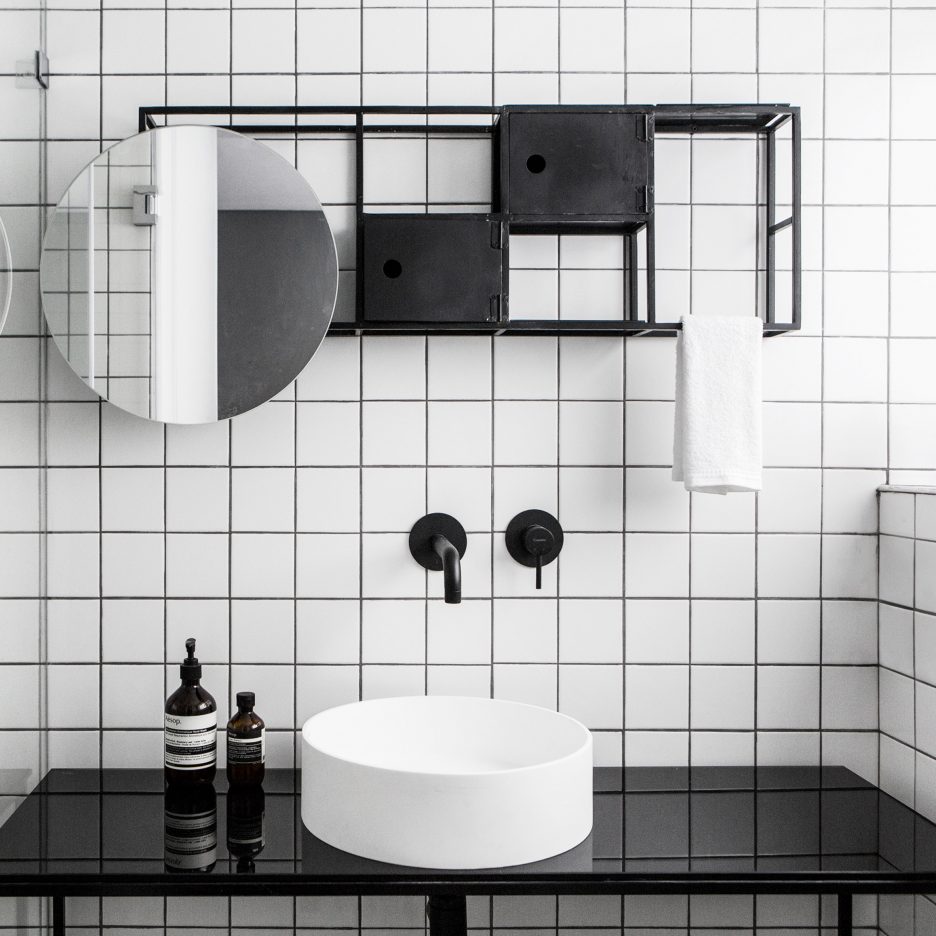
Minimal Tel Aviv apartment features bespoke gridded shelving


Geometric metal fittings extend out from the wall in this pared-back Tel Aviv apartment, created by Israeli interior designers Yael Perry and Dafna Gravinsky with architect Amir Navon (+ slideshow). (more…)

http://ift.tt/2bZH5j1

Peel Place / Dexter Moren Associates


© Andy Stagg Photography

© Andy Stagg Photography


© Andy Stagg Photography


© Andy Stagg Photography


© Andy Stagg Photography


© Andy Stagg Photography

  • Client: Favor Well Ltd
  • Landscape Architect: Craft Pegg

  • Planning Consultant: Indigo Planning

  • Structural Engineer: Michael Barclay Partnership 

  • M&E Consultant: Milieu Consult

  • Quantity Surveyor: Beadmans

© Andy Stagg Photography

© Andy Stagg Photography

Dexter Moren Associates (DMA) has unveiled Peel Place, a new £5 million development for Singaporean developer Favor Well Ltd, consisting of nine contemporary family-sized town houses aimed at the private rented market.  This small-scale, design-led scheme has transformed a constricted 2059 sqm (0.21Ha) brownfield site near Earls Court, with light filled rooms flowing naturally onto outside terraces and gardens, perfect for families and entertaining. The design rethinks the London town house deliberately moving away from homes with rear gardens. Peel Place responds to the need for larger, family or extended family-sized, houses in the private rented sector, where the trend is for one and two bedroom flats. 


© Andy Stagg Photography

© Andy Stagg Photography

The development includes a new street frontage of two houses on Lillie Road with another seven houses forming a terrace behind, perpendicular to the road. The terrace fronts onto a ‘mews-style’ space with a shared access and thoughtful landscaping, whilst the Lillie Road frontage is set back to allow for front gardens and vehicle parking similar to other properties in the street.   


Plan 0

Plan 0

The external facades offer a play of high quality materials, elegantly proportioned shapes, and protruding and recessed planes to provide a strong rhythm and unified architectural expression across the mews whilst clearly identifying each property as an individual home.  DMA have deliberately avoided a pastiche of the various surrounding architectural styles, combining simple compositions with traditional materials and elements to add a distinctly modern chapter in the history and development of Lillie Road.  


© Andy Stagg Photography

© Andy Stagg Photography

Section

Section

© Andy Stagg Photography

© Andy Stagg Photography

Inside the properties, DMA’s design for a full height atrium stairwell is one of the stand-out elements, linking together the internal and external spaces of the house in a light-filled central core. In the open plan kitchen and dining area stylish but hard wearing quartz black floor tiles flow seamlessly between the internal rooms and the outside terrace, with the floor to ceiling doors and glazing giving uninterrupted views between the spaces. In the bathroom, DMA chose bold anthracite grey for the floor and wall tiles, lightened by the curvaceous geometrical designs and buttery hues of the tiles on the features walls.


© Andy Stagg Photography

© Andy Stagg Photography

http://ift.tt/2c5DtPP

Petras Architecture’s Prize Winning Entry in Cyprus “Cultural Village” Competition


Courtesy of Petras Architecture

Courtesy of Petras Architecture

Petras Architects has revealed their third-prize winning entry in the competition to design a new cultural center in Paphos, Cyprus. The brief called for “spaces for the production of ideas and art,” to provide new cultural infrastructure in the expansion of the village. Along with the new buildings, existing buildings were to be adapted to suit the new program, which was to include a school of fine art, workshops, and spaces for communal activity.    


Courtesy of Petras Architecture


Courtesy of Petras Architecture


Courtesy of Petras Architecture


Courtesy of Petras Architecture


Courtesy of Petras Architecture

Courtesy of Petras Architecture

Petras’ proposal, Minimum Domus, features a series of arrayed cubes that intersect with both the existing environment and each other to create a diverse range of conditions. The cubes are arranged into two distinct clusters; the southern includes the artist and student housing of the complex while the northern includes the new Art College, and the Artist Labs.


Courtesy of Petras Architecture

Courtesy of Petras Architecture

The dimension of the 6 meter clay unit is derived from the workspace of the famous painter Stass Paraskos, which sits in the southern cluster. The boxes are multiplied and rotated along the ground place, guided by the existing buildings. The proposed public flows and sun paths helped articulate the refinement of the boxes, as did the reference of the ancient structures at the adjacent archeological site of Lemba.


Courtesy of Petras Architecture

Courtesy of Petras Architecture

An organically flowing “art wall” creates a central point where both students and teachers can display their work in a loose and unprogrammed way. The structural composition is differentiated through materiality and permeability, with specific boxes assigned as intermediate spaces between the public and private areas. Glazing allows visual access, and under certain circumstances the different zones can be opened up and conjoined to provide larger public spaces. 


Courtesy of Petras Architecture

Courtesy of Petras Architecture
  • Architects: Petras Architecture
  • Location: Paphos, Cyprus
  • Design Team: Tsabikos Petrās, George Housos
  • Contributors: Theodosis Drivas, Konstantinos Lamprou, Emmanouil Symiakakis
  • Area: 1522.0 sqm
  • Project Year: 2016
  • Photographs: Courtesy of Petras Architecture

News via Petras Architecture.

http://ift.tt/2cjo2Rl

Who Are You According To Your Name?

It is said that our name can tell a lot about ourselves. Aren’t you curious to know what your name can reveal? Are you a creator? Or maybe a protector?

Let’s have some fun with this test and discover something new about ourselves.

GuidedMeditationsTop20Take this quick and easy quiz and find out who you are according to your name!

Who Are You According To Your Name?

//cdn.playbuzz.com/widget/feed.js

Tell us what you’ve got by leaving a comment below!

The post Who Are You According To Your Name? appeared first on Change your thoughts.

http://ift.tt/2cjgyxv

💙 Life from the Side of the Giant on 500px by Bsam……

💙 Life from the Side of the Giant on 500px by Bsam… http://ift.tt/1qJ7n0h

http://ift.tt/2c19rOH

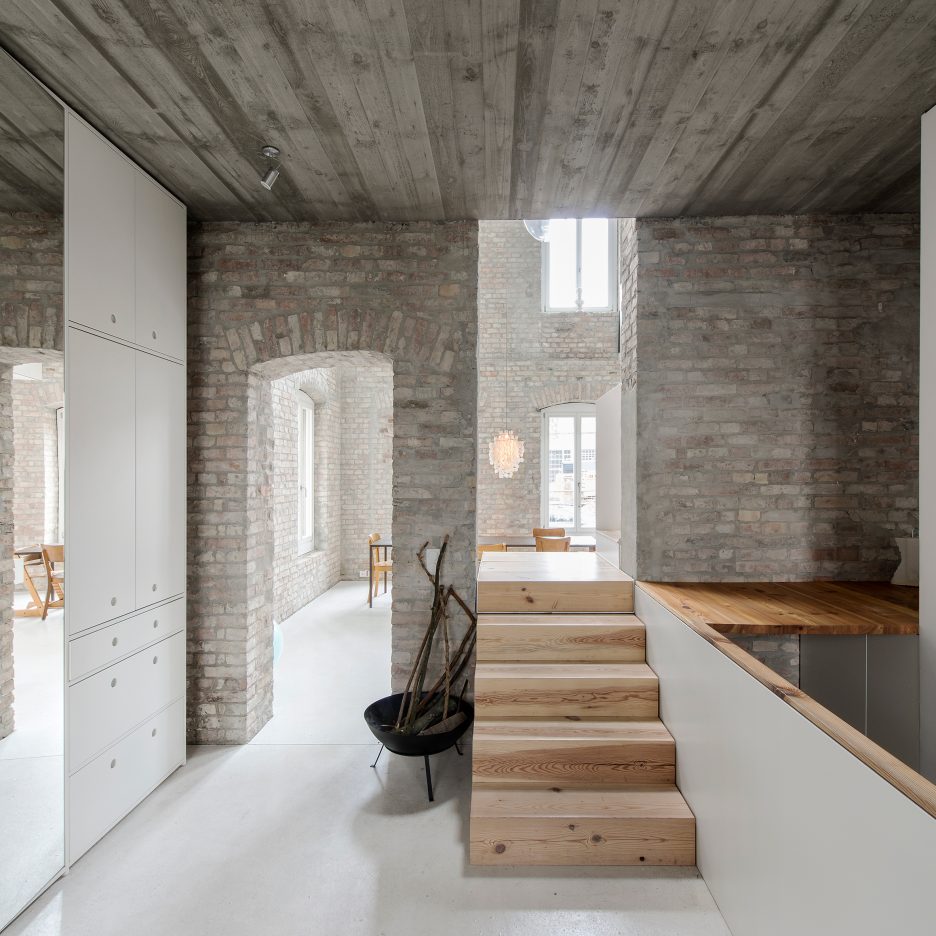
Asdfg Architekten converts former miller’s house into contemporary home


Hamburg studio Asdfg Architekten has converted a 19th-century miller’s house in Berlin into a modern family home arranged around original brick walls (+ slideshow). (more…)

http://ift.tt/2cBQ8bo

A Home Renovation in Toronto, Canada

Instar House by rzlbd Architects (2)

Instar House is a private residence located in Toronto, Canada. It was designed by rzlbd Architects in 2016 and covers an area of 2,200 square feet. Instar House by rzlbd Architects: “Instar House is a minimalist three-storey wood & steel structure, which is located on the southern edge of Allenby, a neighbourhood on the border between North York and Toronto. While carefully responds to the needs and lifestyle of the..

More…

Sopron Castle District Revitalization / Hetedik Műterem


© Balázs Danyi

© Balázs Danyi


© Balázs Danyi


© Balázs Danyi


© Balázs Danyi


© Balázs Danyi

  • Architects: Hetedik Műterem
  • Location: Sopron, Hungary
  • Architect In Charge: Levente Szabó
  • Area: 15040.0 sqm
  • Project Year: 2015
  • Photographs: Balázs Danyi , Courtesy of Hetedik Műterem
  • Landscape Design: Csenge Csontos (†), Borbála Gyüre, Gergely Lád (Geum Műterem Ltd.)
  • Co Architects: Balázs Biri, Jessica Dvorzsák, Dávid Kohout, Orsolya Simon (Competition: Orsolya Almer, András Páll, Tibor Tánczos)
  • Traffic Engineering: Ádám Rhorer, András Mezey (Közlekedés Ltd.)
  • Public Utilities: Ádám Szabó (Aqua-Duo-Sol Ltd.)
  • Street Lighting Technology: Tibor Galazka, Ferenc Horváth (GT-Vill Ltd.)
  • Structural Expert: Géza Kapovits
  • Water Engineering: Gergely Drobni, László Skublics
  • Accessibility: Anna Kormányos
  • General Contractor: VEMÉVSZER Ltd.
  • Inspector Of Monuments: András Veöreös, Sándor Tárkányi

© Balázs Danyi

© Balázs Danyi

From the architect. The Castle District of Sopron is a 40-60 meter wide boulevard, which was formed on the outer skirt of the ditch running along the city walls that encircled the former historical core of the town, on the so called glacis slope. Consequently, from direction of the castle walls the row of houses, mostly of Rococo and Louis XVI style built in the 18th-19th century, appears with alternating building height, developed typically on narrow plots. The only exception is one spot where the facade is interrupted by war dam-ages and part of the castle wall reveals as a visual element. The outer row of houses consists of earlier, partly medieval buildings with wider lot divisions, resulting in patio houses that are connected to Castle District with passages. Once long ago – after the development of the surrounding facades – market function was present in this area of historical significance: it gave place to cattle markets or at some parts of it hay markets were held in the middle of the 19th century. In the 19th century, the Castle Dis-trict was more of a contiguous, slightly outwards sloping area than a boulevard, even though also a tram line was running along it.


© Balázs Danyi

© Balázs Danyi

Conditions prevailing before the design process of the Castle District’s renewal were formed during the second half of the 20th century. At that time, a traffic system was developed on basis of Pál Boronkai’s plans with retain walls, articulated and separated traffic routes (service road). This traffic-dominated state restricted pedestrian traffic to the minimum and at the same time it longitudinally separated the once contiguous space. Traffic light intersections, service roads, cars passing and searching for parking place restricted pedestrian traffic to a narrow stipe along the walls. Prior to the conversion, actually the whole Castle District was one contiguous parking lot. The generosity of the extremely wide public place, the large and contiguous square worthy of a city was overbuilt and over-articulated: the area was filled with retaining walls, roads and hedges blocking the view. The traditional functional dominance of hospitality and trade on the ground floors of the Castle District houses was not accompa-nied by corresponding public space connections (e.g. coffee terraces, outdoor catering areas). The architectural elements (his-toric buildings) of the public space were in poor aesthetic and technical condition, and the area missed a single, integrated image that could have provided the Castle District with identity. The place between the statue of Virgin Mary and the Fountain of Loyalty (=Hűség kútja) is one of the most important public spaces in Sopron. Nevertheless, it was unjustly fragmented and divided by retaining walls and stairs.


© Balázs Danyi

© Balázs Danyi

Site Plan

Site Plan

© Balázs Danyi

© Balázs Danyi

In autumn 2009, the city council of Sopron announced a national, secret, open architectural competition with the title „Sopron – Revitalization of the Castle District”. The competition was won by Hetedik Műterem Kft. in collaboration with its land-scape designer partner GEUM Műterem Kft. In the course of several years of design work, the first and most spectacular phase of the public space renewal, an approx. 15 thousand m2 large area has been completed by 2015.


© Balázs Danyi

© Balázs Danyi

The beauty of the Castle District lies in its character created by the continuously changing cross sections and con-stantly varying spatial relations along almost half a kilometer length; and by the feature that all this belongs to Várkörút (Castle Boulevard), to its dynamism and generosity. This duality, namely the dichotomy of the longitudinal dynamism and cross-sectional diversity is the greatest value that we wanted to strengthen in our plan. The key concept was that when standing at any point of the Castle District one should know and feel that he/she is in this very part of the area. However, moderate approach was also required since the facades of the historic development along the inner and outer curves are determinative urban design ele-ments, thus competing with them for dominance is unnecessary.


© Balázs Danyi

© Balázs Danyi

© Balázs Danyi

© Balázs Danyi

After the complete reconstruction of utilities, new street lighting was installed and new pedestrian-dominated surfaces were formed in accordance with the renewed traffic system. Because of the historic environment and the former state, our main objec-tive was to create a pavement with uniform appearance (color) evenly sloping towards the outer arc, providing a noble effect with its use of material. That is why we chose dark-colored clinker bricks and granite stripes ensuring the unity of the spatial structure. The graphics of the latter, like lines in sheet music, were meant to arrange the different features of public space architecture without disturbing the sense of integrity. Due to the public utility network’s density, landscaping and planting demanded great care. While high trees with pierced foliage were designed to the central zone, tree species with smaller canopy were placed next to the buildings – partly in order to ensure a dominant view for the historic facades, and on the other hand because of the differ-ent functional requirements of the pedestrian-dominated areas.


© Balázs Danyi

© Balázs Danyi

A pavilion was built in the area’s center of gravity, accommodating the necessary service rooms and toilets. The build-ing has fine concrete surfaces with board formwork texture, precast reinforced concrete louvers and wood-paneled facades, subtly evoking the materiality of the excellent monumental reconstruction works accomplished in the second half of the 20th century in Sopron.


© Balázs Danyi

© Balázs Danyi

The first and largest phase of the Castle District has been completed, and now it indicates the direction for further de-velopments of the areas surrounding the city core. The already started public plaza revitalization of the city center will be finished with the renewal of two large connected areas, Kisvárkerület (Small Castle District) and Széchenyi tér.


© Balázs Danyi

© Balázs Danyi

http://ift.tt/2c7OgMa

Abraham John Architects Designs a Private Home in Mumbai, India

Pavilion by Abraham John Architects (3)

Pavilion is a private home located in Mumbai, India. Completed in 2015, it was designed by Abraham John Architects. Pavilion by Abraham John Architects: “The Pavilion was built on an existing underground water tank that dictated the foot print of the structure. Glass became the primary material for construction as the Pavilion was sited amidst lush tropical greenery. Glass not only formed the walls but also the roof in the..

More…